
Maggie McClellan is a volunteer at the Birthplace of Country Music Museum.
For our “Pick 5” blog series, we ask Museum or Radio Bristol staff or volunteers to pick five songs within a given theme – from heartsongs to murder ballads and everything in between! Once they pick their “5,” they get the chance to tell us more about why they chose those songs. With a diverse staff of knowledgeable DJs and friends of the museum and radio station, we’re sure to get some interesting song choices, which might introduce you to some new music.
In celebration of International Women’s Day, I want to focus on women in country music who have created a brighter future for other women by creating their own record labels. These women have controlled their talent, elevated each other and shown real dedication to the industry.
Record labels are the business side of the music industry. They handle the financial and legal aspects of the music. There is often tension between artists and record labels because labels can be restrictive. They control what the artist is able to produce and how the music is marketed and sold. Creating their own record label allows artists more creative freedom and personal control. They can also help create a shift in the power balance within the industry, especially when artists use their new record label to uplift other artists.
Narrowing it down to five women was difficult, but the way these five women have controlled their talent, elevated each other, and shown real dedication to the country music industry spoke to me, so I want to share their stories with you!
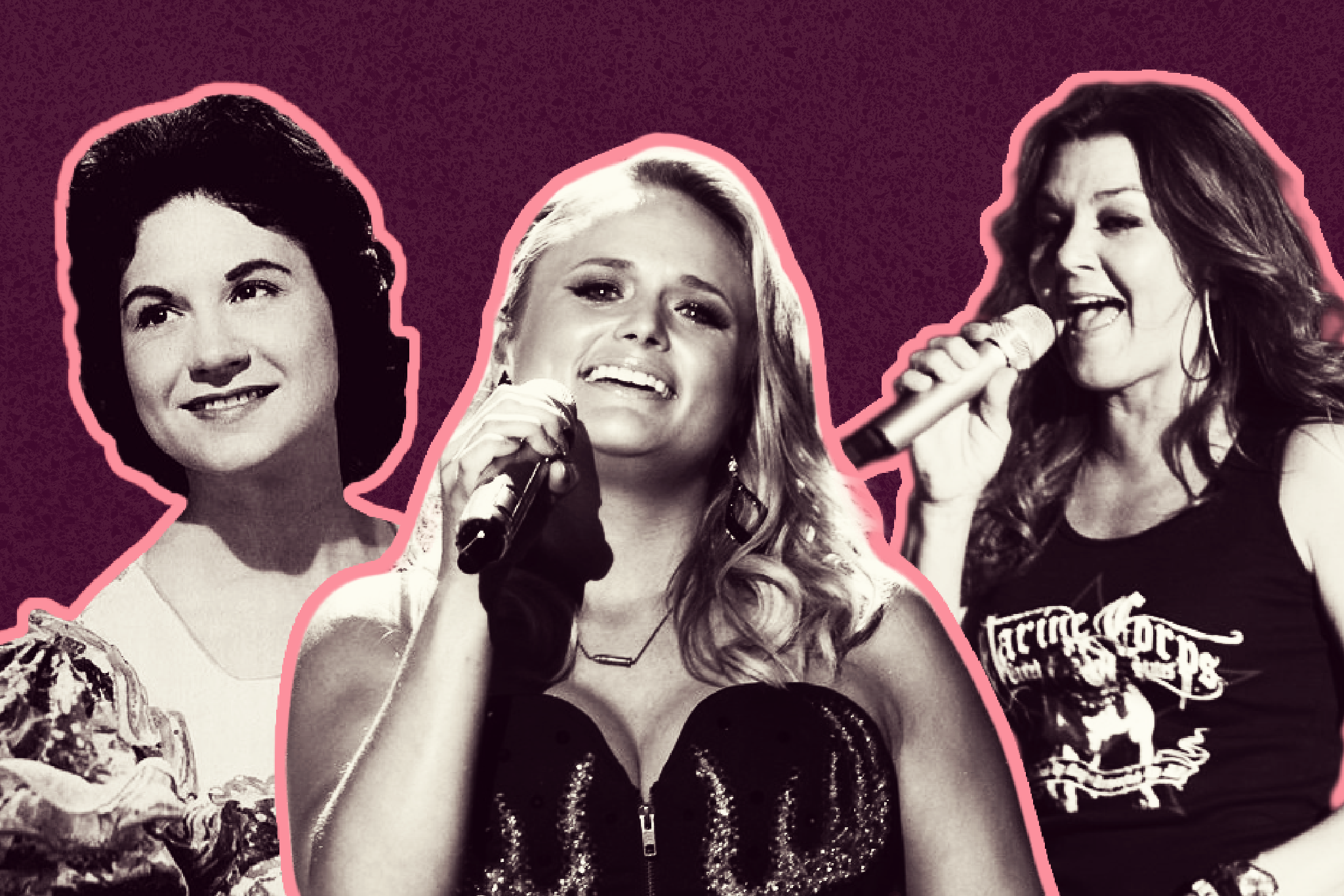
The first artist I want to talk about is also the first woman to become a country music superstar. Kitty Wells, often referred to as the “Queen of Country Music,” is recognized as the first female country artist to sell a million records. Did you know that she also started her own record label?
Kitty was married to Johnnie Wright, who was also a country musician, and together they co-founded Ruboca Records. They named the company after their three children, Ruby, Bobby, and Carol Sue.
Wells started Ruboca Records in 1979 to control her music production, promotion, and release. She may have been the first female to take this step in country music, but women can and have blossomed since then. Taking the reins on her career and future opened the door for other women to shape their future within this male-dominated industry. The song, “Thank You for the Roses,” was released on Ruboca Records.
In 2009, Gretchen Wilson created an independent label after leaving Sony Music Nashville. She has since been able to be hands-on with her projects, ensuring personal creativity. She engineers, produces, and promotes her work on her terms.
Wilson released I Got Your Country Right Here, in March 2010. It was her first album on her own label and reached number six on the Billboard Top Country Albums chart and number 3 on the Independent Albums chart.
Having the ability to control your art matters, and when asked about her new label, Wilson said, “I’m on cloud nine.” Gretchen Wilson works hard and proves that independence is priceless.
Miranda Lambert started two record labels. Her first, Vanner Records, is an imprint or subsidiary of Sony Music Nashville. Lambert used this label to partner her music with major record labels during her solo career. Vanner Records allows her more personal control of her music.
In 2023, Lambert co-created another label with Jon Randall. This time as an imprint of Big Loud and with a focus on Texas talent. Big Loud Texas has a roster of talent that Miranda Lambert hand-selected, including the recently signed Julianna Rankin.
Seeing powerful women in positions to elevate other women is extraordinary. I plan to watch remarkable things from Julianna Rankin; she released Bad Habits and Good Horses with Big Loud Texas in early 2026.
Olivia Records is a pioneering woman-owned record company. It was founded in 1973 by a group of women who wanted a label made by and for women. The label focused on music that empowered women and avoided sexist, racist, or homophobic imagery.
Several of the founding women were part of a lesbian-feminist group called The Furies. They formed a collective and aimed to operate the label in a nonhierarchical, feminist framework. They name, Olivia Records comes from a lesbian pulp novel from 1949.
By 1995, they had ceased recording and become an LGBTQ+ travel company instead. Even though the label is no longer active, it played a big role in the women’s music movement and created lots of opportunities for female artists.
Last but certainly not least is Cordell Jackson. Jackson was a rock musician, but there are lots of connections between country and early rock n’ roll, so I included her in this list because she is a great example of a strong woman making her own way in the music industry.
In the 1940s, Jackson installed recording equipment in her home to record herself and other Memphis musicians, including Sam Phillips. Phillips later started Sun Records, one of the most famous record labels in Tennessee, with an all male stable of artists. After being repeatedly turned down because of her gender, Jackson started her own label, Moon Records out of her home.
Jackson gained more fame as the “Rock ‘n’ Roll Granny” in the 1990s. Although Moon Records never became a household name, her songs continue to resonate and are covered by musicians today, and her label was the oldest continuously operating record label in Memphis at the time of her death in 2004.
These women are carrying a torch for females in this field. Their work is barrier-breaking, showing other women that dreams can come true. It is important to realize how each woman was able to build by watching another. As a music enthusiast and a person who loves watching success, I will need sunglasses because the future is bright!