Radio Archives - Page 8 of 35 - The Birthplace of Country Music
Listen
Play
Loading station info...

Radio Bristol Book Club: Songteller – My Life in Lyrics

Welcome to Radio Bristol Book Club where readers from BCM and the Bristol Public Library come together each month to celebrate and explore books inspired by our region’s rich Appalachian cultural and musical heritage! We invite you to read along and then listen to Radio Bristol on the fourth Thursday of each month at 12:00 noon when we dig deep into the themes and questions raised by the books, learn more about the authors, and celebrate the joys of being a bookworm!

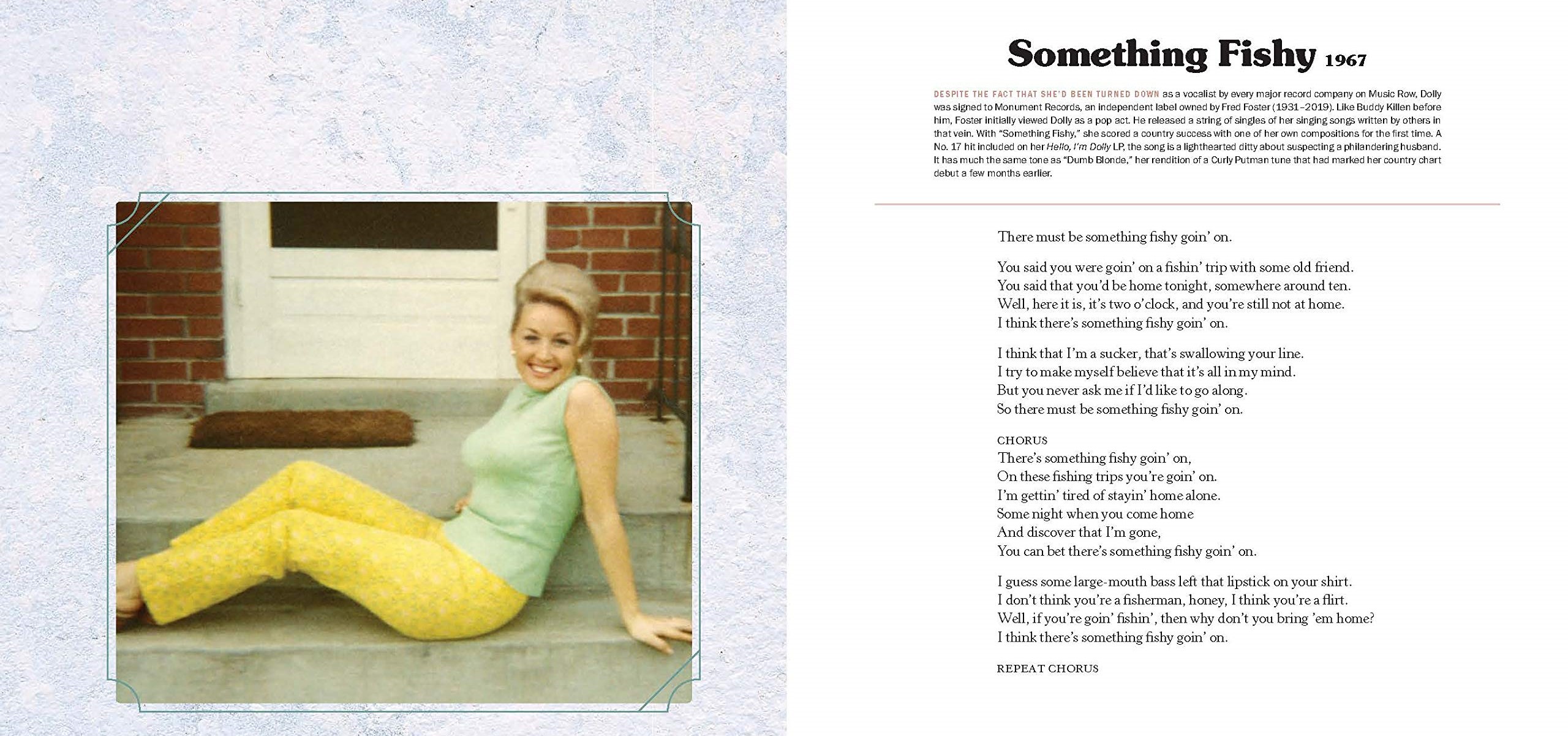
This month’s book is Songteller: My Life in Lyrics by Dolly Parton with Robert K. Oermann. This beautiful coffee table book is a joy and an inspiration to read – from cover to cover, or just dipping into the individual stories behind your favorite songs. Told in her own words, Dolly mines over 60 years of songwriting to share the personal stories, candid insights, and vivid memories behind 175 of her songs. She explores the earliest song she wrote (at age six!), familiar and well-loved hits like “Coat of Many Colors,” “9 to 5,” and “I Will Always Love You,” and songs she performed with other artists like “Tomorrow is Forever” (Porter Wagoner) and “Let Her Fly” (Loretta Lynn and Tammy Wynette) – amongst so many others. It’s not only the insights and the history behind Dolly’s huge songwriting catalog that make this book special; the reader also gets to enjoy wonderful images from throughout her career, photographs of important and personal ephemera and objects that have been saved over the years, and a hint of her “secret song,” locked in a display case at Dollywood’s DreamMore Resort and set to be open in 2045!
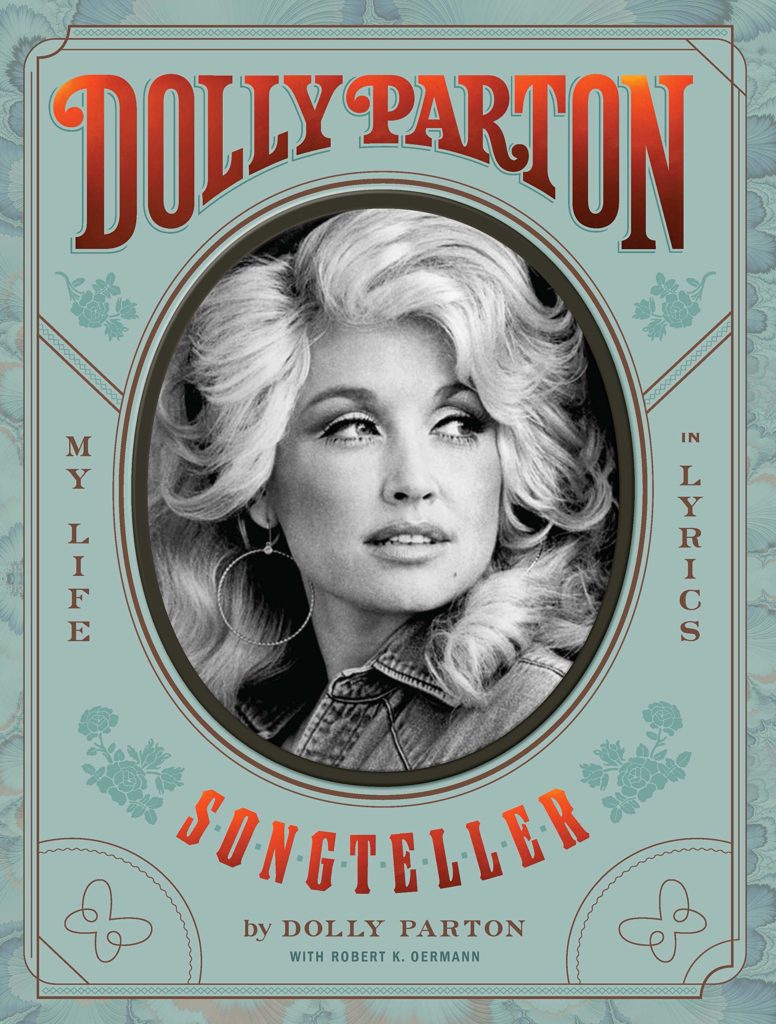
The book cover is a pale aqua with red writing; it also has some decorative floral elements in a darker aqua around the central oval. In the central oval there is a black-and-white photograph of a young Dolly Parton. She is a white woman with big loosely curled blond hair, large hoop earrings, and a denim shirt. She is looking over her shoulder.
The cover of Dolly Parton’s Songteller.

Dolly Parton needs no introduction, but just in case you don’t know her and her work well, here are the basics: Born in East Tennessee, Parton began singing and performing at an early age, taking her talent and determination all the way to Nashville – and beyond. She is the most honored and revered female country singer-songwriter of all time, with numerous awards, bestselling albums, and Top 10 hits. She has also acted to great acclaim, and she is well-known for her charity work, most especially her Imagination Library, which has gifted over 130 million books to children across the world. Journalist Robert K. Oermann has been called “the unofficial historian of Nashville’s musical heritage.” When he first came to Nashville, he worked as a reference librarian at the Country Music Hall of Fame; since then he has written nine books, worked on documentary films, and produced pieces for numerous media outlets including The Tennessean, Rolling Stone, and Esquire.

This photograph shows an older white man wearing a dark flue denim button-down shirt over a tee. He has black-rimmed glasses and white thinning hair. He is sitting in a burgandy/brown patterned chair with bookshelves/record shelves and other home decor behind him.
Author Robert K. Oermann. Taken by Larry McCormack for The Tennessean

Please make plans to join us on Thursday, December 23at 12:00pm for the discussion of Songteller: My Life in Lyrics by Dolly Parton with Robert K. Oermann. After our discussion, we’ll have the chance to chat to Oermann about his work with Dolly on this wonderful book. The book is available at the Bristol Public Library, so be sure to pick up a copy and read it ahead of time – even better, pick up a physical copy and look at it while listening to the audiobook version, thus getting the best of both worlds! We look forward to exploring this book on-air, and if you have thoughts or questions about the book that you would like to share with our readers, you can email info@birthplaceofcountrymusic.org (Subject line: Radio Bristol Book Club) – your book insights might appear on air with us! You can find us on the dial at 100.1 FM, streaming live on Radio Bristol, or via the Radio Bristol app.

Looking ahead: Our book pick for January is Storming Heaven by Denise Giardina; we’ll be discussing it on Thursday, January 27. Check out our full list of 2022 Radio Bristol Book Club picks here, where you can also listen to archived shows!

Rene Rodgers is Head Curator of the Birthplace of Country Music Museum and a Dolly fan.

The Root of It: George Jackson on Ed Haley

Radio Bristol is excited to share “The Root of It,” a series connecting today’s influential musicians to often lesser known and sometimes obscure musicians of the early commercial recording era. The sounds and musicians we hear today on platforms like Radio Bristol can often be traced back to the sounds of earlier generations. What better way to discover these connections than to talk to the musicians themselves about some of the artists that have been integral in shaping their music? These influences, though generally not household names, continue to inspire those who dig deep to listen through the scratches and noise of old 78s, field recordings, and more, finding nuances and surprises that inevitably lead them on their own unique musical journeys.

For this installment of “The Root of It,” we spoke with Nashville-based fiddler George Jackson. Born in New Zealand, George discovered bluegrass music at 14 years old and began learning mostly from recordings. He took to string band music quickly and soon after won the Australian National Bluegrass Championship on fiddle three times; he now pursues a professional career here in Tennessee. With two award-winning albums under his belt – 2019’s Time and Place and the recently released Hair and Hide – Jackson has made quite an impact in the bluegrass, old-time, and folk world as a composer, nuanced musician, and band leader. George spoke to us about celebrated West Virginian fiddler Ed Haley.

George Jackson featuring Brad Kolodner performing “Neighbor Mike” off of his latest release Hair and Hide.

George Jackson:

As someone who was born on the other side of the world from where country music comes from – and whose journey through it started as a teen listening only to what I had exposure to around me, mostly just music from Béla Fleck and a few other relatively modern and flash bluegrass pickers – it’s been a continual journey of discovery for me. Throughout, I’ve been diving deeper and further back generation by generation into the history of early American country recording artists, learning where sounds I’m familiar with in modern recordings and players might have originated, or filtered down from, piecing together the lineage though my own experiences playing and learning this music from its practitioners. Ed Haley is a player that brought a lot of threads together for me when I discovered his music and playing, but of course his influence on me had been longer than I knew. Haley is a continual source of inspiration for fiddlers, and though I didn’t know it at the time, his influence on my playing started right back when I started learning American fiddle music, at the age of around 14 in my home land of New Zealand.

I’ve been aware of, and directly impacted by Haley’s music for a good number of years now, but before I knew his playing or even his name, I can trace some early influences that filtered down to me in my teen years. Haley’s virtuosic playing, tune writing, and iconic versions of fiddle tunes are a strong source of influence on subsequent generations of fiddlers in West Virginia and Kentucky where Haley was based, and much further afield spread by the home recordings he made that were later released – these filtered down through the likes of John Hartford into the bluegrass music scene until it reached me in New Zealand many years later. By the time it reached me of course, it had been through many hands and ears, but I can recognize certain Haley-influenced turns of phrase or stylistic details from the way I first learned to play tunes like “Forked Deer.”

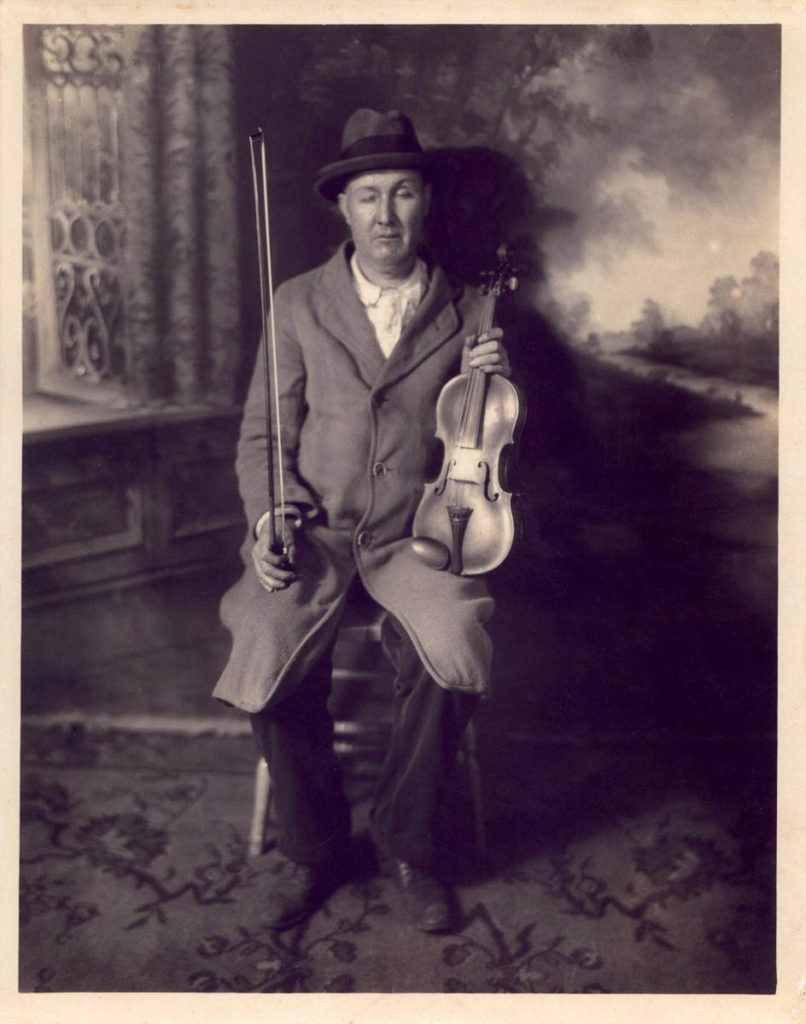
This black-and-white image shows Ed Haley sitting in what looks to be a formalized portrait setting for a photographer. There is a painted landscape behind him and a patterned rug at his feet. He is a white man with partly closed eyes; he wears a dark fedora, a white button-down shirt, dark pants, and a lighter overcoat, buttoned-up. He is holding a fiddle and bow in his hands.
Blind from the age of three, fiddler Ed Haley influenced countless musicians including Clark Kessinger, John Hartford, and our guest blogger George Jackson.  Ed Haley seated with fiddle. Photo from West Virginia Music Hall of Fame

By the time I became aware of old-time music specifically, I was closer to my 20s, and as with most people who aren’t brought up in the geographic regions where this music is from or is being played regularly, my first exposure was to modern players and traveling old-time music gateway musicians such as Bruce Molsky. It’s at this point I get that next step closer to Haley’s music, because if his influence is now written into bluegrass fiddling DNA, its inescapable through the playing of almost all modern players of old-time fiddle. There are so many tunes I knew through jam sessions, concerts, and CDs that are Ed Haley specials – I knew this music and its spirit before I knew who to attribute them to specifically.

At a certain point, as happens with most of the music I’m exposed to, I wanted to hear it from the source, so I remember a day when the curiosity got the best of me and I’d heard the name Ed Haley one too many times. And so I finally got around to looking up Haley’s fiddling and listening through the static of some of his home recordings to the wonderfully virtuosic and melodic playing, along with its multiple variations that are his signature. All these threads of my musical journey started to come together, I’d recognize tunes from bluegrass jams amd recordings of modern old-time or bluegrass fiddlers, and I started to hear the root of many influences on my own playing looking back at me. It’s an amazing thing to be able to listen to music made almost a hundred years ago and, in a moment, see how far that sound has traveled, changed, and also stayed the same.

I’ve recorded a few tunes I learned directly from Haley’s playing recently, and when I learn these tunes they feel natural – I recognize the patterns under my fingers. Though playing an Ed Haley tune is never easy, there are always some finger buster moments that make you stop and think, “Boy, this guy was good!” On my new album, there’s a rendition of Haley’s “Ida Red” that’s a total burner of a tune. The first phrase still trips me up if I’m not concentrating, those micro-movements of multiple pinky finger notes on the E string are something else. It doesn’t get much better than Ed Haley, and I’ll be learning things from him for a long time yet, I’m sure.

Ed Haley’s squirrely rendition of “Ida Red.”

To learn more about George Jackson or to purchase his new album Hair and Hide, visit georgejacksonmusic.com. Released in November 2021, Hair and Hide is an exploration of fiddle and banjo through 14 songs featuring some of the finest players of their generation, including appearances from Jake Blount, Frank Evans, BB Bowness, and more.

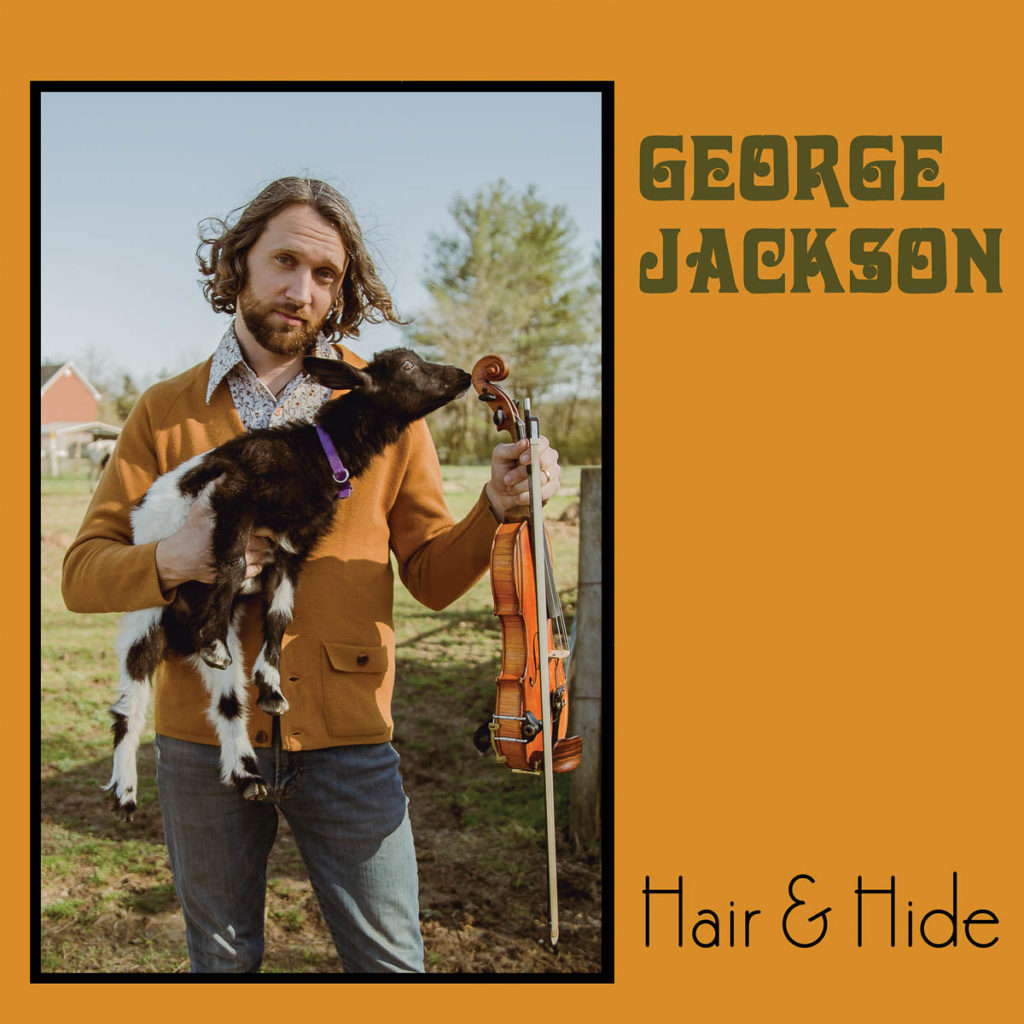
The cover image shows George Jackson standing in a pasture with a barn or farmhouse behind him. He is a white man with slightly longer wavy hair and a beard. He is wearing a white patterned button-down shirt with a brown or ochre-colored cardigan and jeans. He holds a small black and white goat in one hand and a fiddle in the other.
George Jackson’s critically acclaimed release Hair and Hide debuted on the Billboard Bluegrass Charts in mid-November.

Kris Truelsen is the Radio Bristol Program Director. He also performs in the band Bill and the Belles.

Radio Bristol Spotlight: Ed Snodderly

Radio Bristol is proud to offer a platform to local and regional artists, artists who are often underrepresented on a national level yet deserving of that audience. In expanding upon Radio Bristol’s core mission, we are pleased to bring you our Radio Bristol Spotlight series. Radio Bristol Spotlight highlights the top emerging artists in our region. Through interviews and performance, we will learn more about the musicians who help to make Central Appalachia one of the richest and most unique musical landscapes in the world.

Not too long ago we were able to host a well-known local fixture of the Tri-Cities music scene for an interview and live performance: Ed Snodderly, singer-songwriter, professor, venue owner, and live music devotee.

Black-and-white photograph of Ed Snodderly. He is an older white man who wears glasses, a white button-down shirt, and a jean jacket. He is looking up and off to his right. His hair is quite messy and fluffy.
Ed Snodderly is country music outside the box.  Photo credit by Selena Harmon

Folks around the area most likely have heard about The Down Home, the long-running music venue Ed helped found with Joe “Tank” Leach in 1976. The wooden-walled, listening room-focused locale has become legendary for the quality of its musical acts and for the intimacy of the performance space. Famed for hosting major artists such as Old Crow Medicine Show, Townes Van Zandt, and Allison Krauss way before their music became a part of the growing Americana music canon, The Down Home has provided a communal space for experiencing music with a profound dedication to artistry.

Maybe you also recognize Ed’s face from his cameo performance as the “Hillbilly Fiddler” in the movie O Brother Where Art Thou. You may also have seen him running sound during an Open Hoot, or even performing in local community theatre.

If you hang around Johnson City, you may have also caught Ed walking across the ETSU campus, where he teaches songwriting. He is adept at encouraging first-time writers to hotwire their minds and put up their “antennas” to find where an attention-grabbing first line might be hiding in the everyday. This is how I first met Ed via a workshop hosted by the Birthplace of Country Music. His approach to making songs has really influenced me – a lot of his focus hones in on connecting experience to place and allowing the writer to explore “what they know” instead of relying on popular musical tropes.

Ed may wear many hats, but he is first and foremost an amazing songwriter. Indeed, his name is etched beside lyrics from his song “The Diamond Stream” on the walls of the Country Music Hall of Fame. He has released several albums as a solo musician and with his singing partner Eugene Wolf in their duo The Brother Boys, and and currently has new albums in the works in both of these roles, due out later this year and early spring of next year.

Inspired by the extra time during the pandemic, Ed talked to us about the considerable amount of new material he’s written recently, shared a few of his well-crafted songs, and also spoke about his musical journey. Donning a hip pair of rimmed glasses and a country boy swagger, Ed welcomed us into his musical landscape with an endearing East Tennessee drawl. He started off with a nostalgic tune, called “Kiss the Dream Girl,” which recounts a downtown that was once bustling. A steady rhythmic guitar line walks through the verses like someone strolling down an empty street; the “dream girl” acts as a metaphor for those still remembering in the lost spirit of a small town. This song was featured on the Brother Boys record Plow released by Sugar Hill Records in 2006, and you can listen to a recording of it here:

Growing up in the Morristown area near Knoxville, Tennessee, Ed was taught basic chords on an unbranded guitar bought by his father and uncle with money scrounged from farming tobacco. He was encouraged at an early age by his musical family – his grandfather was a fiddler, and his uncle played pedal steel professionally for big-time artists such as Loretta Lynn and Jerry Lee Lewis. With that background, Ed became fascinated with music. He also liked to learn songs by ear, slowing down 33 1/3 records while figuring out how to play the songs himself, and he reveled in the folk music revival that was gaining ground during his childhood. Ed says he’s drawn influence from a wide variety of artists, including Riley Puckett, Guy Clark, and The Beatles – from these, he has pieced together a guitar style that feels extremely unique and captivatingly organic. Part old-timey fingerpicking and part contemporary folk songwriter groove, his guitar licks seem to always be pushing songs rhythmically towards their destination. Ed’s style is both reverent to tradition, while also being totally unafraid to shift itself into another genre, all masterfully cobbled together to best serve the song at hand.

After his first number, Ed shared another original called, “Slow My Girl Around.” which felt like it could be inspired by an old fiddle tune, possibly “Fly Around My Pretty Little Miss.” Its lilting melody hops around his distinctive guitar playing, which guides each note towards the chorus. The lyrics again were tinged with nostalgia, but this time explored modernity’s dependence on technology. Lines like “Your eyes are addicted to the little box screen” and “Where all is quiet and there’s no hum, trying to get back to what we got away from” make it clear that the songwriter is searching for a more genuine existence, unfettered by the mechanics of contemporary life. When asked about his songwriting, Ed replied simply “I write about what I know; I always try to remember what the country smells like.” His dedication to straightforwardly writing about experiences while poetically uncovering personal truths leads to songs that are as thought-provoking as they are familiar and that use easy going off-the-cuff language to describe ego-splitting revelations.  

The third song Ed played during his on-air performance – “Love Song in a Low Key” – felt like an expressive anthem to the present moment. The song features driving guitar accompaniment paired with recollections of everyday experiences that effortlessly create joy: pocket watches, a good cup of coffee, the feel of a steering wheel, the sense of “being home and being here.” This song displays stylistic influences from pop and rock music of the 1960s, while still imparting folk-inspired wisdom, and pulls in the listener with a sing-song talking blues-like cadence. Similar to the first two songs, Ed used the subject of romance to talk about larger truths; his approach to utilizing love as a metaphor allows these songs to seem both personal and expansive.     

Ed Snodderly is many things to many people, but his interview made it clear that most of all he is an absolute devotee to live music, valuing the magic of performance, the art of songwriting, and holding reverence for person-to-person interaction. This passion is what led Ed to open The Down Home, and it is the subject of the last song he played for us. Also titled after the music venue, the song comes from 2017’s Record Shop and chronicles the rarity of a creative space like The Down Home, which according to the song is “enough to make you feel every kind of feeling.” Check out Ed’s inspiring live performance in the video below, and keep your eyes peeled for new music from Ed Snodderly and The Brother Boys.

Ella Patrick is a Production Assistant at Radio Bristol. She also hosts Folk Yeah! on Radio Bristol and is a performing musician as Momma Molasses.

Radio Bristol Book Club: Hear My Sad Story: The True Tales That Inspired “Stagolee,” “John Henry,” and Other Traditional American Folk Songs

Welcome to Radio Bristol Book Club where readers from BCM and the Bristol Public Library come together each month to celebrate and explore books inspired by our region’s rich Appalachian cultural and musical heritage! We invite you to read along and then listen to Radio Bristol on the fourth Thursday of each month at 12:00 noon when we dig deep into the themes and questions raised by the books, learn more about the authors, and celebrate the joys of being a bookworm!

The November book club book is Hear My Sad Story: The True Tales That Inspired “Stagolee,” “John Henry,” and Other Traditional American Folk Songs by historian and author Richard Polenberg. In this book, Polenberg lays out the real historical events that led to the creation of many famous folk songs. The songs in the book are ballads – narrative songs that focus primarily on an individual but also groups, events, or institutions. In this case, they mostly took place in North Carolina, West Virginia, and Missouri though other states appear in the book, including Tennessee, Virginia, Georgia, Kentucky, Alabama, Mississippi, and Louisiana.

Folk songs have many versions, and Polenberg follows that history by examining various versions of the songs in this book. Over time, verses may have been dropped, added, or modified in some way to better suit the musician or audience. However, even though the songs – and sometimes even the melody – have changed, their fundamental message did not. This core message and the circumstances surrounding the song’s creation are where Polenberg has chosen to focus. He dives right to the root of each song and unveils the real events and surrounding social issues that inspired such entrancing music.

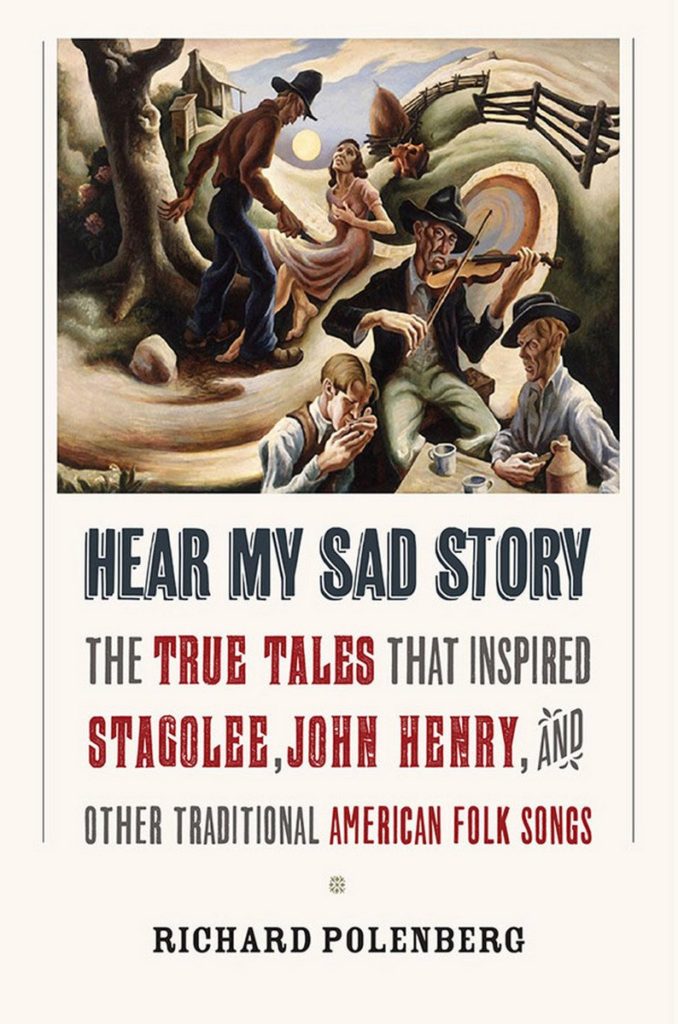
The cover of Hear My Sad Story has a painting of various scenes from the songs featured in the book in its top half. These include a man with a knife standing over a woman on the ground in front of him; an old house on a hill; a tree with a flowering bush behind it; a winding road; and three musicians - a harmonica player, a fiddler, and possibly a jug player (or drinker) sitting at a table, playing their instruments. The title and author are below the cover illustration.

As a professor of American history at Cornell University for 45 years, Polenberg taught a generation of students. He was distinguished with several teaching awards throughout his career and was recognized as one of the most popular professors on campus. He also published many books that helped draw attention to often obscure corners of America’s political and legal development. He received awards and praise for several of his books, including Fighting Faiths: The Abrams Case, the Supreme Court, and Free Speech (1987), which won the American Bar Association’s Silver Gavel Award. Several of his other books, such as The Era of Franklin D. Roosevelt, 1933–1945 (2000), War and Society: The United States, 1941–1945 (1972), and One Nation Divisible: Class, Race, and Ethnicity in the United States since 1938 (1980) are often used in college classrooms.

After his retirement, Polenberg spent more time on his passion for blues and folk music, eventually publishing Hear My Sad Story, his final book. Hear My Sad Story combined his interest in music with his extensive knowledge of the American legal system in the 19th and 20th centuries. The songs are all carefully chosen to reflect the social history of the times in which they were originally written. 

In this image, an older white man with white hair stands in a lecture theater near a podium. He is wearing a grey suit jacket, a royal blue shirt, and a colorful tie; he also wears glasses.
Richard Polenberg at the end of his final lecture at Cornell.
Cornell University File Photo

Hear My Sad Story is organized by key themes within the music – St. Louis, lying cold on the ground, bold highwaymen and outlaws, railroads, workers, disasters, and martyrs – and is a delightful example of how music can be a window into history. Many of the individuals in these tales find themselves in legal trouble – sometimes they deserved it, sometimes the system failed to work for them because they were poor, women, African American, or immigrants. 

Though the lyrics may be romanticized or exaggerated, the true tales behind these classic songs all stem from tragic truths. Truths that often involve murder, love affairs gone wrong, desperate acts born out of poverty or unbearable working conditions, natural disasters, and calamities such as shipwrecks and railroad crashes. These ballads contain the stories of real people who experienced fear, love, loss, and hope. The songs that were born from their stories will help to ensure they are never forgotten. 

Please make plans to join us on Thursday, November 18 at 12:00pm for the discussion of Hear My Sad Story: The True Tales That Inspired “Stagolee,” “John Henry,” and Other Traditional American Folk Songs by Richard Polenberg. You can find us on the dial at 100.1 FM, streaming live on Radio Bristol, or via the Radio Bristol app. The book is available at the Bristol Public Library, so be sure to pick up a copy and read it ahead of time. The librarians will be happy to help you find the book. We look forward to exploring this book on-air, and if you have thoughts or questions about the book that you would like to share with our readers, you can email info@birthplaceofcountrymusic.org (Subject line: Radio Bristol Book Club) – your book insights might appear on air with us!

Looking ahead: Our book pick for December is Songteller: My Life in Lyrics by Dolly Parton w/ Robert K. Oermann; we’ll be discussing it on Thursday, December 23. Check out our full list of 2022 Radio Bristol Book Club picks here, where you can also listen to archived shows!

* Erika Barker is the Curatorial Manager at the Birthplace of Country Music Museum.