Welcome to Radio Bristol Book Club where readers from BCM and the Bristol Public Library come together each month to celebrate and explore books inspired by our region’s rich Appalachian cultural and musical heritage! We invite you to read along and then listen to Radio Bristol on the fourth Thursday of each month at 12:00 noon when we dig deep into the themes and questions raised by the books, learn more about the authors, and celebrate the joys of being a bookworm!
Cultural historian Karl Hagstrom Miller’s first book, Segregating Sound: Inventing Folk and Pop Music in the Age of Jim Crow, combines cultural, economic, and intellectual history to chart the development of a segregated commercial music industry in the early 20th century. Segregating Sound examines popular music in the United States through the intersections of race, gender, sound, and money. A musical color line, corresponding to the physical color line of southern segregation, emerged as both commercial record companies and academic folklorists scoured the south for new songs and categorized them according to the racial ideologies of the day. This book gives readers a more nuanced understanding of the making of musical genres and the impact on these delineations on the music industry. After its publication in 2010, Segregating Sound received the Woody Guthrie Award for the best annual book on popular music from the International Association for the Study of Popular Music.
Dr. Karl Hagstrom Miller is an Associate Professor in the Department of Music at the University of Virginia, focusing on Critical and Comparative Studies. He received a Ph.D. in history from New York University and has received fellowships from the Smithsonian Institute and the American Council of Learned Societies. His writing on various pop music topics has appeared in Wax Poetics, Texas Observer, American Music, American Historical Review, and PopMatters, among other venues. Miller is particularly interested in how transformations in commercial markets and music technology changed the ways people used music to forge their conceptions of race and region, imagine their relationship to the broader world, comprehend the past, and dream about the future.
Please make plans to join us on Thursday, October 27 at 12:00pm for the discussion of Segregating Sound: Inventing Folk and Pop Music in the Age of Jim Crow. You can find us on the dial at 100.1 FM, streaming live on Radio Bristol, or via the Radio Bristol app. The book is available at the Bristol Public Library, so be sure to pick up a copy and read it ahead of time. The librarians will be happy to help you find the book. We look forward to exploring this book on-air, and if you have thoughts or questions about the book that you would like to share with our readers, you can email info@birthplaceofcountrymusic.org (Subject line: Radio Bristol Book Club) – your book insights might appear on air with us!
Looking ahead: Our book pick for November is Voices Worth Listening: Three Women of Appalachia by Thomas Burton; we’ll be discussing it on Thursday, November 17. Check out our full list of 2022 Radio Bristol Book Club picks here, where you can also listen to archived shows! We will also be releasing our 2023 reading list in November!
Tonia Kestner is the Executive Director of the Bristol Public Library.
Radio Bristol is proud to offer a platform to local and regional artists who are often underrepresented on a national level yet deserving of that audience. In expanding upon Radio Bristol’s core mission, we are pleased to bring you our Radio Bristol Spotlight series, which highlights the top emerging artists in our region. Through interviews and performance, we learn more about the musicians who help to make Central Appalachia one of the richest and most unique musical landscapes in the world.
Recently the Radio Bristol studio hosted ETSU Bluegrass, Old-Time, and Country Music Studies graduate Tyler Hughes who hails from beautiful Big Stone Gap, Virginia. Tyler wears many metaphorical hats – some might even call him a modern-day mountain renaissance man – including songwriter, multi-instrumentalist, square dance caller, music teacher, regional music historian, avid gardener, and social justice advocate. During the pandemic, Tyler also worked as a ranger for Southwest Virginia Museum Historical State Parkwhere he booked musical lineups for events such as Gathering in the Gap.
This past summer Tyler played dozens of events at regional venues and recently even performed at The Grand Ole Opry! While in our studio Tyler spoke with “The Old Ranger” – aka DJ Bill Smith – whose radio program, The Crooked Road Radio Hour, focuses on regional music from the 19 counties that comprise Southwest Virginia along the Crooked Road, Virginia’s heritage music trail. The two chatted about Tyler’s upcoming projects, his musical past, and his latest release, When the Light Shines Again, a collection of tunes centered around coal mining.
Tyler Hughesenjoying the natural beauty of a Southwest Virginia field. Photo courtesy of Trevor White
On-air, Tyler’s demeanor felt much like the gracious rolling hills of Southwest Virginia – welcoming, sunny, and wise. Accompanied by a dimpled grin and an open-backed banjo, Tyler began his set with some traditional songs. One of particular note was his rendition of “Davenport,” a tune that is possibly a variant of another old melody called “Last Chance,” originally adapted by Scott Boatright, who was a historically important old-time musician from Fort Blackmore, Virginia. Boatright played throughout the 1920s and 1930s, accompanying well-known musicians such as Dock Boggs, Tom Ashley, “Fiddlin” John Carson, Clarence Greene, and Dudley Vance, as well as with his band, The Boatright String Band. Boatright played anywhere he could – at barber shops, barn dances, coal fields, and theaters.
While listening to Tyler, you can hear musical influence from both Boatright and Dock Boggs, as he employs a unique mixture of clawhammer frailing and three-finger “up-picking” banjo technique. It creates a style that feels extremely distinctive, polished, and organic, like a well-worn river rock – smooth, weighty, and comforting.
Talking about his musical inspiration, Tyler enthusiastically spoke about his experience attending The Mountain Music School camp as a young teenager. The camp is hosted annually at Mountain Empire Community College (MECC) and focuses on keeping traditional Appalachian folk music alive through engaging educational programs. Tyler now works on their faculty as a lead instructor and co-director of the Mountain Music School Stringband. While attending camp, Hughes met Boatwright’s daughter Sue Ella Boatright-Wells, who tirelessly worked to promote the preservation of Appalachian music traditions in Southwest Virginia during her 39-year-long service as the Dean of Workforce Development at MECC. Sue Ella was one of several community members who encouraged Hughes to pursue traditional music, and Tyler expressed extreme admiration for her work and character. Her legacy is something Hughes hopes to champion as a musician and educator. Indeed, in his online bio Tyler states: “I believe that through regional arts, Southwest Virginia can move beyond its current challenges, build a new economy and stronger communities where everyone can reach their full potential” – an inspiring mission statement that encapsulates his current work.
Tyler Hughes’ performance of “Sittin’ on Top of the World” in the Radio Bristol studio.
Tyler has recently returned to playing music full-time after wading through the hardships faced by many working musicians during the pandemic. His downtime was extremely productive, yielding a new album, and he has more original music in the works. His latest release was recorded at the legendary Maggard Sound Studioin Big Stone Gap, Virginia, the same studio that produced Dr. Ralph Stanley’s GRAMMY-winning albums. Tyler’s album When the Light Shines Again is a luminous collection of songs that share a central theme of coal mining. Hughes grew up in the heart of Southwest Virginia’s “Coal Mining Country,” and his Papaw was a miner. The concept for the album was born from conversations the two had about his grandfather’s experiences. Tyler’s interpretations feel purposeful and innate, seamlessly churned with care and bearing an unassuming accuracy that exists only through dedicated practice and deep empathy for ancestral wisdom. The recording features excellent musical performances by several members of the old-time music community throughout the region, including Todd Meade, Haselden Ciaccio, Rich Kirby, Stephanie Jeter, and Sam Gleaves.
Amidst the album’s 11 songs, Tyler maps out the complexities of Southwest Virginia’s relationship with coal through songs that explore the cultural, economic, and environmental impact of mining. A stand-out track, “Coal Miner’s Blues,” was first recorded by The Carter Family in 1938 and was collected by A.P. Carter around Lee County, Virginia in the mining community of St. Charles. The song explores tribulation and veneration of the human spirit with rollicking banjo rhythms and mournful lyrics. As a whole, the album depicts different aspects of the coal miner’s experience with songs that follow a 100-year span telling stories of tragic accidents, hardships of physical labor, and the trials faced by unionized workers. To listen to or purchase the album, visit the link here.
Tyler’s work as a budding forbearer of Appalachian folkways follows many different paths. You can find Tyler pickin’ and grinnin’ while playing an archtop guitar, autoharp, banjo, or dulcimer, solo or with accompaniment. He regularly plays with the Empty Bottle String Band formed by musicians he met when he attended ETSU’s Bluegrass, Old-Time, and Country Music program. Tyler also teaches young musicians in Wise County at the after-school music program Junior Appalachian Musicians (JAM) and is a caller for regional square dances. He learned to call square dances after a group of friends couldn’t find anyone to call a dance for them while in college. Tyler began scouring eBay to find old square dance instructional material and picked local callers’ brains, learning customary dances that were common in the Appalachian Mountains. You can catch all of Tyler’s musical performances and dance callings, or maybe even sign up for banjo lessons, through his website here.
Tyler Hughes’ collection of vintage square dance instructional books. Photo courtesy of Tyler Hughes
Closing out the hour on air, Tyler shared renditions of two Ralph Stanley tunes – “Battle Ax” and “Shout Little Lulie” – with precise clawhammer banjo licks and jaunty singing. Tyler is a regional musician to watch, whose performances offer outstanding musicality and reach into the core of Appalachian life, telling the stories of its people and sharing its rich musical heritage.
Welcome to Radio Bristol Book Club where readers from BCM and the Bristol Public Library come together each month to celebrate and explore books inspired by our region’s rich Appalachian cultural and musical heritage! We invite you to read along and then listen to Radio Bristol on the fourth Thursday of each month at 12:00 noon when we dig deep into the themes and questions raised by the books, learn more about the authors, and celebrate the joys of being a bookworm!
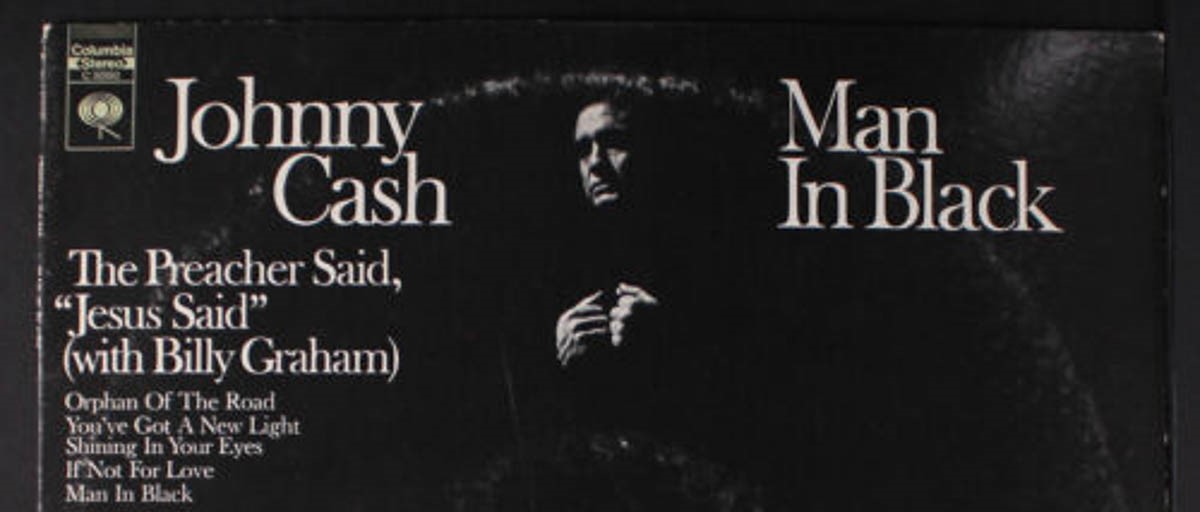
Johnny Cash sold more than 50 million albums over his 40-year career and is the only artist to be inducted into four different Hall of Fames – the Rock and Roll Hall of Fame, the Country Music Hall of Fame, the Songwriters Hall of Fame, and the Gospel Music Hall of Fame. Many biographies have been written about “the Man in Black” but none are quite like The Man in Song. This unique approach to a biography tells the story of Cash’s life through the lens of the music that meant so much to him. By studying the songs Cash wrote or chose to record, John Alexander takes the reader into the mind of the legendary singer and shows how deeply intertwined Cash’s life and music were.
Johnny Cash was a man who prized authenticity in his music, and Alexander demonstrates this as only a music historian can. He leads the reader though a detailed look at how the music and lyrics Cash wrote or recorded throughout his life reflect specific events, people, and memories that tell the story of his life.
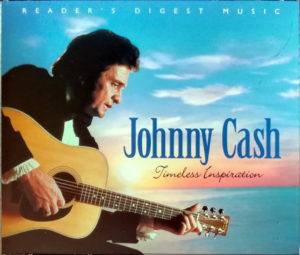
John M. Alexander is a music journalist and a lifelong fan and historian of Johnny Cash. He has a PhD in English from City University Graduate Center in New York and has worked as a professor and was the Senior Music Editor and Producer at Reader’s Digest for 18 years. He is now Senior Editor at the Brooklyn Eagle and has opened his own Alexander Records where he focuses on creating timeless compilations. He has created almost 400 CD box sets throughout his career. In 1977, he compiled Cash’s greatest gospel songs into a 3-CD box set collection called Johnny Cash Timeless Inspiration that prompted Cash to pen a personal note expressing his gratitude, saying “This is an album that has always been my dream project…I am eternally grateful that someone like yourself could share this love with me and put it out there for people to hear.” This note and the work on that collection led to a relationship and four more Johnny Cash box sets.
Please make plans to join us on Thursday, September 22 at 12:00pm for the discussion of The Man in Song: A Discographic Biography of Johnny Cash. You can find us on the dial at 100.1 FM, streaming live on Radio Bristol, or via the Radio Bristol app. The book is available at the Bristol Public Library, so be sure to pick up a copy and read it ahead of time. The librarians will be happy to help you find the book. We look forward to exploring this book on-air, and if you have thoughts or questions about the book that you would like to share with our readers, you can email info@birthplaceofcountrymusic.org (Subject line: Radio Bristol Book Club) – your book insights might appear on air with us!
Looking ahead: Our book pick for October is Segregating Sound: Inventing Folk and Pop Music in the Age of Jim Crow by Karl Hagstrom Miller; we’ll be discussing it on Thursday, October 27. Check out our full list of 2022 Radio Bristol Book Club picks here, where you can also listen to archived shows!
* Be sure to check out the current special exhibit at the Birthplace of Country Music Museum – 1968: A Folsom Redemption – to learn more about Johnny Cash and his music. It is on display through October 20, 2022.
Erika Barker is Curatorial Manager at the Birthplace of Country Music Museum and an avid reader.
Welcome to Radio Bristol Book Club where readers from the Birthplace of Country Music Museum and the Bristol Public Library come together each month to celebrate and explore books inspired by our region’s rich Appalachian cultural and musical heritage! We invite you to read along and then listen to Radio Bristol on the fourth Thursday of each month at 12:00 noon when we dig deep into the themes and questions raised by the books, learn more about the authors, and celebrate the joys of being a bookworm!
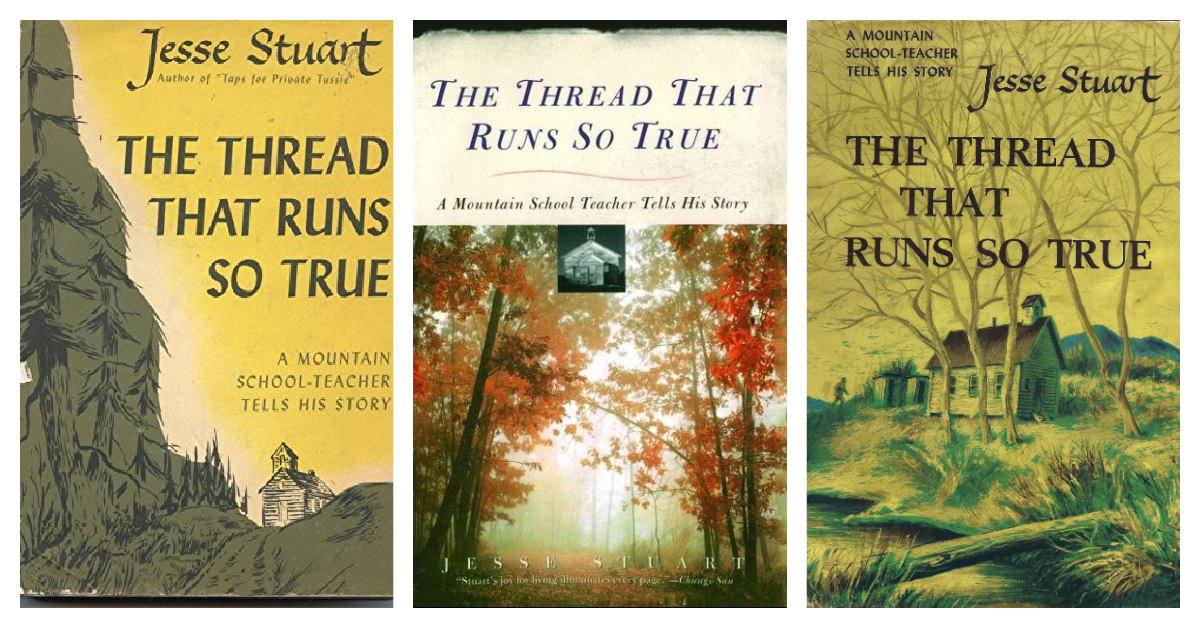
This month we are reading The Thread That Runs So True by Jesse Stuart. This book tells the story of Stuart’s life told in six sections or parts. Among these parts are several stories that define Stuart’s career as a Kentucky Mountain school teacher. Conversational in tone, you soon forget the book is autobiographical because the characters come alive in the richness of their speech and personalities. The book’s title and chapter headings were taken from a folk song children would sing at Lonesome Valley School. At 17, after only three years of high school, Stuart began his teaching career in a one-room rural school. Stuart does not allow himself to come between the reader and the community he describes because he functions as a guide to the experiences of his community. Stuart’s disguise of the people and places within the book give the stories artistic freedom. This book will make you grateful for the teachers you had growing up who influenced your life.
Jesse Stuart was born in a log cabin in Greenup County, Kentucky, in 1906. He was the first in his family to finish high school, graduating from Greenup High school in 1926, and he worked his way through Lincoln Memorial University in Harrogate, Tennessee, from which he graduated in 1929. While at Lincoln Memorial, he studied under Harry Harrison Kroll, a well-known novelist and one of Stuart’s greatest influences. Stuart returned to Eastern Kentucky and, after two years of public school teaching and administrative service, he decided to enroll in graduate school at Vanderbilt University. He pursued, but did not complete, a Master of Arts degree in English.
Stuart married Naomi Deane Norris in 1939, and they settled on his ancestral land in W Hollow. They had one daughter named Jessica Jane who became an accomplished novelist and poet. Stuart was a remarkable and original writer becoming an accomplished poet, short story writer, novelist, and essayist by the time he was in his 40s. He received the 1934 Jeannette Sewal Davis poetry prize for his first major book of poetry, Man with the Bull-Tounged Plow (1934), which included 703 sonnets, many mimicking the style of great Scottish poet Robert Burns. The book was described by the Irish poet George William Russell as the greatest work of poetry to come out of America since Walt Whitman published Leaves of Grass. He was the recipient of many awards, among them a Guggenheim Fellowship (1937), the Academy of Arts and Sciences award, the Berea College Centennial award for literature, the Academy of American Poets award, and several honorary degrees. He died in 1984 in Ironton, Ohio, and is buried in the Plum Grove cemetery near W Hollow.
Author Jesse Stuart
Please make plans to join us on Thursday, August 25 at 12:00pm for the discussion of The Thread That Runs So True by Jesse Stuart. You can find us on the dial at 100.1 FM, streaming live on Radio Bristol, or via the Radio Bristol app. The book is available at the Bristol Public Library, so be sure to pick up a copy and read it ahead of time. The librarians will be happy to help you find the book. We look forward to exploring this book on-air, and if you have thoughts or questions about the book that you would like to share with our readers, you can email info@birthplaceofcountrymusic.org (Subject line: Radio Bristol Book Club) – your book insights might appear on air with us!
Looking ahead: Our book pick for September is The Man in Song: A Discographic Biography of Johnny Cash by John Alexander, a book chosen to go along with our upcoming special exhibit 1968: A Folsom Redemption about Johnny Cash’s concerts at Folsom Prison. We’ll be discussing this interesting book on Thursday, September 22. Check out our full list of 2022 Radio Bristol Book Club picks HERE, where you can also listen to archived shows!
Tonia Kestner is the Executive Director at the Bristol Public Library.