Music & Songs Archives - Page 4 of 30 - The Birthplace of Country Music
Listen
Play
Loading station info...

A Conversation with CALT Fellow Pierceton Hobbs

Pierceton Hobbs is a SWVA musician and recipient of the Greater Bristol Folk Arts & Culture Team’s Central Appalachia Living Traditions (CALT) Tradition Bearer Fellowship in 2022-23. This fellowship provides financial support, professional development, and public presentation opportunities for people working in traditional or folk arts and culture.


Tell us all about your CALT Tradition Bearer project

I was very honored to be rewarded the CALT Tradition Bearer Fellowship Grant to support my work as a teaching and recording artist.  I used my funds to acquire necessary equipment to practice my art as well as finish a recording project of original music.  

How has the grant impacted your craft and your ability to do this work?

Without this grant, I wouldn’t have been able to complete my album.  It has been a work in progress since 2022 because of funding issues. I started with an expansive vision and beautiful friends who own a basement studio. They graciously lent their knowledge and expertise in laying down the bones with me.  With help from the CALT Tradition Bearer Fellowship Grant, I have finally completed all production and the project is in post-production with a release date set for August 31! 

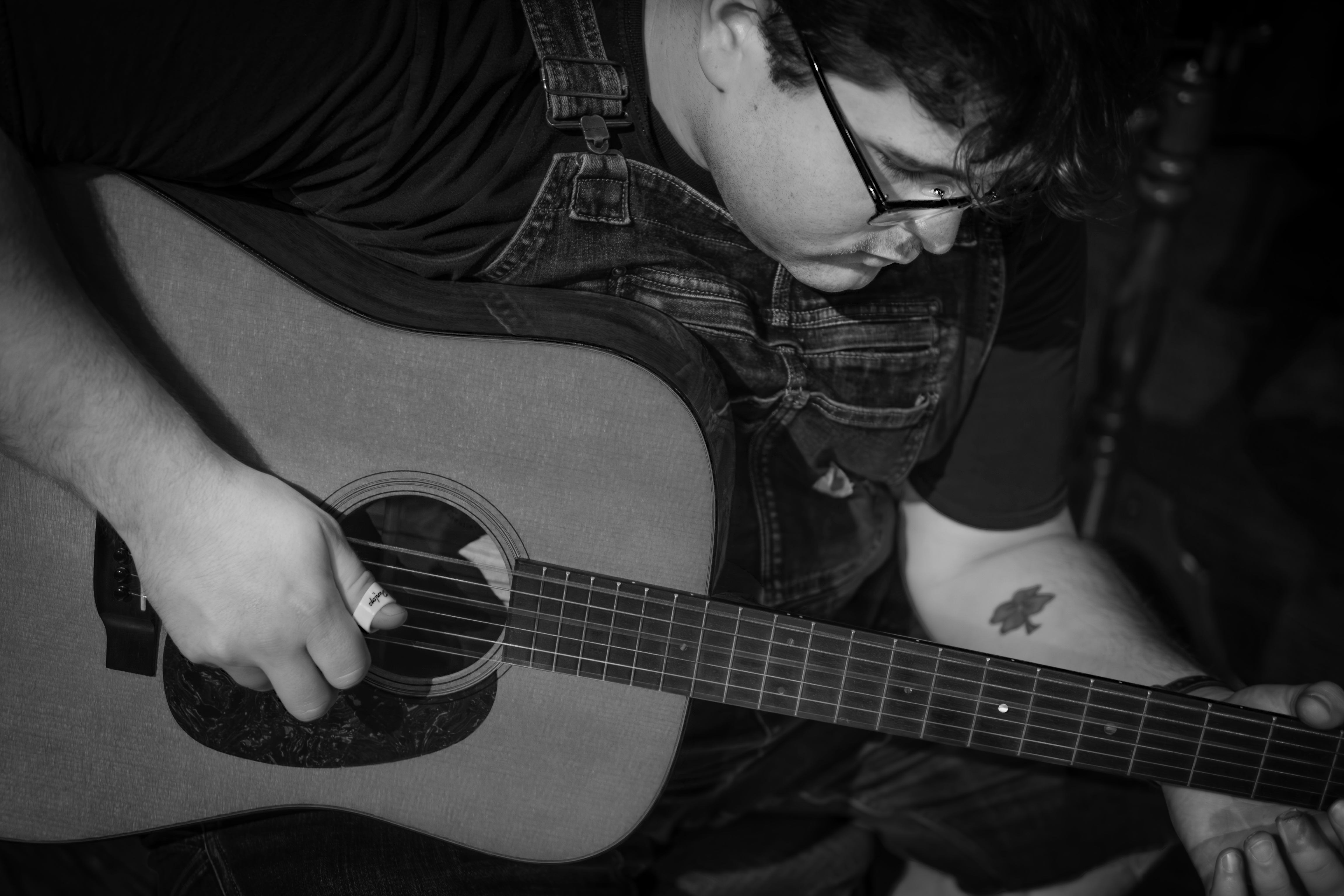
White man with backwards ballcap, glasses, and overalls sitting in front of a mic stand. A guitar sits on his lap and he is smiling and resting his head on one arm propped on the guitar.
Image courtesy of Pierceton Hobbs.

Who are your biggest inspirations for your artistic and creative work and music making? 

This is a loaded question, aha! There are so many beautiful people who have either mentored me in some way or helped me come into my own. Apologies in advance if I miss anybody:  

Folks: 

Tyler Hughes, Sam Gleaves, Thomas Cassell, Will Cassell, Kenny Miles, Hayden Miles, Linda Jean Stokely, Montana Hobbs, Larah Helayne, Don Rogers, Jesse Wells, Matthew Carter, Don Rogers, Mitchella Phipps, John Haywood, Rich Kirby, Senora May, Corbin Hayslett, Chris Rose, Anna Mullins, Ron Short, W.V. Hill, A.K. Mullins, Jimmy Mullins, Ron Kennedy…

Performers: 

Circus No. 9, Wayne Graham, The Local Honeys, Foddershock, Sparklehorse, 49 Winchester, Geonovah, The Empty Bottle String Band, The Foodstamps, Kaleb N.F.I., Amythyst Kiah, The Stanley Brothers, Jim & Jesse, The Carter Family… 


Why do you think your work is important to preserving and sharing Appalachian Folkways?

I consider myself a community-based artist.  Every faucet of the work I partake in contributes to capacity building in a resource-deprived area. We have to build the supportive artist community we want to see together! 

As a tradition-bearer, I also pass along tunes I have learned (and continue to learn) to students in the local Junior Appalachian Musicians program.  
A white man sits playing a guitar in front of a mic on a stage with a quilted backdrop.
Image courtesy of Pierceton Hobbs.

You are an Appalachian artist, a musician, songwriter and storyteller. Tell us what these roles mean to you.

The most astounding thing for me is the tendency of Appalachian artists to stick together like burrs in the wilderness fighting to land somewhere fertile to grow…no matter the genre or level of experience there is support to be had out there. 

Songwriting has always proved important in highlighting disparities everywhere, especially here. For me, it’s about comfort. I spill words to get things off my chest, hairy or otherwise. I write and arrange in the context as if I were a spectator or fan looking for something comforting to listen to whether that be happy, mad, melancholy, sad, or silly – it’s all related to human emotion. I try to make music that I want to listen to.  

Stories from Appalachia are fluid and ever-changing.  I love folktales and carry a few with me but emerging stories are my favorite. I think we’re putting away trauma and collectively lifting each other up…not “by the bootstraps” but with open arms.   

Your music tells the honest and true stories of life in Appalachia, be it an original composition or your rendition of a traditional song. What do you want people to take away from hearing these stories and experiences?

I tend to hope listeners have an open mind.  

Interpretations of meanings are just as diverse as the experiences we have in life.  

A white man in a baseball cap and overalls playing a guitar while singing.
Image courtesy of Pierceton Hobbs.

You also teach students music, tell us about the rewards of this experience

My students are a blessing! I feel as though they teach me more about the world around me than all of the world’s wisdom combined.  

It feels especially rewarding when I show them the basics on any number of instruments and they take flight on their own! When I see that creative spark flare, I think I’ve done what I’m supposed to do. 

What is the most difficult thing about being a musician in the Appalachian region? What is the easiest? What do you like most about it?

It’s hard for me to share anything easy about being an artist here. As we talked about earlier, Appalachian artists are very supportive of each other and it’s a beautiful thing. With that being said, there are still so many limiting factors for artists in the region including but not limited to a lack of creative spaces, funding, healthcare, resources, services, transportation, and venues. This subdues our ability to thrive!  

A white man with glasses and a jean jacket is singing into a mic and holding a guitar.
Image courtesy of Pierceton Hobbs.

Pierceton, is a hotdog a sandwich?

NO! A HOTDOG IS A STAPLE MEAL STEAMING WITH SUSTENANCE AND COMFORTING WARMTH! ESPECIALLY WITH CHILLI! 

What projects are you currently working on/ and or what’s next for Pierceton Hobbs You could mention any upcoming craft shows this summer, workshops etc.

2024 is a busy and exciting year for me! This summer, I’ll be assisting teachers instructing traditional music at Cowan Creek Mountain Music School the last week in June.  This summer, I’ll be performing and releasing singles in anticipation for an album release on August 31! My first show after the release will be at Bristol Rhythm and Roots Reunion on September 15th!  

Folks can keep up with my artistic endeavors by visiting piercetonhobbs.com or on social media (links are accessible on my website). 
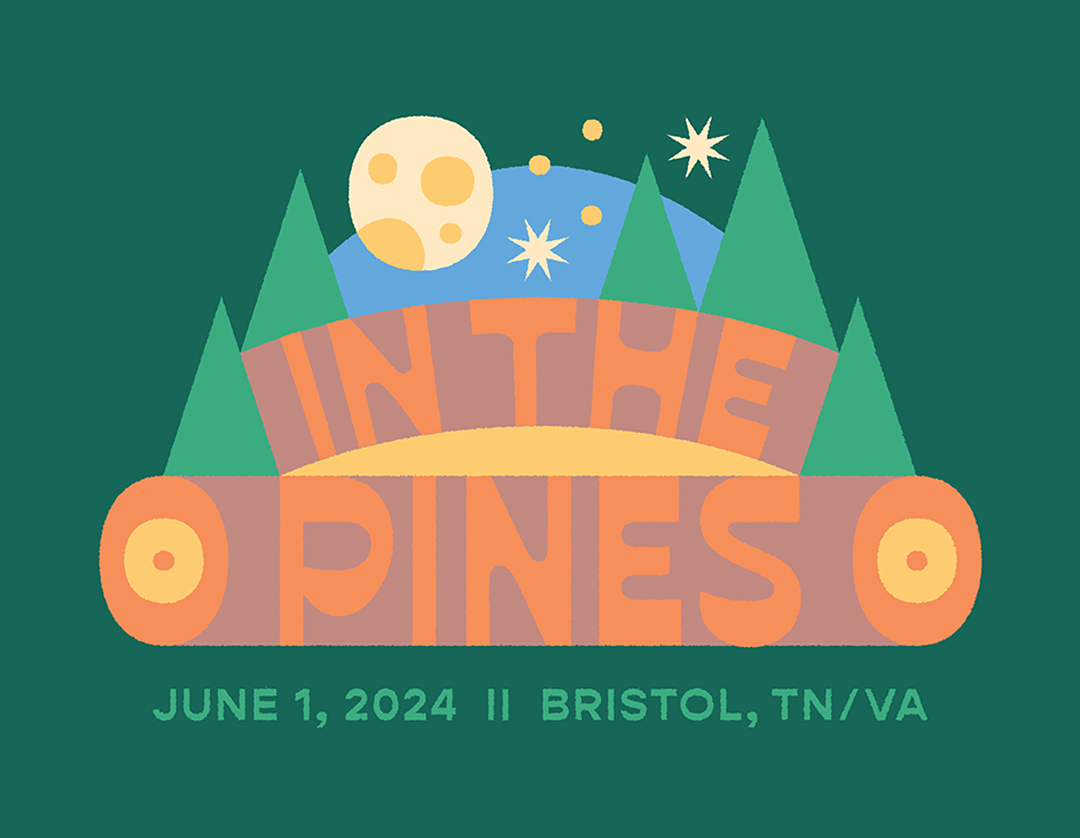


Karma Chameleon: The Ever-Changing Muse of “In the Pines”

In February Birthplace of Country Music announced In the Pines, a new music experience coming to Historic Downtown Bristol, TN-VA June 1. Dwight Yoakam, Elle King, Paul Cauthen, and Wyatt Flores are slated to perform at the inaugural event, but the inspiration for the concert goes much deeper than the artists who will take the stage that day.  It is a celebration of Bristol’s music legacy, bridging the traditions of the past with the innovation of the present.

In the Pines takes its name from a song recorded for the 1927 Bristol Sessions by the Tenneva Ramblers called “The Longest Train I Ever Saw.” From its origins of Southern Appalachia in the 1870s, “In the Pines” emerges as both a muse and a chameleon, seamlessly adapting its melody and lyrical essence to the unique styles and interpretations of every artist who dares to unravel its enigmatic allure. The song is believed to have been the combination of two songs, “In the Pines” and “The Longest Train;” the writer is unknown. It has been recorded under many titles over the years, with some artists adding their own lyrics.

“In the Pines” and all of its adaptations serve as a metaphor for Bristol’s creative music scene, which draws inspiration from the roots of Appalachia yet continuously evolves into new territory and genres. Below are a few interesting examples of the versatile tune that continues to shape-shift over time:

In 1923, King Oliver‘s Creole Jazz Band released a version for Okeh records entitled “Where Did You Stay Last Night” as a B-side for “Dipper Mouth Blues.” Louis Armstrong and his wife Lil Hardin Armstrong, both members of Oliver’s band before Armstrong left the group to pursue a solo career, are listed as composers of the track. This jazz instrumental stands out in sharp contrast to numerous other versions, showcasing a remarkable level of creativity and innovation that sets it apart as a distinctive and captivating interpretation of the timeless song.

The Tenneva Ramblers, an old-time string band based in Bristol, Tennessee, recorded “The Longest Train I Ever Saw” for producer Ralph Peer of the Victor Talking Machine Company on the iconic 1927 Bristol Sessions. The Ramblers were briefly a backing band for Jimmie Rodgers under the moniker Jimmie Rodgers Entertainers, Rodgers and the group were supposed to audition for Peer together under that name. Instead, Rodgers auditioned as a solo act. There’s some controversy as to why the band split, but Rodgers’ solo performances for Peer would be his first recordings. The Tenneva Ramblers, sometimes performing as the Grant Brothers, remained active on various radio stations until the 1950s but never achieved the level of stardom enjoyed by Rodgers.

“Father of Bluegrass” Bill Monroe recorded “In the Pines” in 1941 and 1952 as an anthem of heartache and sorrow–a man “pining” for the girl who cast him aside. The crooning “who hoo hoo hoo” vocal harmonies mimicking the sound of a train whistle in that distinct “high lonesome sound,” combined with Monroe’s innovative bluegrass instrumentation, helped elevate the song to that of a country standard for decades to come.

In 1944 Huddie Ledbetter, a.k.a. Lead Belly, first recorded “(Black Girl) Where Did You Sleep Last Night” for release on the New York-based label Musicraft Records. Though he is responsible for the wider popularization of the song, he is often incorrectly cited as its author. Lead Belly’s interpretation was inspired by the 1917 transcription collected by Cecil Sharp and he went on to record several more versions of the track. It has been documented that when performing the song live Lead Belly adjusted the lyrics to “Black girl” for black audiences and “My girl” for white. His haunting depiction of a cheating lover and a grizzly decapitation is in stark contrast to Bill Monroe’s more G-rated tale of lost love, perhaps made darker by Lead Belly’s own past as a convicted murderer.

Joan Baez is an icon and activist who, during the folk music revival of the 1960s, marched for social justice and change during a time of segregation and political unrest in the United States. Baez’s rendition of “In the Pines” shares lyrical similarities with Lead Belly’s version, yet her voice and the contemporary context in which she sang it infused the song with a novel significance for the era. Baez’s iteration was a commentary on racism and violence against Black people from a woman’s perspective. The Black girl referred to in the song is fraught with anguish over the gruesome killing of her father and the disappearance of her lover as she mourns–or pines–her life away, leaving her cold and distant from an unjust world. Joan performed the song live during her concerts from 1961 to 1963, a volatile time in the civil rights movement, but it was not released until 1982. “In the Pines” appears on the album “Very Early Joan,” which contained 23 other previously unreleased live recordings.

Kurt Cobain‘s raw interpretation of “In the Pines” not only paid homage to Lead Belly, but also served as a poignant symbol of the grunge era’s cultural ethos. Prior to the performance Kurt erroneously credits Lead Belly as the writer of “In the Pines,” while declaring him the band’s favorite performer. By infusing the song with his own emotive intensity during Nirvana‘s iconic MTV Unplugged performance in 1993, Cobain brought this traditional folk tune to a new generation. It resonated deeply with Gen X in what is known as the “grunge” era,  which was defined by a sense of non-conformity and disillusionment of society norms. Tragically, Cobain’s performance of the song stands as a haunting reminder of his artistic legacy, forever tied to his untimely death at the age of 27 just a few months after the show aired.

Xavier Dphrepaulezz, a.k.a. Fantastic Negrito, recorded a searing version of  “In the Pines” for his Grammy Award-winning album The Last Days of Oakland, released in 2016. Growing up in Oakland, California, Xavier was one of 14 children. After leaving home at the age of 12, he went into the foster care system. He hustled the streets of L.A. to survive and lost a brother and a cousin to gun violence. “In the Pines” resonated deeply with Xavier. In his version of the song, he added the verse “Black girl, Black girl, your man is gone/ Now you travel the road alone / And you raised that child all by yourself / Then the policeman shot him down” to emphasize the trauma Black women face when their lives are impacted by such senseless acts. The haunting video below is the accompanying “docu-narrative” featuring one such mother whose son was tragically killed.

Pick 5: Songs to Celebrate International Women’s Day

By Andrea Price. Andrea is a student at East Tennessee State University studying history, museum studies, and Appalachian studies. This semester she is an intern with the Birthplace of Country Music learning about museum management, educational programming, and marketing. When not busy researching and writing, she enjoys the outdoors, spending all her money on concert tickets, and listening to her favorite country and bluegrass hits. 


As a history major and lover of country music, I am excited to share with you my picks of songs for International Women’s Day and some of the stories behind the artists!

“Wildflowers,” Dolly Parton, Linda Ronstadt, and Emmylou Harris

Is there anything more iconic than Dolly Parton? Well, maybe Dolly forming the female supergroup Trio with stars Linda Ronstadt and Emmylou Harris in 1987. In a world of radio charts and limited air time (especially for women), it can be easy to view other performers as competition. Alternatively, you can take notes from these three world class musicians and choose friendship in the form of beautifully crafted harmonies and paperdoll album artwork. This song in particular makes my list because of its theme of growing up and exploring the world outside the gardens of home. As a “wild rambling rose seeking mysteries untold,” I love the empowering feeling of freedom granted to me by this trio on the road they’ve so excellently paved as women in music. 

“You’re Lookin’ at Country,” Loretta Lynn

As the most awarded lady in country music, Loretta Lynn proved that the pinnacle of success could be achieved by overcoming whatever obstacles life threw her way. Throughout her career, Loretta had multiple songs banned from country radio as she tackled controversial topics in several of her songs. Loretta’s music may have been autobiographical, but her blunt honesty and stubborn nature connected with many of the women who tuned in to her performances. I’ve always loved “You’re Lookin’ at Country” for its outright display of Loretta’s unapologetic ‘what you see is what you get’ attitude. Nowadays, this is my soundtrack to carefree confidence and unabashed action. 

“Keep on the Sunny Side,” Mother Maybelle and the Carter Sisters

I could never write about women of country music without including one of the women who started it all – Maybelle Carter. After recording with her family at the 1927 Bristol Sessions, Maybelle continued her career as a performer throughout her lifetime and became known as the “Mother of Country Music.” Maybelle revolutionized country style guitar playing with her popularization of the playing style known as the “Carter Scratch,”  was integral in the guitar becoming a lead instrument, and is credited with transforming the way the autoharp is played. I truly believe country music would not be where it is today without the influence of Maybelle Carter and her enduring legacy as an innovator and trailblazer. This song reflects the continuation of Maybelle’s career as she shared her passion with her daughters and passed the baton to the next generation of country music. 

“Mean (Taylor’s Version),” Taylor Swift

Before she was the princess of pop, Taylor Swift was dominating country radio and sweeping award shows with her catchy early 2000s country chart toppers. “Mean” is a single from her third studio album Speak Now which was single handedly written by Swift after critics claimed she didn’t write her own songs. This song in particular, which took home Grammy wins for Best Country Song and Best Country Solo Performance in 2012, directly addressed those critics with an earworm of a chorus. Watching this saga unfold while I was growing up, I was inspired by Swift’s courage to stand up to the bigger man and prove herself worthy of the rooms she would one day dominate. I’ll always be indebted to Taylor Swift for the confidence I gained by singing “Mean” at the top of my lungs while I forgot what the girls at school and the comments on social media said about me. 

“Girl Goin’ Nowhere,” Ashley McBryde 

In the world of modern country music, no one does it quite like Ashley McBryde. With an array of hits, it was hard to nail down just one for this blog post but “Girl Goin’ Nowhere” is a song I’ve obsessed over since my first listen. As a love letter to the naysayers, this song is a perfect anthem for proving everyone wrong. Several times in my life I’ve felt like all eyes were on me hoping I would make a fatal mistake or throw in the towel on my seemingly unattainable dreams. Ashley’s lyricism and incredible stage presence are frequent reminders to me that one day when my dreams have been achieved I’ll get to have my moment “where they said I’d never be is exactly where I am.” 


A Blog of Soundtracks and Books

Connections between the Hunger Games and Appalachian Traditions and Music in the Hunger Games

By Erika Barker, Curatorial Manager


Sometimes people discover new passions in unexpected places. The 2023 release of the movie adaptation of The Hunger Games: A Ballad of Songbirds and Snakes, is helping introduce new audiences to Appalachian culture and country music. Although it might be surprising that a dystopian young adult novel about children being forced to fight to the death could even loosely be based on real cultural and physical landscapes, this is not the first time a Hunger Games book has sparked a conversation about Appalachia. 

The first Hunger Games book was released in 2008 and spent more than 100 weeks on the New York Times bestseller list. Since then, the series has been translated into 52 languages and sold over 100 million copies worldwide. The first three books have won a combined 77 literary awards with the film series grossing over $3.3 billion worldwide and is the 20th highest-grossing film franchise of all time. The books are about a totalitarian country that forces two teenagers from each of its subjugated districts to fight as tributes in a highly publicized battle to the death called the Hunger Games. The Hunger Games are an annual reminder of the Capitol’s power and the failed rebellion of previous generations from the districts. Although the series is fictional, through the popularity of these books, and their respective movies, a wider audience has been subtly introduced to some of the places, people, and music that makes Appalachia unique.

So, how does the Hunger Games make people think about Appalachia? Well, Suzanne Collins’s fictional country of Panem is set in North America at an unspecified date in the future after an apocalyptic event has left the continent with little resemblance to the Americas we know today. The country is divided into a Capitol and 13 districts. Each district has a distinctive export that symbolizes that region, such as luxury items, textiles, grain, livestock, fishing, or electronics. Katniss Everdeen, the protagonist of the original trilogy and Lucy Gray Baird, a protagonist in the prequel, A Ballad of Songbirds and Snakes are both from District 12, a district centered around coal mining. These two characters give us a glimpse at the fictionalized traditions inspired by real Appalachian people. Here are just a few examples of real Appalachian music, landscape, and cultural connections found in the world of The Hunger Games. 

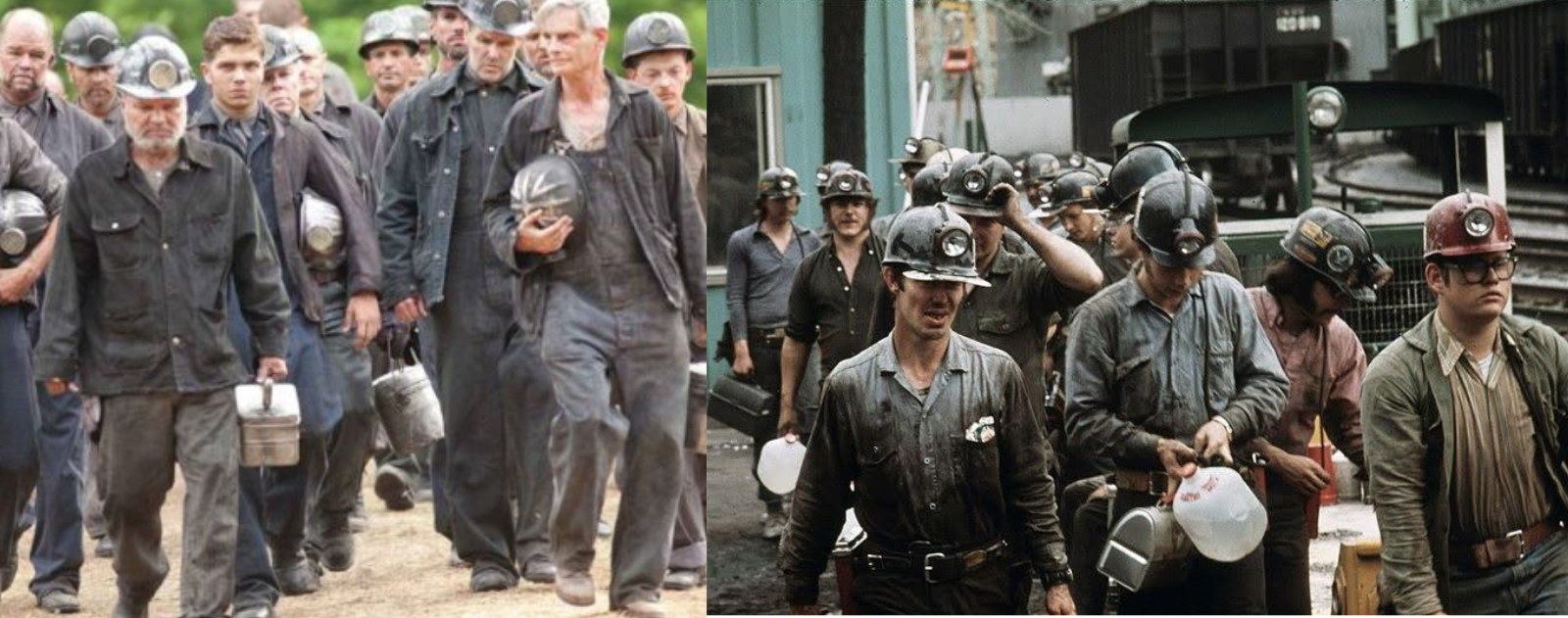
Two images show a group of coal miners walking forward in the open. The image on the left is a scene from the 2012 Hunger Games movie and shows citizens from Panem wearing helments, dark clothing, and carrying lunch boxes. The image on the right features a historical image of coal miners in the same setting from the mid 20th century.
Left: Still of miners from District 12 in The Hunger Games (2012) film. Right: Miners Line Up to Go Into the Elevator Shaft at the Virginia-Pocahontas Coal Company Mine #4 near Richlands, Virginia. This media is available in the holdings of the National Archives and Records Administration, cataloged under the National Archives Identifier (NAID) 556338.

Mining and southern stereotypes 

District 12 is based in the southern Appalachian region, an area that has historically produced and exported coal as a resource across the country.  Several movie scenes were filmed in North Carolina where interested fans and movie buffs can visit those locations and experience the natural beauty of the region firsthand. Although Katniss and Lucy Gray both think fondly of the woods and natural landscapes of the district, they are not blind to the plight of the people living there. 

District 12 is the poorest district, with industry centered on coal mining. Throughout all three Hunger Games books and the prequel, many citizens of Panem look down on District 12. Outsiders talk about the district in ways that resemble the real-life negative stereotypes often placed on the people of Appalachia

In Appalachia, the coal industry has sustained mountain communities for over a century despite being a notoriously dangerous profession. In addition to being an intensely physically demanding job, occupational hazards such as collapses, explosions, accidents, and ailments like Black Lung disease have ensured coalfield communities are consistently among the least healthy. Oppressive business practices, like those portrayed in the Hunger Games reflected in the Capitol’s treatment of District 12, led to even worse living conditions and quality of life for coal miners and their families. 

Beyond the surface-level similarities between the fictional and real-world regions, there is also a strong underlying similarity in the history of resilience and resistance found in the people of Appalachia. It is fitting that the location of the West Virginia Mine Wars was the inspiration for the birthplace of the girl who was brave enough to defy the Capitol with compassion and spark a revolution.

Protest Music

Appalachia has a strong tradition of turning current events, especially tragic events, into songs. In A Ballad of Songbirds and Snakes, Lucy Gray Baird writes a song after witnessing a hanging. Lucy Gray’s “The Hanging Tree” is reminiscent of Florence Reece’s Which Side Are You On,” which Reece wrote after a raid on her house during the Harlan Country Wars. The song became a popular protest song and has been used for many causes since. In the same way, Katniss Everdeen sings Lucy Gray’s “The Hanging Tree” over 60 years later, turning the tune into the anthem of a revolution. Just like how music reaches people on an emotional level, often inspiring them to action in the books, music has been used as an outlet for frustrations and a rallying cry for solutions throughout much of Appalachian’s history. 

Video: Black Lung was written by Hazel Dickens about her brother’s struggle with the miner’s disease.

Balladry

Murder Ballads are one of the most popular forms of balladry in folk music today. Ballads are a narrative form of songwriting that tells a story, in this case, one of murder. The book, A Ballad of Songbirds and Snakes, is written in much the same way as a traditional murder ballad and explores many of the same themes commonly found within the genre. Murder ballads often expose the weakness of humanity in much the same way Coriolanus Snow realizes the brutality of hunger games in the books. 

The Carter Family

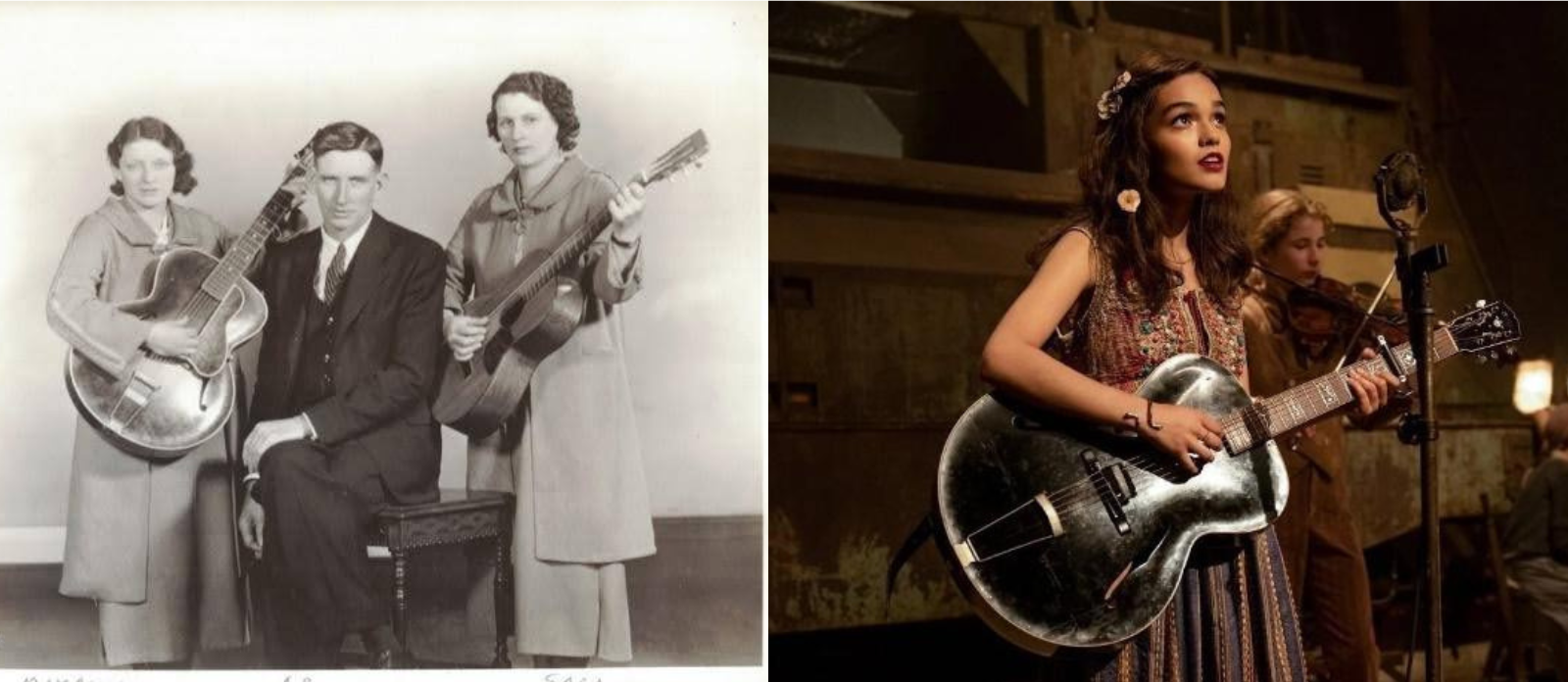
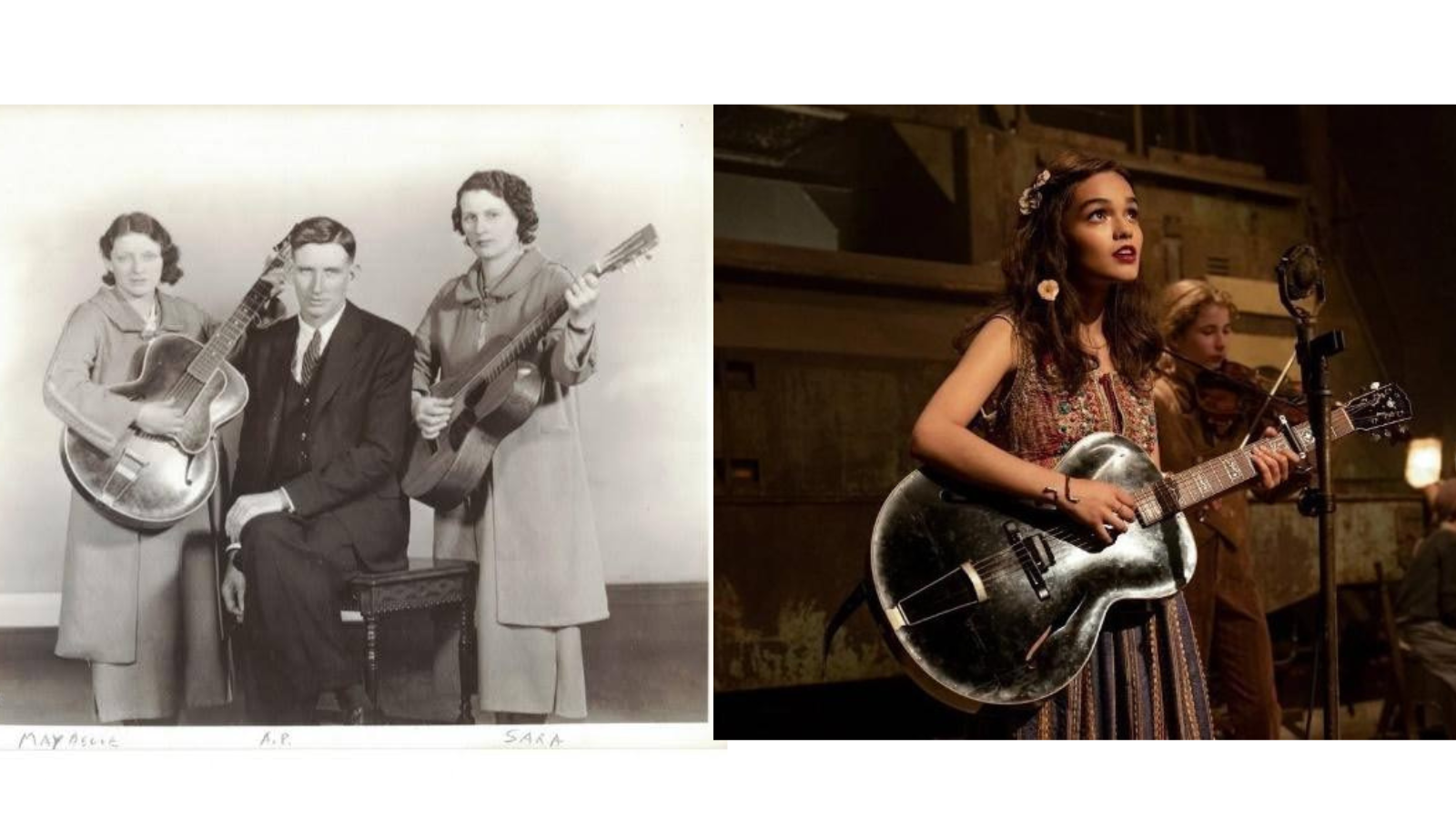
To the left is a promotional black and white photo of the Carter Family holding guitars and facing the camera. AP Carter is seated in the middle sitting on decorative furniture while Maybelle and Sara are standing on both sides of AP. Sarah and Maybelle are both holding guitars. The image on the right features a scene of a young women holding a vintage Gibson guitar and singing on a dimly lit stage, a scene from the recent film.
A publicity still of The Carter Family – Maybelle holds her Gibson L-5 guitar. From the collection of the Center for Popular Music, Middle Tennessee State University. Still of Rachel Zegler as Lucy Gray Baird in The Hunger Games: A Ballad of Songbirds and Snakes.

The early country music scene of the 1920s and 1930s is easily spotted in the dance scenes at the Seam – referring to the most distressed area of district 12 – in A Ballad of Songbirds and Snakes. Collins even pays homage to The Carter Family when Maude Ivory sings “Keep on The Sunny Side.” While many of the songs are inspired by the real music of Appalachia but written as originals for the books and movies, “Keep on the Sunny Side” is one of the few cover songs that make an appearance. Lucy Gray’s vintage Gibson L-10 guitar is another notable nod to the Carter Family. While Lucy Gray’s guitar may not be the exact same model, it is clear that an effort was made to match Mother Maybelle’s iconic guitar.

The soundtrack

Much like the O Brother, Where Art Thou? soundtrack from 2008, the 2023 soundtrack for A Ballad of Song Birds and Snakes is making waves and bringing new attention to country music styles. Many roots and Americana musicians are represented on the soundtrack including Billy Strings, Sierra Ferrell, Charles Wesley Godwin, Bella White. Molly Tuttle contributed her version of another Carter Family classic, “Bury Me Beneath the Willow,” which they first recorded at the 1927 Bristol Sessions! Tuttle also lends her guitar skills to the character of Lucy Gray. She and Dominick Leslie provided the guitar and mandolin parts for much of the film. 

May the music be ever in your favor.

Erika Barker is the Curatorial Manager at the Birthplace of Country Music Museum.