Music & Songs Archives - Page 26 of 30 - The Birthplace of Country Music
Listen
Play
Loading station info...

Follow the Ballad: From Scotland’s “Lord Gregory” to The Carter Family’s “The Storms Are on the Ocean”

Just 30 minutes south of Big Stone Gap, Virginia, where our bookstore Tales of the Lonesome Pine is located, you will find Hiltons, Virginia, and the Carter Family Fold, home of the famous musical family that started with A.P., Sara, and Maybelle, and included Maybelle’s daughter June Carter. June went on to marry Johnny Cash, whose ancestors immigrated to America from the village of Strathmiglo in Scotland. Just down the road an hour or so is Bristol, Tennessee-Virginia, known as the “birthplace of country music” due to its place in early commercial country music history. A wee bit north is the hometown of Ralph Stanley, who among other accomplishments famously sang “Oh Death” in the movie O Brother Where Art Thou. Just to the west in Kentucky is where the wonderful ballad singer Jean Ritchie grew up.

As you can see, it’s an area rich in musical heritage – and one that can be connected to the Old World through song. For instance, one of the most fascinating musical links between Scotland and Appalachia is through the Scottish ballad “Lord Gregory” and its American versions. No less than 30 of the 82 variants listed in the Roud Folk Song Index records are from our adopted state of Virginia. Chief among these is a song recorded by The Carter Family back in 1927 in Bristol, Tennessee, called “The Storms Are on the Ocean”– despite the fact that this part of Appalachia is a few hundred miles inland.
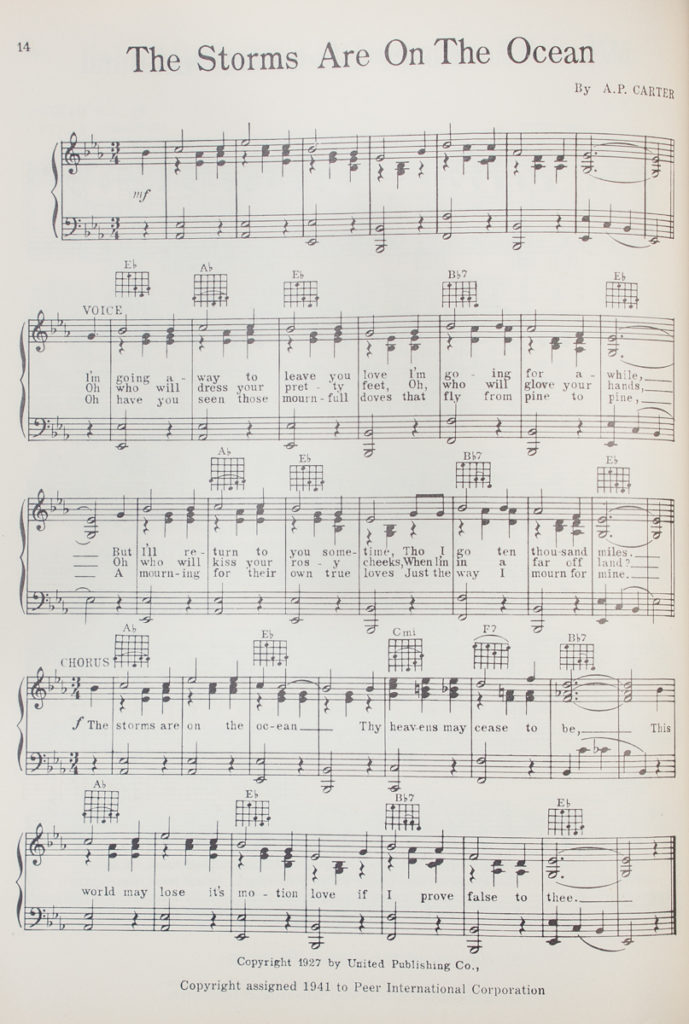
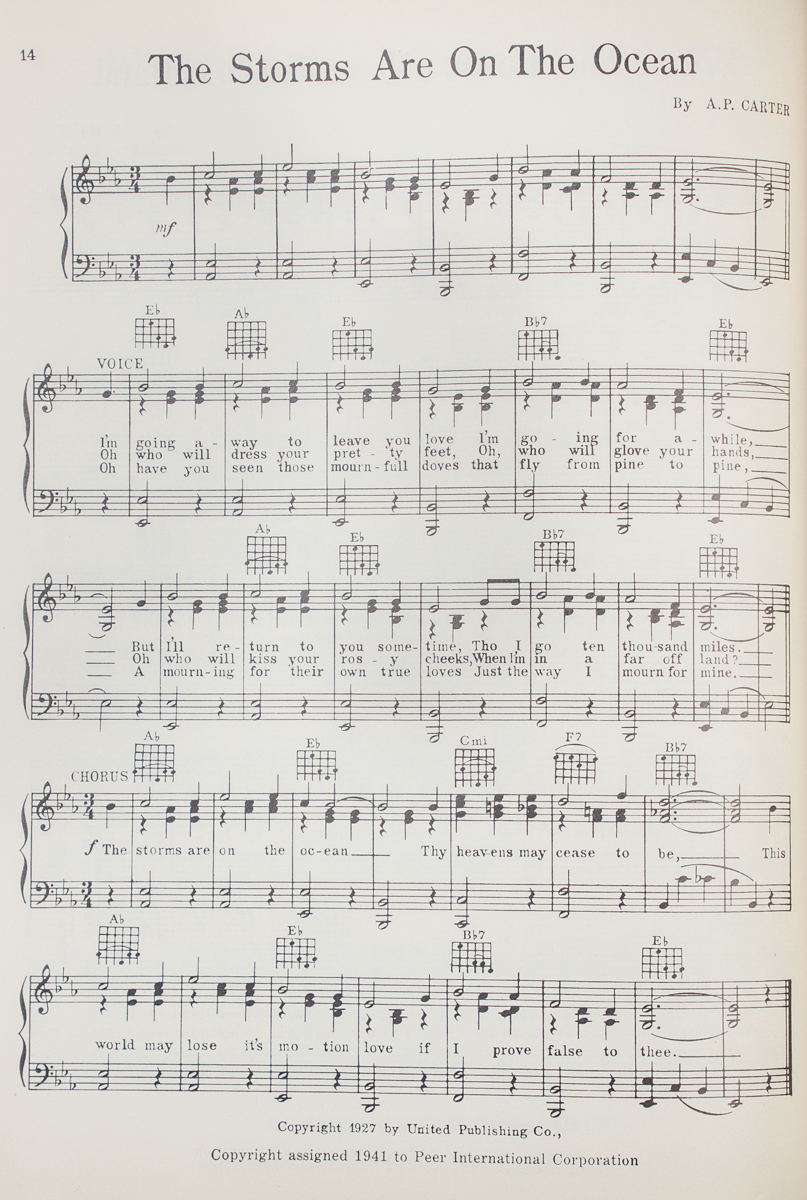
Image of "The Storms are on the Ocean" sheet music.
“The Storms Are on the Ocean,” sung by The Carter Family at the 1927 Bristol Sessions recordings, was published by Ralph Peer’s Southern Music Publishing Company in the Carter Family songbook Album of Smoky Mountain Ballads. Copyright 1927 by United Publishing Co., copyright assigned 1941 to Peer International Corporation; courtesy of peermusic

Here are the opening lyrics of “The Storms Are on the Ocean”:

I’m going away to leave you dear,
I’m going away for a while,
But I’ll return to you my dear,
Though I go 10,000 miles.

Who’s gonna shoe my pretty little foot,
And who’s gonna glove my hand,
And who’s gonna kiss my red rosy cheek,
Till you return again.

The “Storms” version was long established in the family tradition of the Carters, who also claim ancestry from the British Isles, and the first verse, with its reference to 10,000 miles, might also call to mind Robert Burns’ poem “A Red, Red Rose” Different renditions of the second verse can also be found in many of the earlier versions of this song across the years.

The ballad “Lord Gregory,” also known as “The Lass of Loch Royal,” is listed as number 76 in Francis James Child’s famous collection, English and Scottish Popular Ballads. Child also details a number of mainly Scottish variants. In one the lady sails with her baby from Capoquin to her beloved’s castle, only to be told by his duplicitous mother that he’s away. Sailing back to her home, she is drowned, but not before lamenting over who will shoe her foot, glove her hand, etc.

When Bertrand Harris Bronson produced his collection The Traditional Tunes of the Child Ballads, he included several “Lord Gregory” variants more reminiscent of “The Storms are on the Ocean.” Like most American descendants of Scottish ballads, the story got stripped down to become shorter and simpler, while the tunes were jollied up in tempo and rhythm.
Cover of David Herd's book, showing
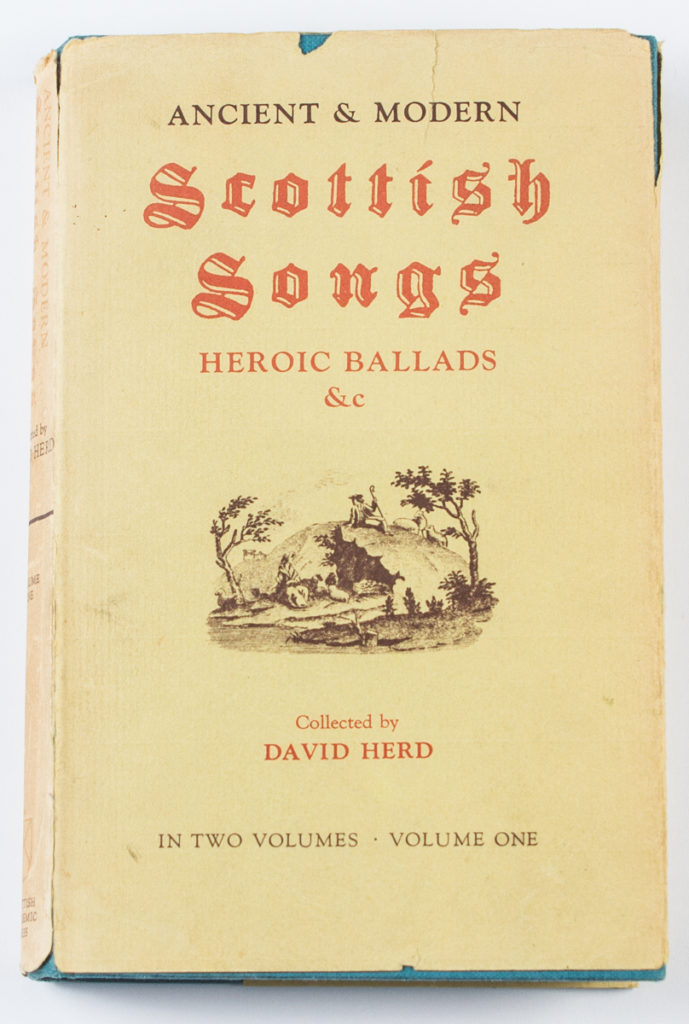
Photograph of David Herd’s Ancient and Modern Scottish Songs, Heroic Ballads, &c, currently on display in the museum’s special exhibit about Cecil Sharp.

We were delighted to be able to lend a number of books to the Birthplace of Country Music Museum for their new special exhibit The Appalachian Photographs of Cecil Sharp, 1916 to 1918, focused on the ballad collecting done in Appalachia by Englishman Cecil Sharp at the beginning of the 20th century. The books trace the journey of “Lord Gregory” (under various titles) from Scotsman David Herd’s Ancient and Modern Scottish Songs, Heroic Ballads, &c from the late 1700s to Bronson’s record of the tunes from the 1950s, along with the afore-mentioned and famous Child’s English and Scottish Popular Ballads, Sharp’s English Folk-Songs from the Southern Appalachians, and a book about the Greig-Duncan Folk Song Collection from Aberdeenshire in Scotland. We hope you’ll check out the exhibit to explore the journey of the “Lord Gregory” variants across these different books!
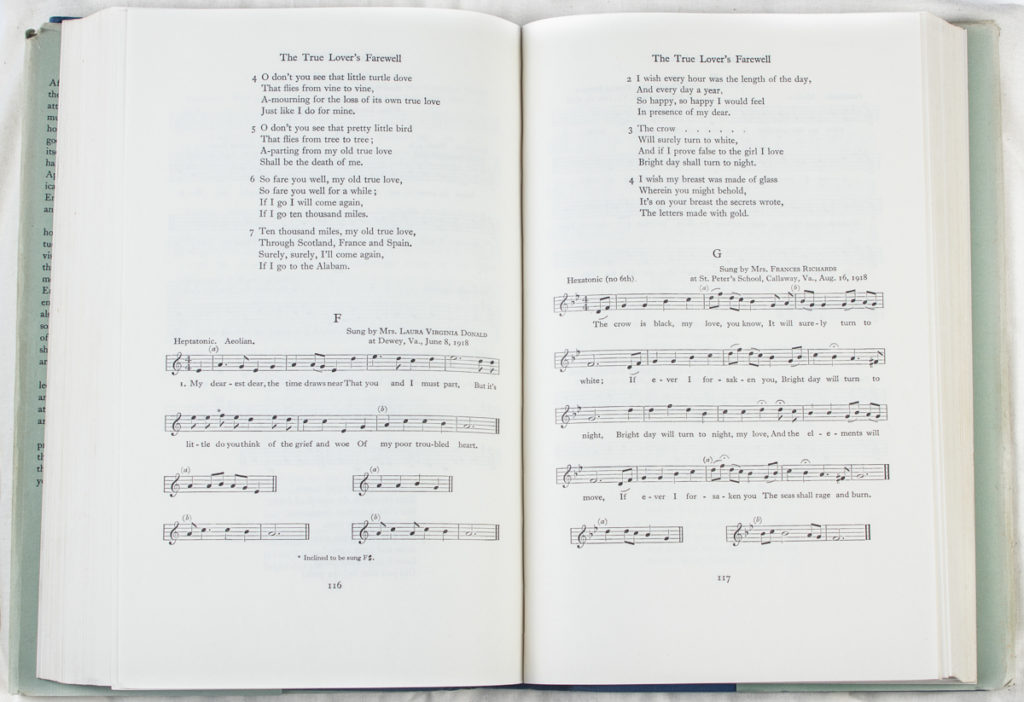
Cecil Sharp book, open to "The True Lover's Farewell" pages
Cecil Sharp’s English Folk-Songs from the Southern Appalachians is also on display in the Cecil Sharp special exhibit. It records the variants of “Lord Gregory” under the song title of “The True Lover’s Farewell. The version seen here under F was sung by Mrs. Laura Virginia Donald, one of the women featured in Sharp’s photographs in the exhibit.

The recording of “Lord Gregory” by Maddy Prior on the Silly Sisters album is magnificent, based on an earlier recording by Ewan MacColl. As for “The Storms are on the Ocean,” while many singers have followed in their footsteps, nothing compares to the original by The Carter Family. You can hear both these versions below:

Nor does anything surpass a visit to the Carter Family Fold, a favorite pilgrimage spot for visitors to Appalachia from across the water. For those unfamiliar, the Carter Family Fold runs Saturday night music and dance events, and we’ve enjoyed many a weekend there, listening to the old-time music and watching the amazing local dancers flat foot – from a woman who often dances with her (willing) dog to an elderly couple tearing up the floor with their moves!

The Carter Family Fold and The Carter Family’s song “The Storms Are on the Ocean” – and the history shared by the Birthplace of Country Music Museum and exhibits like The Appalachian Photographs of Cecil Sharp – illustrate just a few of the many connections between Appalachia and the British Isles. If the subject interests you, start with Child’s book. A world of discovery awaits!
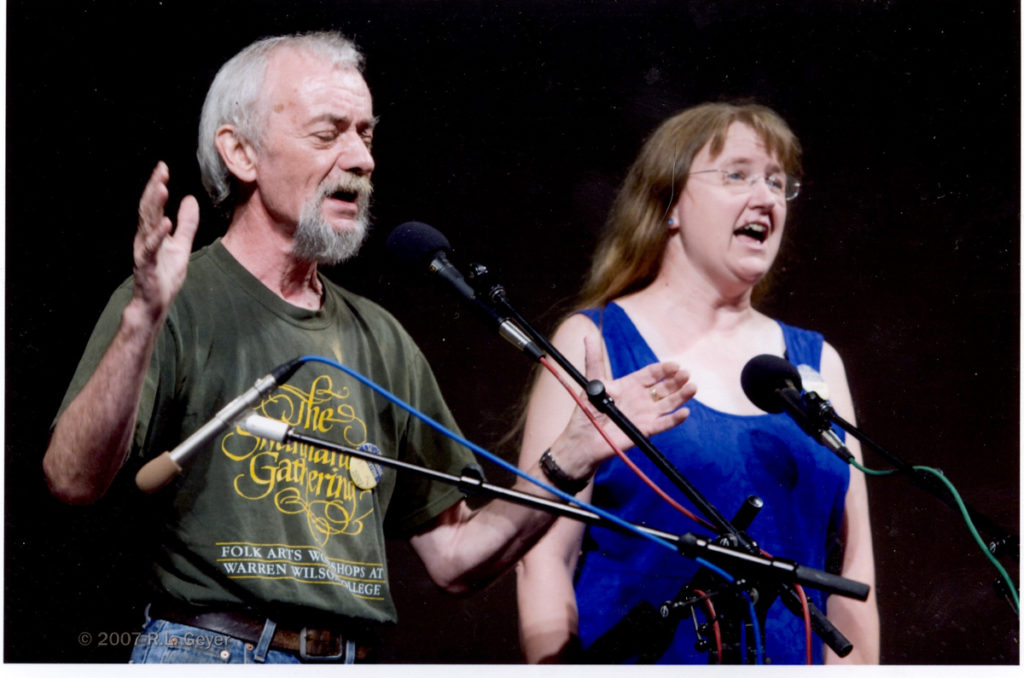
Jack Beck and Wendy Welch singing together on stage
Jack Beck and Wendy Welch performing at the Swannanoa Gathering a few years ago. The photograph was taken by the resident photographer R. L. Geyer, who gave permission for its use here.

Thank you to our guest bloggers Jack Beck and Wendy Welch, who wrote this blog post touching upon the journey of the “Lord Gregory” ballad, the perfect post to accompany our new special exhibit!

Jack was born in Dunfermline, Scotland, and lived most of his life there. A founding member of Heritage, one of the seminal traditional Scottish bands of the 1970s and 1980s, he was also the musical partner of Barbara Dickson. Awarded an honorary lifetime membership in the Traditional Music and Song Association for his services to Scottish traditional music, he spent five years as external examiner in Scots Traditional song at the Royal Scottish Conservatoire in Glasgow. Jack has lived for the last twelve years in Big Stone Gap, Virginia with his wife Wendy Welch, in the heart of Appalachia and old-time mountain music. Wendy is the author of four books, the most recent Fall or Fly detailing effects of the opioid crisis on foster care. She has a PhD in Folklore, is book editor for the Journal of Appalachian Studies, and was founding director of a storytelling non-profit in Scotland. Together they run a bookstore – Tales of the Lonesome Pine – the subject of Wendy’s memoir The Little Bookstore of Big Stone Gap from St. Martin’s Press.
How Old-Time Music Changed My Life

For me, it all started on a Thursday night back in 1991. I had recently torn a ligament in my knee playing softball and felt restless and out of sorts; last doctor visit I’d had, my orthopedic surgeon suggested I take up playing an instrument. My grandparents Reeber and Norma Kilby took me with them to a jam session. I had been with them to the Whitetop Mountain festivals before, but – little did I know – this trip was different and it was going to change my life forever.

We arrived at the old Mill Creek store, near Rugby, Virginia. While there were lots of cars there, it didn’t really look like anything much, just an old, abandoned store building. Pretty soon musicians started to come in, everybody was talking, laughing, and having a big time; my grandparents seemed to know just about everybody there! This was the first time I’d been so close to music being played live. Shortly after the music got started, I focused on one lady’s banjo picking. Later I’d find out she was Dee-Dee Price, who was playing the banjo, clawhammer style. It was at that moment when inspiration hit and deep down, I knew that’s what I wanted to do…play the banjo.

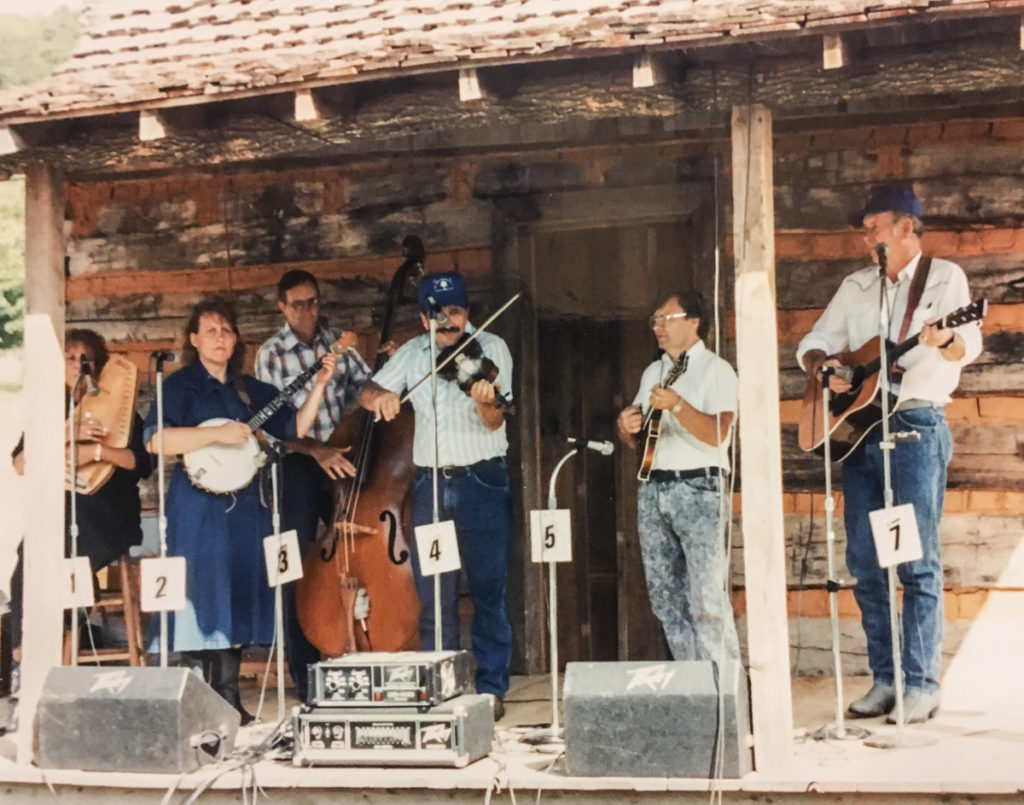
Several musicians on a log cabin front porch stage playing hammer dulcimer, banjo (Dee-Dee Price), bass, fiddle (Dean Sturgill), mandolin, and guitar.
Dee-Dee Price playing banjo onstage with the Grayson Highlands Band. My cousin Dean Sturgill is on the fiddle. © Judy Kilby

That night when I got home, I told my Mama and Daddy that I wanted to learn how to play the banjo. Week after week I went with my grandparents to the weekly jam session that we referred to as “The Music” and my interest continued to grow. I asked for a banjo for Christmas, and Mama and Daddy got me one.

Then came the hard part: learning how to play. I had all kinds of enthusiasm, but absolutely zero know-how. I clearly remember having the Christmas Time Back Home album on the record player and putting on some finger picks to try to play along. My cousin Dean Sturgill, a fiddler, and his wife Phyllis stopped by to visit that afternoon. I wanted to play clawhammer style, but I didn’t know that you didn’t wear picks to play that way. Dean took one look at what I was doing, let out a big laugh, and said, “Why young’un, you’ve got your picks on backwards! And if you want to play clawhammer, why, you don’t need any picks at all!”

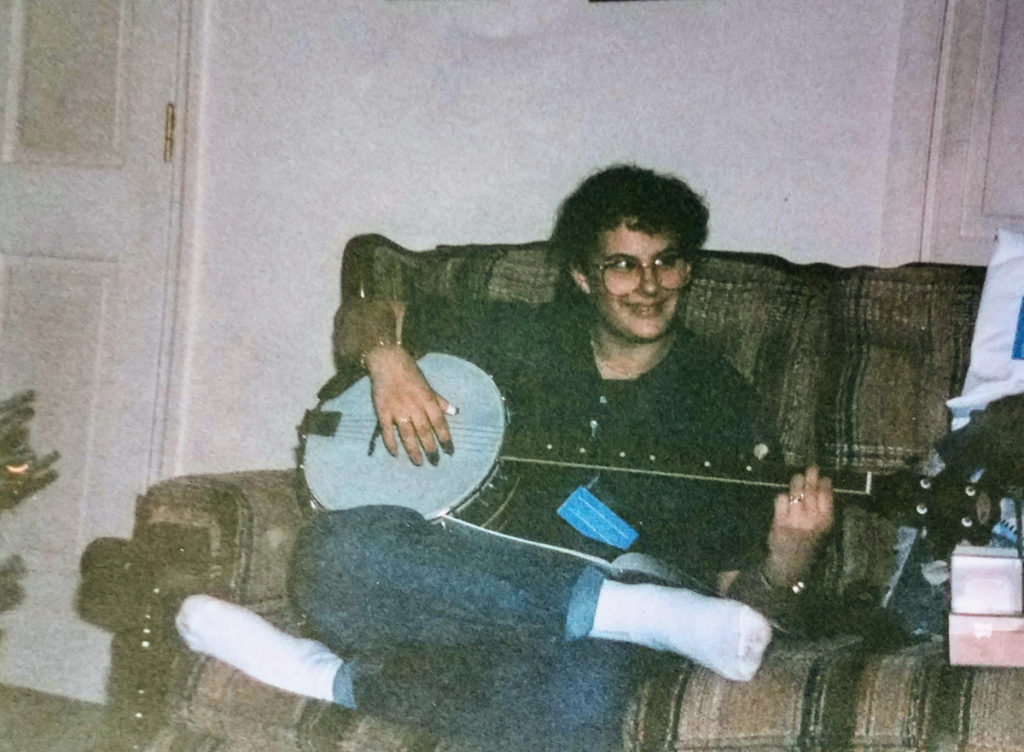
A teenage Trish Fore sitting on her couch holding her new banjo.
Me with my new banjo at Christmas. © Judy Kilby

As a shy, backward, 14-year-old girl, I was struggling to learn how to pick. A book had come with the banjo, but I couldn’t get any understanding out if it. At the time I was growing up there were no traditional music programs around, except the Albert Hash Memorial String Band at Mount Rogers Combined School. As time passed, I got discouraged and practiced less, but I did still keep going to The Music with my grandparents.

In the summer of 1992, it was evident I needed someone to show me more things on the banjo. My family knew Thornton and Emily Spencer, and we were distantly related. After a chance meeting with Emily, a banjo lesson finally got set up for Wednesday, July 29, 1992.

For my first lesson, my Daddy took me to Thornton and Emily’s house. Everything Emily showed me that evening, I just soaked up. The first tune Emily taught me was “Cripple Creek,” which she recorded for me on a cassette tape, playing it real slow so I could have something to listen to when practicing. She also gave me the song written out in a tablature that looked like numbers with exponents. It proved to be a big help because there were so many things to concentrate on all at the same time! She and Thornton showed confidence in me, and this helped me have confidence in myself. At the end of the first lesson, I asked if I could come back the next Wednesday for another lesson. This was a turning point. Emily’s help and influence really made me feel like I could play this instrument.

The whole next week I practiced playing the banjo – I practiced in the bedroom, in the living room, and out on the front porch. By the next Wednesday, I could play a slow, but recognizable version of “Cripple Creek.” I went back to show Emily and Thornton my progress and ask for another song. This went on, week after week, until wintry weather came and we took a break from the lessons. She and Thornton were full of praise and encouraging words, and this helped me begin to establish a strong foundation in music.

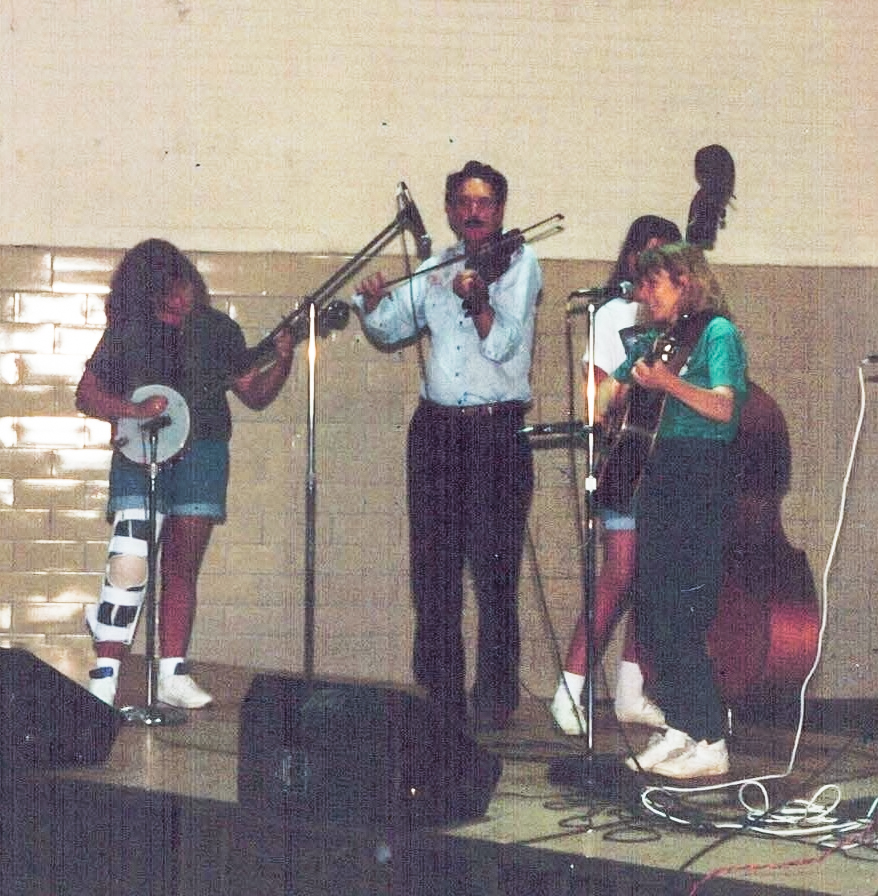
A teenage Trish Fore playing banjo onstage with Thornton Spencer and Emily Spencer.
Me with Thornton and Emily onstage in the gym of the Mount Rogers Combined School. © Judy Kilby

All the while I continued going to The Music, and soon I started to take my banjo with me. I finally found the courage to talk to Dee-Dee Price, the woman I had seen playing the banjo first. She was always nice, giving me pointers on playing tunes. After a while, when I could follow along with music, Dean would call out the chords to me so I could keep rhythm and play along with the group. Watching Dee-Dee play, along with Dean calling out the chords, helped me develop my timing and my ear.

In ways, this all seems like a long time ago, and in ways it seems like yesterday. Dee-Dee and Emily were my earliest influences on the banjo and both of them inspired me to play. Over the years in addition to Dee-Dee and Emily, I’ve been lucky to have many influences on my banjo playing including Howard Wallace, Wade Ward, Enoch Rutherford, Larry Pennington, and Harold B. Hausenfluck. I’m currently in my 40th year and I’m coming up on my 26th year of playing the banjo. Although I’ve been on several recordings in the past, I’m currently working on my first solo recording project which should be released in May. Check out my recording of “Cuttin’ the Cornbread” from that project here:

I truly feel that God has led me here. When the door to playing softball was shut, He opened the door to music.

Trish Kilby Fore plays the clawhammer banjo with various groups, including The Cabin Creek Boys, and is Assistant Director of the Galax-Carroll Regional Library. She is married to banjo builder Kevin Fore and lives near the Blue Ridge Parkway in Carroll County, Virginia. 

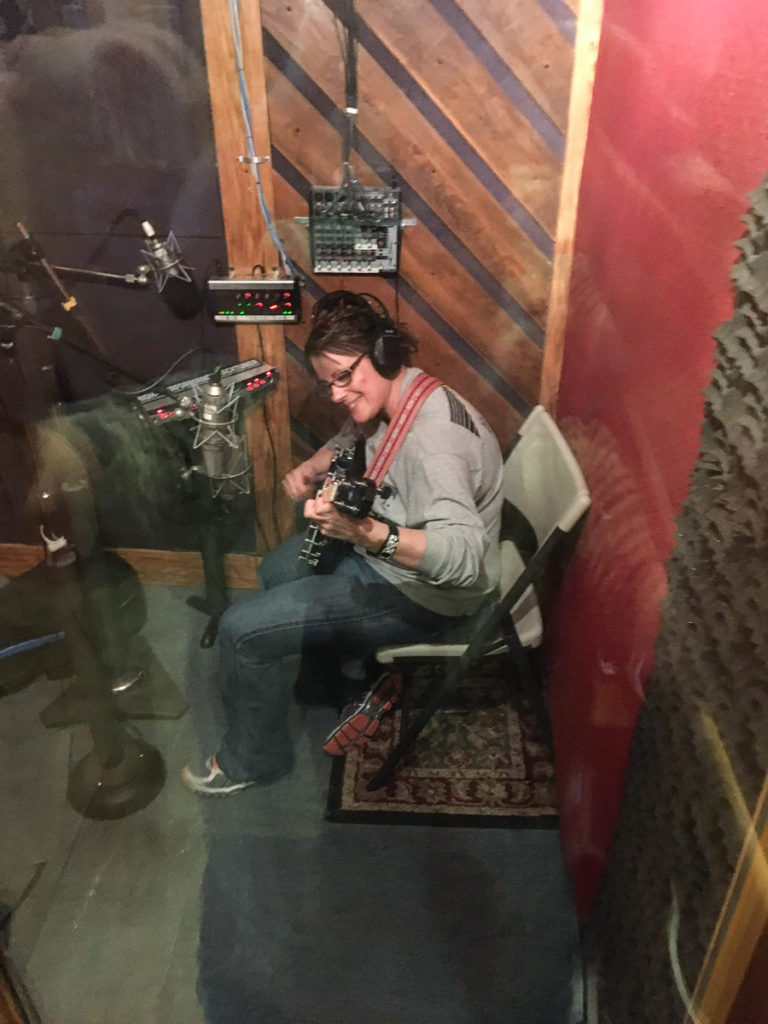
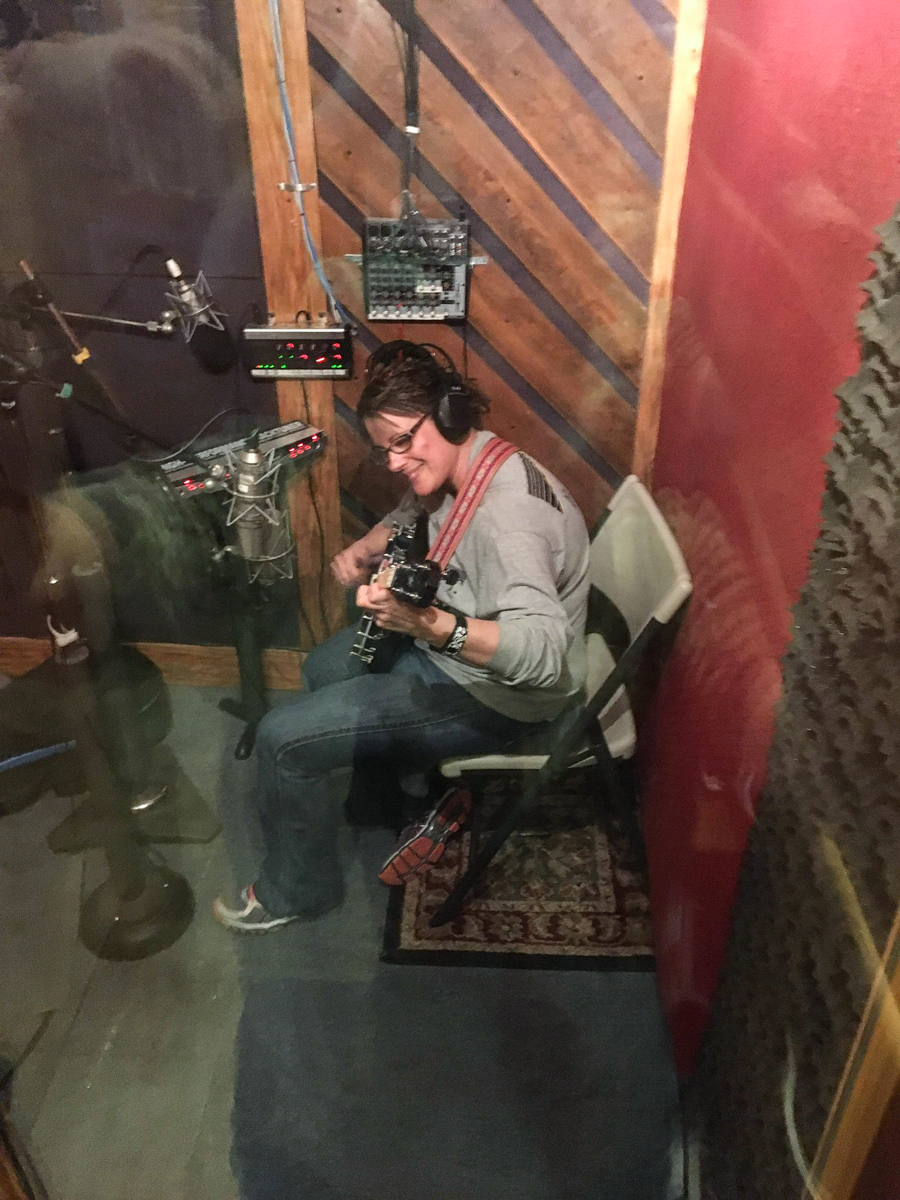
Trish Fore playing banjo in the recording studio.
Recording in the studio. © Kevin Fore.

Off the Record: Memories of My Grandmother’s Music

Our Radio Bristol DJs are a diverse bunch – and they like a huge variety of musical genres and artists. In our “Off the Record” posts, we ask one of them to tell us all about a song, record or artist they love.

The first music I ever heard was my grandmother’s. I was very small, nestled in her lap as she rocked and sang. That sound was a basic part of my growing up, something I, and the rest of the family, took completely for granted. Much later, living far away from the Kentucky homeplace, I began hearing people around me sing “folk songs” that were oddly familiar – songs my grandmother sang, but somehow different and not quite right. I started listening, really listening, to her music and gradually realized she was a great traditional singer.

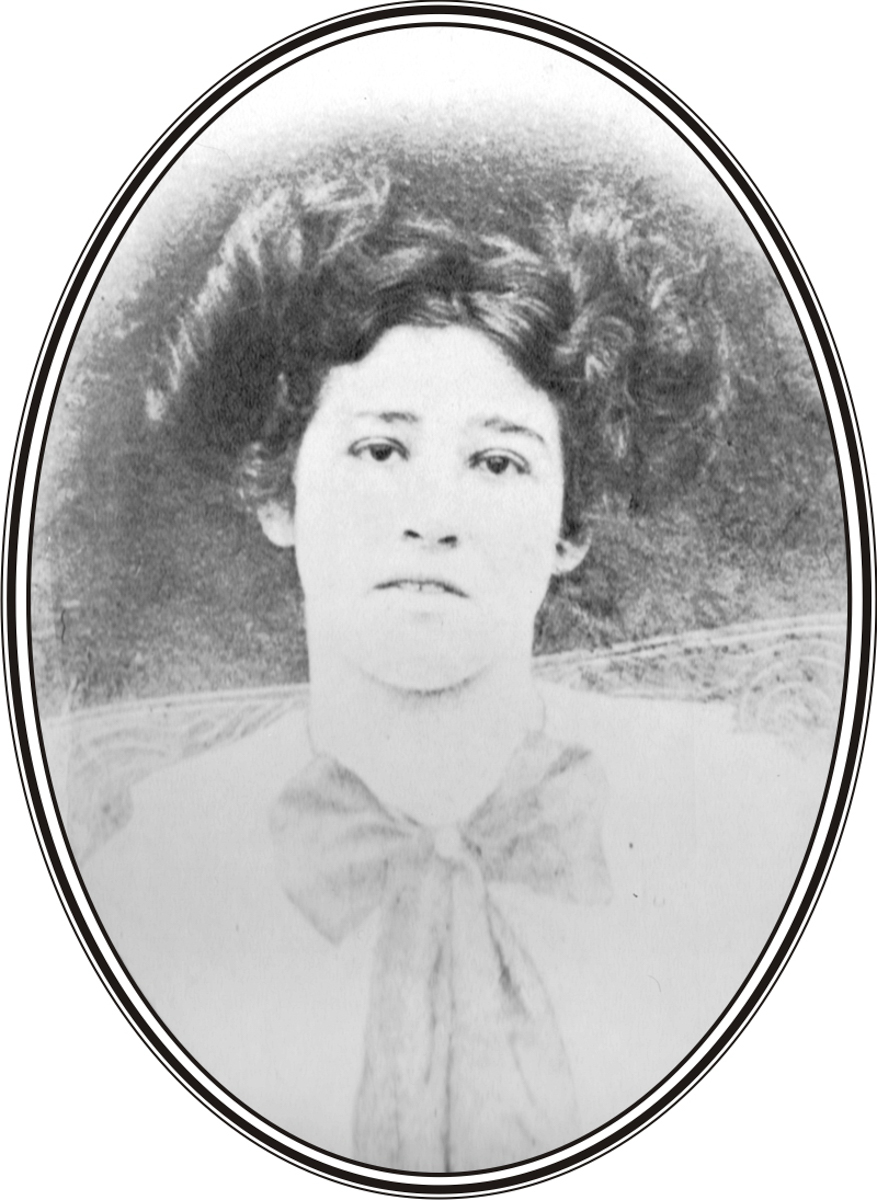
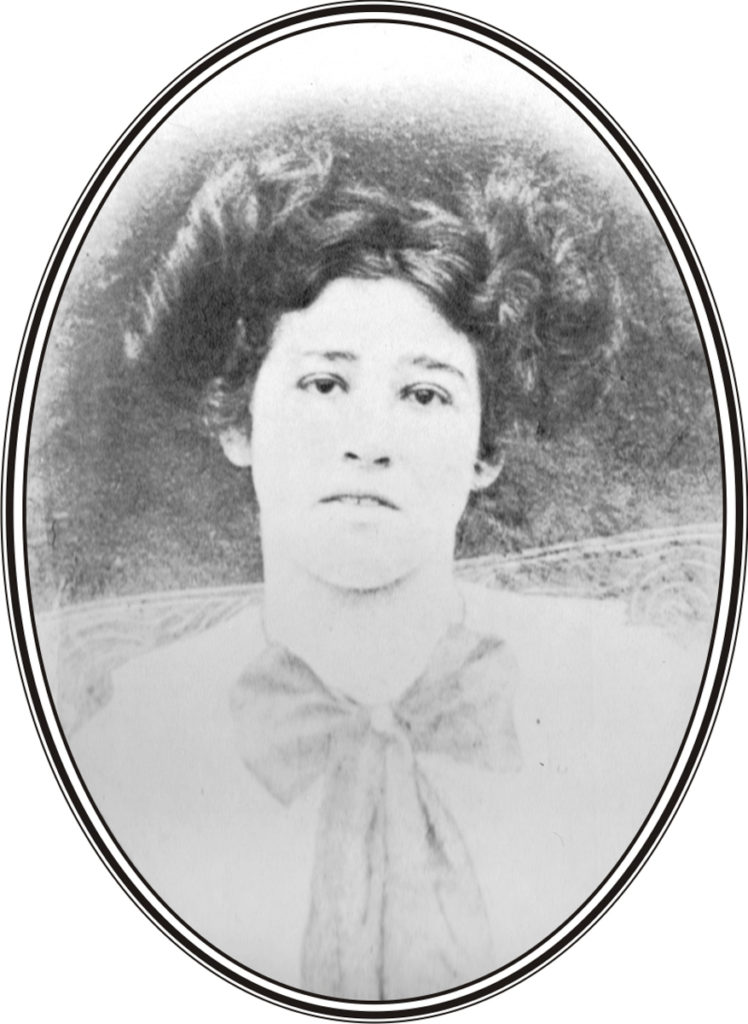
Black and white portrait in an oval frame of a young Addie.
Addie Graham as a young woman, date and photographer unknown. Image courtesy of Rich Kirby

Her name was Addie Graham, born before 1900 in the hills of eastern Kentucky, heir to a great stream of traditional music she heard from her family and community. She sang ballads, Old Baptist hymns, blues pieces learned from African American railroad workers, frolic songs, and some songs that are hard to categorize. One of these is a remarkable window back into a piece of Kentucky’s and America’s past.

The song is “We’re Stole and Sold from Africa.” It is apparently an abolitionist song from before the Civil War that my family held for generations. Addie learned it from her mother, and the song was a family possession: “All the family I guess sung it, sister Nan and all. I can’t even remember how long it’s been in the family.” Addie felt it was an important song and always sang it with great seriousness. It’s a rarity; in a lot of research I haven’t found any other version of it.

We’re stole and sold from Africa
Transported to America
Like hogs and sheep, to march a-drove
To bear the heat, endure the cold

See how they take us from our wives
Small children from their mothers’ sides
They take us to some foreign land
Make slaves to wait on gentleman

We’re almost naked as you see
Almost barefooted as we be
Suffer the lash, endure the pain
Exposed to snow, both wind and rain

O Lord have mercy and look down
Upon the race of the African kind
Upon our knees pour out our grieves
And pray to God for some relief  

Here is Addie singing this song:

Though no other singer has been recorded doing this song, we can trace some of its history through records of the abolitionist movement. The text is similar to abolitionist ballads published in The Liberty Minstrel of 1844 and the Free Soil Minstrel of 1848. A prominent Kentucky abolitionist, James Birney, ran for president under the banner of the Liberty Party in 1844; other Kentucky abolitionists founded Berea College in 1855, which became “an oasis of anti-slavery and democratic education.” Slavery became a very hot issue in Kentucky, particularly in the mountains where few people owned any enslaved people. During the Civil War, communities and families (including Addie’s) were divided, leaving scars that took many years to heal.

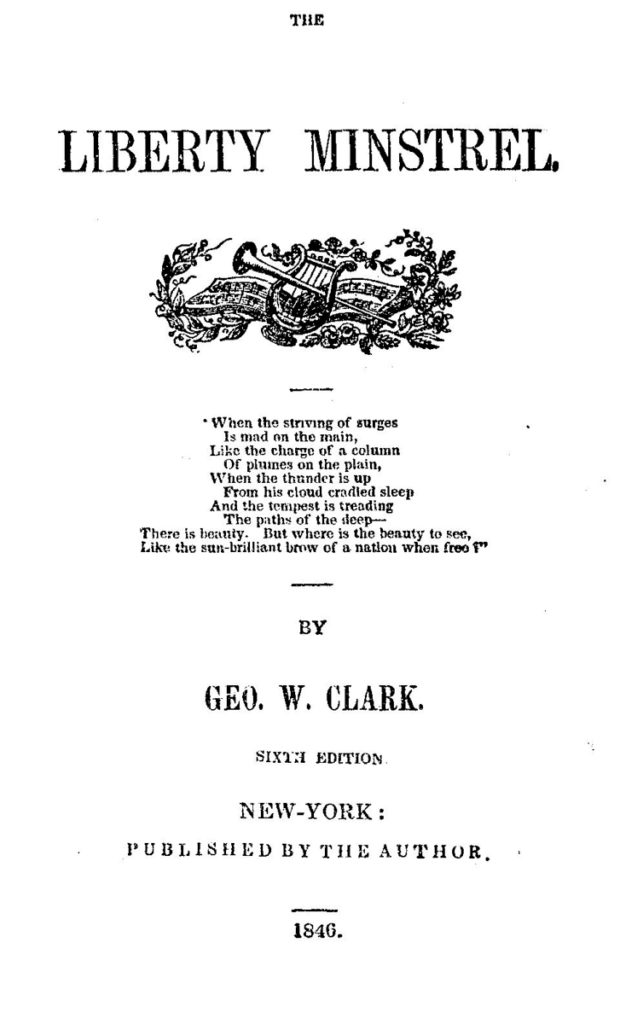
Though it speaks from a slave’s perspective, Addie’s song probably has no connection with Black folk sources. It is almost certainly derived from one or more as-yet-untraced abolitionist tracts. George Clark’s The Liberty Minstrel contains the following in “Song of the Coffle Gang” (“Words by the slaves, music by G.W.C.”):

See these poor souls from Africa,
Transported to America;
We are stolen, and sold to Georgia, will you go along with me?
We are stolen and sold to Georgia, go sound the jubilee.

In the same volume, “Stolen We Were” (“Words by a Colored Man”) contains these stanzas:

Stolen we were from Africa,
Transported to America;
It’s work all day and half the night,
And rise before the morning light;
Sinner! man! why don’t you repent?
For the judgment is rolling around!

Like the brute beast in public street,
Endure the cold and stand the heat;
King Jesus told you once before
To go your way and sin no more;
Sinner! man! &c.

Title page for The Liberty Minstrel
Title page of The Liberty Minstrel.

Tunes for these songs do not at all resemble Addie’s, which instead shares the musical feeling of her Old Baptist hymn tunes. The song may have become part of the folk-hymn tradition, for a couplet “Upon my knees pour out my grief/ And pray to God for some relief” turns up in “Young Ladies All I Pray Draw Near” in the Old Baptist Sweet Songster.

In any case, it is striking that an abolitionist song survived in tradition so many years after the end of slavery. Perhaps it had a special meaning for the family. The song came through Addie’s mother, Gillian Williams Prater. Her ancestor Elder Daniel Williams preached at the Lulbegrud [Baptist] Church in Montgomery County, Kentucky around 1800. He was forced to leave after disagreements with prominent elders of the North District Association to which the church belonged. Williams’ successor at the church, David Barrow, was similarly “run off” for advocating the emancipation of slaves. Williams’s differences with the elders were probably doctrinal rather than political. But in light of the preservation of the song “We’re Stole and Sold” in the Williams family, it is tempting to speculate that Daniel Williams, like David Barrow, sympathized with abolitionist views. Barrow, by the way, went on to found an association of emancipationist Baptist churches; its membership included Thomas Lincoln whose son Abraham would take the lead in settling the slavery question.

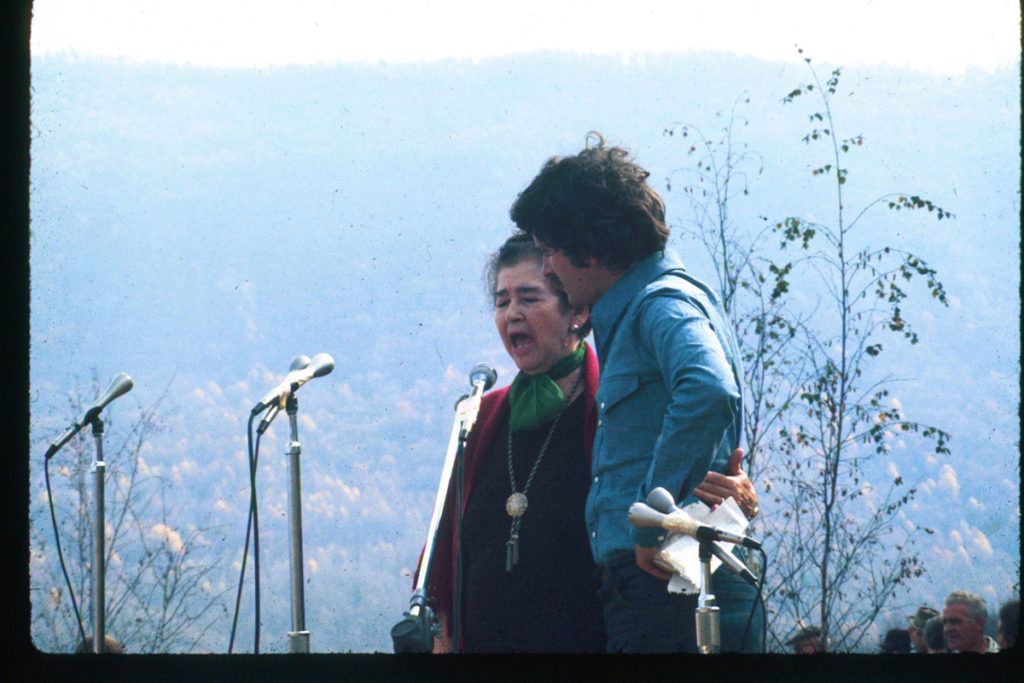
Addie singing with Rich Kirby, mountains in the background
A photograph showing me singing with Addie at Home Crafts Day, Mountain Empire Community College, Big Stone Gap, Virginia, ca. 1976. Photo courtesy Mountain Empire Community College

Addie never performed outside the home until I took her to a few festivals shortly before her death in 1978. “We’re Stole and Sold” reached a wide audience that year, when Appalshop’s June Appal Recordings released an LP of her singing, Been a Long Time Traveling (re-released with additional material in 2008). Over the years, awareness of Addie and her music has gradually spread, and today, she’s well known as an important source of Kentucky traditional music. Mike Seeger and John McCutcheon have performed “We’re Stole and Sold,” and I included Mike’s striking version in The Very Day I’m Gone (June Appal 2014), a collection of Addie’s songs performed by 15 artists. The song remains especially meaningful for me, evoking Addie’s voice and personality, her deep sympathy for those who suffer, and her links to an important if little known part of Appalachian history.

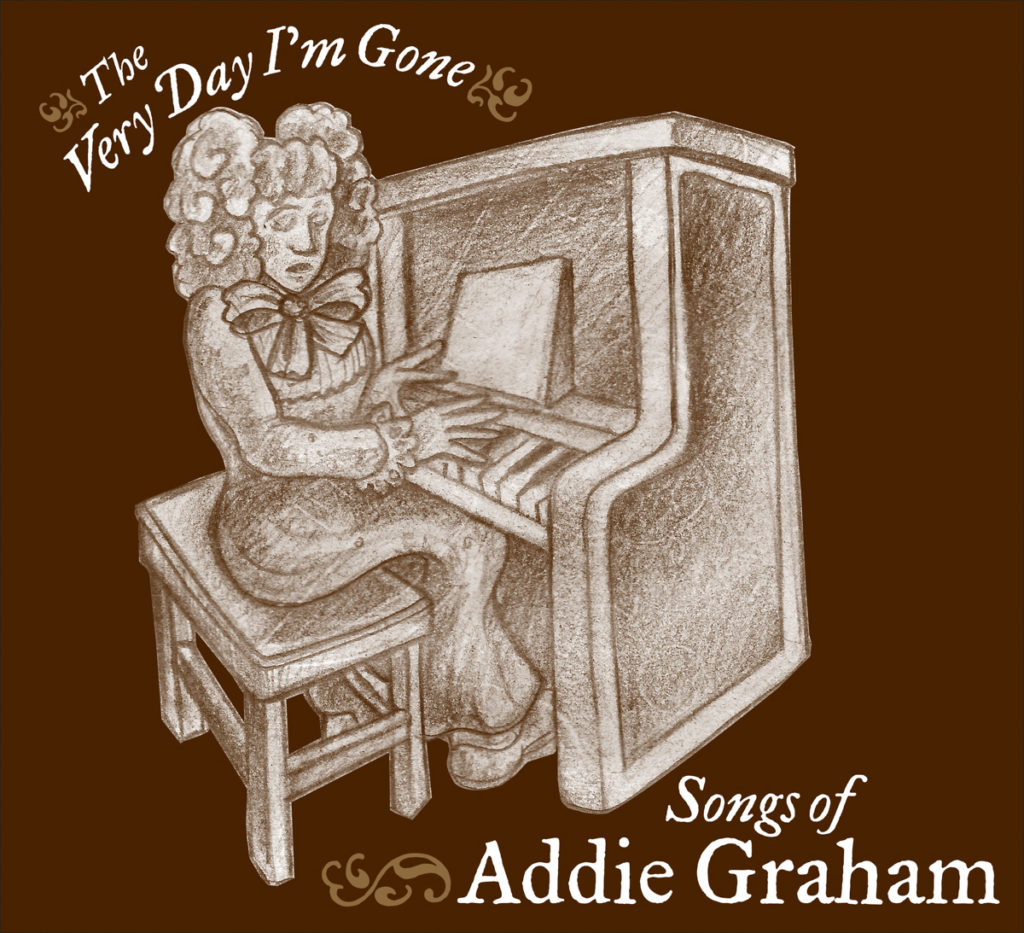
Cover illustration for The Very Day I'm Gone compilation CD, showing a drawing of a woman at a piano
The Very Day I’m Gone CD cover illustration and design by John Haywood.

Rich Kirby is a producer at Appalshop’s WMMT radio station and a performer and historian of traditional Appalachian music and stories. His show Old Kentucky Bound airs on Radio Bristol on Thursdays 2:00 to 3:00pm.

Pick 5: Black Fiddle Traditions in Early Commercial Country Music

For our new “Pick 5” blog series, we ask members of the Radio Bristol team to pick five songs within a given theme – from heartsongs to murder ballads and everything in between! Once they pick their “5,” they get the chance to tell us more about why they chose those songs. With a diverse staff of knowledgeable DJs, we’re sure to get some interesting song choices, which might introduce you to some new music, all easily accessible by tuning into Radio Bristol!

For our first “Pick 5,” I thought it would be interesting to look at the some of the black fiddle traditions found in early country music. Many African American artists that recorded during the 1920s and 1930s came from a stringband background, a style predating the blues, and many of these artists were influential in shaping some of the modern sounds of early commercial country music. I find the merging of the fiddle traditions of the 19th century and the more contemporary sounds found in the blues (which were often guitar-based but sometimes also incorporated fiddle) particularly inspiring. I chose five songs that highlight this cross-pollination of musical style and culture, songs where the sounds of stringbands, blues and jazz came together to create something altogether different. This is by no means intended to cover the scope of black fiddle traditions – instead these are only a few of the many recordings I find to be particularly cool. The artistry found on these records is pretty awe-inspiring to say the least. Have a listen!

“Forty Drops,” Andrew and Jim Baxter, 1928, Atlanta, GA

Forty drops of what? Forty drops of Rye! Maybe that accounts for the greasy slippery fiddle heard on this record…but I doubt it. This is country fiddling at its finest. Or is it blues fiddling? I’d say it’s both. The Baxter’s records were sold as a race records yet they could have just as easily sold as hillbilly records.

“That’s It,” Mississippi Sheiks, 1930, San Antonio, TX

A very fitting title to this hot fiddle number. Interestingly, this record was issued on OKeh’s country label and was marketed to a white audience. The Sheiks entire catalog is incredible and worth checking out if you haven’t done so yet.

“Sweet to Mama,” State Street Boys, 1935, Chicago, IL

Big Bill Broonzy on the fiddle?! Yep, not only could he tear it up on the guitar but he learned to fiddle at an early age and was pretty well versed as this song illustrates. This song has the same melody and some of the same verses as another hillbilly classic, “Blues in the Bottle,” as recorded by Prince Albert Hunt in 1927 in San Antonio. I got to listen to an incredibly clean copy of the State Street Boys record at a recent visit to collector Joe Bussard’s house, and it was a completely different listening experience to say the least. It was as if the band was playing in the room just for us.

https://www.youtube.com/watch?v=koWgVIYXfOY

“Rosalie,” Son Sims Four, 1942, Clarksdale, MS

This one, a straight-ahead blues song, features a young Muddy Waters, who played with Henry “Son” Sims before making his way up north. Not only is this an incredible document of early Waters, but it shows the great musical depth from which he came. Sims commercially recorded with Charley Patton for Paramount in the late 1920s as well.

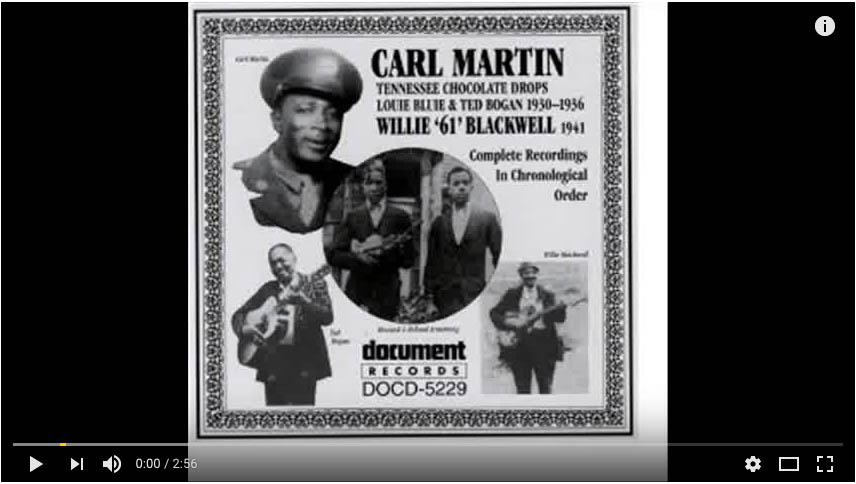
“Knox County Stomp,” Tennessee Chocolate Drops, 1930, Knoxville TN

The virtuosity and unique character of Howard Armstrong – aka Louie Bluie – shines right through on “Knox County Stomp.” This record highlights the tenacity, energy, and passion of a true innovator willing to walk out on to the edge of a musical cliff. Wait for the pizzicato plucking midway through and you’ll see what I mean. Exciting to say the least! Louie Bluie and the Tennessee Chocolate Drops are a perfect example of a band that wasn’t defined by the genres and subgenres we now associate with American music.

So that’s my “Pick 5” – five songs exemplifying a small range of the talent and virtuosity found in early black fiddle traditions. I hope these songs – and the brief view into their background – piqued your interest and maybe introduced you to some new sounds!