Music & Songs Archives - Page 23 of 30 - The Birthplace of Country Music
Listen
Play
Loading station info...

Reading is Music to the Ears!

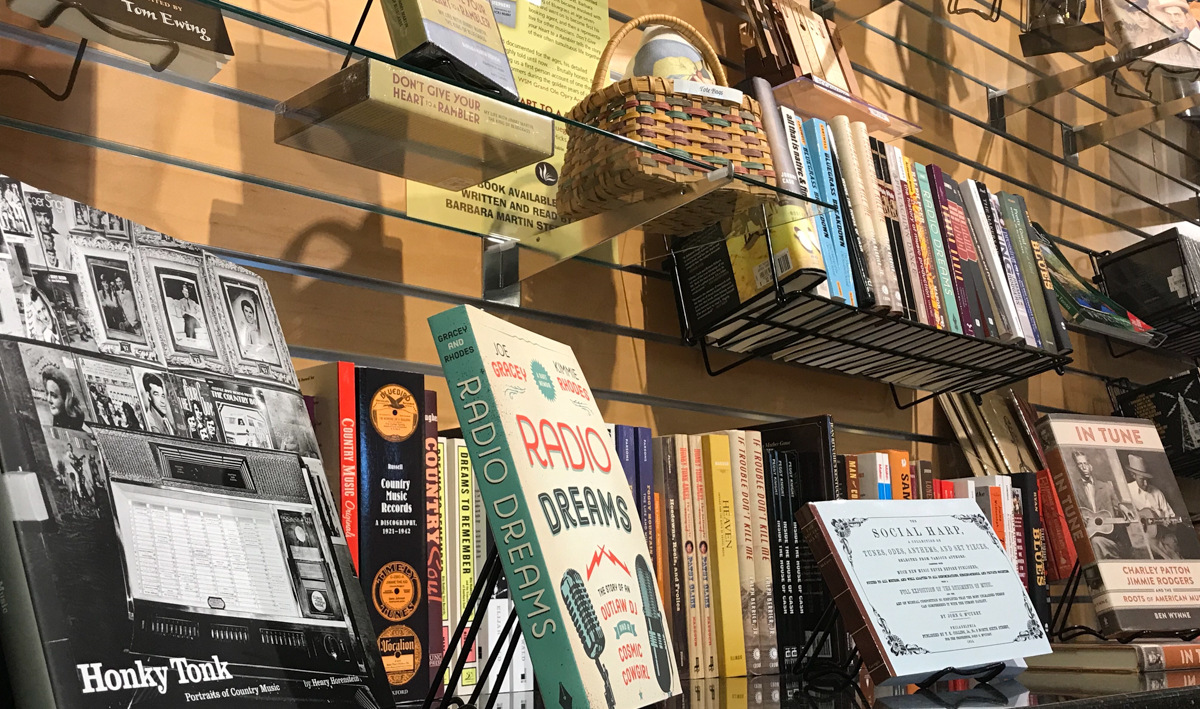
Each year on September 6, bookworms across America celebrate National Read A Book Day. Though this is a fine thing to celebrate, reading is, of course, important and pleasurable every day of the year. If one wants to learn more about country music history, what better place to start than with a book? While you can find all of the selections below through online sellers, these and other fine selections can also be found at the Birthplace of Country Music Museum in our museum store – so stop on by and pick one up. Here are just a few of my favorites to get you started!
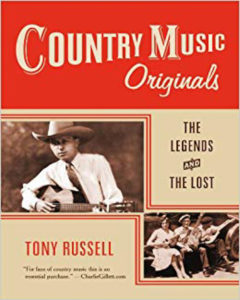
Cover image of Country Music Originals showing the title and two pictures of country music singers/bands.

Country Music Originals: The Legends and the Lost by Tony Russell

If you want to learn more about the important players in the world of country music, Tony Russell’s Country Music Originals is a great place to start. World-renowned scholar Russell presents biographies of figures in country music from the earliest days of recordings until the late 1940s. Highlighting superstars such as Jimmie Rodgers and The Carter Family and celebrating obscure figures such as Bernard “Slim” Smith and John Dilleshaw, Russell provides articles that are short enough to be approachable for the casual reader, but also in depth enough to spark interest for further reading. It’s a great place to start your country music reading journey!
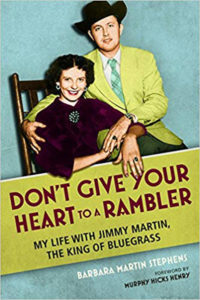
Cover image of Don't Give Your Heart to a Rambler showing title and the author with Jimmy Martin.

Don’t Give Your Heart to a Rambler: My Life with Jimmy Martin, the King of Bluegrass by Barbara Martin Stephens

While bluegrass music is widely regarded as having been born in late 1945, one could argue that the music did not achieve the “high lonesome” sound until a young guitar player and singer from Sneedville, Tennessee, joined Bill Monroe’s Bluegrass Boys in late 1949. Jimmy Martin is widely regarded as “The King of Bluegrass” and is one of most charismatic and controversial figures in bluegrass. Don’t Give Your Heart To A Rambler was written by Barbara Martin Stephens, Martin’s longtime partner and the driving force behind his rise to success in the music business. Barbara spares her readers no gritty details as she gives an inside look into life with the King. Through all the abuse and hardship she suffered in her personal life, Barbara was still able to become the first female booking agent on music row. Nothing short of inspiring, this book is a must-read for all bluegrass fans and those interested in women in country music.
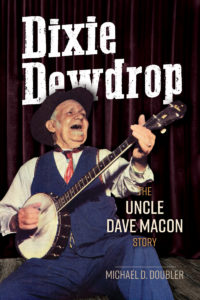
Cover image of Dixie Dewdrop showing title and Uncle Dave Macon playing the banjo.

Dixie Dewdrop: The Uncle Dave Macon Story by Michael D. Doubler

Uncle Dave Macon is one of the most iconic figures of early country music, and his style of banjo playing and showmanship has inspired countless musicians – and so Dixie Dewdrop tells the story of one of country music’s first stars. Michael Doubler, the great-grandson of Uncle Dave, spins a narrative that ties together Uncle Dave’s personal life and the music and culture of the world in which Uncle Dave lived, giving readers a glimpse into a different side of this legendary performer. If you’re curious about this book and Uncle Dave Macon, you can join Doubler at the Birthplace of Country Music Museum at 1pm on Sunday, November 4 for a special talk and book-signing.
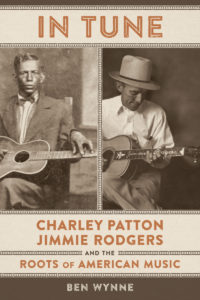
Cover image of In Tune showing title and pictures of Charley Patton and Jimmie Rodgers.

In Tune: Charley Patton, Jimmie Rodgers and the Roots of American Music by Ben Wynne

Before record companies began marketing music to specific audiences, music flowed across cultural lines, and the line between traditional African American and white rural music was blurred. With the wonderfully informative In Tune, Ben Wynne compares and contrasts these two giants of roots music within that context. Both men were born in Mississippi around the same time, and both passed away much too early in their musical careers and their lives, dying within a year of each other. Though from separate sides of a deeply segregated society, these men lived hard lives and had experiences that were remarkably similar. This book provides commentary on the social dynamics that shaped country music, and it gives readers a detailed look into the lives and legacies of these two important figures.
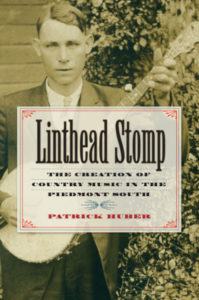
Cover image of Linthead Stomp with title and picture of banjo player.

Linthead Stomp: The Creation of Country Music in the Piedmont South by Patrick Huber

Geography and country music go hand-in-hand, and regionalisms are part of what makes early country music so diverse. Bristol with its significant music history is heralded as the “Birthplace of Country Music,” but in reality, American roots music was shaped all across the nation. Patrick Huber explores the impact of textile mills in the Piedmont region of the Carolinas in Linthead Stomp. With a high population of displaced rural southerners seeking work in the mills, a new market for early country music entertainment was opened. Rural music moving to town also changed the music, and the changes that were taking place in the 1920s and 1930s in the Piedmont set the stage for country music as we know it. This book is a must-read for anyone interested in the commercialization of country music.
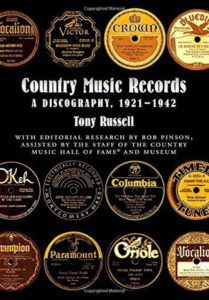
Cover image of Country Music Records with pictures of various record labels and the title.

And finally a “special mention”: Country Music Records: A Discography, 1921–1942 by Tony Russell

All of the books previously mentioned are easily digestible reads for the casual country music fan. However, if you find yourself hungering for all the facts about early county music records, this is the book for you. Roughly the size of your local phone book and twice as dense with information, this book contains the dates, locations, and personnel of every commercial country record recorded before 1942. A must have for any diehard country music fan and connoisseur of fine shellac.

So…I’ve given you my favorites. Now tell us: what are your favorite music reads?!
Pick 5: Laugh a Little – or A Lot – with Novelty Songs!

For our “Pick 5” blog series, we ask members of the Radio Bristol team to pick five songs within a given theme – from heartsongs to murder ballads and everything in between! Once they pick their “5,” they get the chance to tell us more about why they chose those songs. With a diverse staff of knowledgeable DJs, we’re sure to get some interesting song choices, which might introduce you to some new music, all easily accessible by tuning into Radio Bristol!

Howdy, friends and neighbors! It’s your ole pal Boppin’ Bailey George here with the latest Pick 5 blog post!

You know me as the host of The Honky-Tonk Hit Parade where I play the finest in honky tonk, hillbilly, western swing, and rockabilly music. And while I absolutely love playing those fine country & western favorites for you, I’ll bet there is something you didn’t know about me: growing up I wanted to be a cartoonist. As a small child, I would spend all my time watching the classic Looney Tunes and Merrie Melodies shorts and laugh endlessly at the Marx Brothers and The Three Stooges. Those experiences helped to form my appreciation of the odd and irreverent.

Luckily, I quickly found there was a whole genre of music just as weird as my tastes: they were called “novelty” records. Novelty songs especially popular in the early 20th century were comical or nonsensical renditions, often parodies, and they sometimes focused on contemporary events or topics. Let’s explore some of my favorite titles from Wackyland together, shall we? Let’s get weird…

“Tiptoe Through the Tulips” ~ Tiny Tim

If there was a Sinatra of Slack, it would be Tiny Tim. Despite his moniker, he stands as a giant among the world of novelty recordings. No man has ever captivated an entire nation as much as Tiny Tim did in the mid-1960s. Appearing as if from Mars, his performances on The Ed Sullivan Show and Rowan and Martin’s Laugh-In, along with his many appearances on network variety shows, caused him to be the true definition of an overnight sensation. His biggest smash, “Tiptoe Through the Tulips,” was first recorded in 1929 by “The Singing Troubadour” Nick Lucas, who sung it in the Warner Brothers musical Gold Diggers of Broadway. Tiny Tim’s 1967 revival is the “national anthem” of comedy songs and is among the most popular recordings of all time.

“Daffy Duck’s Rhapsody” ~ Mel Blanc

If you think what Mel Blanc did was easy, try it yourself. Known as “The Man of a Thousand Voices,” Blanc was perhaps the greatest name in voice acting, voicing all of your favorite cartoon characters including Bugs Bunny, Woody Woodpecker, Porky Pig, Foghorn Leghorn, Barney Rubble, and literally dozens more. With “Daffy Duck’s Rhapsody,” he takes recorded music to new heights as Daffy expresses his troubles during the dangers of hunting season and his plight as a target of duck hunters, all sung with great fortitude to the melody of composer Franz Liszt’s “Hungarian Rhapsody No. 2.” Sounds interesting, right? Trust me: it is!

“Der Fuehrer’s Face” ~ Spike Jones and His City Slickers

A bona fide victory anthem for audiences during World War II, this piece of morale-boosting shellac allowed people to laugh at the horrors of the Nazis and war. Written by Walt Disney Studios staff composer Oliver Wallace for an Academy Award-winning Donald Duck cartoon, this song found its place as a huge hit among civilians and G.I.s alike. One of the greatest bandleaders of all time, Spike Jones recorded it with his group The City Slickers for Bluebird Records and turned it into the biggest hit of his career. Hitler ordered it burned. It survived, and here it is for you to listen to!

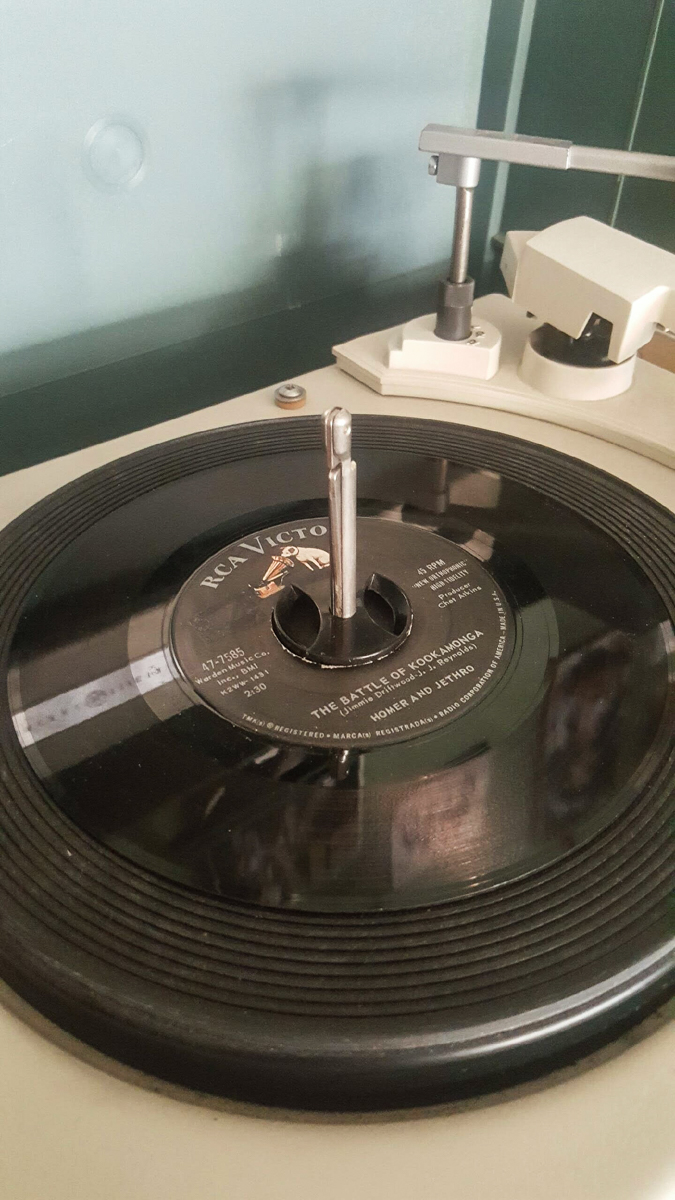
“Battle of the Kookamonga” ~ Homer and Jethro

In my humble opinion, this is the greatest record Chet Atkins produced. “Homer” Haynes and “Jethro” Burns were among the most accomplished musicians of the 20th century. Fully able to record the best in instrumental and comedy albums, they also recorded some of the finest country jazz ever committed to posterity. Masters at the high art of song parody, Homer and Jethro stepped into Nashville’s famous Studio B and let loose with the A-team on this retelling of Johnny Horton’s “Battle of New Orleans.” Turn this up and enjoy, friends. You’ll be glad you did!

https://www.youtube.com/watch?v=zkAGY6W1-38

“A Dear John and Marsha Letter” ~ Stan Freberg

Known to a generation as “The Man in the Pizza Roll Commercials,” hip beatnik comedian Stan Freberg combined the art of classic radio acting and song parody by satirizing popular music to a cult audience in the 1950s. Here he combines “A Dear John Letter” by Ferlin Husky and Jean Shepard with his biggest success “John and Marsha.” The result is truly unlike anything you’ve ever heard. A genuine record from Planet X.

Fiddlers’ Conventions: Summer is the Time for Fiddlin’ Fun!

What do you get when you mix a wide-open outdoor space with camping, musicians, spectators, dancing, ribbons, and prize money? You get a fiddlers’ convention…and that’s no joke!

A view of the Galax Fiddlers' Convention grounds from above -- showing the campground, stage, and other elements.
View of the Galax Fiddlers’ Convention grounds. Photo by Trish Kilby Fore

For those who are unfamiliar with fiddlers’ conventions, these events take place all over the United States, and there’s a hotbed of them right here in this region of northwest North Carolina, southwest Virginia, and northeast Tennessee. Basically, a fiddlers’ convention is an event that is sponsored by a community or civic group as a fundraiser for their organization. Often a convention will occur the same weekend each year, so everyone will know when it is and save the date so they can attend year after year. Lots of musicians and music lovers follow the fiddlers’ convention circuit throughout the summer, going to one every few weekends.

Camping is a big part of many fiddlers’ conventions, and the magic of sleeping under the stars amongst a group of like-minded people certainly promotes a greater sense of community among listeners and musicians. The campground is where musicians jam, learn new tunes, and practice to get ready for the upcoming contests, including individual instruments, old-time and bluegrass bands, and flatfoot dance categories. Where there is music at the campground, a good-sized audience of music lovers is sure to also gather to watch the contests, listen to the music, dance, and socialize together. Out in the field of campers is where some of the best music can be heard – an added bonus!

The convention competitions are exciting to watch and also filled with amazing music. Each on-stage contest performance is assigned a score on a numerical scale by a group of judges, all experienced musicians. The judges’ scores are averaged by the convention organizers, and the performances are ranked according to their average score. At the end of the contests on Saturday night, everyone goes to the stage for the presentation of ribbons and prize money to the winning musicians and bands who have earned the highest scores. After the contests are over and the prizes are awarded, musicians go back to their camps to continue playing, dancing, and frolicking late into the night. There’s no end to the good music!

Historically, fiddlers’ contests and conventions have been around for a long time. The print edition of the Encyclopedia of Appalachia notes that the first fiddling contest in America was held in 1736 in Hanover County, Virginia. The oldest fiddlers’ convention in this region is the Johnson County Fiddlers’ Convention, which is coming up this Friday and Saturday, August 24—25, 2018, at the Old Mill Music Park in Laurel Bloomery, Tennessee. This year will be the Johnson County Fiddlers’ Convention’s 93rd anniversary!

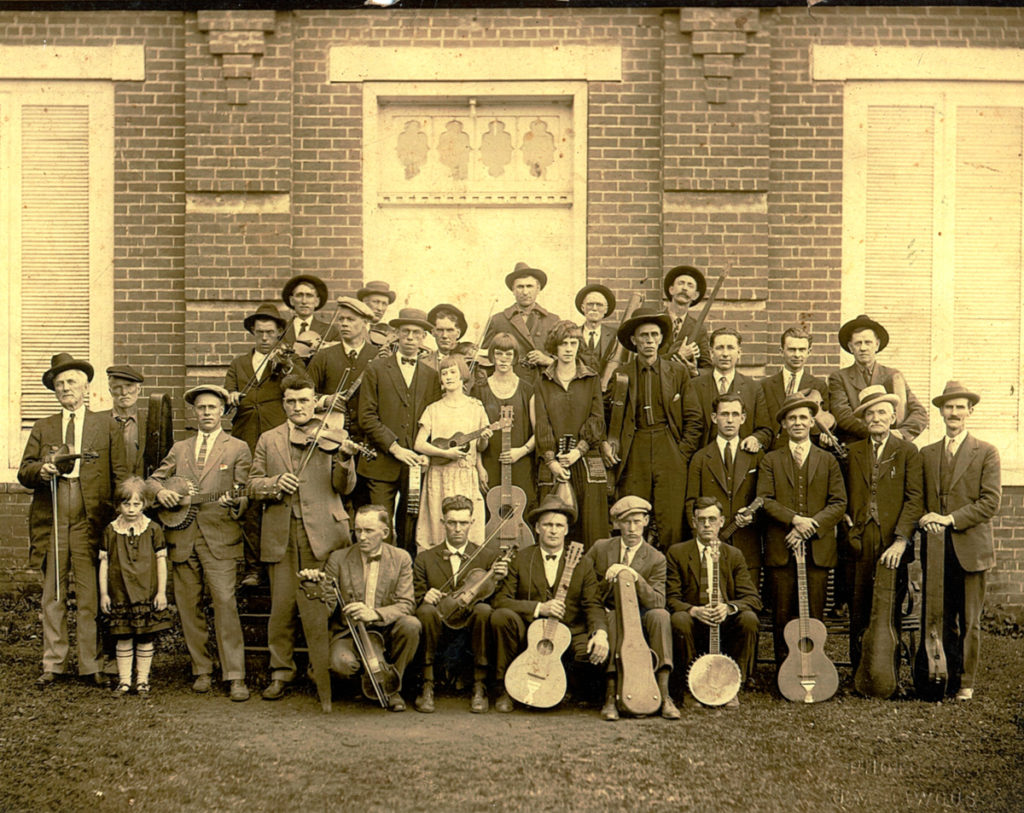
Large group of musicians standing with their instruments in front of what looks to be a large church or civic building; the five members of The Powers Family are seen in the center of the group.
The Powers Family (center), one of the early hillbilly family bands, is seen here with a large groups of musicians at a music competition in the 1920s or 1930s. Courtesy of James Powers and Stephanie Collins

The largest fiddlers’ convention in this region is the Galax Old Fiddlers’ Convention, which always takes place the second week of August. The founder was Dr. W. P. Davis, who thought of the idea as a fundraiser for the Galax Moose Lodge and involved the school’s Parent Teacher Association so the school could be used for the location. The first convention was held in April of 1935; this year marked the 83rd annual convention. Since that first fiddlers’ convention, Galax has become well-known as the World Capital of Old-Time Mountain Music, and people from all over the world come to attend the convention at Galax.

Each year, I take vacation time to attend the Galax Old Fiddlers’ Convention. It is a special time for me – some of my best musical memories and dearest friendships have been made there. The thing I love most about Galax is visiting with friends and playing music with folks that I don’t get to see on a regular basis; indeed, seeing people at Galax is similar to attending a big musical family reunion. And, of course, old-time music is dance music, and I love to see people flatfoot dancing on the small, portable dance boards they carry with them from one jam session to another. I also love meeting people and making new friends, easy to do at any fiddlers’ convention. I’m also realizing now that I’m no longer the younger generation, so I love seeing young folks becoming part of this community and playing music.

This year, my husband Kevin and I made two new friends at Galax who traveled long distances to attend the event: Ulf Lidberg and Marc Menish. Lidberg, who made the trip from Stockholm, Sweden, plays guitar, banjo and fiddle, loves old-time music, and followed the advice of a friend who told him he should come to Galax. Menish teaches Media Studies at Aoyama University in Tokyo, Japan, and he is making a documentary on the history, development, and characteristics of old-time music. When asked why he came to Galax, he said he wanted to video jams and to experience the music in an up-close and personal way – he definitely came to the right place!

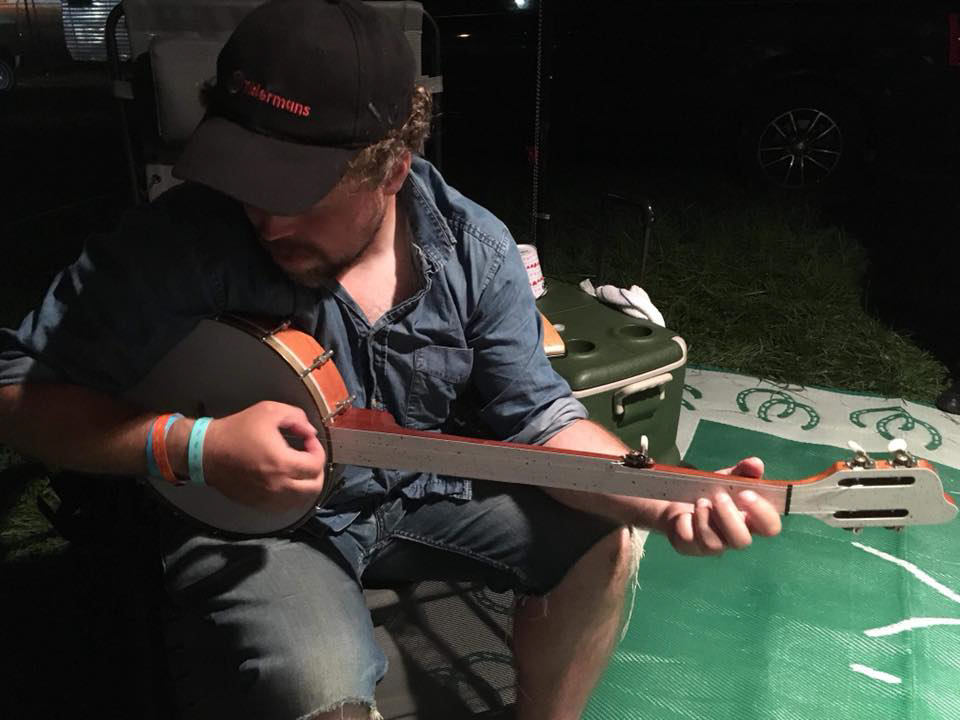
Close up of Ulf Lidberg, wearing a baseball cap, playing a banjo.
Ulf Lidberg from Stockholm, Sweden, playing a fretless banjo made by Kevin Fore. Photo by Kevin Fore

In recent years, there’s been a trend to get young musicians involved in the fiddlers’ convention tradition, and so Galax begins on Monday night with a large youth competition. I think it’s an excellent way to give young musicians the experience of playing on the Galax stage and to compete against other youngsters of a similar playing ability so they don’t have to compete against adults unless they choose to do so. Winning a prize in the youth contest helps young musicians gain a sense of accomplishment and provides a lot of encouragement to continue playing music.

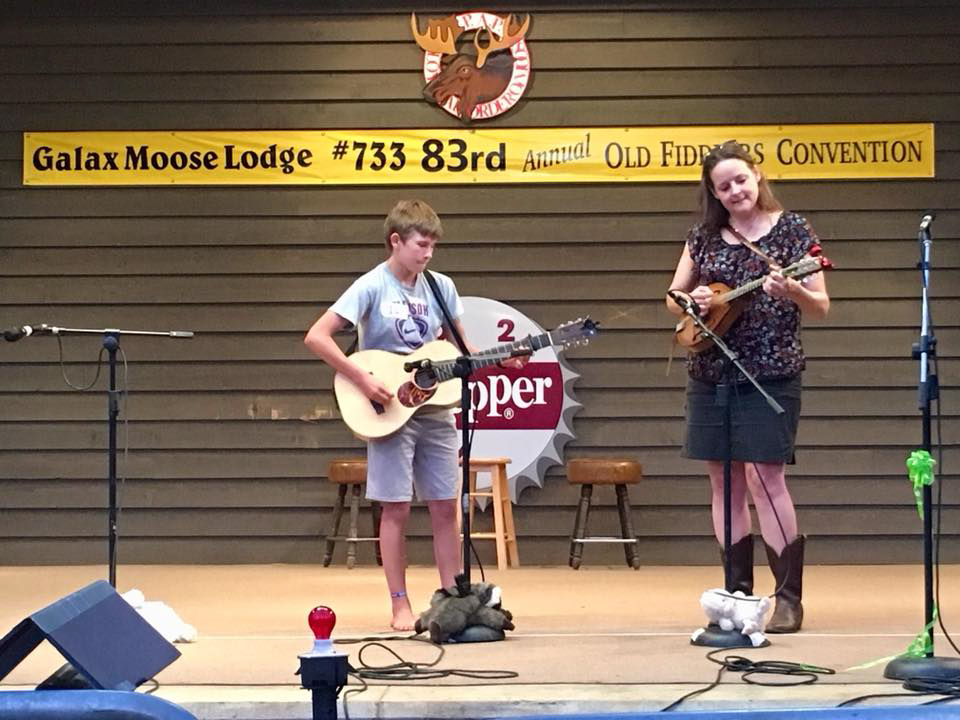
Two youth musicians on stage -- the one to the left on guitar, the one to the right on mandolin.
Hazel Pasley, from Sparta, North Carolina, participating in the youth guitar competition. Photo by Trish Kilby Fore

Going to the fiddlers’ conventions is one of my all-time favorite things to do as a musician. You never know who you might see or get to play with or what might happen! There’s an excitement in the summer night air that binds people together. If you’ve never been to a fiddlers’ convention, start planning to get to one as as soon as you can!

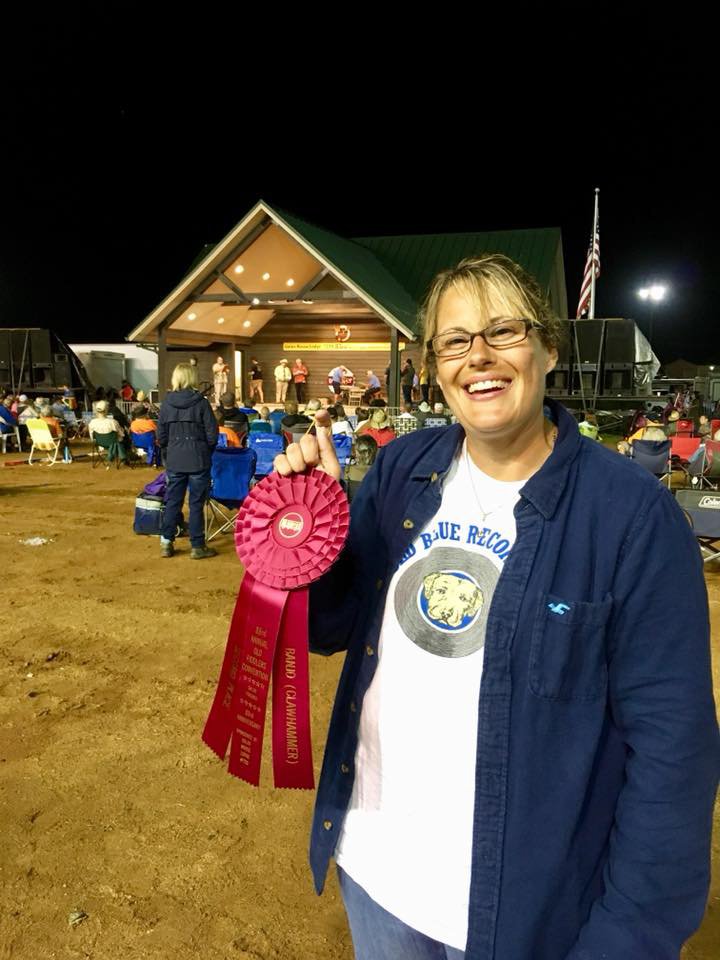
Trish Kilby Fore standing near the performance stage with her second place ribbon.
Me with my second place ribbon from the clawhammer banjo contest, Galax Old Fiddlers’ Convention 2018 – an exciting night for me! Photo by Dennis Hines


The Banjo Gathering: Exploring Banjo History and the American Experience

I came to the banjo in the early months of 1994, at the age of 19, when I saw a PBS broadcast of the documentary The Weavers: Wasn’t That a Time! (1981). In addition to being entranced by depictions of the banjo in the hands of the great Pete Seeger (1919—2014), I was also deeply moved by what I felt to be a positive sense of community projected in the film. It was a major turning point as I became transfixed, learning about how the power of music shaped various social movements in the 20th century. Within the next year, after getting my own banjo, I discovered that the instrument could serve as a gateway to learning about American history in ways that I had never before experienced.

Now, after 24 years of chasing the banjo and its long, complex history, I often reflect on the incredible people I’ve collaborated with through the years, building on that sense of community that attracted me to the banjo in the first place. I’ve enjoyed many rich opportunities to learn from a great diversity of individuals and traditions in the Americas, West Africa, and Europe. Here in the United States, some of the most significant people I’ve known in the banjo world are associated with the annual Banjo Gathering. Formerly called the Banjo Collectors Gathering, this event has informed many aspects of my life as an archivist, ethnomusicologist, and musician.

Since 1998, this informal network of collectors, researchers, instrument builders, and musicians has shaped the way people understand and appreciate the banjo’s deep links within the greater American experience. What makes the Banjo Gathering distinct from other banjo-centric events is that its founders – banjo collectors and scholars Peter Szego and Jim Bollman – have maintained the event to focus entirely on the banjo ​as a historical, cultural, and design object.

Each Gathering has met in a range of locations along the east coast with geographic significance to banjo history, such as Rochester, Boston, Long Island, Philadelphia, Baltimore, Washington, D.C., Nashville, Knoxville, Tennessee, and Williamsburg, Virginia. This year, the Banjo Gathering is celebrating its 20th anniversary (1998—2018) on November 1—4 by convening at Bristol’s Birthplace of Country Music Museum (BCMM). Here, registered participants will experience the Gathering’s signature activities while exploring the banjo’s intersections with the museum’s mission to illuminate Bristol’s role in the birth and development of country music.

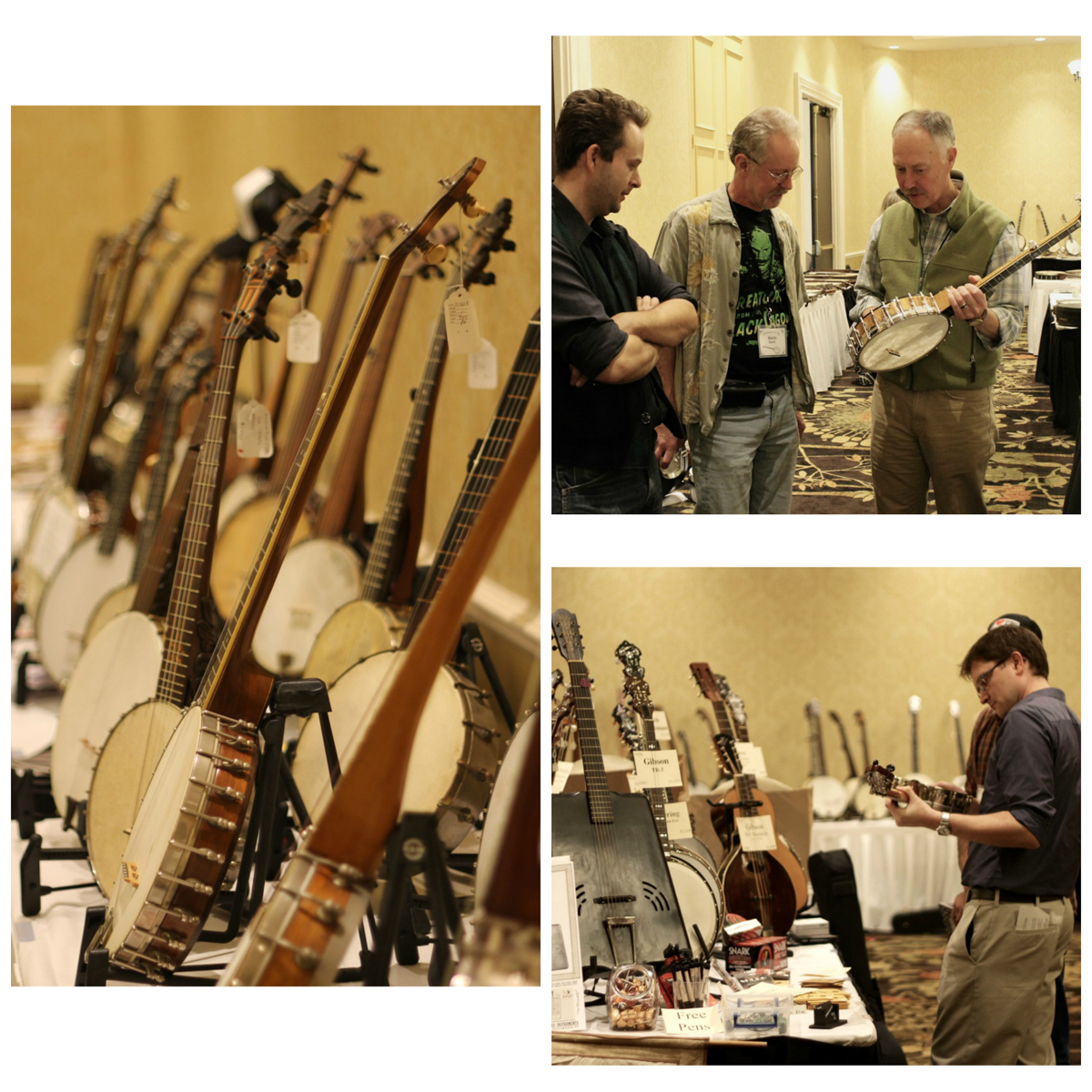
One of those signature activities is an “expo,” which will occupy the museum’s Special Exhibits Gallery. In this space, attendees will display instruments and ephemera predominantly from the 19th and early 20th centuries, and they will also get the chance to network and to talk in a more casual atmosphere.

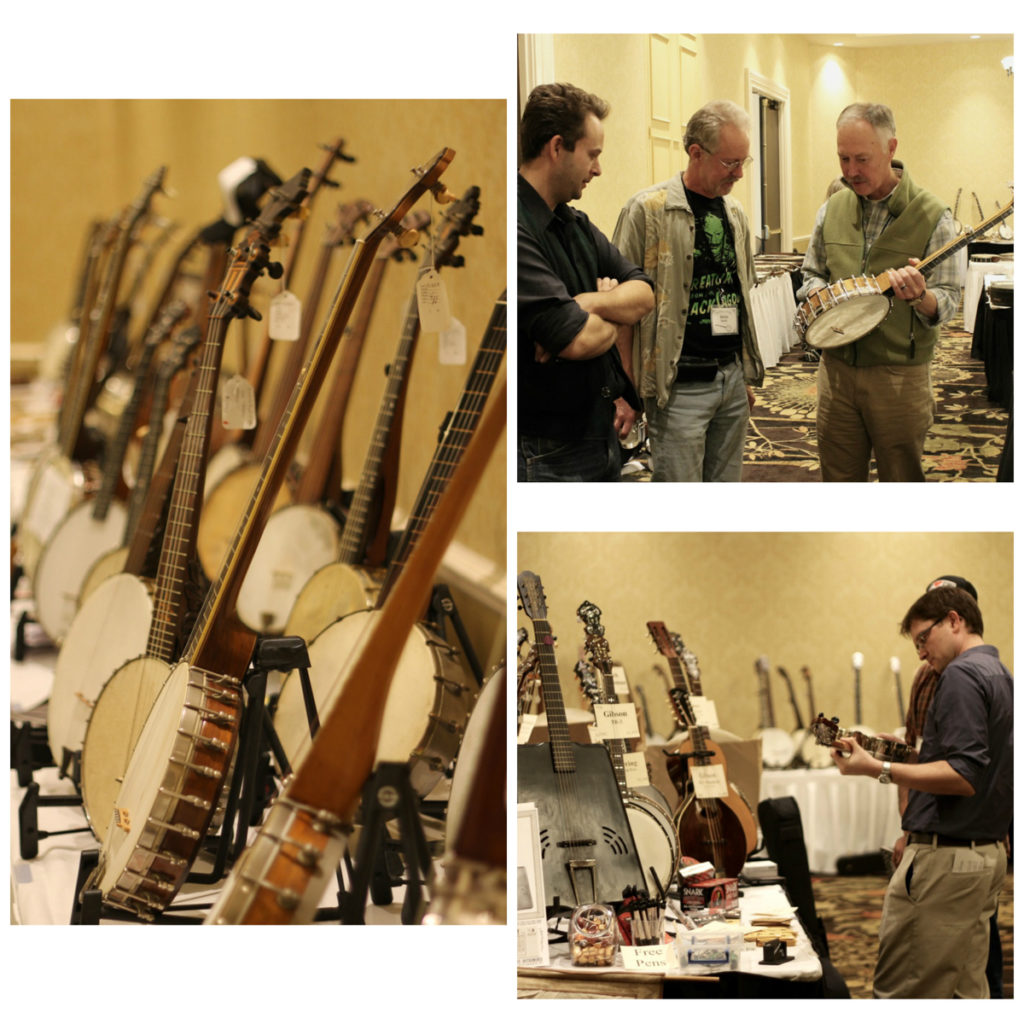
Three pictures from Banjo Gathering 2017: Several banjos displayed on stands at the expo (left); two men looking at a banjo being held by a third man (top right); a display of banjos and related ephemera on a table with one male visitor (bottom right).
The “expo” at the 2016 Banjo Gathering: Display tables filled with banjos (left); attendees Andy Fitzgibbon, Kevin Enoch, and Richard Jones-Bamman discussing a banjo during a break between presentations (top right); attendee Chris Witulski visits display tables filled with banjos and related instruments (bottom right). Photographs courtesy of Kristina Gaddy / Banjo Gathering

The Gathering also provides a platform for the latest scholarship, talks, and panel discussions on banjo history. As outlined on the Banjo Gathering website, the event welcomes presentation proposals that cover:

* The art and craft of banjo-making from early gourd instruments to contemporary banjos

* The banjo’s role in the early recordings and music and dance in genres such as minstrelsy, jazz, country, old time, and bluegrass

* The American experience through banjo history, including the African Diaspora; America’s history of slavery, racism, and resistance; and social class and cultural stereotypes

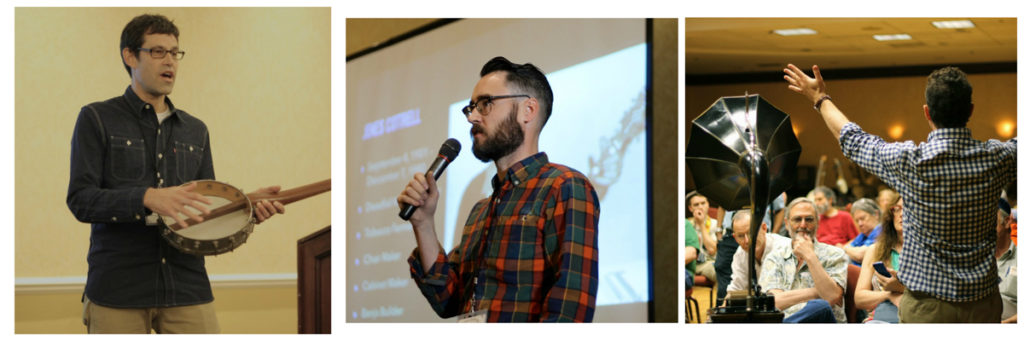
Three pics: Man holding a banjo while discussing it in a presentation (left); man holding a mic in front of a PowerPoint presentation (center); man facing a large audience with his arms held wide and a Edison recording machine with morning glory horn to his left (right).
Two presenters from the 2016 Banjo Gathering – Brooks Masten (left) and Christopher Dean (center) – share their knowledge about banjo-building traditions. Jerry Fabris, a 2014 Banjo Gathering presenter, explains early Edison recording equipment that was used at the Gathering to demonstrate historical recording techniques for the banjo (right). Photographs courtesy of Kristina Gaddy / Banjo Gathering

Every Gathering also typically includes site visits and field trips to locations that add value to the narratives surrounding banjo history.

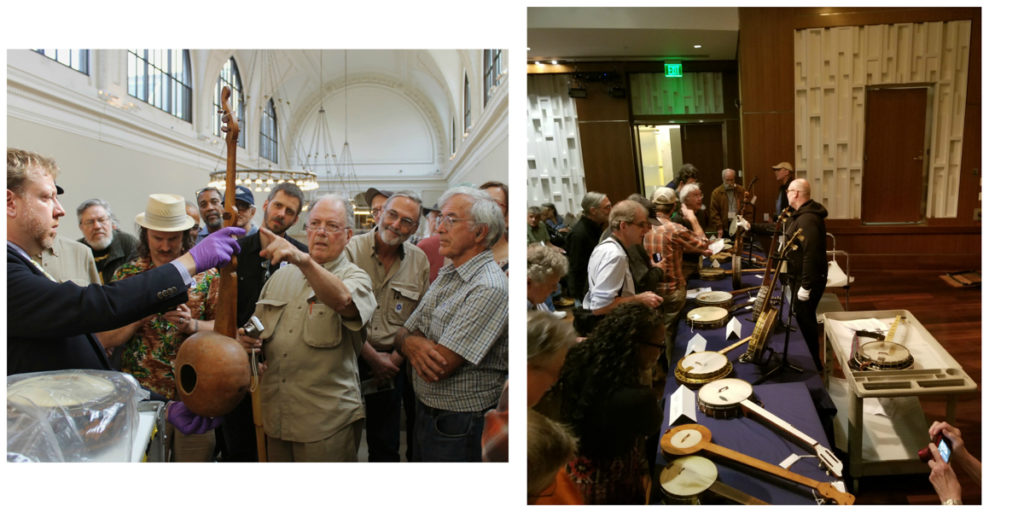
Two pics: Several Banjo Gathering attendees in the one of the Met Museum's galleries being shown a banjo by a curator (left); several participants looking at a variety of banjos and related ephemera on a table in a museum education room (right).
In 2014 Banjo Gathering attendees visited the banjo holdings at the Met in New York City (left), and in 2017 participants got the chance to view a cross-section of the banjos and related ephemera in the collections of the Smithsonian National Museum of American History (right). Photographs courtesy of Kristina Gaddy / Banjo Gathering (left) and Greg Adams (right)

I attended my first Banjo Gathering in 2001 at the invitation of banjo builder and historian George Wunderlich, and I’ve only missed one Gathering since that time. I keep coming back year after year because I see the constant potential of tapping into the knowledge of other attendees, exploring the instruments and ephemera they bring, and brainstorming ways of applying that knowledge in public-facing outputs. A goodly number of exhibits, books, and recordings have grown out of this event, and 2018 looks like it will maintain this trend.

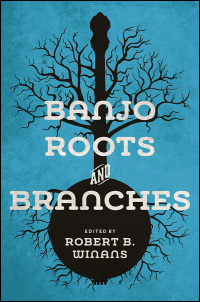
What makes the 20th Anniversary Banjo Gathering particularly special for me is that it coincides with the University of Illinois Press publication of Banjo Roots and Branches, edited by Robert B. Winans. Many of the authors of this highly anticipated book are regular Banjo Gathering attendees. The book’s subtitle – West African precursors, African-Caribbean origins, North American journeys – measures the breadth of dedication and influence that the Banjo Gathering represents. The book not only pays homage to another University of Illinois Press author – Dena Epstein and her book Sinful Tunes and Spirituals – but it is also dedicated to Shlomo Pestcoe (1958—2015), who was a part of the greater Banjo Collectors community and a driving force behind the book.

Book cover of Banjo Roots and Branches -- blue background with a banjo shape bearing tree branches and roots.
The book cover of Banjo Roots and Branches makes a strong statement with its graphic design. Image from the University of Illinois Press website, where the book can be purchased.

For some attendees, the Banjo Gathering is just a good time to get together with friends who like to collect similar things and to talk about their passion. For others, this event provides access to primary source materials that illuminate banjo history in ways that do not exist anywhere else. For me, I see the Banjo Gathering as an opportunity to ask questions about what it means to understand the American experience using an instrument whose history has the power to challenge and inspire.

Come explore what banjo history and the American experience means to you when you reserve your place at the Banjo Gathering!