Music & Songs Archives - Page 22 of 30 - The Birthplace of Country Music
Listen
Play
Loading station info...

Instrument Interview: Uncle Dave Macon’s Banjo

“Instrument Interview” posts are a chance to sit down with the instruments of traditional, country, bluegrass, and roots music – from different types of instruments to specific ones related to artists, luthiers, and songwriters – and learn more about them. Ten questions are posed, and the instruments answer! Today we talk with Uncle Dave Macon’s banjo.

Who are you?

I am a Gibson 5-string banjo, Model RB-1. I was born in 1928 at the Gibson Company’s facility in Kalamazoo, Michigan. It was my good fortune to be the first banjo given to Uncle Dave Macon by Gibson as part of a national advertising campaign. I was made special, without a resonator and with a wooden dowling, all to make me lighter so Uncle Dave could better perform his “trick banjo playing,” as he called it. I stayed with Uncle Dave for nearly 25 years, until he passed away in 1952. Most other production RB-1s at the time were made for sale; in 1928 a Gibson banjo with case sold for $26.

Where did you first meet Uncle Dave?

I’ll never forget that day! In 1928 the folks at Gibson had hired Uncle Dave as a promoter for their national advertising campaign, and so a photo shoot was set up to help with the promotion. A Gibson sales representative took me to a photographer’s shop – Wagner Studios in Cullman, Alabama – and I met Uncle Dave there for the first time. I have to say, it was love at first sight for both of us. He looked at my fine craftsmanship with glee, and it was my pleasure to be in the hands of the most renowned and popular banjo player of the day, all the while knowing that I was headed for center stage at the Grand Ole Opry.
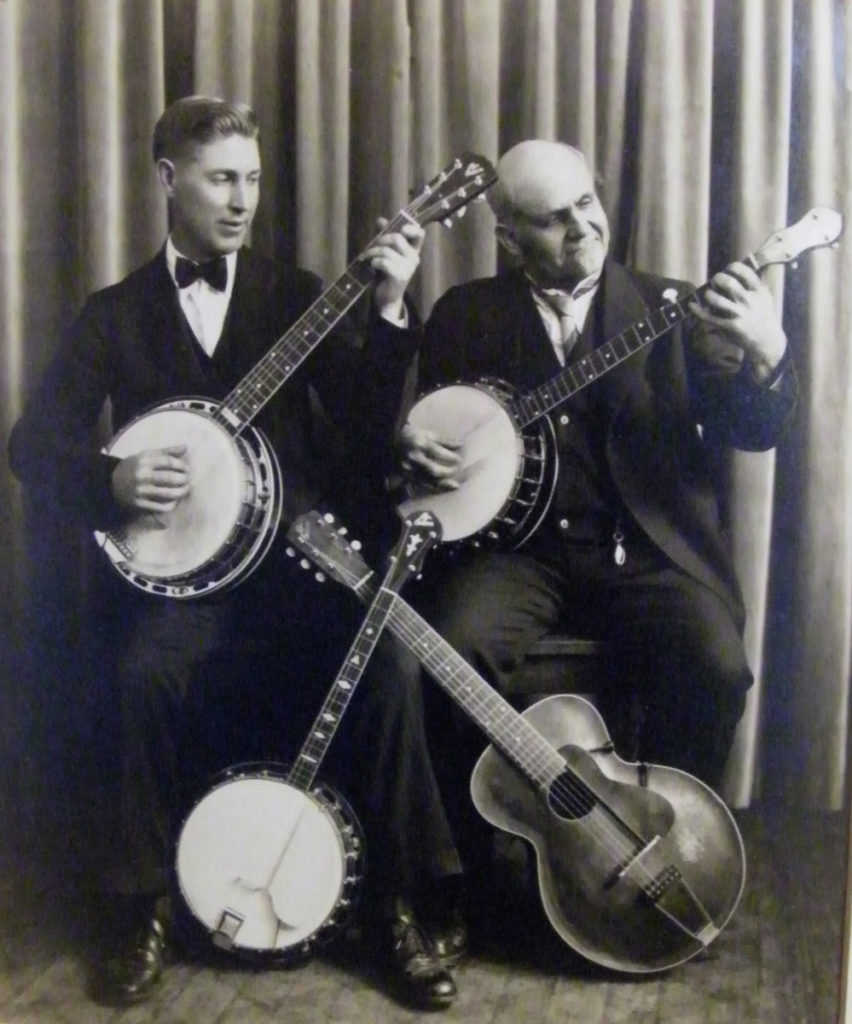
Sam McGee was part of the Gibson photo shoot too; here he is seen with Uncle Dave and their new Gibson instruments in 1928. Courtesy of Macon-Doubler Family

Were you his only banjo?

No, I wasn’t. And I want to share some private information that most people don’t know. Uncle Dave and his dear wife, Miss Tildy, raised seven sons. As part of compensation for his advertising work, Gibson agreed to provide Uncle Dave with other banjos, and before long, he had seven Gibson banjos in all. We were like a second family to Uncle Dave, and being the first he acquired, the other banjos looked up to me like an older brother. Not to be prideful, but Uncle Dave eventually gave away or set aside the first banjos with which he had started his career and used only us Gibsons. The Dixie Dewdrop truly believed the punch line of Gibson’s advertising campaign: “Only a Gibson is good enough.”

Is it true that Uncle Dave always performed using three banjos?

It sure is! He used three banjos so he could switch quickly from song to song without having to re-tune his instrument. The three banjos were tuned in the keys of C, F, and G. I was always set to the key of C.

What are your fondest memories of being with the Dixie Dewdrop?

No doubt, it was being part of his shows. It was fun, but Uncle Dave really made us work. Once he took to the stage, it was non-stop action. His picking style made it sound as though us Gibsons were singing right along with him, and we often felt we were the center of the show, even though we knew that was Uncle Dave’s rightful place. We had to twang, spin, and twirl throughout the entire show – without much rest! When we’d get overheated from all the frenetic playing, Uncle Dave would remove his big, black hat and fan us to cool us down, a stunt that always made the house roar. With the travel and all, it was hard work, but Uncle Dave really cared for us. Like I said, he treated his seven Gibson banjos like a second set of sons.

Uncle Dave didn’t begin his career as a professional entertainer until he was age 50. Did that help or hurt him?

It definitely helped him. By the time he turned 50, he was at the peak of his playing abilities. He had also learned so many other traditional songs that younger musicians just didn’t know. His age also gave him confidence in dealing with all the people we encountered. Uncle Dave was always honest and fair with folks, especially when it came to his financial dealings.
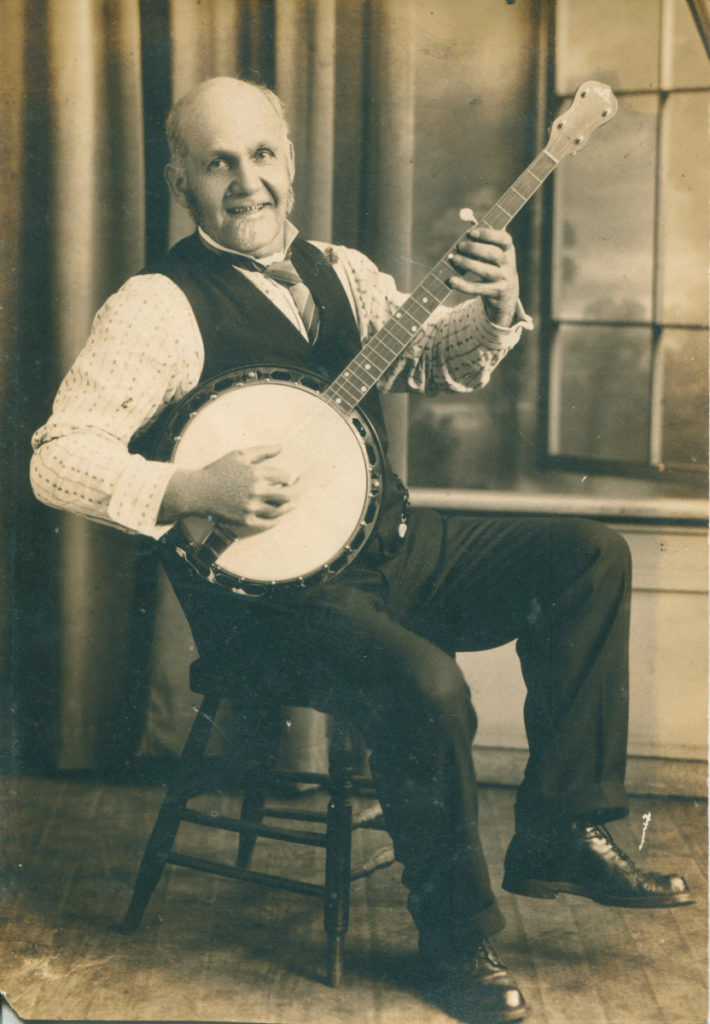
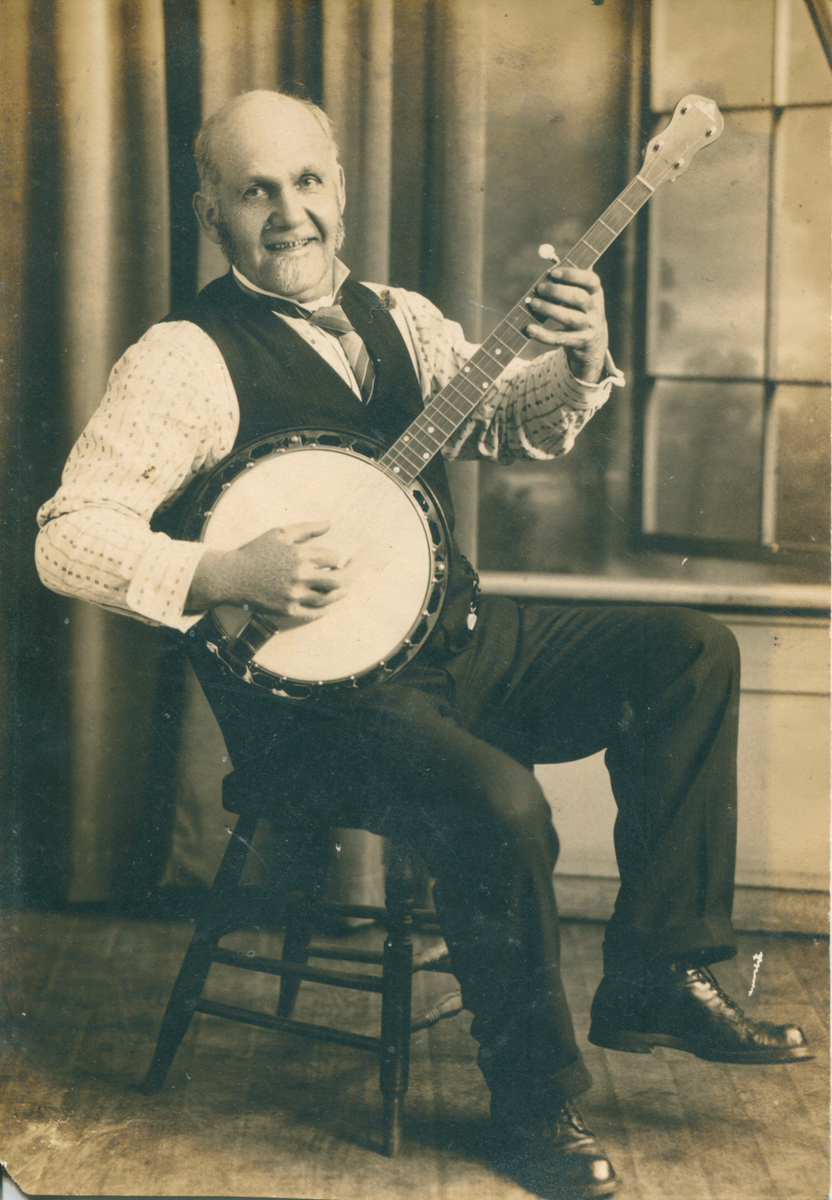
Uncle Dave Macon in a shirt, vest and trousers playing the banjo sitting down.
The Dixie Dewdrop always played sitting down to facilitate his “trick banjo playing.” Courtesy of Macon-Doubler Family

Were there any special, personal moments you’d like to share?

Well, most folks know that Uncle Dave fought alcoholism and depression for much of his life. What they don’t know is that when he began to recover from these episodes, he would call for a banjo. One of his Gibson banjos would hop into his lap, and he’d start to play and sing. Before long, that music would completely restore sobriety and lift the fog of depression. The cure for Dave Macon’s ailments didn’t come from a little box of pills or a medicine bottle; all of us Gibson banjos were his best therapy!

What happened to you after Uncle Dave passed away?

What a sad time that was for us! One of us was stolen from Uncle Dave’s house, even before the estate sale was conducted, and has not been seen since. However, Uncle Dave had left instructions for his Gibsons to be given to folks who he knew would take good care of us. His son Dorris, who had played with his father for nearly 25 years, knew Uncle Dave’s wishes and carried out those instructions. Our little Gibson family was broken up and given to various entertainers. I had a fortunate fate, being bequeathed to Roy Acuff, who really appreciated what I and Uncle Dave had done together. One of us went to Stringbean, another to Brother Oswald, another to June Carter, and yet another to Earl Scruggs. We still don’t know the fate of the seventh banjo. Uncle Dave honored us all in a special way. On his tombstone is inscribed the epitaph “The World’s Most Outstanding Banjoist.” I like to think that all of us Gibsons had a lot to do with making that tribute a reality.

And so where are you now?

I’m on public display at the rear of Ryman Auditorium in Nashville as part of the Roy Acuff Collection. I hang in a display case that also features a short history of the song “Rock About My Sara Jane,” one of Uncle Dave’s most popular tunes, which he learned while living in Nashville as a teenager. From my vantage point, I can still see the center stage of Ryman Auditorium, where Uncle Dave played and sang his last song ever on March 1, 1952, not long before he passed away.

I’ve heard you can also be seen somewhere else?

The second location where I can be seen is on Uncle Dave’s roadside monument located just east of Woodbury, Tennessee. It was placed there by other Opry stars in 1955 to honor Uncle Dave’s great status as the “Grand Ole Man of the Grand Ole Opry.” Near the top of the tall memorial, Uncle Dave is depicted in a fine, chiseled profile. I’m shown right below in full relief, 5-strings and all! It is an honor for me, and all the other Gibson banjos, to know that our name and reputation will always be remembered as part of Uncle Dave’s music and performance legacy.

*To learn more about Uncle Dave Macon, his banjos, and his life in music, join Michael Doubler in the museum’s Performance Theater on Sunday, November 4, 2018 at 1:00pm for a talk and signing of his new book Dixie Dewdrop: The Uncle Dave Macon Story. This program is free and open to the public.
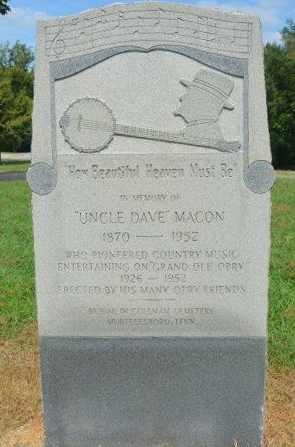
Stone marker to Uncle Dave Macon with his profile and banjo carved at the top and a memorial text to him below.
The Uncle Dave Macon monument stands east of Woodbury, Tennessee, along Route 70S. Courtesy of Macon-Doubler Family

Pick 5: The Witching 17 Minutes, 12 Seconds

For our “Pick 5” blog series, we ask members of the Radio Bristol team to pick five songs within a given theme – from heartsongs to murder ballads and everything in between! Once they pick their “5,” they get the chance to tell us more about why they chose those songs. With a diverse staff of knowledgeable DJs, we’re sure to get some interesting song choices, which might introduce you to some new music, all easily accessible by tuning into Radio Bristol!

Hello BCM blog readers! That creepiest, kookiest, and most enchanting holiday of All Hallows’ Eve is almost upon us so I have seized the opportunity to contribute my first “Pick 5” blog post!

If you had known me as a kid and inquired about my favorite season and/or holiday you would have gotten the same answer then as you will now: fall and Halloween. I find the combination of contrasting colors, spicy scents, and the brisk chill of autumn to be a wonderful atmosphere, but then you go and add the fun and mischief associated with Halloween and you have a formula that has always created good times and lasting memories for me. Include the concept of my ever-constant passion for music, and what do you get? The subject of this blog!

So, on focusing on my “Pick 5” choices, my first thoughts were of the multitudes of spooky songs I have listened to and enjoyed over the years. I then, almost instantly, realized that it would be way too tough to narrow these down to only five songs…BUT WAIT! When contemplating this, it occurred to me that several of the first tunes that came to mind had a running theme: WITCHES! And so I was able to access the disorderly yet bountiful section of my mind dedicated to music and summon my favorite peculiar compositions on the topic within minutes. Thus I present to you, Scotty’s Top 5 Witchy Records:

“The Witch,” The Sonics (1965)

This track could very well be the epitome of what is (and should be) considered garage rock and has definitely served as a blueprint for many architects of the primal rock-and-roll and punk that followed. “The Witch” is just one of a handful of The Sonics’ songs that are unmistakable when heard, and it is one of the first that I think of when the subject of garage or Halloween comes up. Though originally released as a single in 1965, the video below shows the band performing the song live in Iceland for KEXP in 2016. Sounds like they’ve still got it!

“Season of the Witch,” Donovan (1966)

This track from the Scottish musician’s 1966 Sunshine Superman record is a psychedelic pop gem. It is likely the most recognizable of my picks as it has been covered by other artists such as Vanilla Fudge and Joan Jett, as well as having been used in several television shows and movies throughout the years. The song’s popularity in soundtracks is not a mystery – it definitely sets a distinct tone and eerie atmosphere. “Season of the Witch”: a truly cool piece of music!

“You Must Be a Witch,” The Lollipop Shoppe (1968)

My last blog post was about rock-and-roll singer and guitar player Fred Cole, a musician who made an incredible impact in the world of garage rock. He formed the band Dead Moon in 1987, his most notable endeavor, but The Lollipop Shoppe, formed in the late 1960s, is close to where it all began for him. “You Must Be a Witch” is arguably my favorite witchy song of all time but, as with most things, I guess mood dictates that. The musicianship and dynamic loud/quiet/loud formula gives the song its own je ne sais quoi. Fred even took to wearing a witchy hat in his Dead Moon days!

“The Witch,” The Rattles (1970)

I can’t remember where I first encountered this track, but it has been a Halloween staple in my song repertoire over the past ten years or so. Though the song is not just a Halloween song for me: it gets stuck in my head randomly as well. I don’t know a whole lot about The Rattles, but they were a German band active from the early 1960s through the mid-1970s and must have been at least mildly successful because I have seen footage of them playing on Top of the Pops. This video for The Rattles’ performing “The Witch” is definitely worth your time. Dig the drummer playing the downed branch of that tree!

“Witch,” The Bird and the Bee (2008)       

The Bird and the Bee are an indie pop duo that first attracted my attention with their 2010 release of Interpreting the Masters, Vol. 1: A Tribute to Daryl Hall and John Oates, which I highly recommend. As music nerds do when they find something they love, I backtracked through the group’s discography and found two previous releases that I also really liked. This cut of “Witch” is from their sophomore release Ray Guns Are Not Just the Future and sounds like it was retro-recorded for 1960s espionage cinema – it has a REALLY cool vibe. “P.S. I’m a witch…”

The Devil Has All the Best Tunes

You may have heard that A. P. Carter could play the fiddle, but refused to do so on record because it was “the devil’s box.” And just about everyone knows Charlie Daniel’s 1979 hit song “The Devil Went Down to Georgia” about a demonic fiddling contest. But here’s the question: Out of all the instruments, why is the devil so taken with the fiddle? Why not the accordion? The saxophone? I mean, surely the kazoo was born from hellfire, right?

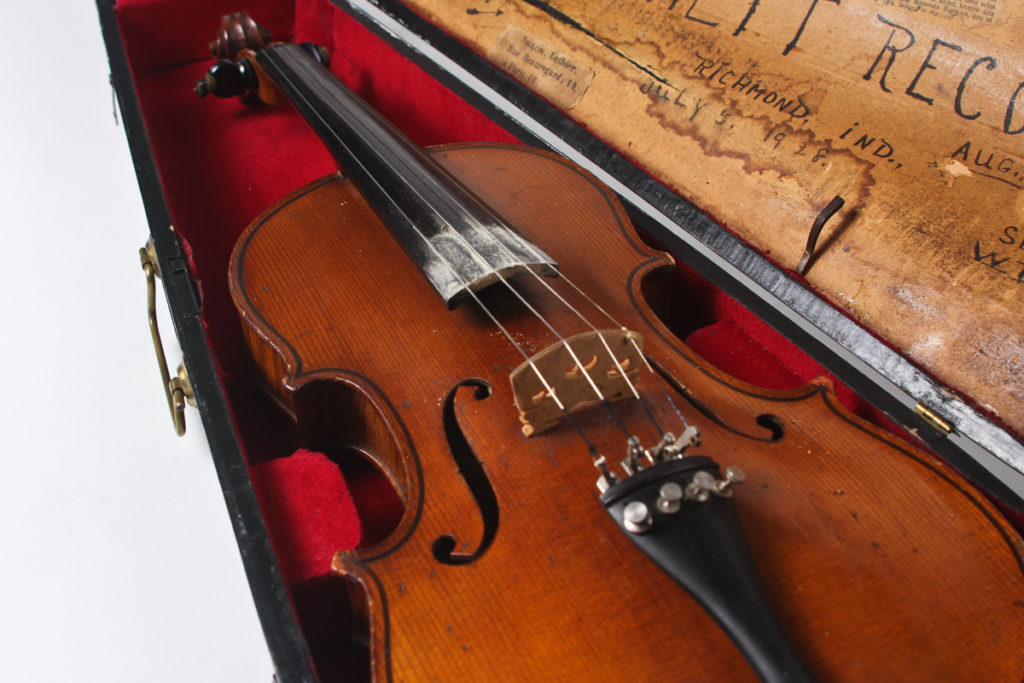
Close up of fiddle in its case.
This fiddle from our collection looks pretty free of fire and brimstone… © Birthplace of Country Music; Photographer: Haley Hensley. Gift of Ruth Roe

Where there is fiddle music, though, there is often dancing, and where there is dancing, the devil is surely at play. I have stories of this in my own family – my grandmother’s Uncle Willard was very musical, but Grandma and her sisters would only dance to his music when their very religious Aunt Eugie wasn’t around to see them. The link between dancing and the devil is an old one in fact. Way back in the 4th century, St. John Chrysotom said that “where dance is, there is the devil.” Countless preachers over the centuries have espoused the same.

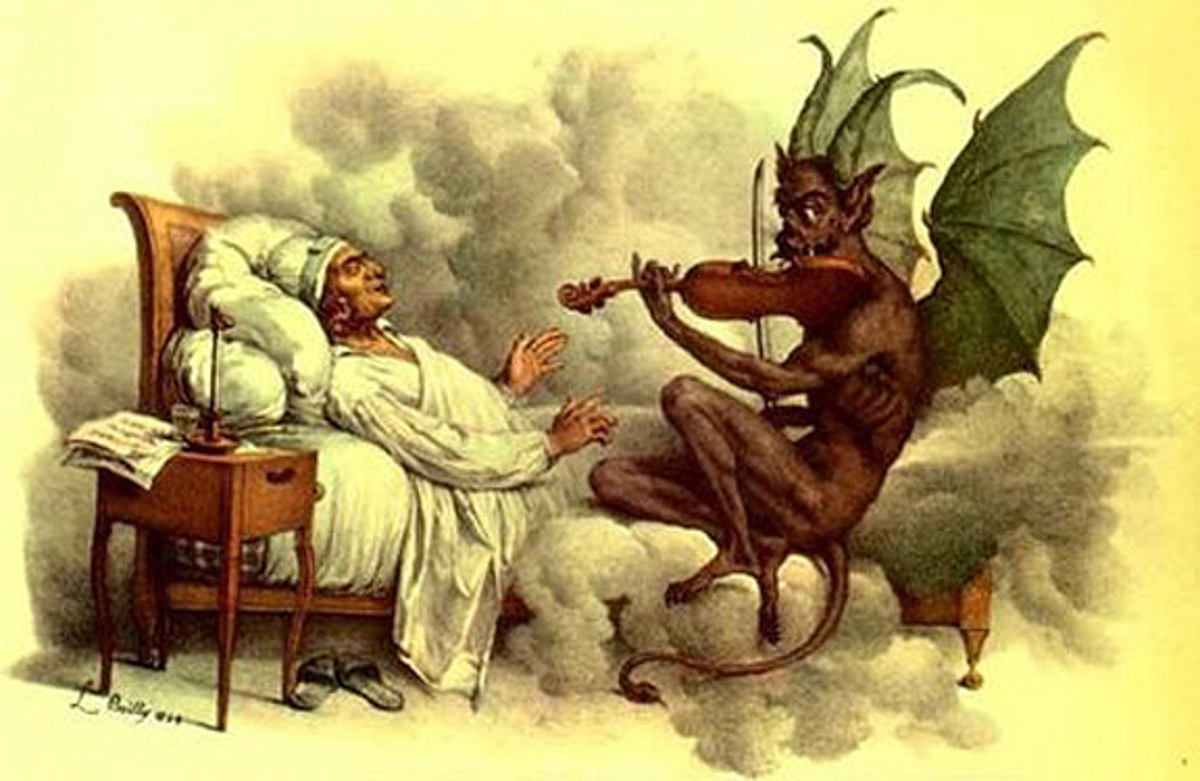
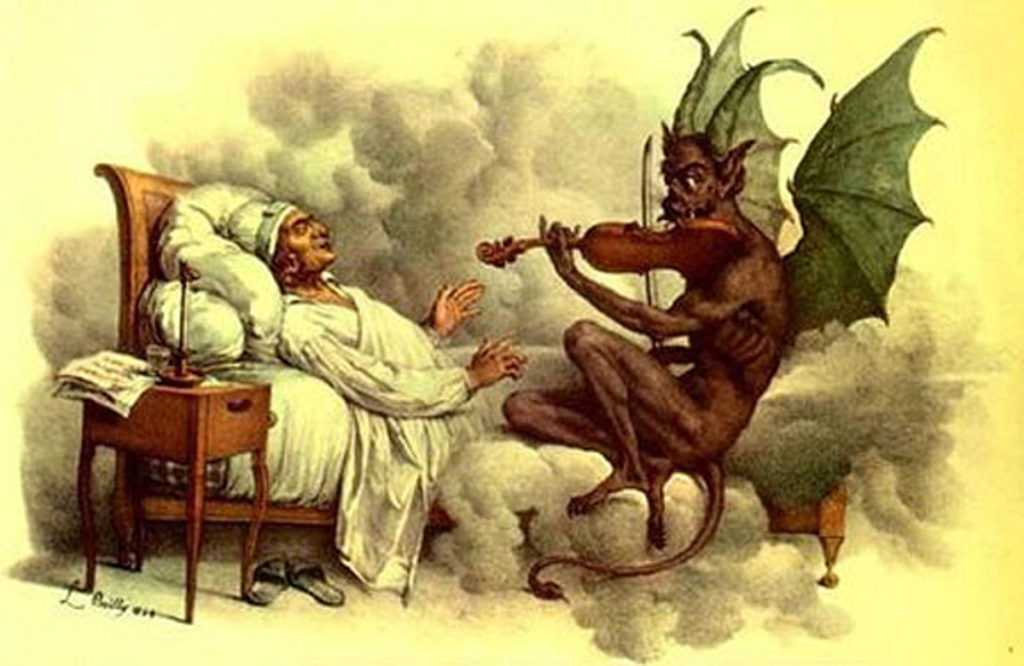
While the fiddle and its link to dancing was seen by many as the devil at play, the devil’s prowess with a fiddle and bow also brought inspiration. In the early 18th century, the Italian composer and violinist Giuseppe Tartini claimed that his most famous work, the “Devil’s Trill Sonata,” was delivered to him by the devil in a dream. This, of course, led to some imaginative depictions of what that might have looked like…

Illustration shows a man asleep in bed with the devil seated at the foot of the bed playing the fiddle.

Illustration of the legend behind Guiseppe Tartini’s “Devil’s Trill Sonata.” Public domain image from Wikimedia Commons

Scotland’s favorite poet, Robert Burns, wrote “The Deil’s Awa Wi’ The Excise Man” a few decades later, in which the devil fiddles into town and dances off with the tax collector. The townsfolk react thusly:

We’ll mak our maut, and we’ll brew our drink,

We’ll laugh, sing, and rejoice, man,

And mony braw thanks to the meikle black deil,

That danc’d awa wi’ th’ Exciseman.

In case your Scots dialect is a bit rusty…basically everyone extends their grateful thanks to the devil, for with the tax man gone, they can booze it up all they want and have a big time!

With that rollicking party in mind, here are a handful of the most devilish tunes I know:

“The Devil’s Dream”

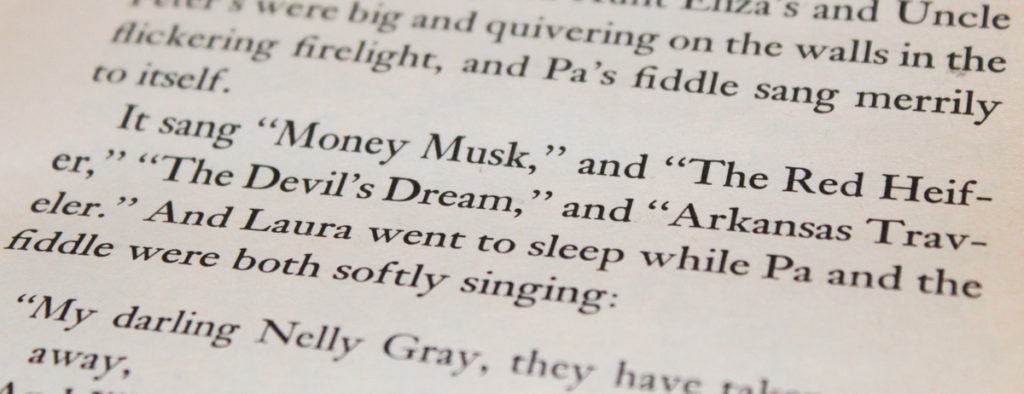
“The Devil’s Dream” is a standard Appalachian fiddle tune. Laura Ingalls Wilder remembers hearing this tune as a child in the 1870s, so it’s probably safe to assume that it was also a familiar one to fiddlers in our region at the time of the Bristol Sessions. It originated in Scotland as “The De’l Among the Tailors,” and it was also noted in an English folk tale from the early 1800s. It is played here by the Whitetop Mountain Band (featuring Radio Bristol DJ Martha Spencer and family).


Detail of text describing Laura hearing her Pa play "The Devil's Dream" and other tunes on the fiddle.
Laura Ingalls Wilder remembers her Pa playing “The Devil’s Dream” in Little House in the Big Woods. Photograph courtesy of Emily Robinson

“Did You Ever See the Devil, Uncle Joe?”

“Did You Ever See the Devil, Uncle Joe?” is another good fiddle tune. Fiddlin’ Cowan Powers and his family, who play it here, were the first family string band to record commercially…three years before the 1927 Bristol Sessions! I learned this tune as “Hop High Ladies,” and some may know it as “Miss MacLeod’s reel” – another import from the British Isles. Click on this link for an extra treat: Pipe Major Willie Ross playing both of these tunes in the early 20th century!

“Never Let the Devil Get the Upper Hand”

Speaking of the 1927 Bristol Sessions, here’s another devil-fueled tune recorded a decade later by Bristol Sessions artists The Carter Family: “Never Let the Devil Get the Upper Hand” – which just seems like good all-round advice! Spoiler alert, however: the devil DOES get the upper hand of the young man in this song and convinces him to murder his lover. This story might sound familiar if you’ve ever heard the old murder ballad “Knoxville Girl.” It’s basically the same tale, though the latter adds a lot more gruesome detail.

“The Old Lady & the Devil”

In contrast, a woman gets the upper hand of Old Scratch – and her husband! – in “The Old Lady & the Devil,” recorded by Johnson City Sessions artists Bill & Bell Reed. In this tune, a farmer happily lets the devil carry off his wife, but she raises so much hell in Hell that the devil brings her back home again. Dave Rawlings included a fantastic version of this song on his 2017 album Poor David’s Almanackthough he shortens the chorus and leaves out the bit where the woman whacks her husband with the dasher from the butter churn.

That gives you just a few of the devilish tunes out there, but I hope the music and the links between the devil and the much-loved fiddle get you in the mood for a very Happy Halloween!

Instrument Interview: The Creole Bania, the Oldest Existing Banjo

“Instrument Interview” posts are a chance to sit down with the instruments of traditional, country, bluegrass, and roots music – from different types of instruments to specific ones related to artists, luthiers, and songwriters – and learn more about them. Ten questions are posed, and the instruments answer! Today we talk with the Creole bania.

What ARE you?

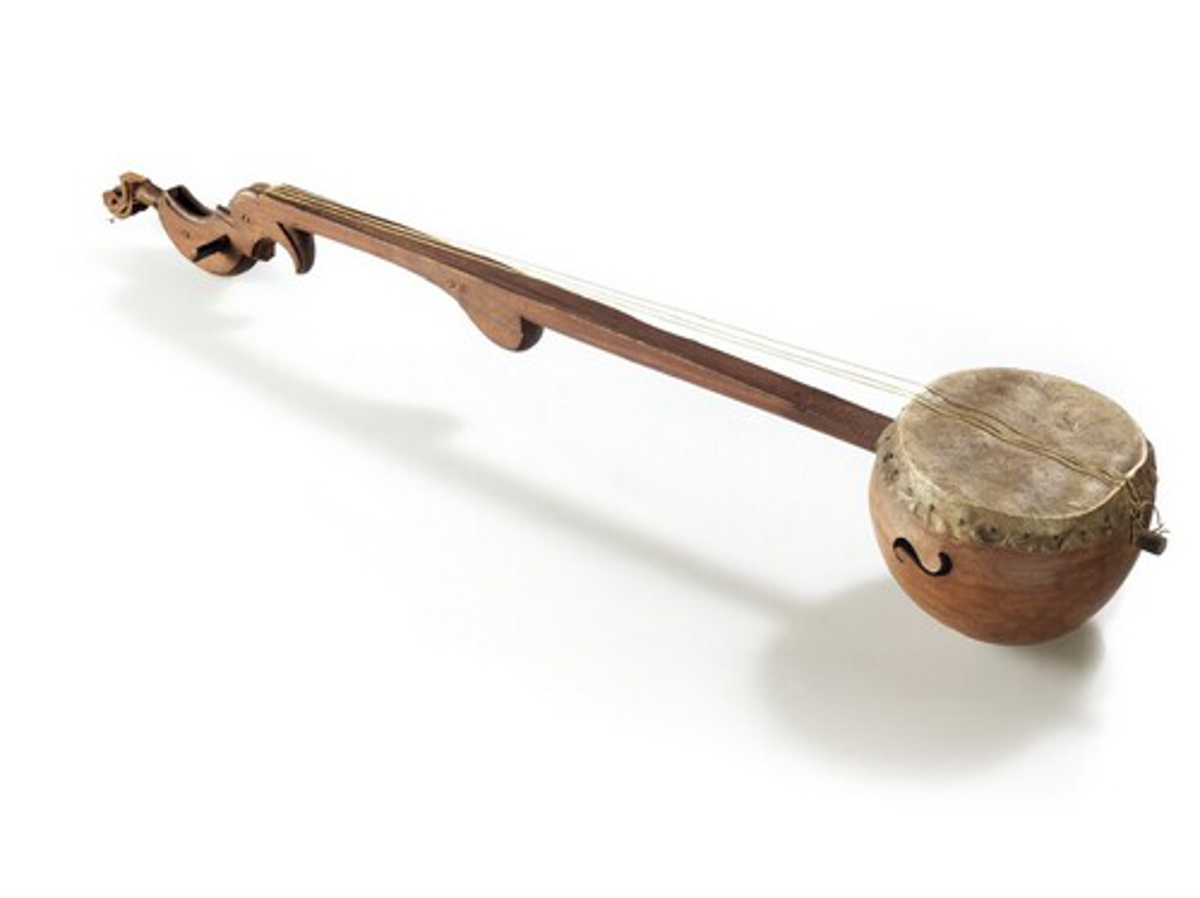
I’m a banjo! I know I don’t exactly look like the banjos you think of today, but I’m actually the earliest known banjo that still exists. I was made sometime before 1777, and at that time, banjos were made of gourds and calabashes.

Since you’re so different from the banjos we know today, describe yourself to us.

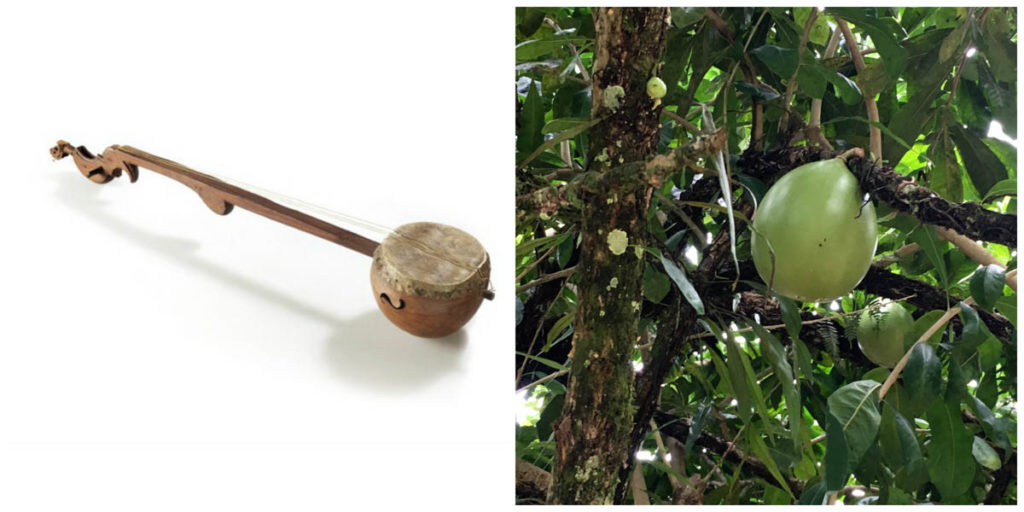
My body is a calabash, and my drumhead is made of animal skin held on with wooden pins. I have two S-shaped sound holes (kind of like a fiddle). I also have three long strings and one short string and a very nicely carved peghead. My neck is thinner than banjos today, and it is made of wood.

Left pic: A creole bania as described in the text, made of a calabash with a skin drumhead, charged peghead, and strings. Right pic: A globular green calabash growing on a tree.
The image to the left is a picture of me, where you can see the details I describe above. To the right is a picture of a calabash, a type of fruit that grows on trees; banias are also made from gourds, which grow on vines on the ground. Left: Creative Commons, https://hdl.handle.net/20.500.11840/609575; Right: Photograph courtesy of Kristina Gaddy

Where did you come from?

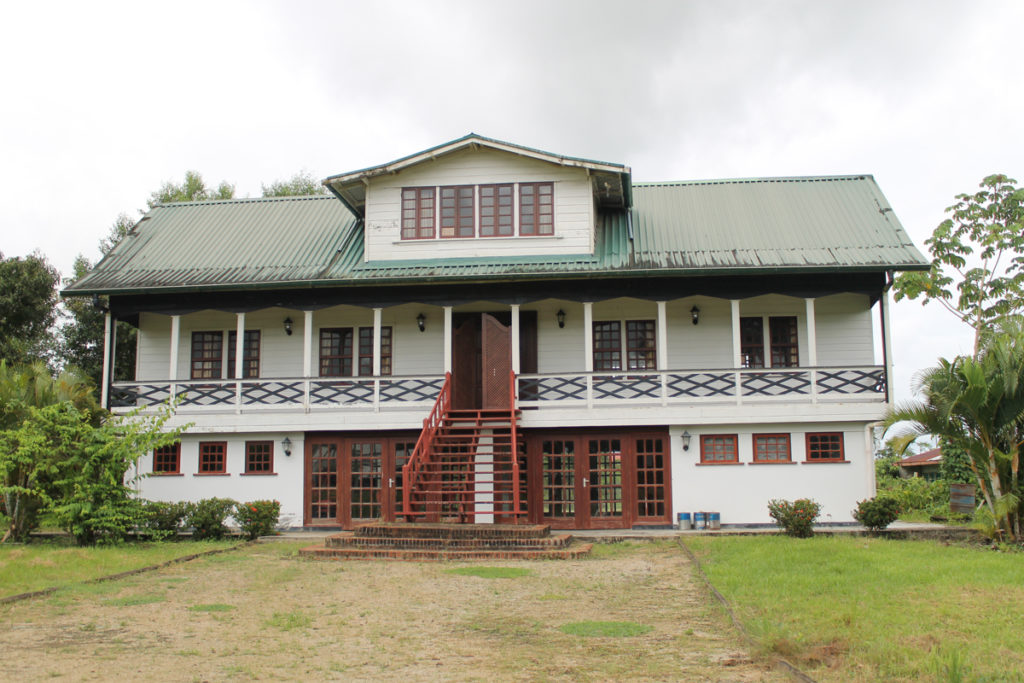
I came from the country that is known as Suriname. Located on the northern coast of South America, Suriname is actually a part of the Caribbean, even though it’s not an island. In the 1770s, Suriname was a Dutch colony, known for the brutal conditions that enslaved Africans and people of African descent faced working on sugar and coffee plantations.

A two-storey, with gable, plantation house, reconstructed. It is white with red stairs and doors on the ground floor, and a green roof.
A reconstructed plantation house at Stichting Openluchtmuseum Fort Nieuw Amsterdam (SOFNA), an open-air museum in Paramaribo, Suriname.
Photograph courtesy of Kristina Gaddy

Wait! I think of banjos as a North American instrument, but you say you’re from South America?

Actually, we’re not just found in North America. Banjos were observed all over the Caribbean, too. In fact, the first record of a banjo is from about 1687 in Jamaica! Instruments similar to me had lots of different names, including bania, banya, banjo, banger, banza, and panja, and were observed in New York, the Carolinas, New Orleans, Cuba, Haiti, St. Vincent, and Barbados, among other places. If you want to know more, you should check out Dena Epstein’s Sinful Tunes and Spirituals. Yours truly is mentioned, but she has accounts of my relatives from all over.

Check out this video of Seth Swingle playing a reproduction of the Haitian banza, a banjo collected in Haiti around 1840. Pete Ross studied the original and now makes reproductions for players and museums.

Who made you?

Almost 300,000 people were forcibly taken from Africa and enslaved in Suriname, and I was made by one of those enslaved people, who based my design on the instruments he or she had in Africa. I wish I could tell you more about the person who made me, but the man who collected me, John Gabriel Stedman, didn’t tell anyone more than that.

Tell me more about this Stedman guy.

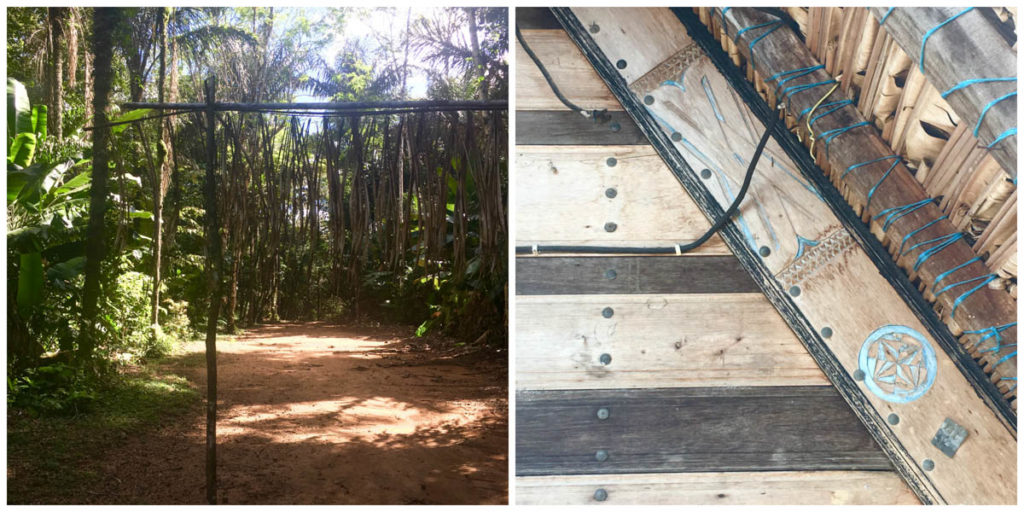
Captain John Gabriel Stedman arrived in Suriname to fight formerly enslaved people who had escaped to live in the jungle. Stedman was there to stop two tribes – the Saamaka and Njuka – from attacking plantations. Stedman kept a diary while he was in Suriname, which eventually became a very popular book, and he even drew a picture of me in it! That was when he named me “Creole Bania.”

Left: A earthen path marked with a horizontal wooden branch with hanging elements on it to mark the entrance to a village; right: boards from a house (looks like a ceiling), including carved elements.
Left: The entrance to a Saamaka village in Suriname; right: Detail of a carving on a home in a Saamaka village. Photographs courtesy of Kristina Gaddy

Where are you now?

I live at Tropenmuseum in the Netherlands. For many years I was in the storerooms, but I’ve recently been put on permanent display in an exhibit about slavery in the Dutch colonies, including Suriname.

Ok, so you’re the oldest banjo, but are there any other banjos like you?

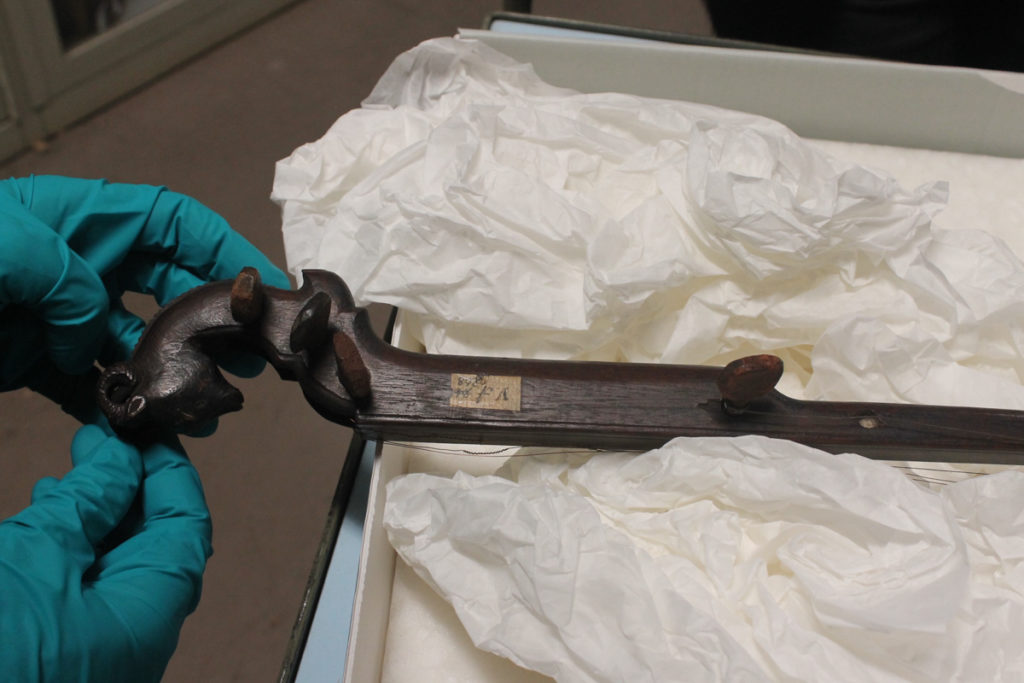
Yes! I have a friend from Suriname who lives at the Ethnologisches Museum in Berlin, Germany. That banjo is known as the panja (pronounced pan-ya), and it was collected sometime before 1850. We are very similar in construction, and this panja has a really beautiful peghead.

The panja's dark wood peghead, intricately carved with what looks to be a goat head, in the museum archive.
The peghead of the panja at the Ethnologisches Museum in Berlin, Germany. Photograph courtesy of Kristina Gaddy

Do we know any more about the panja?

No. In fact, for many years, U.S. banjo scholars didn’t know about the panja at all! It was rediscovered by a banjo researcher named Schlomo Pestcoe, and now a couple of people have even been by to visit it.

What type of music did you and the panja play?

Alas, something else we don’t remember! No one wrote down the music that was played on banjos in Suriname, but a note about the panja does give a bit of a clue. The collection note says: “Panja, 4-stringed strummed instrument, particular to death celebrations and to the song Ananhitori.” Recent research suggests that the banjo was a central part of a spiritual/cultural ritual across the Americas. I hear if you want to find out more about this, you should come to this year’s Banjo Gathering at the Birthplace of Country Music Museum in November!