Music & Songs Archives - Page 20 of 30 - The Birthplace of Country Music
Listen
Play
Loading station info...

Songs of Our Native Daughters: A Note from a Native Daughter

A little over a year ago I was asked by Rhiannon Giddens, co-founding member of the groundbreaking and Grammy-Award winning group The Carolina Chocolate Drops, if I was available to be part of a project with other black female songwriters that focused on the banjo and slave narratives. It is possible that these three concepts had never even been in a sentence together at any time in recent human history.

Rhiannon has been studying slave narratives and the history of the banjo for many years, and her inspiration for the project came from the idea of centering the story of the African diaspora with the voices of black women – voices that have been historically left in the background. Taking a cue from James Baldwin’s Notes of a Native Son, which inspired this project’s namesake, the stories of struggle and resistance come in the form of music. “It is only in his music…that the Negro in America has been able to tell his story. It is a story which otherwise has yet to be told and which no American is prepared to hear.”
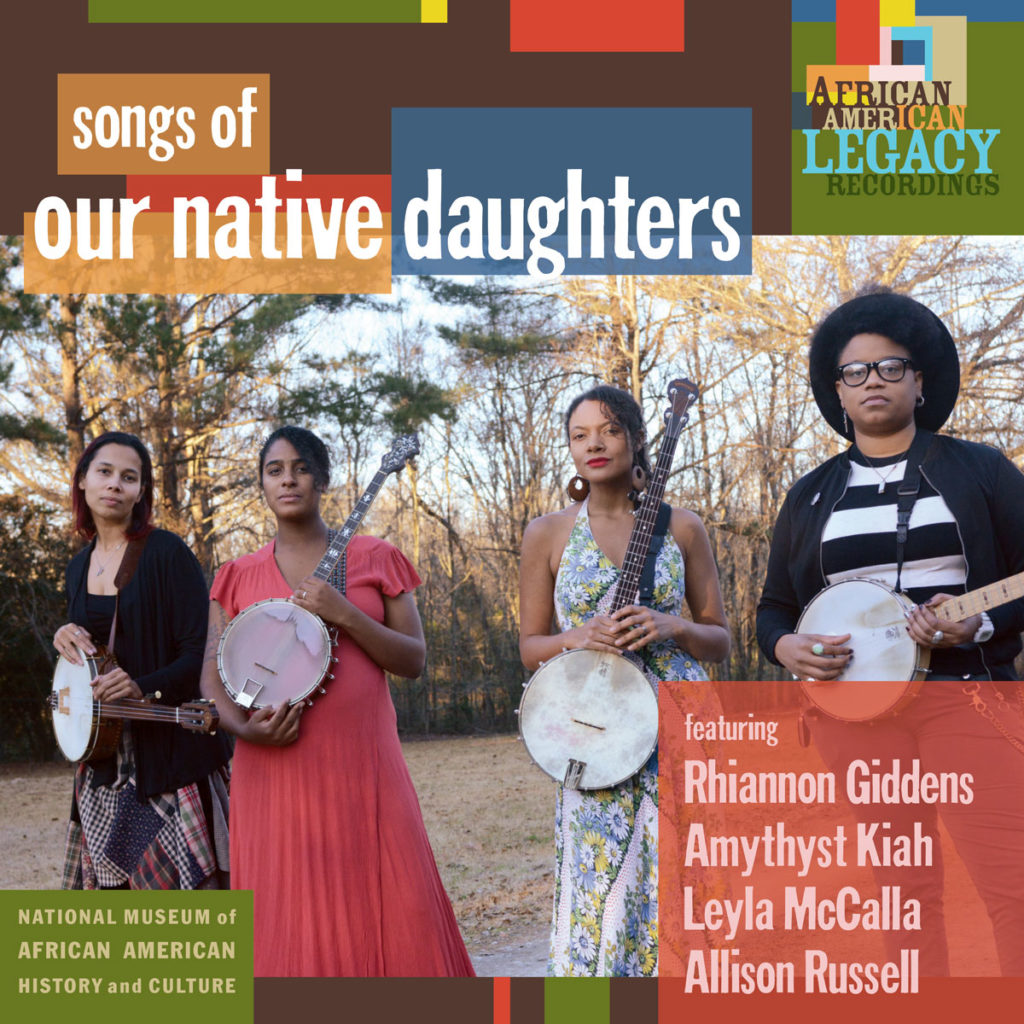
The album cover has all four women standing facing the camera, holding their banjos. Amythyst, in black hat and black and white striped tee, is to the far right of the picture.
Album cover to Songs of Our Native Daughters. Photograph by Terri Fensel

Songs of Our Native Daughters aims to contribute to preserving the history of the African diaspora in the Americas through an eclectic mix of folk styles. Rhiannon’s vision for the project centered on the banjo, an instrument descended from the West African lute family, incorporating it into folk music arrangements to tell the stories of ancestors who were brought to the Americas against their will. We today, as descendants, continue to thrive and heal with the power of music despite the adversity that has been endured.
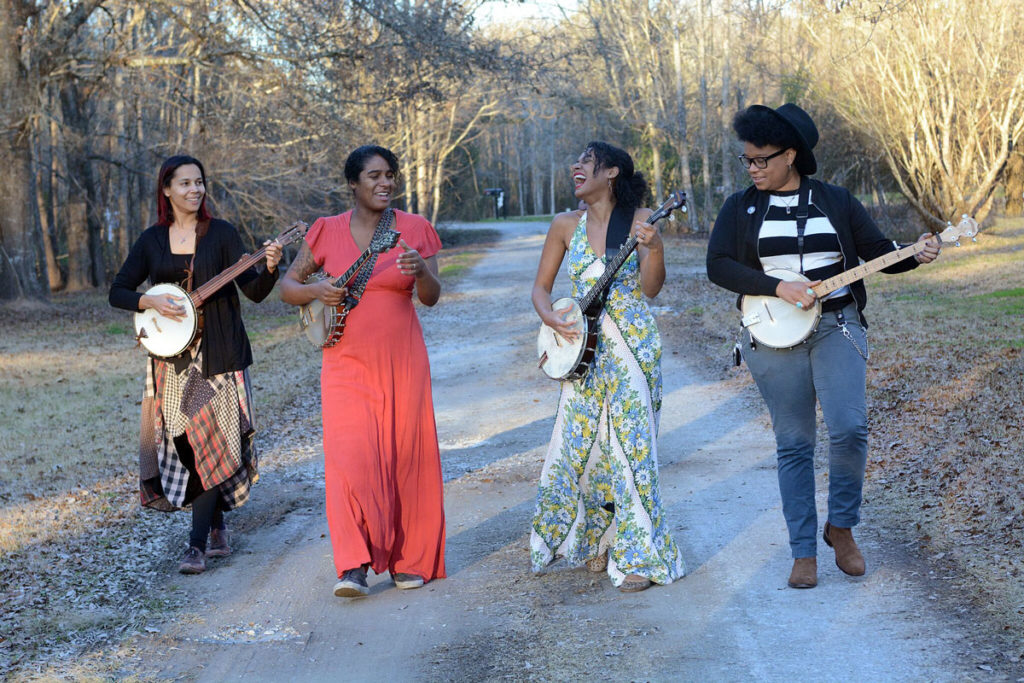
The four musicians walking down a dirt road with their banjos.
From left to right: Rhiannon Giddens, Leyla McCalla, Allison Russell, and Amythyst Kiah. Photograph by Terri Fensel

My career was just beginning to blossom when Rhiannon reached out to me about being part of Songs of Our Native Daughters. One year prior she had invited me to open a string of shows for her Freedom Highway album release tour. This new project was certainly an intriguing opportunity, not only from a historical and educational perspective, but also on a deeply personal level.

The album collaborators come from varying backgrounds: Rhiannon and I are both from the American Southeast, Allison Russell is from Montreal, Canada, and Leyla McCalla is a first-generation Haitian-American from New Jersey. We all have our unique perspectives and experiences as black women in North America, and our individual approaches to folk music are very eclectic, bringing so much dynamism to the music on the record.

Rhiannon cast the room well, calling upon Dirk Powell to record and co-produce the record with her at his studio in Breaux Bridge, Louisiana. She also invited Jamie Dick to perform drums and percussion, and Jason Sypher joined on upright and electric bass. Dirk, Jamie, and Jason have been touring and recording with Rhiannon on her previous solo work, so the template for the sound and process was already set.
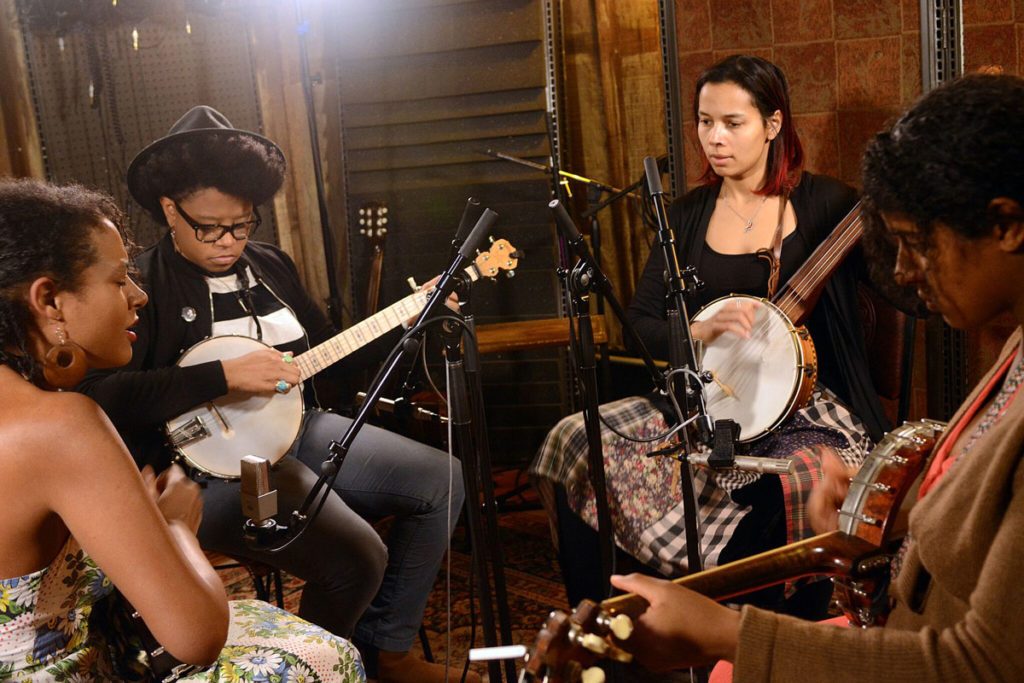
The four musicians sit in a small circle in studio, playing their banjos with mics and other equipment around them.
Making music together in studio. Photograph by Terri Fensel

The nature of four black women playing banjo and writing songs about the stories of our North American ancestors and their struggle was in and of itself a remarkable experience – truly inspiring and healing. There is an emotional and mental aspect to writing such heavy material; I have always been interested in using Southern Gothic style to convey concepts of human nature, and this project by far is the heaviest and most emotionally stirring work I have done. And it has changed me. Today I feel even more convinced in my pursuit of music as one of the best forms of communication, healing, and understanding of each other and our place in the world.

The entire concept of Songs of Our Native Daughters has simply never been done before. Rhiannon is truly one of the most driven and imaginative people I have ever met. To have the courage to dig into some of the subject matter she has tackled and to want to create a medium that relays these stories is simply remarkable. In order to deal with this kind of material – to know the pain and anguish my ancestors went through, to see the shoulders on which I stand, and to appreciate the people that survived and lived to tell their stories – is something that requires much patience and understanding. It was an enormous blessing to be part of this project and to be given the wonderful opportunity to help make these narratives come to life musically.

* Songs of our Native Daughters is released today, February 22, 2019 on Smithsonian Folkways Records as part of their African American Legacy series, which introduces a new way to celebrate black voices during Black History Month. The album is an eclectic folk record, with music styles ranging from minstrelsy, contemporary folk, blues, Appalachian string band, and more. Several publications and media outlets – including NPR, Rolling Stone, The Guardian, and DownBeat – have reached out to Rhiannon, Allison, Leyla, and me about our new project. Check out my website here to learn more about this and other projects I am working on.
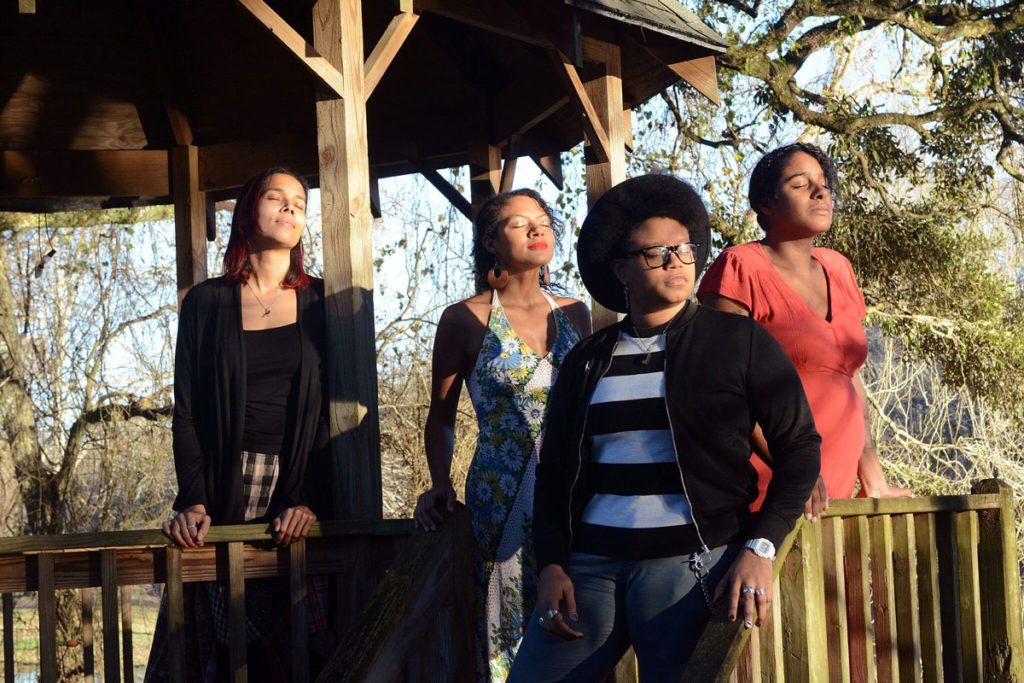

Album promotional photograph showing the four musicians on a cabin porch, faces to the sun and eyes closed.
Photograph by Terri Fensel

Pick 5: Anti-Valentine’s Day Ballads of Tragic Love

For our “Pick 5” blog series, we ask members of the Radio Bristol team to pick five songs within a given theme – from heartsongs to murder ballads and everything in between! Once they pick their “5,” they get the chance to tell us more about why they chose those songs. With a diverse staff of knowledgeable DJs, we’re sure to get some interesting song choices, which might introduce you to some new music, all easily accessible by tuning into Radio Bristol! Today’s “Pick 5” is by Ella Patrick, DJ host of Folk Yeah!

When I think of Valentine’s Day, I remember losing all the lollipops out of those little cardboard cards the cool kids used to give out, or I think of the time I accidently sat on an entire box of conversation hearts in front of the whole class. For me the “Valentine’s Day” thing has been forever clouded by a dust of powdered sugar, wadded up declarations of strictly platonic love, and the sinking feeling of rejection.

Based on personal experience, I thought for my “Pick 5” I’d make an “Anti-Valentine’s Day” playlist for all the broken hearted ne’er do wells out there (like me). Basically for those of us who know that love’s true nature is destruction, tears, and tubs of ice cream. So if you’re looking to avoid the sickly-sweet melodrama of assorted chocolate boxes and piles of overpriced hallmark cards, or if your personal life has been obliterated by Cupid’s arrow and the texture of red velvet makes you nauseous, look no further then this incredibly tragic playlist of sulking folk ballads! Whether you want to let go of the deranged hope of “finding true love,” feel the need to cry your eyes out, or want to find a “Sonic Hole” to crawl into, these songs will be a perfect guide to letting those nasty feelings of regret, loneliness, and heartbreak play on repeat.

“The End,” Sibylle Baier (1970 / 2006)

Written by Sibylle Baier, German folk singer and actress, “The End” was originally recorded in the early 1970s and was almost lost to obscurity. In 2006 Orange Twin Records released this song, along with a handful of recordings that comprised the album Colour Green, which gained Baier a cult following. Accompanied by sparse plucking on a classical guitar, Baier’s airy voice lingers through the refrain “It’s the end, friend of mine,” expressing wistful disbelief in her impending heartbreak. If you get through this first song without one tear, you may in fact be a robot…or an emotionally stable human being, whichever.

Diamonds & Rust,” Joan Baez (1975)

One of the few songs written by the “Queen of Folk” Joan Baez to chart top 40, “Diamonds & Rust” recounts the awkwardly public love affair between Baez and Bob Dylan. Literally every time I hear the spacy intro to this song, I start tearing up!!! I don’t know if it’s the uncomfortably vulnerable storytelling of a break-up that happened TEN years before the song was written, or the undeniable realization that there IS a universal force that makes it impossible for folk singers to have healthy relationships, but it always gets to me. If you don’t find yourself misty eyed after listening to this song, then you need to go spend some time contemplating existence in a crummy hotel over Washington Square, or just continue being a square for all eternity.

https://www.youtube.com/watch?v=2MSwBM_CbyY

“Make the World Go Away,” Ruen Brothers (2018)

Originally composed by Hank Cochran and first recorded by Ray Price in 1963, “Make the World Go Away” was a top 40 success three times back in the day and became a “Country Crooner Classic” covered by the likes of Eddy Arnold, Jim Reeves, The Secret Sisters, Martina McBride, and even Elvis! This version was released last year on Ramseur Records and features the “retro” rock English duo, the Ruen Brothers. Produced by Rick Rubin, this stripped-down acoustic, starry-eyed take alludes to every half-realized romantic daydream that smitten, self-centered lovebirds feed off of. If you can sway along to this beautifully dreary number without so much as a snivel, I’m personally concerned about your emotional depth.

“Undone in Sorrow,” Ola Belle Reed (1976)

Introduced as “a sad, sad, mournful song,” this song by Ola Belle Reed from a 1976 Smithsonian Folkways’ recording recounts the tale of every true lover’s worst nightmare. The main character goes out into the world to seek his fortune, planning to come back to marry his betrothed, but when he returns, he finds her pushing up daisies, buried on the mountainside instead. This song is a painful reminder that breaking up isn’t the only way to be destroyed by love; you can also have your partner plucked from this life randomly, never to return. If you can’t squeeze out a tear or two from this woeful ballad, you must live a life sheltered by powder puffs and psychological bubble wrap.

“Nothin,’” Townes Van Zandt (1971)

Nothin’ says romance like telling your lover to pick up all their junk and make sure not to leave anything behind when they go…RIGHT?! This song is either a destructive anthem to a wanna be Buddhist/strung-out hobo, or the bitter words of an extremely mortified songwriter unable to accept love, relating it only to their addictive patterns. Recorded in 1971 by Texas songwriter Townes Van Zandt, “Nothin’” has a circular feel to its brooding finger-picked melody. It seems like the listener is being swirled into a black hole of a jangling dismally poetic abyss. This IS the “Sonic Hole” I was talking about! Listen to this song five times on repeat, and if you don’t find yourself bawling uncontrollably, then you’re probably irreversibly desensitized to the human experience, or you just don’t care about nothin.’


Yodeling and Wounded Animals

I was booked to play and sing at an outdoor music festival in Indiana shortly after I learned to yodel. This was probably around 1983. I recall wandering around under the trees in a sparsely populated section of the festival grounds, practicing my yodeling prior to a performance on the stage. After a while I became aware that I was being watched by a young woman. She eventually spoke.

“What is that you are doing?” she asked. “You sound like a wounded animal.”

While “wounded animal” was not the effect I was going for, I was glad for some female attention. We smiled and had a conversation about yodeling.

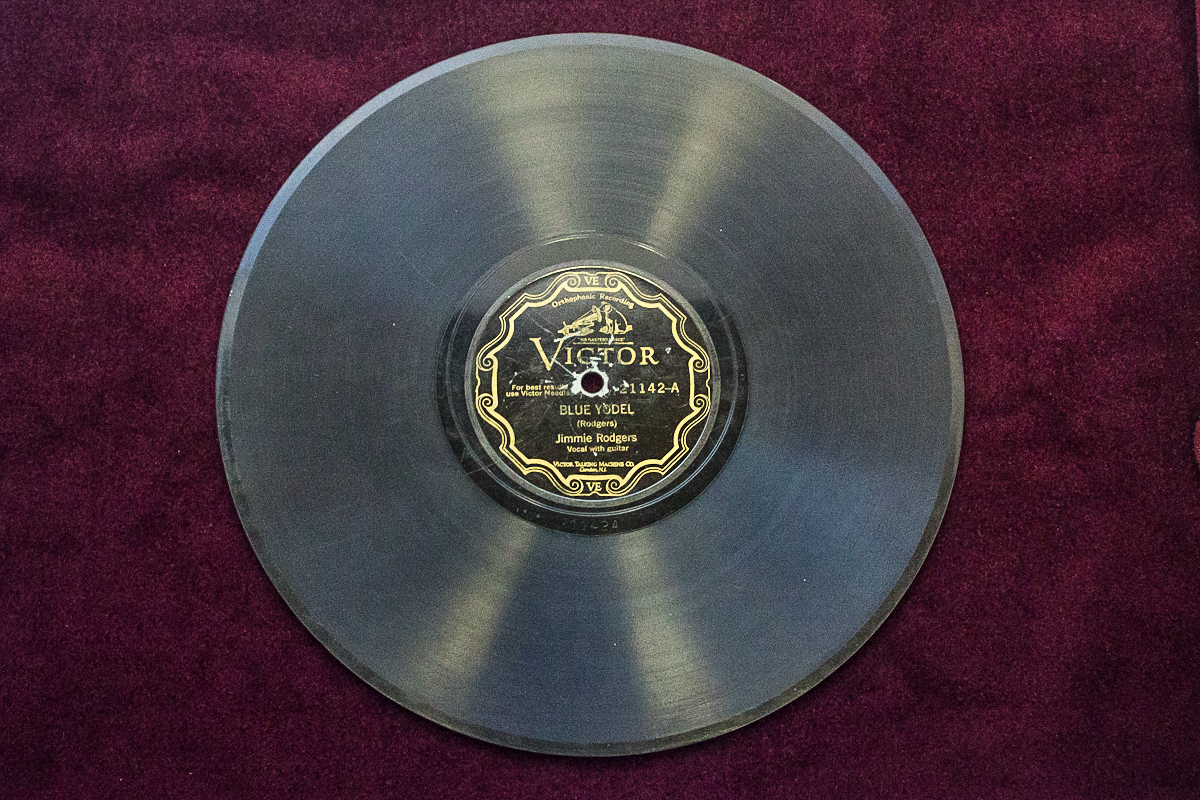
Any conversation about yodeling – at least any conversation with me about yodeling – will inevitably get around to Jimmie Rodgers. Rodgers was a tubercular railroad worker who began a career as an entertainer in the late 1920s. No, Rodgers did not invent the yodel – that distinction probably goes to some wounded animal – but he went a long way toward defining and popularizing it.

He made his first recordings in Bristol, Tennessee, on August 4, 1927, and he brought his yodel with him. His recording of “Sleep, Baby, Sleep” – a sweet, traditional lullaby that had been recorded and performed many times previously – was infused with a stunningly high and clear yodel that launched his career and, by extension, launched the early country music recording industry. Bristol is now known as the Birthplace of Country Music largely as a result. His first “official” yodel song – his “Blue Yodel No. 1” – was released 91 years ago today on February 3, 1928.

A wounded animal, a lullaby, and a sick railroad worker. Who knew that such an unlikely combination of elements would lead to an internationally respected and financially fruitful style of entertainment!

Jimmie Rodgers was so popular and influential that he is commonly known as the “Father of Country Music.” He, along with Hank Williams, became the first two performers to be inducted into the Country Music Hall of Fame when that institution was formed in Nashville, Tennessee, in 1961. After his death from consumption, or TB, in 1933, his musical style lived on for many years. An entire generation of singers – men and women – did their best “Jimmie” to please a seemingly insatiable public appetite for Rodgers’ Blue Yodel. Ernest Tubb, Hank Snow, Jimmie Davis, Gene Autry, Bill Carlisle, Bill Monroe, and Lefty Frizzell were just a few of his many followers.

Once that trend faded in the late 1930s, fortunes were made embellishing and elaborating on the Rodgers yodel. Roy Rogers and the Sons of the Pioneers were among the first and most successful artists to take Rodgers’ simple and plaintive “yodel-ay-hee-tee” and turn it into a syncopated, multisyllabic Rubik’s Cube of vocalization. The imagination and vocal agility required to master this newer style of country yodeling made stars out of many singers. Elton Britt, Patsy Montana, Hal Lone Pine, Montana Slim (Wilf Carter), the Girls of the Golden West, and Slim Whitman were just a few of these.

Two sisters from rural Minnesota, Carolyn and Lorraine DeZurik, developed a unique yodeling style in the late 1930s that drew its inspiration from the animal sounds they grew up with on their family’s farm. Calling themselves the Cackle Sisters, they honed their complex and near-perfect duet yodeling along with hen cackles and other animal sounds to form a memorable, if somewhat whimsical, musical statement that must be heard to be believed.

The world changed forever after World War II, and the popularity of yodeling seemed to be a casualty of that war. Sure, yodeling lingered through the late 1940s, but it took on the mantle of nostalgia. This changed in 1949 when Hank Williams scored a huge hit with an old Tin Pan Alley song called “Lovesick Blues.” That song introduced the world to a man who was arguably the greatest country music singer and songwriter of all time. And he introduced the world to a new approach to the yodel. Rather than treating the yodel as a stand-alone passage of music separate from the rest of the song, Hank Williams incorporated the yodel into the song lyrics. “I got a feeling called the blu-OO-ues, since my baby said good-bye,” etc. The effect was electrifying!

https://www.youtube.com/watch?v=-Xu71i89xvs

That was 70 years ago. Today, country music yodeling is again viewed as a vestige of a bygone era, even as we wait patiently for the next wave of yodel-mania. There are certainly some fine yodelers out there – the Riders in the Sky, Wiley and the Wild West, Wanda Jackson, and a young singer from North Dakota and a recent graduate of East Tennessee State University named Kristi Galdade, also known as “The Yodeling Songbird of North Dakota.”

And I do my part. A song I wrote in 1984 called “A Little Yodel Goes a Long Way” remains my unofficial theme song. Even if it makes me sound like a wounded animal!


Off the Record: Big Mama Thornton and Nina Simone

Usually our “Off the Record” posts focus on one of our Radio Bristol DJs. Today, however, we asked Amythyst Kiah, one of our favorite artists, to tell us all about a song, record or artist she loves.

Throughout my musical and personal journey as an artist, I’ve been inspired by a variety of musicians in a broad range of genres. Although there are certain ones that invoke strong feelings of nostalgia for me (for instance, 1990s grunge rock and R&B), I’ve never been one to attach my identity to a genre of music ­­– rather I’ve always been more drawn to the use of melody, arrangement, and grit.

As I started digging into earlier eras of popular music, there are two songs in particular, however, that have had a huge impact on me as a singer and songwriter in my mid-20s: “Hound Dog,” performed by Big Mama Thornton, and “Four Women,” written and performed by Nina Simone. These are important songs because of their place in popular music history, but they are also significant because behind both songs are women who weren’t initially accepted by their own peers in the music world because of their race.

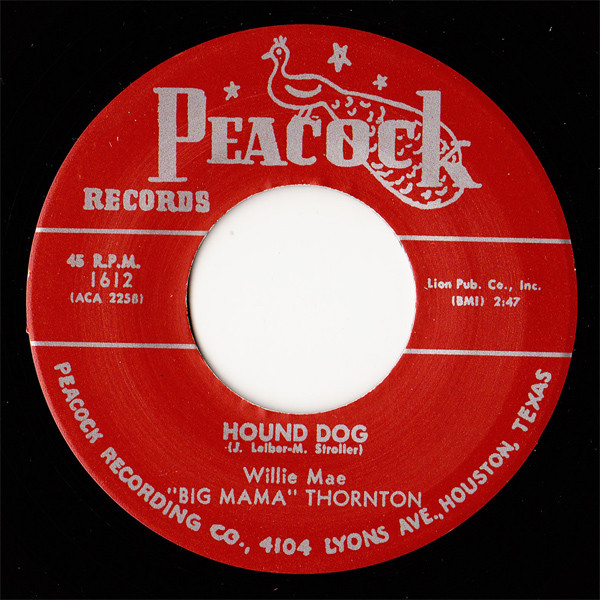
“Hound Dog” was made internationally popular by Elvis Presley in 1956, and it is considered one of the most influential rock & roll songs. However, Big Mama Thornton was the first person to record the song in 1952.

https://www.youtube.com/watch?v=IgmKhIxMxdI

Written by Jerry Leiber and Michael Stroller, Thornton recorded the song on Peacock Records, and it was released four years prior to Presley’s recording. Her version has become my favorite. There is a certain rawness about her vocal delivery and the call-and-response between the lead guitarist and her voice that is simply captivating.

Thornton’s version would go on to influence other rock & roll singers, including Presley, and it was inducted into the Rock & Roll Hall of Fame in 2013. Despite this, Thornton revealed in a 1971 interview (Gunsmoke Blues, 2004) that Presley refused to do a show with her. It would only be in the late 1960s when Janis Joplin, who recorded Thornton’s song “Ball and Chain,” would not only formally recognize her as an influence, but ask her to open for her for a couple of concerts. This gives a little insight into the issues that the music industry caused for women of color – something as simple as being recognized for her work was a challenge in and of itself.

Check out Big Mama Thornton’s 1965 live performance here:

Nine Simone’s “Four Women” was a single from her 1966 album release, Wild as the Wind. It chronicles the lives of four black female characters from slavery to the present era: Aunt Sarah, Saffronia, Sweet Thing, and Peaches. Each woman experiences the effects of slavery in a different way. Aunt Sarah is presented as a slave who can take the pain; Saffronia’s birth was the product of the rape of a black woman by a rich, white man; Sweet Thing is a prostitute – historically women of color have been disproportionately put in positions of poverty where prostitution might be seen as the most effective way to make money to survive. And Peaches, who is the last of the four women and of the latest era, is justifiably upset about the plight of her parents and ancestors and has developed the thickest of skins in order to protect herself, presumably from the very things that haunt the other three women in the song: physical abuse, rape, and the hands of strange men.

What’s particularly intriguing about this song is that it offers no solutions; it is simply a telling of four experiences of women of different shades of brown and the struggles that each one faces. Simone herself would face racism herself at a very young age when she applied for the Curtis Institute of Music in Philadelphia and was denied entry, despite her talents, because of her race (two days before her death, they gave her an honorary degree). Nonetheless, from playing classical music to playing “the devil’s music,” according to her pastor mother and religious family, Simone had a harrowing journey as a musician and as a woman, an experience which is expressed in this powerful song – one of many she wrote as critiques and reflections on the realities of racism during the Civil Rights movement.