Music & Songs Archives - Page 18 of 30 - The Birthplace of Country Music
Listen
Play
Loading station info...

From the Vault: Without a Yodel – The Manuscripts of W. E. Myer and His Lonesome Ace Label

Yodeling? Maybe for Jimmie Rodgers, but not for the little-known W. E. Myer.

William Evert Myer (1884—1964) was an entrepreneur from Richlands, Virginia, who tried his hand at producing a successful record label called Lonesome Ace. Sadly he felt the crushing blows dealt by the Great Depression instead. A man of many interests and talents, Myer taught school, studied law, and worked on the accounts of a coal company before following his musical dream. He sold phonographs and records in his store and also wrote several songs – or “ballets” as he called them – preserving them in a set of manuscripts that were recently donated to the Birthplace of Country Music Museum’s collections.
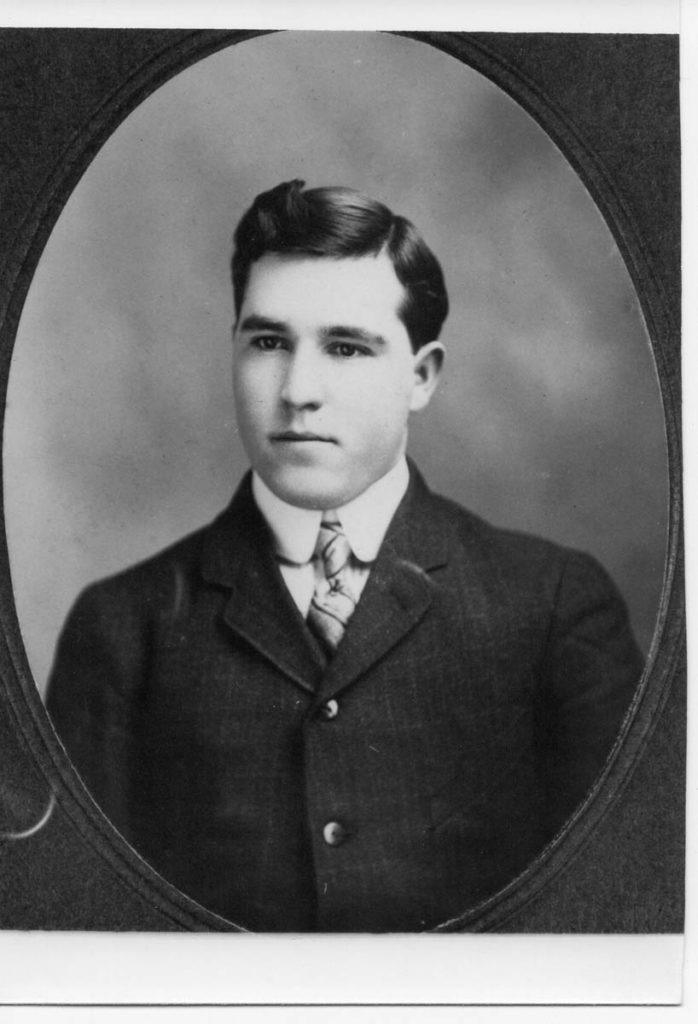
Black-and-white portrait of W. E. Myer as a young man -- dark hair, dark suit, high collar and striped tie.
William Evert Myer. Gift of Dwight Dailey and Robyn Raines, in memory of their great-grandfather W. E. Myer

Unlike much of the rest of the listening public at this time, Myer didn’t like Jimmie Rodgers’ popular yodeling sound. Indeed, he immortalized his thoughts on this subject with his Lonesome Ace record label. Each record was blazoned with Charles Lindbergh’s plane The Spirit of St. Louis and bore the motto “WITHOUT A YODEL”! Lonesome Ace’s promotional material also declared: “Every song has a moral,…and all subjects are covered without the use of any ‘near decent’ language which is so prevalent among many of the modern records.” Myer’s quirky label and his work to release records were the culmination of all of his hopes: a removal of yodeling from the lexicon of American popular music and a desire to shares his musical loves.

Myer’s strong opinions led him to seek out more well-known musicians as a way to market his own songs. Most of all, he wanted his songs to be performed by musicians he liked, and one of his grandest notions was to have the famed country-blues musician Mississippi John Hurt set lyrics that Myer wrote to music. He sent Hurt several of his compositions, and Hurt set three of them to music he chose: “Waiting for You” and “Richlands Woman” set to his own melodies and “Let the Mermaids Flirt with Me,” ironically set to Jimmie Rodgers’ “Waiting for a Train.” This last song was a wild mixture of country, blues, and legendary sea creatures that was later recorded by musician Tom Hoskins in 1963.
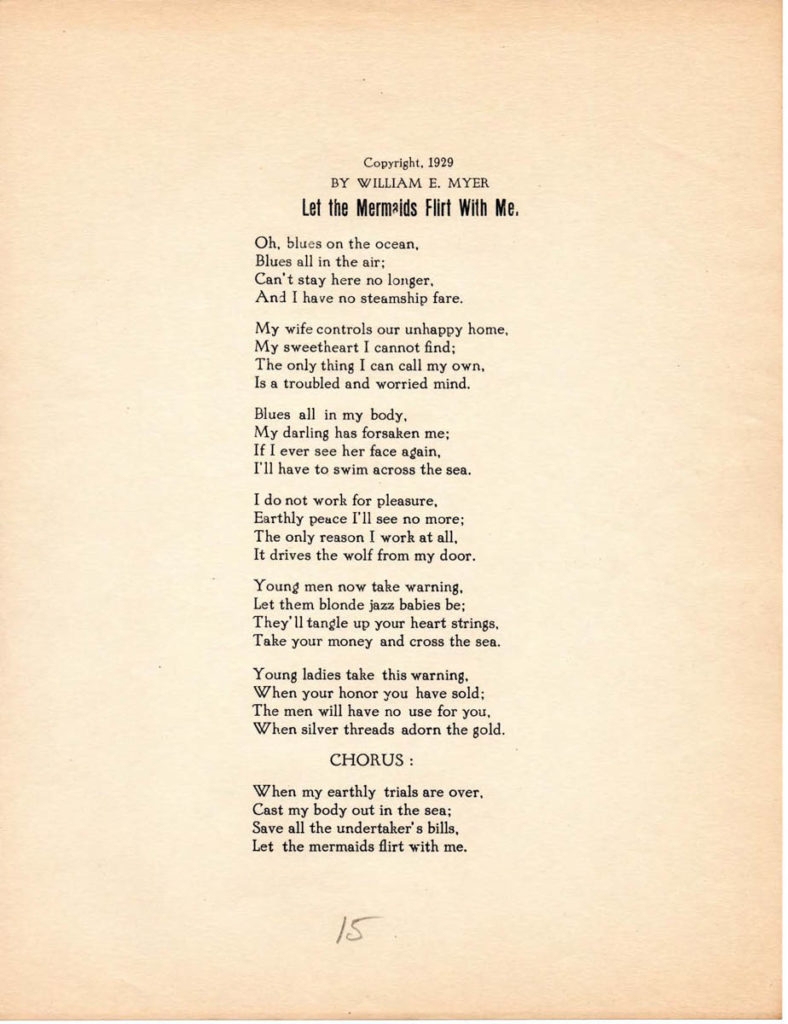
Typed lyrics to "Let the Mermaids Flirt With Me," including copyright date of 1929 and the note "By William E. Myer." The lyrics included 6 verses and a chorus, and there is a pencil-written number 15 at the bottom of the page.
“Let the Mermaids Flirt with Me” tells the sad tale of a man who is unhappy in his home life and missing a sweetheart so he looks to burial at sea as sweet respite amongst the mermaids. Gift of Dwight Dailey and Robyn Raines, in memory of their great-grandfather W. E. Myer

Myer also approached traditional musician Dock Boggs, a banjo-frailing, hard-drinking coal miner from a musically inclined family in West Norton, Virginia. Boggs had recorded with The Magic City Trio, led by Fiddlin’ John Dykes, with New York’s Brunswick Records in March 1927, the same year as the Bristol Sessions. During the succeeding years, he did well playing in his local community for various dances and events, much to the chagrin of his wife. And In 1929 Boggs recorded with the Lonesome Ace label, producing four sides of Myer’s “ballets” with his own choice of tune, but following Myer’s advice with “False Hearted Lover’s Blues” by setting it to Myer’s suggestion of Boggs’ “Country Blues.” Even with Boggs’ skill and Myer’s entrepreneurship, the Great Depression led to the decline of the record label and Dock’s career as a musician. Myer declared bankruptcy in 1930 after releasing only three records, and Dock pawned off his banjo to make ends meet.
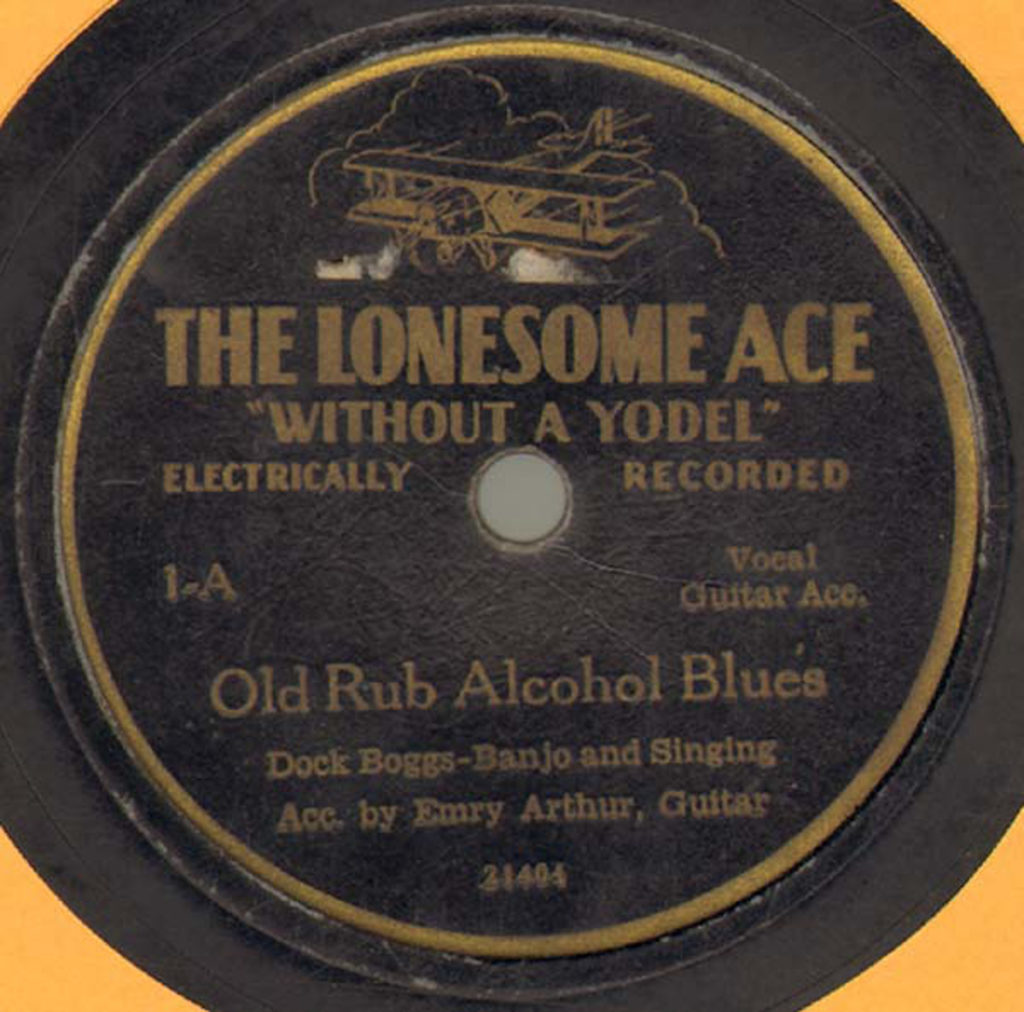
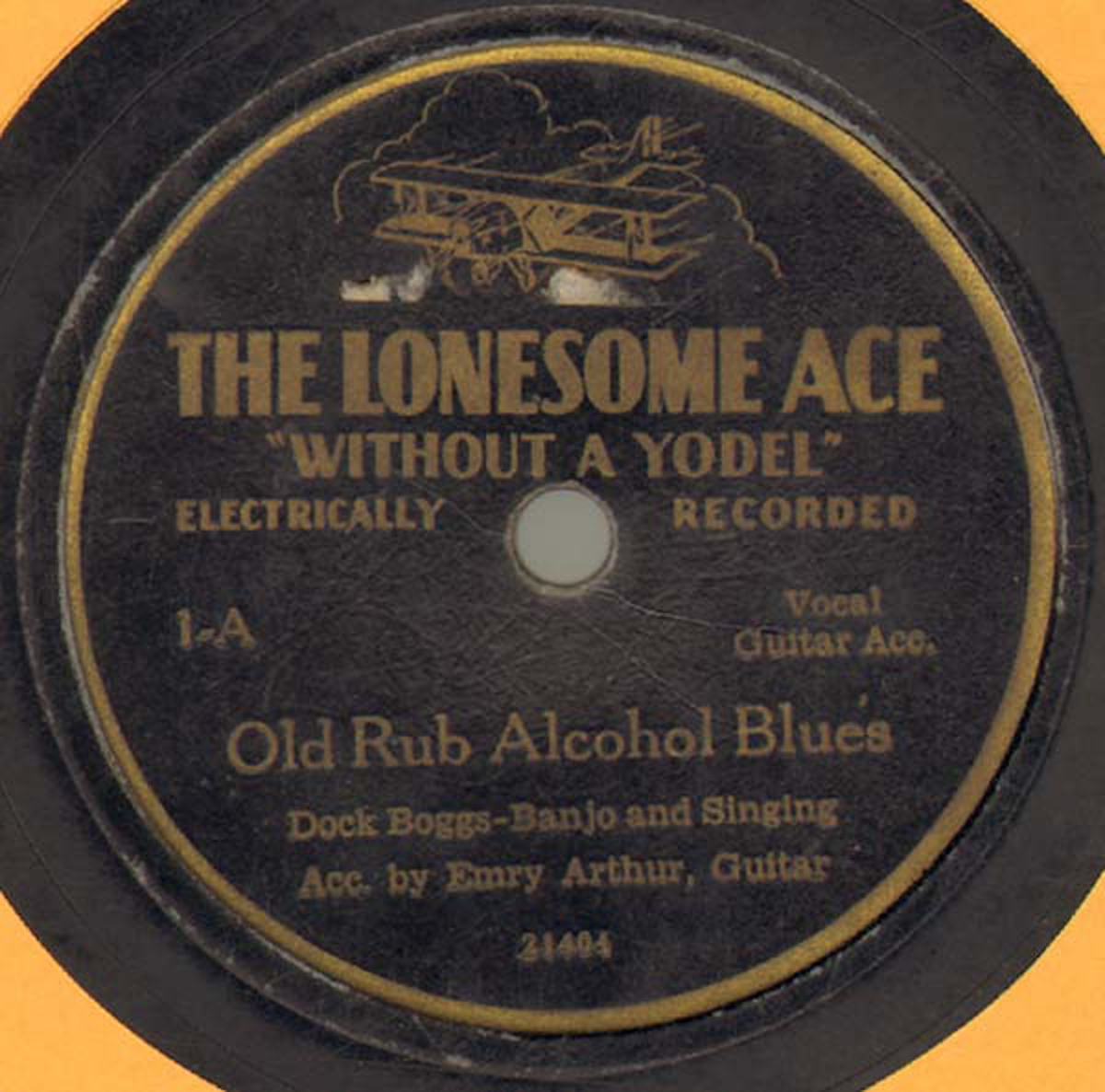
Close up of the Lonesome Ace record label showing the biplane in flight at the top of the label with the words The Lonesome Ace "Without a Yodel" underneath the image.
The Lonesome Ace record label for Dock Boggs’ recording of Myer’s “Old Rub Alcohol Blues.” From discogs.com

However, this was not the end of Dock Boggs or of W. E. Myer’s music. During the folk revival of the 1960s, Boggs was rediscovered by folk musician and folklorist Mike Seeger, who traveled to Virginia and located Boggs at his home near Needmore. Boggs had recently purchased another banjo, and after Seeger heard him play it, he convinced Boggs to perform at various folk festivals and clubs. This rediscovery brought a renewed love by the American public for the music of Dock Boggs, which continues through today.

Myer, though not revitalized by the folk revival, continues to be known because of his association with Boggs and other important musicians. The stories told to us by his family underline what a remarkable character Myer was, and his manuscripts, which are now part of the museum’s collection, highlight this even further. With song titles like “Old Rub Alcohol Blues” and “Milkin’ the Devil’s Billy Goat” – and one of my personal favorites “The New Deal Won’t Go Down,” which supported President Franklin D. Roosevelt’s New Deal program – it is clear that Myer’s songs reflected a wide range of interests and stories! And while Myer’s Lonesome Ace may not be well-known or prolific, it certainly played a noteworthy role in the folk music of Southern Appalachia – even “without the yodel”!
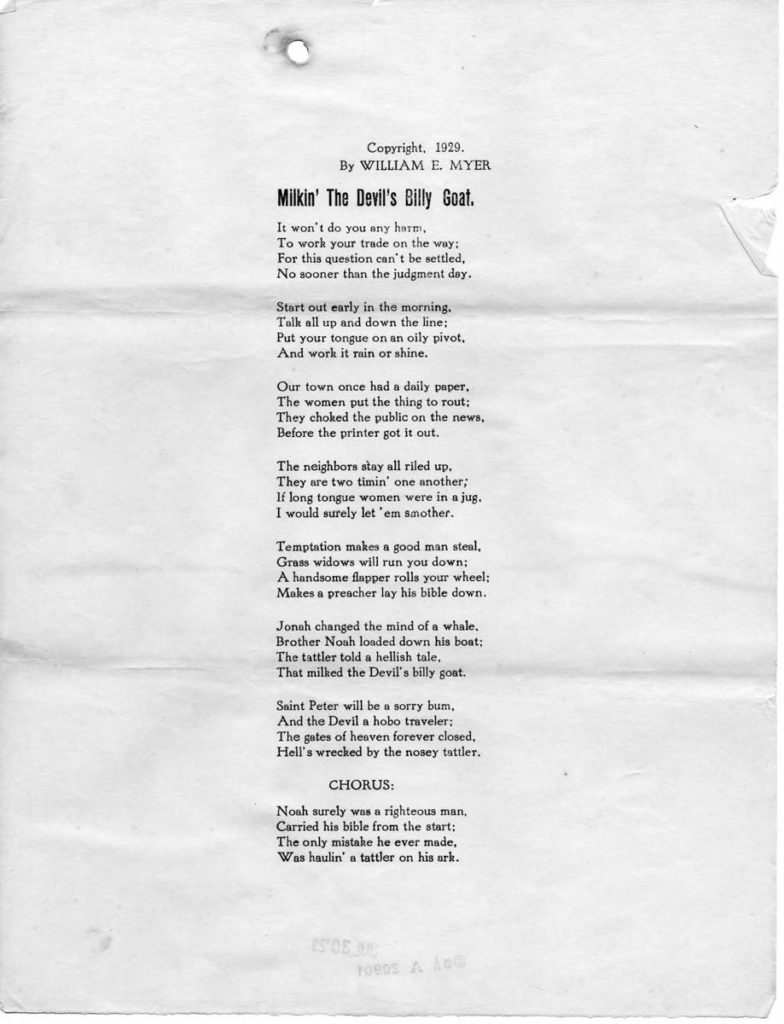
The typewritten lyrics to "Milkin' the Devil's Billy Goat," including the copyright date of 1929 and "By William E. Myer" at the top of the page. The song consists of 7 verses and the chorus.
The lyrics of “Milkin’ the Devil’s Billy Goat” chastises and judges “tattlers.” Gift of Dwight Dailey and Robyn Raines, in memory of their great-grandfather W. E. Myer

Along with the William E. Myer manuscripts, the donors generously gave the museum several other items related to their great-grandfather, including the collector’s edition of The Rise and Fall of Paramount Records Vol. 2 (1928-32), which contains the duets by Emry Arthur and Della Hatfield of the two Myer’s songs they recorded.
The Ballad – From There to Here with Wayfaring Strangers

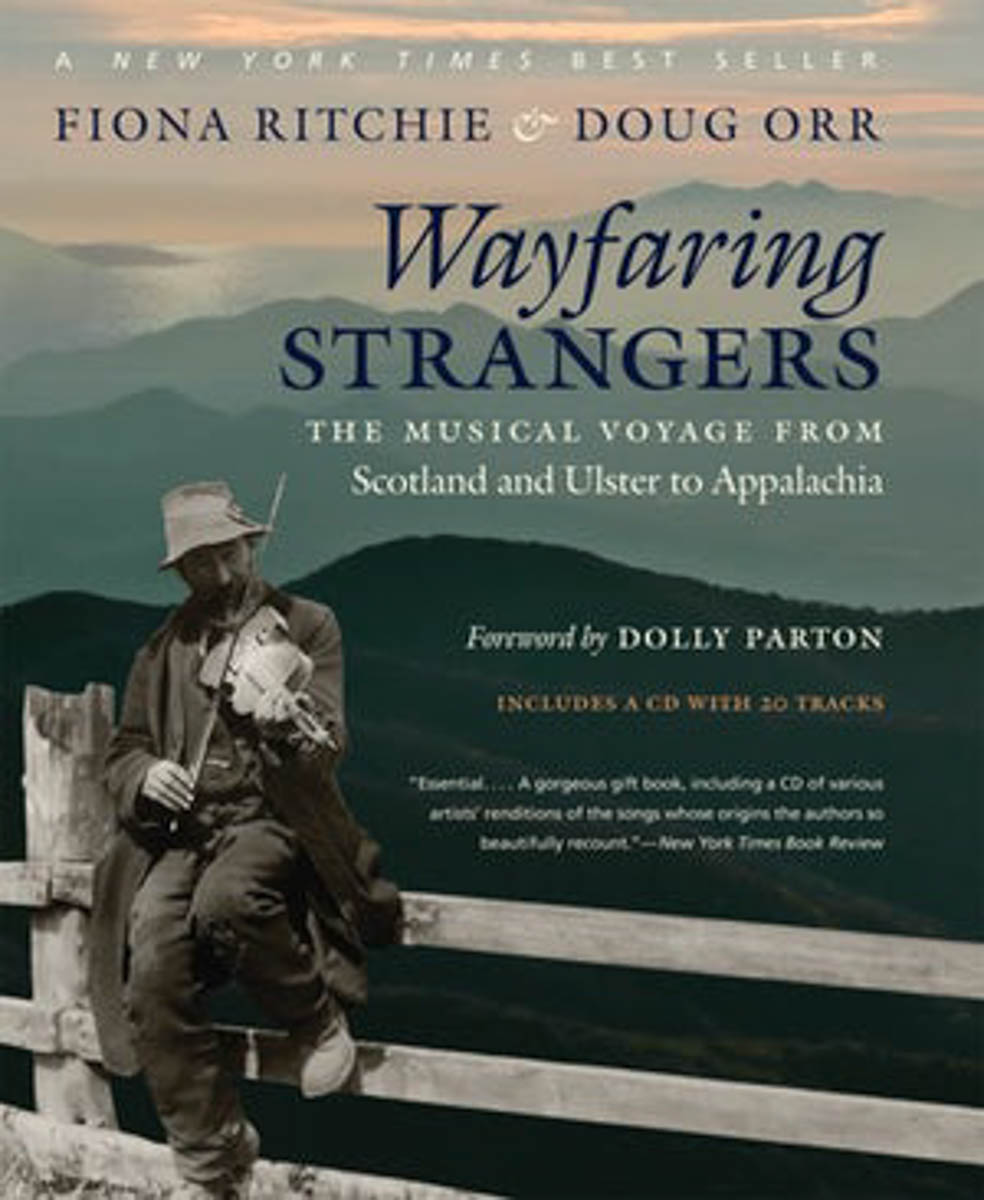
There is a book on the shelves in the museum’s Blue Stocking Club Learning Center that I come back to time and time again – Wayfaring Strangers: The Musical Voyage from Scotland and Ulster to Appalachia by Fiona Ritchie and Doug Orr. This wonderful book chronicles the history of the ballad from its origins to its place in our very own Appalachian Mountains. Beautifully written, with equally beautiful artwork and photographs, it tells the story in a meandering manner, taking the reader down old and new roads, mimicking the ballad journey itself.

The cover of Wayfaring Strangers shows hill upon hill of the Appalachian Mountains, with a superimposed photograph of a Scottish fiddler to the left side of the cover image.
The cover of Wayfaring Strangersfeatures the rolling peaks and valleys of the Appalachian Mountains and a traveling Scottish fiddler.

The story of ballads is greater than what can be covered in a blog post, but I want to share what I have learned from Wayfaring Strangers, giving readers a small glimpse into that history in a fairly simplistic and straightforward manner. However, I encourage you to also read this book to learn more; it captured my heart – and it is sure to capture your heart too!

Ballads go further back in pre-recorded history than initially thought, to the seafaring civilizations sharing cultures via storytelling and music. There is no one single point of ballad origin; rather points as disperse as Scandinavia, Germany, Western Europe, Scotland, Ireland, England, and the Mediterranean all had a role to play. For example, there is an old-style epic narrative performed in Connemara, Ireland that is nearly identical to a Bedouin style.  

Scottish poet, folklorist, and songwriter Hamish Henderson called the ballad journey the “carrying stream,” a perfect analogy for its meandering ways through ages, cultures, and configurations. Ballads were an oral tradition for disparate, often illiterate populations wherein stories, news, commerce, commentary, protest, and dance could be part of the delivery. As they traveled, ballads were subject to many influences and variations, both to their words and music, and often the same ballad may have different tunes or one tune may be associated with several different ballads. Over time and space, it was the best lyrics and tunes that continued along the carrying stream.

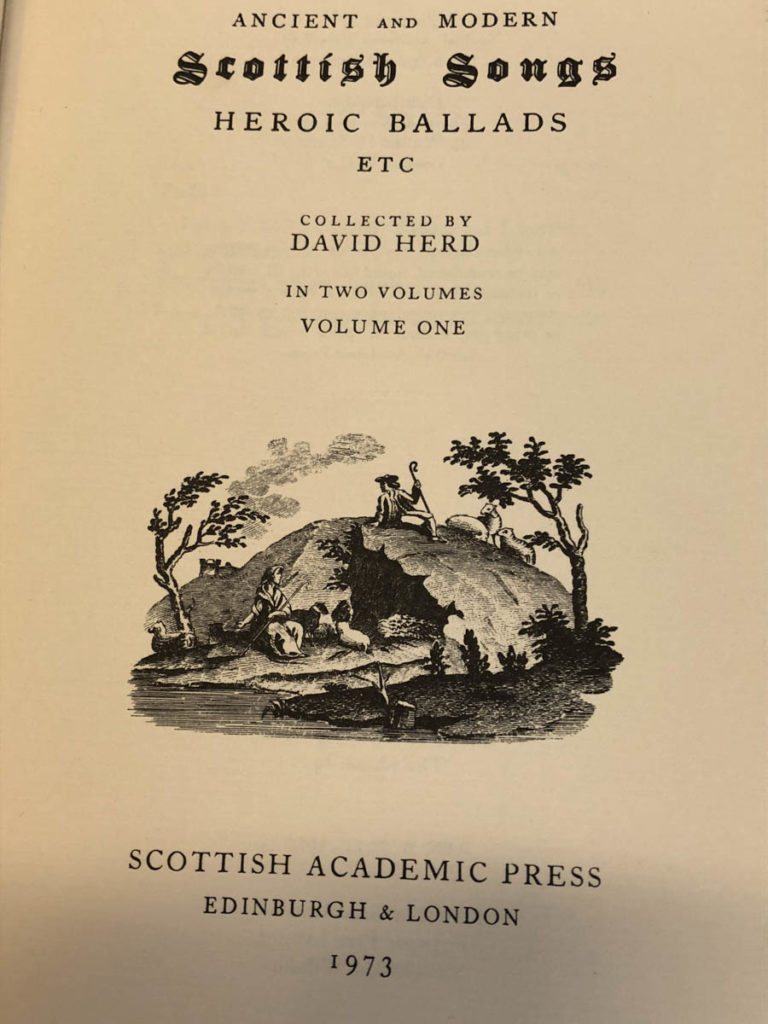
The title page of David Herd's book shows the title and publication information, along with a lithographic illustration of a shepherd with his flock on a hillside.
This edition of David Herd’s Ancient and Modern Scottish Songs, Heroic Ballads, &c is from 1973, but the original book was published in 1776. It was on loan from Jack Beck and Wendy Welch during The Appalachian Photographs of Cecil Sharp, 1916 to 1918 special exhibit in 2018.

As to the Scots-Irish ballad tradition that is quite familiar in the Appalachians, it begins with a Nordic-Baltic influence arriving early on the Scottish shores. Northeast Aberdeenshire is considered the cradle of Scottish balladry with distinct language, customs, and folklore created out of isolation and seafaring influences. Western Scots and Irish people shared their traditions as well via the short sea route between them, and the Scottish and English border counties added further influences, all contributing to the oral-to-written evolution.

The ramifications of politics and palace intrigue over the course of the ballad history were many and varied, and the resulting diaspora impacted the story. One such dispersing was the Scots to Ulster Ireland and then on to the American colonies. It is this carrying steam that brought the ballad tradition to our mountains. The majority of these immigrants arrived at various ports northward and traveled down the Wilderness Road to the Appalachian Mountains. The pioneers settled in valleys and coves throughout the mountains, bringing their musical heritage with them – a heritage that merged with other traditions, styles, and songs found in the Appalachians including those of Native Americans, enslaved peoples from Africa, and other ethnic groups. It is this mixing that eventually evolved to be recognized as old-time country music. 

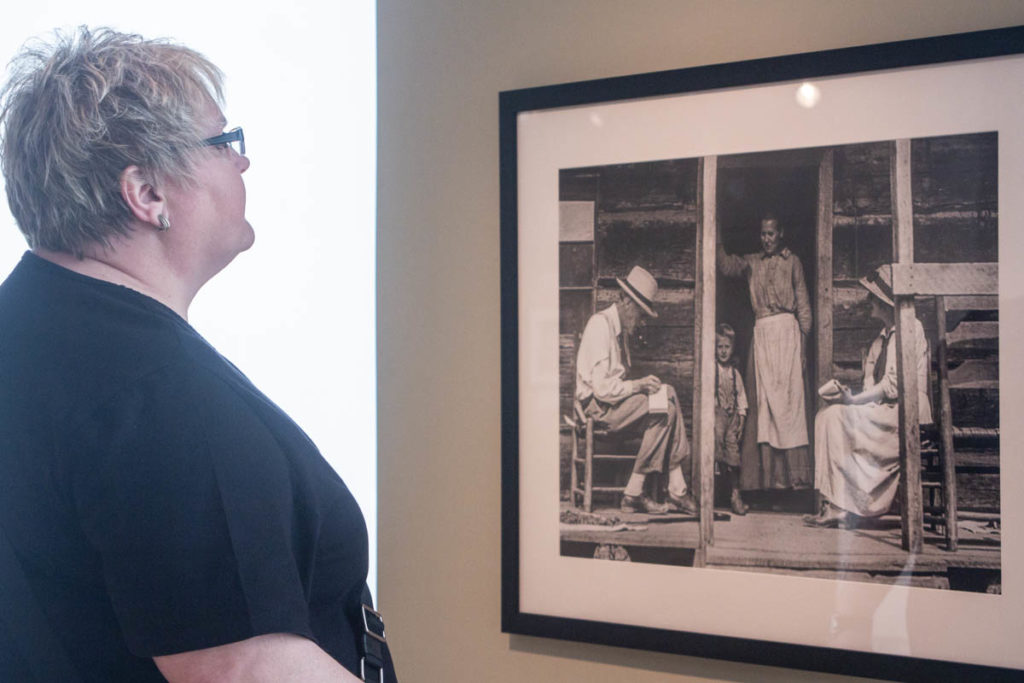
A visitor looks at a photograph of Cecil Sharp and his assistant recording the words/lyrics of an Appalachian woman on her porch. A small child stands in the doorway with her.
The 2018 Cecil Sharp special exhibit featured photographs of the many singers Sharp met on his Appalachian song-collecting trip in 1916 to 1918. He transcribed the lyrics and music of numerous ballads and songs that still had strong ties to their Old World origins. © Birthplace of Country Music

As Wayfaring Strangersnotes: “Music provided the social fabric, creating a sense of community amid isolation and reinforcing identity. That said, while the Scots-Irish origin is clearly the dominant one, it is the braiding and weaving of European, African and indigenous American influences that creates the unique tapestry of Appalachian music.”

The long tradition and the evolution of ballads is further underlined by Bascom Lamar Lunsford, western North Carolina Minstrel of the Mountains,  when he tells us “… that though the words changed from country to country, and generation to generation, even from valley to valley in the same range of hills, the essence of the music changed not at all.  It formed a link, unbroken, back through time, tying to the past.”  

Music was – and still is – reward at the end of a long day’s work, something to share in front of a winter fire or on a summer porch, and an act of community as voices are raised together at barn raisings, harvests, market days, and other events and occasions. And, of course, this included the teaching of these traditions to succeeding generations of children and grandchildren.  

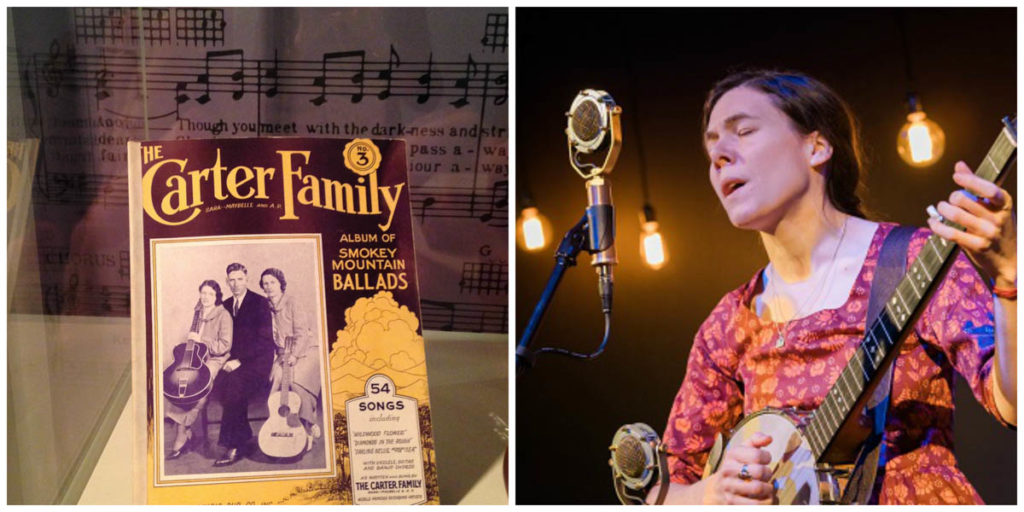
Left: The cover of the Carter Family songbook bears a photograph of them with their instruments and a drawn rural image. Right: Elizabeth LaPrelle, wearing a red dress, plays the banjo and sings into the mic on the museum's Performance Theater stage.
The museum’s Carter Family exhibit in 2014 showcased The Carter Family’s songbook of Smokey Mountain ballads. The ballad tradition is honored and continued by musicians like Elizabeth LaPrelle, who performed at the January 2019 Farm and Fun Time and in concert in March 2019 at the museum. Left: © Birthplace of Country Music; Right: © Birthplace of Country Music; photographer: Billie Wheeler

This ballad heritage was found at the Bristol Sessions in some of the songs, which were then shared through the recordings on a much wider scale. This music was a continuation of the carrying stream, and that musical migration continues through today’s carriers and tradition bearers – they too are immersed in the carrying steam. And old-time country music and the storytelling it is a part of, along with music festivals the world over and our museum visitors from every state and over 44 countries, all testify to that continuing journey.  

Pick 5! Get Outside and Celebrate National Great Outdoors Month This June!

For our “Pick 5” blog series, we ask members of the Radio Bristol team to pick five songs within a given theme – from heartsongs to murder ballads and everything in between! Once they pick their “5,” they get the chance to tell us more about why they chose those songs. With a diverse staff of knowledgeable DJs, we’re sure to get some interesting song choices, which might introduce you to some new music, all easily accessible by tuning into Radio Bristol! This month’s “Pick 5” is from Toni Doman, host of Radio Bristol’s Mountain Song & Story airing Thursdays at 4pm!

Isn’t it ironic that I’m stuck inside writing about how badly I want to leave the office and enjoy the great outdoors? I’m so ready to enjoy the month of June and kickstart National Great Outdoors month! What could be better than taking in the fresh mountain air and soaking up sunshine (with proper sunscreen, of course) while in sight of the beautiful Blue Ridge Mountains?

This summer, I’ll be doing my best to take advantage of all that the Tri-Cities area has to offer: hiking, biking, paddling, you name it! There truly is something out there for everyone to enjoy, and you don’t have to be an expert in outdoor recreation to have a great time. Some of my favorite outdoor activities in and around the Tri-Cities include hiking to visit the wild ponies at Grayson Highlands State Park and taking it easy in the shade near South Holston Lake. Other great spots stand out such as the Virginia Creeper Trail, which extends from Abingdon to Whitetop, or you can even explore the local entry points to the Appalachian Trail, which covers 14 states spanning over 2,000 miles from Georgia to Maine! Nothing quite compares to the unique scenery of the Appalachian mountain landscape, and Roan Mountain State Park also has some stunning views. These are just a few of the great places where you can embrace Mother Nature and all she has to offer in the local area – check out Visit Southwest Virginia and Northeast Tennessee Tourism Association to learn more!

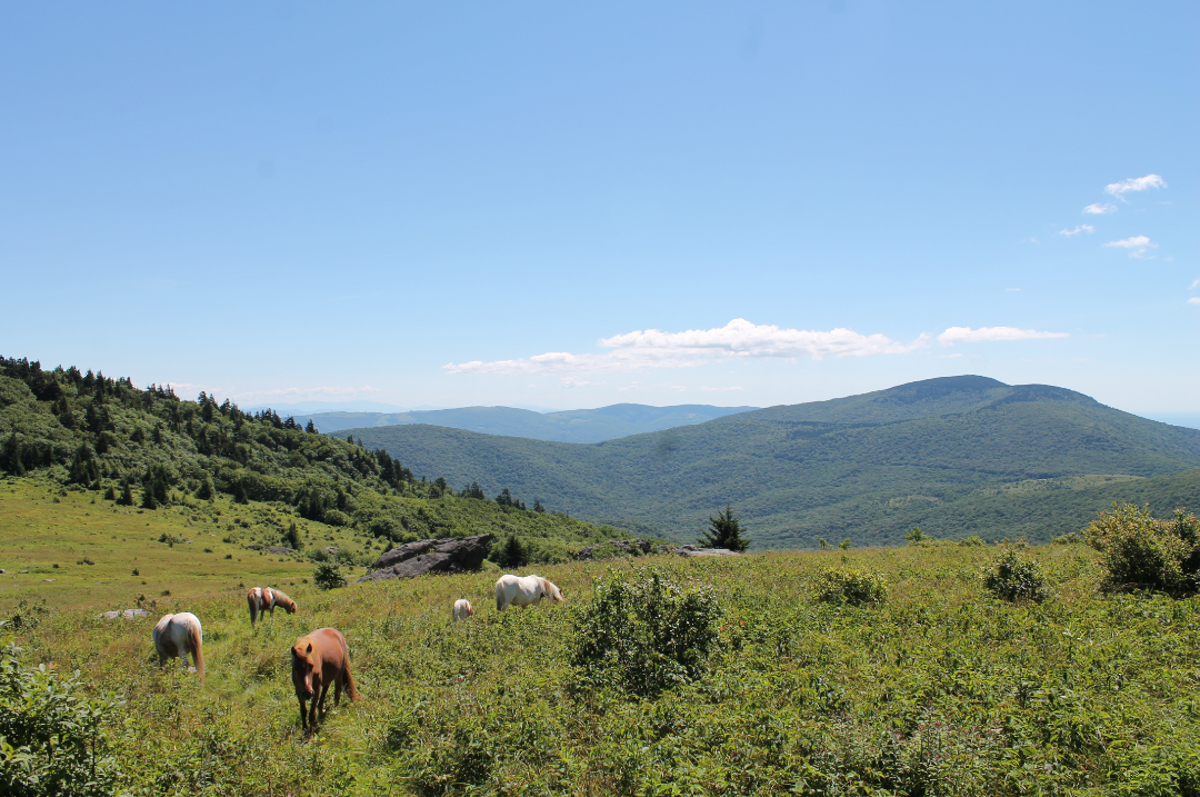
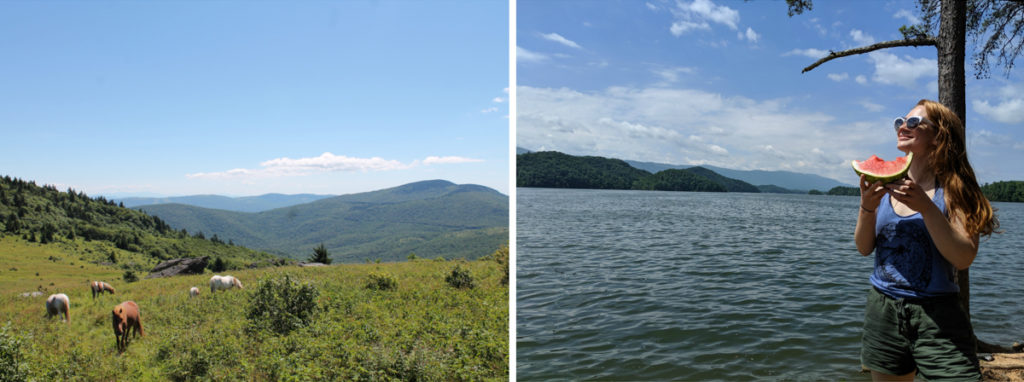
Left: The rolling mountains of the Blue Ridge stretch out in front of a green hill with several grazing ponies. Right: The author stands on the short of the lake with her face turned to the sun and holding a big slice of watermelon.
Left: Wild ponies roaming the mountain at Grayson Highlands State Park in Grayson County, Virginia. It’s a beautiful view from the top and well worth the hike to get there!  Right: Enjoying a little slice of life at South Holston Lake! Photographs courtesy of Toni Doman

Now that you’re as excited as me about our nearby natural beauties, here are a few tunes that are sure to get you ready for camping (it’s in-tents…) and all things outdoors this June!

“Where the River Meets the Road,” Tim O’Brien

Grammy winner, singer-songwriter, and West Virginia native Tim O’Brien released the album Where the River Meets the Road in 2017 with Howdy Skies Records. The full album pays homage to his West Virginia roots and features songs that have a connection to his home state. With influential artists like Hazel Dickens and Bill Withers, it is also a tribute to prominent artists that are associated with West Virginia. As a native of the mountain state myself, this classic album generates nostalgia for Appalachian culture and is sure to get the listener in touch with their mountain roots.

“Sunshine on My Shoulders,” John Denver

After a long and seemingly endless winter, I’ve been in serious and dire need of sunshine on my shoulders. Influential and notable singer-songwriter John Denver’s melancholy folk song makes me feel like I’m floating down a lazy river with not a care in the world. The song made its first appearance on Denver’s album Poems, Prayers & Promises released in 1971, and according to songfacts.com, Denver’s inspiration and reason for writing the song was that he wanted to spend more time outside enjoying the sunshine. I think we can all relate!

“My Home’s Across the Blue Ridge Mountains,” The Carter Family

The slow-moving melody and repetitive lyrics of this classic Carter Family song invoke a feeling and longing for the journey home. Originally released by Decca records with lyrics written by A. P. Carter, this version of the song was recorded on June 18, 1937 in New York, a time when the career of the Carter Family was in full swing. Anyone who has passed through the Blue Ridge Mountains can likely relate to the feelings of being drawn to these hills and valleys.

“Lewis & Clark,” Tommy Emmanuel

The outdoors can often be a place for us to practice individual self-reflection, to set out on adventure, and to explore new sights and sounds. Guitarist Tommy Emmanuel takes you on an instrumental journey, inspired by the real adventures of Lewis & Clark. Maybe this tune will inspire you to start your own journey!

“Green Green Rocky Road,” Dave Van Ronk

American folk and blues legend Dave Van Ronk was an influential and prominent figure in the American folk music revival. “Green Green Rocky Road” was composed by Len Chandler and was one of the most requested songs over the course of his career. The song lyrics were largely pulled from a traditional African American children’s song with the melody added to and rewritten. As with all music, songs can take you on a personal journey, and for me this song evokes a sense of travel and longing to get lost out in nature.

Foraging For Another Great Farm and Fun Time!

From blaring horns to sweet duets, May 9’s Farm and Fun Time featured a dynamic display of roots music styles! Thanks to our sponsor Eastman Credit Union, Radio Bristol was able to bring Farm and Fun Time to not only those in the audience or tuned in to WBCM-LP, but to viewers far and wide via Facebook Live. Be sure to like WBCM – Radio Bristol on Facebook to tune in every month!

Host band Bill and the Belles started the show off with favorites old and new, including a rip-roaring rendition of “Roll on the Ground.”  The “Heirloom Recipe” segment was presented by the reigning Haint Mistress of Abingdon Virginia, Donna Marie Emmert. When Donna Marie isn’t looking for ghosts, goblins, and ghouls around historic Southwest Virginia, she can be found hunting for the ever-elusive Appalachian spring time delicacy: morel mushrooms. While Donna Marie shared a recipe for how to prepare the elusive dryland fish, she wasn’t about to disclose the location of those rare treats – you’ll have to find your own! Bill and the Belles then crooned a song of longing and frustration all about the woes of not finding any morels.

Left: Bill and the Belles gather at the mic together with their bass player behind then. Right: Donna Marie Emmert at the mic with her story on the page before her.
Bill and the Belles charmed the Farm and Fun Time audience, while Haint Mistress Donna Marie Emmert got their stomachs growling for the tasty morel mushroom. © Birthplace of Country Music; photographer: Billie Wheeler

Our first musical guest of the evening was Hoot and Holler. Amy Alvey and Mark Kilianski are a hard touring duo of multi-instrumentalist musicians and songsmiths who draw heavily from the roots of American music, especially old-time, bluegrass, and Cajun music. Together they craft timeless songs that tell the stories of their life on the road. From a classic fiddle tune “Honey Suckle Blues” to “Old Buffalo,” a piece of self-proclaimed “cowboy existentialism,” to “Reasons to Run,” a song that explores the feeling of needing to be in multiple places at once but never settling, Amy and Mark took the audience on a journey down the highways and backroads of America in just a handful of songs.

Three images -- Left: Amy Alvey playing the fiddle in front of the mic. Center: A view of Amy singing and Mark Kilianski playing guitar at the mic with their guest bass player behind them. Right: A close-up of Mark's guitar.

With only a few songs, Hoot and Holler explored a range of emotions and experiences, bringing the audience right along with them. © Birthplace of Country Music; photographer: Billie Wheeler

This month’s “ASD Farm Report” went off the beaten path to showcase foraging with Taylor Callahan. If one knows what to look for and where to find it, there’s a bounty of useful plants growing wild in the hills and hollers of Appalachia, and Taylor crafts apothecary projects to cure what ails you from locally sourced flora. Here’s a video from our visit:

Our last guest of the evening was Davina and the Vagabonds. Hailing from the land of 10,000 Lakes, Davina and the Vagabonds put on a high energy stage show that blended elements of New Orleans-style jazz and 1950s R&B into a style all their own. Sitting at the keys, Davina is powerhouse performer, who channels the likes of Bessie Smith and Sister Rosetta Tharpe into an expressive vocal style that cuts above the horns and drums and takes listeners on a roller coaster ride of emotions. In a set that seemed to be perpetually rolling forward, Davina and the Vagabonds performed original songs about topics ranging from “Monday Dates” to how the devil got his horns, and they brought the Farm and Fun Time crowd to their feet for perhaps the most rousing standing ovation we’ve seen yet! 

Four pics -- Top left: Davina, wearing a black dress and black hat and with her black hair styled in a 1950s-style pompadour, at the keyboard with the horns behind her. Bottom left: The two horns players blowing their trumpet and trombone. Top right: Davina singing at the keyboard with the bass player behind her. Bottom right: A view of the drummer.

Davina and the Vagabonds’ energy on stage and quirky and expressive songs combined together to create a really special Farm and Fun Time night! © Birthplace of Country Music; photographer: Billie Wheeler

Thanks to everyone who came out and shared in this wonderful evening of music! Tickets are on sale for June’s show featuring Sierra Ferrell, Steel City Jug Slammers, and host band Bill and the Belles, but they’re going fast. We hope to see you there!

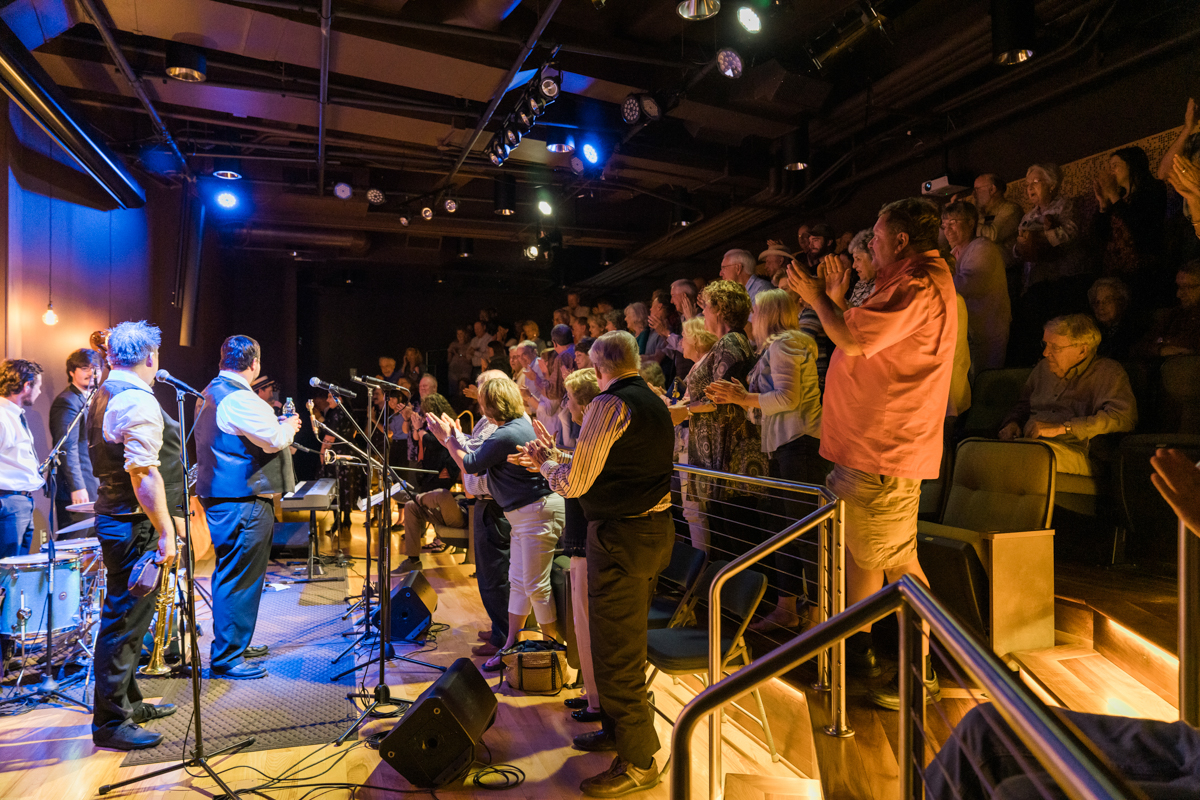
Davina and the Vagabonds on stage in front of the Farm and Fun Time crowd, all on their feet and clapping enthusiastically.
An enthusiastic, foot-stomping standing ovation heralded the end of Davina and the Vagabonds’ set. © Birthplace of Country Music; photographer: Billie Wheeler