Music & Songs Archives - Page 15 of 30 - The Birthplace of Country Music
Listen
Play
Loading station info...

A Rose by Any Other Name…Celebrating Musicians through Flora and Fauna!

Today is the anniversary of Johnny Cash’s birth date. He was born on February 26, 1932 in Kingsland, Arkansas, the son of sharecroppers who were struggling through the Great Depression. Despite – and indeed, perhaps because of – this early hardship, Cash went on to become one of the most iconic and influential country musicians in the history of the genre.
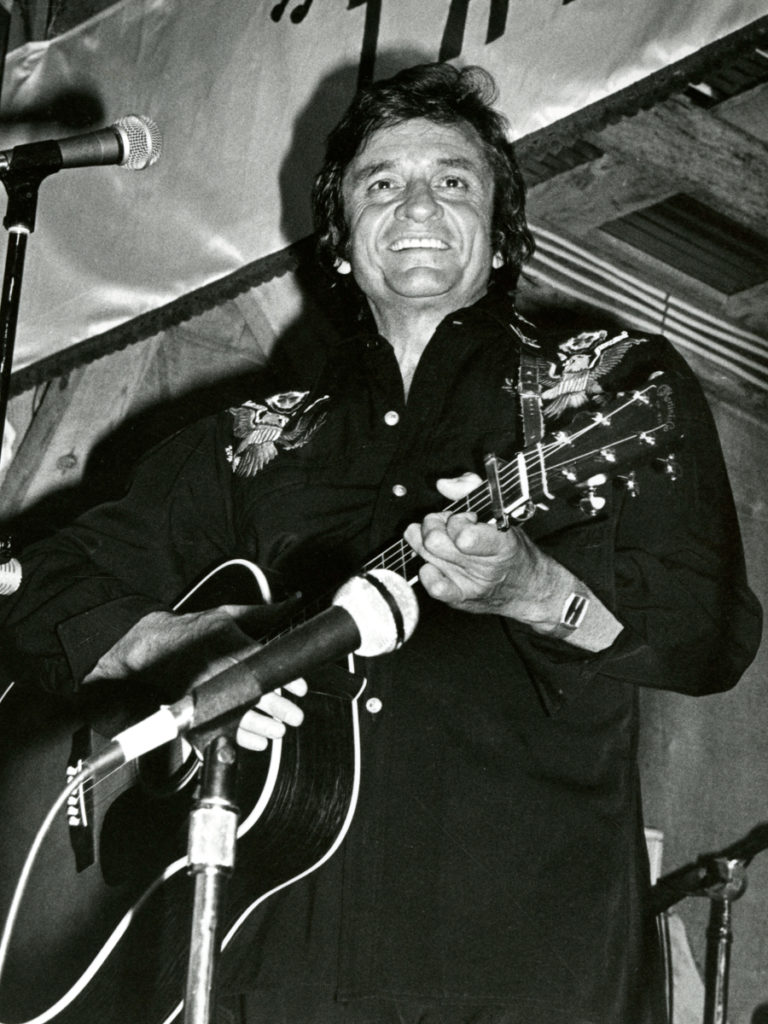
Johnny Cash in a black decorated shirt and holding his guitar on stage in front of a mic; he smiles out at the audience.
Johnny Cash on stage. From the Robert Alexander Collection at the Birthplace of Country Music Museum

So, what you ask, does this have to do with the naming of flora and fauna species, or binomial nomenclature as it’s known in the scientific community? Johnny Cash and his musical impact is rightly celebrated and recognized in a variety of different ways – through a US postage stamp with his image to a museum dedicated to his life and legacy in Nashville to numerous industry and national awards and honors to the many artists who have been inspired by Cash and his songs. I, of course, knew all about these honors, but then I found out that he had also been celebrated in a really interesting and relatively under-the-radar way: by having a spider named after him!

First, a little bit about how binomial nomenclature works. This “two-term naming system” is a formal way to name species of living things. Both names are based in Latin grammatical forms, but they do different things: the first name is called the generic name, identifying the genus that the species belongs to; the second name is called the specific name, identifying the species within the genus. Therefore, scientific names for flora and fauna can share the first name because the genus may cover many species, but their second name will always be unique. And that second name is where scientists get creative!

Now, back to Johnny Cash: In 2016, a previously unknown tarantula species was discovered in the course of a larger research project. This particular species was found in abundance near Folsom Prison in California, and its coloring was dark, almost black. And from these two links – Cash’s “Folsom Prison Blues” and “The Man in Black” nickname – the tarantula was named Aphonopelma johnnycashi.

Image of the Aphonopelma johnnycashi tarantula -- a large black spider with a hairy abdomen and long legs.
A male Aphonopelma johnnycashi. © Dr. Chris A. Hamilton

Johnny Cash isn’t the only musician who has had a species named after him. While the specific names within binomial nomenclature can be inspired by many things – such as the location where they were found, to commemorate a scientific mentor or teacher, inspired by another language or culture where the meaning matches the animal or plant in question, etc. – there are many species names after celebrities.

Here are just a few:

  • Myrmekiaphila neilyoungi, a species of trap door spider discovered in 2007 (the scientist loves Neil Young’s music)
  • Scaptia beyonceae, a species of horse fly with a shiny golden abdomen discovered in 2011 and named after Beyoncé
  • Synalpheus pinkfloydi, a type of shrimp discovered in 2017 (this shrimp stuns and kills its prey with small “sonic booms” made by its snapping claws – kind of like standing too near an amp during a Pink Floyd concert!)
  • Orectochilus orbisonorum, a species of whirligig beetle, black on top and white on the bottom, that was discovered in 2008 and named after Roy Orbison
  • Cirolana mercury, an East African isopod (crustacean); this species is found off the coast of Zanzibar (where Freddie Mercury was born)
  • Gaga germanotta and Gaga monstraparva, where both genus and species within a group of ferns honor Lady Gaga and her fans (due to the appearance of the fern being akin to some of Gaga’s costumes and her “paws up” salute; even more interesting is that the DNA for this potential new genus of ferns had GAGA spelled out in its base pairs!)
  • Macrocarpaea dies-viridis, a type of night-blooming flower discovered in Ecuador and named after the band Green Day (dies-viridis is Latin for green day)
  • Anillinus docwatsoni, a species of ground beetle discovered in 2004 and named after Doc Watson
  • Desis bobmarleyi, an Australian intertidal species of spider discovered in 2017 and inspired by Marley’s song “High Tide or Low Tide”
  • Japewiella dollypartoniana, a type of lichen so-named due to its abundant growth in the mountains of East Tennessee
  • Phialella zappai, a species of jellyfish discovered in 1987 (named in a ploy to meet Zappa after the musician said “There is nothing I’d like better than having a jellyfish named after me.”)

These are just a few of the MANY plants and animals with names inspired by musicians and other well-known people. And referring back to the great Dolly Parton, while it’s not related to binomial nomenclature, she has also been honored through naming in another scientific endeavor – the genetic cloning of Dolly the Sheep in Scotland in 1997. Dolly was named after Parton because part of her DNA came from a mammary gland cell of a Finn Dorset sheep. Knowing Dolly Parton’s self-deprecating humor and her graciousness, one imagines that she found this interesting honor both amusing and wonderful!
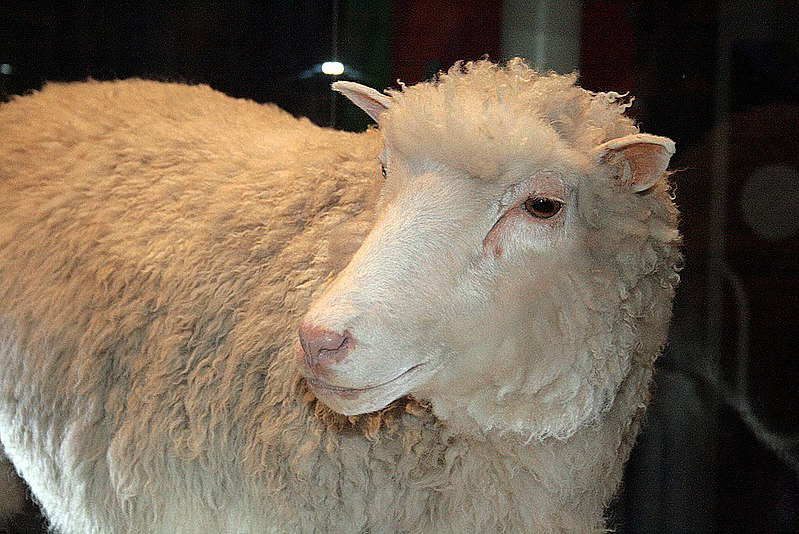
A close-up shot of Dolly the Sheep on display at the National Museum of Scotland.
Dolly the Sheep passed away in 2003 and is now preserved in taxidermy form at the National Museum of Scotland. From Wikimedia Commons, image courtesy of Toni Barros

And so with that, we can marvel at the wide-ranging inspiration that comes to scientists as they go about their important work – and how it connects to our love of music. Sometimes a celebrity-inspired name is the perfect way to get people engaged and excited about the biodiversity of our planet. As Dr. Chris Hamilton, namer of our Cash-monikered spider, notes: “It’s a really important mechanism for reaching out to the public and getting them involved,” Hamilton said. “We want the public to love these new species, too.”
Pick 5: Coal-Mining Songs

For our “Pick 5” blog series, we ask members of the Radio Bristol team to pick five songs within a given theme – from heartsongs to murder ballads and everything in between! Once they pick their “5,” they get the chance to tell us more about why they chose those songs. With a diverse staff of knowledgeable DJs, we’re sure to get some interesting song choices, which might introduce you to some new music, all easily accessible by tuning into Radio Bristol! This month’s “Pick 5” focuses on coal-mining songs and is from Rich Kirby, host of Radio Bristol’s Old Kentucky Bound airing Thursdays at 2:00pm!

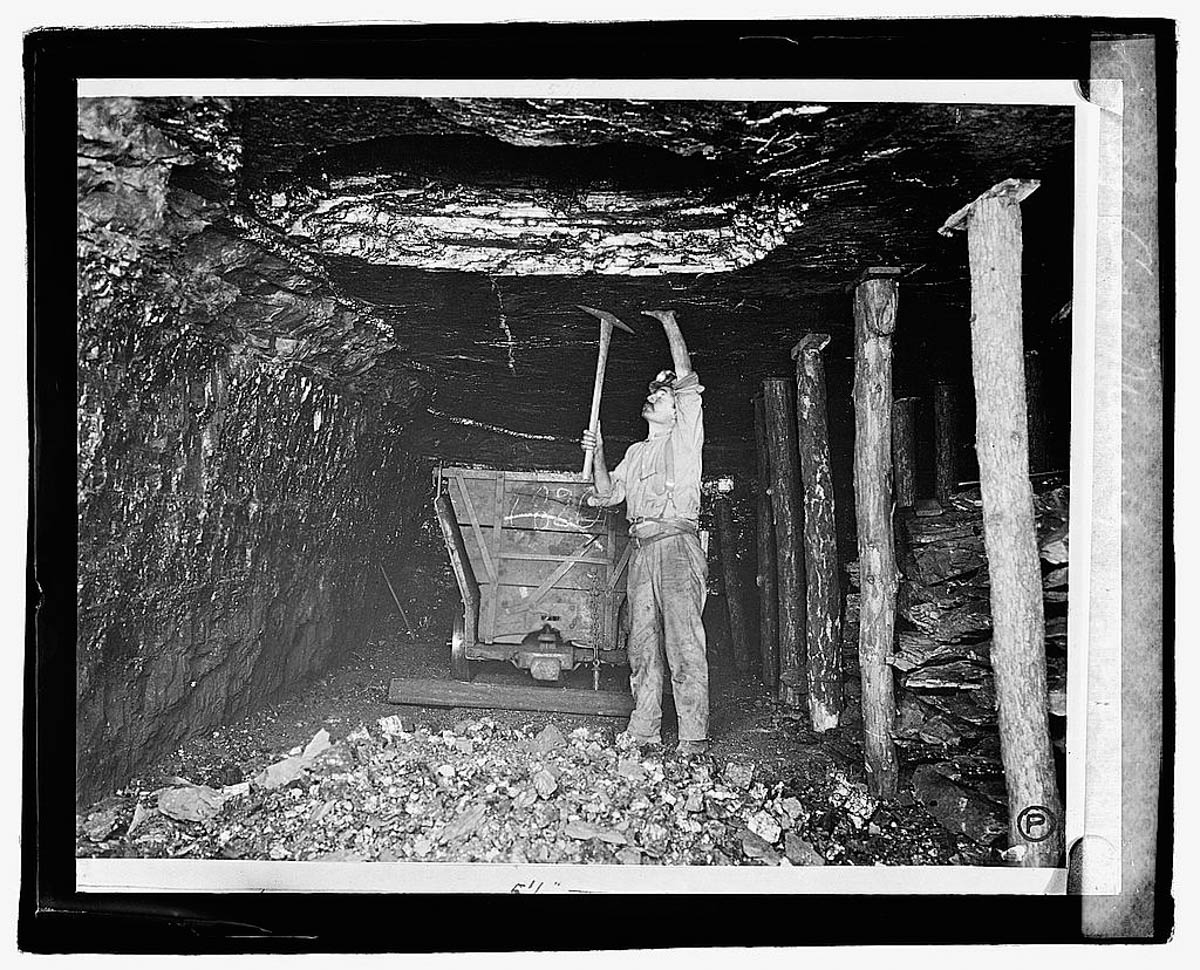
The coal mining era is coming to an end in southwest Virginia, eastern Kentucky, and southern West Virginia. Coal has had its share of booms and busts over the decades, but this time it looks like the elevator is going to go to the basement and stay there. What with cheap natural gas, cheap solar and wind power, and our awareness of the climate crisis, coal plants are shutting down, and no new ones are being built. Coal will still be used for steelmaking, but that’s only a small share of the market.

But what a ride it’s been! Coal has sustained mountain communities for well over a century with good-paying jobs and an important place in the national economy. However, as with so many things, these benefits have come at a price. For instance, 100,000 miners have died on the job since 1900, and Black Lung Disease and other occupational ailments have helped make coalfield communities some of our least healthy. Strip mining has left hundreds of mountains scarred. And despite the coal jobs, income is low, and this area consistently ranks at or near the bottom of quality-of-life measures.

As you would expect when such an intense way of life meets a culture with a strong musical tradition, there is a ton of coal-mining music – more, I believe, than from any other industry. Mining songs shine a light on the many ups and downs of the mining life. Here’s just a small sampling (and despite the “Pick 5” title, I couldn’t pick just five, so you get a bonus song for six!):

“Which Side Are You On,” written and sung by Florence Reece

The Great Depression hit coalfield communities hard. Desperate companies cut wages to the bone, then cut more, to the point where miners were facing actual starvation. Desperate miners tried to unionize, an action which companies met with armed repression – especially in Harlan County, Kentucky, where coal completely controlled the county government. Harlan miner Sam Reece, an organizer for the National Miners Union, worked in hiding with a price on his head. One night his wife Florence had had enough. “When the thugs were raiding our house off and on, and Sam was run off, I felt like I just had to do something to help. The little children, they’d have little legs and a big stomach. Some of the men staggered when they walked, they were so hungry… We didn’t even have any paper, so when I wanted to write ‘Which Side Are You On?’ I just jerked the calendar off the wall and sat down and wrote the words down on the back.”

Her powerful song went on to become an anthem of the labor movement, sung on countless picket lines and recorded by everyone from Pete Seeger to Natalie Merchant.

“’31 Depression Blues,” written and sung by Ed Sturgill

The Union – specifically the United Mine Workers of America – brought miners and their communities out of the pits of despair and into the middle class. Ed Sturgill managed to get all that history into two minutes and forty-two seconds. From the days of scrip (company money) and miners paid by the ton (with the company doing the weighing) to FDR’s New Deal and the UMW Welfare and Retirement Fund to a plea to miners to stick with the union – it’s all here in this one song.

Ed Sturgill was from either Harlan or Wise County – I’ve heard both. His banjo style tells us he was likely a good buddy of Dock Boggs.

https://www.youtube.com/watch?v=dmnlqEXbHwg

“Coal Miners Boogie,” sung by George Davis

Listen to a lot of mining songs, and you can get the idea it’s all strikes and disasters, and indeed there have been plenty of both. But a lot of old miners like to remember the camaraderie of men whose lives were in each others’ hands, and the freewheeling excitement of coal towns on Saturday night. George Davis, “the Singing Miner,” did daily radio shows in Hazard and Pikeville, Kentucky. His songs capture a lot of this strong, cheerful spirit.

https://www.youtube.com/watch?v=6d-LU8IMB1M

“West Virginia Mine Disaster,” written and sung by Jean Ritchie

I once sang this at an open mic in Portland, Oregon. Afterwards a young woman came up in the throes of great emotion. Seems her grandfather had been a West Virginia coal miner who had died recently of Black Lung Disease. She told me she’d been holding all her feelings inside until suddenly Jean’s piece gave her permission to grieve. Such is the power of a great song.

“Dyin’ to Make a Livin’,” written by W. V. Hill, sung by Foddershock

Living in the hills of Dickenson County, Virginia – Clinchfield Coal Company’s historic center – W. V. Hill knows firsthand the toll that mining can take on a human body, and the drugs that give the promise of being able to go on another day. This song was part of the Grammy-nominated Music of Coal collection that appeared in 2007.

“Black Dust Fever,” sung by the Wildwood Valley Boys

Black Lung Disease should have been wiped out by health and safety laws that require adequate ventilation in the mines, but shoddy enforcement has kept that goal out of reach. After years of decline, Black Lung is again on the rise. I’ve been unable to find who wrote this song, or where the Indiana-based Wildwood Valley Boys got it. I can’t imagine a pithier way of expressing the existential dilemma of coal communities than the chorus:

      “The black dust has taken my last dying breath / But the mines kept my family from starving to death.”

Long Dark Night…Dancing with the Boogeyman

Things are weird in the holler…teen sweat and anxiety mixed with gasoline fumes and a fear of being found out.

Always a fear…

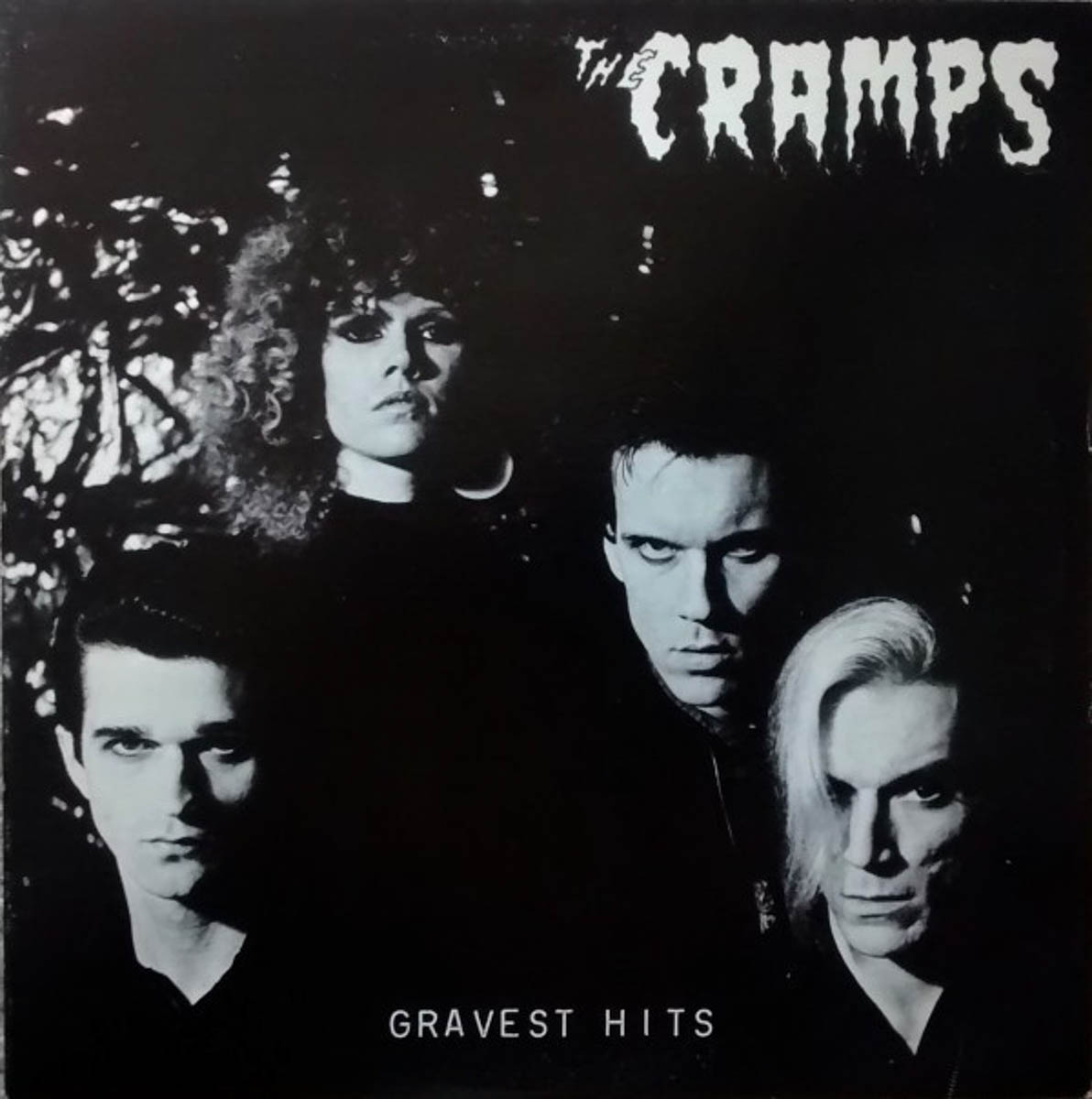
The Cramps with their short five-song gem Gravest Hits was the soundtrack to this time for me. Gravest Hits, a compilation tape and record that came out in 1979, included their first two 45 rpm singles plus a bonus track of swamp rockabilly madness…the gravest of all!

So, in the late 1980s I was a young teen who had been playing music since I was nine years old, and that was all country songs from country’s early days to the poppy 1980s style that was coming out of NashVegas at the time. It was not feeding my pubescent soul. Then along came the Ford Country Squire that belonged to the Swiney boys’ dad, with a warblin’ noise coming out of the tape deck. Reverb garglin’ mess, it was…the tape, not the Ford! I was intrigued and hooked immediately.

I had to have this sound in my heart…. I had to have it in my hands…. I was to be one with it…. I was it, and it was me.

The car sped off down a gravel road leading into the mountains while Lux Interior belched out:

“I’m a human fly

I spell [it] F-L-Y!

I Go BUZZ BUZZ BUZZ

And it’s just becuzz.”

I too felt unhuman and something to be swatted out of existence…

The Swiney boys laughed and thought this tape was just funny, but to me it was serious business. I must find out more about this bunch of miscreants!

I started looking for the name The Cramps in every music publication I could get my hands and eyes on, all the while blaring my recent copy of the Swineys’ Cramps tape. The band showed up in Rolling Stone and in some books on rock-and-roll that I checked out at the library. There was also the name of the record’s producer, which showed up in all kinds of magazines and books – the late great Alex Chilton!!!! He was responsible for making this record sound so creepy, and oozy as an infected sore…

Alex Chilton, the man-child who sang the soulful sound of Memphis, Tennessee’s own The Box Tops in the 1960s! And as with The Box Tops, The Cramps recorded Gravest Hits at Ardent Studios in Memphis. More reverb! I’m begging you – REVERB! Even though the band was NYC-based, they chose another Memphis studio (Phillips Recording) with Chilton again at the helm for the 1980s follow-up, full-length LP Songs the Lord Taught Us.

The years have passed by, and yet this five-song EP still oozes its way into every music endeavor I write and record… Thank you, and Godspeed, Alex Chilton…rest easy, Lux Interior.

  • “Human Fly”
  • “The Way I Walk”
  • “Domino”
  • “Surfin’ Bird”
  • “Lonesome Town”

The Cramps – Gravest Hits

We all live in a world of mystery & deceit…

The Cramps – “Domino”

Pick 5: Not-So-Traditional Christmas Songs for Traditional Christmas

Christmas Day is over, and all of the traditional Christmas songs have also gone away – for the past month (and sometimes into November), you couldn’t go to any public place with a sound system without hearing these yuletide tunes on repeat. I’ve never been one for traditional Christmas music; I blame my parents for playing Josh Groban’s Christmas album Noel over and over during the holiday season when I was younger. However, it is still officially Christmas, the 12 days of Christmas, in fact. And so, I’ve gathered a list of some alternative Christmas songs that I’ve grown to love and appreciate over the years to carry us through to the end of the season on January 6.

“Hard Candy Christmas,” Dolly Parton

This Dolly Parton classic wasn’t conceived as a Christmas tune. Originally written by Carol Hall for the musical The Best Little Whorehouse in Texas, “Hard Candy Christmas” became a bona fide Christmas song once Dolly put it on her collaborative album with Kenny Rogers, Once Upon A Christmas, and after she performed the song on Bob Hope’s Christmas special in 1988. I love this song because it starts off so sad. And then there’s so much possibility and hope for the future with every ‘maybe’ Dolly croons – life and the holiday season may be hard, but we have the opportunity to make of it what we will. Dolly lets us know that it will all be fine.

“I Just Wanted to Say,” My Morning Jacket

My Morning Jacket, one of those quintessential early aughts indie bands, released a Christmas EP entitled My Morning Jacket Does Xmas Fiasco Style in 2000, which was very early in their career. And, with artists like Nick Cave listed in the composer credits the EP is anything but a fiasco. My favorite song of the bunch is “I Just Wanted to Say.” The song has a sad indie sound with some alt-country guitar twang, but it’s actually a very endearing and sweet song lyrically – Jim James just wants to be a little part of your cheer.

“River,” Joni Mitchell

“River” is another song that was not meant to become a part of the Christmas song canon, instead being merely written with the temporal setting of the Christmas season. The song borrows melodies from classic Christmas songs that give it that Christmas feel, but the melancholic and nostalgic lines and winter imagery by the Queen of sad and thoughtful lyrics are what really make this a spectacular Christmas song for me.

“Christmas in Harlem,” Kanye West, CyHi da Prynce, Teyana Taylor

Anyone who knows me knows I love and am fascinated by Kanye West, and I try to find any excuse to talk about him. And so, of course, his Christmas song would be on my list! “Christmas in Harlem” was released in 2010 as a part of his GOOD Fridays free music giveaway series. Like most of the other songs on this list, the lyrics speak to the sadder side of Christmas like not being able to be with family and the disillusionment with the consumerist culture surrounding the season.

“It’s Christmas! Let’s Be Glad!,” Sufjan Stevens

This is definitely the happiest track from my list! The song comes from a box set of five different Christmas and Christmas-related EPs the singer Sufjan Stevens released between 2001 and 2006. Sufjan is known for his haunting lyrics and unique banjo playing, and what this Christmas song lacks in haunting lyrics, it more than makes up for in unique and wonderful banjo sounds! I picked this song out of the long track list just because I thought you all deserved at least one genuinely happy sounding Christmas song – and who doesn’t love a banjo-filled Christmas?