


Music & Songs Archives - Page 11 of 30 - The Birthplace of Country Music
Listen
Play
Loading station info...

Pick 5: Songs about Travelling

For our “Pick 5” blog series, we ask members of the Radio Bristol team or our BCM staff to pick five songs within a given theme – from heartsongs to murder ballads and everything in between! Once they pick their “5,” they get the chance to tell us more about why they chose those songs. With a diverse staff of knowledgeable DJs and friends of the museum and radio station, we’re sure to get some interesting song choices, which might introduce you to some new music, all easily accessible by tuning into Radio Bristol!

For this “Pick 5” post, we have a special guest blogger – Meghan Zuzolo, a student at Western Carolina University who helped us with social media and content creation as part of an honors student project led by Assistant Professor Lyn Burkett this past spring. Meghan chose songs that are about traveling to and from places for different reasons, thinking about loved ones while you’re – or they are – gone, and the good feelings that traveling gives us. Traveling has always been a theme in music, from the very earliest recordings to the most recent. And after this past year of “safer at home,” social distancing, and quarantine, traveling, and missing far-away friends and family, is probably on all of our minds!

“Hey, Porter,” Johnny Cash

“Hey, Porter” was released by Johnny Cash in June 1955. This tune describes the story of a man on a train ride to Tennessee who keeps on asking how long it will be until they reach their destination. The passenger in the story makes it very clear that he is excited to make it back home, perhaps to his family or a loved one. I picked this song because I think everyone can relate to the feelings of excitement of returning home after being gone for too long or having a loved one return home.

“We Shall All Be Reunited,” Alfred Karnes

“We Shall All Be Reunited” was recorded by Alfred Karnes at the 1928 Bristol Sessions and released in 1929. This song describes the story of how loved ones and family members may travel far away and pass away, but we will be united in the afterlife. I chose this song because I enjoy the hopeful message that no matter how far away you are from your loved ones, or maybe those who have passed, one day we will see them again.

 “Carrying Your Love with Me,” George Strait

“Carrying Your Love With Me” was released by George Strait in 1997. In this song, Strait describes having to be away from the one he loves, but no matter what, he carries the love of his significant other with him when he’s gone.

“It’s my strength for holding on
Every minute that I have to be gone.

I’ll have everything I’ll ever need
Carrying your love with me.”

I chose this song because I think everyone can or has been able to relate to this song at some point in their lifetime. Whether you are the one who has had to be away from the ones you love, or you’ve had someone that you love that had to be away for a period of time, this is an uplifting song that can be a reminder that the ones you love are with you, always in your heart.

“Sailing,” Christopher Cross

“Sailing” was released by Christopher Cross in 1979. This tune focuses on how liberating and relaxing being out on the open water can be.

“Sailing takes me away to where I’ve always heard it could be.
Just a dream and the wind to carry me
And soon I will be free.”

I chose this song because I think everyone has their own version of sailing, whether it be taking a drive on a nice Sunday afternoon, watching the sunset, or just spending time with those you love. Everyone has something in their life that makes them feel free and takes them away from the stress of everyday life, and I think this song is a gentle reminder of that.

“Travelin’ Man,” Ricky Nelson

“Travelin’ Man” was released by Ricky Nelson in 1961. This song is about a man who travels the world and sees beautiful women everywhere he goes! I picked this song because I think it’s a happy and uplifting song, and it’s a reminder that there is beauty everywhere in the world. I also appreciate the way the song takes the listener with him to the many different places he visited, from Mexico and Berlin to Polynesia and Hong Kong.

* The “featured image” for this blog post is from Pixabay.

The Root of It: Joseph Decosimo on Dick Burnett

Radio Bristol is excited to share “The Root of It,” a new series connecting today’s influential musicians to often lesser known and sometimes obscure musicians of the early commercial recording era. The sounds and musicians we hear today on platforms like Radio Bristol can often be traced back to the sounds of earlier generations. What better way to discover these connections than to talk to the musicians themselves about some of the artists that have been integral in shaping their music? These influences, though generally not household names, continue to inspire those who dig deep to listen through the scratches and noise of old 78s, field recordings, and more, finding nuances and surprises that inevitably lead them on their own unique musical journeys. 

For this installment of “The Root of It,” we spoke with banjo and fiddle extraordinaire Joseph Decosimo. Joseph was raised in Tennessee’s Cumberland Plateau and has had a lifelong passion for the music of the region centered upon banjo and fiddle. Through his illustrious performing and recording career with projects like The Bucking Mules and The Rocky Creek Ramblers, and through his solo work, Joseph celebrates and reimagines the music of the Cumberland Plateau, Central Appalachia, and the broader American South. Currently based in Durham, North Carolina, Decosimo continues to engage with traditional music not only through performance but also through scholarship as a recent PhD in American Studies at the University of North Carolina. By exploring the history of a tune and theme that has permeated old-time traditions for generations, Joseph shared some of the artists that inspire him and his music.

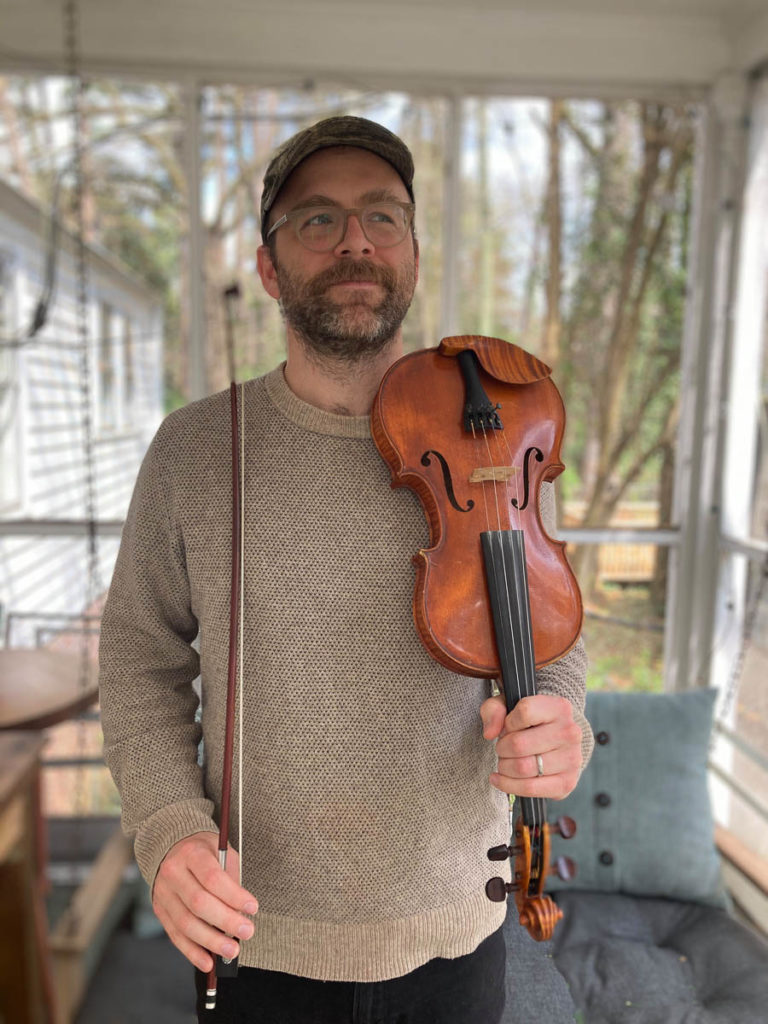
A man standing on a screened in porch with the side of the house and trees/yard showing behind him. He is bearded and wearing glasses,a tan sweater, a baseball cap, and dark pants. He holds in fiddle in one hand and a bow in the other.
Joseph Decosimo with fiddle.

Joseph Decosimo:

Last spring, I found myself visiting a little city park down the hill from my house in Durham. There’s a stand of persimmon trees there, surrounded by a tangle of blackberry bushes that are slowly reclaiming a field. I don’t know that I’ve ever paid much attention to blackberry blossoms, but something about that early pandemic moment led me to attend to the smaller details – smells, sights, sounds – of the natural world. In this corner of the park, these five-petaled blackberry blossoms burst into clouds of linen whites and soft pinks against a backdrop of late spring greens. I hadn’t noticed them before. The blossoms were graceful and delicate. And they were gone almost as quickly as they came.

There’s a musical idea that circulates through Southern fiddle repertoires, taking on the name “Blackberry Blossom” after these delicate and understated flowers that precede the summertime berries with their clash of tartness and sweetness. (My friend Kerry Blech offers a handy primer on the fiddle tune’s recorded life.) The most widely circulating versions, inspired perhaps by Fiddlin’ Arthur Smith’s mid-1930s recording of the tune, takes a turn towards the tart – overlaying a puckeringly sour chord change over the first few beats of the tune’s second part. Over time, most players, perhaps following the lead of the Nashville studio musicians who accompanied fiddler Tommy Jackson, have decided to turn this chord into a minor chord – a rather grand gesture given the subtlety of the namesake blossom. Whatever the case, most folks have decided to resolve the tension of the tune. This variety of “Blackberry Blossom” has come to be the dominant one, spread far and wide by radio and recordings and frequently heard at bluegrass and old-time jams alike.


Fiddlin’ Arthur Smith’s rousing version of “Blackberry Blossom,” featuring the Delmore Brothers and recorded for Victor Talking Machine Company in 1935.

However, deep within this bramble of musical creativity, another strain of blackberry blossoms can be found. This rare strain is known for its ethereal beauty and tantalizing subtlety. These sprout along the West Virginia and Kentucky line. On an old field recording from the 1930s, Kentuckian Fiddlin’ Ed Morrison offers an origin for the piece, explaining: “This tune was learned from General Garfield by my father during the Civil War. He whistled it all the time on his march up Big Sandy River to Middle Creek.” You can hear Morrison’s version here. Morrison’s fiddling neighbor, the legendary blind fiddler Ed Haley, explored all the territory the tune could muster as he busked around Ashland, Kentucky. In the placement of their fingers on the violin’s fingerboard, both Morrison and Haley located the tune in an unquestionably tart tonal space. At a fiddle contest in Paintsville, Kentucky, Dick Burnett, another blind musician, heard a fiddler named Bob Johnson play the piece. Johnson, in turn, had heard Haley playing it somewhere along the Ohio River. After the contest, Burnett cornered Johnson and had him play the tune over and over until it fell under Burnett’s fingers.

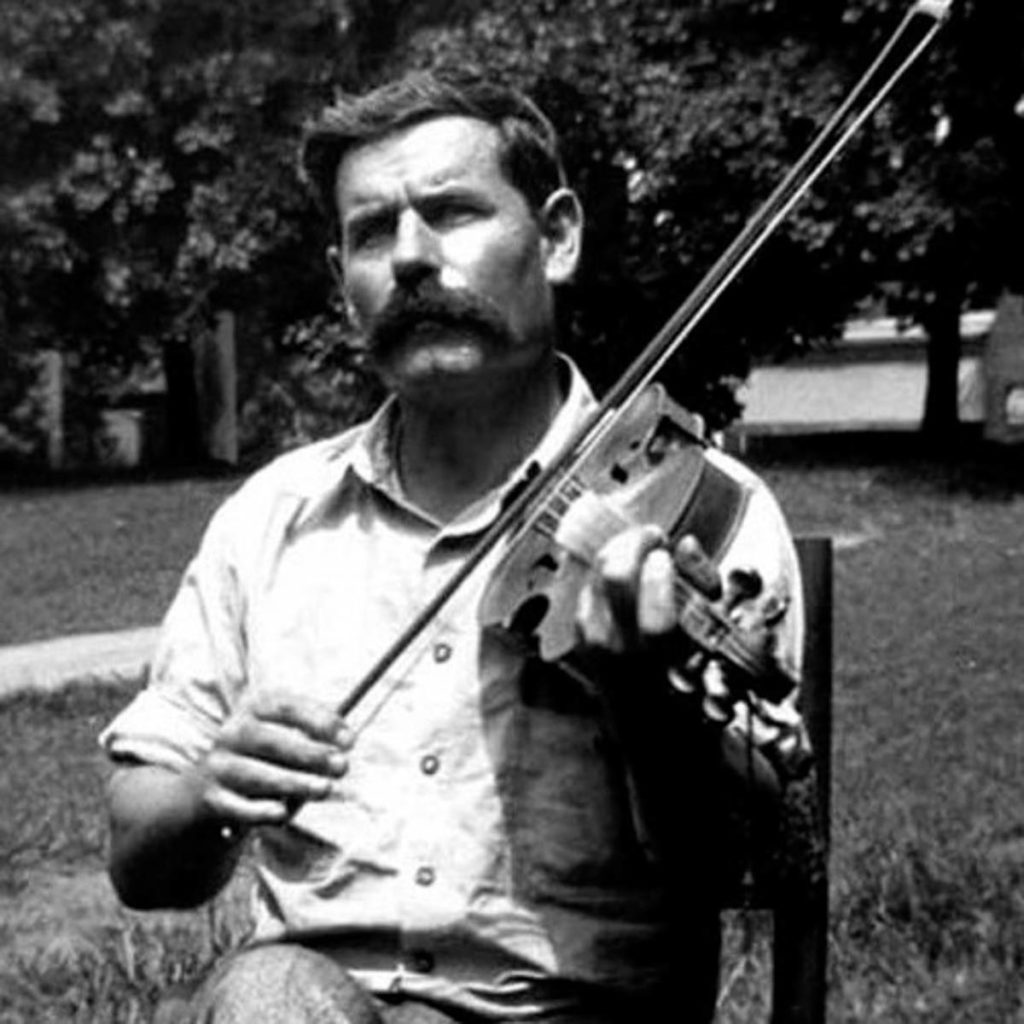
Black-and-white photograph of a dark-haired man seated on a chair outside. He has a large moustache and is holding his fiddle to his shoulder with the bow poised to play.

Pictured is Fiddlin’ Ed Morrison whose father Christian Morrison allegedly learned “Blackberry Blossom” from the whistling of Col. James Garfield (he did not become a general until later) in 1863 during the Civil War activity in Kentucky. Photo and sound clip (linked in paragraph above) courtesy of Kerry Blech via Florida State Fiddlers Association

Burnett stored the tune away in his mind and carried it back to Monticello, Kentucky. In the process, the tart angles and tones of Haley’s version softened into something more ambiguous and delicate – something more gently rolling like the hills around Monticello. By the time Burnett made it down to Atlanta to fiddle the piece for Columbia in April of 1930, his fingers had pushed the notes of the melody into a place of beautiful uncertainty. The twists and turns and more certain tartness of Haley’s setting gave way to something simultaneously sweet, tart, and delightfully ambiguous. Burnett’s rendition conveys a smoky quality that prevents things from being seen or heard with total clarity or certainty.

I realize that this post is supposed to be about a musician whom I’ve found influential, and I’ve burned through a lot of words describing a tune. But it’s hard for me to think about a lot of these older players and not think about a specific tune. And so let me turn my attention fully to Dick Burnett whose rendition of “Blackberry Blossoms” I find so compelling. I’m pretty sure that Dick Burnett isn’t my favorite old fiddler. There’s a good chance that his longtime playing partner Leonard Rutherford might be, but my preferences for these kinds of things change with the weather. I love trying to fiddle his version of “Blackberry Blossoms” – it’s slippery and subtle. I enjoy playing his slippery “Wild Good Chase” – a piece that I learned from mentor Clyde Davenport. As a young man, Davenport learned it from hearing Burnett play it at the courthouse in Monticello. These are fun tunes to play, however, I’m sharing some thoughts on Dick Burnett because he links a network of traditional musicians whose music has inspired and charmed me over the last two decades. I guess Burnett serves as the common thread running through a handful of my favorite artists from the Upper Cumberland region along the Tennessee/Kentucky line.

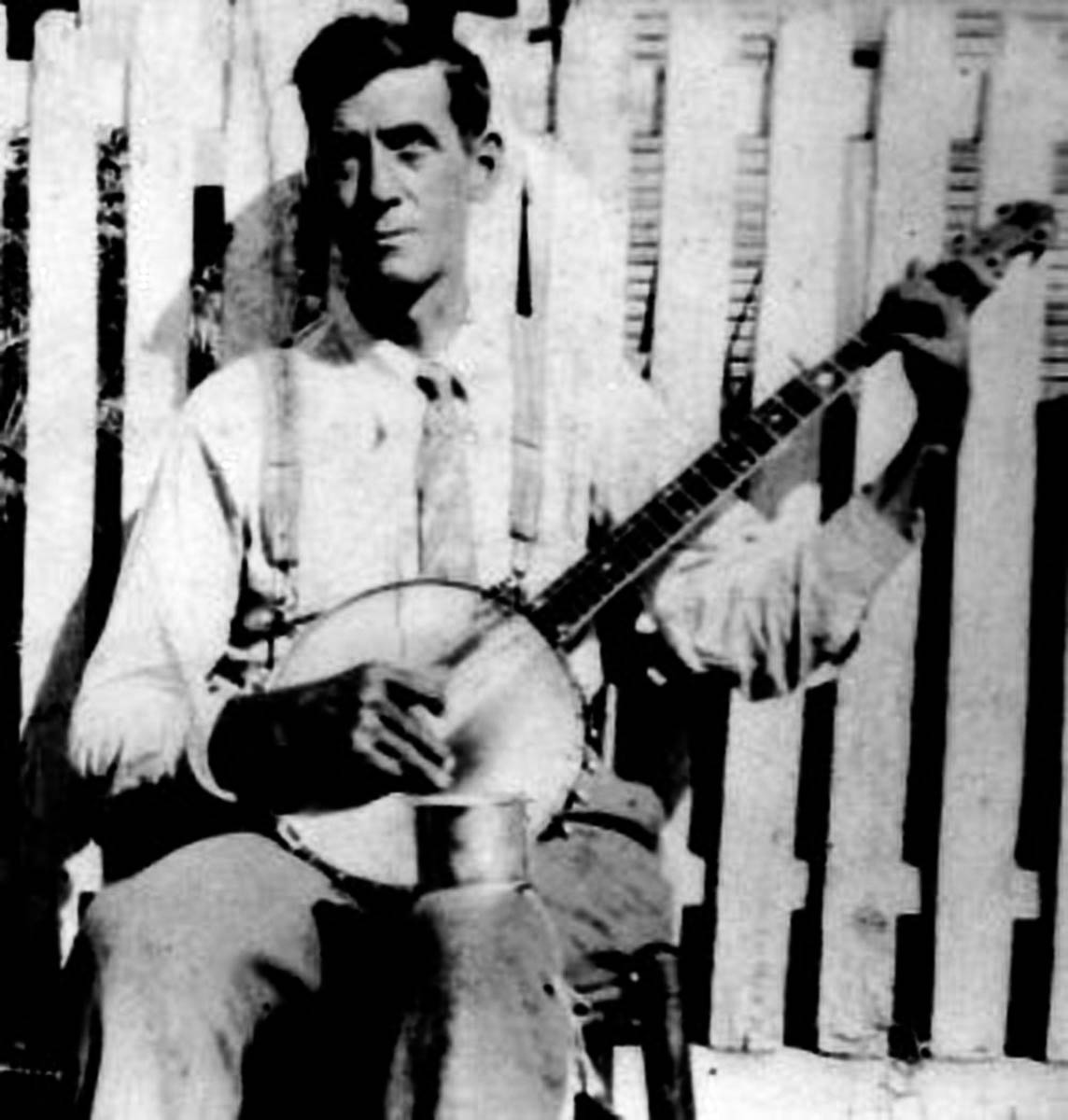
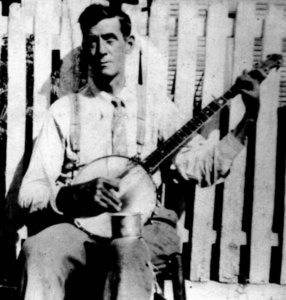
Black-and-white photograph of a dark-haired, clean-cut man seated in a chair in front of a white picket fence. He holds a banjo on his lap, ready to play.
Dick Burnett with banjo.

There’s Retta Spradlin – one of my favorite old singers and banjo players. She sang a powerfully beautiful version with her banjo of “Man of Constant Sorrow” that she learned from Burnett as he was traveling through her rural community. Burnett played an important role in popularizing the song, and his neighbors sang some fine versions that treated his version as a jumping off point. There’s the fiery fiddler John Sharp who spent time playing music with Burnett and his musical partner Rutherford. In Burnett and Rutherford’s repertoire and stylings, we hear traces of the local Black fiddle tradition as performed by their neighbor and aesthetic companion Cuje Bertram. Bertram’s slippery approach to the fiddle and subtle infusions of vibrato into tunes like “Billy in the Lowground” can also be heard in Burnett and Rutherford’s take on the tune. It’s this world of musicians that captivate me.

While I thoroughly enjoy Burnett’s playing, singing, and cutting up, I’m writing about him because I wanted to write about his “Blackberry Blossoms” and because he speaks to ways that music can flow through and create communities. I’m interested in the network of musicians of which he was a part. He links a world of repertoire, artistry, and sound that inspires my own music making. Over the last two years, the repertoire and aesthetics of Burnett’s world has inspired a forthcoming recording project.

Burnett’s music recalls a way of knowing these old pieces and making music that eludes recording technologies and industries. Part of the beauty of his “Blackberry Blossoms” is felt in the way that the tune shifted in his hands. This older stuff resists being fixed in the grooves of a record, on a bit of magnetic tape, or as a digitized abstraction. It eludes formal educational programs and fiddle camps. It’s a reminder of the fact that this is ultimately ear music. It’s music that we pull into ourselves and make something with, music that invites us to trace relationships and discover communities of taste. It’s about repertoire as shared experience and concepts open to exploration. It’s durable stuff.

*To learn more about Joseph Decosimo, visit www.josephdecosimo.com and be sure to check out his latest project “The Aluminum Wonder” featuring rare banjo tunes played in various banjo styles. And be on the lookout for a new solo project featuring collaborations with Alice Gerrard, Cleek Schrey, Joe and Matt O’Connell, and Stephanie Coleman.

The Root of It: Vivian Leva on Texas Gladden

Radio Bristol is excited to share “The Root of It,” a new series connecting today’s influential musicians to often lesser known and sometimes obscure musicians of the early commercial recording era. The sounds and musicians we hear today on platforms like Radio Bristol can often be traced back to the sounds of earlier generations. What better way to discover these connections than to talk to the musicians themselves about some of the artists that have been integral in shaping their music. These influences, though generally not household names, continue to inspire those who dig deep to listen through the scratches and noise of old 78s, field recordings, and more, finding nuances and surprises that inevitably lead them on their own unique musical journeys.

For this installment of “The Root of It,” we spoke with standout roots duo Vivian Leva and Riley Calcagno. Leva and Calcagno have been stalwarts within the old-time community since they were children, both coming from a lineage of celebrated old-time performers. Leva and Calcagno not only shine within the bounds of old-time string band traditions, but they also skillfully break outside the barriers often set by traditional music with well-crafted songwriting and unique singing and arranging, exemplified on their recent self-titled release on Freedirt Records. Their songs breathe with maturity beyond their years, eloquently speaking to the current state of our times while managing to retain a timeless sound built upon the foundation of old-time and classic country. Leva, a native of Lexington, Virginia, has long been inspired by renowned Saltville, Virginia, ballad singer Texas Gladden. Though Gladden was celebrated as a skilled singer and considered an important figure within Appalachian music culture, she never commercially recorded. Thankfully folk archivist and field recorder Alan Lomax recorded Gladden in depth for the Library of Congress and the Southern Journey series (worth seeking out for a listen). We asked Leva to share with us some of the reasons why the music of Texas Gladden keeps her inspired.

Left image: A young woman and man sitting on a concrete wall. The woman is white with her brunette hair pulled back in a ponytail; she wears a white t-shirt, jeans and sneakers. The man is white with dark hair and a beard; he wears a patterned button-down shirt, black pants, and holds a banjo. You can see a house, trees, and a telephone behind them. Right: The album cover shows a white man in an untucked grey button-down shirt and dark pants, looking towards a white woman with shoulder-length brunette-blondish hair and wearing a floral dress. They are inside what looks like an old, run down house and you can see fields outside the windows; the sun is shining through so that you see sun glare in the camera. Their names -- Vivian Leva and Riley Calgano -- are written in script acoss the photograph.

Vivian Leva and Riley Calcagno have been steadily garnering public praise and critical acclaim for their skillful songwriting and unique singing. Image and album cover art courtesy of Leva and Calcagno for Free Dirt Records.

Vivian Leva:

“I remember the first time I heard the plaintive, clear tone of Texas Gladden’s voice. I was 13 or 14, sitting in the car with my dad. The sound of Texas Gladden singing ‘One Morning in May’ drifted through the speakers. I was captivated by Texas’s voice, and by the story of a young woman and her tragic death. Over the course of the next few months, I listened to that track and to my dad singing it over and over again. It wasn’t before long that I learned it as well. At the time, my dad was working on a project with Stephen Wade, who wrote about Texas in his book, The Beautiful Music All Around Us. The two of them asked me to join them on their trip to visit and perform for Texas Gladden’s family. We went first to Salem, then to Saltville, Virginia, where I had the privilege of singing ‘One Morning in May’ for Texas’s kin.”

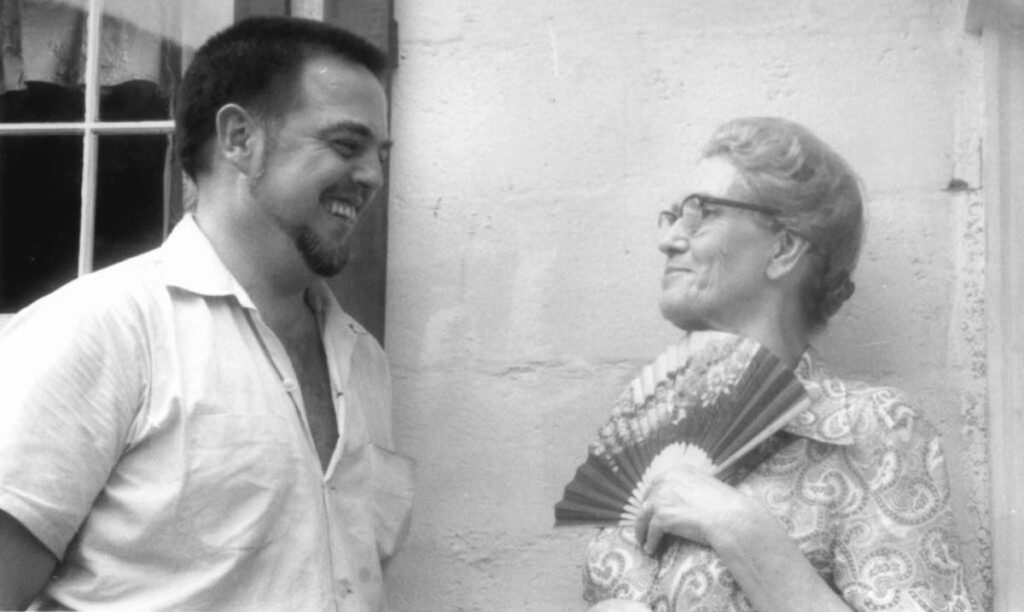
This black-and-white image shows a young man with dark hair and a short beard with an older woman with her grey hair pulled back in a bun at the nape of her neck. The man is smiling at the woman, and she looks at him with a small smile and holds a fan below her chin.

Texas Gladden was a celebrated ballad singer from Smyth County, Virginia, who recorded regularly with Alan Lomax from the early 1940s into the early 1960s. Alan Lomax Collection, American Folklife Center, Library of Congress

”Most of the information I have about Texas comes from a chapter in Stephen Wade’s book. According to him, Texas was born in Saltville, Virginia, about two and a half hours from where I grew up in Lexington, Virginia. My parents were one of her many appreciators, and thoroughly considered naming me Texas. It would have fit into a long tradition, as Texas had sisters named Kansas and Virginia, and a cousin named Tennessee.

She was born and raised in a musical family. Both of her grandparents played the fiddle, and her parents played the banjo. Often, her family held square dances at their house, where people would come to dance and play. Texas inherited many of the ballads that she sang from her mother, and formed a close musical bond with her brother, Hobart Smith. Although she never pursued a career in music, her songs nevertheless reached many through the recordings made by the Lomax family and other folk song collectors.

I didn’t realize how much Texas’s music was woven into my everyday life. One of my favorite tracks off of the Troublesome Creek Stringband’s CD was the song “Three Babes.” I listened to it all the time, and loved singing along to the sad tale. Later, I realized that they had gotten it from Texas, and, after listening, I was similarly intrigued by her version. Texas’s voice, to me, somehow is both soft and cutting. She is gentle, but also sharp and clear. The way she sings, it is almost impossible to not become absorbed in the story.”


Texas Gladden singing “Cold Mountains,” one of the songs recorded in Salem, Virginia by Shirley Collins and Alan Lomax in 1959. 

“In October of 2016, my bandmate Riley sent me a YouTube video of Texas singing “Cold Mountains.” We decided to arrange it into a string band version and to write a chorus for it. It was exciting to not just try to imitate Texas, but to expand upon the song and imagine what she might like. Texas Gladden was one of the first singers that inspired me to learn ballads. She continues to be an example to me of not just how to sing pretty, but how to tell a story.”

To learn more about Vivian Leva and Riley Calcagno, visit their website. Their debut, self-titled album released in March 2021 on Free Dirt Records. Check out the music video for “Will You” from the album:

The Root of It: Brad Leftwich on John Dykes and the Magic City Trio

Radio Bristol is excited to share “The Root of It,” a new series connecting today’s influential musicians to often lesser known and sometimes obscure musicians of the early commercial recording era. The sounds and musicians we hear today on platforms like Radio Bristol can often be traced back to the sounds of earlier generations. What better way to discover these connections than to talk to the musicians themselves about some of the artists that have been integral in shaping their music. These influences, though generally not household names, continue to inspire those who dig deep to listen through the scratches and noise of old 78s, field recordings, and more, finding nuances and surprises that inevitably lead them on their unique musical journeys. 

For our first installment of “The Root of It,” we spoke with legendary Oklahoma fiddler Brad Leftwich. Brad has long been considered the gold standard for old-time fiddling and banjo, learning directly from some of the masters who came before him like Tommy Jarrell, Melvin Wine and the Hammons Family, and more. Brad has been a performer and educator for over 40 years and continues to record projects with his group Brad Leftwich & the Humdingers; he has also crafted genre-defining teaching materials and continues to tour internationally. Brad shared with us his interest in the music of old-time pioneer John Dykes and the Magic City Trio, a celebrated local Tri-Cities band that recorded in the late 1920s.


Brad Leftwich performing at Wheatland. Courtesy of Brad Leftwich

Brad Leftwich:

I still remember when I met John Dykes. Well, I didn’t “meet” meet him, because he died a couple of decades before I was born, but from the moment I first heard his fiddling I felt like we had a connection that bridged space and time.

Linda and I were visiting our friends Gail Gillespie and Dwight Rogers. This was in the days before CDs and the internet, when it was actually difficult to get hold of recordings of old-time music; musicians who wanted more than the few Folkways and County LPs that were available resorted to swapping cassette tape copies of field recordings and old 78s. By the time they’d been recopied several times, the sound quality (usually not good to begin with) was pretty awful.


Dyke’s Magic City Trio, pictured left to right: John Dykes on fiddle, Myrtle Vermillion on autoharp, and Hubert Mahaffey on guitar. This legendary local group was named after Kingsport, Tennessee, which was coined the “Magic City” as it flourished as one of the key Appalachian “planned cities” built on industrialism in the early 1920s. Photo from rllane.com

While we were there, Gail put on a recently acquired cassette and asked with a sly smile, “Do you recognize this fiddler?” Linda and I had to admit it sounded like a distorted, muddy recording of me – or at least what I hoped to sound like. Except it couldn’t be me because I didn’t know the tune, and I certainly never recorded a 78. She made us a copy (maybe seventh or eighth generation at this point), and when we returned home I set about finding as many (and clearer) recordings of Dykes’s Magic City Trio as I could.


“Tennessee Girls,” recorded in 1927 by Dyke’s Magic City Trio, is often credited as one of the groups most influential recordings.

I originally learned to fiddle mostly from visiting Tommy Jarrell, but although his bowing structure formed the bones of my fiddling, I never really sounded like him (who does?). After several years on the road learning from many more fiddlers – from the Appalachians to Oklahoma to the Ozarks – I felt like I had taken the bits and pieces that appealed to me from those sources and built my own distinctive sound. But listening to John Dykes was different: I thought, “I know you!” Even now when I listen to him I feel not just that I understand every bow stroke, but that I would put together tunes in pretty much the same way. His fluid, driving sense of rhythm and the clarity of his sound are the ideals that I strive for, not only when I play his tunes, but in my fiddling in general.


“Dusty Miller” performed by Brad Leftwich & the Humdingers.

To me, John Dykes is among the greatest fiddlers I’ve heard, and certainly the Magic City Trio is one of my all-time favorite bands. I love to play with guitar players who can lay out a hypnotic, elegant bass line like Hub Mahaffee, and although Myrtle Vermillion’s autoharp merges with the guitar and thus is not clearly audible on the recordings, I like to think she is filling out and driving that band like Linda’s banjo uke does in ours. The Magic City Trio has been an inspiration and model for my band, the Humdingers, in both its old and new incarnations.

* To learn more about Brad Leftwich or to purchase his band’s latest record Rise and Bloom Again, visit www.bradandthehumdingers.net.


Images courtesy of Brad Leftwich