Music & Songs Archives - Page 10 of 30 - The Birthplace of Country Music
Listen
Play
Loading station info...

Radio Bristol Spotlight: Anya Hinkle

Radio Bristol is proud to offer a platform to local and regional artists who are often underrepresented on a national level yet deserving of that audience. In expanding upon Radio Bristol’s core mission, we are pleased to bring you our latest series – Radio Bristol Spotlight – highlighting top emerging artists in our region. Through interview and performance we will learn more about the musicians who help to make Southern Appalachia one of the richest and most unique musical landscapes in the world.

Recently in the studio we hosted singer-songwriter Anya Hinkle, just a few days before her new album Eden and Her Border Lands was released on Organic Records. This newest collection of songs marks the Asheville, North Carolina-based artist’s first solo recording project, after a history of playing within different band formations. Tellico, the most recent band iteration, garnished quite a bit of success on the Folk DJ charts with a #1 single and #2 album rating from their 2018 release Woven Waters. It comes as no surprise that Hinkle’s newest solo project is currently making sizable waves within the Appalachian region and beyond. The title track recently landed a spot on Spotify’s Indigo and Emerging Americana playlists alongside alt-country giants such as Tyler Childers and Sturgill Simpson. During her on-air interview and performance at Radio Bristol, Hinkle shared thoughts about her musical background and played a few tunes from the album, joined by dobro virtuoso Billy Cardine.

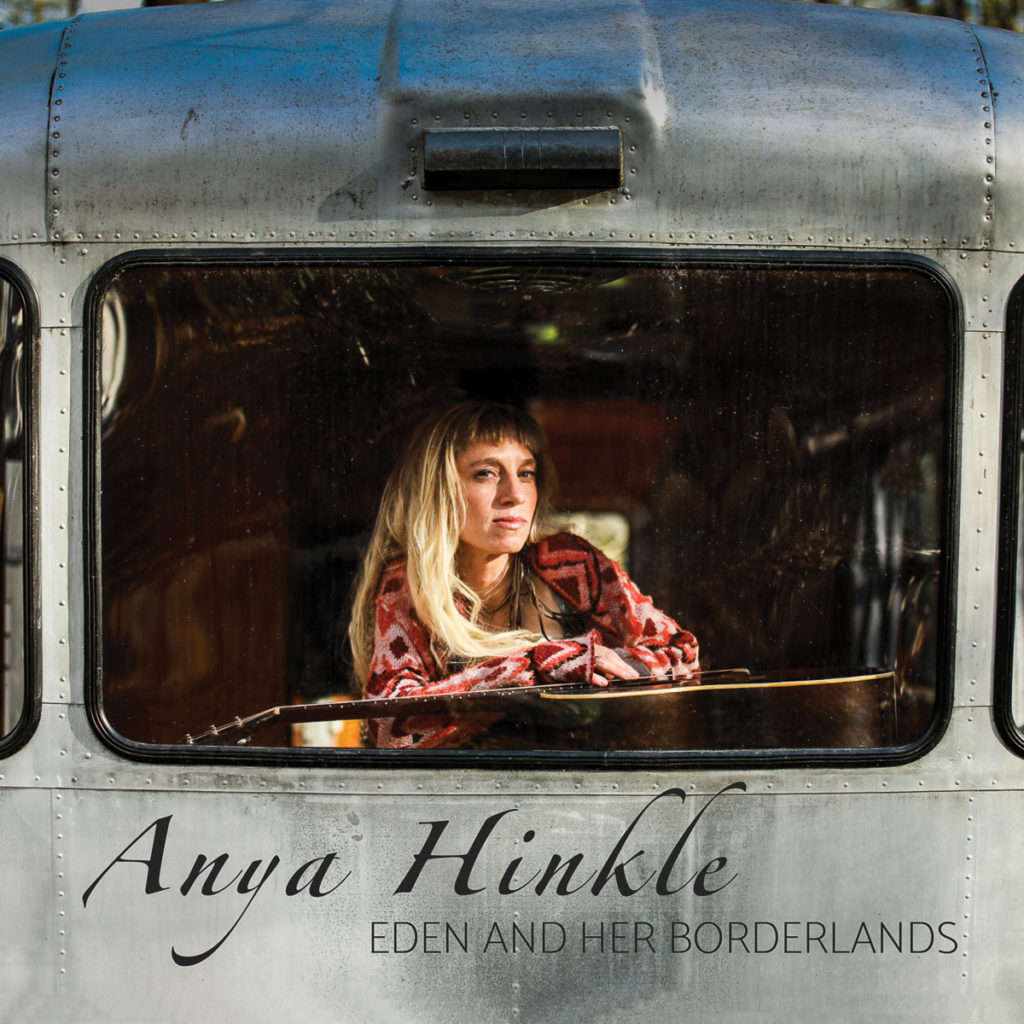
This image is focused in on the back window of a shiny silver Airstream trailer. Anya Hinkle sits in the back window, looking out at the photographer -- she is a blonde white woman, with long hair and waring a red and pink patterned top. She is leaning her arms on a guitar.
Anya Hinkle’s debut Eden and Her Borderlands released on Organic records this August. 

Hinkle started things off with her single “That’s Why Women Need Wine” a lighthearted but strategic storytelling song that offers a bounty of reflective musings exploring the headaches women encounter in a male-centric world. Inspired by a bout of depression after losing another band, the song’s message acts as a declaration of self-reliance. With humor and skillfully crafted verse, Hinkle uncovers a glimpse of what it’s like to exist as a woman within the music industry and offers herself relaxing reassurance through, of course, a glass of wine: “After half a glass I feel divine.” During their performance, Cardine’s dobro offered a swelling reel across the steel strings that felt like a rush of Pinot Noir expertly poured by a seasoned sommelier. There was no doubt when listening to the two that they are both outstandingly polished musicians.

Hinkle grew up in Blacksburg, Virginia, the daughter of classically trained symphony musicians. Her mother was a cellist for the Roanoke Symphony and enrolled Hinkle at an early age in violin lessons. As a teenager she picked up acoustic guitar and began to branch out of the classical music umbrella. Inspired by the virtuosity of bluegrass instrumentalists such as Norman Blake and Tony Rice, she began her musical aspirations as solely a “heritage player” looking to emulate bluegrass greats. It was only after starting to perform out at local bars that she felt the itch to “have something to play” and began songwriting. That itch has since gained her awards and accolades; in 2019 Hinkle won the prestigious Merlefest Chris Austin Songwriting Competition and was a finalist for the Hazel Dickens Songwriting Competition. Her dedication to musicality and craft are on full display in her new album, which alongside her unique songwriting, offers a breadth of talented players and co-writers, such as Graham Sharpe of Steep Canyon Rangers, fiddler Julian Pinelli, sacred steel player DaShawn Hickman, Mary and Billy Cardine of Lover’s Leap, and Japanese songwriter Akira Satake.

Hinkle played another tune during her studio visit, an instrumental piece named “Meditation Beyond the Shores of Darkness.” The tune harkens back to Hinkle’s commitment to traditional Appalachian music, while unveiling the musician’s distinctive musicality. It flutters through a beautiful finger-picked theme reminiscent of folk melodies from the past, while exploring some unknown inner psychological and surreal musical space. Hinkle’s music is definitely built for lovers of bands like the Grateful Dead, who value roots in traditional music and effectively work within a bluegrass framework yet push against those boundaries with skill and ease. Aside from this tune, Hinkle’s writing and vocal styling drifts between familiarity, sometimes sounding like contemporaries Gillian Welch and Alison Krauss, while maintaining all the grit and honesty of legendary Appalachian singers like Hazel Dickens and Ola Belle Reed.

Lastly, Hinkle and Cardine performed a standout tune from the new record called “The Hills of Swannanoa,” co-written with songwriter Akira Satake. I personally was excited they chose this song because it instantly grabbed my attention for its lyrical strength and gave me goosebumps with its mysterious sounding, modal musical phrasing. To me this song sounds like an echo from established folk tunes such as “Swannanoa Tunnel/Asheville Junction” while delving into uncharted liquified Newgrass-Jam territory.

To check out Hinkle and Cardine’s performance live in our studio, click here. Also, to learn more about Anya Hinkle and find tour dates, or to purchase her music visit: www.anyahinkle.com.

Ella Patrick is a Production Assistant at Radio Bristol. She also hosts Folk Yeah! on Radio Bristol and is a performing musician as Momma Molasses.

The Root of It: Nora Brown on Lee Sexton

Radio Bristol is excited to share “The Root of It,” a new series connecting today’s influential musicians to often lesser known and sometimes obscure musicians of the early commercial recording era. The sounds and musicians we hear today on platforms like Radio Bristol can often be traced back to the sounds of earlier generations. What better way to discover these connections than to talk to the musicians themselves about some of the artists that have been integral in shaping their music? These influences, though generally not household names, continue to inspire those who dig deep to listen through the scratches and noise of old 78s, field recordings, and more, finding nuances and surprises that inevitably lead them on their own unique musical journeys. 

For this installment of “The Root of It,” we spoke with Brooklyn, New York native Nora Brown. At the early age of six, Nora took an interest in old-time banjo music from the regions of Eastern Kentucky and Tennessee. She began traveling down south to learn from masters steeped in this musical tradition, including Eastern Kentucky banjo player Lee Sexton. Flash forward ten years later, and Nora is an inspiring and influential performer who has released successful projects on Jalopy Records, performed all over the country, and been asked to be a part of renowned series such as NPR’s Tiny Desk Concerts and more. Below, Nora shares her musical journey that inevitably led to meeting and learning from Letcher County’s Lee Sexton, who much like Nora, learned two-finger and drop thumb banjo styles at an early age.


Nora Brown performing “Miner’s Dream” based on a version she learned from a Virgil Anderson recording.

Nora Brown:

Like most people, I love being told stories. Whether it’s a firsthand experience being retold or a book being read aloud, listening to a story is something I’ll always enjoy. I remember when I was younger, staying over at my grandparents’ house, before bed I’d beg my grandmother – Nan – to tell me what she called “Rockaway stories.” As a child growing up in the Bronx, Nan would take the IRT (Interborough Rapid Transit) line to the BMT (Brooklyn-Manhattan Transit) line out to the far Rockaways where she would stay with her grandmother for the summer. Upon my requests, she would sit at the end of my bed and tell me about when Aunt Peggy got caught clipping roses from a neighbor’s flower-filled garden or about her grandfather who refused to leave the bungalow during hurricane season, stationed with his pipe and by the radio through the storm. It didn’t matter how many times I heard these stories, the best part about this was hearing her recall those memories from years ago.

Storytelling and oral traditions have served as a vital part of various cultures throughout the world. In West Africa, griots – also known as jalis – held the responsibility of learning and passing on oral history in the form of storytelling or song. Cool fact: an instrument often used in the griot tradition to accompany storytelling is the khalam or xalam, which happens to be an ancestor of the banjo! This position was extremely valued in the time when recording history was not easy; griots would serve as advisers for royal persons as they not only existed as living archives but were also extremely familiar with the geography of their region. The griot tradition continues to be practiced today in many parts of West Africa, demonstrating the power and timelessness of storytelling – that it continues to be empowering to honor the history of your community and tell the stories of those who came before you.

An old white man wearing a dark long-sleeved shirt with jean overalls and a white baseball / trucker-style cap. He is clean-shaven. He sits in front of some old oil barrels, tires, and other items in a yard area.
Master banjo player Lee Sexton at his Letcher County home in Eastern Kentucky. Photograph by Benton Brown

I have had the pleasure of spending time with an incredible person and musician: Lee Sexton. Living in Linefork, Kentucky, on the land he grew up on, Lee was a former coal miner and master banjo player. I had listened to Lee a lot and played a couple of his tunes prior to meeting him, but learning directly from him and hearing his stories changed my relationship with the music I play completely. The first time I went down to visit Lee, I felt really nervous, the kind of nervousness that you feel in your fingers – kind of an ache. I think this feeling probably stemmed from my belief that our differences in place of origin would create a divide between us, preventing any mutual connection. This feeling would persist as we pulled into his driveway and as he yelled “Come in” from the couch inside his home in response to our knocking. As we sat down and shared tunes, stories, and food, slowly my nervousness dissipated and was replaced with a feeling of comfort and security. I think that the act of sharing music or sharing a story with someone is not only incredibly generous, but ties the sharer and receiver together through their new shared experience.

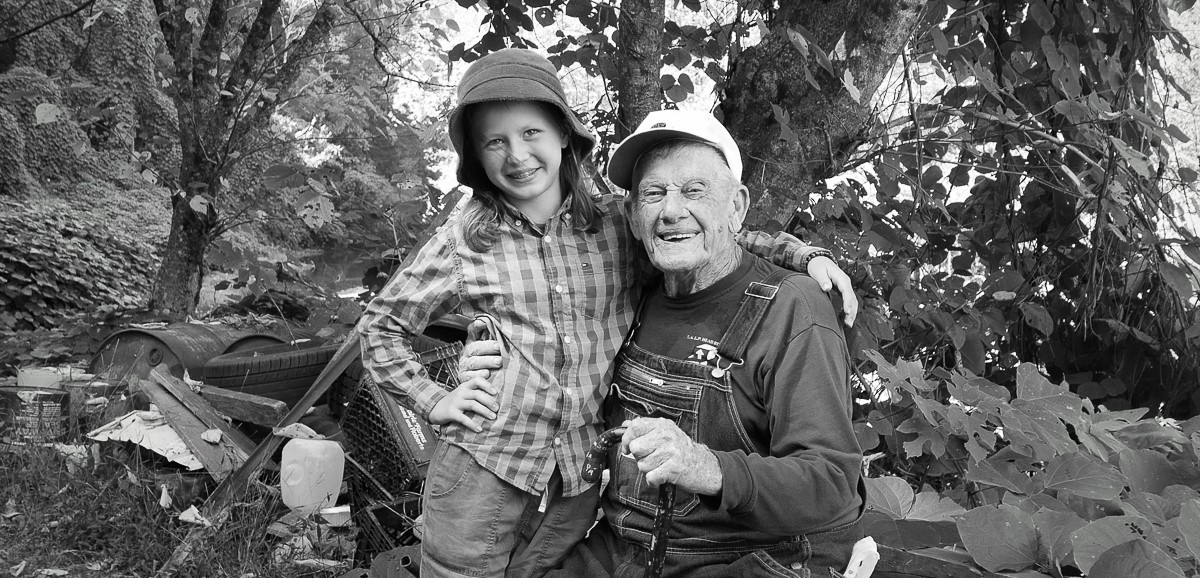
A young white girl with blondish hair and wearing a plaid long-sleeve shirt, light-colored pants, a bucket hat, and converse sneakers has her arm around an old white man in a dark long-sleeved shirt and overalls. He is seated and wearing a white baseball cap and holding a wooden cane. She is standing beside him. Trees and an old wall can be seen in the picture too.
Nora Brown at 12 years old with Lee Sexton. Photograph by Benton Brown

Prior to my first visit with Lee, I hadn’t had the experience of learning from someone who had grown up with the tradition and learned the same way – person to person. Lee reminded me of the power of storytelling. Spending time with him taught me that there is much more to traditional music than just learning the old songs, that stories told alongside them provide context that gives them meaning. Lee has helped me build a personal connection to the music I play and has made me understand why so many of us love it so much.


Home performance of Lee Sexton at 90 years old playing a two-finger version of “Cumberland Gap” with Nora at 12 years old.

Lee Sexton playing an inspired version of “St. Louis Blues.”

Nora Brown’s latest project Sidetrack My Engine on Jalopy Records releases September 23, 2021, and her debut release Cinnamon Tree can be purchased at Norabrown.bandcamp.com. For more information about Nora and her music, visit norabrownmusic.com.

Nora Brown is a talented banjo player from New York. Kris Truelsen is the Program Director at Radio Bristol.
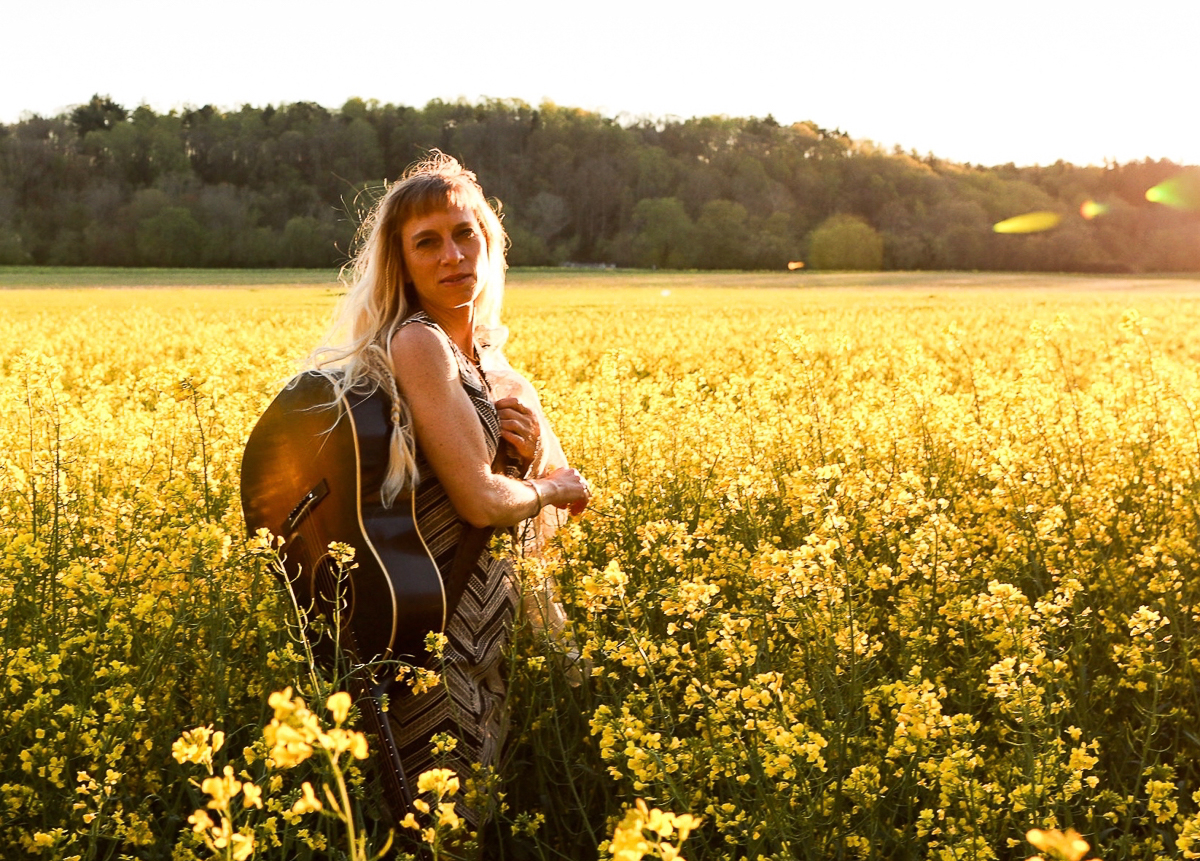
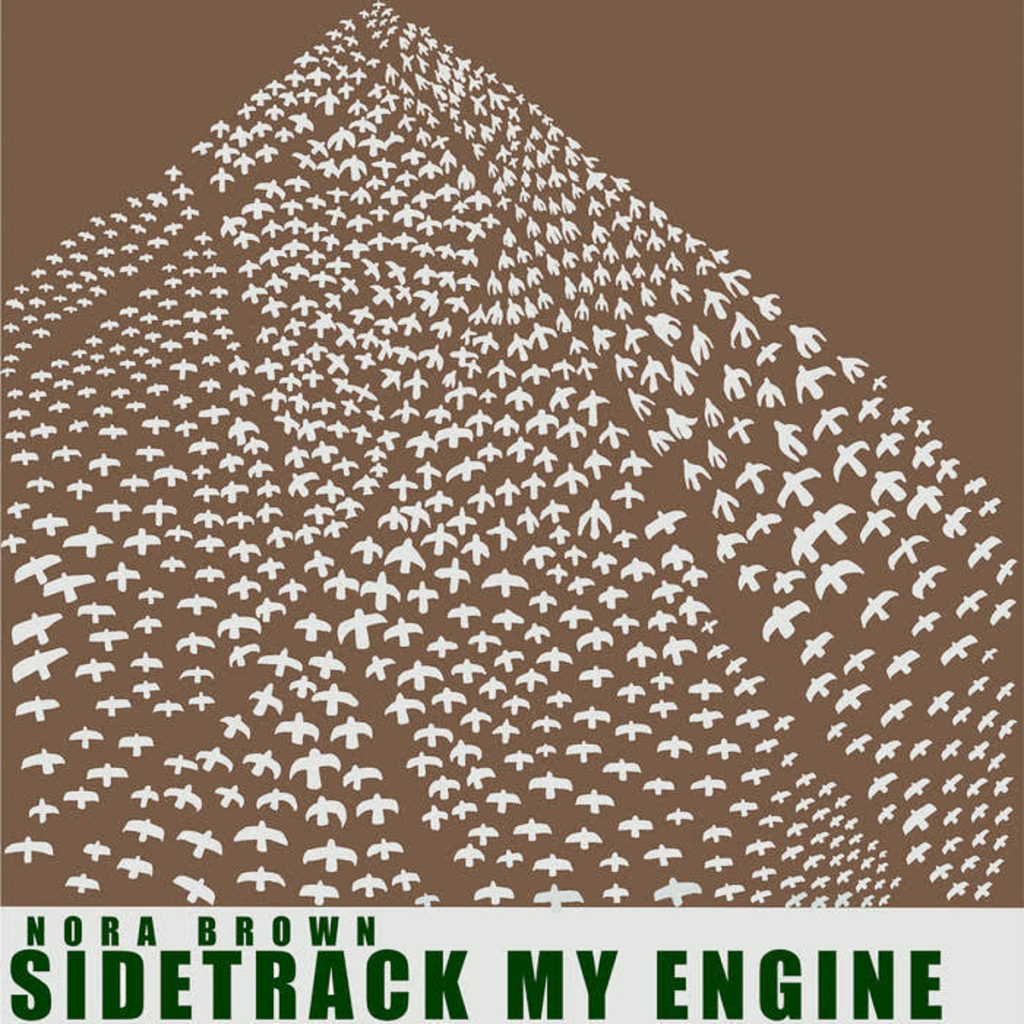
Album cover design showing a pinky-brown background with different groupings of white birds drawn so that they are all heading upwards to form a pyramid-like design. The album's title of Sidetrack My Engine is shown in green at the bottom of the album cover.
Nora Brown’s upcoming project on Jalopy Records  “Sidetrack my Engine” releases September 23.

Will the Circle Be Unbroken? A Personal Commentary on the Cycle of Various Changes in Country Music

For some, country music appears to be a genre that hasn’t changed much over time – too often, there is a perception of it being pretty much the same, no matter what song or artist is on the playlist. But over the years, it really has changed – from the subjects of the songs to the styles to the variety and diversity of its influences. We’ve seen the “big bang” of early commercial country music at the 1927 Bristol Sessions with artists like Jimmie Rodgers and the Carter Family, honky-tonk blues, the Nashville sound, outlaw country, traditionalists, and so much more.

Over the past decade or so, it feels like we’ve seen a conforming era in the sound of country music. As a country music fan, I can’t count how many times I’ve said or heard the words: “I don’t like new country music, only old country music.” When Taylor Swift emerged as a country artist, I was right there for it. I burned “Our Song,” “Tim McGraw,” and the Fearless album onto a CD as quick as I could. But after a while, Taylor Swift wasn’t so country anymore – and she wasn’t the only one. And so soon, I fell away from new artists because I felt like they were clinging too much to pop music, or really over-doing the country sound.

Within the last five years, however, I’ve once again started listening more and more to new country. Artists like Luke Combs, Kacey Musgraves, and most notably, Tyler Childers have become especially popular in country music. These artists seem to be moving towards a revival of that country sound I’ve been craving. They haven’t necessarily strayed away from a pop sound, but they don’t sing solely about the stereotypical boots, tractors, beer, and women either. For me, it feels like they’ve brought back the country sound with real emotion – from “Dime Store Cowgirl” and “Whitehouse Road” to “When It Rains It Pours.”

When I listen to these artists, I definitely feel the connection to 1990s country, which was a very successful decade for the genre. We saw unforgettable artists like Garth Brooks, Shania Twain, the Chicks, and many more come to the stage, and their legacy and music is still insanely popular almost 30 years later. Not only did the 1990s see these successful and “modernizing” artists, but there was also a roots revival in country music where some musicians hearkened back to earlier bluegrass and hillbilly stars and took a step away from a commercialized sound.

While we have seen numerous waves between the popularity of country-pop and traditional country, we can connect our dear fondness of that old-time sound to the 1927 Bristol Sessions and other early recording sessions of “hillbilly music.” The Bristol Sessions led to the mainstream commercialization of the traditional sound we’ve now been listening to for almost 100 years. When we’re relaxing outside on a hot summer day to the embrace of fiddles, tangy harmonies, and the sounds of music floating through the air, we must give credit to that foundational moment at the Bristol Sessions.

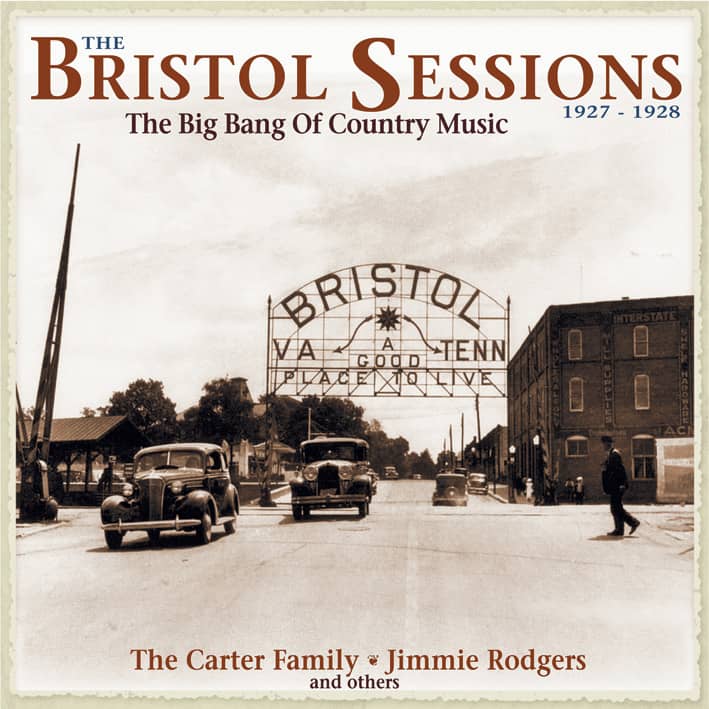
The box set cover has the title "The Bristol Sessions: The Big Bang of Country Music, 1927-1928 at the top with an image of the Bristol sign and State Street, probably in the 1930s or 1940s.
Cover of The Bristol Sessions box set from Bear Family Records.

So, how does this compare to what we are experiencing today in country music? While I think we do find ourselves within the roots revival and traditional influences of the genre, we also have to look at how society is today – we naturally have major divisions in the genre over the sound that is created and viewed as “country,” but now we also have divisions within politics and social activism that are also being expressed through music. We also have greater technological advances that allow the industry to produce many different styles of country music, even some we might not have heard before.

And so, for me, I think as the cycle continues to go on, we will never see exact repeats and can never exactly compare one cycle to a previous one, but we will always have the influence of country music’s history as part of this wonderful musical story.

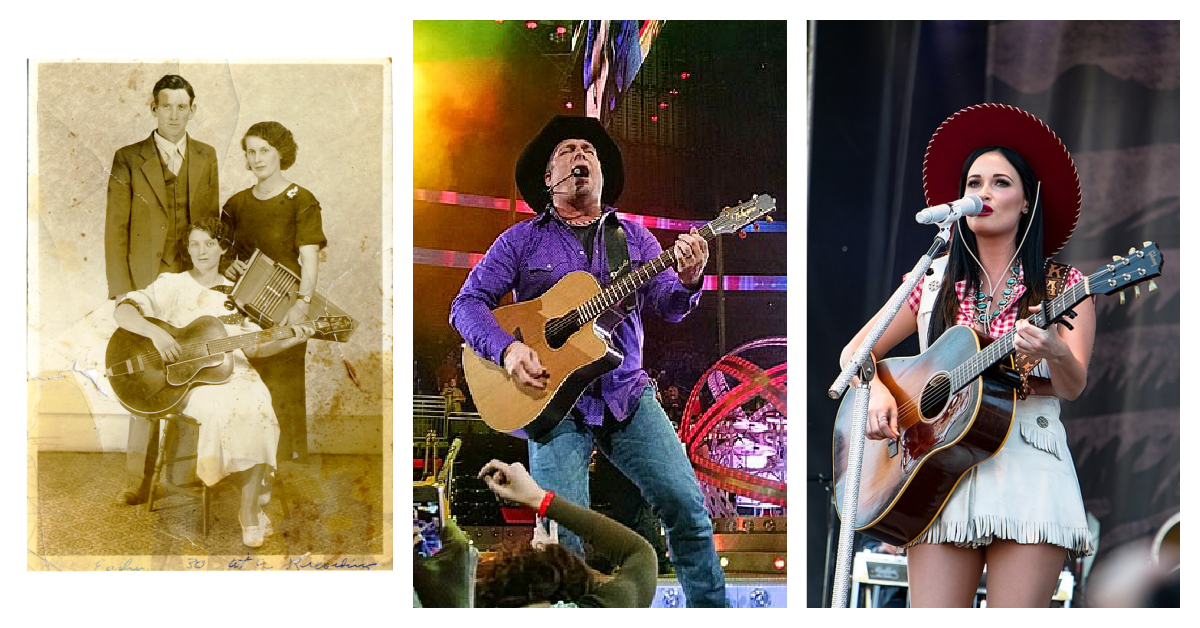
* Title images: The Carter Family (courtesy of Dale Jett); Garth Brooks (Fatherspoon); Kacey Musgraves (BruceC007)

Caitlyn Carter is an honors student and psychology major at Western Carolina University. She is a fan of country music and enjoys exploring different trends of the genre between decades.

Celebrate Record Store Day with History!

Record Store Day, celebrated on June 12, was established in 2007 to support independent and small business record stores, and it has become a highlight for the record-buying public. The height of record store popularity ranged from the 1950s to the 1980s, but wherever you purchase your music these days, it’s obvious that vinyl is having a resurgence in popularity. Taylor Swift recently broke a modern era record for vinyl sales in a single week. So, in celebration of Record Store Day, here’s a brief look at the history of recording records.

Customers browsing and buying records in a record store. Records are on display on a central table and in rows of boxes, while the walls are decorated with album covers, t-shirts, and a sign about Record Store Day.

Record Store Day 2014 at Drift Records in Totnes, United Kingdon. Photo by Sophie means wisdom, Wikimedia Commons 

The first audio recording and playback machine was invented by Thomas Edison. It worked by carving the audio into a piece of metal foil wrapped around a cylinder. The original purpose of this invention, called the phonograph, was not for listening to music for pleasure but as a machine to record short notes for business meetings. Edison actually never thought of his invention as a means for music or entertainment, and these early cylinders certainly weren’t viewed as items for posterity – the recordings could only be played back a few times before they were too degraded to hear. Later, through the work of other inventors, cylinders began to be coated in wax, which provided a slightly better sound with more playbacks. 

Emile Berliner improved upon this invention by converting the bulky and hard-to-store cylinders into flat discs. With the invention of these more durable discs, listening finally started to take the shape we now know and love. Berliner’s hand-cranked invention to listen to these discs was dubbed the gramophone, which is where the Grammy Awards get their name and their trophy gets its shape in honor of this piece of music-listening history.

Technology is always a story of constant evolution and, usually, improvement. Eldridge Johnson, a machinist who worked with Berliner to improve the gramophone, founded the Victor Talking Machine Company and began making and his own version of the playback machine, as well as producing 78 records that were made with a new and improved technique resulting in a higher quality sound. With changes in the recording technology – including the electric microphone and the electric amplifier – recorded music became more and more popular from the 1920s. And technology continued to develop over the years with a whole host of different record playing machines and changes in the format of records – from the early 78s to the later 33 1/3 and 45rpm records. The museum’s collections hold a multitude of the older 78s, while 33 1/3s, or LPs, are most widely sold now.


Left: A small Victrola phonograph on display at the museum. Top right: A cylinder player and cylinders. Botom right: A modern record player with a 45rpm record on it. Credits: © Birthplace of Country Music; photographer: Neil Staples; Photo by Petit Louis, Wikimedia Commons; Photo by Alan Levine, Wikimedia Commons

The invention of magnetic tape offered a clearer sound and portable listening, and record technology faded into the background, but the appeal of listening via records never quite died. A surge in popularity of record listening in the 1960s ushered in a golden age of records that lasted through the 1970s. And once again innovation came to the fore, influencing musical styles and techniques – for instance, in the 1980s and 1990s, hip hop artists created new and unique tracks from the sounds that were on the records using mixers and samplers.

In the past few years, a new wave in the popularity of vinyl has increased the appeal of owning and listening to music on records. Popular artists are releasing their albums on vinyl to be sold in record stores, big and small, as well as box stores with growing shelf space for these records. Record players are easy to find at affordable prices, and some of these modern players now offer multiple listening formats including cassette players, CD players, AUX jacks, and Bluetooth connection. This lets you listen to your music in just about any format you want. 

Despite vinyl records not being as convenient as the common digital technology, there is something really special about owning the physical song etched into a disc and building a collection of your favorite albums – and it’s not just about the record itself, but also about the cover artwork and the liner notes. And so, embrace vinyl once again, and celebrate this Record Store Day by going out to your nearest record store and treating yourself to an addition to your collection – or starting one! Because even if it’s the first record you’ve ever bought or your 101st, there’s nothing quite like the first play of a new record.

A set of shelves (4 high) filled with records. A Star Wars-themed "record tote" is on display on the 3rd shelf.

Museum staff member Scotty Almany is an avid record collector. © Scotty Almany