

Museum Archives - Page 6 of 34 - The Birthplace of Country Music
Listen
Play
Loading station info...

Instrument Interview: The Frying Pan Guitar

By Erika Barker, Curatorial Manager

“Instrument Interview” blog posts are a chance to sit down with an instrument and learn more about it! From the different types of instruments played in traditional, country, bluegrass and roots music to specific instruments belonging to artists, luthiers, and songwriters, these blogs feature several questions that are posed and the instruments giver their answer. Today we talk with the frying pan guitar.

Why are you called a frying pan guitar?  That is my most popular nickname. I get called “Frypan” or “Frying-pan” guitar because of the way I look – similar in shape to a frying pan! 
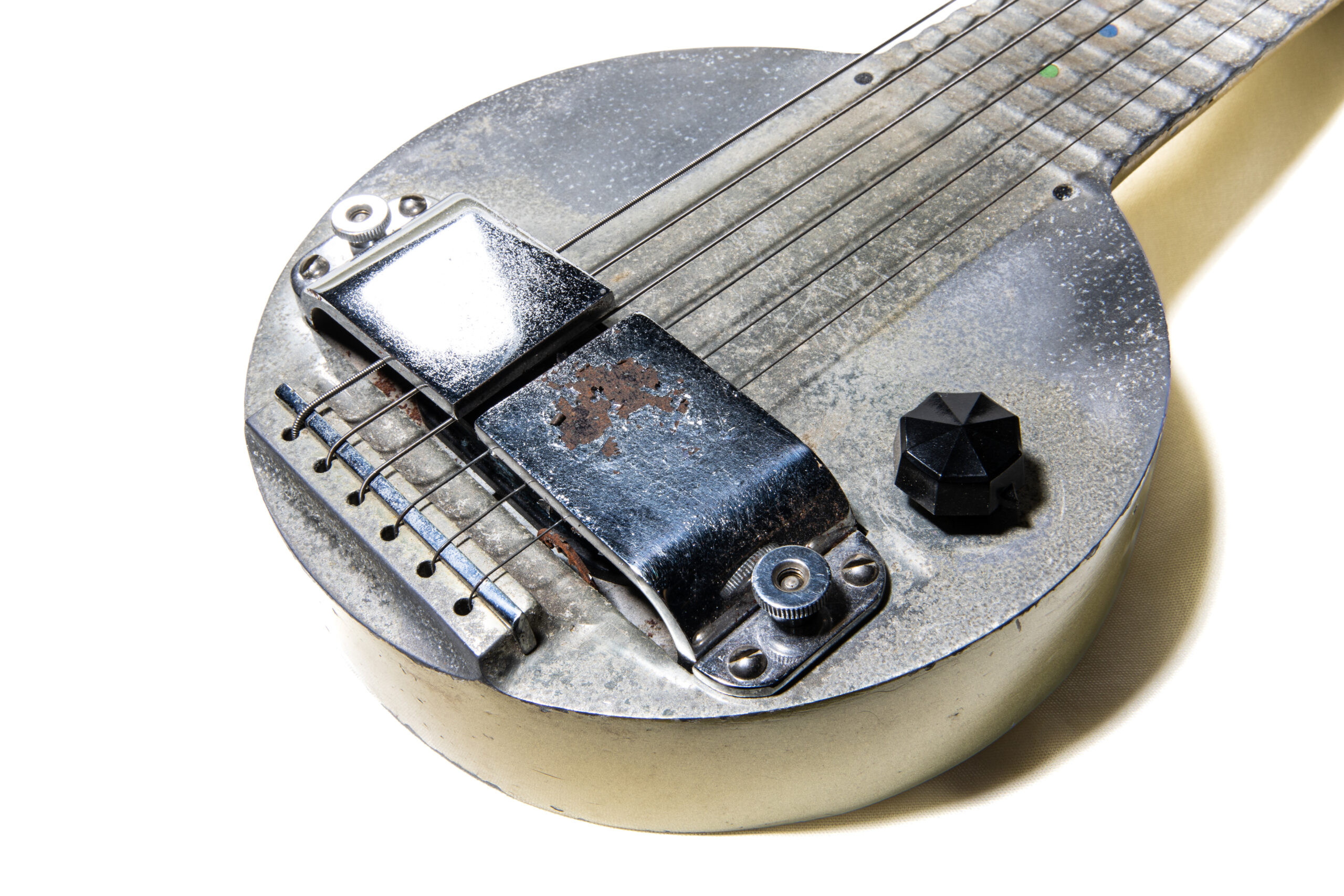
A frying pan guitar (also known as a fry pan guitar) lays flat with a white background. Rickenbacker Electro “Fry Pan” Lap Steel Guitar (c.1934)
Rickenbacker Electro “Fry Pan” Lap Steel Guitar (c.1934)

Some of my other nicknames include; the “Aluminum Lollipop”, the “Beauchamp Elektro guitar”, “panhandle” guitar, “pancake” guitar, and the “electro-Hawaiian model”. My original name was Ro-Pat-In Electro Hawaiian Guitar. I am named after the company founded by my inventors. They soon changed my name, and the name of the company, to Rickenbacker though so many people know me by my official name: Rickenbacker Electro A-22. 

You may have noticed that my nameplate spells my name Rickenbacher instead of with a “k”. This is because one of my inventors, Adolph Rickenbacker, changed the spelling of his Swedish last name to honor his distant relative and American WWI hero, Eddie Rickenbacker. Even though the official name of the company used the new spelling of his name, the headstock nameplates on me and my siblings kept the original spelling into the 1950s.

Are you really a guitar? I am the first commercially successful electric guitar and also the first solid body guitar. I know I don’t look much like a modern electric guitar, I am what is called a lap steel guitar. I am made to be played while lying flat on your lap or on a stand in front of you. Some people refer to this as a “Hawaiian-style guitar” because my acoustic ancestors were invented in Hawaii.
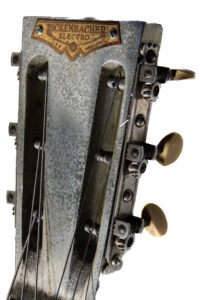
Near the end of the 19th century, a Hawaiian teenager named Joseph Kekuku developed a new technique, and the lap steel guitar was born! There are many legends about how this came about. One popular version is that he picked up a railroad spike while walking along a railroad track and later noticed the unique sound it made when he ran it along the guitar strings while strumming them in his dorm room. However he did it, by the 1930s, Hawaiian-style guitar had become very popular in the continental United States. One of my inventors, George Beauchamp, particularly enjoyed the Hawaiian-style lap steel guitar. He was an avid musician whenever he wasn’t tinkering with electronics. So when he began inventing, it is no surprise that he made an electric lap steel guitar, like me!

Are you the first electric instrument?  No, people have experimented with making electric instruments as far back as 1761. A few interesting electric instruments, such as the telharmonium, an early electrical organ, were developed in the late 1800s and early 1900s. But these earlier instruments were often impractical and never became widely popular the way I did.

The period between World War I and World War II was an exciting time for innovators working with electricity; many new electronic instruments were invented in those days. Some other folks attempted to create electric guitars in the 1920s, but they were not successful. My unique design, which captures vibrations directly from the strings, is still in use today and is what made me one of the earliest electronic instruments to be commercially successful.
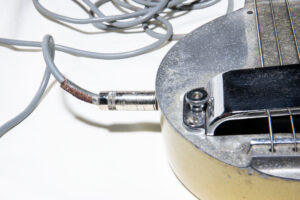
Are you really made out of a frying pan? No, my nickname was given to me because of my shape. I am made out of cast aluminum. I have steel strings and a horseshoe electro-magnetic pickup inside me. The pickup is what makes me an electric instrument. A pickup captures the vibrations of my strings and converts them into electronic signals.

How were you invented?  By nature, the guitar is pretty quiet, and louder instruments in acoustic ensemble settings often drown out our beautiful sounds. In the early 20th century, there was a lot of interest in finding a way to amplify our sound using a variety of methods, including resonators and electric amplification. 

In 1931, George Beauchamp and Adolph Rickenbaucher founded the Ro-Pat-In Corporation with the intent of manufacturing a completely electric instrument. Both men had already been involved in the development of early resonator guitars. Beauchamp developed a new “horseshoe pickup” that utilized magnetic coils and was designed to completely shun all acoustic amplification properties. It worked, and pickups today are still based on his design! Adolph Rickenbacher used his expertise to manufacture the guitars and improved the overall design to reduce feedback.

How are you played? I am played while lying flat on the lap of a seated player or sitting flat on a stand in front of them. The player uses a metal slide, called a steel or tone bar, to move along the strings on my neck with one hand, changing the pitch while also plucking or picking my strings with the other hand.

What do you sound like? 

You can listen to some of my relatives in these videos:

Honolulu How Do You Do – Rickenbacker Frying Pan and Ukulele

Hilo March – Steel Guitar

Erika Barker is the Curatorial Manager at the Birthplace of Country Music Museum. 

The Stories of I’ve Endured: Women in Old-Time Music, Hazel Dickens & Alice Gerrard

Voice Magazine for Women, a free, monthly publication distributed regionally in Northeast Tennessee and Southwest Virginia to 650 locations, partners with the Birthplace of Country Music an affiliate of the Smithsonian Institution, to take you inside the special exhibit I’ve Endured: Women Old-Time Music, on display at the museum through December 31, 2023. Each month through the duration of the exhibit, Voice features impactful stories of the hidden heroines, activists, and commercial success stories of the women who laid the foundation for country music. Inspiring, insightful, and Dolly-approved, you may just find a piece of yourselves, or a loved one, in the stories of some of these hidden figures in American music.

With their permission, we have duplicated our “I’ve Endured: Woman in Old-Time Music” special feature article for this month – we hope you enjoy it! To read this month’s issue in its entirety, click here.

The Stories of I’ve Endured: Women in Old-Time Music
Hazel Dickens and Alice Gerrard
By Guest Contributor Charlene Tipton Baker

old Photo of Alice Gerrard posing with guitar with no shoes
Alice Gerrard, Photo by Henry Horenstein

“When I was 13 years old I heard a Hazel Dickens song and it changed my life. I would not be doing what I do without her, Elizabeth Cotten, Ola Belle Reed, Alice Gerrard, and so many other incredible women featured in this exhibit.” ~ Molly Tuttle

Hazel Dickens and Alice Gerrard were two of the most influential bluegrass musicians of the 20th century. Their focus on women’s issues and their influences from old-time music helped to create a unique sound that set them apart from their male counterparts. Their contributions to the genre continue to be felt today, as they have inspired countless musicians and helped to shape the sound of the genre.

Dickens was born in the coal mining community of Mercer County, West Virginia, and though she later moved to Baltimore, she continued to be an advocate and activist for mine workers and their families. A native of Seattle, Washington, Gerrard was exposed to folk music while in college. The duo met in Washington, D.C., in the early 1960s and quickly formed a musical partnership that would last for several decades. They recorded their first album together, Who’s That Knocking? in 1965. Featuring a mix of traditional ballads and original compositions, the album showcased their vocal harmonies and instrumental skills. It was a critical success and helped to establish Dickens and Gerrard as influential musicians in the bluegrass scene.

Hazel Dickens sitting down playing the guitar outside
Hazel Dickens, photo from the Southern Folk Cultural Revival Project Collection, 1965—1989, #20004, Southern Folklife Collection, Wilson Library, University of North Carolina at Chapel Hill

One of the most significant contributions that the duo made to bluegrass music was their focus on women’s issues. Their music often addressed themes of social justice, economic hardship, and the struggles of rural women. In a genre that was largely dominated by men, Dickens and Gerrard were trailblazers for women in bluegrass music.

Gerrard and Dickens’ influence on the genre can be seen in the many female bluegrass artists who have followed in their footsteps – along with women in other genres who have been inspired by their example. Women such as Emmylou Harris, Naomi Judd, and Claire Lynch have all cited Dickens and Gerrard as significant influences on their music. Additionally, the all-female country band, The Chicks (formerly The Dixie Chicks), has credited Dickens and Gerrard with inspiring their sound and their approach to songwriting.

In an interview with the Washington Post in 1996, Naomi Judd recalled the moment she and a then 12-year-old Wynonna first heard the album Hazel & Alice:

“Their whole sound was so unpolished, so authentic, they were unabashedly just who they were – it was really like looking in the mirror of truth. We felt like we knew them, and when we listened to the songs, it crystallized the possibility that two women could sing together.”

Dickens was the first woman to receive the Merit Award from IBMA and was presented with a National Heritage Fellowship by the National Endowment for the Arts in 2001, the highest honor for folk and traditional arts in the United States. A tireless advocate for traditional music, Gerrard has earned numerous honors including an International Bluegrass Music Association (IBMA) Distinguished Achievement Award, a Virginia Arts Commission Award, the North Carolina Folklore Society’s Tommy Jarrell Award, and an Indy Award. Dickens and Gerrard were inducted into the IBMA Hall of Fame in 2017.

Last fall Smithsonian Folkways released newly remastered editions of their first two albums Who’s That Knocking? and Won’t You Come and Sing for Me? The albums had been unavailable on vinyl for over 40 years. On the same day, Folkways released Pioneering Women of Bluegrass: The Definitive Edition, which included every track recorded by the duo for Folkways in addition to a bonus track. The CD features notes and an essay by Gerrard who is now 88 years old and still performing. Dickens passed away in 2011 due to complications of pneumonia. She is often referred to as the “First Lady of Bluegrass.”

Stay tuned! Next month’s I’ve Endured: Women in Old-Time Music spotlight will focus on renowned Piedmont Blues guitarist and singer Etta Baker who performed music up into her 90s. The North Carolina native said she received chords for her music in her dreams. Artists such as Bob Dylan, Taj Mahal, and Kenny Wayne Shepherd cite Baker as an influence on their own music.

To learn more about I’ve Endured: Women in Old-Time Music, visit www.WomenInOldTimeMusic.com!

Instrumental History: Inspired by Jimmie Rodgers Martin 000-45 Guitar

Did you know that last year the Birthplace of Country Music Museum took in on loan one of the most important guitars in American music history – Jimmie Rodgers’ 1928 000-45 Martin? Yep, it’s true, and it’s currently on display here at the museum! 

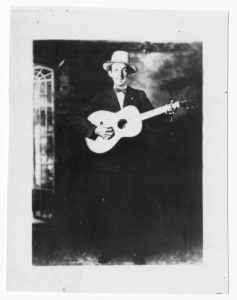
Jimmie Rodgers: A white man in a dark suit with a bow tie. He wears a light-colored cowboy-style hat and holds a guitar in his hands. The background is dark though you can see a windowed-doorway to the left-hand side of the image.

Jimmie Rodgers. From the John Edwards Memorial Foundation Records, #20001, Southern Folklife Collection, Wilson Library, University of North Carolina at Chapel Hill

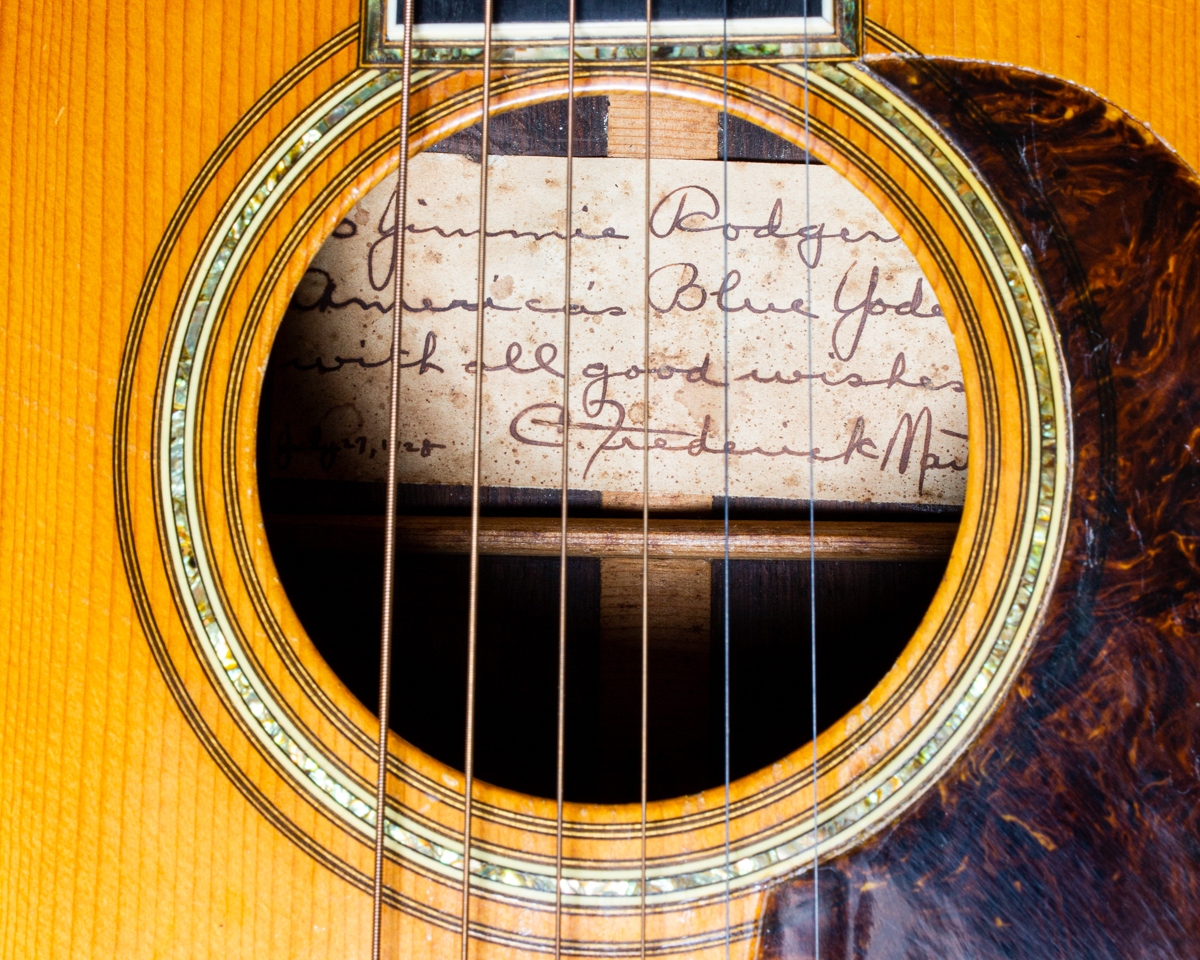
Over the years this guitar has become one of the most iconic symbols for country music, boasting a mother of pearl neck inlay touting Jimmie Rodgers’ name, an iconic hand-painted “THANKS” on the back of the guitar, the words “Blue Yodel” in inlay on the headstock, and a label on the interior with a message signed by C. F. Martin himself. Of course, the guitar was made famous by not only Rodgers – recognized as “the Father of Country Music” and also known as “the Singing Brakeman” and “America’s Blue Yodeler” – but also by honky tonk great Ernest Tubb, who was loaned the famous guitar by Jimmie’s widow Carrie Rodgers. Ernest went on to play the guitar for nearly 40 years, helping to solidify its importance in the history of country music.

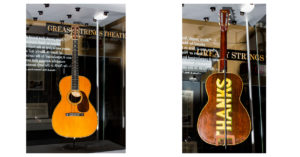
Left image: Guitar seen from the front in a museum exhibit case. You can see the inlay "Jimmie Rodgers" and "Blue Yodel" on the neck and headstock. Right image: Guitar seen from the back in museum exhibit case. "Thanks" is painted on the back of the guitar's body.

Jimmie Rodgers’ 1928 Martin 000-45 on display at the Birthplace of Country Music Museum. © Birthplace of Country Music; photographer: Ashli Linkous

To celebrate this iconic guitar in its temporary home here at the Birthplace of Country Music Museum, Clint Holley – Radio Bristol DJ and host of “Pressing Matters” – has been working with museum and radio staff to create and share a three-episode program featuring perspectives from scholars and musicians from across the country. Titled “Instrumental History: Thoughts & Anecdotes on Jimmie Rodgers Martin 000-45 ‘Blue Yodel’ Guitar,” the program will air on Fridays at 6:00 pm ET on Radio Bristol for the next six weeks launching Friday, February 3 – each episode will be aired two week in a row. And so, in other words, tune in tonight for the first one! 

To get us warmed up and ready for the series, we asked some of our knowledgeable Radio Bristol DJs to tell us about their favorite Jimmie Rodger’s songs, whether sung by him or a cover by another artist. Our DJs came through with some great, if not surprising, choices. 

Crystal Gayle, “Miss the Mississippi and You”

“A thoroughly modern take on this classic song. Although NOT written by Jimmie, he made it his own and was the first to release it in 1932. The song has been recorded over 40 times, and Crystal’s version is the first I could find with a female singer as the main character. Produced with contemporary sounds in the late 1970s, this version shows how flexible and enduring the song truly is.”

~ Clint Holley, Pressing Matters

Jorma Kaukonen, “Prohibition Blues”

“I want to nominate Jorma Kaukonen’s version of Jimmie’s never-recovered master of “Prohibition Blues” from his album Blue Country Heart as my favorite…both for its rarity and its timely nature. The fact that he had the writer, Clayton McMichen, play on his recording of it is even more interesting and shows how much respect Rodgers had for his fellow musicians. As a collector’s aside, can you imagine finding that master sitting in a dusty storeroom somewhere today? Talk about your Holy Grail! It would probably be worth more than the 000-45 that we are so lucky to get to display!

Jorma’s version is, of course, outstanding as well with a superb lineup, and he does it justice with humor and flawless musicianship. I will admit to prejudice here, because Jorma is a good friend whose music is a large part of my repertoire…but his choice of that song is a rare treat for us all.”

~ Marshall Ballew, Off the Beaten Track

Jimmie Rodgers, “Waiting for a Train”

“Two of Jimmie Rodgers’ tunes that I have always connected with are “Waiting for a Train” and “Miss the Mississippi and You.” Jimmie wrote his version of  “Waiting for a Train” based on an English tune from the 19th century. He recorded it in 1929 for Ralph Peer’s Victor label on the back side of “Blue Yodel #4.” I have always liked the horns at the beginning; they resonate with my traditional jazz roots. “Miss the Mississippi and You was recorded later and has that feeling, to me, that Jimmie knew his time was increasingly short. I think Jimmie was able to translate a number of types of music into his own unique style, which is why he was so popular. I hear the music of Western styles in his yodel and jazz in his singing, coupled with the Delta blues and Appalachian sounds. It is a compelling combination. He also recorded long enough that his later songs were technologically better recorded than his early stuff. He was a true artist who died way too young.”

~ Bill Smith – Crooked Road Radio Hour

Jimmie Rodgers, “Last Blue Yodel”  

“A part of Jimmie Rodgers’ final group of recordings, performed during the sessions that took place in New York City just 48 hours before his untimely death, “Last Blue Yodel” is a poignant soliloquy relinquishing personal thoughts on heartbreak. Following a 12-bar-blues format paired with Jimmie’s trademark yodeling, which Rodgers employed on all of his series of 13 Blue Yodels, this last one has become my favorite for its directness and intensity. The tag of each verse admits “The women make a fool out of me.” Rodgers known for his intimate solo guitar style is also one of the first singers to display confessional songwriting, which has deeply shaped country music as a genre, and my own personal approach to creating songs.”

~ Ella Patrick, Folk Yeah!

Leon Redbone, “T.B. Blues”

“My personal favorite cover version of a Jimmie Rodgers song is Leon Redbone’s rendition of “T.B. Blues.” The song itself always stood out to me because of the unique perspective of writing so specifically about one’s own mortality. It was covered by several bluesmen that I took to when I first started researching the blues, but Redbone’s version has the perfect amount of his own style while still paying homage to the original.”

~ Scotty Almany, Scotty’s Tune Up


Kris Truelsen is the Radio Bristol Program Director.

The World of Marty Stuart: Country Music’s Legacy in Mississippi

Today we welcome guest writer Miriam Meeks to the BCM Blog as she shares stories and objects from a wonderful special exhibit currently on display at the Mississippi Department of Archives and History (MDAH) in Jackson until December 31. Focused on Bristol Rhythm & Roots Reunion favorite Marty Stuart and his collection of country music artifacts, this exhibit is sure to be of interest to Birthplace of Country Music fans and friends! Enjoy!

As the year begins to wind down, many people are feeling nostalgic for the past. Until December 31, fans of country music will be able to take a walk down memory lane through the golden age of country music at The World of Marty Stuart, a collaboration between Grammy-winning musician Marty Stuart and MDAH to tell the story of country music with emphasis on its lasting role within Mississippi. The World of Marty Stuart exhibit covers his life and legacy of preserving country music’s stories, photographs, instruments, costumes, and more.

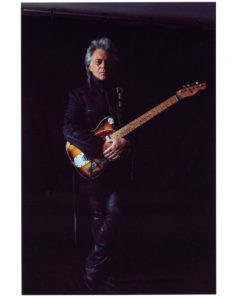
A white man with grey hair stands against a black background. He is wearing all black and holds an electric guitar.

Marty Stuart with his electric guitar. Photo by Alysse Gafken; courtesy of Mississippi Department of Archives and History

As a young boy, Stuart began playing music in his hometown of Philadelphia, Mississippi. He joined The Sullivans, a family bluegrass gospel group based in Alabama, after being drawn to bluegrass and gospel music. He played guitar and mandolin with them until eventually meeting bluegrass musician Roland White, who invited Stuart to back Lester Flatt’s band.

After touring with Flatt, Stuart recorded his first solo album, With a Little Help from My Friends, and performed with various artists like Vassar Clements and Doc Watson before joining Johnny Cash’s band in 1980. Stuart collected memorabilia from shows played by fellow musicians, many of whom were friends and mentors of Stuart. His greatest passion to safeguard the legacy of country music strengthened as he continued to produce solo albums.

Over the years, Stuart’s trove of treasures grew as he recognized the importance of preservation. “Somewhere along the way, about the early ‘80s, those artifacts were being discarded,” said Stuart. “So it became a self-appointed mission to curate, protect, and preserve that end of country music: authentic, traditional country music. The people and their treasures.” Hundreds of these priceless artifacts are currently housed at the Two Mississippi Museums in Jackson as part of The World of Marty Stuart exhibit.

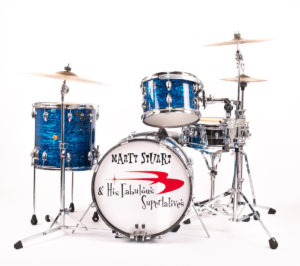
A full drum set against a white background. The drums are a deep blue color and the large drum in the front has the band name -- Marty Stuart & His Fabulous Superlatives -- on its head. Several cymbals can also be seen.

Drum set used by Marty Stuart & His Fabulous Superlatives. Artifacts courtesy of Marty Stuart; photography by Mark Geil

Stuart and the MDAH worked together to curate a truly timeless exhibit, one that gives a small glimpse into Stuart’s dedicated collection. A plethora of pieces from the golden age of country music are on display, including Stuart’s first guitar; original manuscripts from Hank Williams; guitars that belonged to Merle Haggard and Pops Staples; and costumes worn by Porter Wagoner, Dolly Parton, and Johnny Cash, including Cash’s “Walk the Line” performance suit.

Eagle-eyed visitors will recognize the connection to the namesake for Stuart’s second solo album from 1982. Stuart first experienced rhythm and blues as a young boy at the Busy Bee Café, now the Busy Bee Suites, in Philadelphia. Virgil Griffin and the Rhythm Kings frequently played there, and now the group’s original bass drum head rests at the Two Mississippi Museums. A school essay also hangs in the halls of the exhibit. A young Stuart was asked by his teacher, “What do you want to be when you grow up?” to which Stuart wrote, “a musician.” Now his answer has come full circle. The exhibit is the living embodiment of Stuart’s musical journey resting in the state that raised him.

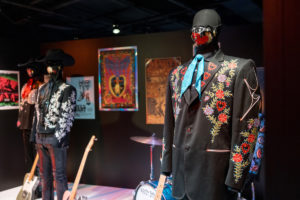
One of the exhibit displays from The World of Marty Stuart. Several stage costumes can be seen, along with posters and prints in the background. There are also a several instruments on display.

Various performance costumes featured in The World of Marty Stuart exhibit. Photo courtesy of Mississippi Department of Archives and History.

What you see in the exhibit is only the tip of the iceberg – in actuality, Stuart has collected over 20,000 pieces of country music memorabilia and historic items, which will settle in the future home of Marty Stuart’s Congress of Country Music in Philadelphia. This Congress will be a celebration of country music and a culmination of the musician’s ultimate goals.

The World of Marty Stuart exhibit is brought to you by the title sponsor, Blue Cross & Blue Shield of Mississippi, as well as by AT&T and Visit Mississippi. The World of Marty Stuart runs through December 31, 2022, with regular exhibit hours: Tuesday—Saturday, 9:00am—5:00pm and Sunday, 11:00am—5:00pm. For more information, visit www.mdah.ms.gov. You can also check out Stuart’s memoir, The World of Marty Stuart. The book covers his life with photographs and artifact reproductions straight from his collection. It was published by MDAH and distributed by the University Press of Mississippi.

Finally, check out the interview with Nan Prince, Director of Collections at MDAH, that we conducted last week on the Birthplace of Country Music Museum’s Museum Talk radio show.

Image at top of page: Marty Stuart and his acoustic guitar. Photo by Alysse Gafken; courtesy of Mississippi Department of Archives and History

Miriam Meeks is the Content Writer of Moore Media Group in Jackson, Mississippi.