Museum Archives - Page 5 of 34 - The Birthplace of Country Music
Listen
Play
Loading station info...

Quick-Witted Women: Comedy and Country Music

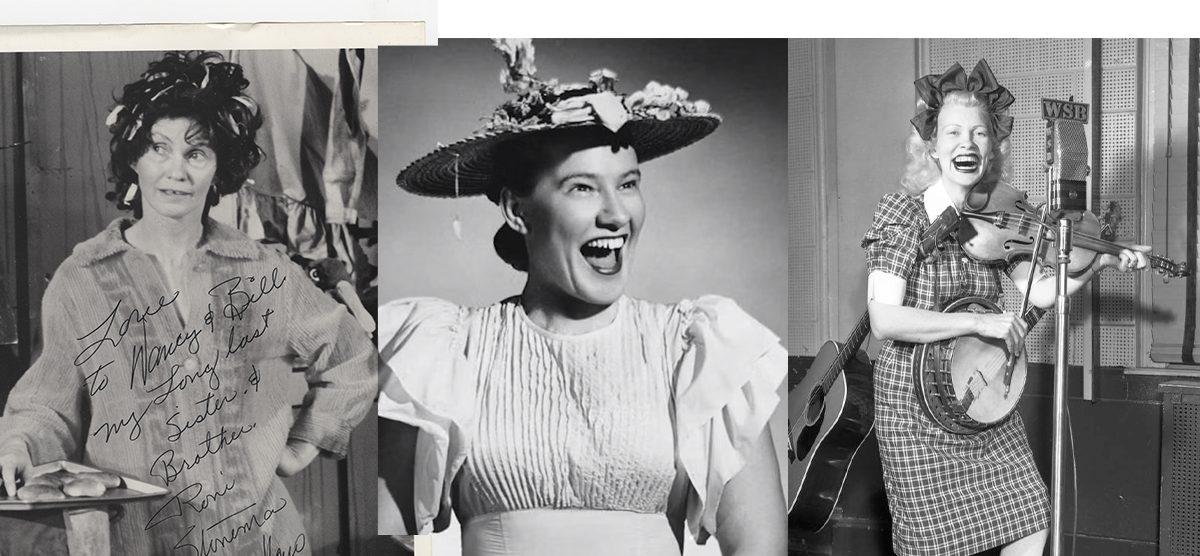
Left to right: Promotional images of Roni Stoneman as “Ida Lee” from Hee Haw from the Birthplace of Country Music Museum archives, Sarah Ophelia Colley Cannon as Minnie Pearl sporting her signature hat and price tag courtesy of the Grand Ole Opry archives and Cynthia Mae Carver as Cousin Emmy courtesy of Georgia State University Digital Collections

Toni Doman-Vandyke is Grants Coordinator and Curatorial Specialist at the Birthplace of Country Music


August 16th is National Tell A Joke Day! Comedy and country music have a long and enduring history. From the extravagant days of vaudeville variety act performances in the late 19th and early 20th centuries to early barn dance radio programs of the 1930s, comedians and musicians were regularly featured.

A graphic image of a logo for the program Hee Haw. The graphic is a mule wearing a yellow straw hat, with droopy eyes and prominent large teeth. The mule is smiling and underneath of the mule to to right are the words “hee haw”
The logo for the television show Hee Haw, a variety show featuring country music and humor in the fictional “Kornfield Kounty”

Comedians brought their wit be it silly, old-fashioned, and sometimes crude – to the stage to entertain audiences, oftentimes with humor focused on a rural country lifestyle. Some of the first comedians to be a part of the WSM’s Grand Ole Opry program in the 1930s included Sarie and Sally, a female comedic duo, and arguably the Opry’s most well-known comedian, Minnie Pearl, who later went on to be a cast member of Hee Haw, which ran for 25 seasons from 1969 until 1993. Humor can break down boundaries, engage and entertain people, and has the ability to connect listeners and audiences deeply through a shared experience of laughter. Comedy is deeply intertwined with the genres of and relating to country music, with many memorable funny and satirical songs by musicians through the years. Today contemporary artists still carry on the tradition of writing ironic, satirical and humorous songs.

I’m a huge fan of side-splitting country songs, with some of my earliest musical memories include “discovering” Ray Stevens and “The Mississippi Squirrel Revival“,and listening to every whimsical goofy tune by Roger Miller (personal favorite: “My Uncle Used to Love Me But She Died). Upon doing research for this blog post, I found that most “funny country songs” are written and performed by male artists. However, female performers – despite historically facing challenges, such as the assumption that women aren’t funny and gender discrimination surrounding what might be appropriate for a female performer to sing or speak about on stage – have made their comic mark in the country genre too. Therefore, to celebrate National Tell a Joke Day, here’s a roundup of music and stories by some of my favorite funny female country music comedians and entertainers. From Cousin Emmy to Dolly Parton, women have been getting the last laugh for years!

Lulu Belle and Scotty – “Store Bought Teeth”
How are false teeth like stars?
They come out at night!

This novelty song about “store bought teeth” by Lulu Belle (born Myrtle Eleanor Cooper) and Scotty Wiseman features comical lyrics of problems that might just occur should you have fake teeth and you dig into the taffy candy (not advised). Lulu Belle and Scotty were known as “The Sweethearts of Country Music” first meeting one another on the WLS National Barn Dance in the mid 1930s. Together they both had successful careers in country music performing across the Midwest and even appeared in seven films.

“Well a feller called and said his name was Slim, and he wanted me to work for him
And I said boy I always aim to please
So I signed upon the dotted line and everything was just going fine
Then he led me to a 90 foot trapeze

Well he handed me some kites like them folks wear
And he pulled me way up in the air
Then hollered “hang on by your teeth and wait!”
And then it happened the things I feared
When the screaming stopped and the dust had cleared
The only thing hanging was my plate

Store bought teeth and taffy candy
Store bought teeth and taffy candy”

Cousin Emmy on Pete Seeger’s Rainbow Quest
What kind of music do balloons hate?
Pop.

Cynthia Mae Carver, known professionally as Cousin Emmy, began playing music as a young girl, mastering the fiddle, banjo, guitar, harmonica, ukulele, and musical saw, and even playing music on a rubber glove. She performed on local radio stations, and in 1935 she won the National Old Time Fiddlers’ Contest, which brought her better gigs and eventually larger radio markets in Knoxville, Tennessee, and St. Louis, Missouri. Very few recorded performances exist of Cousin Emmy, though this excerpt from the 1944 film Swing in the Saddle by Lew Landers features one of her stage performances during her career heyday. The video below features another rare recording from Pete Seeger’s Rainbow Quest, a program focused on folk music. At mark 7:30 of the video, you can catch Cousin Emmy playing “You Are My Sunshine” on the rubber glove!

Roni Stoneman – “Going Up Cripple Creek”
How can you tell the difference between all the banjo songs?
By their names.

Veronica “Roni” Stoneman is an accomplished banjo player and comedian, and she was a long-time cast member of Hee Haw from 1972 to 1990, known for playing the skillet-wielding “Ida Lee Nagger” character, as seen in this YouTube clip. She is the 14th child and youngest daughter of Ernest and Hattie Stoneman, old-time artists who recorded at the 1927 Bristol Sessions. With a career spanning a lifetime in music and stage performances, Roni is a true entertainer. This video of “Going Up Cripple Creek” features a performance by the Stoneman Family from 1967, with Roni playing the banjo with a stoic attitude and expression-less face, totally out of character (but still a hilarious performance) from her normal upbeat and energetic stage personality.

Mother Maybelle and The Carter Sisters – “Well I Guess I Told You Off”
Did you hear about the cow that tried to jump the fence and missed?
Utter disaster.

Some of my absolute favorite funny recordings feature Mother Maybelle Carter and The Carter Sisters with  tunes like Root Hog Or Die, Too Old To Cut the Mustardand “Well I Guess I Told You Off” when sisters Helen, June, and Anita each take turns singing lines of the chorus. Their amusing performances always make me laugh! 

The three daughters of Maybelle Carter began performing with her publicly as The Carter Sisters after the original Carter Family (A. P., Sara, and Maybelle) disbanded in 1943. The Carter Sisters appeared on numerous radio and television shows, performed live, and became regulars on the Grand Ole Opry. June, in particular, honed her comedic skills with the group, bringing a folksy charm and humor to many of their stage performances.

“If brains were thousand dollar bills
I’d tell you what we’d bet
You wouldn’t have enough
To buy a cup of coffee yet

Well, that ain’t the way I heared it
But here’s a thought for you
Your’s might as well be coffee grounds
For all the thinking they’ll do

Well I guess I told you off
That ought to hold you for a spell
Furthermore if you don’t like it
You can pack tonight, get out of sight
And go jump in the well!”

Dolly Parton – Songwriter and Storyteller
“I’m not offended by all the dumb blonde jokes because I know I’m not dumb…and I also know that I’m not blonde.” – Dolly Parton

Finally, this clip features legendary living musician and singer-songwriter Dolly Parton, highlighting her character and charisma through humor and storytelling – a regular hallmark of her shows and appearances. With a successful career spanning over 50 years, she released her first album Hello I’m Dolly, in February of 1967, which included her first hit, Dumb Blonde,” a song that called out female stereotypes. Soon after she was invited to be the regular “girl singer” on The Porter Wagoner Show. At the six-minute mark in the video below, Dolly dives into a witty and humorous tale as a guest on The Tonight Show, cracking the entire audience up by the end of her tale. 

If you liked the female artists and their featured funny songs, check out these additional hilarious comedic country songs by female artists: 

Big Lon’s Vinyl Record Collecting Guidelines

 Lonnie “Big Lon” Salyer is a vinyl record historian focused on local independent studios and labels in Southern Appalachia. His show “Diggin’ With Big Lon” airs weekly on WBCM Radio Bristol. 


Hey ya’ll this is Big Lon checking in to make sure you are aware that August 12th is National Vinyl Record Day, a celebration of vinyl records, their history, and their significance in music and culture. If you’re interested in collecting vinyl records, here are some guidelines on what to collect, where to find them, and how to store and clean them. 

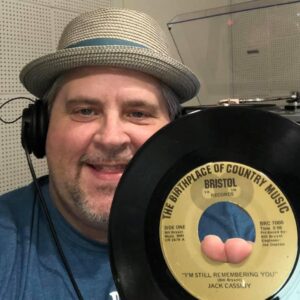
A selfie of Big Lon inside of the Radio Bristol studio space holding a record with that reads "The Birthplace of Country Music Bristol" on the front. Big Lon (Lonnie) is smiling and wears a fedora straw hat and studio headphones.
 Big Lon is a Radio Bristol DJ and avid vinyl record collector. 

First off there’s not a wrong answer on what to collect, it all depends on you and what makes you happy. Music provides both a connective social bond and an individual experience, and no two people have the same tastes or collective life journeys. Collecting vinyl records bridges both realms together in a tangible format you can hold in your hand. I’m still learning and certainly don’t know all the answers but here’s my two cents based on my collecting experience.

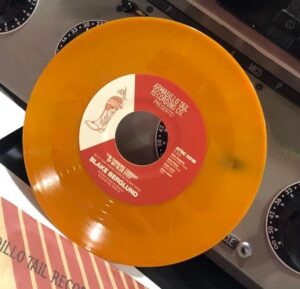
What should I collect Big Lon? I’d answer that with what do you like about music? What are your motivations when it comes to hobbies, investments, collecting, socializing?  I can break this down into five basic categories to consider. First, what’s your personal connection with music? A great way to start is collecting records that have sentimental value to you on a personal level. Do you remember a song from Saturday morning cartoons or a song that you used to listen to with your grandfather on the drive to and from fishing trips? It may be as simple as the music you and your friends liked back in college or middle school. Make a list of all those songs you connect with as a bucket list you’d like to have on vinyl. Secondly, what genres of music and artists do you like? You can focus on records from your favorite artists or specific genres like heavy metal or even eras such as 1950’s jazz. This will be a great starting point that can lead to discovering similar artists or labels that specialize in the genre of music you like. Maybe you want to get into vinyl for the collectible aspect because you heard of valuable vinyl records and want to invest in records in hopes of your collection growing in value. Limited editions and limited pressings can fulfill this option. Limited releases, colored vinyl, and special editions can be valuable and unique additions to your collection. A great example is this limited pressing orange vinyl 45rpm release by Blake Berglund, recorded at The Earnest Tube in Bristol and released on Armadillo Tail Records. 

A closeup of a bright orange colored vinyl 45rpm record. The text on the front of the record reads "armadillo tail recording company presents" and the bottom text reads "Blake Berglund" in larger lettering with smaller text. An armadillo with his head inside of a cowboy boot is also on the record.
Limited orange vinyl 45rpm record in Big Lon’s collection.

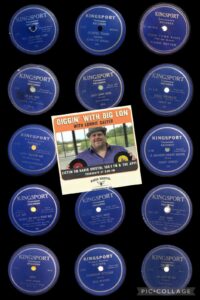
Befriending the owners and sales people at your local vinyl record shop can lead to insight on when new releases will hit the shelves or what unique items your local shop will be getting for Record Store Day, which occurs annually in April. A fourth option is focusing on classic iconic albums that have had a significant impact on music history. A simple google search of the greatest or essential vinyl records in a genre you are interested in or maybe the top 20 of multiple genres so you can build a diverse interesting collection to match your mood or the social crowd you are having over for dinner or a cup of coffee. A final category I recommend is obscure and rare records. Once you get a little experience in vinyl collecting this one tends to happen organically. Seek out records that are hard to find or have historical significance. It can be that local band that you remember from high school that put out one independent record or whatever inspires you. For me, the hard-to-find Kingsport label from the 78rpm era of the early 1950s is one I actively collect.

A graphic collage of records with the text "Kingsport" labeled clearly. In the middle of the collage is a promotional graphic image of Big Lon. He is wearing a fedora straw hat and holding two records.
Big Lon’s Kingsport Records collection featured on an airing of Diggin’ With Big Lon on Radio Bristol.

Big Lon, where do I find vinyl records? We’ve already touched on visiting your local record shops to get an understanding of what they offer. Local record stores often have a diverse selection of vinyl records, both new and used. These stores can be a great place to discover hidden gems and interact with fellow enthusiasts. Online marketplaces like eBay, Discogs, and Amazon offer a wide range of vinyl records for sale. You can find rare and collectible records from various sellers. I’m a member of several Facebook groups of like interested collectors who specialize in specific record genres or format sizes such as LPs (33rpm), 78rpm or 45rpm. Flea markets and thrift stores are essential. Get to know those in your community. These spots can be treasure troves for vinyl collectors. You might stumble upon valuable records at affordable prices. In addition, don’t overlook estate sales and garage sales; occasionally, people sell off their vinyl collections, often at reasonable prices. I’ve personally bought four records that are valued over $1,000 each for a buck or less at rummage sales and from flea market dealers. Another great avenue is music festivals and conventions. Sometimes music events and conventions include vinyl vendors or the artists will have a merchandise table selling vinyl records along with t-shirts and swag. As you get your bearings in the hobby and a focused list of what you are looking for, I recommend record fairs. These events gather multiple sellers in one place, offering a variety of records for sale. It’s a great opportunity to network and learn more about collecting. I host one for Fun Fest in Kingsport, TN to meet new vinyl enthusiasts and network to find records on my want list.

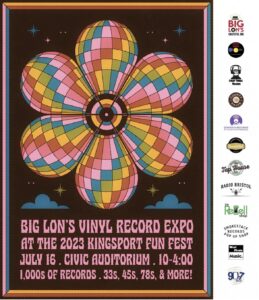
A promotional image of Big Lon's vinyl record expo. The poster features a colorful graphic that resembles 6 hot air balloons in a circle. The background is black with blue clouds and stars. The text reads "Big Lon's Vinyl Record Expo at the 2023 Kingsport Fun Fest July 16 Civic Auditorium 10-4. 1,000's of 33's, 45's, 78's and More!"
Big Lon’s Vinyl Record Expo, July 2023.

How do I store vinyl records Big Lon? The key is vertical storage. Heavy flat stacks of LP’s and especially 78rpm records can cause damage. Store records vertically to distribute weight which helps prevent warping. Use record crates, shelves, or dedicated record storage units. Keep records in protective inner sleeves to prevent scratches and dust buildup. Outer sleeves can safeguard the album covers. For loose 45rpm or 78rpm records, your local record shop most likely carries packaged sleeves you can utilize to protect the vinyl. Climate control is a major priority. Direct sunlight can warp and damage the vinyl and fade the covers. A cool, dry environment is ideal. Extreme temperature and humidity fluctuations can warp records or cause labels and covers to mildew. I’ve run across records with mold growing in the grooves from dirt and debris in wrong storage climates, like records found in musty basements.

OK Big Lon, what if I find the perfect record but it’s not been well cared for, what do I do? Here are some tips for cleaning records: first, handle records correctly by their edges and avoid touching the playing surface with your fingers. This keeps the oils from your skin off the vinyl to avoid the collection of dust and dirt. Sometimes what’s perceived as scratches or skips can be resolved with a gentle cleaning of the grooves. Use a carbon fiber brush to remove dust and debris from the surface before playing. A microfiber cloth can help clean the album cover. Invest in a good cleaning solution or cleaning system. I personally use Pristine Platters and a microfiber cloth for light cleanings and a system called Spin Clean for more challenging cleans. Both products as well as several similar products can be found online or at a local record shop. A static roller can work wonders to remove pops and crackles associated with static energy build up. Some collectors come up with their own system for cleaning records. Research any household cleaners before you use them to make sure they don’t contain chemicals that can damage your vinyl collection. Dry your records including the labels before putting them back in the sleeves and before putting them on your turntable.

Collecting vinyl records can be a rewarding and enjoyable hobby. Remember that each collector’s journey is unique, so feel free to tailor your collection to your personal preferences and interests.

Happy collecting!

Local & Regional Record Stores 

Resources

Example Record Collecting Facebook groups 

Stories of I’ve Endured: Women in Old-Time Music: Etta Baker

Voice Magazine for Women, a free, monthly publication distributed regionally in Northeast Tennessee and Southwest Virginia to 650 locations, partners with the Birthplace of Country Music an affiliate of the Smithsonian Institution, to take you inside the special exhibit I’ve Endured: Women Old-Time Music, on display at the museum through December 31, 2023. Each month through the duration of the exhibit, Voice features impactful stories of the hidden heroines, activists, and commercial success stories of the women who laid the foundation for country music. Inspiring, insightful, and Dolly-approved, you may just find a piece of yourselves, or a loved one, in the stories of some of these hidden figures in American music.

With their permission, we have duplicated our “I’ve Endured: Woman in Old-Time Music” special feature article for this month – we hope you enjoy it! To read this month’s issue in its entirety, click here.

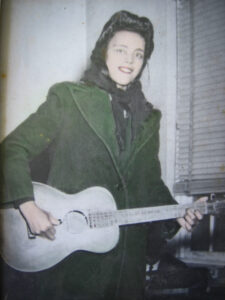
A photo of Etta Baker in her youth, wearing a coat and head scarf and playing her guitar.
Photo from the Music Maker Relief Foundation archive.

The Stories of I’ve Endured: Women in Old-Time Music
Etta Baker
By Guest Contributor Charlene Tipton Baker

“Etta Baker didn’t put up with any of that foolishness, either. You know, she would call somebody on it. She’d say ‘Lord, honey, I have been around so long, how could you call me a girl?” ~ Sheila Kay Adams, Appalachian ballad singer

Born in 1913 in Caldwell County, North Carolina, Etta Baker learned how to play guitar before she could hold one. She grew up in a musical household, with influences passed down from her African American, Irish, and Native American lineage. When she was just shy of three years old, her dad would lay his guitar on a bed face up as she stood, teaching her tiny hands how to pluck the strings and work the frets.

It was around that time her family moved to Keysville, Virginia. She would often get up in the middle of the night to listen to her dad play, and she played music at churches, parties, and dances with her family as a child and young woman. In interviews she has said that she practiced on her guitar an hour or more every single day. The music she made brought her great joy and, while sleeping, Etta often dreamed of the melodies she would write. She played 6-string and 12-string guitar and the 5-string banjo. The majority of Etta’s songs were instrumental; she chose instead to let the chords and melodies of her instrument do the talking.

Married at the age of 36 to a piano player, Etta’s husband forbade her to play music outside the confines of the home. Decades would pass before Baker was given the opportunity to perform her music in public again, so she helped make ends meet working in a textile factory. Together they had nine children and she played for her kids and encouraged their musical abilities. When asked how she had time to play music with so many children, she laughed and replied “I made them be quiet!”

Baker’s distinct, two-finger style of picking the Piedmont blues would later influence artists like Bob Dylan, Taj Mahal, and Kenny Wayne Shepherd, but she never achieved the money or the fame she so deserved—an all too familiar narrative around the careers of many women in early American music.

“This gracious grandmother was the source of a great deal of joy and surprise when I found that she still played guitar after I had heard her early recordings in the ’60s,” says blues legend Taj Mahal. “One of the signature chords of my guitar vocabulary comes from her version of ‘Railroad Bill.’ This was the first guitar-picking style that I ever learned.”

In fact, Etta was 43 years old before she was “discovered” by renowned folk singer and scholar Paul Clayton who, along with Diane Hamilton and Liam Chancey, recorded and released five of her songs on the compilation album Instrumental Music of the Southern Appalachians. Those historically significant recordings were among the first commercial releases of African American banjo music, and though Etta’s songs “One Dime Blues” and “Railroad Bill” became traditional standards, she was unpaid for the session.

Baker was invited to perform at the 1958 Newport Folk Festival due to the impact of those recordings, but was denied the opportunity by her husband. After he passed away in 1967, she left her job to pursue music full time. In 1991, at the age of 78, Etta released her first album, One Dime Blues, on Rounder Records. She soon became recognized as one of the foremost practitioners of the Piedmont finger-picking style—her right forefinger picking out melodies as the thumb strummed the bass notes.

Decades passed before Etta was able to regain the rights to those early recordings, doing so with the help of the Music Maker Relief Foundation, a North Carolina-based nonprofit that provides traditional musicians 55 years and older with financial and professional support for their art.

Whatever hardship or challenge Baker may have endured over her long life, she remained positive and focused on playing the music passed on to her by her father and his family before him. She also loved to garden, grow and can her own food, and forage for herbs. She had many grandchildren and also loved playing music for them.

“Just the sound of happiness,” Etta said in a recorded interview for Music Maker. “It gets on your mind heavier than your ailments do, I think.” It must have been a healing kind of magic; in the same interview Etta proclaimed she never knew any doctors or treatments until she was 89 years of age.

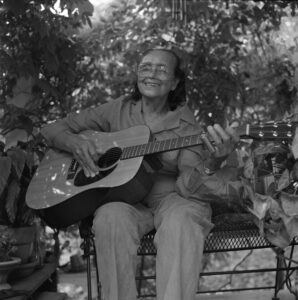
A photo of Etta Baker in her later years, holding an acoustic guitar and smiling.
Photo courtesy of Music Maker Relief Foundation, photograph by Tim Duffy

In 1991 Etta was honored with a National Heritage Fellowship from the National Endowment for the Arts after winning the North Carolina Folk Heritage Award from the North Carolina Arts Council two years prior. The wunderkind passed away in 2006 at the age of 93, having performed music into her 90s.

Etta Baker possessed a soul that breathed the essence of music, transcending the ephemeral allure of fortune and fame. With each pluck and strum, her hands were vessels, channeling the sounds of her ancestors. Her guitar was an extension of her very being, an instrument of liberation and expression. Her legacy transcends the trappings of success, forever embodying the boundless joy of music for music’s sake. Her enduring legacy serves as an inspiration for women and musicians of all ages, showcasing the unwavering passion and dedication that can carry an artist through a lifetime of creating and sharing their art.

Stay tuned! Next month’s I’ve Endured: Women in Old-Time Music spotlight will focus on the dynamic performer, musician, and forward-thinking businessperson Cousin Emmy, born Cynthia Mae Carver, the first woman to take home a win from the National Old Time Fiddler’s Contest, and a teacher and influencer to Hee Haw’s Grandpa Jones. She also appeared in Hollywood films and on television.


Will the Circle Be Unbroken? History of a Song

By Ed Hagen, Gallery Assistant and guest blogger

There is a dance floor inside of the Birthplace of Country Music Museum that features the song “Will the Circle Be Unbroken,” playing over and over and sung by a mix of modern and old-time country artists. Toward the end of the looping video, John Carter Cash explains that the “circle” is music itself. In that sense “Will the Circle Be Unbroken” is a homage to the pioneers of country music and a salute to current artists who honor these diverse roots. The circle is unbroken because the music is handed down from generation to generation. 

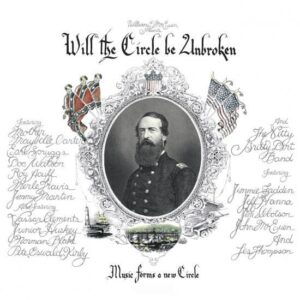
Album artwork for the Nitty Gritty Dirt Band’s 1972 album “Will the Circle Be Unbroken”. The album has a white background with an unnamed military officer in the center, with both American and Confederate flags surrounding the officer. Names of musicians featured on the album are written in cursive handwriting on each side of the profile of the unnamed man. The words "Will The Circle Be Unbroken" are clearly visible in large lettering at the top of the image, and the words "music forms a new circle" is written at the bottom of the image.
The Nitty Gritty Dirt Band’s 1972 album “Will the Circle Be Unbroken” cover

The song has had that association for many years now, perhaps starting with the release in 1972 of the Will the Circle Be Unbroken album by the Nitty Gritty Dirt Band, a 1960s California jug band that had gone electric and was at that time best known for covering Jerry Jeff Walker’s Mr. Bojangles. Will the Circle Be Unbroken was their seventh album and came about when band member John McEuen asked bluegrass musician Earl Scruggs and legendary guitarist Doc Watson if they would record with the band. One thing led to another, and many of country music’s biggest stars – including Roy Acuff, Jimmy Martin, Maybelle Carter, Merle Travis, Vassar Clements, Randy Scruggs, Pete “Oswald” Kirby, and Norman Blake signed up for the project. It was a collaboration of two culturally different generations of musicians, traditional Grand Ole Opry stars and a group of hippies that Acuff described as “a bunch of long-haired West Coast boys” (Maybelle called them – affectionately – the “dirty boys”). By all accounts, the generation gap was bridged and new friendships were made, not to mention the incredible music. The album was a crossover success, introducing many folks to traditional country music, and in 1997 the original album was certified platinum. 

Since its release, the song has become an inspiration for intergenerational celebrity get-togethers. When the song is called at any local museum jam sessions, everyone sings the chorus, and the emotion in the room is palpable. 

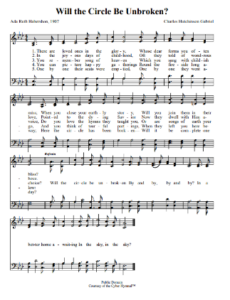
A black and white image of lyrics to the song "Will the Circle Be Unbroken".
A hymnal page of the song “Will the Circle Be Unbroken” dated 1907 courtesy of hymnary.org

The original version of “Will the Circle Be Unbroken” was a hymn written in 1907 by Ada R. Habershon, with music by Charles H. Gabriel. It is long out of copyright, and so we freely reproduce the sheet music here. According to hymnary.org, the song peaked in popularity just before World War II, when it appeared in about 20% of hymnals in use. It is down to about 7% today. Based on conversations I have had, the number is higher here in East Tennessee.

Note that the words and melody of the verses in the original hymn depart substantially from the way it is usually sung today (although the refrain is very close). That’s because A. P. Carter rewrote the song when The Carter Family recorded it in 1935. 

Victor producer Ralph Peer used to tell A. P. and his other folk and country artists to avoid recording songs heard on the radio, but to collect traditional music that could be modified and copyrighted. A. P. may have thought it was a traditional song. Perhaps to differentiate it a bit more, the Carter version was retitled as “Can the Circle Be Unbroken” (though nobody uses that title anymore).

The sentiment conveyed in both versions is that we have all lost loved ones, but that they have gone to a better place where we will see them again. It is interesting to compare the two versions of the song. Habershon’s version admonishes the listener to take the Christian view of family loss:

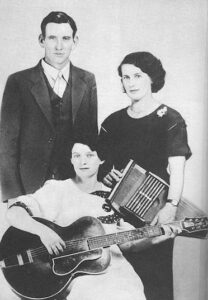
A black and white image of The Carter Family. Three people are facing the camera, A.P. Carter is wearing a blazer and vest, looking toward the camera. Sarah Carter is to his left and is standing facing the camera. She is holding an autoharp and wearing a dress. Maybelle Carter is sitting holding an archtop guitar and looking into the lens. All three individuals have a slight smile to their faces.
A promotional photo of The Carter Family taken by the Victor Talking Machine Company circa 1928. Left to right: A.P. Carter, Maybelle Carter, and Sarah Carter.

You remember song of heaven
Which you sang with childish voice,
Do you love the hymns they taught you,
Or are songs of earth your choice?

The Carter version, recorded and released in 1935, focuses on the painfulness of the loss:

Oh, I followed close behind her
Tried to hold up and be brave
But I could not hide my sorrow
When they laid her in the grave

Can the Circle Be Unbroken” also focuses on the death of a beloved mother rather than family members in general (as in the original hymn). In any event, it is not surprising that the more emotional Carter version won people’s hearts. Roy Acuff used the Carter lyrics when he recorded it in 1940, and that eventually became the standard version. You can listen to different versions of the song via the YouTube links below. 

Nitty Gritty Dirt Band – Will The Circle Be Unbroken

The Carter Family – Will The Circle Be Unbroken

Will The Circle Be Unbroken Vol.2/Nitty Gritty Dirt Band/Johnny Cash/Ricky Skaggs

Ed Hagen is a volunteer gallery assistant and guest blogger at the Birthplace of Country Music Museum. His earlier post, Celebrating Jimmie Rodgers: A Short Lesson in His Guitar Style, appeared here last year.