Museum Archives - Page 34 of 34 - The Birthplace of Country Music
Listen
Play
Loading station info...

Southwest Virginia’s Favorite Uncle: Celebrating the Birthday of Uncle Eck Dunford

Meeting Uncle Eck Dunford must have been quite an experience. While there aren’t many accounts of his life and times, the ones I’ve found – and the stories I’ve been told – point to a man who was full of character and personality.

He was born Alex Dunford on May 30, 1875 in Ballard Branch near Galax, Virginia; interestingly he has two recorded birth dates – 1875 and 1878 – but the 1875 one is from his tombstone and therefore that’s the one I’ve picked! Several sources tell us that Uncle Eck was a bit of an eccentric, wearing an overcoat and overshoes in all seasons, no matter the weather, and adding pink earmuffs when the temperatures turned cold. He also spoke in a distinctive voice, one that has been attributed to a possible Scots-Irish dialect. He was known for his jokes, but he also stood out from others in the Galax area when he frequently quoted Shakespeare and Robert Burns, pointing to a man who took the time and the interest to read and educate himself.

At the turn of the 20th century, Uncle Eck built a cabin in Galax made up of one big room and a kitchen out back, and this was his home until he passed away in 1953. A large number of pictures – on glass plate negatives – were found in his cabin after his death, along with a tripod and other photographic equipment; unfortunately many of these photographs have now been lost. As an amateur photographer, Uncle Eck seemed to focus on pictures of the everyday life around him in Galax, though it’s not known whether he took photographs to sell or simply for pleasure. One of his photographs of a logging group was used on a County Record label; another picture – this time of several Galax musicians – was used by Mike Seeger and John Cohen on the cover of The New Lost City Ramblers Song Book. Uncle Eck also worked as a shoe cobbler, and a Singer leather sewing machine was also found in the cabin.
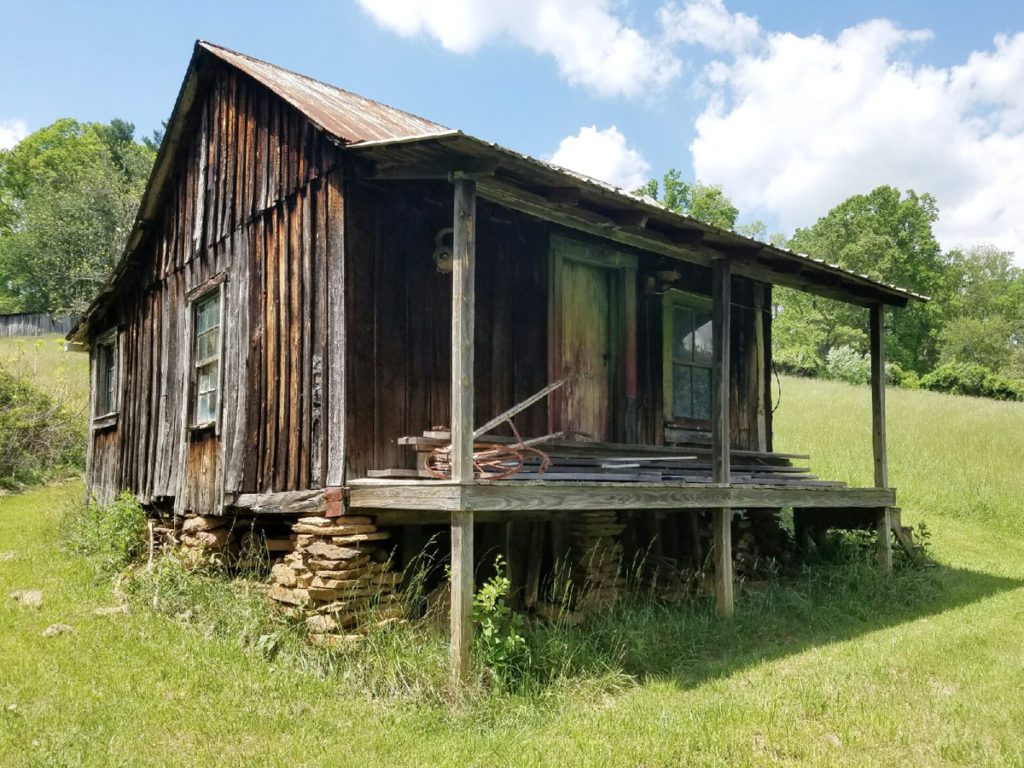
Uncle Eck’s cabin is still standing. © Lynn Delp

However, Uncle Eck is really known for music. He was a highly skilled fiddler, guitarist, and storyteller, and he played with a host of other musicians and bands. He is especially known for his musical connections with Ernest “Pop” Stoneman; he even married into the family when he wed Callie Frost, a relative of Hattie Stoneman’s. The first time that Uncle Eck recorded was in 1927 at the Bristol Sessions, and he sang or played (or both) on several sides with different Stoneman configurations – “Mountaineer’s Courtship” with Irma Frost and Stoneman, several sides including “Are You Washed in the Blood” and “I Am Resolved” with Ernest Stoneman & His Dixie Mountaineers, “What Will I Do, For My Money’s All Gone” with Hattie, “Barney McCoy” with Stoneman, and “Old Time Corn Shuckin’” with the Blue Ridge Corn Shuckers. Uncle Eck also recorded two sides by himself – “The Whip-poor-will’s Song” and the familiar children’s tune “Skip to Ma Lou, My Darling,” with the 1927 recording being its first commercial outing.
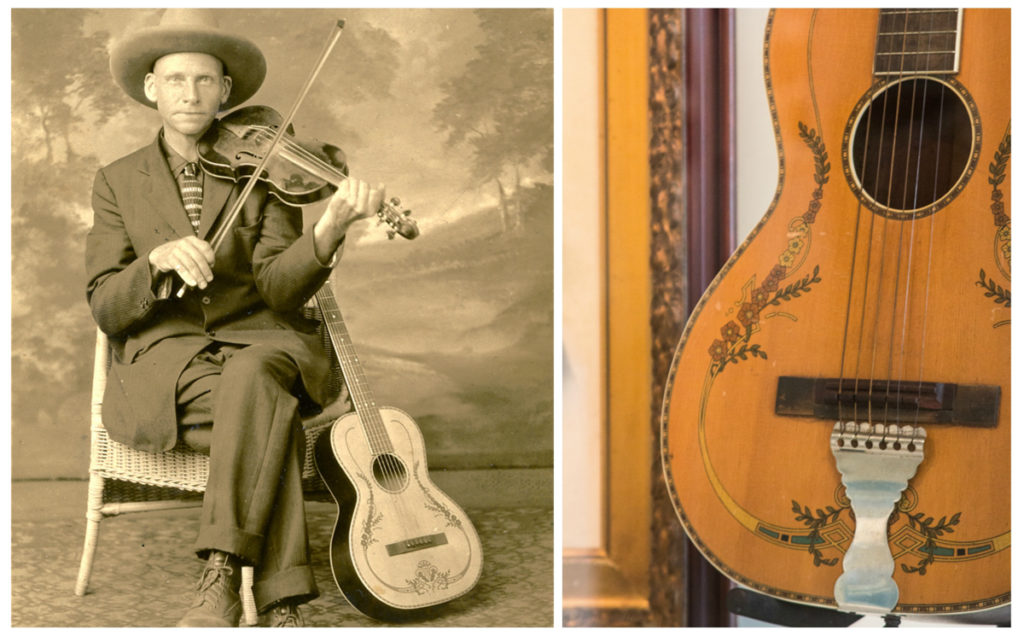
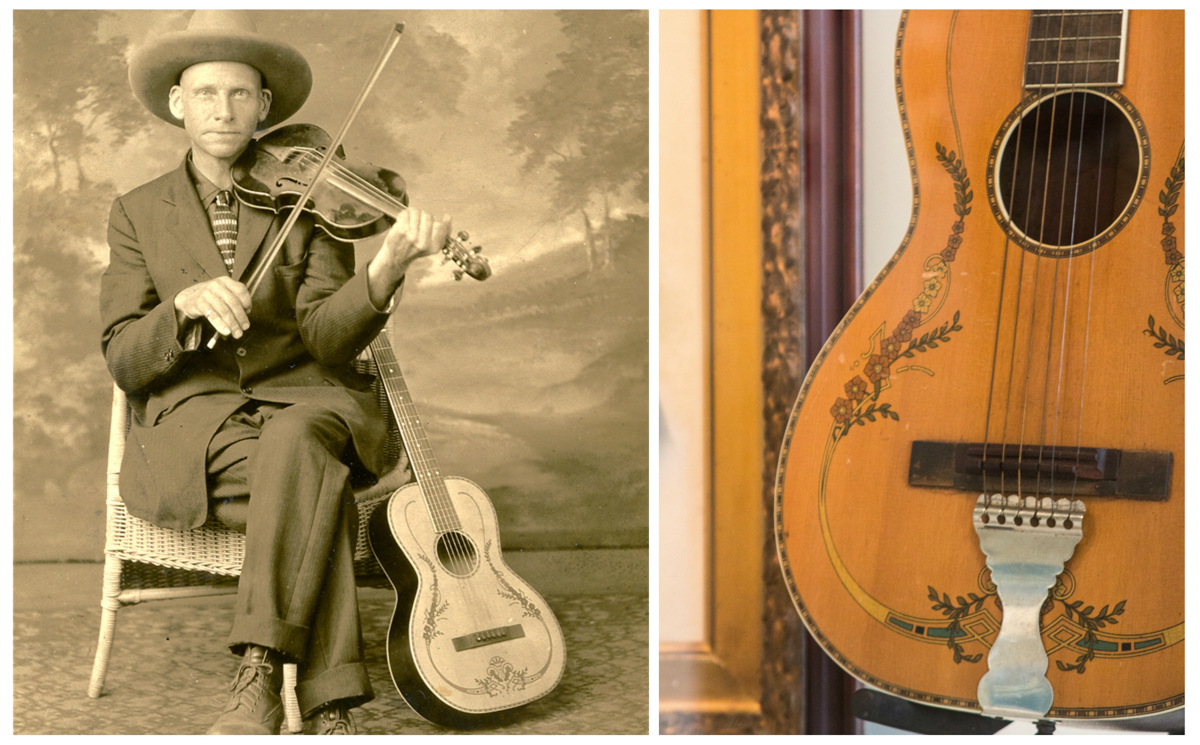
There is some speculation that this picture of Uncle Eck Dunford was a self-portrait. The portrait highlights his musical instruments, including a guitar he bought in 1912 from Sears Roebuck and which he played on most of his recordings. The guitar is currently on loan from Doris Brown and on display in our Hometown Stars: Southwest Virginia’s Recording Legacy, 1923—43 special exhibit, open through June 4, 2017. Portrait courtesy of Doris Brown; guitar image © Birthplace of Country Music

His appearance on the “Old Time Corn Shuckin’” song with and his unusual way of speaking brought his comedic talent to the fore. Based on this, Ralph Peer invited Uncle Eck to Atlanta later that year to record four comic monologues, including two that were listed as original compositions – “Sleeping Late” and “The Taffy Pulling Party.” Well-written lyrics obviously make a song skit funny, but Uncle Eck’s language, his timing and delivery, and the emphases he put on certain words underlined their comic value. He recorded two other skits with Stoneman in February 1928, again in Atlanta. One of these – “Possum Trot School Exhibition” – detailed the misadventures during a Southwest Virginia mountain school’s activity day. In October 1928, Uncle Eck was back in Bristol with the Stonemans when they recorded “Going Up the Mountain after Liquor,” amongst others, another song where Uncle Eck’s comedic talents were heavily featured.

Uncle Eck was part of several other recording sessions with Stoneman, and he recorded a couple more solo numbers at the 1928 Bristol Sessions – “Old Shoes and Leggings,” which was later featured on Harry Smith’s Anthology of American Folk Music, and “Angeline the Baker,” an Appalachian standard. But he also played fiddle and guitar with other local groups in the 1920s and 1930s including the Bogtrotters and the Grayson County Railsplitters, and there were probably other instances where he was never listed as one of the band members.
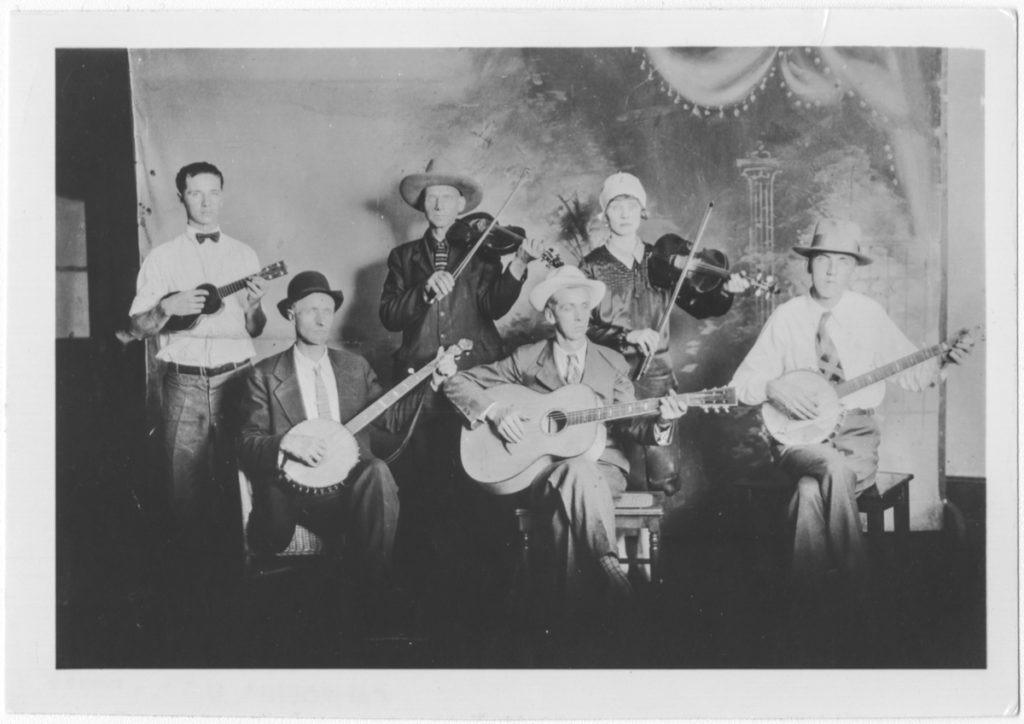
Uncle Eck can be seen in the back row holding his fiddle. This configuration of musicians was known as the Blue Ridge Corn Shuckers and the Dixie Mountaineers at different times. Image from the John Edwards Memorial Foundation Records, #20001, Southern Folklife Collection, Wilson Library, University of North Carolina at Chapel Hill

Oscar Hall, an organizer of the Galax Old Fiddlers’ Convention, knew Uncle Eck in his later years – his wife’s parents were family friends and took care of him until he died on June 26, 1953. Towards the end of his life, Mr. Hall says Uncle Eck was still playing his guitar, and playing it pretty well, and he even got the chance to play with him some.

Learning about Uncle Eck for this post has obviously underlined his musical talents, but learning about Uncle Eck the man has been the most interesting part. A final story told to me by Mr. Hall is definitely my favorite. According to Mr. Hall, whenever Uncle Eck headed back over the hill to his cabin after a visit with his wife’s parents, their goose would follow him home, flying back once the trip home was finished. And that’s the picture I now have in my mind: of Uncle Eck walking home, perhaps to play a bit of music, with a goose following close behind him.

René Rodgers is the Curator of Exhibits & Publications at the Birthplace of Country Music Museum. Special thanks to Roddy Moore at the Blue Ridge Institute & Museum in Ferrum, Virginia, and Doris Brown and Oscar Hall of Galax, Virginia, for their help with this post.
Challenging the Ideas that Bear Our Name: Why Museums Give Us More than the Elevator Speech on History

Today is International Museum Day, a day that reminds us to reflect on the purpose of museums, to really dig into the idea of why museums matter. After all, can’t we find all the information we need online these days? Can’t we use Google to find answers to the facts we seek, look at images and media that shape histories of the world, and read countless commentaries on these ideas that are written by scholars? Isn’t all the recorded music explored in the museum available online somewhere? Basically, yes. But in a world where the answers are at our fingertips, museums remain important institutions.

Museums bring relevance to our communities and remind us why history matters and how art speaks in numerous voices. Museums are spaces to gather, investigate, collect, interpret, and debate. Yes, debate! Museums are not spaces to find the answers, but to seek, experience, explore, and connect. In fact, the theme for International Museum Day in 2017 is contested histories – and, importantly, museums do not shy away from contested histories; they provide a space for debate and discussion. And at a museum that calls itself The Birthplace of Country Music Museum, you can bet there’s a lot to discuss!

When developing the permanent exhibits for our museum, we focused much attention on the debates and the nuances that are an important part of the complex, multifaceted history of American popular music. And while we like to think of ourselves as experts – content specialists, museum designers, experienced graphic artists, and museum media producers, amongst others – we also consulted the written scholarship, other historians, our colleagues, and our communities.

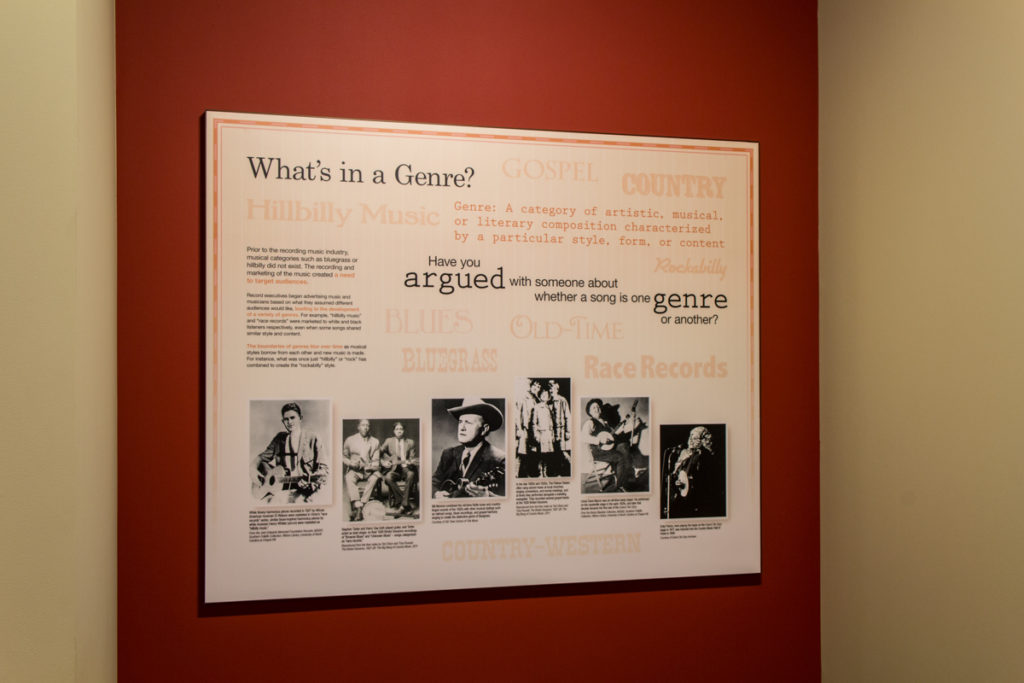
Inviting arguments about genre gets people to think about how the early recording industry categorized musical style by musical characteristics, marketability, and race. © Birthplace of Country Music; photographer: Neil Staples

With this many voices,  everyone didn’t always agree, and it’s the ongoing, day-to-day interpretive work that is truly invigorating and defines us as an institution. No one wants to go into a museum and read the facts through a dominant narrative written by scholars. Even scholars don’t want this, as they will continue to debate and discuss these histories from their perspectives and training. (And yes, we scholars think that’s fun!)  Everyday visitors also like to understand the shades of the story, debate the facts, and marvel at how a moment in musical history that was not significant enough at the time for Mother Maybelle to even consider keeping the guitar she used to record there could then influence so many of the musicians who followed.

In the final gallery of the museum, images of festivals past and present, song lyrics, and questions such as these offer a space for contemplating how country music has shaped American history and continues to invite participation and ownership. © Birthplace of Country Music

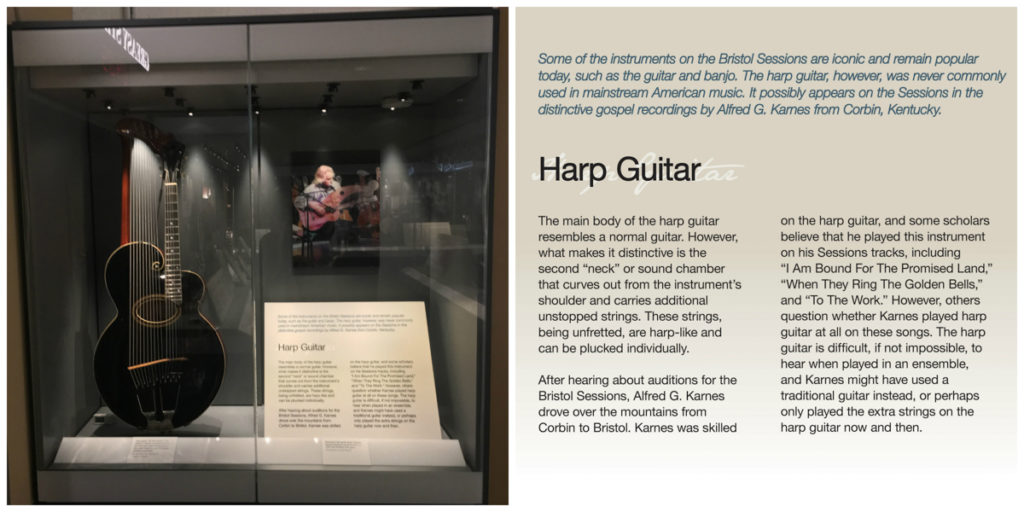
In our exhibit design, the museum content team tried to raise more questions than we answered. Did Alfred Karnes really play a harp guitar on his Bristol Sessions recordings, or did he just own one at the time? Would these recordings have been as successful without the new microphone technology, especially given the quick popularity of the songs of Jimmie Rodgers and The Carter Family? How long would the hillbilly music industry have been delayed if Fiddlin’ John Carson hadn’t recorded a few years prior to the Bristol Sessions in Atlanta? Would the Stonemans have been more successful if Ernest “Pop” Stoneman claimed composition ownership of the songs he recorded and not attributed the hymnbooks where he learned them?

One of the museums cases shares the debate about the harp guitar’s appearance on the Bristol Sessions. © Birthplace of Country Music

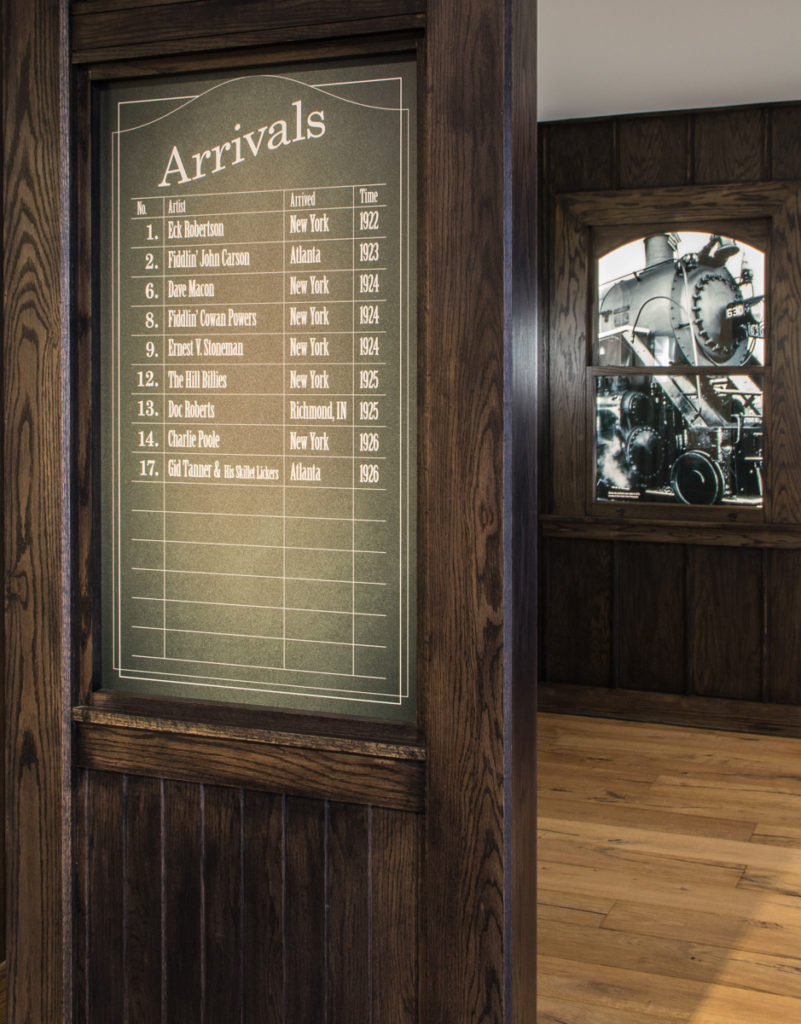
And where is the Birthplace of Country Music? The 1927 Bristol Sessions provide a significant anchor and the museum explores this impact, but we also dig into earlier arrivals into the hillbilly music industry, such as Atlanta and New York. Should Atlanta be considered the birthplace? Or somewhere else? What about the Stonemans’ home in Monarat, Virginia? Or the Carter’s home place in Maces Springs, Virginia? Our earliest conversations about a museum in Bristol acknowledged the entire region as the birthplace. And hillbilly music/early country/traditional Southern Appalachian music began long before it was recorded, right?!?

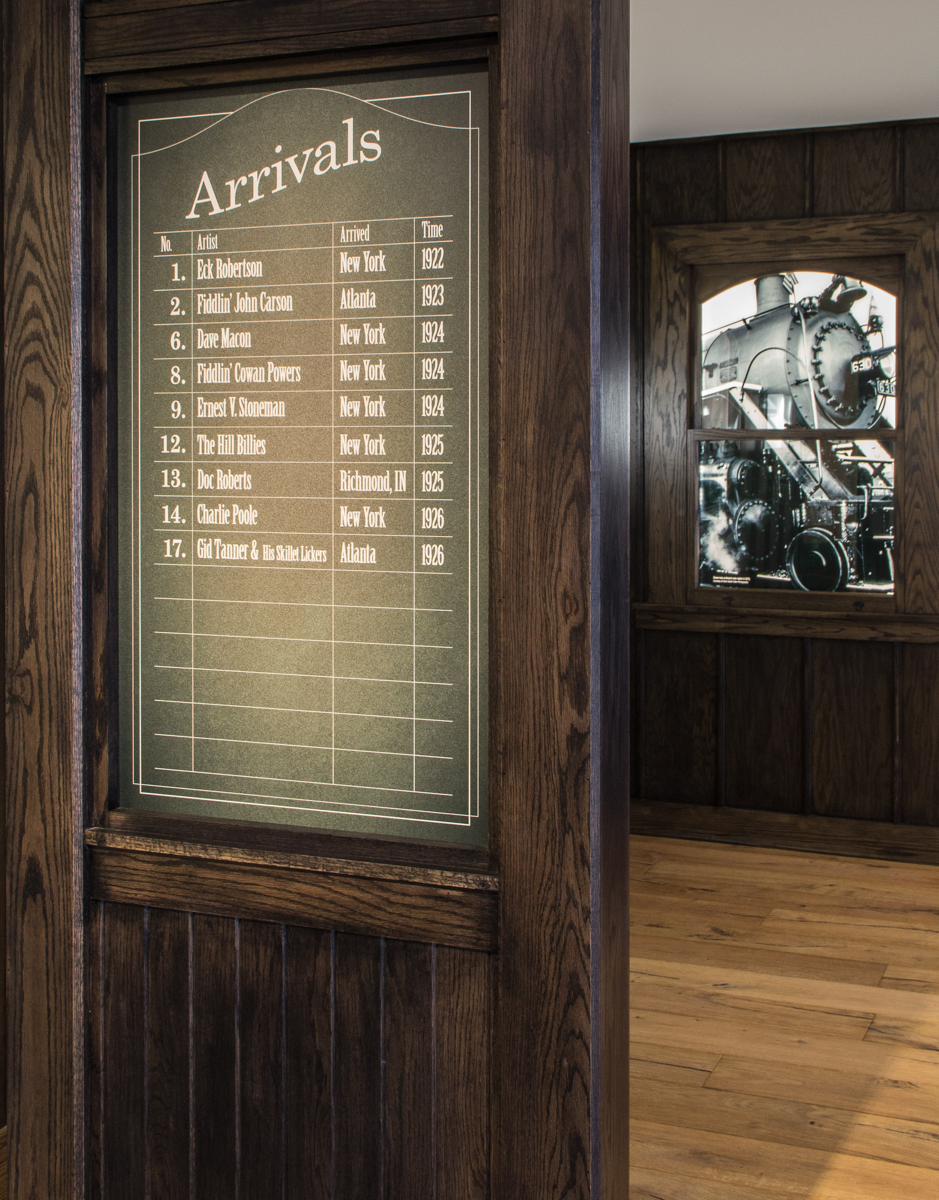
In a simulated train station, the museum playfully explores the “earliest arrivals” in country music through an arrivals board that notes where a sampling of the earliest country music records were recorded. There is also a soundscape in this exhibit, including early songs of Fiddlin’ John Carson, Vernon Dalhart, Ernest Stoneman, and others. © Birthplace of Country Music; photographer: Neil Staples

Can we also consider the British Isles as the Birthplace of Country Music? Many of the ballads that became the songs of early traditional music came from there, after all. And, with the roots of the banjo, shouldn’t we also consider West Africa? I’d say sure, it’s all part of an amazing and intricate history, and the Birthplace of Country Music Museum exhibits acknowledge the complex interaction of musical styles and social history that fostered the vernacular musical styles that ended up being recorded in Bristol.

It’s in these debates that museums offer relevance and dialogue. Where we can learn something new as we listen deeply and engage with history. Where we also discover something about ourselves when we attend live programs that celebrate community music-making. And where we can pass along inquisitiveness, appreciation, and a deeper understanding of place to our kids. It’s why museum staff work long hours even after a museum opens, and why the work going forward is just as important as the foundation we sit on.

Adding more nuance to an already-wordy name playfully acknowledges the many ways scholars have discussed the birth of country music. Many recognize that country music existed long before it was recorded, and some say Bristol should be called the birthplace of “commercial” country music, emphasizing its impact on the commercial country industry. © Birthplace of Country Music

Jessica Turner is the Director of the Birthplace of Country Music Museum. She reminds us that this is a blog post, so it’s a mere 800 words. For further reading, turn to Bill Malone, Barry Mazor, or Charles Wolfe and Ted Olson, amongst others… Just keep digging and debating!