Museum Archives - Page 33 of 34 - The Birthplace of Country Music
Listen
Play
Loading station info...

Things Come Together for Things Come Apart

Whew! It’s been a long few weeks – even months – here at the Birthplace of Country Music Museum. We’ve planned and designed materials. We’ve hammered and painted. We’ve found parking spots for tractor trailers and forklifted huge crates into the museum. We’ve hung photographs and artfully arranged objects. We’ve made messes and tidied up.

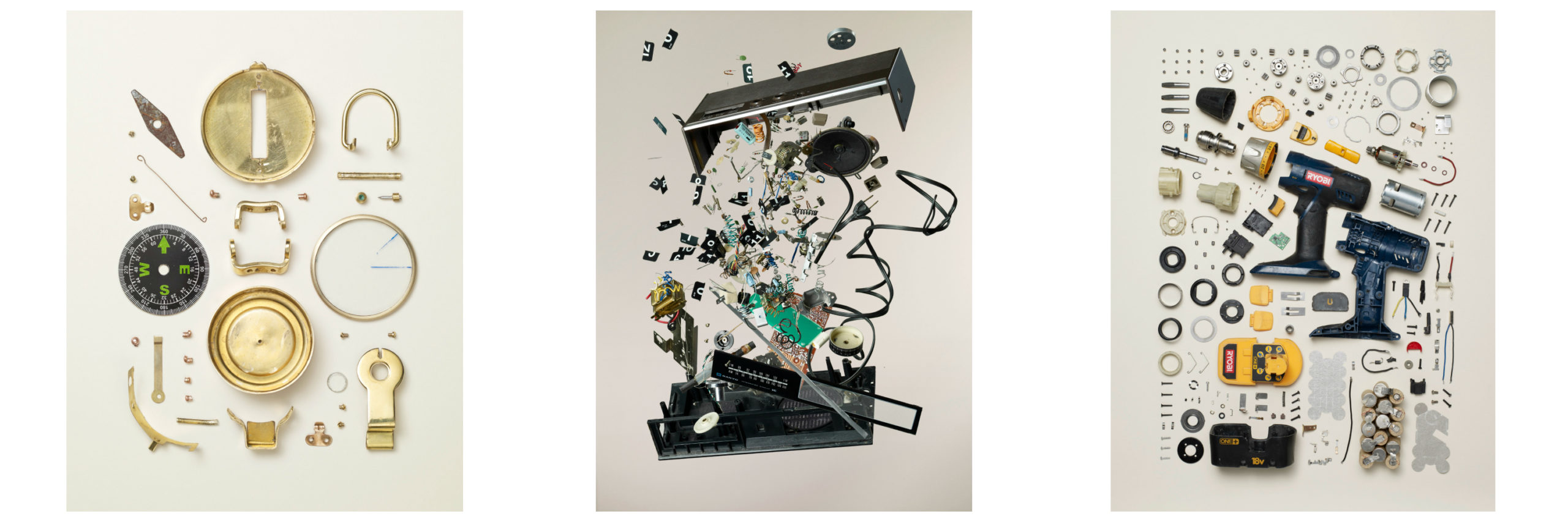
All of these efforts have been working towards our new special exhibit Things Come Apart, which comes to us from the Smithsonian Institution Traveling Exhibition Service and opens today. The exhibit features the work of artist Todd McLellan – 39 extraordinary photographs, 4 disassembled objects, and 5 short videos, all exploring the inner workings of common, everyday possessions. From a record player to a telescope to a two-seater light aircraft – and more – the images and objects invite the viewer to reflect on how things are designed and made and how technology has evolved over time. The exhibit also includes three fun and educational activity kits created by the Smithsonian’s Lemelson Center for the Study of Invention and Innovation’s Spark!Lab.
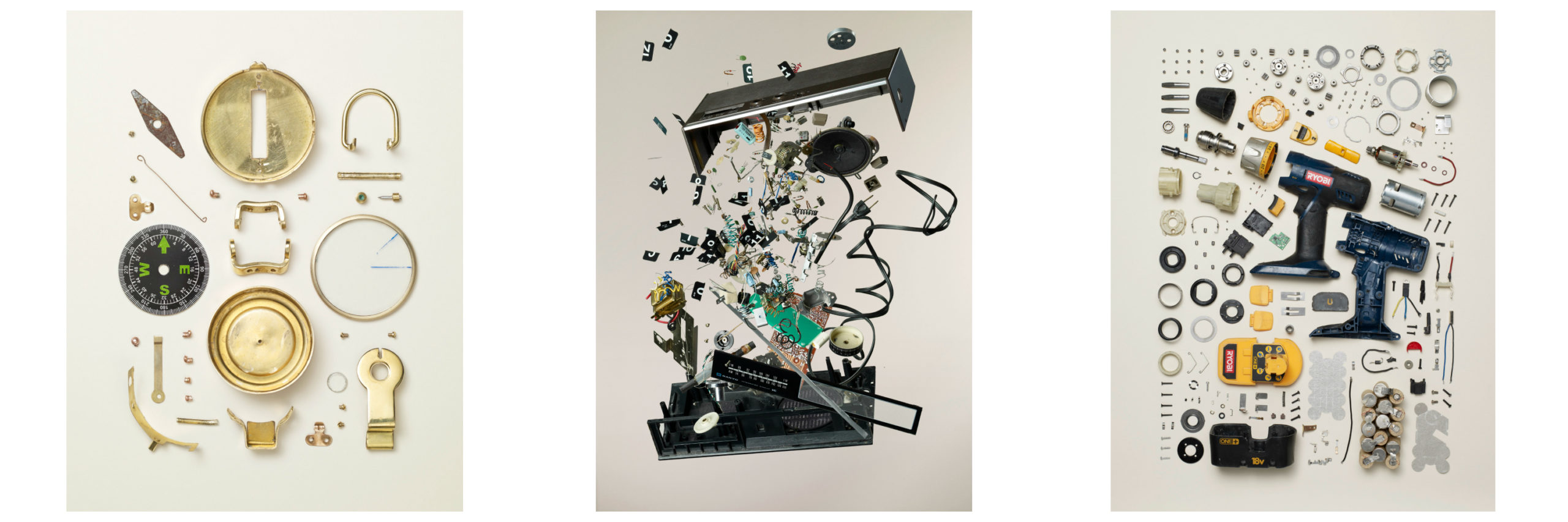
Three of the photographs by Todd McLellan from Things Come Apart: Lensatic compass made by Indian Nautical Instruments in the 2000s, component count: 33; Flip clock made by Sanyo in the 1970s, component count: 426; Power drill made by Ryobi in 2006, component count: 216. © Todd McLellan

Things Come Apart is not our “usual” type of exhibit, one where the focus is on the history of early country music, the musical legacy of this region, or other related social and cultural topics. However, one of our aims with the museum’s Special Exhibits Gallery is to also choose interesting and engaging exhibits that will serve to bring new audiences into the museum and expand the educational resources offered to our local community. With this type of exhibit, we also work hard to find ways to relate the exhibit’s subject to our content or to music, for instance through panels and artifact supplements or the related programming and outreach.

Things Come Apart effectively fits those goals through its distinctive subject matter – one that should appeal to a different audience along with our everyday visitors – and through its focus on STEAM (science, technology, engineering, art, and math) content. The activity kits are a tangible and hands-on manifestation of that STEAM focus, perfect for working with schools and youth groups, and combined with the exhibit, they offer a unique supplement to the curricula in our local schools. And while we have spent months bringing Things Come Apart to fruition and are wonderfully excited to have this very special Smithsonian exhibit here at the museum, it’s been the supplementing that has really caught our imaginations and given us opportunities to create some truly interesting displays and plan a host of engaging programs.

The exhibit highlights several musical instruments and sound-related gadgets in its exploration of design and technological innovation, which gives us a great opportunity to relate the exhibit to our content. For one thing, the photographs of the piano and accordion taken down to their component parts will hopefully prompt our visitors to also consider the complexity and functionality of the instruments used in the 1927 Bristol Sessions recordings – from the Frankenstein-like harp guitar to the more basic kazoo.

Secondly, the focus on technology in Things Come Apart can be related to an important part of the story told in our permanent exhibits – that of the importance of technological developments to the success and legacy of the 1927 Bristol Sessions, and how technology was instrumental in the distribution of these early commercial country music recordings.
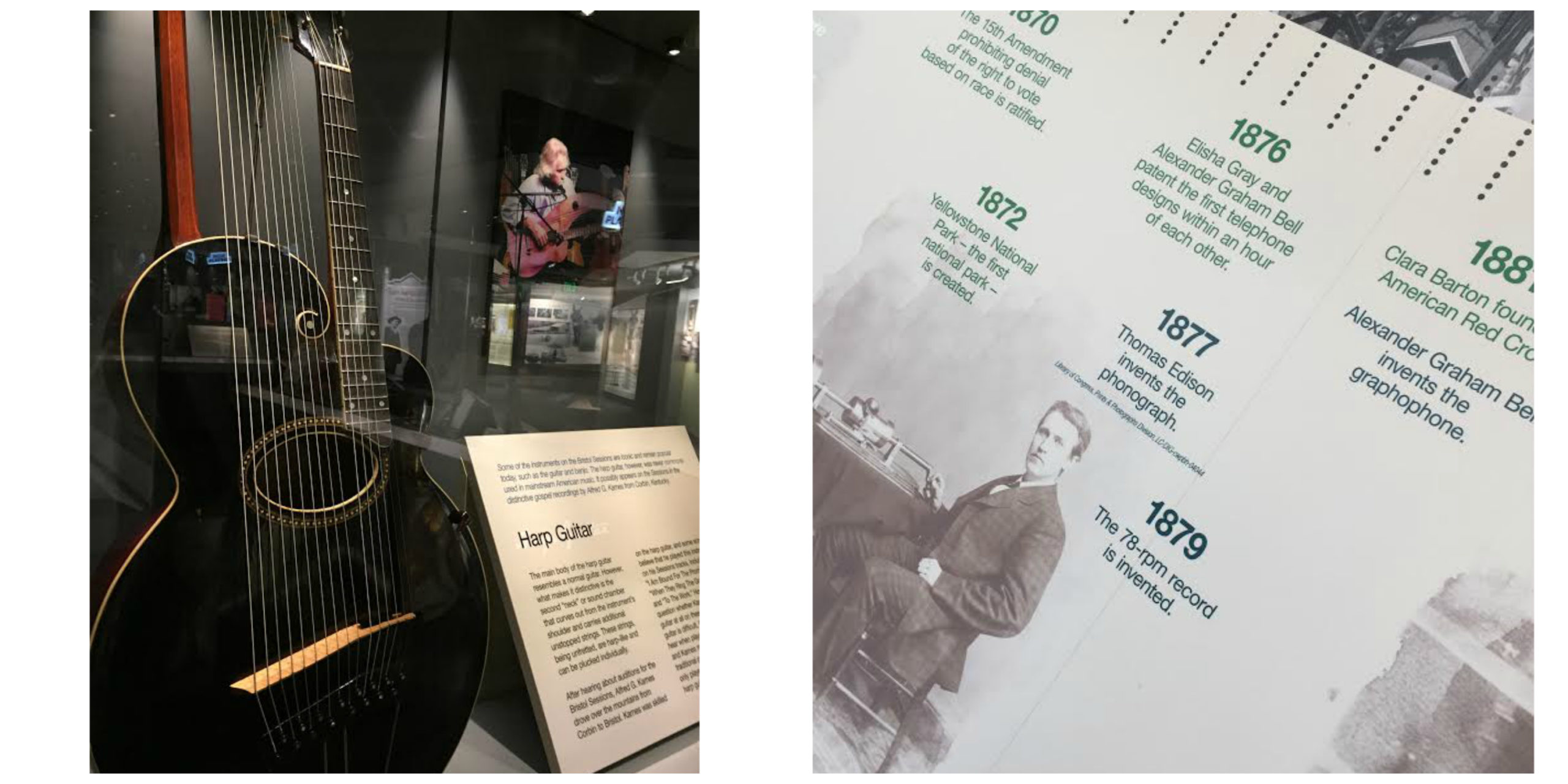
In the museum’s permanent exhibits, a harp guitar is on display with several other instruments, and a timeline highlights important milestones in sound and radio technology. © René Rodgers

We also decided early on in the planning process that we would include an object or two related to the museum’s content, taking apart and displaying them to go along with the four disassembled objects already present in Things Come Apart. The first object we tackled was a circa 1900—1910 phonograph, donated to us by Bob Bledsoe, a favorite friend of the museum and an expert on all things to do with early cylinder players and phonographs, and his son John. We spent a happy morning with them both, taking a Columbia Graphophone phonograph down to its three largest components: base, top and turntable with attached motor, and horn, along with a second non-working motor down to its smaller components. It was dirty but interesting work – two days later I still had 100-year old grease underneath my fingernails! We also took apart a broken guitar, even sawing it in half so that the inner struts, bracing, and tone bars could be seen by our visitors.
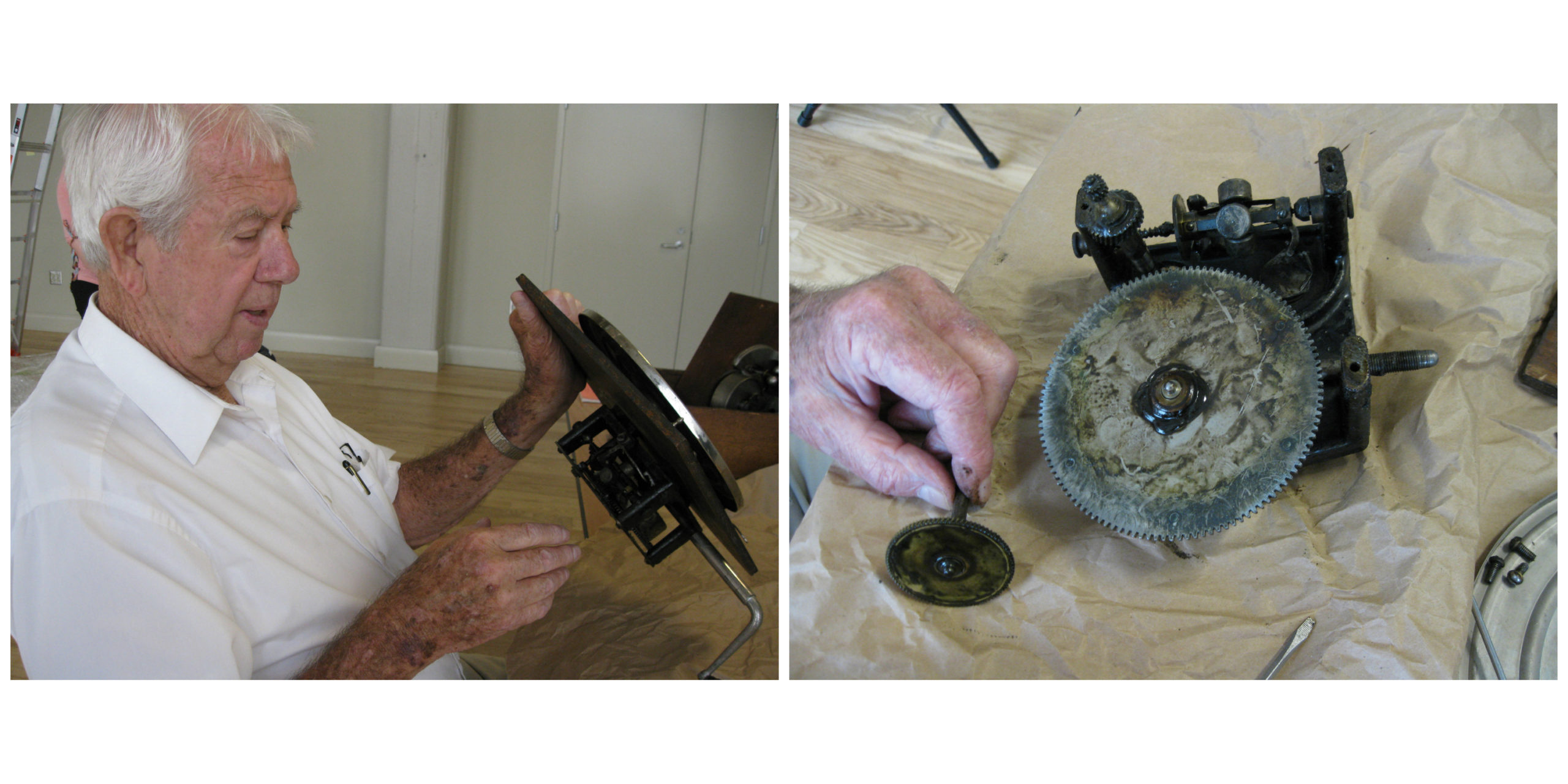
Mr. Bledsoe taking apart the phonograph now on display with Things Come Apart. © René Rodgers

Planning museum programs is always a challenge as there are so many “moving parts” – creating engaging activities and experiences that tie into the museum content and mission; tapping into limited staff, volunteer, and financial resources in order to hold those programs; marketing the events effectively and widely; working with partner organizations; and so much more. For Things Come Apart, we spent a lot of time thinking about those challenges and how best to share the resource of this exhibit with a wide variety of visitors. We decided to focus on the invention / maker side of things, including participating in the Kingsport Mini Maker Faire, screening films about Edison, Tesla, and the making of a Steinway piano, and hosting our own Family Fun Day maker-type event. The Family Fun Day is the event I am most excited about – a chance for us to do a different type of programming and work with some great partners to pull together a host of activities including an introduction to 3D printing by the folks at the Bristol Public Library, an “art from found objects” demo by local artisan Terry Clark, and a recycling craft from the Bristol Rhythm & Roots Green Team – and more!

For the museum, an exhibit like Things Come Apart presents a golden opportunity to bring a really wonderful educational resource to our community, one that they might not otherwise be able to access, and to invite new – and old – visitors into our space to experience this wonderful exhibit and our museum. But it also gives us the chance to learn more ourselves and to stretch outside our usual wheelhouse, which is always exciting.

This exhibit is a visual display of what we do as a museum every day: take things apart and dig deeply into their content, look at how things fit together, and ask visitors to share in those experiences. At our museum, it’s the ongoing taking of things apart and exploring them that brings real meaning to our work. These are the things that keep us going!

René Rodgers is Curator of Exhibits & Publications at the Birthplace of Country Music Museum. You can visit the Things Come Apart exhibit from July 15 to October 8, 2017.
Volunteers: The Glue that Holds Us Together

Every year, volunteers across the country lend a hand to help organizations, charities and nonprofits, schools, and churches to do their work and to carry out their missions. In museums alone, volunteers give over a million hours of volunteer service every single week!

As a small nonprofit, the Birthplace of Country Music is fortunate to tap into the time and talents of hundreds of volunteers each year. We recruit these dedicated people throughout the year – from calls for volunteers for Bristol Rhythm & Roots Reunion to regular training sessions at the museum.

Our volunteers act in dozens of important roles supporting all three elements of our organization: the museum, the festival, and the radio station. They are docents and gallery assistants, work behind the scenes in our archives, tackle the logistical puzzle of our 3-day music festival, greet and transport performing musicians, help facilitate our live radio shows, and so much more. There is no doubt that they are integral to our success.

There are many reasons to love our volunteers – I could definitely write a hugely long post about this – but, for now, here are our top 5!

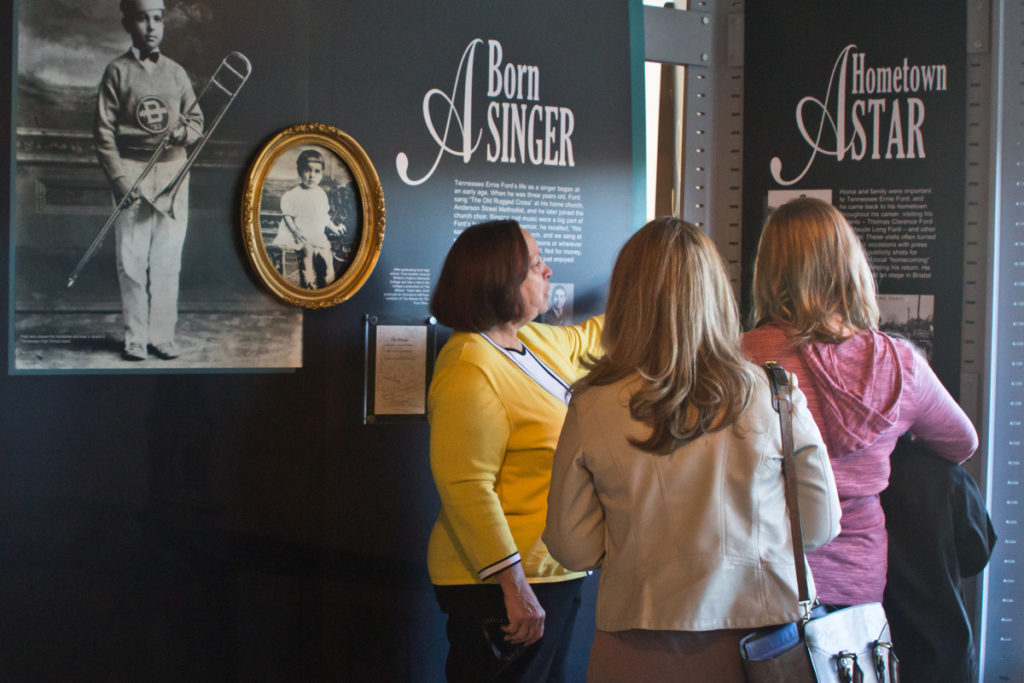
1. We consider our volunteers to be the equivalent of members of staff. Every day we see their professionalism on display, and we know that they take their responsibility to our visitors seriously. By sharing their input with us, helping us when our paid staff cannot fulfill all the organization’s needs and roles, and holding themselves accountable on a daily basis, it also means that they make our work easier. This allows us to focus on other necessary tasks knowing that whatever they are doing is in good hands. And because they are immersed in our work – and truly understand the depth of that work – our volunteers are our very best advocates, sharing our story and our mission with visitors, the local community, and even further afield.

Volunteer gallery assistant Kathe shares her passion for Tennessee Ernie Ford with our visitors. © Birthplace of Country Music

2. Our volunteers are interesting! We have volunteers from all walks of life – from retired schoolteachers to neurologists, high school and college kids to history buffs, and artists and musicians. Every day we get the chance to have a fascinating conversation with a volunteer, learn something new about a topic we previously knew little to nothing about, or tap into their many skills, making all the difference to our work.

3. Volunteers help make our grant applications even stronger. The significant amount each and every one of them gives to our organization can be viewed as in-kind donations from our community. Each year we have over 800 volunteers on the ground from the break of dawn until late at night at the Bristol Rhythm & Roots Reunion festival; we also have volunteers working on the planning committees for the festival all year round. Since the Birthplace of Country Music Museum opened in August 2014 and Radio Bristol launched in August 2015, our museum and radio volunteers have given almost 10,000 hours to help us on a daily basis. Volunteers also pitch in with other outreach projects like the annual Border Bash concert series and our support of Bristol Motor Speedway’s Speedway in Lights program every winter. All of the time and support given to us by our volunteers is a tangible marker of community support and engagement, which is integral to successful grant applications – and successful grants help our organization to develop and to deliver our mission.

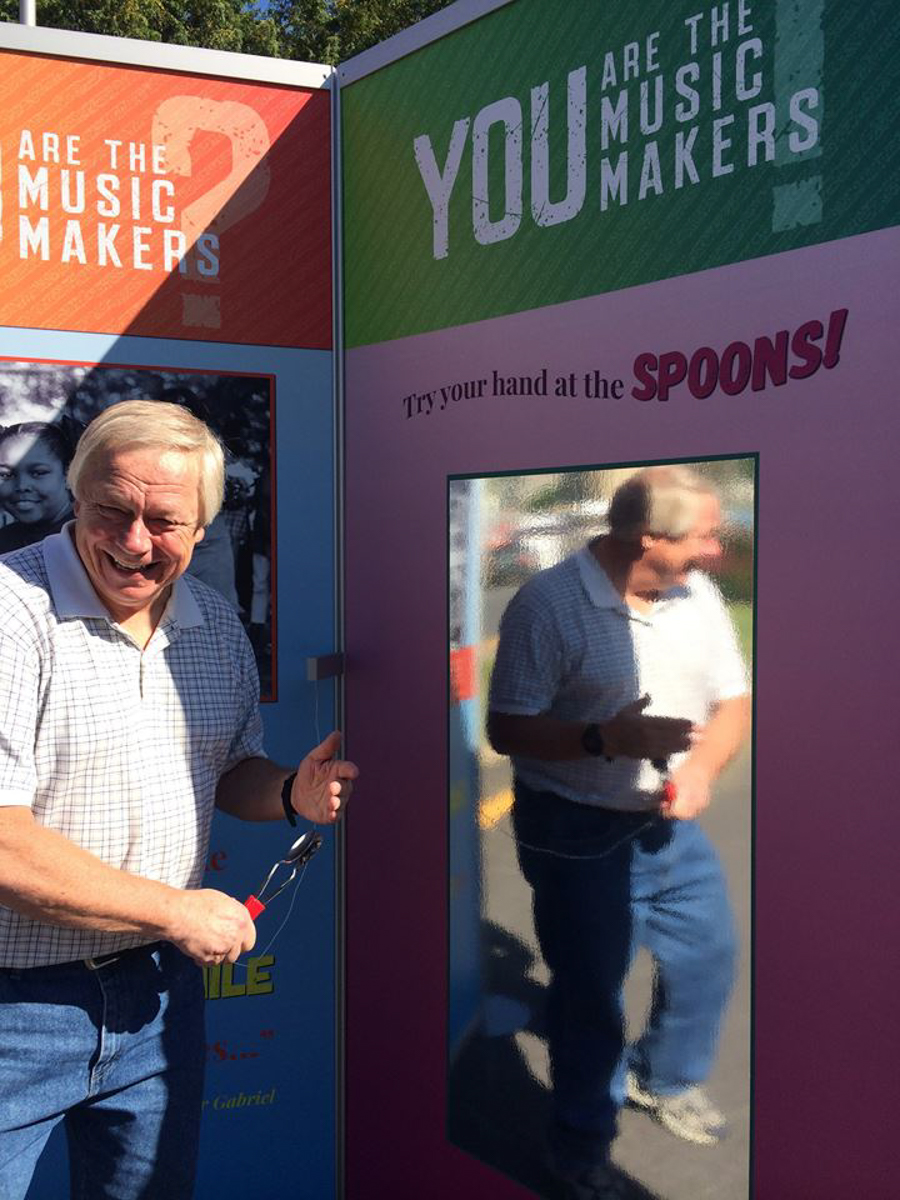
4. Not only are our volunteers good at what they do, but they also know how to have a good time – and how to make our lives fun! From getting into the spirit of a volunteer party theme by dressing up like country musicians to sharing the best-tasting potluck dishes in town at our annual Christmas party, you can count on our volunteers to bring good cheer and good fun to every occasion.

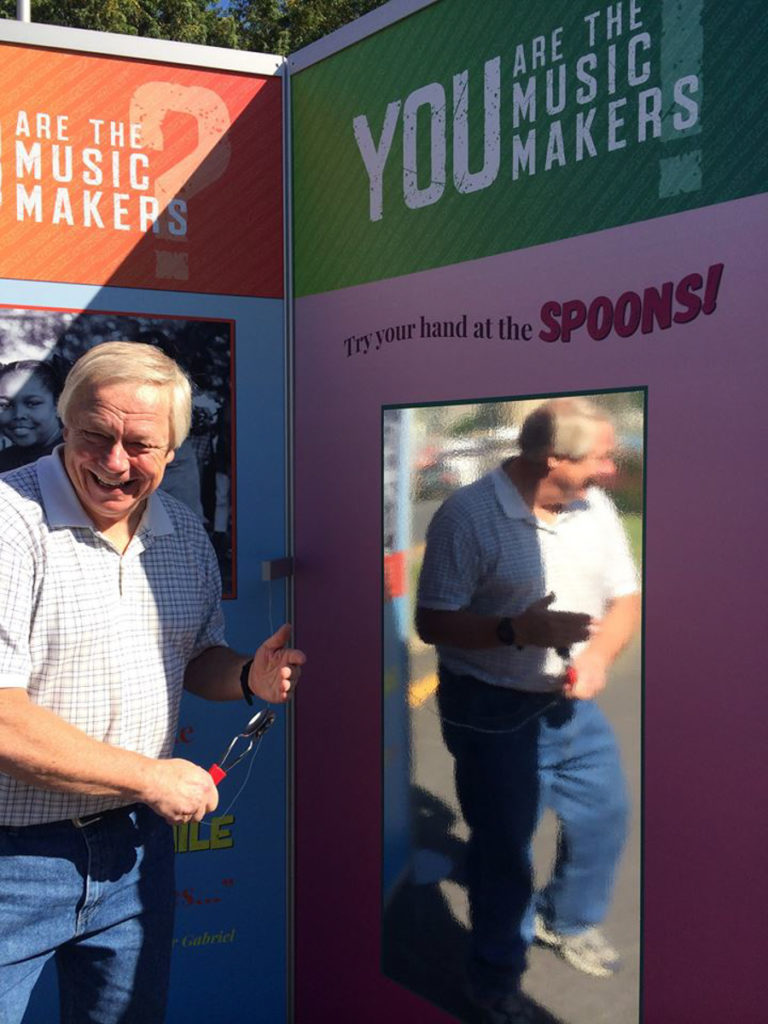
While helping to set up an outdoor display during Bristol Rhythm & Roots Reunion, volunteer Bob tried his hand at the spoons. © Birthplace of Country Music

5. Most importantly, because our volunteers are dedicated, welcoming, and knowledgeable, they have a direct and meaningful impact on our visitors. Our festival may be a blast, our museum may be engaging, and our radio station may make your toes tap, but it is our volunteers who make your time with us special.

René Rodgers is Curator of Exhibits & Publications at the Birthplace of Country Music Museum. If you are interested in volunteering at the museum, new volunteer training is being held on July 25 and August 1.

Country Music Icons: Immortalized and Celebrated in Stamps

July 1 is National U.S. Postage Stamp Day, a day to celebrate these miniature works of art and their important role in correspondence and communication.

While letters and messages have been sent throughout history, the first ever pre-paid postage stamp was issued in the United Kingdom on May 6, 1840. This stamp bore the profile portrait of a young Queen Victoria and was known as a “Penny Black” due to its cost and the ink color used for the printing. The first stamps issued in America were a 5-cent Benjamin Franklin stamp and a 10-cent George Washington stamp, both produced in 1847.

U.S. postage stamps are often used to commemorate important events and people in American history – the first American commemorative stamps were produced in 1893 to celebrate the discovery of the New World by Christopher Columbus. Since then, there have been numerous commemorative stamps and stamp series, including ones to honor the people who made a mark on country music.

Jimmie Rodgers

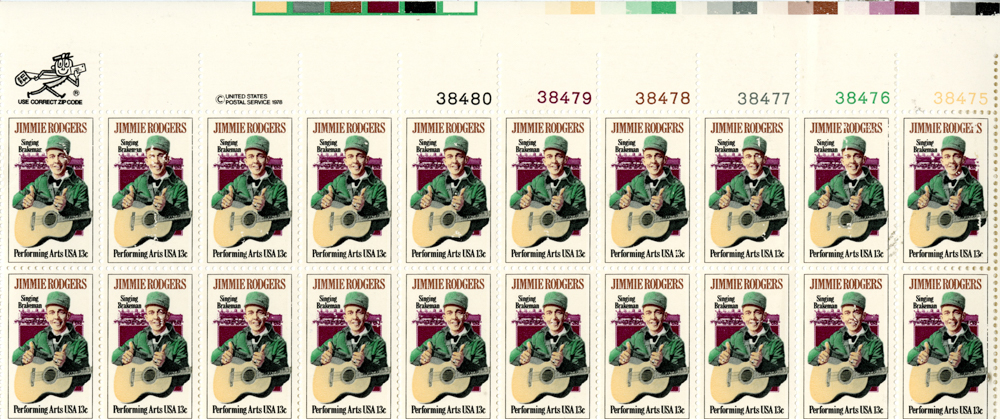
The 13-cent Jimmie Rodgers commemorative stamp was issued on May 24, 1978, and its first-day city was Meridian, Mississippi, Rodgers’s birthplace – it was issued during the town’s annual Jimmie Rodgers Festival. The design of the stamp celebrates his nickname as the “Singing Brakeman,” a persona based on his railroad career and reflected in a character he played in a short film of the same name. The film, produced by Columbia Pictures and Victor Talking Machine Company in 1930, features Rodgers singing three of his songs at the “Railroad Eating House” after a long day on the rails. As with many stamps, the Jimmie Rodgers stamp was part of a series, the first issued in the U.S. Postal Service’s Performing Arts and Artists series.

Jimmie Rodgers Stamp © 1978 United States Postal Service. All Rights Reserved. Used with Permission. Third-party permissions courtesy of Karen Court at Jimmie Rodgers Properties I LP.

Legends of American Music Series: Hank Williams, Patsy Cline, The Carter Family, and Bob Wills

From 1993 to 1999, the U.S. Postal Service produced the Legends of American Music Series. This series covered a host of genres and contributions to American music, including rock-and-roll, jazz and blues, gospel, opera, folk, and popular music; songwriters, conductors, composers, big band leaders, and Hollywood and Broadway songwriters and composers; and, of course, country music icons. The country music stamps, all issued in 1993, featured Hank Williams, Patsy Cline, The Carter Family – A. P., Sara, and Maybelle, and Bob Wills. The stamps were presented at various dedication ceremonies, including one highlighting the Hank Williams stamp at the Grand Ole Opry, which was attended by his son. Williams Jr. noted that his family was thrilled about the stamp, adding that he had told his children that their grandfather now had his picture in the U.S. Post Office, and not on an FBI poster!

Artist Richard Waldrep designed the stamps, creating the artwork for them at 400% of the actual stamp size using gouache that had been thinned so it could be applied with an airbrush, creating a smoother surface showing no brush strokes; he then filled in the minor detailing with brush and colored pencil. The results are vibrant portraits of these artists, capturing their personalities and performance. Waldrep has created 38 stamps for the U.S. Postal Service, including several other commemorative series. He remembers in particular his work on the Centennial Olympic Games stamps of 1996 when he was asked to sign 30,000 sheets of the stamps – he says his signature has never been the same since!

Roy Acuff

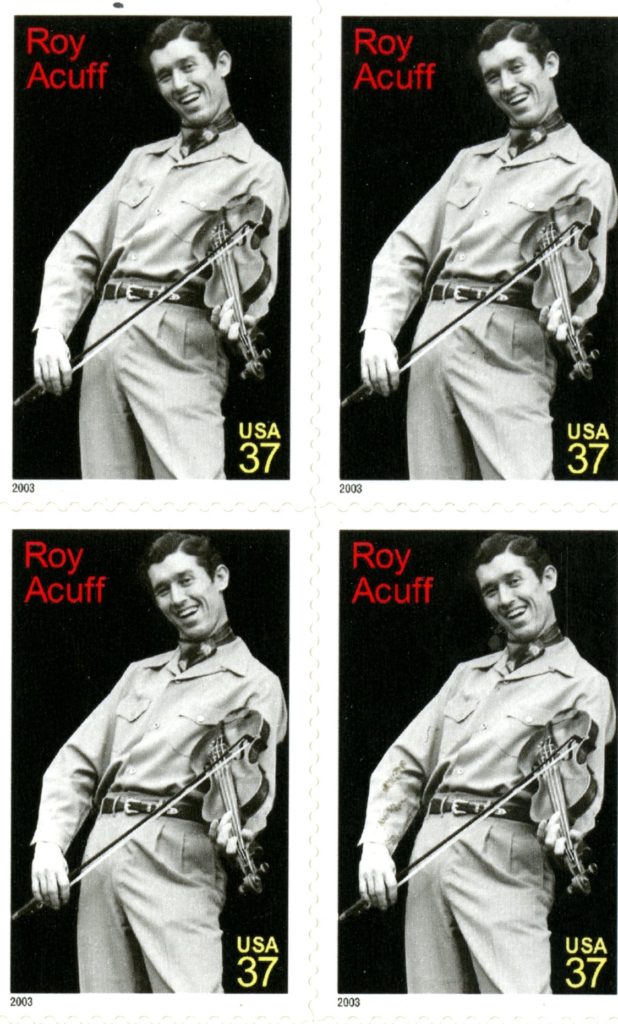
Rather than artwork, the 37-cent Roy Acuff commemorative stamp bore a photographic likeness of the “King of Country Music.” As with the Legends of American Music stamps, the Roy Acuff stamp was printed using the gravure process, a type of printing where the image is engraved on a metal plate for use on the printing press – 52 million Acuff stamps were produced. The stamp was first issued in Nashville, Tennessee, and it was presented at a dedication ceremony during a live Roy Acuff tribute show broadcast from the Grand Ole Opry on September 13, 2003. By coincidence, Johnny Cash had passed away the day before, and the former Postmaster General Marvin Runyon promised he would do all that he could do to be sure Cash was also memorialized through a U.S. postage stamp in the future.

Roy Acuff Stamp © 2003 United States Postal Service. All Rights Reserved. Used with Permission.

Johnny Cash

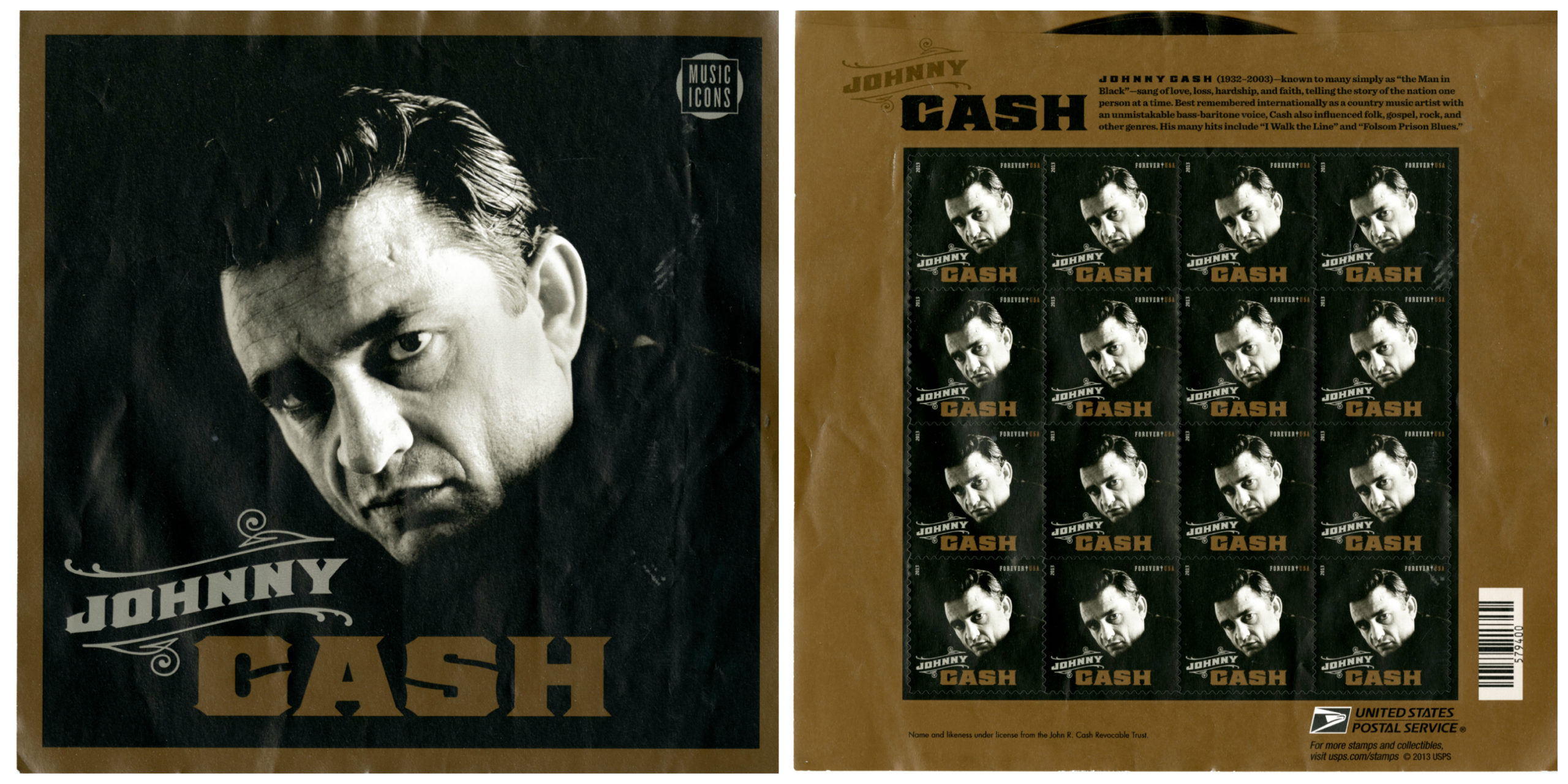
The promise made at the Roy Acuff issue ceremony came to fruition in June 2013 when the U.S. Postal Service released a Forever stamp commemorating Johnny Cash, part of their Music Icons series that also included Lydia Mendoza and Ray Charles. The dedication ceremony was attended by son John Carter Cash, daughter Rosanne Cash, and musicians Larry Gatlin, Jamey Johnson, The Oak Ridge Boys, The Roys, Marty Stuart, and Randy Travis, amongst others. The image used on the stamp is a photograph by Frank Bez, taken during a photo session for Cash’s album Ring of Fire: The Best of Johnny Cash (1963). The level of detail and thought put into stamp design is often extraordinary – for instance, the square stamp pane surrounding the Johnny Cash stamps was designed to resemble a 45rpm record sleeve.

Music Icon Johnny Cash Stamp © 2013 United States Postal Service. All Rights Reserved. Used with Permission. Third-party permissions courtesy of Josh Matas at Sandbox Management.

Country Music Stamps and Beyond

Other stamps from the U.S. Postal Service and Canada have celebrated other country music icons. For instance, the U.S. Postal Service issued stamps focused on cowboys of the silver screen, two of which were also known as singers: Gene Autry, the “singing cowboy” and Roy Rogers, the “King of the Cowboys.” And Canada Post released a series focused on the contributions of Canadian country music stars with stamps of Shania Twain, k. d. lang, Tommy Hunter, Hank Snow, and Renée Martel.

René Rodgers is the Curator of Exhibits & Publications at the Birthplace of Country Music Museum. Special thanks to Patricia Raynor at the National Postal Museum, Richard Waldrep, Karen Court, Josh Matas, and Andrea at the U.S. Postal Services Rights & Permissions Department for their help with this post.

Creating Experiences for Engaged Learning through Music: A Key Component to our Organizational Mission

At the Birthplace of Country Music (BCM), we believe that engaged learning in museums should be a component of every child’s experience, and those museums should be welcoming, accessible, and relevant. Whether with a school group, as individuals, or with their families, inviting young people to interact with the arts and history in museums and through outreach programs gives us opportunities to teach elements of these subjects through broad lenses in the humanities – and this in turn helps children to understand the world around them. These hands-on learning experiences give students the chance to explore and connect history to their own lives. We offer a variety of youth programs at BCM in an ongoing effort to serve the region – our school group programs, youth summer camps, free Family Fun Days, the Bristol Rhythm & Roots Reunion Children’s Day, and a variety of outreach programs at schools or area agencies provide opportunities for arts education that is an important component in a well-rounded education. And research into visitor engagement at cultural organizations suggests that children who visit museums or other cultural events are TWICE AS LIKELY to visit them as adults. (So take your children to experience the arts and culture at the museums, festivals, and art galleries all around us!)

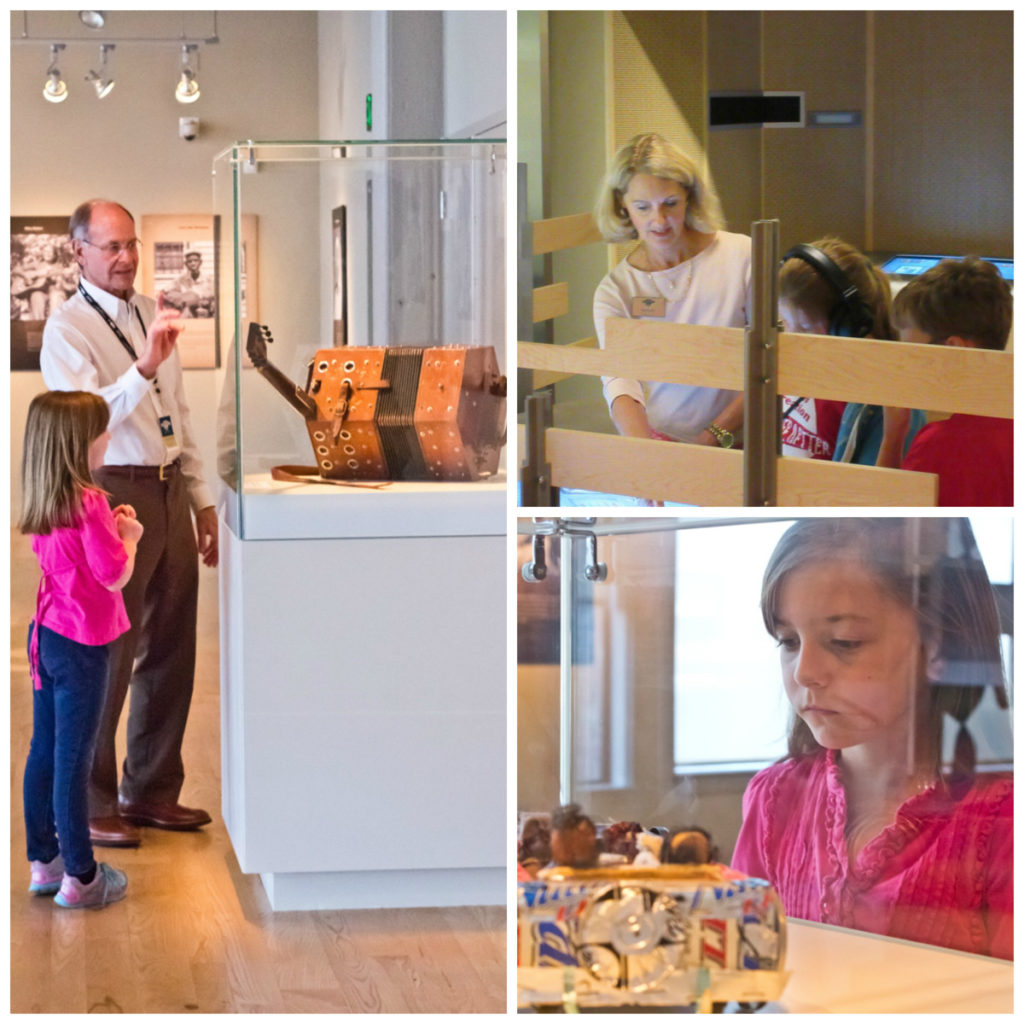
Clockwise from left: Docent Richard Horner and a young visitor ponder the uses of a unique hybrid guitar-accordion on loan from the Music Maker Relief Foundation; docent Barbara Smith explores the mixing station with students during one of her tours; and a young visitor looks at a piece of folk art from the We are the Music Makers exhibit. © Birthplace of Country Music

Planning educational and outreach programs takes enormous amounts of time. Museum staff members develop programming for each new exhibit so that groups visiting the museum have the opportunity for a variety of experiences and so that schools can link to state standards as they plan their visit – because Bristol is located on the state lines of Virginia and Tennessee, we include two different state standards in our planning. Talented volunteer docents are trained in museum content and are ready to provide a tailored and engaging group tour for area students; our docents often gain as much from the students as the students do from their visit!

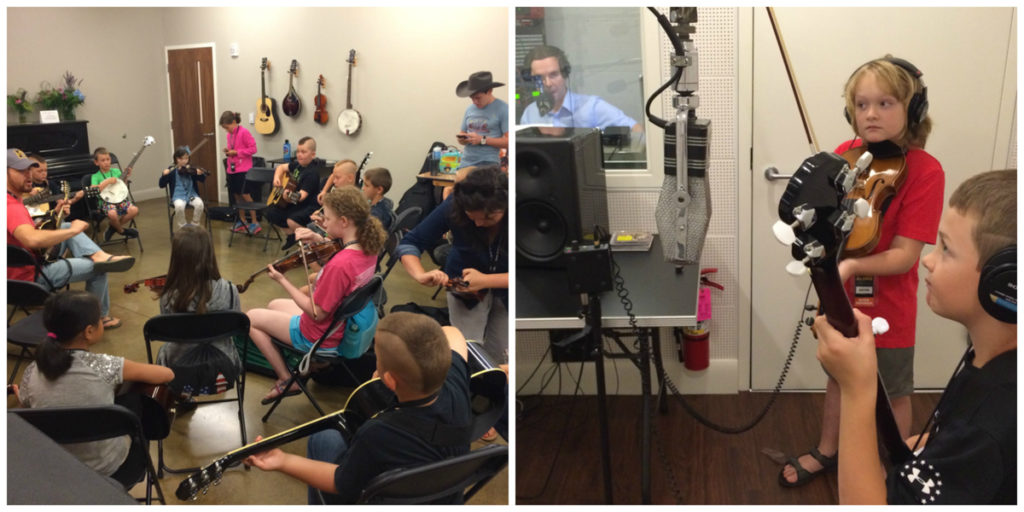
Our Pick Along Summer Camp coordinators and instructors spend numerous hours developing curriculum and activities so that summer camps provide not only a really engaging and enjoyable week, but they also nurture and develop skills in instrument playing and performance competence. These summer camp sessions are a fantastic way to introduce kids to string band music through individual and group instruction, museum-focused activities, songwriting, and arts and crafts. Campers get a chance to perform live on Radio Bristol in the museum, and some have also had the chance to produce their own short programs for broadcast. Scholarships for campers who need financial assistance are always available (we eagerly accept donations for these scholarships and to help with bus transport!) so that we are able to serve our entire community regardless of income level. By offering instrument instruction in a camp format, we have the ability to integrate learning experiences with museum exhibits and radio, facilitate lessons in history and social context for the music they are playing, and give students the opportunity to develop a social network of young musicians interested in regional string music. And, of course, the Pick Along camps are also lots of fun and filled with laughter!

Students enrolled in the Pick Along Summer Camp learn string instruments individually and in groups; young campers also get their first taste of live music broadcast on Radio Bristol. © Birthplace of Country Music

Family Fun Days provide hands-on activities for kids of all ages and encourage families to bring children to the museum. These events give free entry to our Special Exhibits Gallery and often include programming that goes along with the particular exhibit that is featured in that space – from songwriting Mad Libs to a chance to play real instruments to coloring sheets. Our Family Fun Day visitors also get to create entertaining craft takeaways from various activities (and sometimes even prizes, especially after a rousing game of Banjo Bingo!).

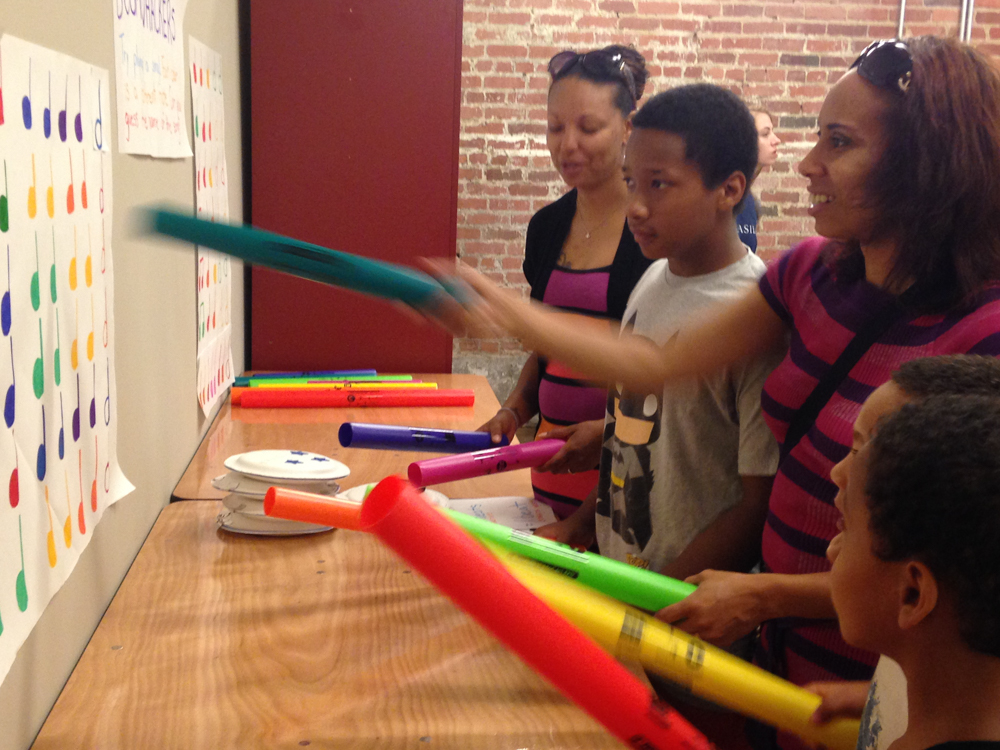
Our free Family Fun Days provide the opportunity for families to engage in making music together – here a family enjoys the Boomwhacker Music Station. © Birthplace of Country Music

Bristol Rhythm & Roots Reunion’s Children’s Day is another space for engaging families and features a variety of hands-on music-related and arts-focused activities for kids. Participants at this free event get the chance to dance and sing, play instruments, create take-home crafts, and learn about BCM and other nonprofits in the community. It’s also a chance for them to enjoy the feel of a mini-festival with some kid-focused music.

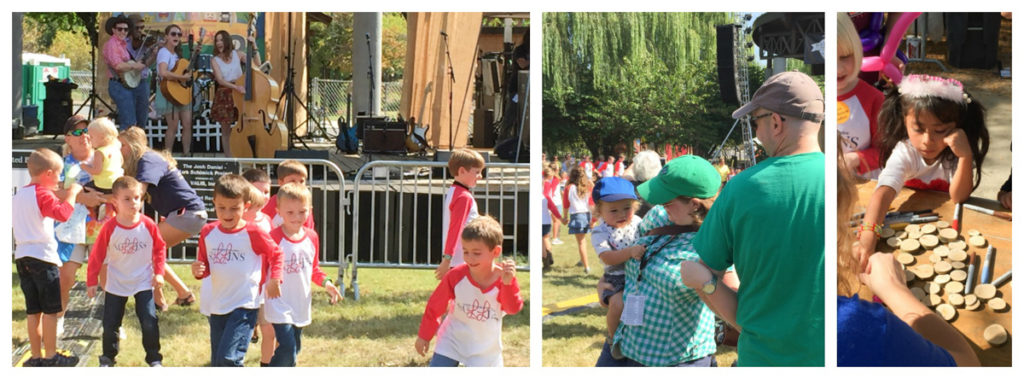
In 2016 the festival’s Children’s Day featured an interactive square dance and a short performance from students at Sullins Academy, while Collections Manager Emily Robinson do-si-doed with her family and children enjoyed crafts with the area nonprofit agencies who participated in the event. © Birthplace of Country Music

Many of our educational programs and events are geared towards giving students a short learning experience that might shape their understanding and create a desire to dig deeper, while others delve further into museum content through a longer program that helps students gain skills in history, music, writing, and critical thinking. One particularly successful program was an outreach project that museum staff provided for a youth group at the YWCA Bristol. It was developed in response to a special Museum Day Live! event on March 12, 2016, which focused on encouraging all people – and particularly women and girls of color – to explore our nation’s museums and cultural institutions. After thinking carefully about programs that fit in with this theme, we approached the YWCA Bristol TechGYRLS, a local after-school program based on a STEM-focused curriculum and geared towards supporting girls aged 9—15 who would otherwise have limited access to and experience with technology. The goal of the partnership was to give the TechGYRLS access to a new technology and the opportunity to explore the music history of their hometown in a meaningful way – this project provided an innovative STEAM educational program that connected our museum to our community by empowering the TechGYRLS to create a special radio program on Radio Bristol, our in-house working radio station. The program took a creative approach to our museum content and gave the participants a learning experience that has resulted in a strong and continuing partnership with the YWCA, enabling the museum to share its mission with a much wider audience and to engage students in an interesting way.

This project introduced the students to the museum, gave them opportunities to engage directly with radio technology and to learn more about how a radio station works, and helped them to research, write and produce a special radio program that highlighted the importance of the TechGYRLS program to them, their experiences in the museum, and the content that inspired them from our exhibits. The TechGYRLS visited the museum four times for a museum tour, to work on their radio script, to record the program, and as participants in Museum Day Live! We also went to the YWCA Bristol to give them additional coaching on their script and being “on air.” The half-hour radio program they created was played during the Museum Day Live! event at the museum, both on air and in the museum’s Performance Theater (attended by several girls and family members, along with museum visitors). For museum staff, it was a wonderful experience to work with these girls, and it was really gratifying to see them explore the museum and share their enthusiasm and learning on air.

Our goal with this program was to create a new opportunity for an underserved group in our community, while also sharing an enjoyable learning experience that would tie into that group’s needs. Not only did this partnership accomplish that, it also resulted in many of the TechGYRLS becoming advocates for our museum and for the musical heritage of our area – we have seen them as school group visitors sharing the things they learned with their friends, at our summer camp, and at special events. This program is also now saved in our archive collection for future use. By exploring our museum’s content in a new way through the TechGYRLS radio program, we were able to share our mission with a wider audience – across the radio airwaves and within our community – in an engaging way, and more importantly, provide an opportunity for tangible and creative learning to underserved local children, really highlighting the role of our museum as a community resource.

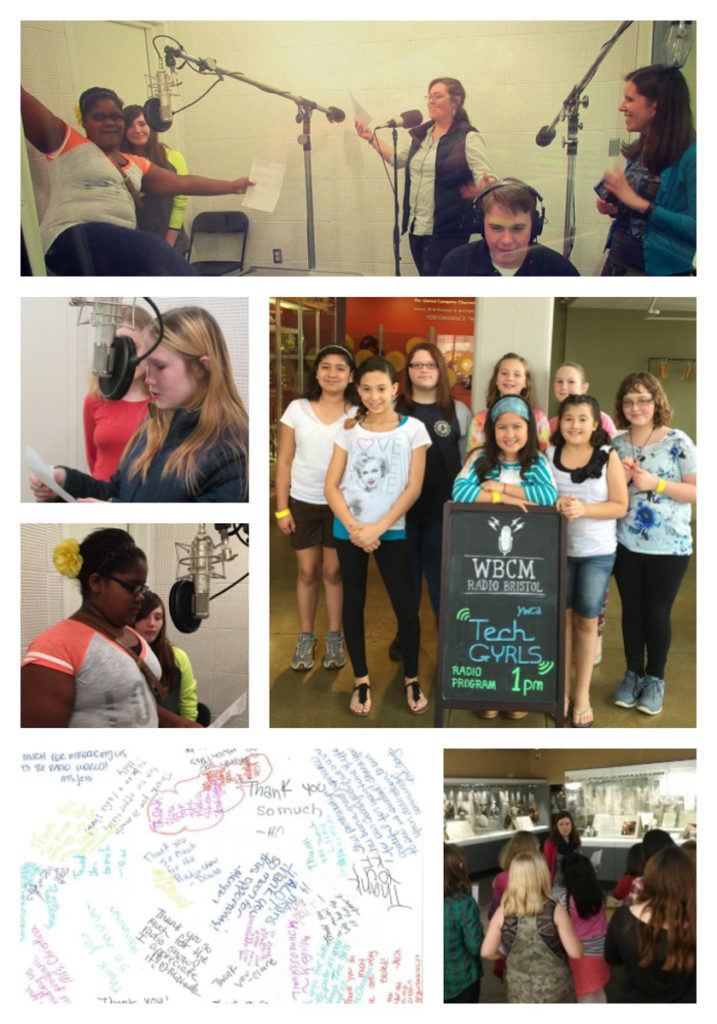
The YWCA Bristol TechGYRLS Radio Program brought together history, the arts, and radio technology as the students researched and recorded their show. © Birthplace of Country Music

At the risk of sounding overly romantic, I’ll finish by saying that the responses of students when they engage in our programs can be rewarding and overwhelming. We see students whose first-ever visits to a museum are on a school visit to our museum, and we’ve heard local students remark about how the Birthplace of Country Music Museum makes them proud to be from somewhere “important.” That’s a significant gift to give, along with inquisitiveness, a general appreciation of the music all around us, and an understanding that history matters now and shapes how we think and live our lives. Those concepts, along with the music history of the region’s rich traditions, are some of the core values driving our educational mission – and these are the things that make our day-to-day jobs so rewarding.

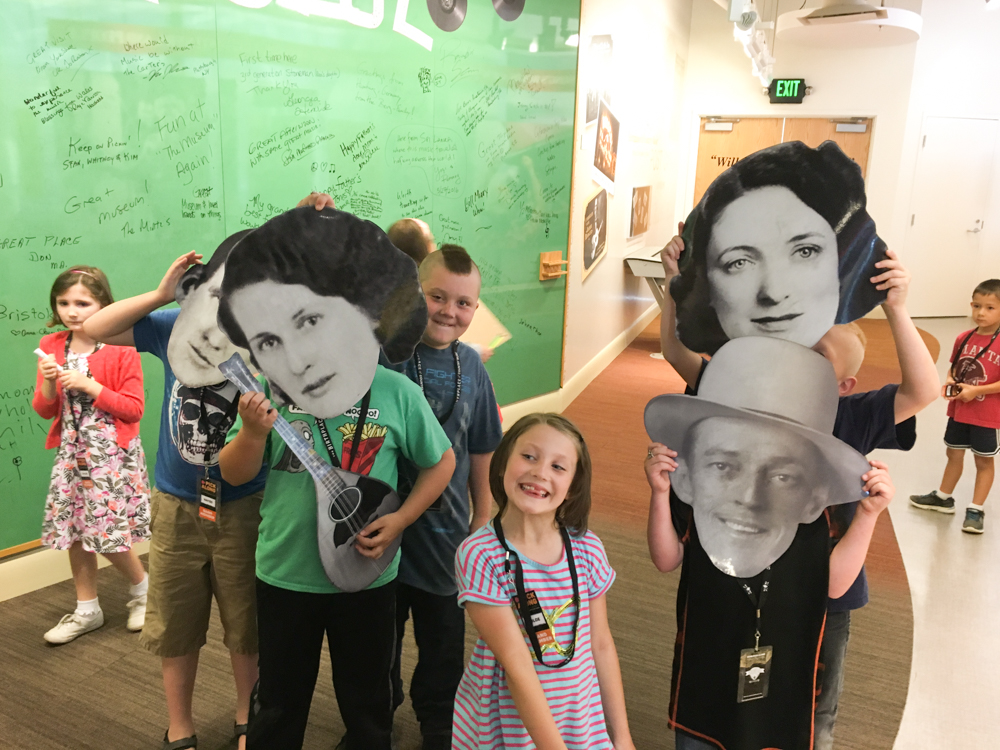
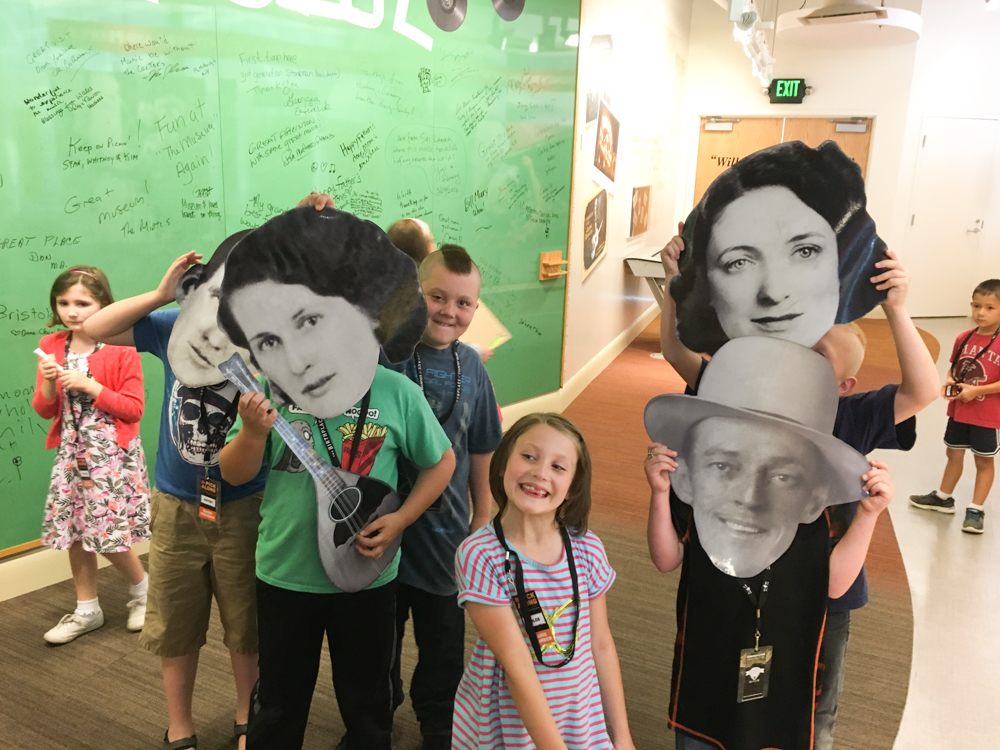
A young camper poses with a few significant “figures” in country music history during a Pick Along camp lesson. © Birthplace of Country Music

Jessica Turner is the Director of the Birthplace of Country Music Museum.