Museum Archives - Page 30 of 34 - The Birthplace of Country Music
Listen
Play
Loading station info...

Trading Local: Keeping Craft and Currency Close To Home

Ahhhh…the magical world of retail shopping! It’s called many things from “therapy” to “a necessary evil” to “entertainment” to “an addiction.” The retail industry is a complicated, beautiful, sometimes crazy sector of our culture and economy that reaches every individual in some way.

Tomorrow, November 25, is Small Business Saturday, a day dedicated to encouraging us to shop in and support local businesses from smaller merchants and mom-and-pop stores to independent restaurants and cafes. And these small, local businesses include “miscellaneous store retailers” or “specialty retailers” like the stores and gift shops that can be found in museums, cultural venues, and even libraries. A tiny niche within the vast retail sector, but one that has impact nonetheless!
The 2017 Small Business Saturday graphic from American Express.

I started working for the Birthplace of Country Music in 2014 as the Museum Manager – this, of course, covered a lot of responsibilities, including stocking and running The Museum Store. Which led to a lot of questions: What must a small museum store do to stand out in the crowd among big box giants in a society where bigger is almost always perceived to be better? How do we compete for our piece of the estimated $4.785 trillion retail sales in the United States? And finally, how do we inspire customers to come into The Museum Store as a place to shop when there are so many wonderful and unique shopping opportunities in our historic downtown in Bristol, TN/VA?

The first step in creating an inspiring and meaningful museum store was to look to the museum’s mission statement: “To explore the history, impact, and legacy of the Bristol Sessions through educational, engaging, and fun experiences and provide our patrons with museum experiences that teach, entertain, delight, and spark curiosity.” It was important, therefore, to make every effort to create a museum store that was firmly part of that mission – this was accomplished by bringing together a variety of items that dig deeper into our content, for instance through books and media. The books give our visitors an opportunity to learn more about the 1927 Bristol Sessions, to explore their impact and legacy on other musical genres and later musicians, and to understand the Appalachian history and heritage that is a part of these musical traditions. And records, CDs, box sets, and videos provide numerous ways for interested patrons to take the music they’ve been tapping their feet to in our exhibits home with them! The aim was to strive to be an extension of the museum and an integral part of the overall museum experience. While this is obviously very important to our visitors, from near and far, it is especially important for our local residents as it is another way to encourage knowledge of and pride in the heritage of their region.
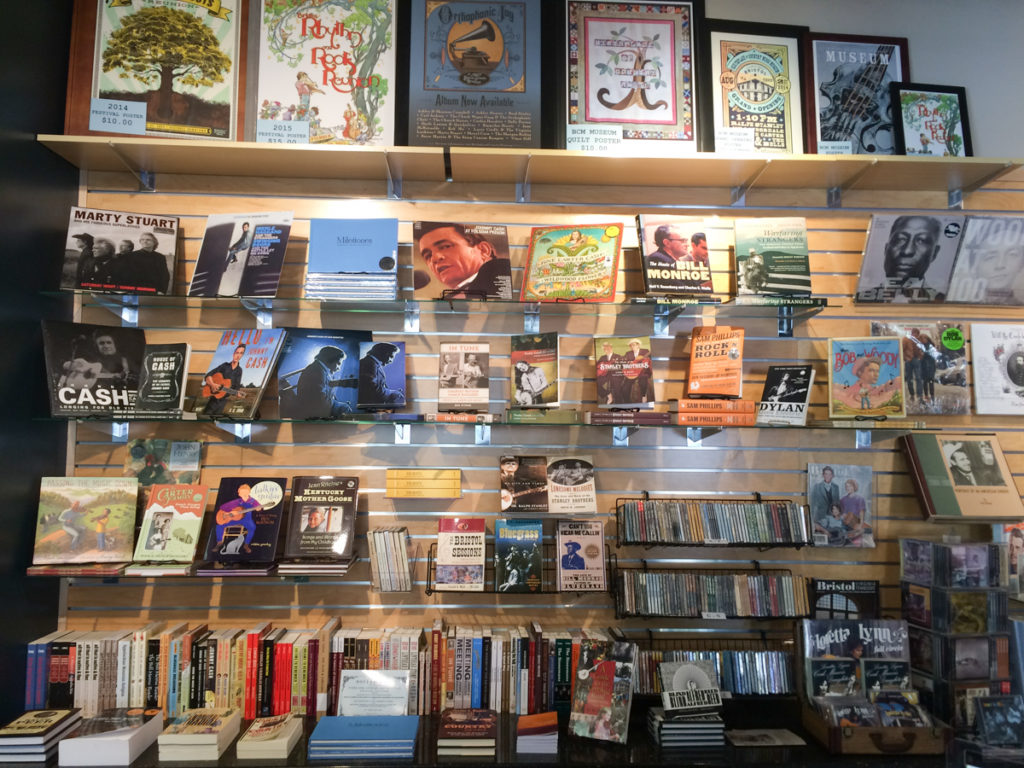
Display of books, CDs, and other media in the Birthplace of Country Music Museum store
Books and music relevant to the Bristol Sessions as well as more current selections extend the museum experience. © Birthplace of Country Music

Another way to extend the museum’s mission through the store is by offering elements of our Appalachian culture to our store visitors, for instance through local items that showcase the best of tradition and innovation in this region in a way that connects back to our community. The store has a host of unique, handmade goods from local and regional artisans in The Museum Store, bringing a truly special element to the retail space. Our artisan items include pottery, jewelry, steampunk lamps, glass, textiles, folk art, woodwork, soaps and lotions, and hand-printed notecards, just to name a few! As part of the store display, they bring a gallery affect that is widely appealing to store customers and museum patrons alike. Additionally, the ability to consign the merchandise from artisans is financially beneficial to a museum store as the artisans are paid as items sell. Most importantly, featuring artisans in the store is a great way to support these artists and to highlight and celebrate the craft traditions in this region. We are fortunate to have so many talented local and regional artisans, all producing beautiful items, and we are glad to work with them in this mutually beneficial way.
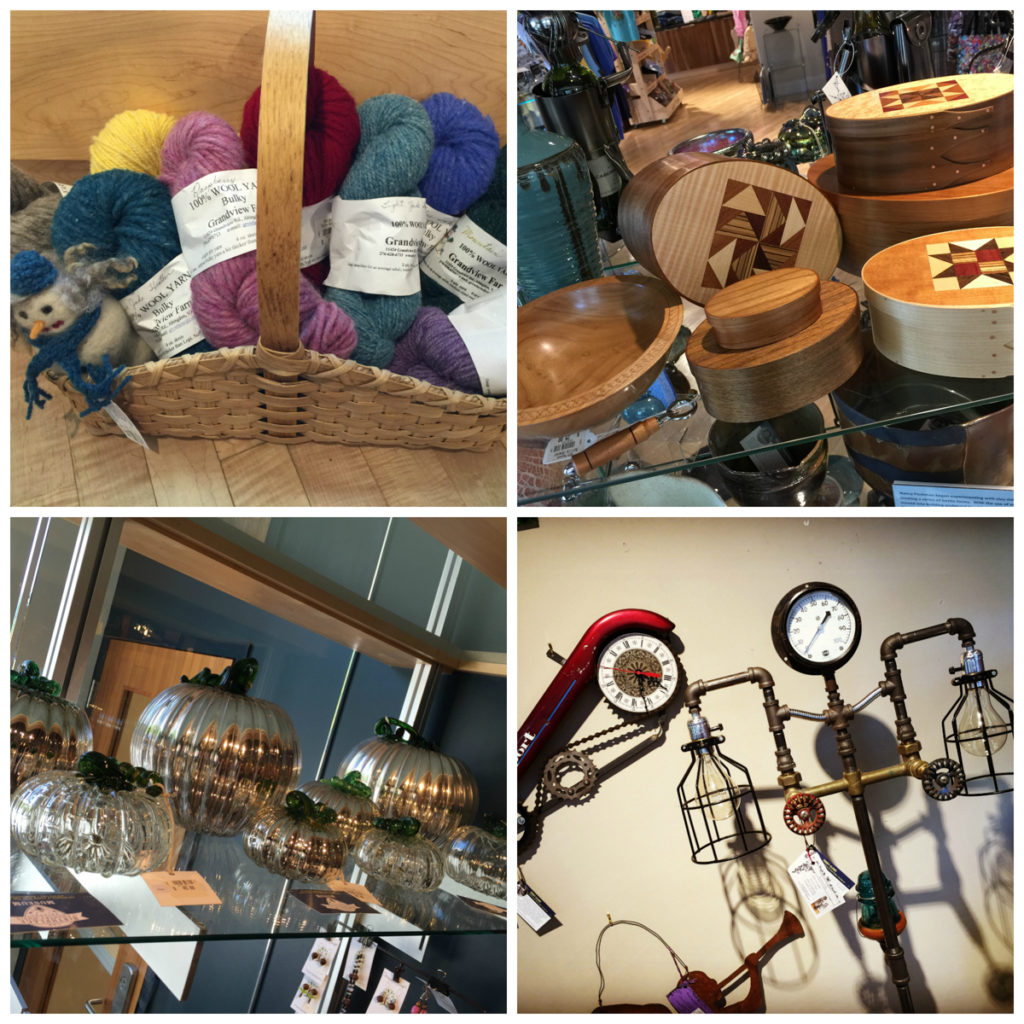
Different artisan items from the Birthplace of Country Music Museum store, including hand-dyed yarn, wooden boxes, glass pumpkins, and a steampunk lamp
One-of-a-kind handmade goods by local and regional artisans create a gallery atmosphere in The Museum Store. © Birthplace of Country Music

And finally, let’s face it…any time you visit a museum or historic site, you’ve gotta get the t-shirt! Most museum visitors love to take home an easy-to-pack souvenir, and our locals love to send a piece of Bristol to far-away friends and family for special occasions. From a marketing standpoint, souvenir items – like t-shirts, hats, magnets, mugs, bumper stickers, patches, etc. – are an effective means of getting the BCM name around the world! T-shirts remain a top seller and never go out of style. We work with local screen printers, but also offer custom designed tees and sweatshirts created just for our store that have proven to be very popular as well.
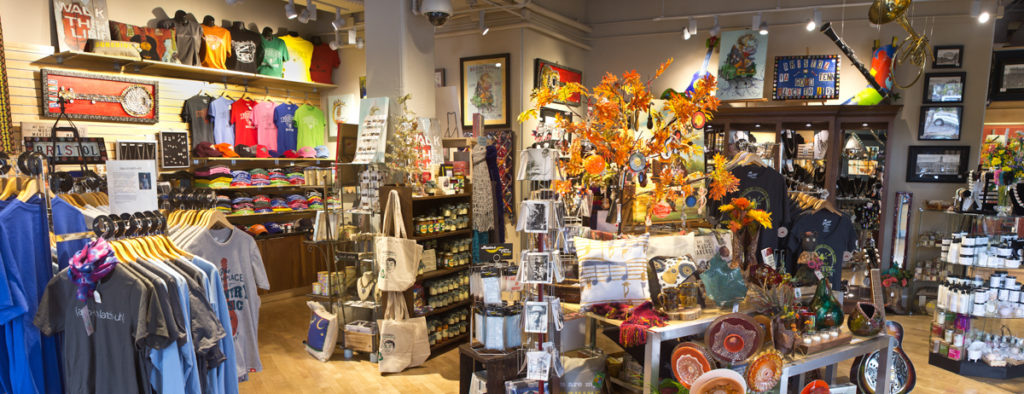
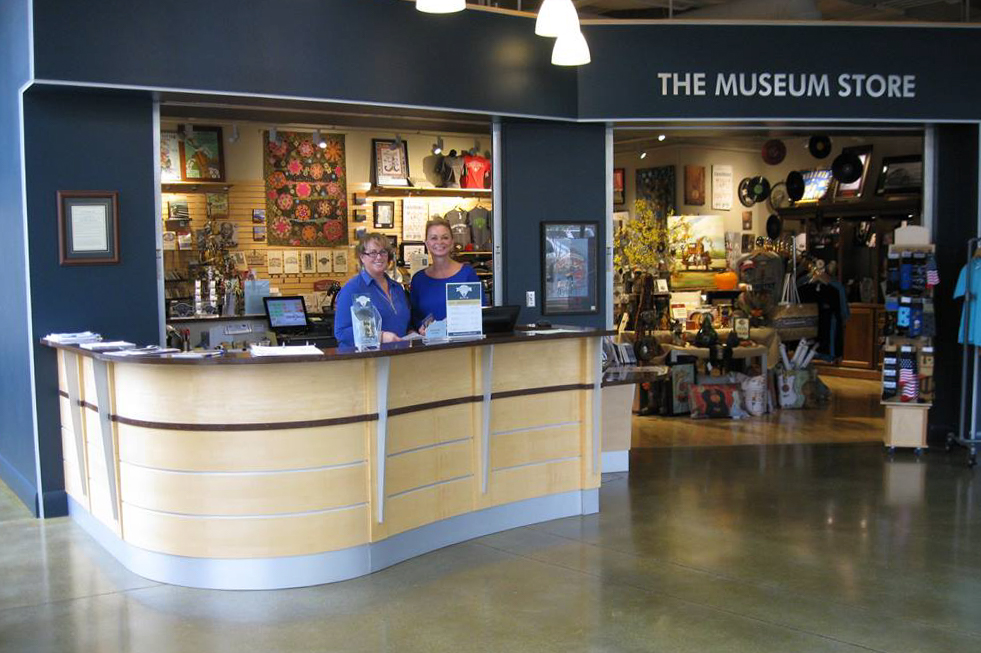
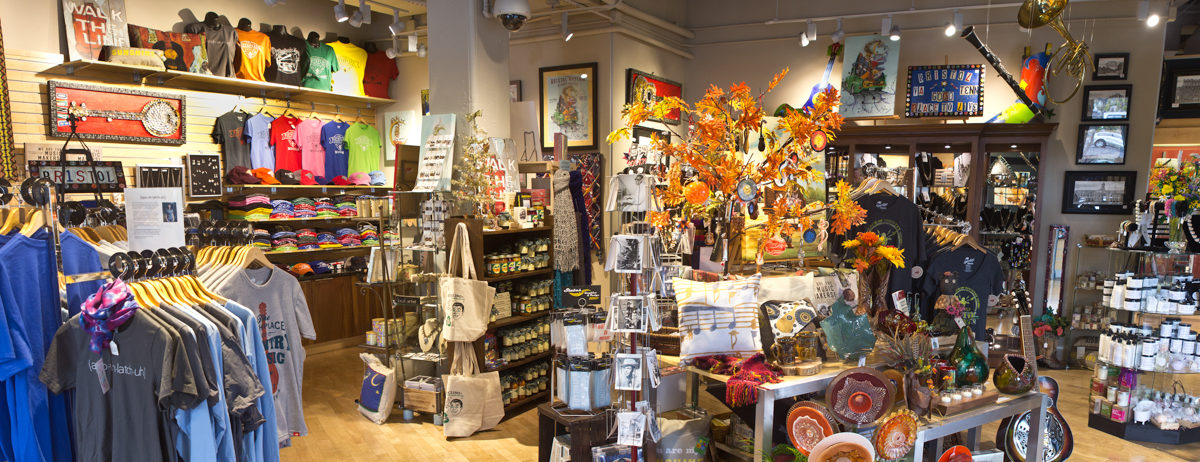
A view of the Birthplace of Country Music Museum store
T-shirts are always a popular take-away for our visitors, and the inviting front table display changes with the seasons. © Birthplace of Country Music

This combination of content-driven items, handmade goods, and souvenirs provides a truly unique atmosphere in our museum store and sets us apart from other retailers in our area. It also makes us one more asset in our quaint historic downtown, one that helps tourists and visitors to have an enjoyable and engaging experience – from visiting the museum and its store to eating at a local restaurant and strolling around State Street popping into the many wonderful shops.

And so it’s worth remembering the importance of shopping local and patronizing small businesses, tomorrow on Small Business Saturday, and every day of the year! For every $100 spent in your community, $68 stays in the local economy – which is a big deal. And, of course, you’ll be supporting our fantastic museum; you’ll be helping regional artisans to continue producing their amazing work; and, as you wear or gift that BCM t-shirt or hat, you will show your pride in the awesome and very important musical heritage that makes Bristol the birthplace of country music!

* Check out our website for information on all of our great specials and promotions in The Museum Store and online over the weekend, including Bristol Rhythm tickets, discount promotions, and free shipping!

Guest blogger Landy Mathes is the former Museum Manager at the Birthplace of Country Music Museum. In that role, she often tapped into the Museum Store Association, a great place to gain the knowledge and resources needed for a museum store to thrive in a competitive retail environment. 
It’s Not You, It’s Us: The Heartbreak of Unsolicited Object Donations

As the museum collections manager, it’s my job to take care of and keep track of all the STUFF in the museum. Which is great, because I love old stuff! I love my old stuff. I love the museum’s old stuff. I might love your old stuff, too!

In the museum biz, though, we have to put the brakes on our love of stuff and be very thoughtful about what we bring into our permanent collection. We’re talking about a serious long-term relationship, to have and to hold, forever and ever. It’s not something to be entered into lightly. Have you ever brought an object to the front desk of a museum, only to be told that you need to make an appointment and come back later? What’s the big deal about dropping something off? Well, it’s not you, it’s us – I promise. Let me explain…

My other true love is paperwork

When we accept objects into the museum’s permanent collection, we really do mean permanent. The museum is promising to be stewards of these important historical objects and to keep them in perpetuity. As a nonprofit organization that serves the community, we take our duties as stewards of these objects seriously. We keep track of them and take care of them so they will be available to the community for research and via exhibitions and publications. Through saving objects and audio/visual material, we are saving and perpetuating the incredible stories of people in our community and region.

Keeping track of the museum’s objects, their condition, and their location involves a lot of database records, file folders, lists, photographs, tracking numbers…you get the idea. The Collections Management department is responsible for the large amount of tracking documentation and legal paperwork that follows each and every object we accept, so it makes sense for us to be the ones to be the gateway for object donations. Our friendly and hardworking Visitor Services staff has plenty to do without having to keep track of objects and huge amounts of paperwork, too! It would be tragic if something was dropped off at the front desk and it got lost in the shuffle, or if the amazing story behind an object got lost. To keep things straightforward and streamlined, our policy only allows the Collections Management staff to accept objects.

Our Visitor Services staff is the best! They cannot accept object donations, but they will be happy to give you the contact information for the Collections Manager. © Birthplace of Country Music

If I can’t have the one I love, I won’t have none at all

You may have heard the Smithsonian Institution referred to as “America’s Attic.” That makes collections managers cringe, because not only are attics too hot for storing museum objects, but attics are notorious for being disorganized. Also, sometimes they have squirrels in them. We pride ourselves here at the Birthplace of Country Music Museum on being both organized and squirrel-free!

No squirrels allowed.

In order to remain so, we have a Scope of Collections. Instead of collecting anything and everything related to country music and Bristol, we collect objects that support the types of exhibitions we want to do. This is driven by the Birthplace of Country Music’s mission, which is to perpetuate, promote, and celebrate Bristol’s rich musical heritage; to educate and engage audiences worldwide regarding the history, impact and legacy of the 1927 Bristol Sessions from which we derive our name; and to create recognition, opportunities, and economic benefit for our local and regional communities. You can find a list of what we do and do not collect here! The Curatorial and Collections staff carefully reviews each and every potential object donation to be sure it fits our mission before we make room for it on the shelf – this is another reason we require an appointment to discuss donations.

I just need some space

We have our Scope of Collections not only as a guide to help us keep our collecting activity mission-driven, but also for practical reasons. For one thing, we want to provide meaningful collections for research and not collect the exact same things that other institutions are collecting. Additionally, we simply have limited space, time, and money! Before we agree to take an object or collection of objects, we have to make sure we have a safe place to put it. We also have to plan our budget to cover costs associated with processing new objects – things like archival boxes, supportive foam and tissue, new shelving, and staff time. Speaking of staff time, it can take weeks (or even years, depending on the size of the collection) to fully process a donation of objects. Because of these constraints, we must be careful to only accept objects that are truly within our scope.

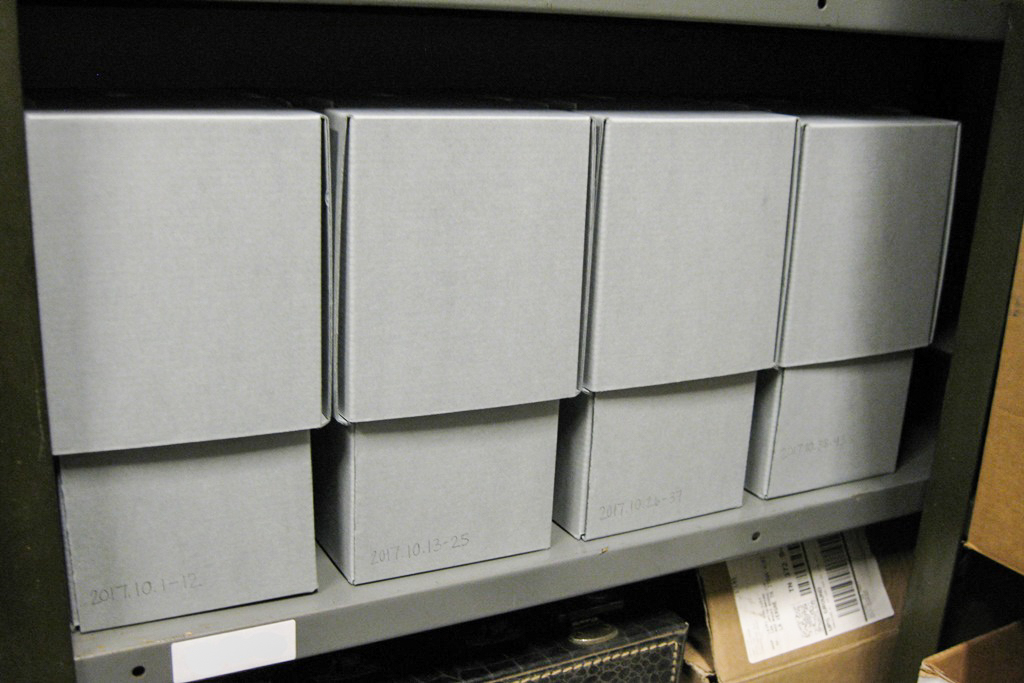
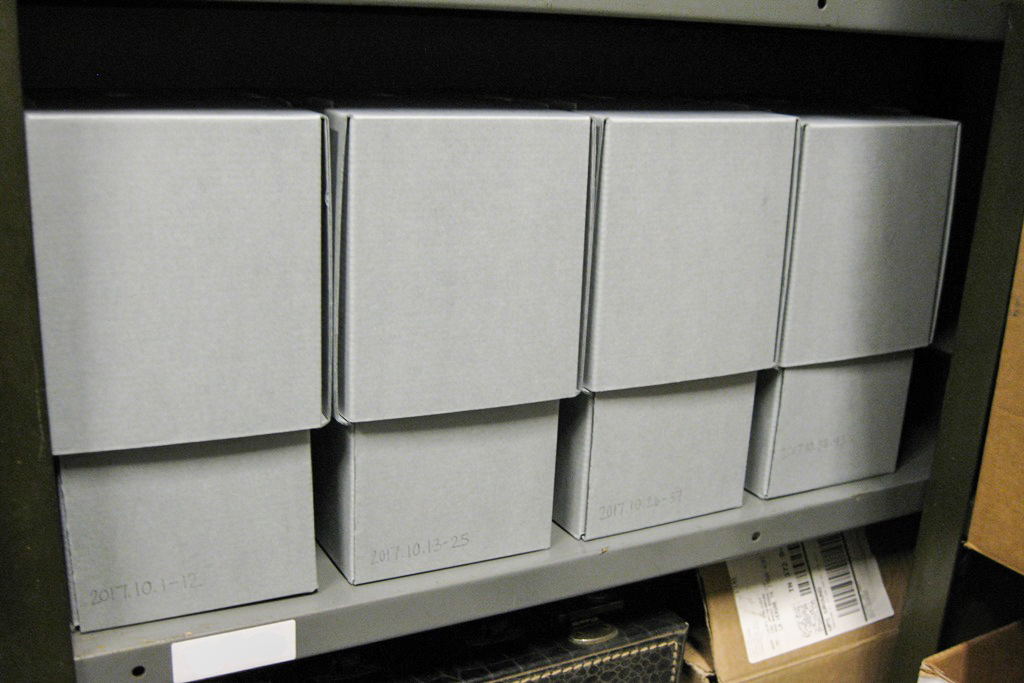
The sight of archival boxes in a neat row makes a Collections Manager swoon. © Birthplace of Country Music

Call us, maybe?

If you think we might want your object to have and to hold, in the public trust, forever and ever, please don’t drop it off at the front desk. Your stuff is special! It deserves careful consideration and attention! To make sure I can provide that attention, please email me at erobinson@birthplaceofcountrymusic.org or call me at 423-573-1927. I will happily find a time for us to talk about the potential of a serious long-term relationship between the Birthplace of Country Music and your amazing STUFF!

Emily Robinson is the Collections Manager at the Birthplace of Country Music Museum.


With a Little Help From My Friends: Creating Equal Opportunity Enjoyment for All

We all need assistance at some point in our everyday life, no matter the range of our abilities. Often, these needs ultimately put us in a position of relying on the consideration and preparation of others, usually strangers.

Some examples where there could be a need for assistance are minor injuries like a sprained ankle, maybe something like an eye procedure that causes temporary sight issues, or even accommodations for a small child. These types of things are situations that we all encounter at least at some point in our lives. But there are other members of our community who need accommodations that may not always come to mind when we are planning events, experiences, or programs – for instance, individuals with seeing, hearing, or mobility challenges. However, don’t let the word challenges misguide you – these fellow citizens are very motivated and as “able” as most of us. They enjoy the same things, and with the same small amounts of consideration, they can take part in all that the world has to offer.

I have always thought myself to be sensitive to those who are considered to be dis- or differently abled, and I guess this is most likely a result of minor physical birth defects that I have and the over-reactions to these that I have experienced throughout my life. Even though I had my own experiences, I recently learned a lot and gained some valuable insights from working with a couple of local agencies who serve these community members and from some of their individual clients as well. These relationships and exercises came about as part of the museum’s recent completion of the Museum Assessment Program, or MAP, through the American Alliance of Museums.

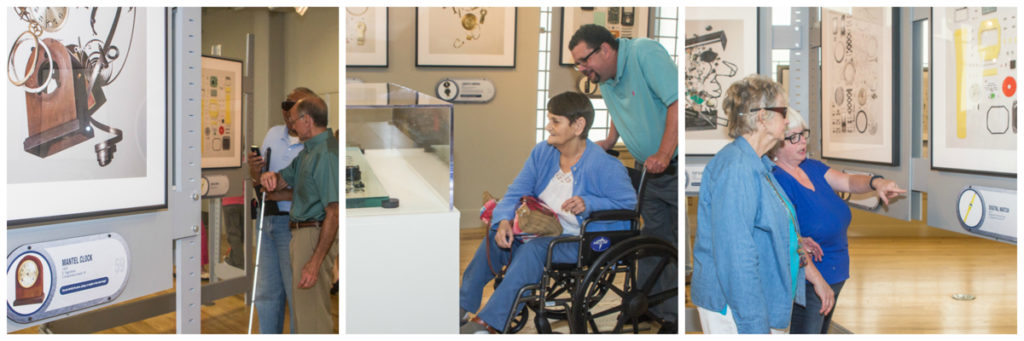
When our museum first opened in 2014, I assisted with some of the efforts in making sure that we are ADA compliant in the area of mobility, and as part of my graduate studies, I also researched the areas of visual and hearing compliance. Therefore, I was happy to take the lead on the accessibility learning and activity that was part of our MAP experience. Part of this activity was to reach out to members of the community to come in to the museum as visitors and give us feedback on their experiences. I was able to recruit two area organizations – the Appalachian Independence Center (AIC) in Abingdon, Virginia, and the Virginia Department for the Blind and Vision Impaired (DBVI) here in Bristol. Both agencies were very gracious in bringing multiple staff members and clients who provided us with extremely valuable information regarding accessibility elements that were already in place in the museum as well as candid suggestions for things that needed improvement.

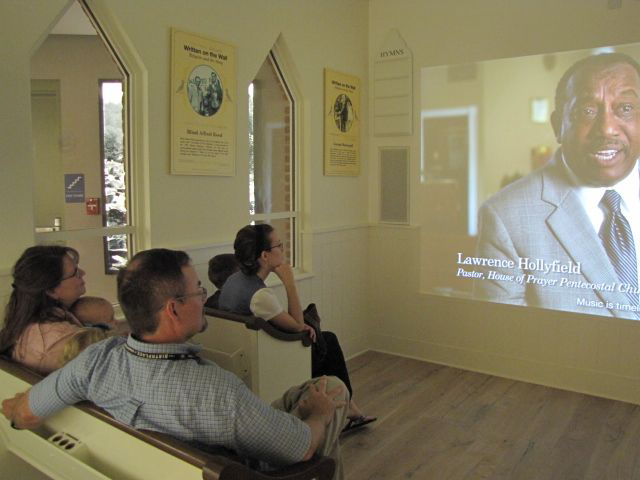
All of the films in the museum’s permanent exhibits have closed captioning for the hearing impaired. © Hillmann & Carr

One conversation between Museum Director Jessica Turner, myself, and a DVBI employee named Debbie Able packed a particularly powerful punch. Debbie, who happens to be blind, told us that she had visited the museum previously with a companion to assist her and that she joined as a member at the same time. I asked her about her overall experience in her previous visits to the museum – she obviously enjoyed the museum but I was surprised to hear her say that she felt like she had missed out and express a wish that she could have experienced more during those visits.

I remember looking at Jessica, and we both had the same expression of concern on our faces. This was a big deal – and something that we both agreed needed immediate attention – and so we asked for more feedback on ways to improve a museum visit for someone who might need to approach our content in a different manner than we had planned for within the exhibit layout or format. The first things that we talked about were ways to address interpretation of our content for those with visual and aural challenges. This led us to discuss technology-based solutions like audio tours, Braille captioning, and large-text labeling and gallery guides. From our conversation, it also became apparent that even when people with disabilities visit a museum with a companion who we may think will assist them, we should not assume that their companion has the knowledge or even intent to help with interpreting our exhibits and content. With the depth of time and energy that we can provide in a scheduled guided tour that addresses our visitors’ needs, we can assure that they have the best experience possible.

Since these initial visits during the MAP exercise, we have held training classes for museum staff and docents conducted by the AIC and DBVI, and these have provided invaluable information and perspectives for us to use in preparing solutions for making our museum accessible and enjoyable for everyone. During these trainings, museum staff and docents were given the opportunity to experience the museum in the same way a disabled visitor might.

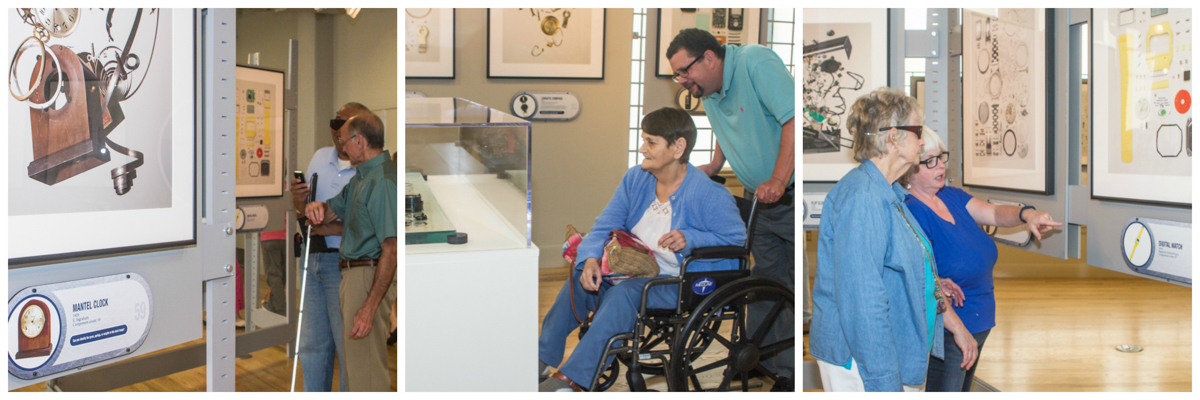
Our docents and staff explored our recent special exhibit with clients of ACI and DBVI, gaining valuable insights on ways to make our content accessible and enjoyable to all of our visitors. © Birthplace of Country Music

Docent Mary Geiger was especially moved by the experience, saying: “The instructors were informative on how to approach a visually impaired visitor, how to physically contact them, how to lead, and why various movements and verbiage were necessary.  Additionally, I found invaluable the experience with the blindfold, learning the feel of degrees of darkness and to trust a person leading. Coupled with this was the exercise of actually leading an 11-year-old visually impaired visitor. This visitor was mature and articulate regarding what I was doing correctly or not (I flunked “doors,” which gave us both a good laugh!). All in all, I will feel more comfortable leading such visitors now.” Docent Barbara Smith agreed, saying: “Touring with a visually impaired person changed my perspective. I noticed things I had not seen before, I was asked about things I took for granted, and I needed to explain things for which I had no words. After this tour I had an even better understanding of the museum’s content.”

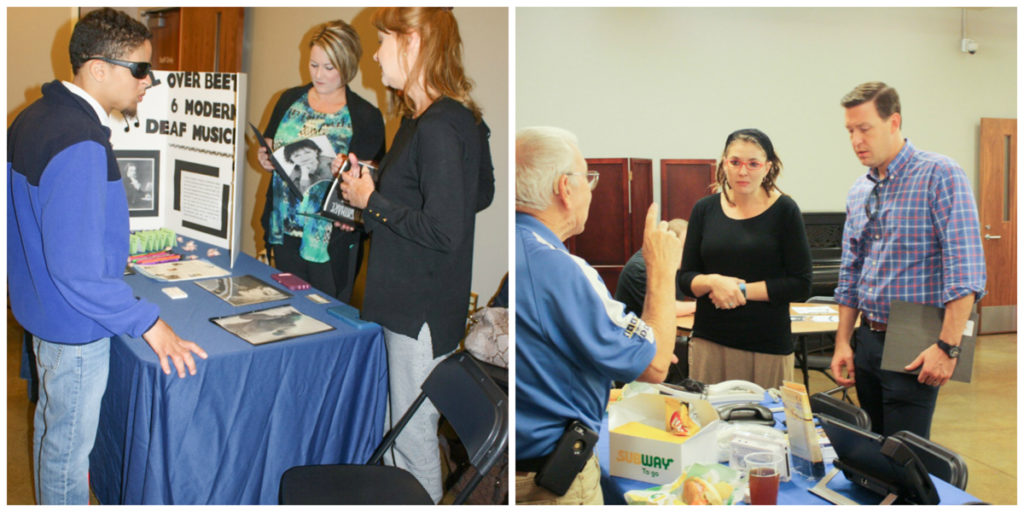
To follow up on this training – and in line with October being Disability Employment Awareness Month – the museum also held an event on October 6 to encourage our community to view their everyday surroundings and experiences through the eyes of a differently abled person. Various agencies set up tables with information to share with interested parties, enabling us to make important contacts with these agencies and for them to talk to each other about possible ways to work together in the future.

A client listens as Department for Aging and Rehabilitative Services counselors discuss individuals with disabilities in the music industry (left). Jack Owens explains Virginia Relay’s services to Delegate Israel O’Quinn (right). Photographs courtesy of Kathy Malone, DBVI

All of these activities and training sessions have helped us to see our museum in a new light, to look at different ways to approach our content, and to begin working on solutions that take us beyond simple ADA compliance to providing a museum experience that brings enjoyment to all!

Scotty Almany is the Digital Resources Manager & Catalog Associate for the Birthplace of Country Music Museum. He would like to thank all of the nonprofit agencies who donated their time to attend the event on October 6 with special appreciation to the DBVI and AIC, who have given so freely and generously of their time. For more information on accessibility tours, please contact the Birthplace of Country Music Museum at (423) 573-1927 or info@birthplaceofcountrymusic.org. And if you have any suggestions or ideas for how our museum can become a more inclusive environment for those with different abilities, please feel free to contact us!

“Sixteen Tons”: Merle Travis, Tennessee Ernie Ford, and Beyond

By Summer Apostol, October 17, 2017

Today marks the anniversary of two important dates in music history. On October 17, 1991, Tennessee Ernie Ford passed away, leaving behind a wide-ranging and hugely significant musical legacy. It was also on October 17, this time in 1955, that one of Ford’s most important and well-known songs was released: “Sixteen Tons.”

Born Ernest Jennings Ford in Bristol, Tennessee, on February 13, 1919, Ford would become a local legend and a national treasure. He paved his way in the world through his gregarious personality, his humor, his wit, and most notably, his distinctive baritone singing voice. Music had been a part of Ford’s life from a young age; in his memoir, he recalled: “We sang at home, we sang at church, and we sang at weddings and funerals and at prisons or wherever there happened to be a need for it. Not for money, mind you – we never got paid. We just enjoyed singing.” And, everyone sure did enjoy hearing Ernie sing – from his hometown, childhood church to his professors at the Cincinnati Music conservatory to the nation through the radio and television airwaves and the many songs he recorded.

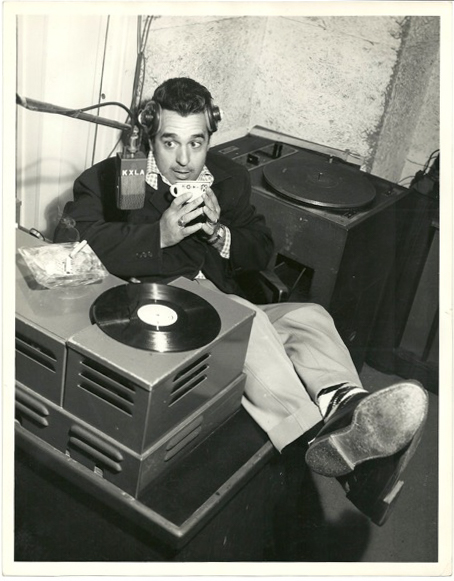
Radio station KXLA produced in-house promotional publicity photographs featuring Ford in 1949. From the collection of Tennessee Ernie Ford Enterprises LLP

“Sixteen Tons,” the song popularized by Tennessee Ernie Ford, was originally written by Merle Travis. In 1947 Capitol Records encouraged Travis to write a series of songs that “sounded folky” for an album, one that would tap into the American folk music revival that was just starting to take off. Travis drew inspiration from his family back home in Ebeneezer, Kentucky. He took the line “You load sixteen tons, what do you get / Another day older and deeper in debt” from a letter his brother had sent to him about the death of World War II journalist Ernie Pyle. Another famous line of the song came from a saying Travis’s father used to say: “I can’t afford to die. I owe my soul to the company store.” And so, “Sixteen Tons” was born on Travis’s album Folk Songs of the Hills.

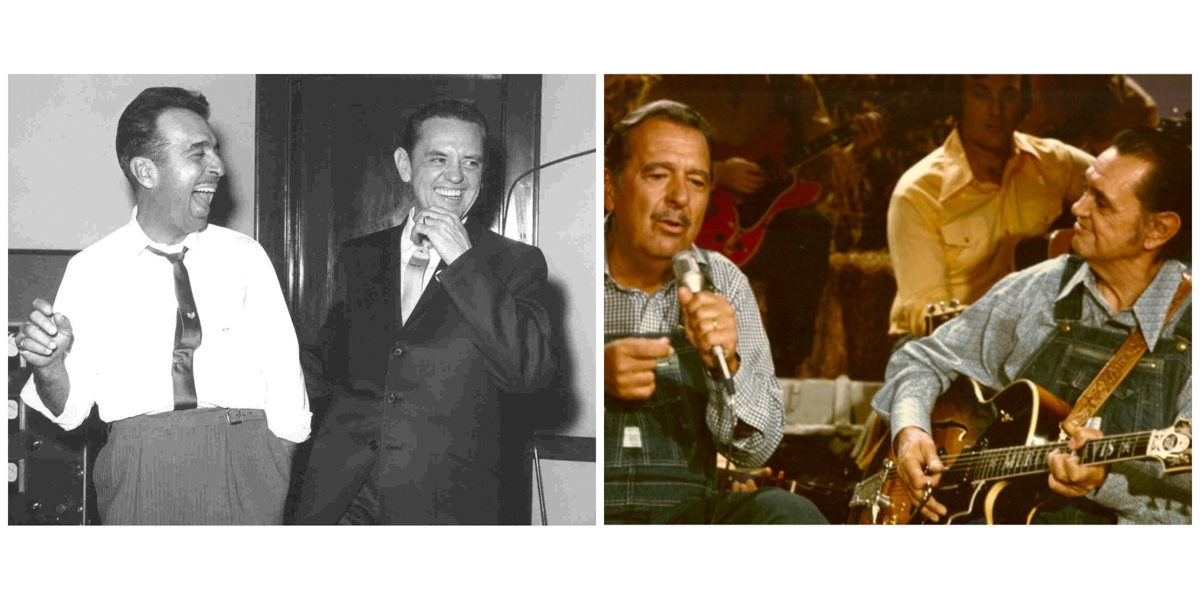
Ford and Travis knew each other from the recording of Ford’s first album, on which Travis played the guitar. As support for his friend and a general love for the song, Ernie performed the song on his daily NBC television show, resulting in a huge amount of fan mail focused on this song. Ford’s live performance of the song later that year at the Indiana State Fair brought the crowd to its feet – they loved it! So, when Ford came under pressure from Capitol to record a new song as he approached breach of contract due to an overfull schedule, he turned again to the song written by his friend. On September 17, 1955, Ford recorded “Sixteen Tons” as the B-side to the record’s A-side: “You Don’t Have to Be a Baby to Cry.”

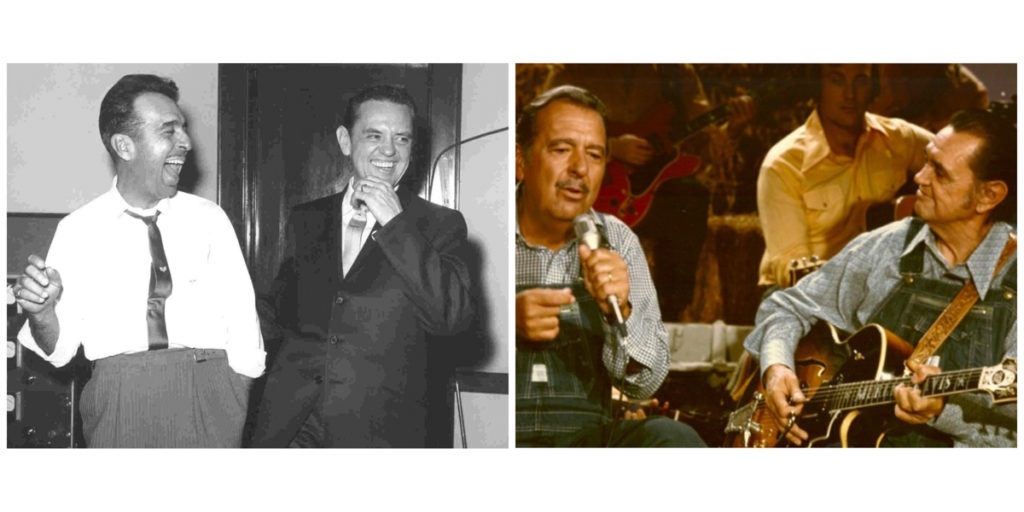
Ford and Travis shared a long friendship and a strong working relationship. The picture on the left shows them having a laugh together, while the one on the right shows them performing together on Hee Haw in 1977. From the collection of Tennessee Ernie Ford Enterprises LLP

Capitol thought the A-side song was going to be the record’s big hit, but “Sixteen Tons” – with its innovative modern instrumentation and a jazz-like arrangement including Ford’s distinctive snapping – was played more by DJs at radio stations across the nation. The success of Ernie’s version of “Sixteen Tons” was much bigger than the recording label could have ever expected. After only 11 days, the single sold over 400,000 copies, and after only a few months it became the fastest selling single in Capitol’s history with over 4 million copies sold. The record dominated both the country & western and pop charts in late 1955 and early 1956 – this crossover from country & western to pop was a rare thing, underlining the impact and appeal of Ford’s version of this song.

Tennessee Ernie Ford recorded hundreds of albums, won countless awards and honors – including three stars on the Hollywood Walk of Fame, a Grammy, and the Presidential Medal of Freedom – and hosted and guest starred on a number of television shows. His wide range of talent garnered him massive appeal, making him one of the most well-regarded crossover artists in modern history. His strides in multiple facets of the entertainment industry helped pave the way for other artists throughout the years.

Ford’s version, coupled with Travis’s relatable lyrics, account for the large number of covers of the classic “Sixteen Tons.” Notably, several of the covers are by artists whose musical background does not necessarily match with Ford’s musical legacy. Some of our favorite covers of “Sixteen Tons” are included below – have a listen and explore the evolution of Tennessee Ernie Ford’s influence on music through the years!

B.B. King & His Orchestra, 1956

Jose Guardiola (Spanish version “16 Toneladas”), 1960

Stevie Wonder, 1966

Johnny Cash, 1987

ZZ Top with Jeff Beck, 2016

Summer Apostol is an intern at the Birthplace of Country Music; she is studying history and sociology at Emory & Henry College.