Here at the Birthplace of Country Music we are so excited that a radio transcription disc from our museum collections has been chosen as one of the Virginia Association of Museum’s Top 10 Most Endangered Artifacts! At first glance it might seem odd to be excited about having an object that is in danger of falling apart, but this honor gives us the chance to receive much-needed funds to save it.
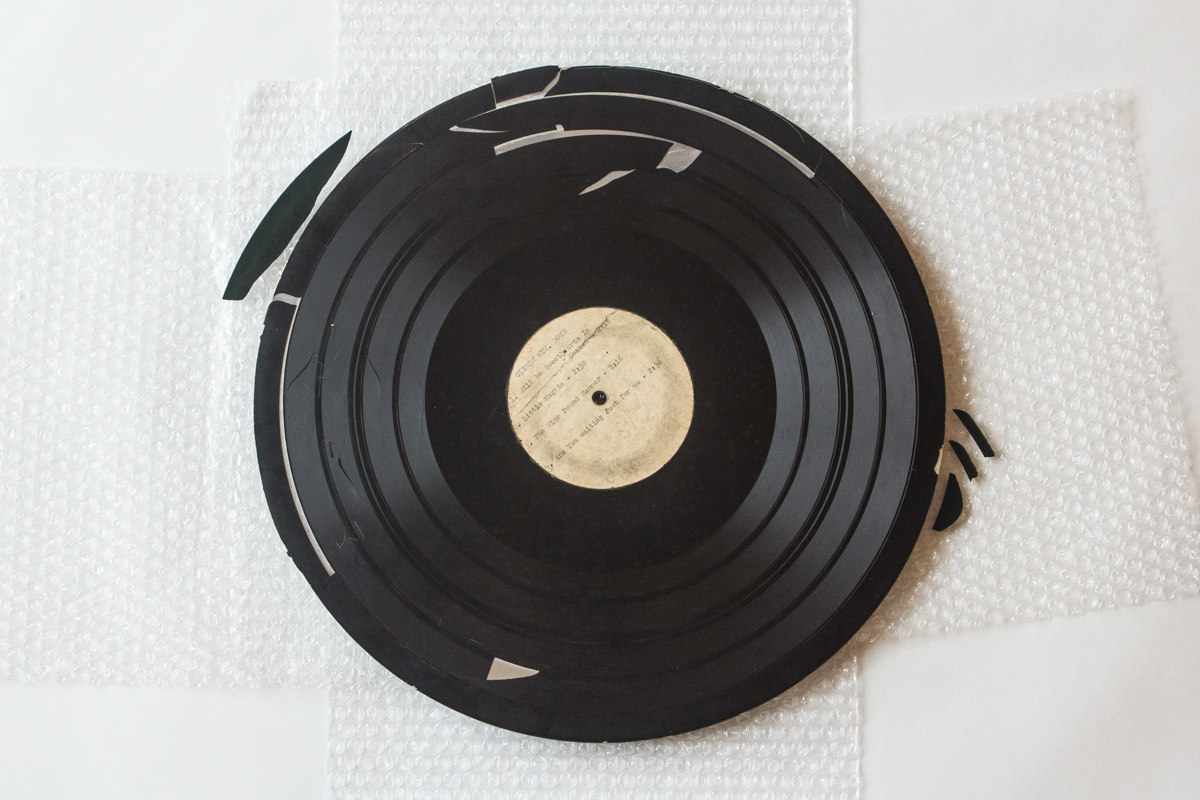
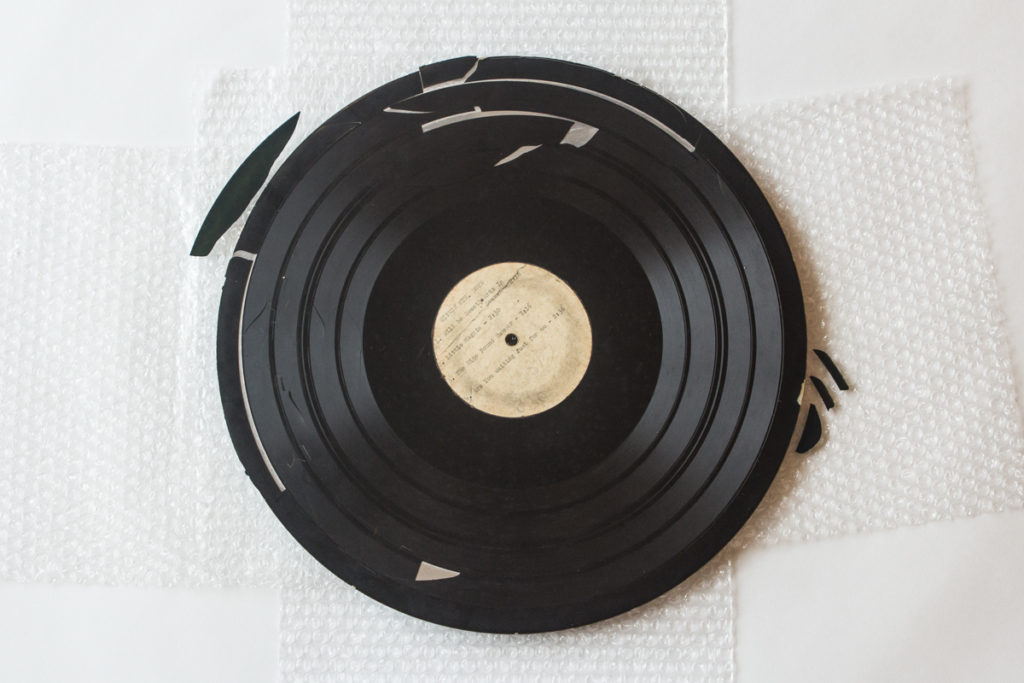
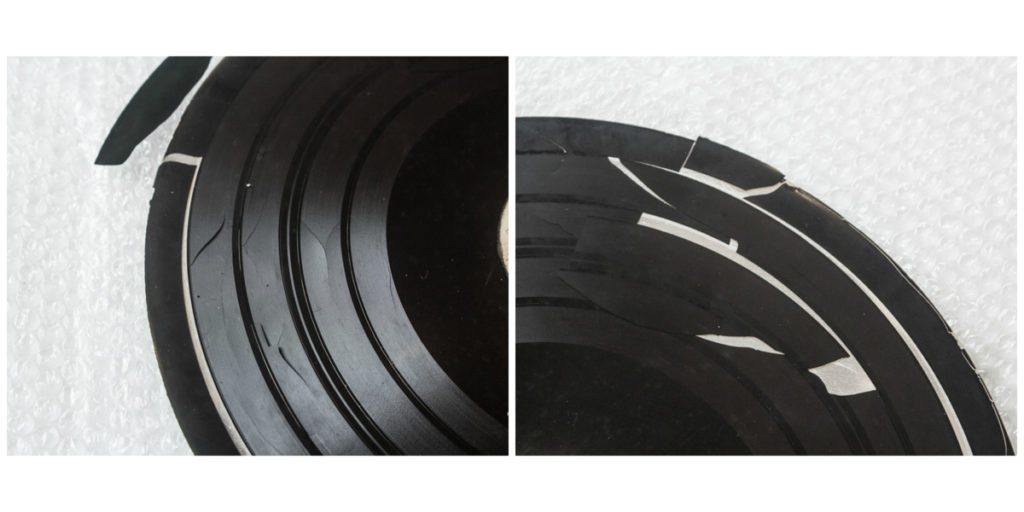
Early in 2017, Glen Harlow donated a Farm and Fun Time radio transcription disc containing live tracks that have not been heard in over 60 years. The fact that an original live recording of the Stanley Brothers with the Clinch Mountain Boys from Farm and Fun Time exists at all is pretty amazing, because the discs used to record radio broadcasts in the mid-20th century are highly unstable and prone to degradation. Before the advent of magnetic tape, instantaneous recordings were usually made on lacquer discs. These discs have an aluminum core covered with a lacquer coating. Over time, the lacquer becomes brittle and shrinks. Since the aluminum core cannot shrink, the lacquer flakes off and the recording can no longer be played with a stylus.
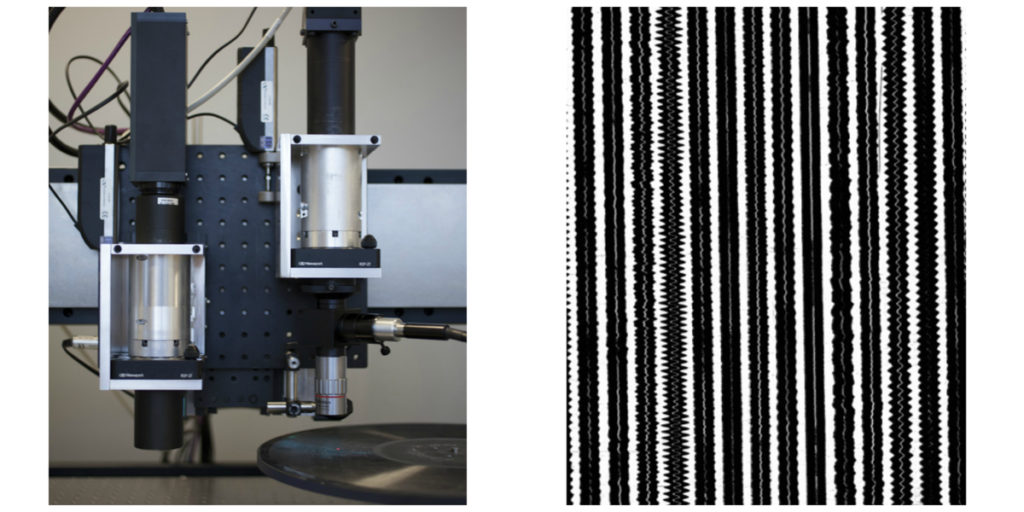
This recording is no different – it is fragile, damaged, and unplayable. Until recently, recordings on degraded lacquer discs like this one were usually lost forever. Starting in 2014, the Northeast Document Conservation Center began offering audio preservation services using a new technology called IRENE. This process involves creating highly detailed images of the grooves on a disc and recreating the sound from these images. The recordings can be heard again without a stylus getting anywhere near the disc and damaging it further. Buried treasure revealed without even touching the fragile disc!
The IRENE camera apparatus (left) and an IRENE scan (right). As the disc rotates, the IRENE camera virtually ‘unravels’ the spiral shape, producing images of long straight lines. These images can then be analyzed in custom software to extract the sound. Courtesy of the Northeast Document Conservation Center
And buried treasure it truly is. The chance to hear a live recording of the Stanley Brothers from Farm and Fun Time is tantalizing to say the least. Farm and Fun Time began broadcasting to a five-state area from WCYB in Bristol, Tennessee-Virginia in 1946 and provided a platform for many of the first generation of bluegrass performers. Indeed, the program was crucial in the development of bluegrass music. The Clinch Mountain Boys, the band of Ralph and Carter Stanley, were featured on the first episode of Farm and Fun Time and continued to play on the show on and off for the next decade. The recording trapped in this degrading transcription disc is truly a piece of lost history. It is beyond exciting to have an opportunity to uncover it again!
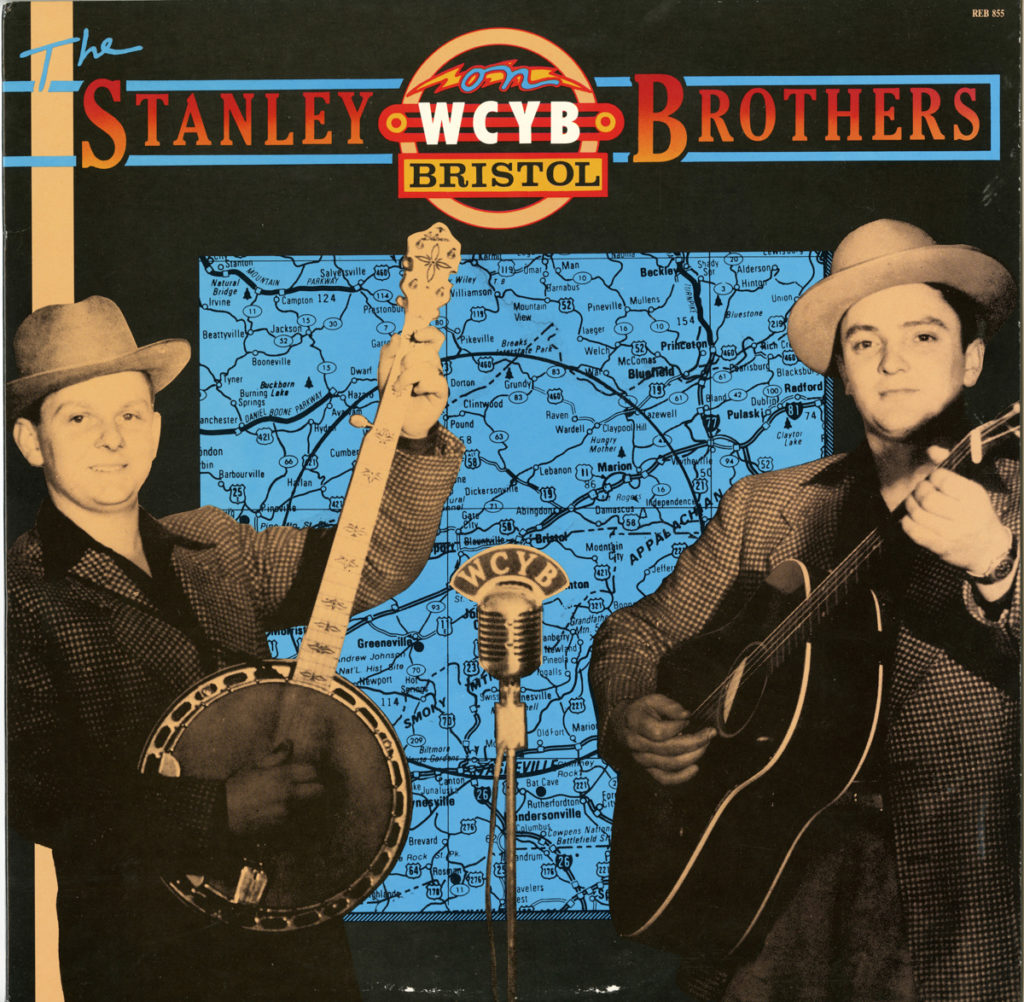
This album is a collection of Stanley Brothers recordings from their time on WCYB — but not the one from the transcription disc! From the Birthplace of Country Music Museum Collection
Part of the Virginia Association of Museums Top 10 Endangered Artifacts honor is a People’s Choice voting contest. The artifacts that receive the most votes will receive conservation awards of $5000 and $4000 respectively. In other words, YOUR votes translate into dollars that will enable the Birthplace of Country Music Museum to work with NEDCC to scan the damaged disc and reveal this performance that hasn’t been heard in decades.
We hope you are as excited about this prospect as we are – and so we need you!
Please click on the link below and help us uncover this amazing piece of music history! You can vote daily from January 15 through January 24.
Today is National Trivia Day, the perfect opportunity to dig deep into the interesting and unexpected origins of a well-known, oft-sung country song – “A Boy Named Sue.”
Johnny Cash’s At San Quentin album is iconic for many reasons – the album went triple platinum and was nominated for Album of the Year at the Grammys, and the infamous picture of Johnny Cash boasting the middle finger was taken during the recording of the concert in the prison. Johnny Cash at San Quentin was just one of Cash’s albums featuring the concept of playing live in front of an audience of prisoners, so what made this time around so special? Well, one thing was the song that won Cash Best Male Country Vocal Performance at the Grammys – “A Boy Named Sue” – a song he didn’t even write.
Cash performed and was recorded live at San Quentin on February 24, 1969. Before this performance, Cash had a slew of famous musicians at his house for a party. The guest list included artists like Joni Mitchell, Bob Dylan, and Shel Silverstein. As a form of entertainment, Cash had his guests gather around and perform whatever song they were currently working on. Silverstein played a song entitled “A Boy Named Sue.” Cash thought it was both hilarious and genius, so much so that he asked Silverstein to write down the lyrics for him.
While it may seem odd that Shel Silverstein, a man known in popular culture as a children’s author and illustrator, was at a party with country and folk musical legends like Cash, Dylan and Mitchell, there was really much more to Silverstein than his classic and much-loved book Where the Sidewalk Ends. He was also a well-regarded singer and songwriter, writing for groups and artists like Dr. Hook & the Medicine Show and Loretta Lynn.
Another less well-known side of Silverstein, perhaps a fact only known by a few parents out there, is that he was also a cartoonist for Playboy magazine where he wrote and drew an illustrated travel journal! So, with his knack for rhyme, lyric, and the provocative, it’s no surprise that he would have a lyrical hit with the likes of “A Boy Named Sue” up his sleeve. According to Silverstein, he drew inspiration for the lyrics to this song from friend and fellow humorist Jean Shepard, who was teased as a child for having a “girl’s” name.
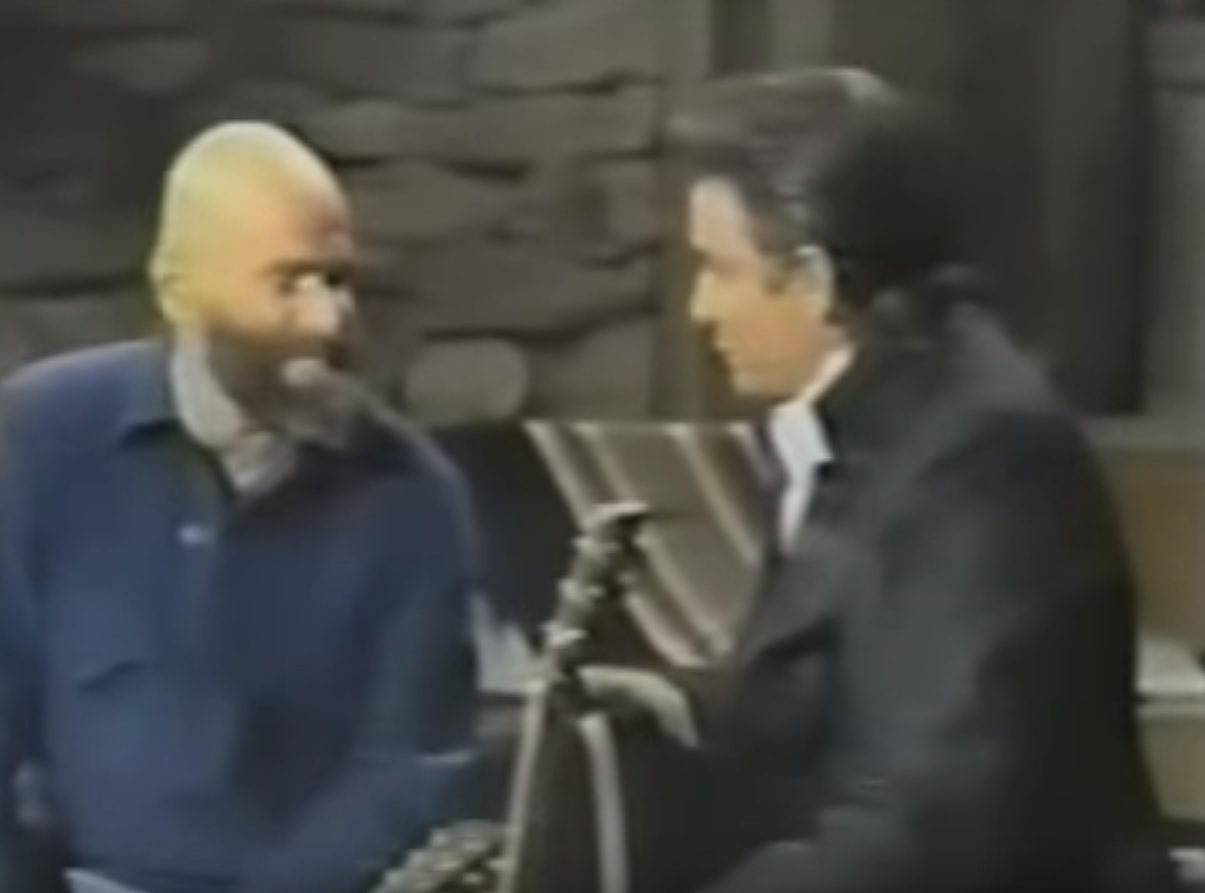
Check out this link to watch Cash and Silverstein singing “A Boy Named Sue” together on Johnny Cash’s variety show:
Cash never would have sung Silverstein’s song if not for his wife June. She convinced Cash to take the lyrics Silverstein wrote down for him on the road to California, saying that it would be a great song to play at San Quentin. Cash, however, was hesitant about the idea because he had only just heard the song for the first time the night before, and he wasn’t sure how people would respond to the song. Despite his misgivings, he brought the lyrics along with him, and a few songs into the set (after he had time to build up some courage), he pulled out the lyrics to “A Boy Named Sue.” And what ensued was an iconic moment.
Here’s an audio recording of Cash performing the song for the first time at San Quentin Prison:
All of the laughs, mess ups, and other such inflections that are clearly heard in Cash’s version of the song are all completely genuine because he is really reading and understanding the lyrics as a performance for the first time. He is truly playing off of the reaction of the crowd and of his band (which was also performing the song for the first time) in order to figure out how to best recount and sing this tale. It is the genuine nature of the song that warrants it all of its accolades – and today it’s a true classic.
Silverstein would also win a Grammy for “Best Country Song” with this song, and later in 1978, he returned to the topic of that boy named Sue, but this time telling the tale from the father’s perspective. And of course, that song was called “The Father of a Boy Named Sue”!
Summer Apostol interned at the Birthplace of Country Music in fall 2017; she is studying history and sociology at Emory & Henry College.
Sometimes it ain’t easy living with a musician. Amps and instruments are your furniture. There are long, late nights of waiting at home or holding up a bar stool while he/she is out practicing with the band or playing a gig. Music will always be their first love, so you’re always a little jealous when it takes time away from you. Though, of course, there is also the bonus of strangers telling you how awesome your musician is – which is actually pretty cool. And I can attest to all of the above because I am Chuck Tipton’s kid.
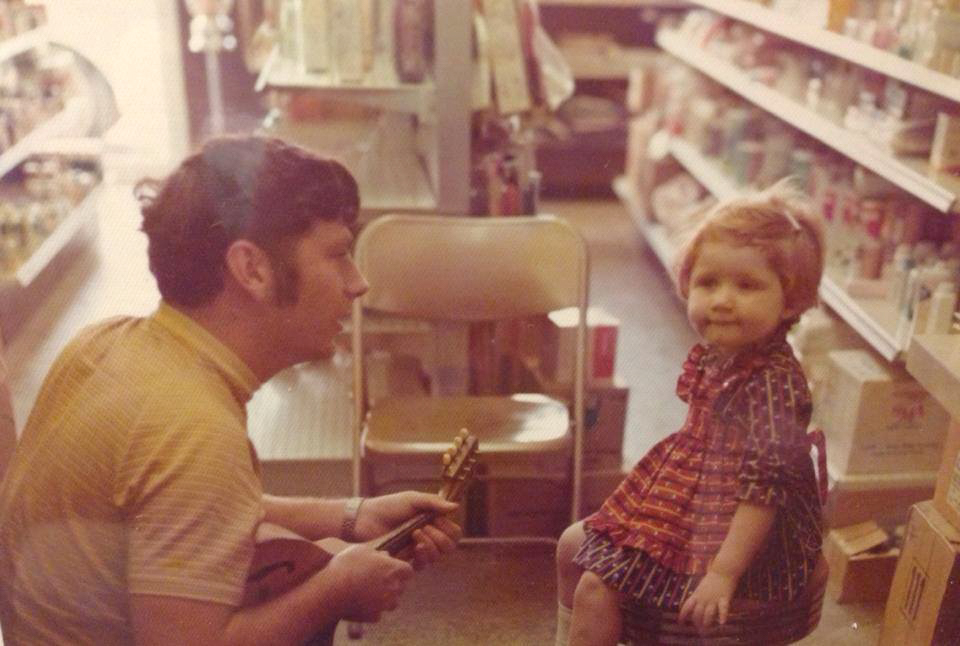
Dad and me at a jam session at Doc Morgan’s Pharmacy in Bristol, formerly located at 101 Memorial Drive, circa 1973. I look like I need a nap. Photograph courtesy Chuck Tipton
Growing up, the duality of Dad’s daytime profession as a sought-after commercial videographer/photographer was only slightly eclipsed by his nighttime side-hustle as a renowned guitarist, studio musician, and luthier. (For those who don’t know, a luthier is a maker of stringed instruments.) On any given day I am blessed to receive accolades for my Dad’s work from people who know him from both worlds, so to see him honored by having two of his Tipton Custom Guitars on display in the current special exhibit at the Birthplace of Country Music Museum – The Luthier’s Craft: Instrument Making Traditions of the Blue Ridge – alongside some of the best instrument makers in our region means a great deal to me.
Sometime in the late 1980s Dad declared: “If I can’t fix my own guitar, then I shouldn’t play one!” So he read everything he could get his hands on about the craft, converted my parents’ garage into a workshop, and never sent another guitar off for repair again. Soon he was doing repairs for friends and taking in work from local music stores. Around that time he also started building guitars, both acoustic and electric, and electric basses as well. Dad is among the elite few to achieve certification from C. F. Martin & Co. to service their guitars; he is also an authorized Fender repair technician. (And by the way, he does an awesome Tele replica!)
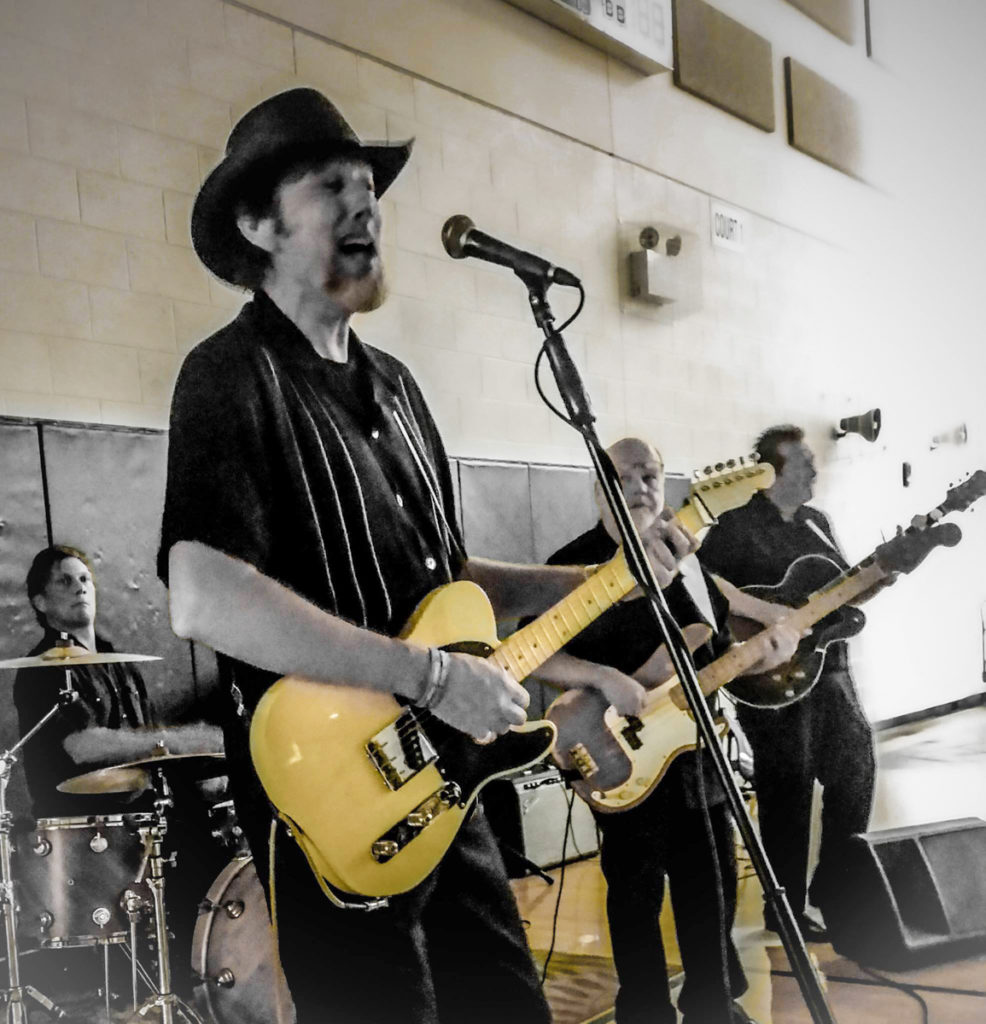
Lightnin’ Charlie playing his Tipton Custom electric, a replica of a Telecaster. Photograph courtesy Lightnin’ Charlie Real
Dad’s expertise has brought some wonderful guitars into his workshop over the years. Chad Weaver, a family friend, was a local musician who moved on to work for many years as Brad Paisley’s guitar tech. Chad once trusted Dad to do some work on Brad’s famous 1968 Fender Pink Paisley Telecaster. Dale Jett, grandson of A. P. and Sara Carter, is another family friend and a customer of Dad’s. Dale inherited A. P.’s 1935 C. F. Martin & Co. 000-28 and has brought it over to Dad’s shop for work in the past. Dad loves working on instruments that have some history, and A. P.’s Martin was put on display and included in the programming for The Carter Family: Lives and Legacies, the first special exhibit curated by the Birthplace of Country Music Museum back in 2014.
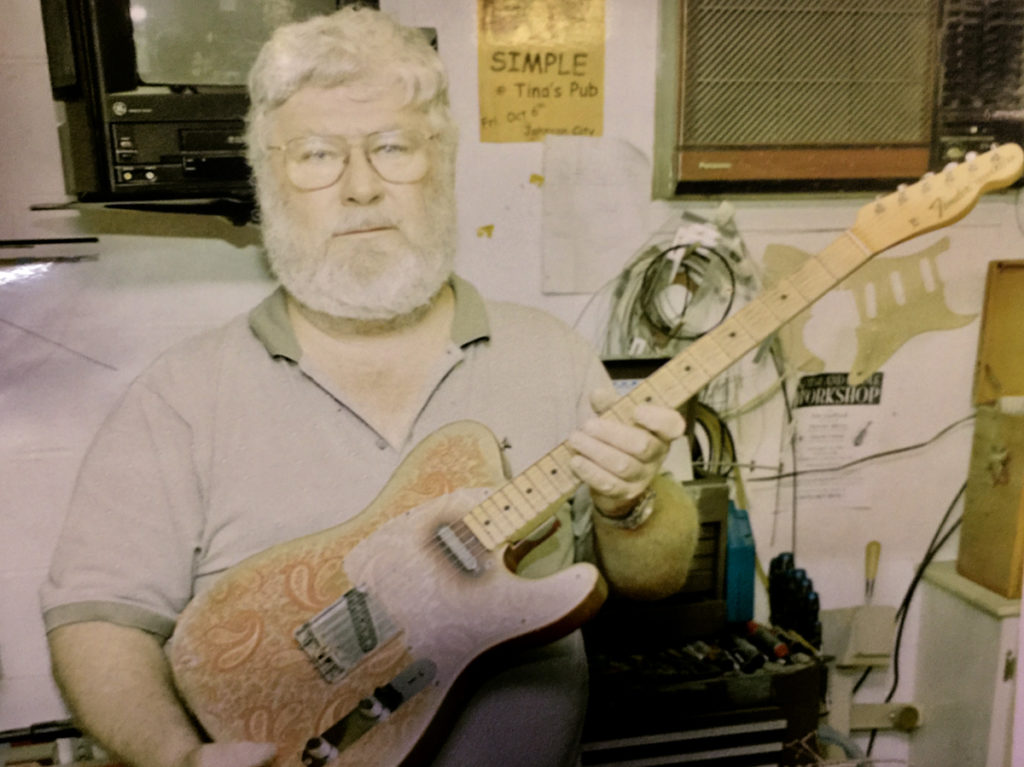
Chuck Tipton in his shop holding Brad Paisley’s 1968 Tele, nicknamed “Pink.” Photograph courtesy Chuck Tipton
Musician Webb Wilder has made a stop or two in Dad’s workshop, and country music singer/songwriter Terri Clark owns an electric Tipton Custom Guitar, as does award-winning blues guitarist Deborah Coleman. And both Clark and Coleman listed Tipton Custom Guitars in their album liner notes – Clark’s Pain to Kill and Coleman’s Soft Place to Fall.
Dad pictured with country artist Terri Clark (left); Tom Comet, George Bradfute, and Webb Wilder (right). Photographs courtesy Chuck Tipton
Dad is also a studio musician, and I’ve been told that Dad has likely a thousand album credits to his name. A thousand! He learned to play by ear at a very young age, and he’s played on a ton of records, primarily gospel and country. He once told me that he had to teach himself how to read and write music so he could lead recording sessions – whatever that entails. Sadly, the availability and affordability of DIY recording technology has rendered recording studios across the country an endangered species.
Dad doesn’t do much, if any, studio work these days, and a few of the shops Dad recorded in have either changed hands or no longer exist. He did a lot of work for Joe Deaton, owner of Tandem Records in Bristol, Virginia, in the studio that became Classic Recording Studio when Deaton retired. I remember napping in a chair while Dad laid down tracks during a marathon recording session there. Thankfully Classic is still in operation, though it has changed hands a few times.
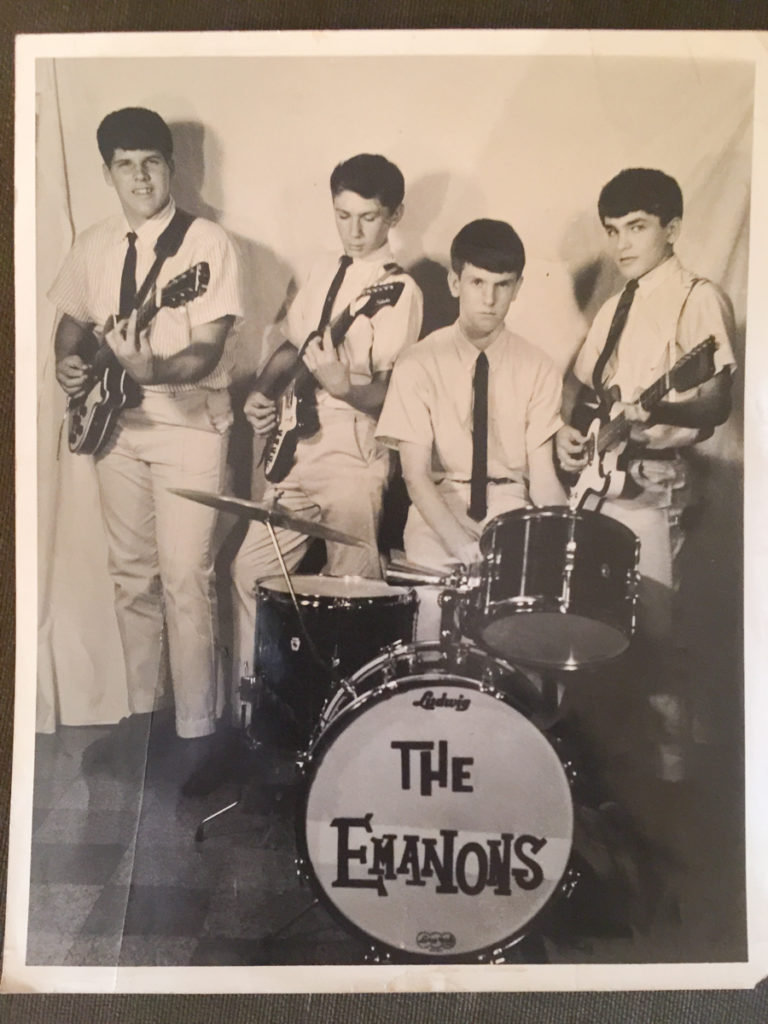
While Dad was a studio musician for years, he got his start in high school with his first band The Emanons (no name spelled backwards). Band members Doug Hale, Chuck, Jerry Linberger, and Mike Peters are pictured here, left to right. Photograph courtesy Chuck Tipton
I also recall my brother Matt and I playing with the gooey chunks of vinyl that had dripped to the floor from the old record press they had at Tri-State Recording Studio in Kingsport, Tennessee. Tri-State no longer exists, but I did find them listed on Discogs.com, along with a number of records the company produced on their label. Lasting Sounds is another local studio that Dad spent a lot of time in over the years.
I was usually the first person to grab the phone when it rang in our house, and Dad got lots of calls from people like Charlie Maggard of Maggard Sound Studios and Joe Morrell of Morrell Music. They were always very nice to me and sometimes made small talk while we waited for Dad to pick up. I didn’t think much of it then, but looking back I see what a big chunk of this area’s music history I was witnessing without even realizing how significant it was. Sadly, neither Charlie nor Joe is still with us, but those men left a great legacy to the music culture of this region. Thinking about it now, perhaps some of these studios and their owners deserve blog posts of their own in the future!
The late, great Charlie Maggard at his recording studio, Maggard Sound, Inc. Photograph courtesy Chuck Tipton
From music to camera work, my Dad has maintained the ability to eke out a living through his hobbies, and he is always finding a way to enjoy them too. Last year he even built a one-inch scale model steam traction engine that actually works! The truth is I’ve never known anyone with more ingenuity and determination. From his eye for lighting and shot composition to his keen ear for music, every skill Chuck Tipton has gained has been self-taught. I only feel shortchanged by the fact that I inherited ZERO of his genetic guitar genius or concentration; my younger brother got all that – he’s an amazing picker in his own right.
Dad is a man of few words and tends to shy away from the spotlight. He rarely talks about his accomplishments, so I didn’t appreciate the full scope of his work until I was older. And at the opening reception for TheLuthier’s Craft special exhibit, I noticed the other luthiers who were there had the same quiet nature as my Dad until you got them talking about their work. I suppose they feel most at ease in the solitude of their workshops as opposed to big parties in their honor – which may explain why none of them were smiling in the photo I took at the reception!
Luthiers Chuck Tipton, Randal Eller, and Kevin Fore at the opening reception for The Luthier’s Craft. Photograph courtesy Charlene Tipton Baker
Rob Nicar and Doug Sims are the proud owners of the two Tipton Custom Guitars displayed in TheLuthier’s Craft special exhibit. One of them – called “Redneck” – is the first guitar he ever built from scratch. When asked by the museum if they would loan the instruments for a while, both were anxious to know how long they would have to part with them. Doug said his only regret about having his guitar behind glass is that people won’t be able to hear how good Dad’s guitar sounds!
Dad in front of the display holding his Tipton Custom Guitars with Doug Sims, the owner of “Redneck.”
To say that I’m proud of my Dad would be an understatement. And though he would never say so, I know that being part of this special exhibit at the museum means a great deal to him. It’s the culmination of all the hard work he has done over the past three decades. He told me he has built around 90 instruments since he built his first guitar from a kit, though he doesn’t own a single one. He doesn’t do builds anymore – he says the repair work at the shop keeps him too busy – but I’m hoping being in this exhibit may inspire him to build at least one more for himself so that someday his grandkids will have a piece of this wonderful legacy, made with his own hands!
The Luthier’s Craft exhibit, produced by the Mount Airy Museum of Regional History, is open through March 4, 2018, in our Special Exhibits Gallery. Be sure to take the time to come see Chuck Tipton’s guitars, along with instruments from a host of wonderful local and regional luthiers!
In January 1949, after several years performing on the radio, Bristol native Tennessee Ernie Ford was signed to a recording contract with Capitol Records. Over the course of only a few years, Ford placed a dozen Top 20 hits on the country chart while simultaneously scoring half a dozen Top 20 pop hits, clearly demonstrating his broad appeal to disc jockeys and fans alike. A trailblazer within the industry, Ford recorded 66 singles, including the hit for which he was most well known, “Sixteen Tons,” and 88 albums, selling an estimated 90 million copies and influencing countless artists throughout his career.
Ford had a special place in his heart for Christmas music, and within the many genres that he made his own – from “boogie” to gospel – he recorded several albums celebrating the festive season, including The Star Carol (1958), The Story of Christmas (1963), Sing We Now of Christmas (1965), O Come All Ye Faithful (1968), and C-H-R-I-S-T-M-A-S (1971).
And so to mark the holidays, we thought we’d share a few Christmas-themed Tennessee Ernie Ford memories and objects from our collections to get our readers in the spirit of the season!
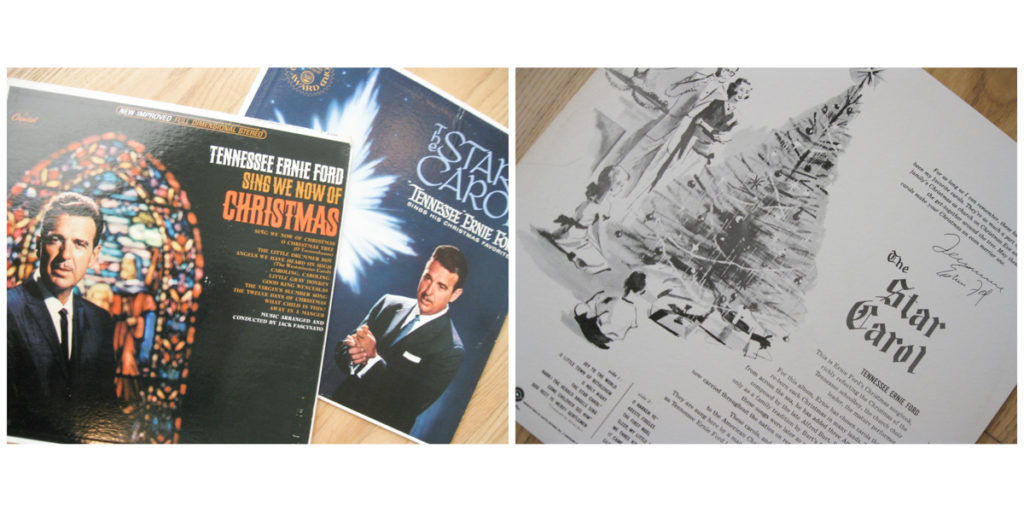
We have several of Tennessee Ernie Ford’s records in our museum collections, including the two seen here. The holiday songs on these albums are mostly religious ones, such as “O Holy Night” and “Joy to the World,” but also include simply festive selections, such as “The Twelve Days of Christmas.”
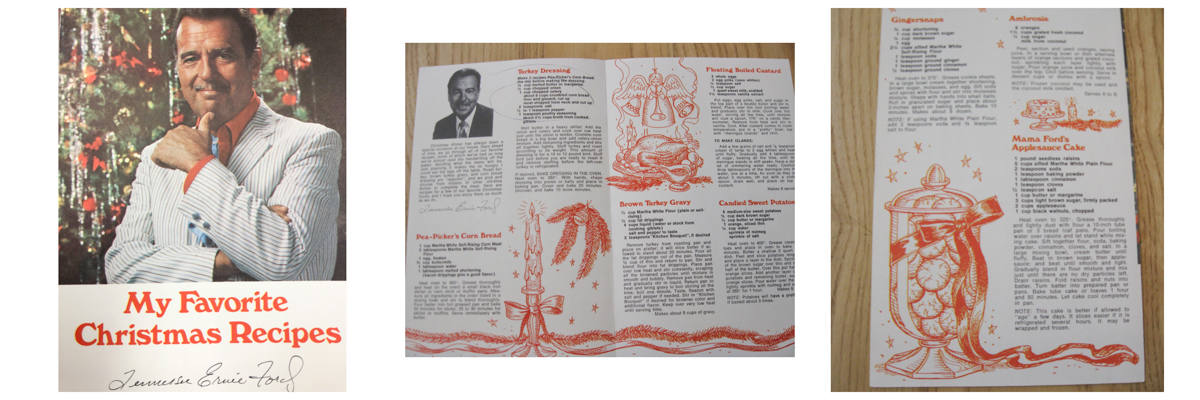
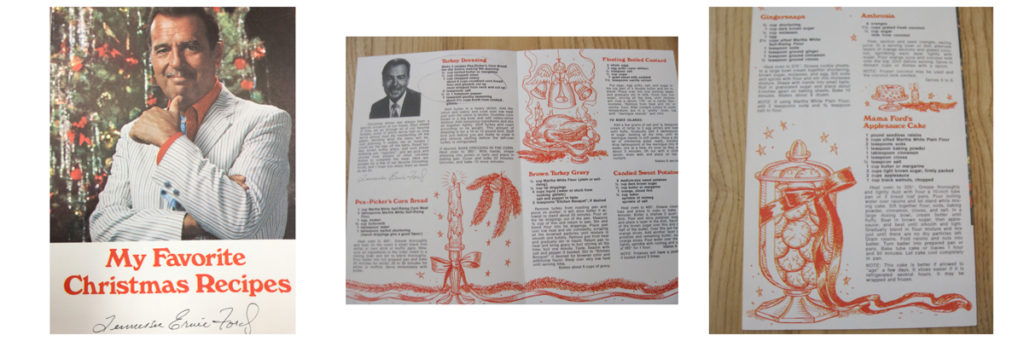
This pamphlet, now in the museum’s collections, shared some of Tennessee Ernie Ford’s favorite Christmas recipes, including his mother’s famous applesauce cake, so loved by the star that when he visited his hometown of Bristol at the height of his fame, the press took a photograph of him having the first slice of the cake his mother had made for his return! Inside the pamphlet, Ford notes that his family have pored over and made some of their favorite recipes so many times that they’ve “almost read the handwriting off the paper”!
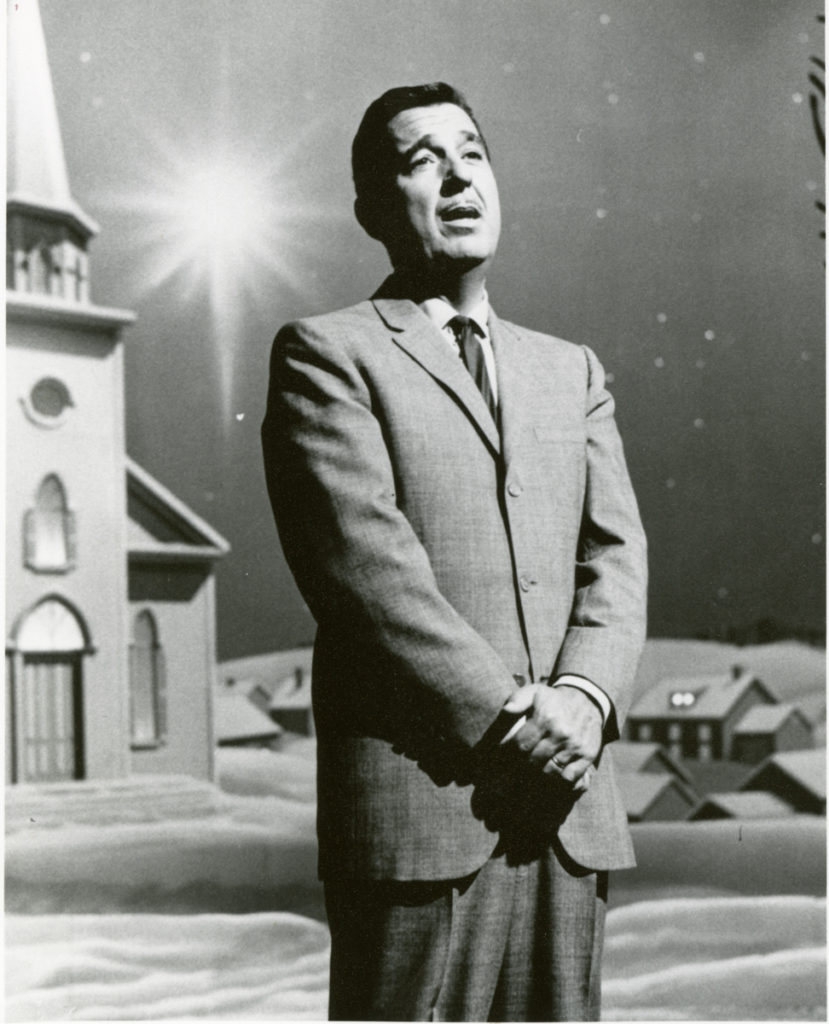
Ford is seen here on the 1963 NBC special The Story of Christmas, one of many Christmas shows he did during his long career. This holiday special, sponsored by General Mills and hosted by Ford, included him performing numerous musical numbers, vocal arrangements of classic carols by the Roger Wagner Chorale and Orchestra, and a wonderful animated segment that was created by Eyvind Earle, the renowned animation artist who worked on Walt Disney’s Sleeping Beauty and Fantasia. It was also the first network television special to be broadcast without commercials! When the special aired, it was hugely popular, with entertainment trade magazine Daily Variety saying: “The tape should be preserved and played back for years on end. Its brilliance will never be dimmed or excelled.”
Last but certainly not least, we wanted to share this wonderful – and hilarious – clip of Tennessee Ernie Ford performing the African-American spiritual “Children Go Where I Send Thee,” a cumulative song whose lyrics reference the Christmas story in the line “One for the little bitty baby born in Bethlehem.” Watch the clip all the way through to see visual evidence of the W. C. Fields’ mantra about the challenge of working with children and animals…and how hard Ford works to not crack up during his singing! (By the way, the kid sitting beside Ford who steals the show? His youngest son Brion!)
And with that, we wish you a very merry Tennessee (Ernie Ford) Christmas!
Emily Robinson is the Collections Manager and Rene Rodgers is the Head Curator at the Birthplace of Country Music Museum.