Museum Archives - Page 28 of 34 - The Birthplace of Country Music
Listen
Play
Loading station info...

Remembering Georgia Warren

The 1927 Bristol Sessions story is one of developing technology, star singers, and business acumen. It’s also a very personal story for the descendants of those artists who answered Ralph Peer’s call for musicians and recorded in that makeshift studio in the Taylor-Christian Hat Company here in Bristol.

One of those Bristol Sessions artists – Georgia Warren – holds a particularly special place in our story as she was here with us at the museum’s Grand Opening in August 2014, the last surviving musician from those historic recordings. When she came to Bristol in 1927, she was only 12 years old, the daughter of George Massengill, who was the leader of a congregational choir from Bluff City, Tennessee. Known as the Tennessee Mountaineers, they recorded two songs at the Bristol Sessions: “Shall We Gather at the River” and “Standing on the Promises.”
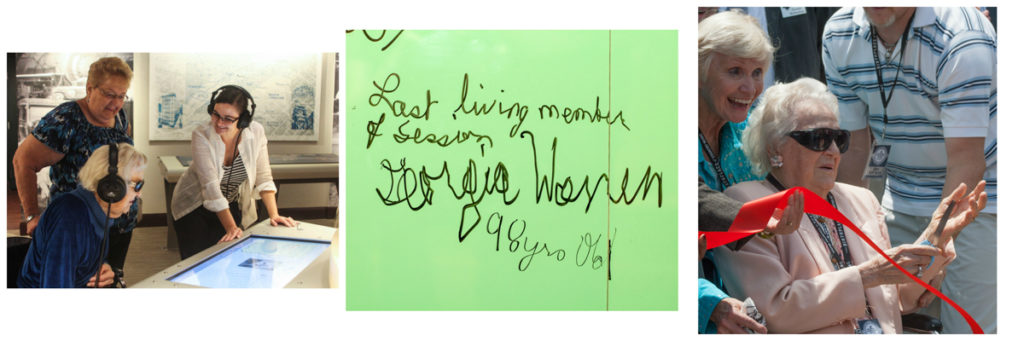
Left pic: Georgia Warren at museum interactive wearing headphones with daughter Nancy and museum director Jessica Turner; center pic: Georgia Warren's signing of Green Board, reading: Last living member of Sessions, Georgia Warren, 98 yrs old; right pic: Georgia Warren cutting Grand Opening ribbon in front of museum with Roni Stoneman behind her.
Georgia Warren, seen here with daughter Nancy Taylor, got a sneak peek of the museum before it opened – here she is listening to the clip of the Tennessee Mountaineers at the 1927 Bristol Sessions (left). Georgia also came to the museum’s Grand Opening on August 1, 2014, signing our Green Board in the permanent exhibits (center) and cutting the Grand Opening ribbon with Roni Stoneman, daughter of Ernest and Hattie Stoneman (right). © Birthplace of Country Music

Georgia Warren passed away on March 6, 2016 at the age of 100. And so today, the anniversary of that date, we want to remember her and her part in our story. Because we actually knew Georgia, and know her family, we have had the chance to learn about the things she loved, about her life, about what singing in that dark studio all those years ago meant to her. And we’ve had the chance to learn what Georgia’s place in this history means to her family too.

Some things we learned were surprising – for instance, Georgia played basketball in high school and won MVP in 1934 when her high school team won the local championships. She kept her love for basketball in later life as a huge fan of the Lady Vols and Pat Summitt, often saying that Pat should have been the men’s coach at University of Tennessee too. (Something probably quite a few Pat Summitt fans have said in the past!)
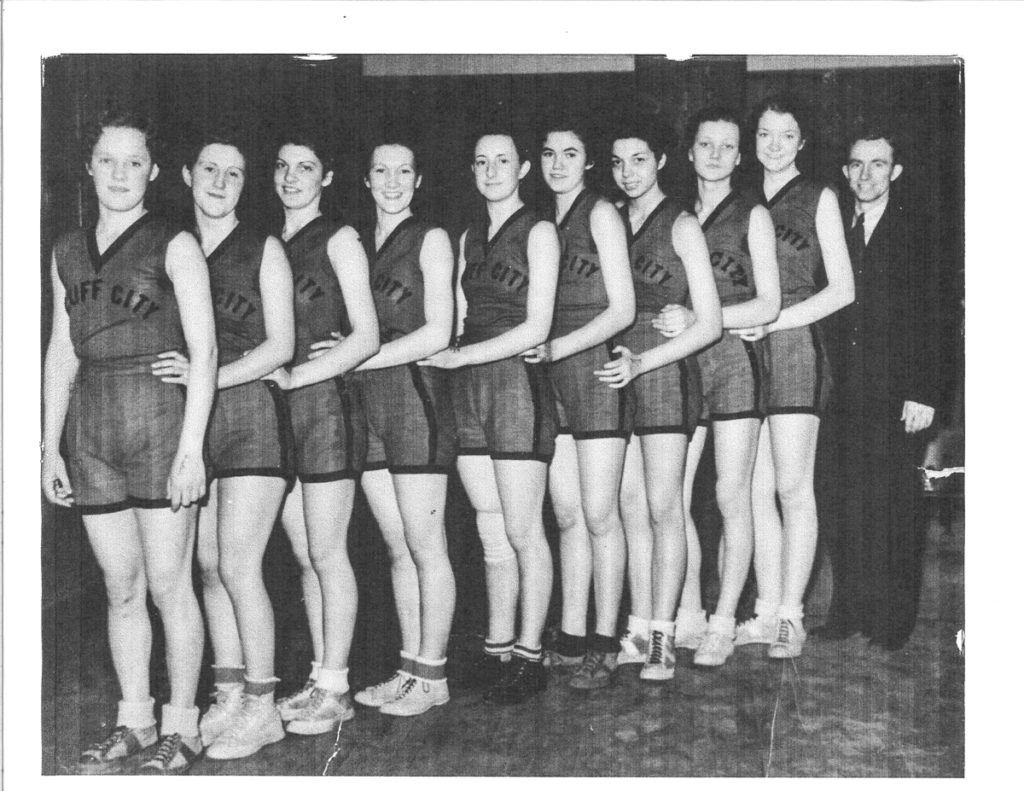
Black and white photo of girls' basketball team -- 9 players and 1 coach
Georgia as a senior (first on the left) with her winning high school basketball team. Photograph courtesy of Nancy Taylor

Others – like her green thumb – made more sense, knowing that Georgia grew up on a farm in rural Tennessee. After marrying her husband Paul and living in California for a while, they moved back to Tennessee to build a farm on a parcel of land – with Georgia right there in the thick of it driving the tractor, baling hay, planting tobacco, helping with the animals, and growing vegetables. Her daughter Nancy Taylor remembers sitting under a tree in the yard of their house, breaking beans with her mother, and how her mother did a lot of canning of fruit and vegetables, stocking their pantry with row upon row of Mason jars filled with food. Georgia was also a keen flower gardener, filling her yard with a bounty of beautiful flowers and especially loving the first crocuses as they bloomed each year.
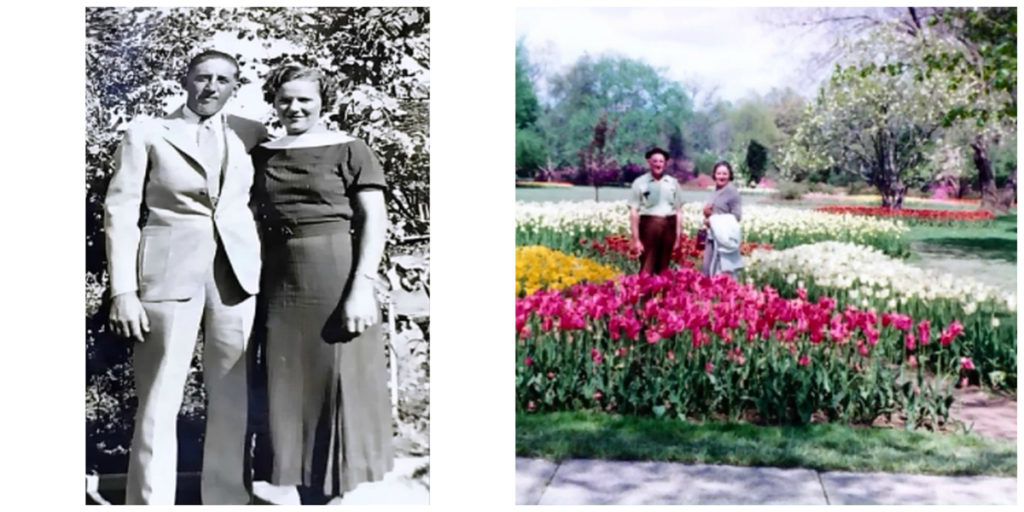
Left pic: B&W photograph of Paul and Georgia Warren; right pic: Paul and Georgia Warren standing in a flower bed.
Georgia with husband Paul (left) and enjoying the flowers at a garden visit (right). Photographs courtesy of Nancy Taylor

Even though Georgia’s appearance on the two Tennessee Mountaineers sides from the Bristol Sessions was her one and only professional performance, music and singing was still a big part of her life. For many years, she continued to sing (alto) in the First Christian Church in Bluff City, Tennessee, along with her parents and her husband (tenor), while Nancy’s sister played piano and organ. Georgia’s father George Massengill was one of the originators of this church, though before it was made of brick and mortar the congregation often gathered on Massengill’s front porch to sing, and Nancy remembers her grandfather saying that people would yell out song requests down the holler because they could hear them from afar. The family also used to sing together just for fun – as Nancy tells us, “We’d have a big time singing different songs,” from Elvis’s “Love Me Tender” to singing along with the record from the Sessions.

A connection to the music she sang in 1927 stayed strong through the years, and when Georgia was ailing toward the end of her life, the hospice minister would sing “Shall We Gather at the River” with her at home – apparently she knew it by heart, never missing a note or a word of the song. And at her funeral a couple of years ago, the Tennessee Mountaineer’s 1927 rendition of “Shall We Gather at the River” was played in the funeral home chapel with everyone singing together to honor Georgia.

Nancy tells us that Georgia felt enormous pride from the part she played in the 1927 Bristol Sessions recordings, and that the recognition of this history was important to her. She didn’t want to have a fuss made over her, but she enjoyed telling people about climbing the dark stairs to the put-together studio, seeing Peer and the engineers, and being a bit scared by the whole set up, staying close to her father but still singing strong and true. And the best part – seeing Jimmie Rodgers, who recorded the previous day, and thinking he was quite handsome!
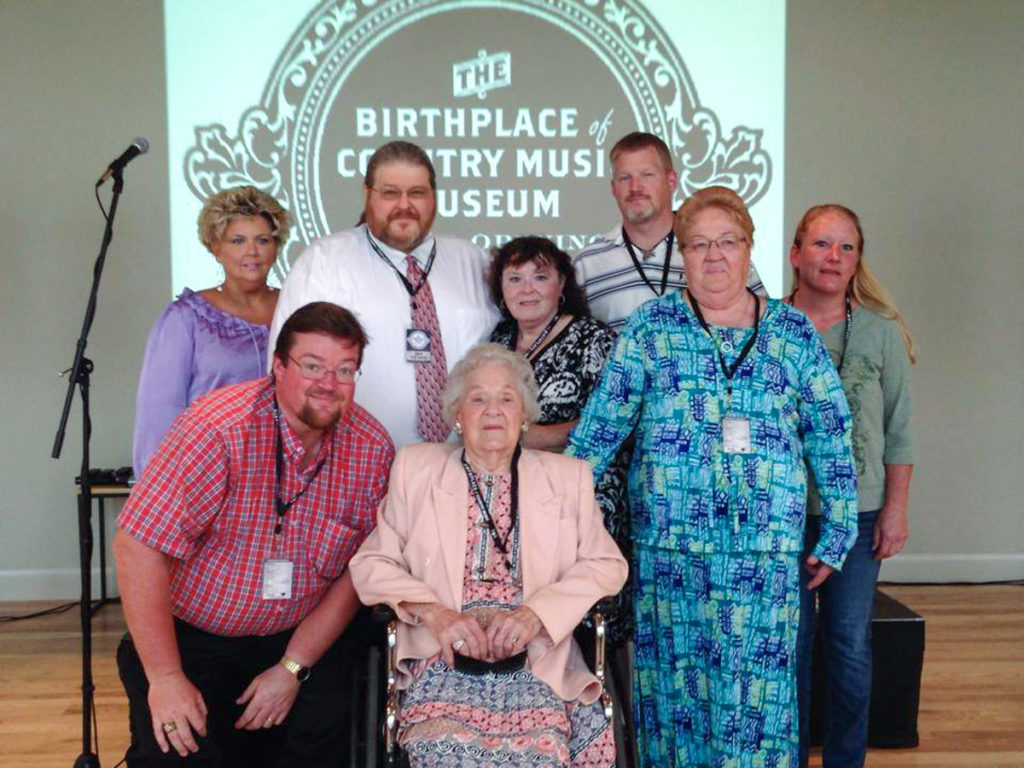
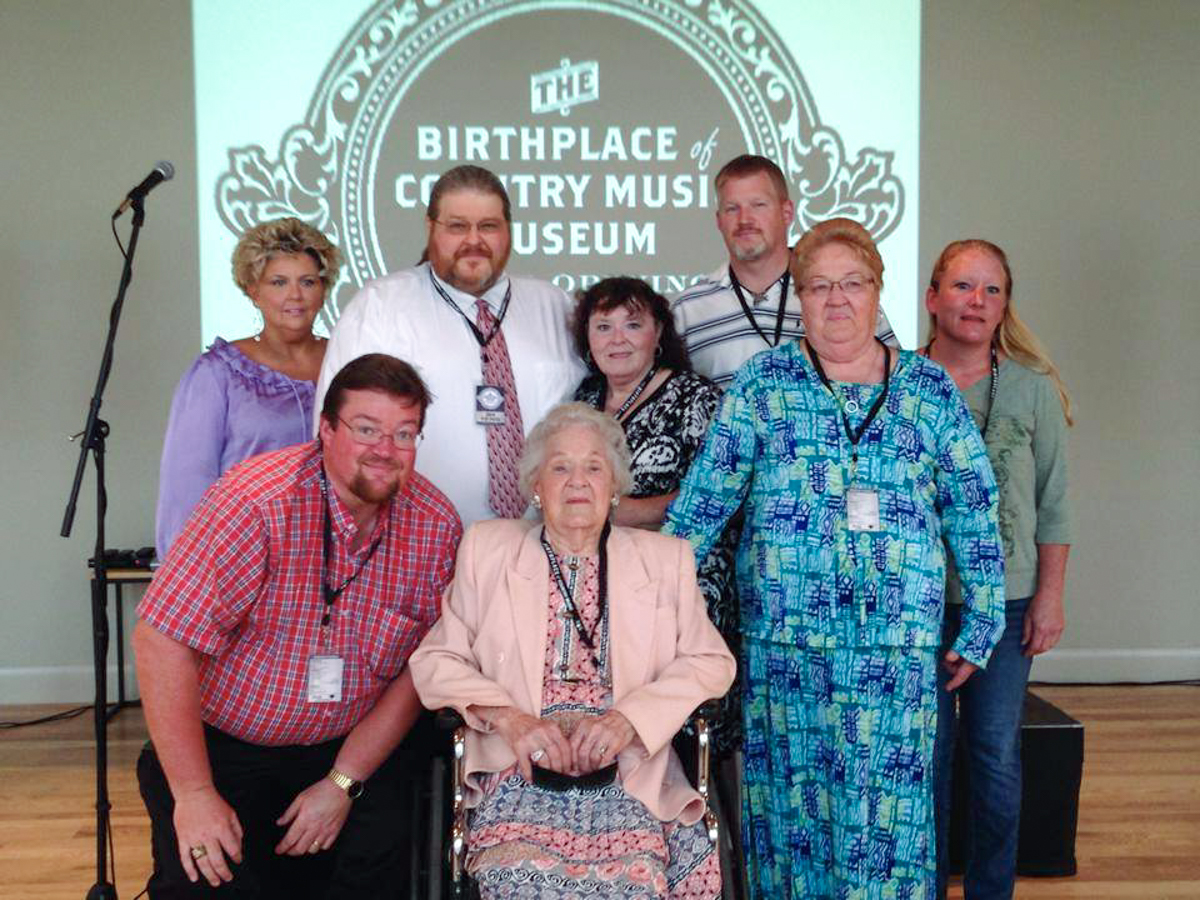
Georgia Warren sits central, surrounded by her daughter Nancy and several other family members. Behind them is the Grand Opening Birthplace of Country Music Museum logo.
Georgia with her family at the museum’s Grand Opening on August 1, 2014. © Birthplace of Country Music

Nancy notes that the songs the Tennessee Mountaineers sang at the Sessions were old standards, not really sung much anymore but the kind of music she and her mother were raised on. And Georgia’s story underlines one of the fundamental truths about the Sessions recordings: many of the songs recorded were everyday sacred family songs, songs sung in church and at home, and most of the artists were working people who went back to their everyday lives after the recordings. And that’s part of what makes them special.

When asked what her mother’s place in the history of the 1927 Bristol Sessions means to her, Nancy said, “Even though she’s gone, I don’t want them to forget her.” There’s no fear of that here at the Birthplace of Country Music Museum – Georgia’s story is our story and the personal connection makes our appreciation of this history richer.

African American History in a Country Music Museum? Exhibits and Programs Explore the Connections

Each year February is highlighted as Black History Month. This call to recognize the central role of African Americans in our history was first put forward by Dr. Carter Goodwin Woodson in 1926. As a blog post on the National Museum of American History website notes: “When mainstream history either largely ignored or debased the Black presence in the American narrative, Dr. Woodson labored to inject a fair portrayal of African Americans into the national record.”

At first glance, you might not think that the history of early country music intersects a great deal with African American history. However, the intersections exist and are significant, and we’ve explored some of these in the Birthplace of Country Music Museum – for example, in the development of genre, with musicians who had impact on early commercial country music, and of course, through the African origins of the banjo, an instrument now indelibly linked to country and bluegrass music. And there has been a continuing presence of African Americans in country music beyond the early commercial years, for instance with artists like DeFord Bailey, Charley Pride, Linda Martell, and the celebration of black stringband music by the Carolina Chocolate Drops. Books like Diane Pecknold’s Hidden in the Mix: The African American Presence in Country Music and Francesca Royster’s Black Country Music: Listening for Revolutions explore these connections more deeply.

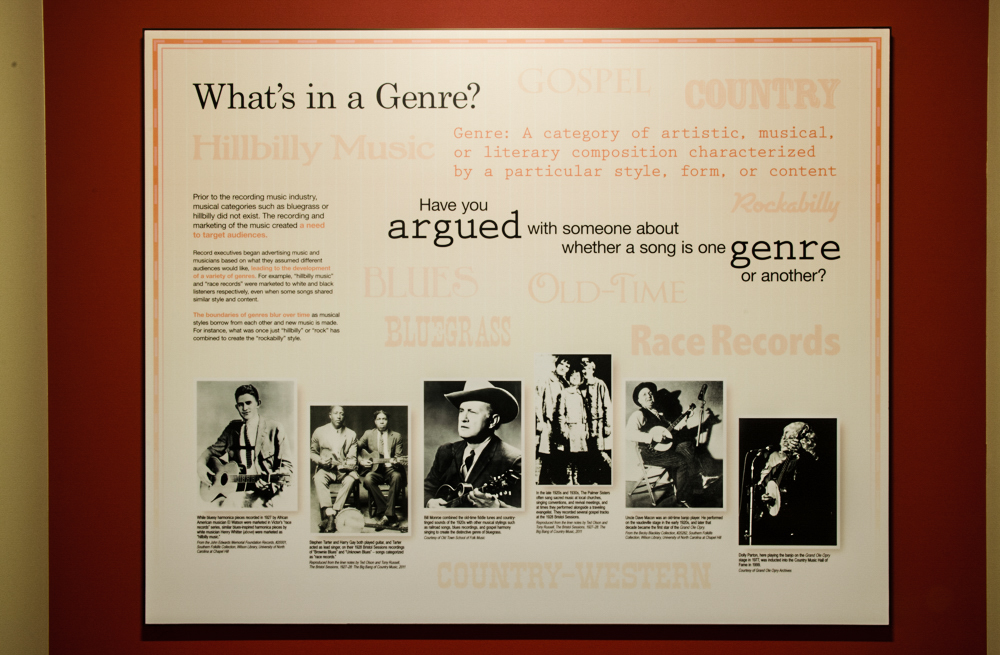
Prior to the recording music industry, musical categories such as blues or rock or country did not really exist. However, the recording and marketing of music created a need to target audiences in order to make money, and so record executives began advertising music and musicians based on what they assumed different audiences would like, leading to the development of a variety of genres.

Detail from Decca record sleeve listing several genre types such as Hill Billy, Race, Sepia, Mexican, Irish, and Scotch, along with their price.
This Decca record sleeve in the museum collections includes a list of various genres and the price of records within each series. © Birthplace of Country Music; gift of Betty Lou Dean and Roger Allen Dean

One of these genres was known as “race records,” commercial recordings that were aimed specifically at African American audiences. Mamie Smith’s “Crazy Blues,” produced by OKeh Records in 1920, was one of the first recordings in this new genre. Selling around 8,000 copies per week over several months, the popularity of “Crazy Blues” proved to record executives that there was a market and an audience for “race records.” Companies began developing catalogues aimed at these audiences, and they often hired black talent scouts and agents to find musicians to record. Much of these early recordings were focused on blues artists.

Despite the seeming segregation of audiences – with black audiences targeted through “race records” and “hillbilly records” marketed to white audiences – the lines between genres were often crossed with musicians, styles, and songs from each influencing the other. And, of course, just because a record was marketed to a particular audience doesn’t mean that other audiences didn’t listen to and buy that record.

Photograph of "genre" panel in the museum exhibits with listing of different genres, descriptive text, and several images illustrating artists from these genres.
The museum panel on genre explores some of the different types of music that have been marketed to different audiences, including “hillbilly records” and “race records.” © Birthplace of Country Music; photographer: Haley Hensley

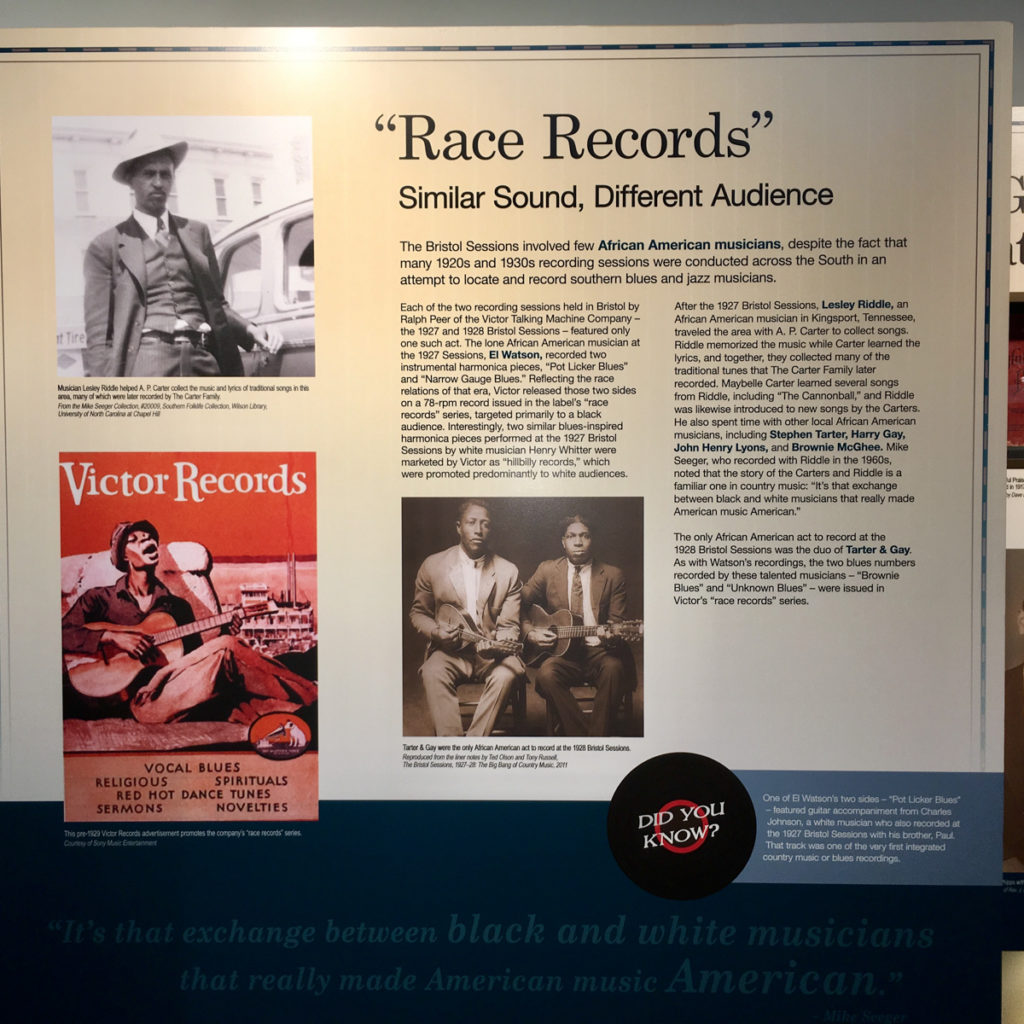
The Bristol Sessions involved few African American musicians. Each of the two Bristol recording sessions held by Ralph Peer of the Victor Talking Machine Company – the 1927 and 1928 Bristol Sessions – featured only one such act. At the 1927 Sessions, El Watson recorded two instrumental harmonica pieces, “Pot Licker Blues” and “Narrow Gauge Blues.” The fairly arbitrary categorization of genre is reflected in the marketing of Watson’s recordings – Victor released Watson’s two sides in the label’s “race records” series, while two similar blues-inspired harmonica pieces by white musician Henry Whitter were marketed as “hillbilly records” and promoted predominantly to white audiences. Watson also played the bones on some Johnson Brothers (a white duo) recordings at the 1927 Bristol Sessions, and Charles Johnson played guitar on Watson’s sides; these are some of the earliest integrated recordings of country and blues music. There is little information about El Watson to be found in the historical record, but we do know that Peer was very much impressed by Watson’s sound and musical skills, inviting him to record four more songs with Victor in New York: “Fox Chase,” “Sweet Bunch of Daisies,” “Bay Rum Blues,” and “One Sock Blues.” It’s also likely that he recorded with Columbia Records in Johnson City, Tennessee, in 1928.

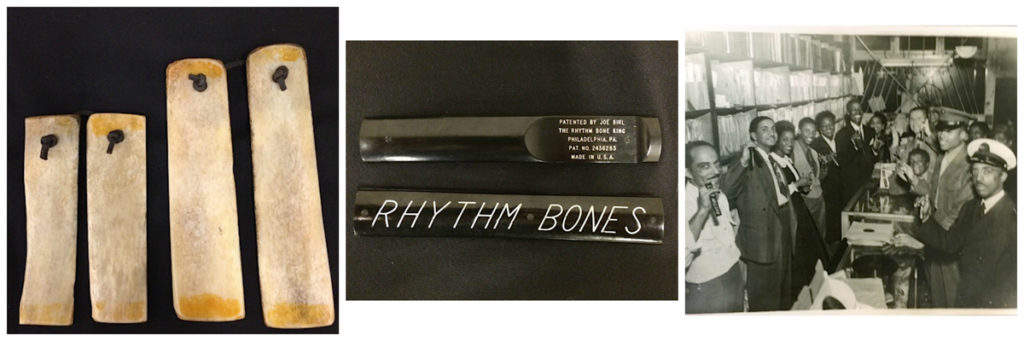
Left: Two sets of historic bones; center, a set of manufactured bones; right, a photograph of a group of customers in a record shop holding manufactured bones.
In 2015 musician Dom Flemons, cofounder of The Carolina Chocolate Drops and known as “The American Songster,” donated to the museum two sets of bones (ca. 1927), a set of manufactured bones patented by Joe Birl, “The Rhythm Bone King,” and a photograph of a group of customers in a music shop with their sets of rhythm bones. © Birthplace of Country Music; gift of Dom Flemons

The duo of Tarter & Gay recorded the next year at the 1928 Bristol Sessions. As with Watson’s recordings, the two numbers recorded by these talented musicians – “Brownie Blues” and “Unknown Blues” – were also issued in Victor’s “race records” series. Before they recorded in Bristol, Stephen Tarter and Harry Gay had performed live for white and black audiences at dances, and the style reflected on their Bristol Sessions recordings touches upon ragtime and stringband music, amongst others.

Race records panel in museum, with descriptive text and three images: Lesley Riddle, a Victor race records catalog cover, and Stephen Tarter with his cousin
This panel in the museum explores “race records” – an image of one of the Victor marketing pieces for their “race records” series can be seen here. The photograph to the upper left is of Lesley Riddle; the other photograph had been previously identified as Steven Tarter and Harry Gay, but new information tells us that it might be Tarter with his cousin Carson Anderson. There are no known photographs of El Watson. © Birthplace of Country Music

And then, of course, there’s Lesley Riddle, a hugely influential musician who worked closely with A. P. Carter in his search for songs and music worth playing and turning into hits. And don’t forget: Riddle has also been credited with sharing his style of guitar picking with Maybelle Carter, who built on this learning with the now well known and revered Carter scratch. His significance to the history of early commercial country music cannot be overstated – you can read all about his impact and influence in our blog post here and here.

While Black History Month may be a starting point for talking about African American history in early country music, it is not the stopping point. This is why we have worked to share relevant content within the museum’s permanent exhibits and also to continue the conversation through special exhibits and public programming outside of this one month of the year – for example, the special exhibit We are the Music Makers: Preserving the Soul of American Music in 2016, our display of the Smithsonian poster exhibit A Place for All People, the live simulcast of the opening ceremony for the National Museum of African American History and Culture, a roundtable discussion about the history of the local African American community, and engaging performances by a host of artists. to name a few.

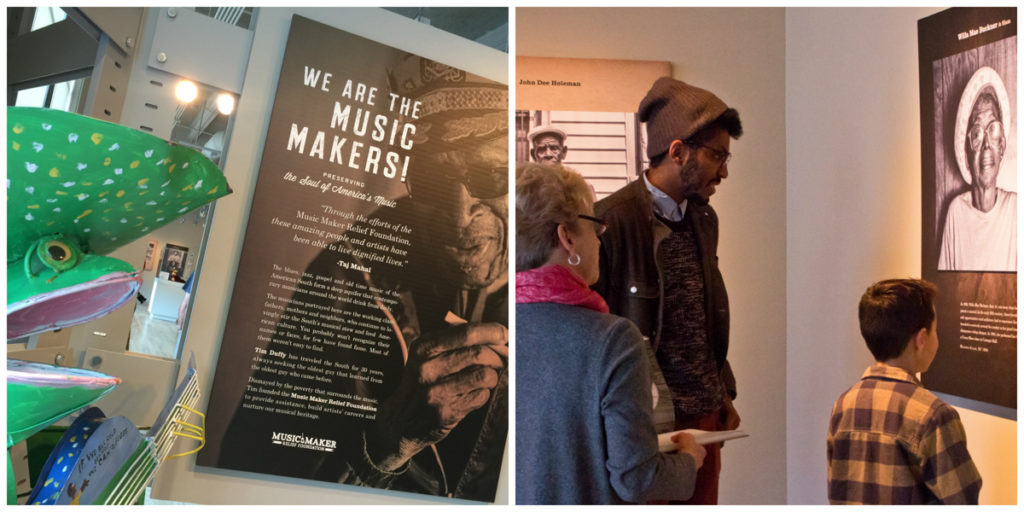
Two photographs of the Music Maker exhibit in the museum's Special Exhibits Gallery; the one to the right shows visitors enjoying the exhibit.
Museum visitors to the We Are the Music Makers exhibit really connected with Music Maker Relief Foundation founder Tim Duffy’s images and stories of southern old-time and blues artists. During the exhibit, the museum also hosted a performance by NEA National Heritage Fellow John Dee Holeman, a Music Maker Piedmont blues guitarist, and we got the chance to interview Dom Flemons about his work with the foundation and why its mission is so important. © Birthplace of Country Music Museum
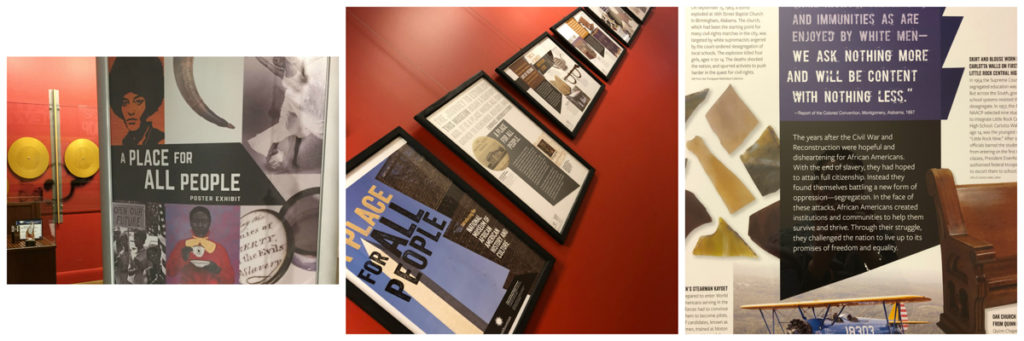
Three shots showing different parts of A Place for All People, a poster exhibit from the Smithsonian.
The A Place for All People poster exhibit – a survey of the African American community’s powerful, deep and lasting contributions to the American story – marked the historic opening of the Smithsonian’s National Museum of African American History. This poster exhibit is now a permanent part of our collection, and we rehung 10 of the posters this January to mark the anniversary of Dr. Martin Luther King’s death. © Birthplace of Country Music
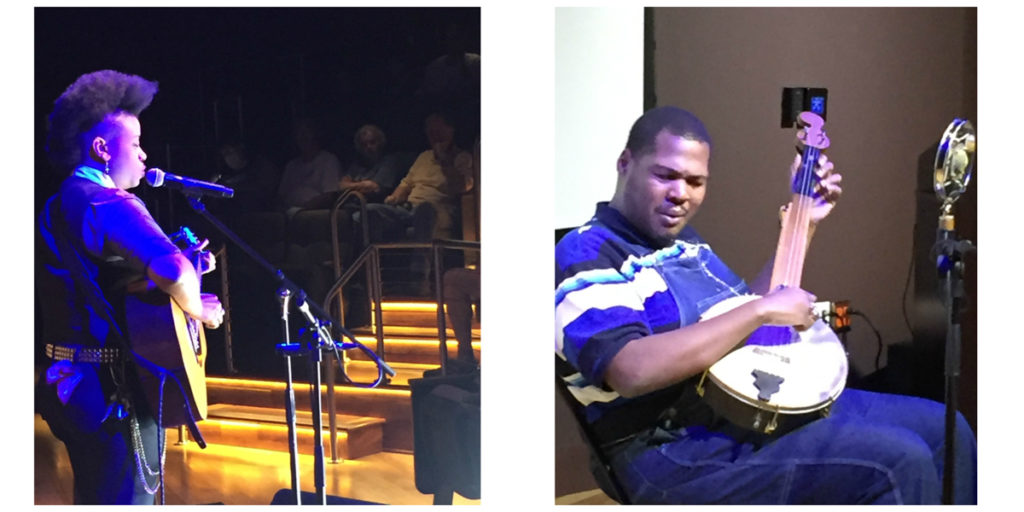
Photographs of Amythyst Kiah and Jerron "Blind Boy" Paxton performing in the museum's Performance Theater.
We held several events as part of our “Lift Every Voice” series, based around a global initiative highlighting organizations co-celebrating the Grand Opening of the National Museum of African American History and Culture. These included a powerful performance by Southern gothic, alt-country blues singer/songwriter Amythyst Kiah, a fan favorite in Bristol, and an academic lecture by Dr. Cece Conway on the African roots of the banjo followed by a concert by Jerron “Blind Boy” Paxton, a multi-instrumentalist who not only shared some amazing music with us but also had everyone in the audience enthralled by his wonderful storytelling and his deep knowledge of the history of his craft. © Birthplace of Country Music

Today there are criticisms aimed at setting aside a month or a week or a day of the year to commemorate important historical subjects – for instance, the question of whether setting aside a designated time to explore those histories means that they aren’t fully integrated into the study and understanding of American history. While in some ways the name of our museum – the Birthplace of Country Music Museum – might seem to narrow our focus, through exhibits, programming, and even collections we have tried to bring together the histories and voices of a variety of musicians and communities in order to underline just how much American music has been built and created from the intersection of different styles, different stories, different artists, and different backgrounds.


Music in the Blood: Norman Edmonds and Jimmy Edmonds

On February 9, 1889, Norman Edmonds was born in Wythe County, Virginia. Edmonds recorded four songs at the 1927 Bristol Sessions, playing fiddle alongside J. P. Nester’s singing and banjo on “Train on the Island,” “Black-Eyed Susie,” John, My Lover,” and “Georgia.” Their version of “Train on the Island” was included on Harry Smith’s Anthology of American Music in 1952.

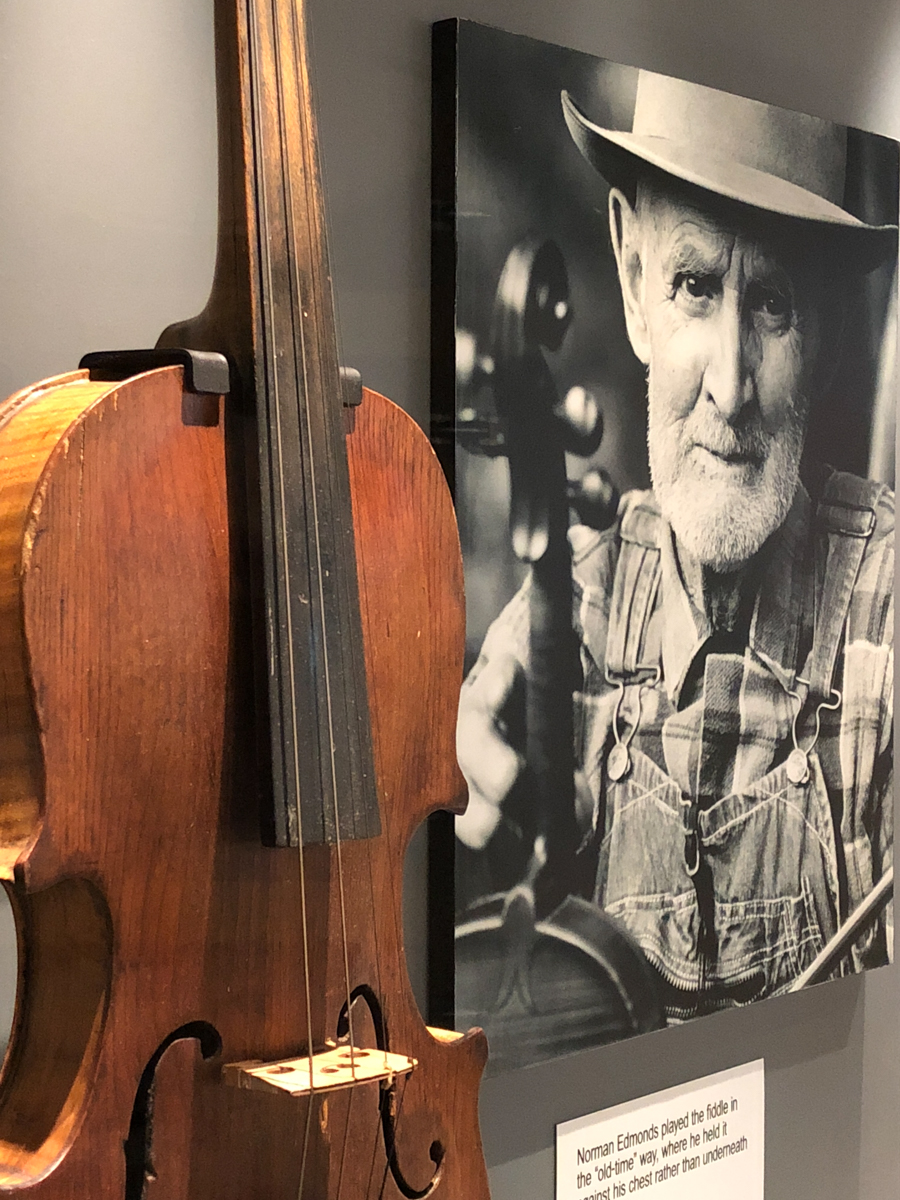
Photograph of museum case displaying an old fiddle and a photograph of Norman Edmonds, holding his fiddle.
The photograph of Norman Edmonds in the museum’s permanent exhibits shows him in later life with his fiddle. The photograph was shared with us by Mark Sanderford. ©Birthplace of Country Music

Only two sides from the Sessions recordings were released (“Train on the Island” and “Black-Eyed Susie”), but Ralph Peer was impressed with their sound, a wonderful throwback to earlier stringbands that were made up of just fiddle and banjo together. Peer invited them up to New York City – all expenses paid – to record further; however, Nester refused to leave his Blue Ridge Mountains home and so a continuation of their partnership “on record” didn’t happen.

Edmonds, who played the fiddle in the “old-time” way, where he held it against his chest rather than underneath his chin, may not have gotten another chance to record in the 1920s and 1930s, but his fame as a fiddler saw him become a local star in his later years. He performed at the Galax Old Fiddler’s Convention (amongst others), played on several LPs made in Galax and also one for independent label Davis Unlimited, and had his very own radio show called The Old Timers.

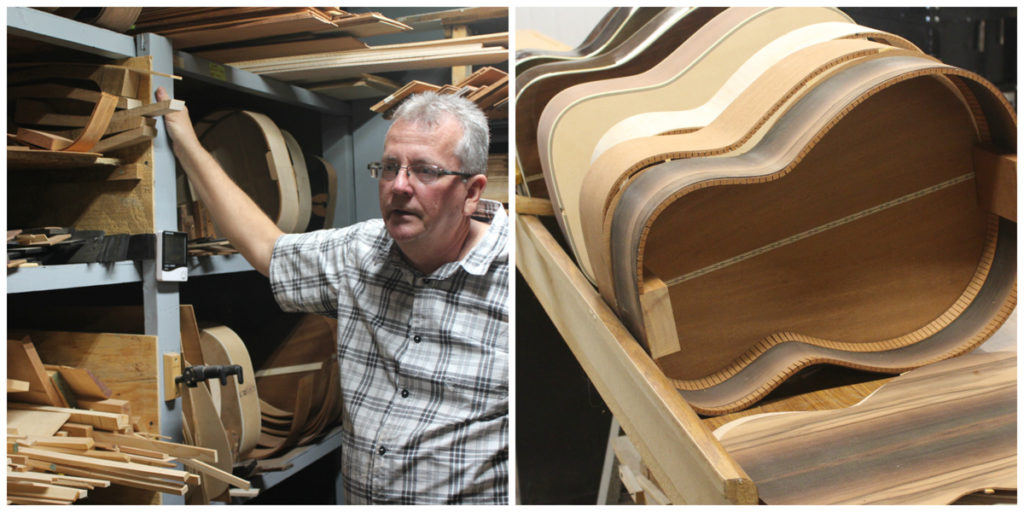
As with so many traditional musicians, whose music and instruments were passed down through the generations, Edmonds learned his playing from his father, who learned it from his father. And today, Edmonds’ grandson Jimmy Edmonds of Galax, Virginia, has also come to music and instrument building the old-fashioned way: through his family. He is a 5th-generation Edmonds fiddle player – he started playing at four years old, picking up other instruments along the way – and his father was a luthier who passed on his skills, tools, and craftsmanship to his son. Jimmy started off helping his father repair instruments and working on finishes, moving on to making his first fiddle under the encouragement of luthiers Wayne Henderson and Gerald Anderson. A busted Wayne Henderson guitar while he worked at the Myrtle Beach Opry led to guitar building.

Left-hand pic shows Jimmy Edmonds standing in his wood storage room and various types of wood on the shelves. The right-hand picture shows several guitar bodies, unfinished, waiting to be fully constructed.
Jimmy Edmonds is seen to the left in the wood storage room at his workshop. This room is filled with a variety of woods used in the different instruments Jimmy builds, from Brazilian rosewood and mahogany to Carpathian spruce and Koa. To the right, several guitar bodies are waiting to be fully constructed. © Birthplace of Country Music

The legacy of this mountain music, and the craft that makes it possible, is wonderfully on display through Jimmy’s work. A visit to Jimmy’s workshop gives you a real insight into the traditions that come together when luthiers make their instruments – the choices of wood, the techniques used, the influences from past luthiers and the innovations of present-day ones, the decorative touches that hold meaning and beauty. And it gives you the chance to see the huge amount of work, love, and care that goes into crafting each and every instrument, and why those who are lucky enough to own an instrument by Edmonds are pretty passionate about them! This video from a February 2013 Fretboard Journal article serves as a great introduction to Jimmy’s work:

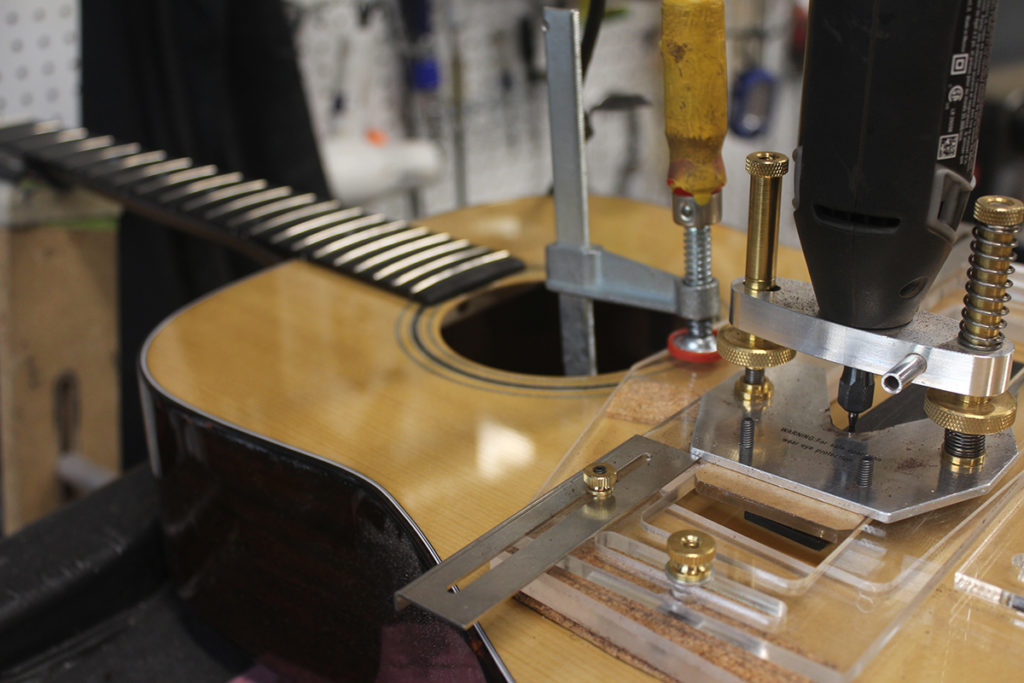
Jimmy mostly makes guitars – he is almost to his 300th guitar – but he also makes fiddles, mandolins, Dobros, and dulcimers, and he helps with the fretwork, pearl inlay, and the finish on his workshop partner Kevin Fore’s banjos.  He does not copy any set style or type of guitar, but he is a big fan of 1930s and 1940s Martin guitars and therefore many of his builds reflect those iconic instruments. He has crafted some of his own innovations and decorative touches in the guitars he builds. Henderson views Jimmy’s finish work as some of the best out there – he uses varnish rather than lacquer – and he often does the finish work on Henderson’s guitars.

Close up of a Jimmy Edmonds guitar in its framing, reading to be worked on.
Jimmy’s decorative flourishes are pretty special; for instance, his rosette decorations – the circular bands around the sound hole – are a delicate mix of light and dark woods and tortoise. His guitars for country musician Zack Brown bear a particularly beautiful Martin-style herringbone pattern. © Birthplace of Country Music

The passing down of tradition amongst families and from luthier to apprentice is what keeps this craft and this music alive. And so today, we celebrate that passing on from grandfather to grandson, and from father to son, as an appropriate way to mark the anniversary of Norman Edmonds’ birth!

Jimmy Edmonds is featured in our current special exhibit The Luthier’s Craft: Instrument Making Traditions of the Blue Ridge. The exhibit is open through March 4, 2018. He is also a member of the Virginia Luthiers, alongside other luthier band members Wayne Henderson, Gerald Anderson, and Spencer Strickland.

Exhibit Yourself: #MuseumSelfie Day at the Birthplace of Country Music Museum

Today is #MuseumSelfie Day, a chance for museums across the globe to show the fun side of museums – and to ask you to join in the fun with us!

Our BCM staff are pretty passionate about the Birthplace of Country Music Museum, so I asked them to find their favorite spot in the building, take a selfie, and then tell me why they picked that spot. Check out their picks below – and then come out to the museum today, take your own selfie, and share it on social media with the tags #MuseumSelfie and #BCMMuseum.

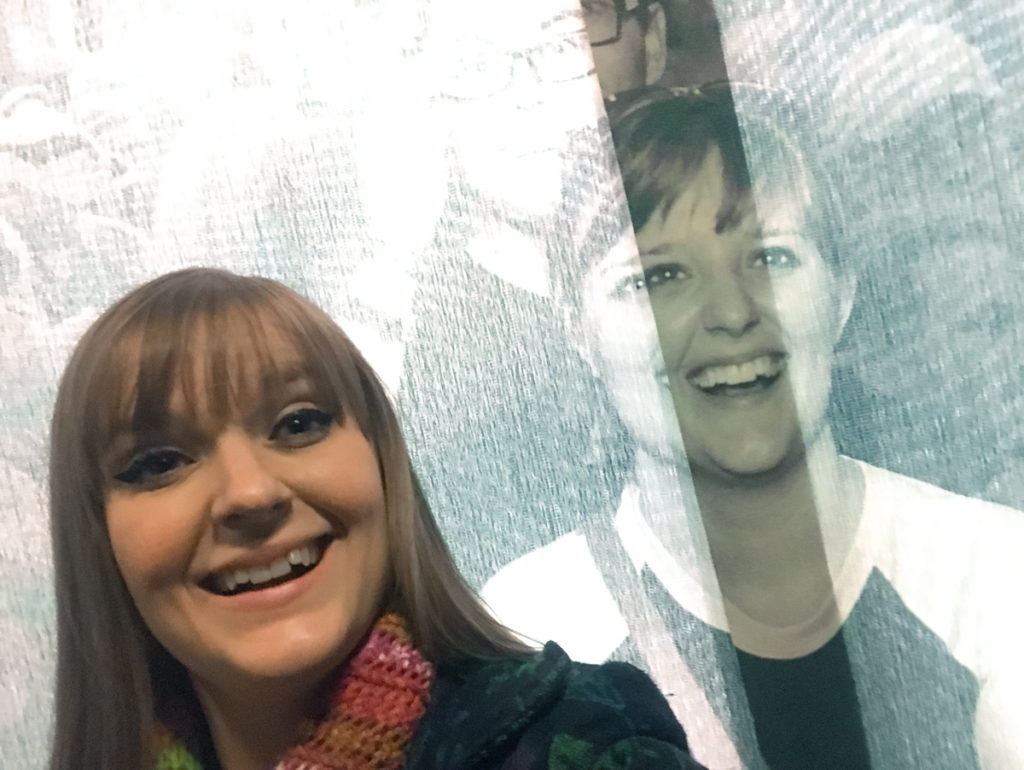
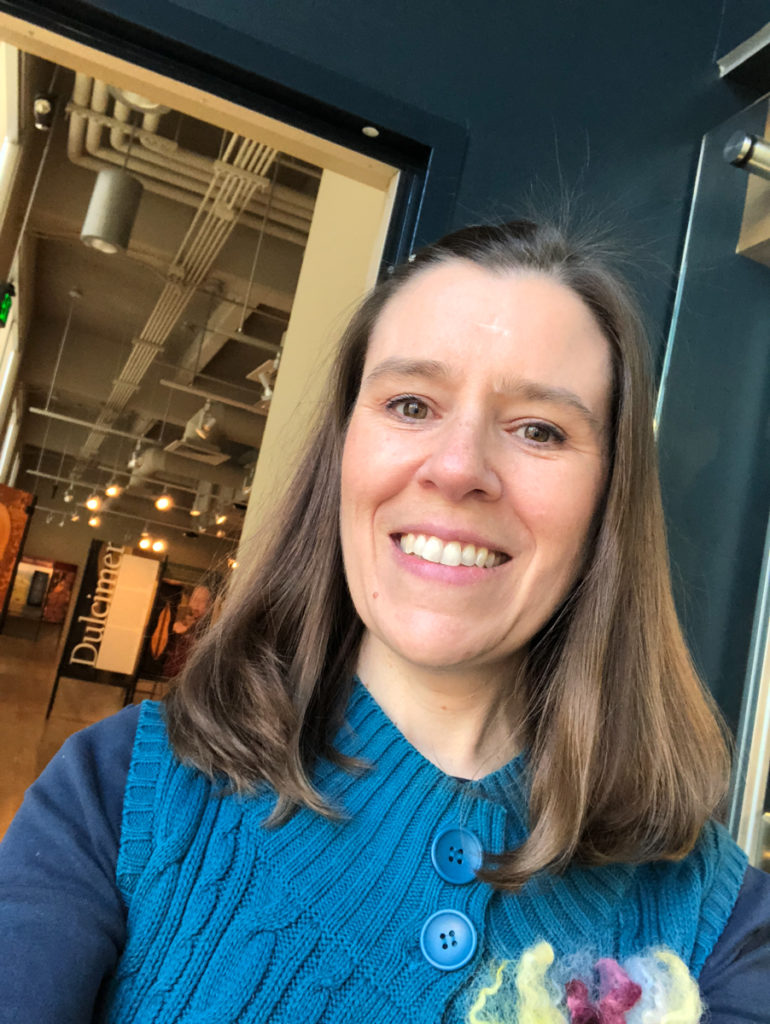
Hannah Holmes, BCM Graphic Designer: I thought it only appropriate to take a selfie…with myself! Now that I’m memorialized in the Immersion Theater I may as well embrace it, right? Hundreds of people every month get to come see my goofy mug while listening to the sweet sounds of “Will the Circle Be Unbroken.”

Rene Rodgers, Head Curator: I chose the Special Exhibits Gallery for my selfie because to me it is a room full of possibilities. We have 2–3 temporary exhibits per year – one time we might have an exhibit about luthiers, another we might explore the lives and legacy of The Carter Family, and yet another we might have a STEAM-focused exhibit here from the Smithsonian. Looking ahead we have some great exhibits on the horizon with topics from civil rights and Appalachian children’s literature to honky tonks and Marty Stuart! It’s exciting to be able to bring interesting and diverse exhibits to the museum and to see our community engaging with them in a meaningful way.

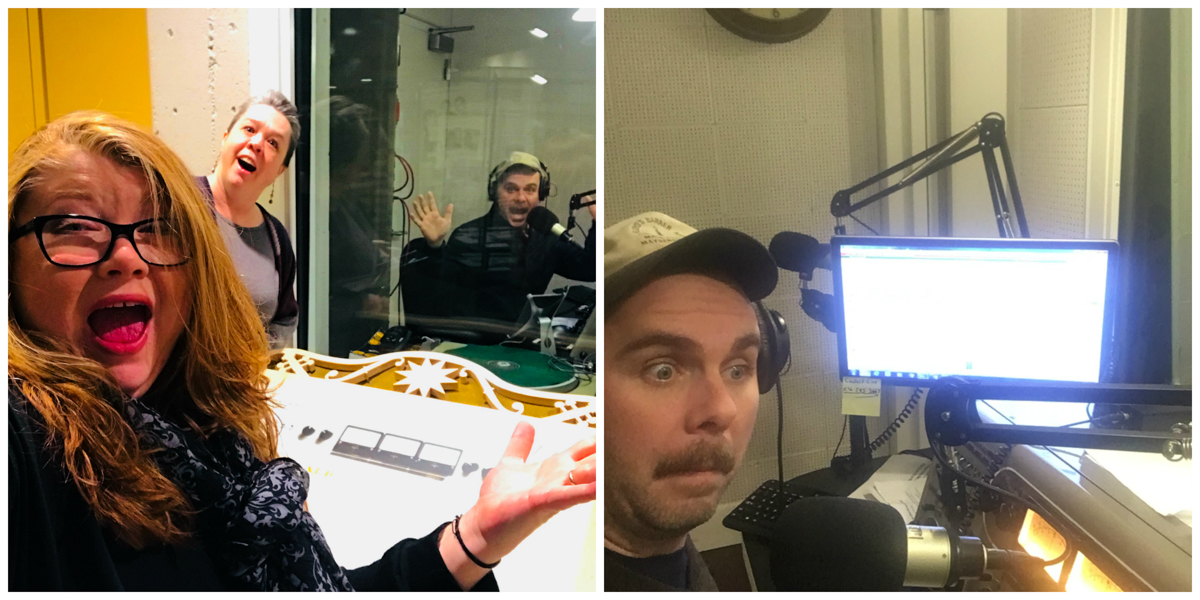
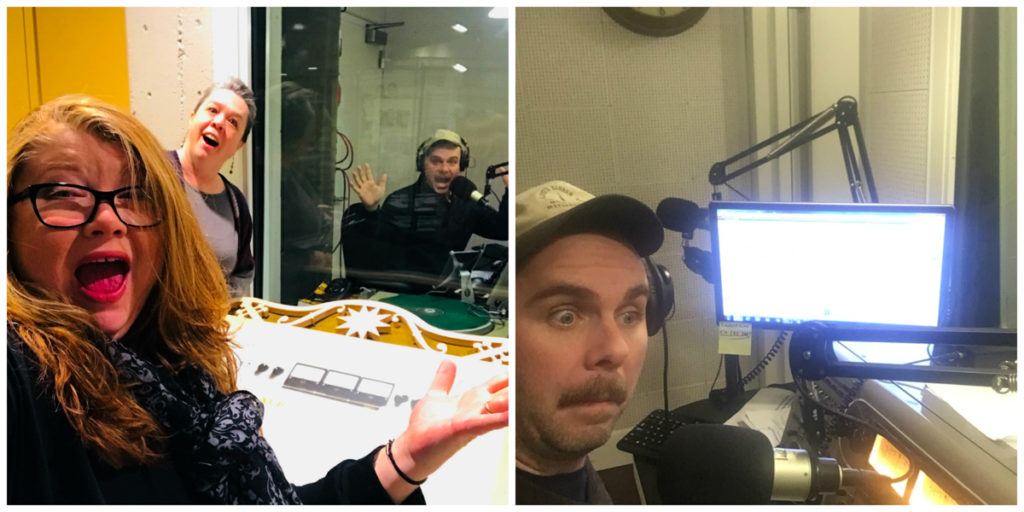
Kris Truelsen, Radio Bristol Producer (seen here with Tracey Childress and Charlene Baker, BCM Marketing Specialist): Nobody told me this thing was on?! Radio Bristol – we do radio a little bit different…

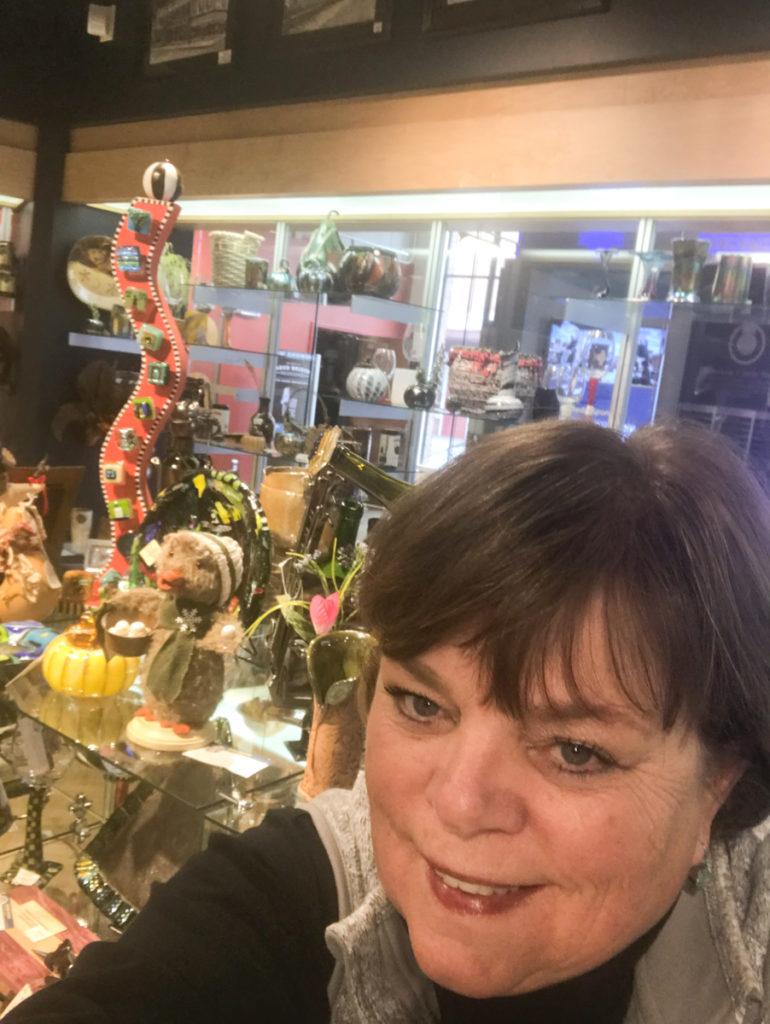
Leah Ross, BCM Executive Director: I love The Museum Store because of all the wonderful artisans who are a part of the museum experience. It is my #1 place for shopping!

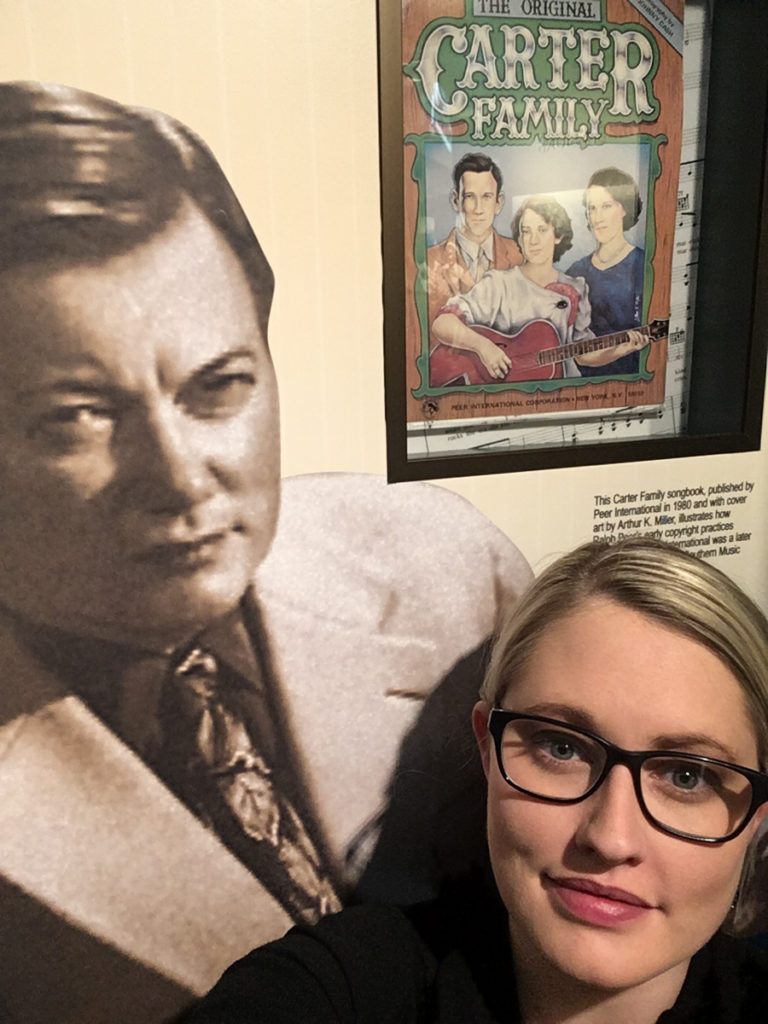
Baylor Hall, Museum Manager: I love reading about Ralph Peer and how influential he was in the music industry. It’s because of his vision that I get to enjoy the music I love today!

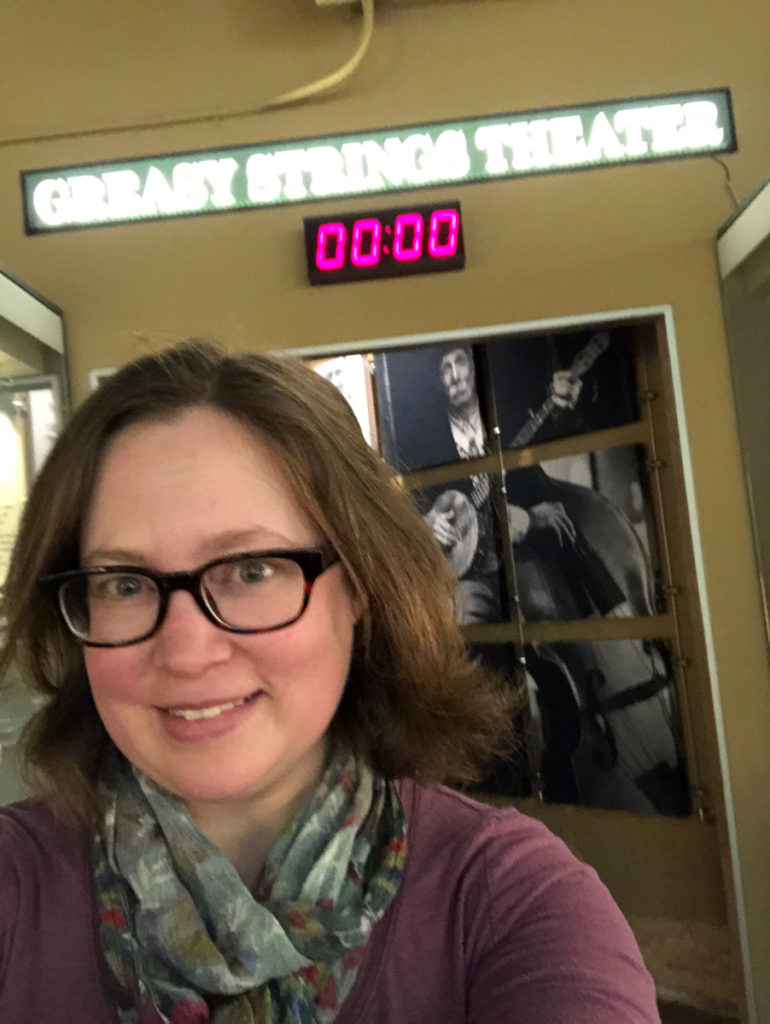
Emily Robinson, Collections Manager: I never get tired of watching the film of musicians deconstructing Bristol Sessions recordings in the Greasy Strings Theater. It is so amazing to watch the tiny playing style details these talented folks can pick out just by listening to the recordings. It always makes me want to go home and learn to play my banjo better!

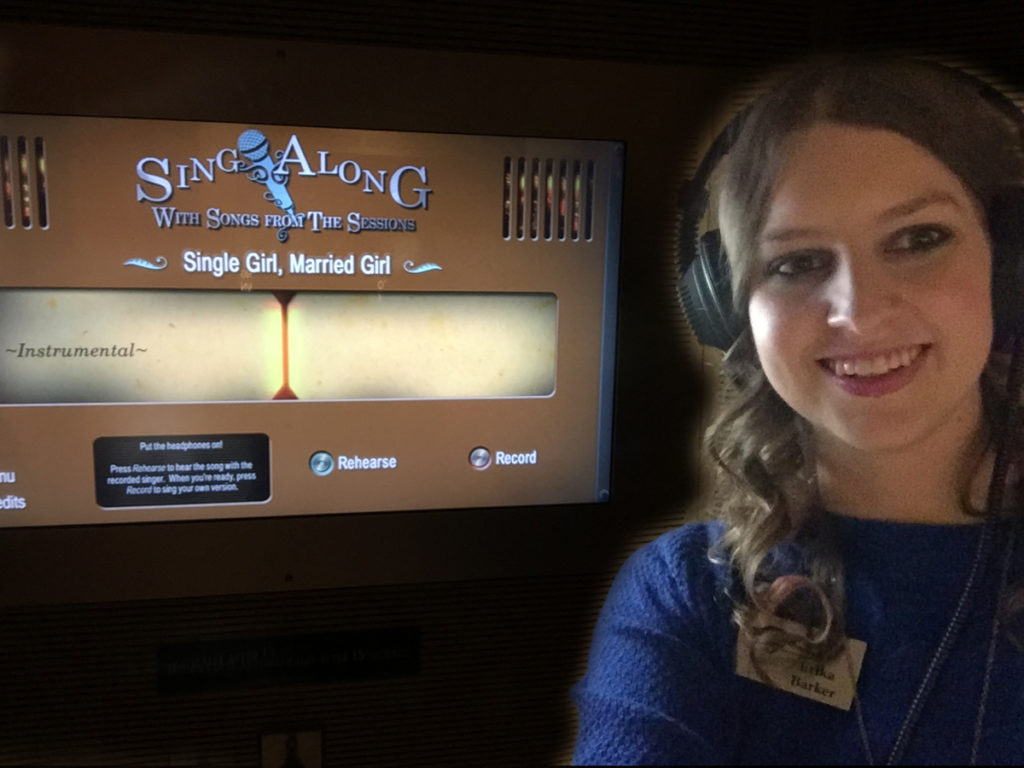
Erika Barker, BCM Sales & Business Development Manager: The Sing Along Station is my favorite place in the museum because I love to sing! Inside the booth, you can sing along to songs from the 1927 Bristol Sessions and then listen to the recording of your very own modern Bristol Session. It is always fun to watch kids and adults make recordings. This is an interactive part of our exhibit that everyone can enjoy – even if you are shy, being in the soundproof box means only those you choose to take into the booth with you will hear you sing!

The Performance Theater was a popular spot…

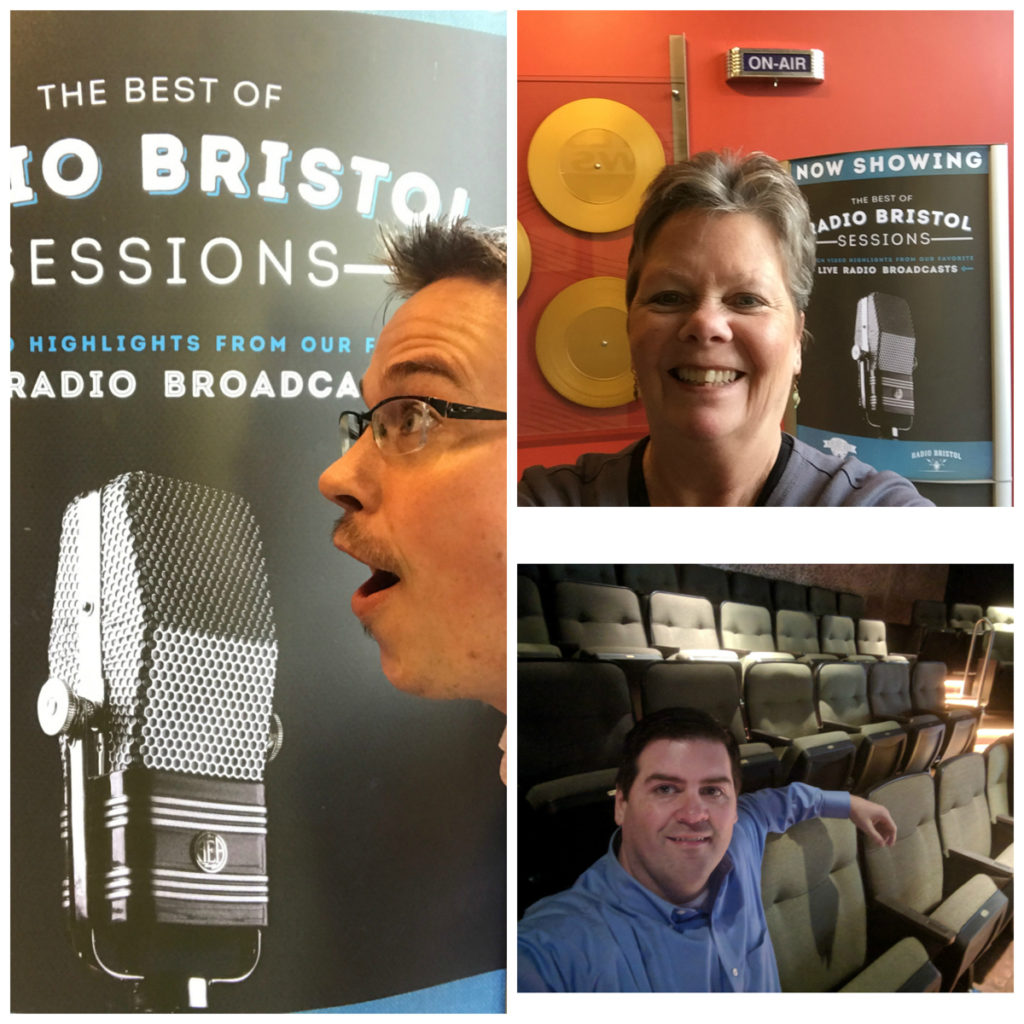
(Left) Josh Littleton, Radio Bristol Engineer & Technical Administrator: I love watching the loop of Radio Bristol Sessions playing in the Birthplace of Country Music’s state-of-the-art Performance Theater. There’s nothing better, except being here in person and seeing a LIVE Radio Bristol Session in that very same space!

(Top right) June Marshall, Frontline Associate: I love the Performance Theater, especially when it comes to life!!

(Bottom right) Shane Simmons, BCM Director of Development: My favorite part of the museum is the Performance Theater. It is a great reminder to me that while we are a museum, we aren’t just about the past – we are still making history today.

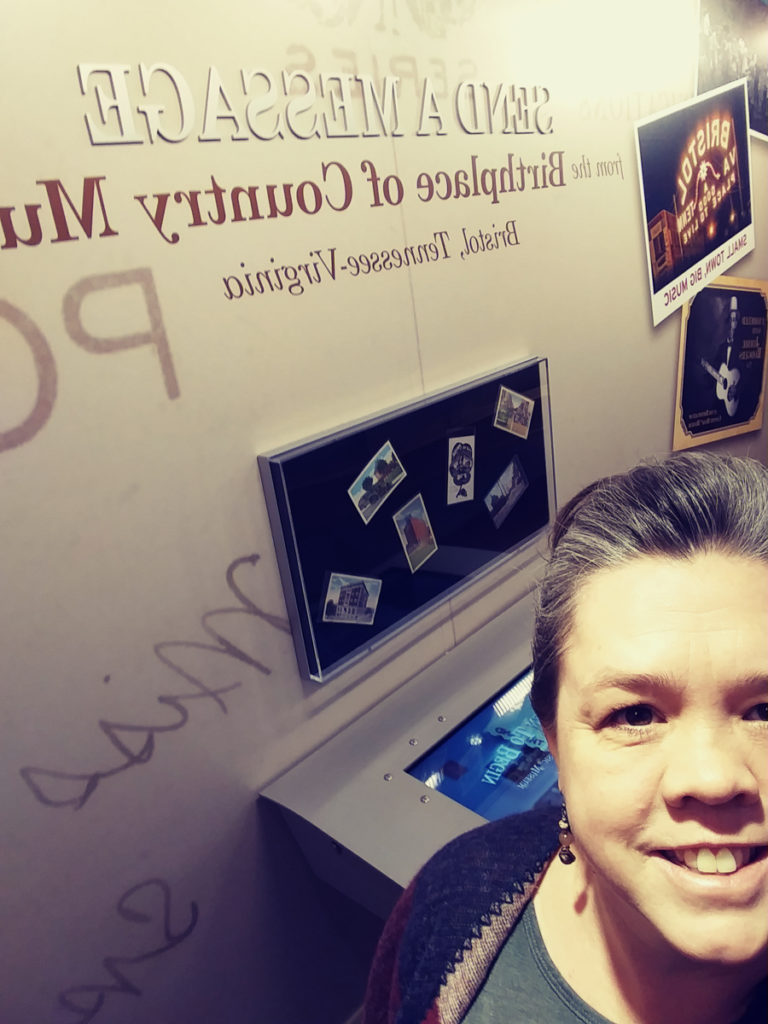
Tracey Childress, BCM Administrative Assistant: Did you know you can email someone a postcard from Bristol from the museum? It’s a cool way to send an electronic souvenir – and show everyone you’re having a good time, wish they were here!

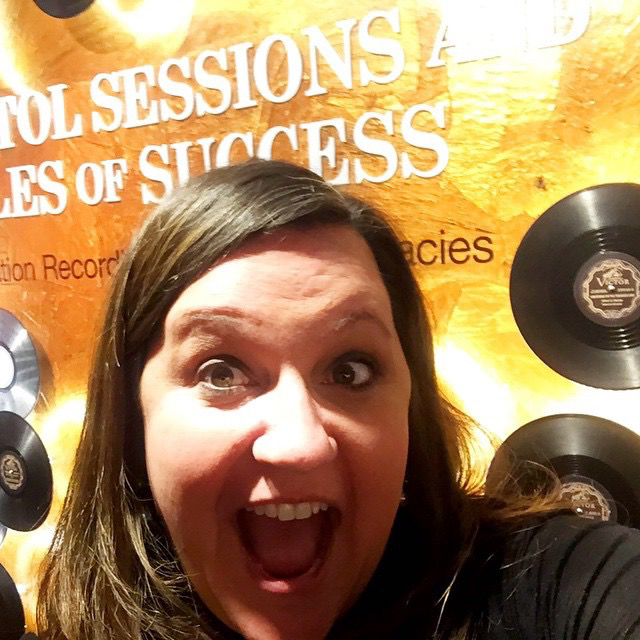
Kim Davis, BCM Director of Marketing: One of my favorite areas of the museum is the “Circles of Success” wall, which features 76 individual records representing each song recorded in the 1927 Bristol Sessions. There is something about seeing each and every song recorded on the wall that brings the Sessions to life for me.

Thank you to all our staff for embracing their silliness and feeling passionate about this museum all at the same time!

Â