Museum Archives - Page 27 of 34 - The Birthplace of Country Music
Listen
Play
Loading station info...

Teachers and Museums Go Together Like Peanut Butter and Jelly (And All the Other Good Things!)

Today is National Teacher Appreciation Day!

And while the museum views itself as an educational resource, some of OUR most important resources are the teachers who bring their students through our doors and take what they learned in the museum back to their classroom. And so today, we wanted to share a blog post about the educator’s experience in our museum – and say a HUGE thank you to all the teachers who enhance their students’ learning through a variety of creative lessons and activities, who support the kids in their classrooms in ways big and small, and who work hard to set the foundation to make the next generation into curious, interested, and engaged adults!

The Birthplace of Country Music is always looking to find great ways to engage with students and teachers and with families looking for entertaining learning experiences. This is an essential part of our mission. We do this in a variety of ways from school tours to educational programming to fun family activities and through all three of our outlets: the museum, the radio station, and the festival. Check out our blog post here to learn more about some of these activities. We are also fortunate that our museum’s permanent exhibit enables us to approach our content from multiple angles – for instance, music and its history, Appalachian culture, local history, and technology, to name a few.

Museum staff member showing a group of female students the instruments in the museum's permanent exhibits.
American Heritage Troop TN5624 touring the museum in July 2017. © Birthplace of Country Music Museum

But we also have the wonderful resource of our Special Exhibits Gallery and the variety of traveling and temporary exhibits that are displayed there – and these present us with the opportunity to bring a variety of other interesting and relevant educational opportunities to our local and regional schools and our community. We hosted the Smithsonian’s Things Come Apart exhibit last summer and fall, and it is a great example of how a special exhibit can address a host of learning goals – due to its heavy STEAM focus, we saw several school groups visit the exhibit and we experienced firsthand how teachers can use our content as a supplement to their curriculum.

One school – Sullins Academy – decided to make the most of all that Things Come Apart offered, and we asked their Head of School Roy Vermillion to blog about their experience, sharing with us and our readers how the exhibit enhanced their learning goals – and was just all around good fun!

“Sullins Academy’s faculty and staff had a chance to experience the wondrous exhibit Things Come Apart last summer right as it opened. We came to the museum for one of our faculty workdays, which gave us the chance to dig deep into this Smithsonian exhibit firsthand and to actually see how touring and working with the content of this exhibit could benefit our students.
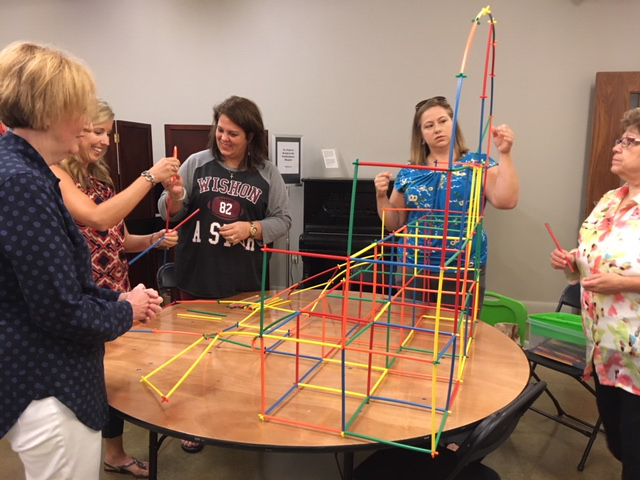
Group of teachers working together at a round table to build a structure of colorful straws.
Sullins Academy teachers used their faculty workday to explore the Spark!Lab activity kits that came with the Things Come Apart exhibit. As can be seen here, they took the task of building a structure from bendy, colorful straws seriously! © Birthplace of Country Music

After having lots of fun ourselves, we booked several of our classes to visit the Birthplace of Country Music Museum to see this exhibit focused on various common items that had been taken apart and presented in a most unique and artistic format. STEAM (Science, Technology, Engineering, Art and Math) education is such an important part of our school’s curriculum, and the Things Come Apart tour supported and affirmed the importance of providing such opportunities for our students. The experience gave our students the opportunity to view things differently and to begin to understand the complexity of items and the engineering that goes into the manufacturing of such objects.

The tour enjoyed by our faculty, as well as our students, was enhanced with a fortuitous chance to have a hands-on experience through a variety of Smithsonian Spark!Lab activities where groups worked together to create a product specific to a particular need. These makerspace centers encouraged the groups to collaborate in order to solve a problem, which further enhanced what was taken away from this educational “Beyond the Classroom” experience.
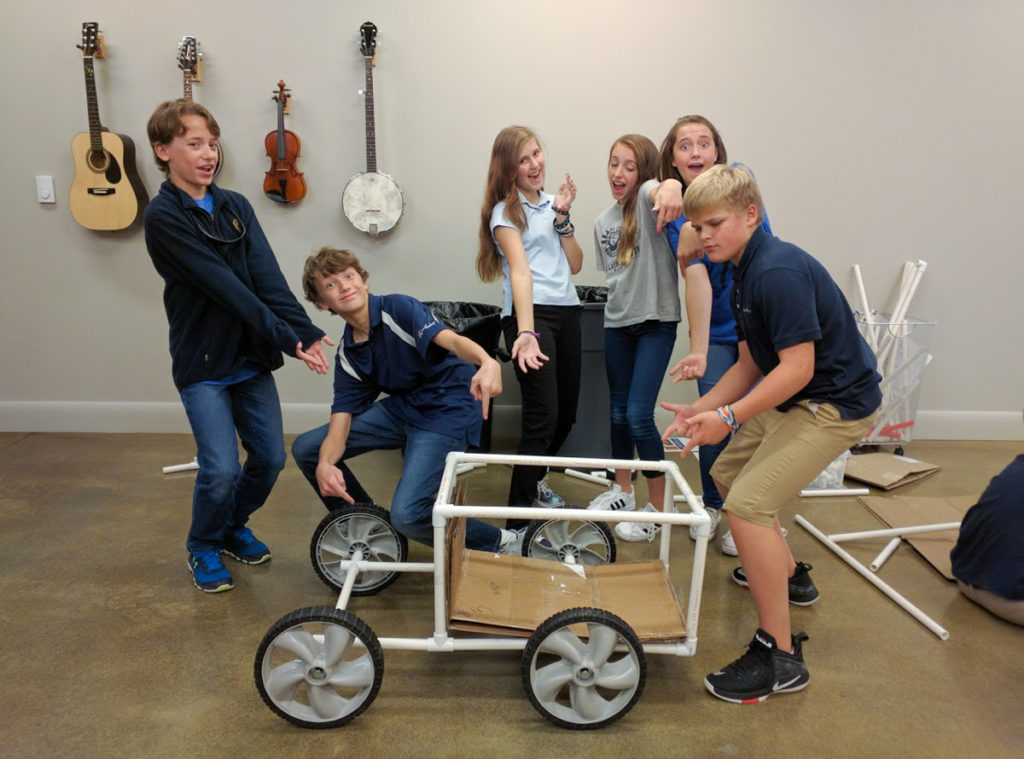
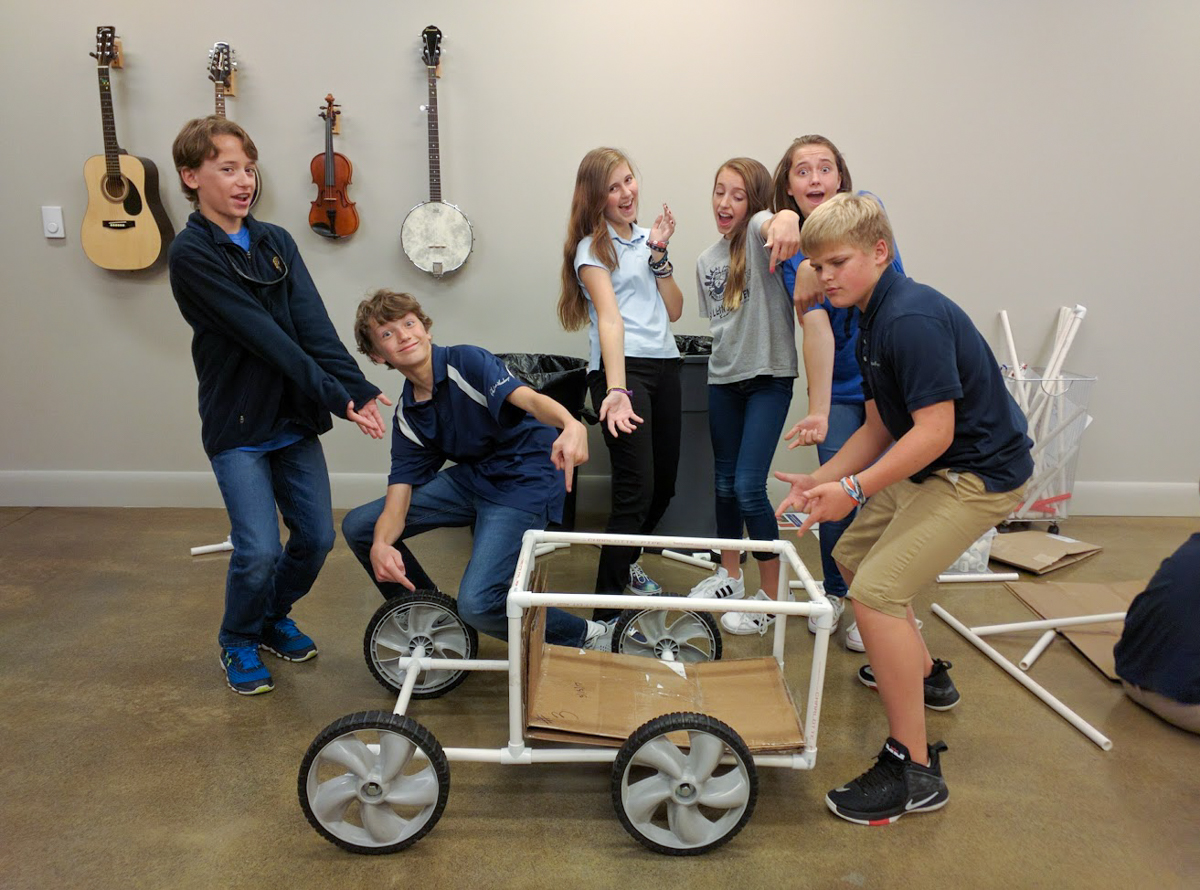
A group of students grouped around their finished Invent-a-Vehicle, all making silly faces and poses!
A group of Sullins students used the Smithsonian Spark!Lab activity kit to build a functional vehicle from wheels and plastic pipe. Photograph courtesy of Sarah Hampton

The principles highlighted in this exhibit also carried through into our classrooms back at Sullins – for instance, prior to visiting the museum, our eighth-grade students actually disassembled a broken cell phone to see all the components and applied what they would see at the exhibit to a real-life experience.

This exhibit was important to Sullins because it gave us a unique educational opportunity to enhance our students’ learning experience. It also served as an inspiration for our students to explore and to experiment as they participated in their own Things Come Apart projects back at school.
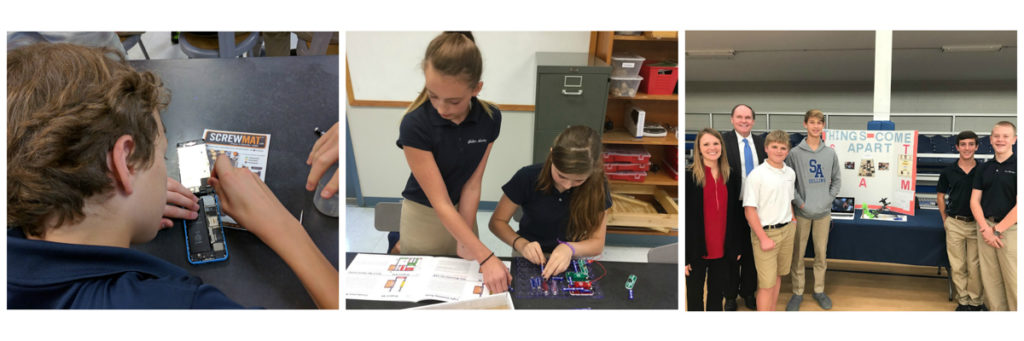
Left pic: Male student taking apart a cell phone; center pic: Two female students working on a circuit board; right pic: A group of students with their Things Come Apart science fair display, along with their teacher and school principal.
Sullins teacher Sarah Hampton used the faculty workday, the student visits to the Things Come Apart exhibit, and its related STEAM concepts as inspiration for a variety of learning lessons back in the classroom. Photographs courtesy of Sarah Hampton

We encourage everyone to take advantage of the myriad of opportunities a facility like the Birthplace of Country Music Museum is able to bring to our community. We are fortunate to have the availability of such an innovational entity from which we can garner these unique and important educational opportunities for ourselves and the children we serve.”

The experiences of Sullins Academy’s students and teachers really reflect the goals of our museum: to provide an educational and inspirational experience, one that brings real engagement to those who visit us and acts as a support for learning within our local community and schools. And they also reflect the dedication of our teachers and educators to bring out the curiosity of our children and get them excited about learning.

As we move forward, we embrace the excitement of engaging with students – and all of our every day visitors – in order to share our resources with them and highlight the value that museums – and teachers – bring to communities like ours on a daily basis.

Guest blogger Roy Vermillion is Head of School at Sullins Academy in Bristol, Virginia. Head Curator René Rodgers provided context to his guest post. Thank you to teacher Sarah Hampton for sharing her wonderful pictures of the students at the museum and in the classroom.
Happy Birthday to Ernest Phipps!

There’s an old church joke about when Jesus returned to heaven after his time on earth. All the angels gather around to celebrate Jesus’s success overcoming death, and someone asks, “So now what’s the plan? How are we going to tell the world the good news?” Gabriel offers to blow his trumpet. Michael suggests a multitude of heavenly hosts. Jesus looks at the angels and says, “I’ve got it covered. I told these twelve guys, and they’re going to tell some people, and then those people will tell some people…”

As ridiculous as this sounded to the angels, this method of sharing the gospel tells us something about the music and ministry of Ernest Phipps of Gray, Kentucky, who was born on May 4, 1900. Ernest Phipps and His Holiness Quartet recorded six sides on Tuesday, July 26, the second day of Ralph Peer’s 1927 Bristol Sessions. Their recording of “Don’t You Grieve After Me” was issued with the earliest Bristol Sessions serial number and released in the first batch of Bristol sides in September 1927.

The music Phipps and His Holiness Quartet made in 1927 sounds like spirited old-time music. Phipps sings lead accompanied by a high harmony; a guitar or two and fiddle back the singing, and the fiddle plays the melody on instrumental breaks. Charles Wolfe conjectured that Ancil McVay played guitar and Roland Johnson played fiddle and that perhaps Alfred Karnes, another preacher from the Corbin area who recorded his own gospel sides that week, played the driving guitar bass runs. The singing and playing are raw and real, someone stomps on the one and three, and the distinguishing element of these songs, particularly “Do, Lord, Remember Me” and “Old Ship of Zion,” is a galloping, deep-in-the-beat feel.

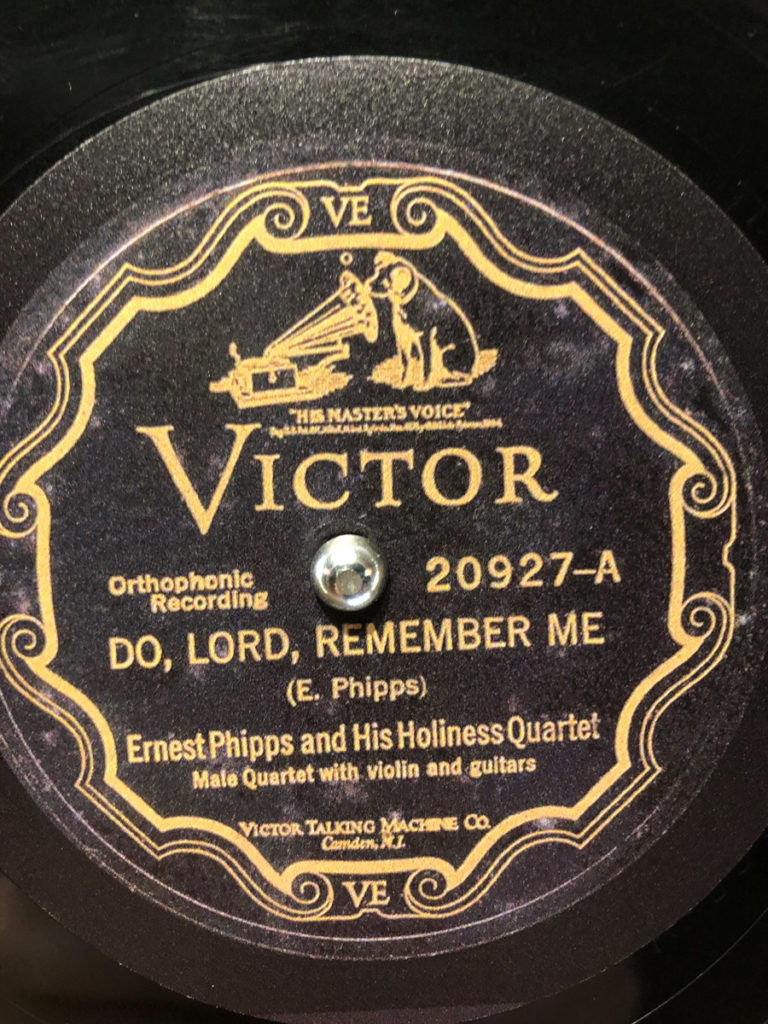
Reproduction Victor label of Ernest Phipps and the Holiness Quartet's "Do Lord Remember Me" showing the Victor Nipper logo and the name of the song and singers.
Reproduction Victor label of Ernest Phipps and His Holiness Quartet’s “Do, Lord, Remember Me.” Photograph © Birthplace of Country Music

Phipps worked his whole life in the coal business, as a miner, a truck driver, and later as co-owner of a small operation. He also preached and sang in the Holiness churches around Corbin, Kentucky from the 1920s until his death in 1963, minus a few years he was in the army during World War II. Much of what we know of his life comes from his youngest sister, Lillian McDaniel, and his stepsons W. R. and J. Randall Mays. Their memories do not fill in the whole picture of Phipps’s life, but they tell us enough to know that his ministry was his major focus, and that his music was likely a component of his ministry. He often visited churches to preach, and would also sing, but no one remembers his visiting churches to sing and not preach.

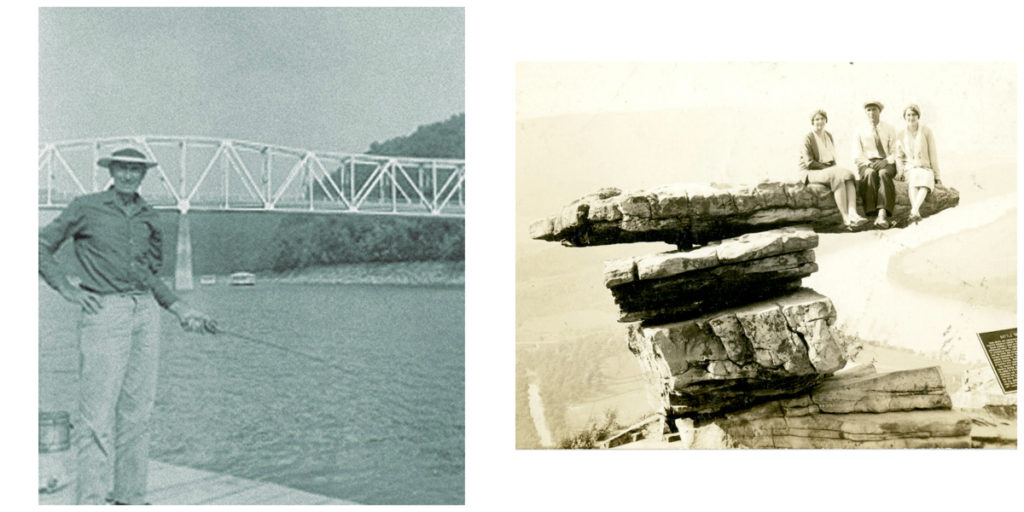
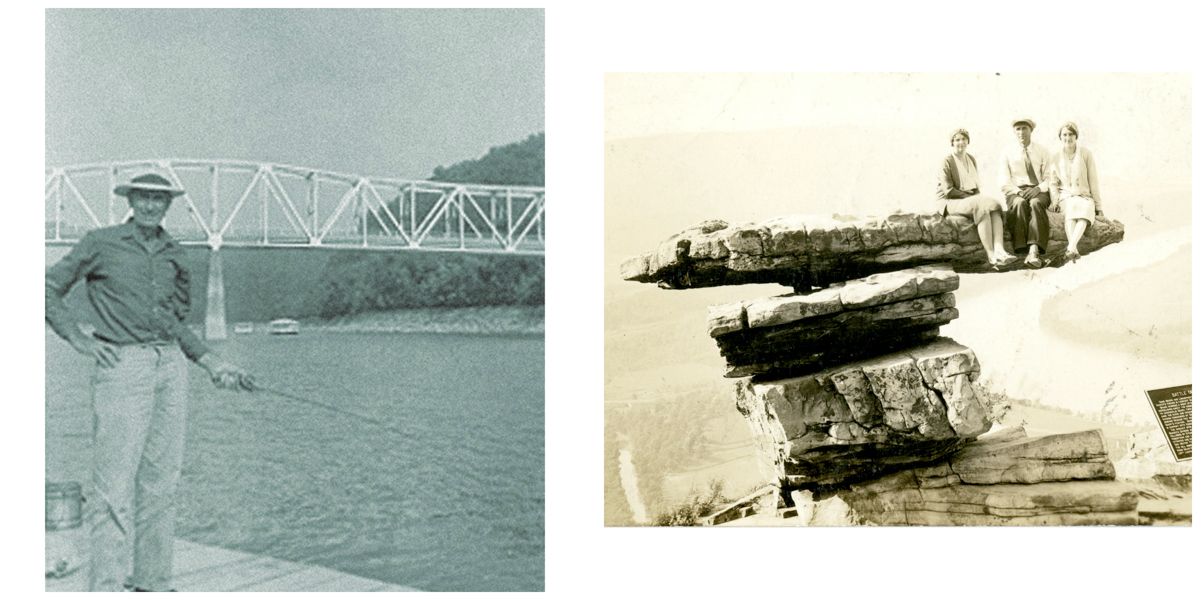
The picture to the left show Ernest Phipps in front of a bridge at the side of the lake; he is holding a fishing pole. The picture to the right shows Ernest Phipps, wife Minnie, and an unknown women perched on top of a "stack" of rocks above a river plain.
Ernest Phipps loved fishing and is pictured here at Cherokee Lake sometime around 1953. In the picture on the right, he is seen with his first wife Minnie and a friend posing on a rock outcrop; a historic site marker nearby references the Civil War’s Battle of Wauhatchie. Left: Courtesy of Rev. J. Randall Mays and Rev. W. R. Mays, stepsons of Rev. Ernest Phipps; Right: Donated to the Birthplace of Country Music Museum by Teresa Phipps Patierno in the memory of her grandfather, Ernest Phipps, a coal miner and Holiness preacher from Kentucky, a simple man who loved his Lord.

The idea that Phipps’s recorded music constitutes an early form of mass media evangelism may involve projecting motives from our time onto his, but nothing in Phipps’s story suggests that he sought a career in music; however, much evidence exists that Phipps sought to share his faith. When he returned to Bristol in October 1928, he brought eight members of his congregation – three female vocalists and five instrumentalists – who recorded six songs that “give us some sense of the power and drive of a real Holiness service,” in the words of Charles Wolfe. The group vocals shift moment to moment between harmony and unison singing and overpower the instrumentation on most songs. The string band groove of Phipps’s 1927 sides is replaced here with a less precise but no less energetic backing shuffle. During refrains, a chorus of handclaps on the one, two, three, and four beats propels these songs into a frenetic pace. These sides sound more like field recordings of a church service than commercial records, but Ernest Phipps and Ralph Peer were onto something: “If the Light Has Gone Out of Your Soul” backed with “Bright Tomorrow” sold almost 12,000 copies.

Here’s “Went Up In The Clouds Of Heaven,” one of the songs recorded by Ernest Phipps and His Holiness Singers at the 1928 Bristol Sessions:


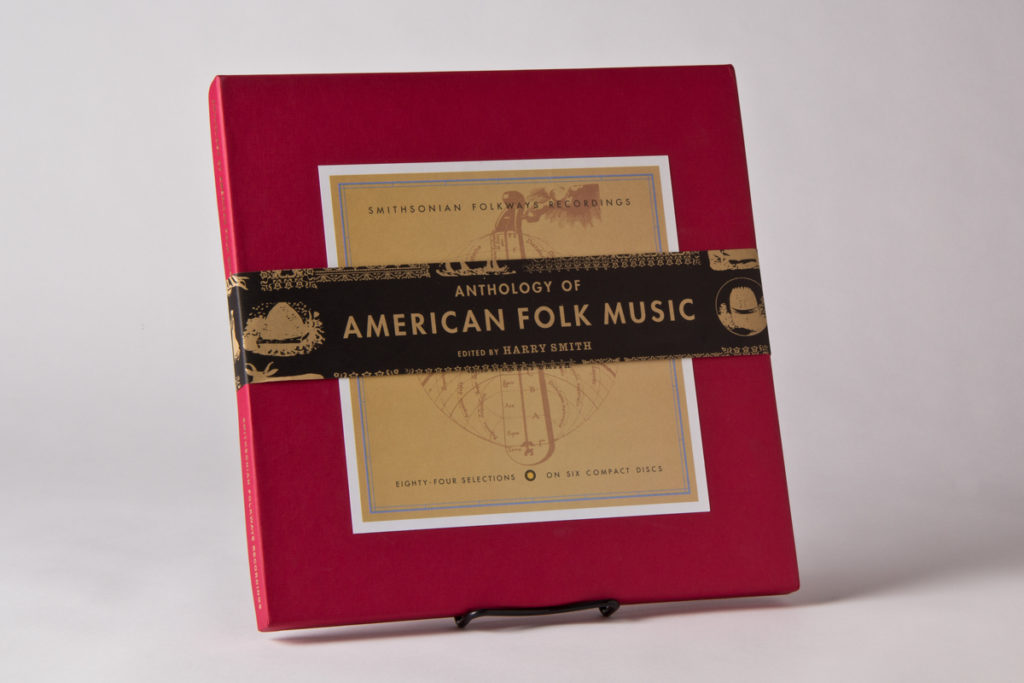
Phipps’s recordings, especially from the 1928 sessions, have sent folk music scholars and fans in a number of interesting directions. Charles Wolfe remarked that Phipps’s recordings preserve “rare examples of the exuberant, ragged, hand-clapping Holiness music” of 1920s Appalachia, particularly Eastern Kentucky. Harry Smith included “Shine on Me” from the 1928 Sessions in his Anthology of American Folk Music alongside the most important American folk musicians of the first half of the 20th century. My work on Phipps suggests that his recordings pioneer a Southern Gospel music antithetical to the harmony singing of the Stamps Quartet, who also recorded at the 1928 Bristol Sessions.

Simple photograph of The Anthology of American Folk Music CD set.
The cover of Harry Smith’s Anthology of American Folk Music.

Because of the spirit it preserves and represents, Phipps’s music has lived a remarkable life of its own. The life of Ernest Phipps suggests that his brief recording career served a purpose: to share the gospel with as many people as he could.

Brandon Story teaches English at King University in Bristol, Tennessee. His chapter “Gospel According to Bristol: The Life, Music and Ministry of Ernest Phipps” appears in Charles Wolfe and Ted Olson’s The Bristol Sessions: Writing About the Big Bang of Country Music.

All for One, and One for All!

Alexandre Dumas wasn’t talking about museums when he wrote the famous “All for one, and one for all” cry of the Three Musketeers. Rather it was a rallying cry of solidarity in the midst of derring-do and various battles of wit and strength.

Nevertheless, this motto is something I’ve been thinking about a lot over the last few months, but in relation to those who work in the museum and cultural institution field rather than swashbuckling adventurers. (Though museum people can swash and buckle with the best of them – spend time in any conference hospitality suite at the end of a long day of presentations and learning if you don’t believe me!) And here’s why: Cultural and heritage bodies are great organizers, especially organizing themselves into professional associations. And these professional organizations are hugely important to the success and growth of each individual institution within them, and all of those individual institutions work together to make that professional association stronger and more effective.

Here at the Birthplace of Country Music Museum we are fortunate to belong to several associations, from big to small: American Alliance of Museums (AAM), Smithsonian Affiliations, Southeast Museums Conference (SEMC), American Association of State and Local History (AASLH), Virginia Association of Museums (VAM), Tennessee Association of Museums (TAM), and Northeast Tennessee Museum Association (NETMA). And each and every one of them brings us benefits, every day and in so many ways:

Professional Development

Professional associations offer a host of wonderful opportunities for professional development through conferences, webinars, courses, workshops, training, online resources, and networking events. Conferences and networking events give us the chance to learn about what other museums are doing, discuss common challenges, and brainstorm strategies and solutions. The conference sessions cover a huge variety of topics – from educational programming to board membership to digital trends to accessioning collections (and more!) – which means that every role in an organization is sure to gain valuable insights into their daily work. And these professional associations not only include the broader ones noted above, but there are also a host of more specific groups that use conferences, events, and online forums as a chance to go even deeper into topics and needs relevant to museums. For instance, NAME (National Association of Museum Exhibition) focuses on exhibit design and development while DIVCOM (AAM’s Diversity Committee) focuses on the advancement of diversity and inclusion, and our Digital Resources Manager has found that his museum degree alumni group offers continued support and other opportunities.

Courses and workshops are also a great way to learn about a topic, and training provides useful skills to put into practice at your work. However, webinars in particular offer a low-cost route to that learning, while still also giving you the chance to interact with other professionals in your field. Our staff have attended many a webinar at their desk, exploring topics such as Twitter for Museums, image copyright, or audience evaluation, but we have also hosted a couple of AAM “live” webinars where other local and regional museum peers have come to our museum to watch the webinar streaming in the Performance Theater – these are particularly useful because you then have time together afterwards to discuss the topic and network with the other webinar watchers. I always walk away from webinars with a list of ideas and action points to follow up on, and often even with a name or two of people I want to connect with in order to talk further about the topic. In the nonprofit world of museums and cultural institutions, webinars and other online resources – such as AAM’s Resource Library and its variety of sample documents or the many online forums and newsletters out there – are a great way to learn and work together and to find ways to tackle just about any challenge you might face in your own museum.

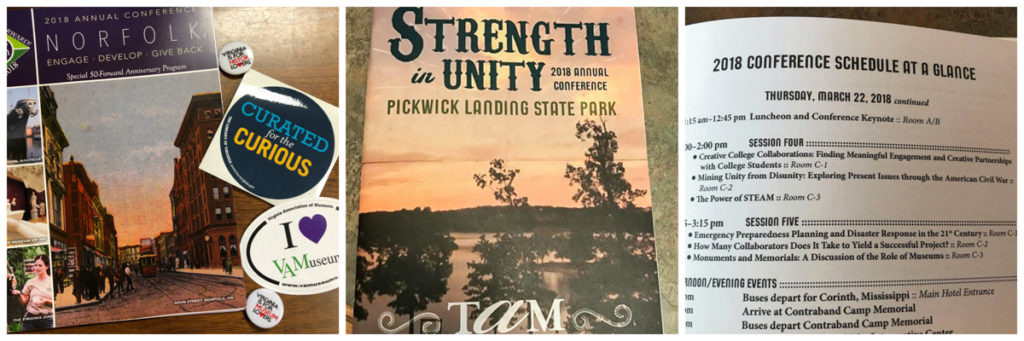
3 images: VAM conference brochure and swag; cover of TAM conference brochure; inside of TAM conference brochure showing various sessions offered
A couple of conference brochures illustrate the diversity of themes and topics explored. Right: © Birthplace of Country Music, Center and Left: Courtesy of Bill Hickerson

Inspiration

One of the best things about our connection to professional associations and their many events and programs is the huge amount of inspiration we gain from them. For instance, the TAM conference I attended in March gave us some new ideas about different ways we can use old photographs and objects to engage kids more directly when they are visiting the museum, something I hope our docents will be able to put into practice in the near future. And earlier this year I went to the Virginia Museum of Fine Arts partner exchange, where all of the participating museums presented about their current exhibits, programs, and events, sharing a host of ideas for bringing visitors through the doors and getting them connected to our content.

A lot of the inspiration, however, comes from actual visits to other museums, historic sites, and organizations, which is a major feature of most conferences. These visits give you the chance to see the ideas that are talked about at conferences, in webinars, and online “on the ground,” a wonderful way to assess their impact and to get the gears going in your own mind about how those ideas might work on the ground for your museum.

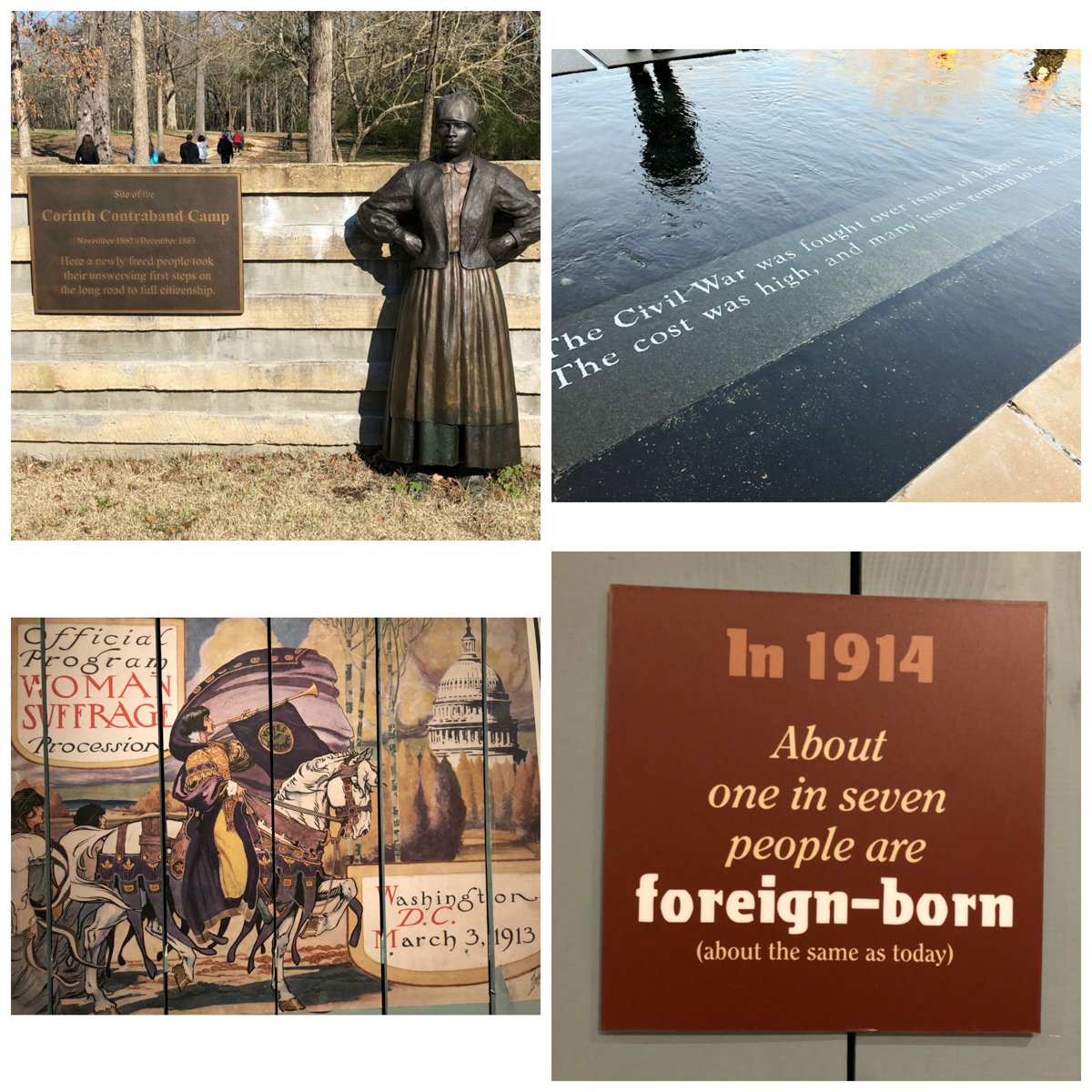
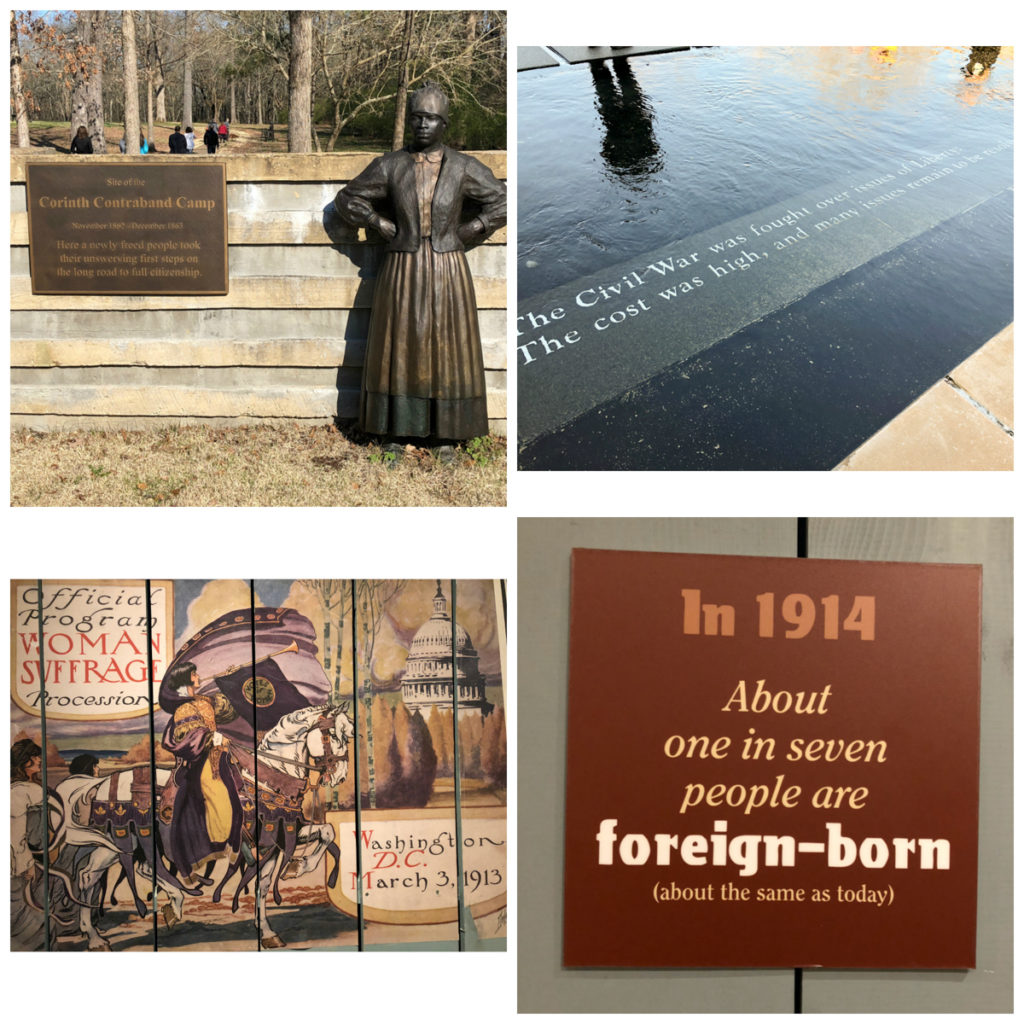
4 images: Corinth Contraband Camp entrance with sculpture of woman with hands on hips and sign; Corinth battlefield interpretative center courtyard fountain/sculpture; women's suffrage advertisement for protest in 1913; museum sign about the level of immigration in 1914 (1 in 7, about the same as today).
One of the things I love the most about visits and tours is getting a chance to see how museums tackle difficult and topical subjects, offering visitors the chance to think critically about a host of important issues – from questions of freedom during the Civil War and the continuing issues of race today to women’s march to suffrage to the realities of a country born of immigrants. © Birthplace of Country Music

Advocacy

Every day our professional associations are working hard for museums, historic sites, cultural institutions, and libraries. They advocate about our importance to local, state, and federal governments, giving them numbers and facts and figures to underline the impact that our institutions have on the economy, education, and quality of life. They are doing this in small ways, such as through social media; in grassroots ways through letter writing and petitions; and in big ways, with feet on the ground, visiting our senators and representatives to state the case for funding and support. For the first time, I had the chance to participate this February in one of those events during VAM’s Museum Advocacy Day in Richmond – we spent the day visiting with state legislators, talking about their memories of and experiences with museums, telling them our ideas for engaging the state’s citizens in history and heritage, the arts and culture, and so much more. It was a real chance to see the importance of professional associations to the field as a whole, but also to be inspired and gratified by the support we gave each other and that we received from the people we met at the capitol.

AAM's Museum Advocacy Day 2018 logo
The American Alliance of Museums organizes a nation-wide advocacy event every year, while many state museum associations do the same at the state level. © American Alliance of Museums

Partnership

Each professional association we belong to gives us the opportunity to form new and fruitful partnerships with other museums and sites. From these connections, we’ve worked with a variety of other institutions to present conference sessions together on topics as diverse as Smithsonian Magazine’s Museum Day Live!, using crowdfunding to get the support needed for cultural projects, and working with performing arts groups to deliver museum programming. Our relationships with our sister institutions also lead us to new exhibits to bring to our Special Exhibits Gallery – this is how we found out about Made in Tennessee, which we featured in 2016, and I Have a Voice, which will come to the museum next year. And we are also able to work with other museums who may have previously hosted those exhibits to share resources and event ideas that have been created as supplements to the exhibit. These associations also bring the possibility of joint promotion and programming, especially on a local and regional level with our participation in NETMA and amongst our peers at Smithsonian Affiliations. And while we think of partnerships as always being a product of positive times, those connections also help in the midst of challenging ones – for instance, our Disaster Plan lists all of the local and regional cultural institutions that we could turn to for support and expertise in the case of a disaster hitting our museum.

Assessment, Recognition, and Support

Through our connection to AAM, we participated in the Museum Assessment Program in 2016—17. Other organizations like AASLH offer similar evaluative programs such as StEPs. These types of assessment exercises give museums the chance to look at themselves realistically, to analyze their strengths and challenges, and to make plans for sustainability and growth within those parameters – often the first step to future accreditation. At the same time, most professional associations offer a variety of ways to bring recognition to their member organizations through awards and other tangible support.

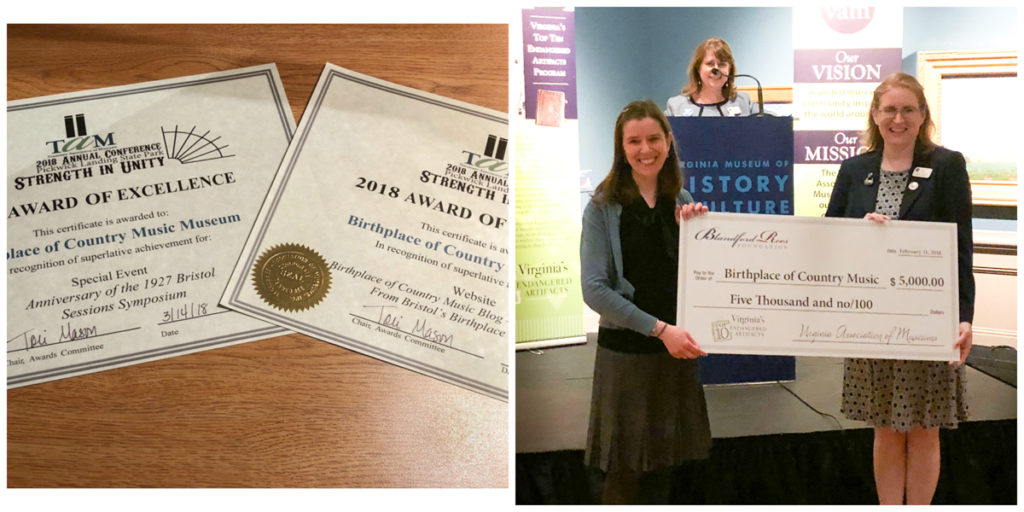
2 images: One shows the two TAM Awards of Excellence the museum received in March 2018; the other shows Head Curator Rene Rodgers accepting the $5000 check from VAM for their Top 10 Endangered Artifacts competition.
The Birthplace of Country Music Museum has received a number of awards from professional associations, including two TAM 2018 Awards of Excellence for our blog (!) and our special event, the 90th Anniversary of the 1927 Bristol Sessions Symposium. Through VAM’s Top 10 Endangered Artifacts, we also received preservation funding for our Farm and Fun Time radio transcription disc. © Birthplace of Country Music

Friendship

Finally, and sometimes most importantly, friendships come out of these professional associations, which makes working in the often challenging, always passionate field of museums and cultural institutions easier, more interesting, and just plain more fun!

All for one, and one for all!

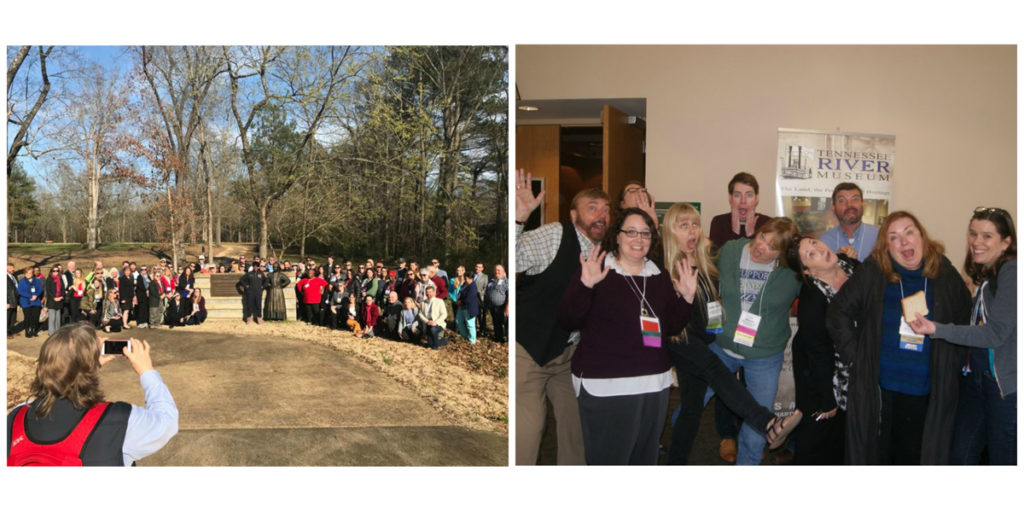
2 images: The TAM 2018 attendees at the entrance to the Corinth Contraband Camp site; the TAM board members striking funny poses
TAM conference attendees pose at the Corinth Contraband Camp entry, while the TAM board goofs around for the camera at the end of a successful conference. Right image courtesy of Bill Hickerson, left image courtesy of Tori Mason


Follow the Ballad: From Scotland’s “Lord Gregory” to The Carter Family’s “The Storms Are on the Ocean”

Just 30 minutes south of Big Stone Gap, Virginia, where our bookstore Tales of the Lonesome Pine is located, you will find Hiltons, Virginia, and the Carter Family Fold, home of the famous musical family that started with A.P., Sara, and Maybelle, and included Maybelle’s daughter June Carter. June went on to marry Johnny Cash, whose ancestors immigrated to America from the village of Strathmiglo in Scotland. Just down the road an hour or so is Bristol, Tennessee-Virginia, known as the “birthplace of country music” due to its place in early commercial country music history. A wee bit north is the hometown of Ralph Stanley, who among other accomplishments famously sang “Oh Death” in the movie O Brother Where Art Thou. Just to the west in Kentucky is where the wonderful ballad singer Jean Ritchie grew up.

As you can see, it’s an area rich in musical heritage – and one that can be connected to the Old World through song. For instance, one of the most fascinating musical links between Scotland and Appalachia is through the Scottish ballad “Lord Gregory” and its American versions. No less than 30 of the 82 variants listed in the Roud Folk Song Index records are from our adopted state of Virginia. Chief among these is a song recorded by The Carter Family back in 1927 in Bristol, Tennessee, called “The Storms Are on the Ocean”– despite the fact that this part of Appalachia is a few hundred miles inland.

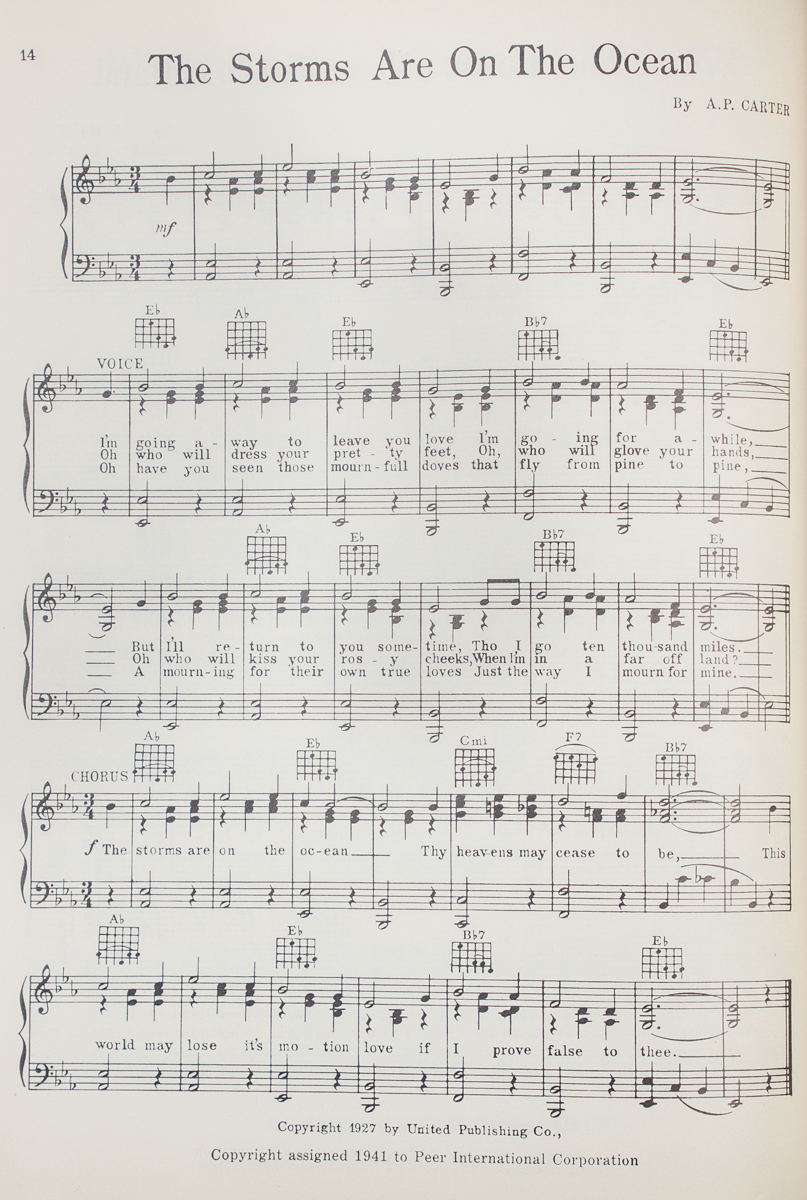
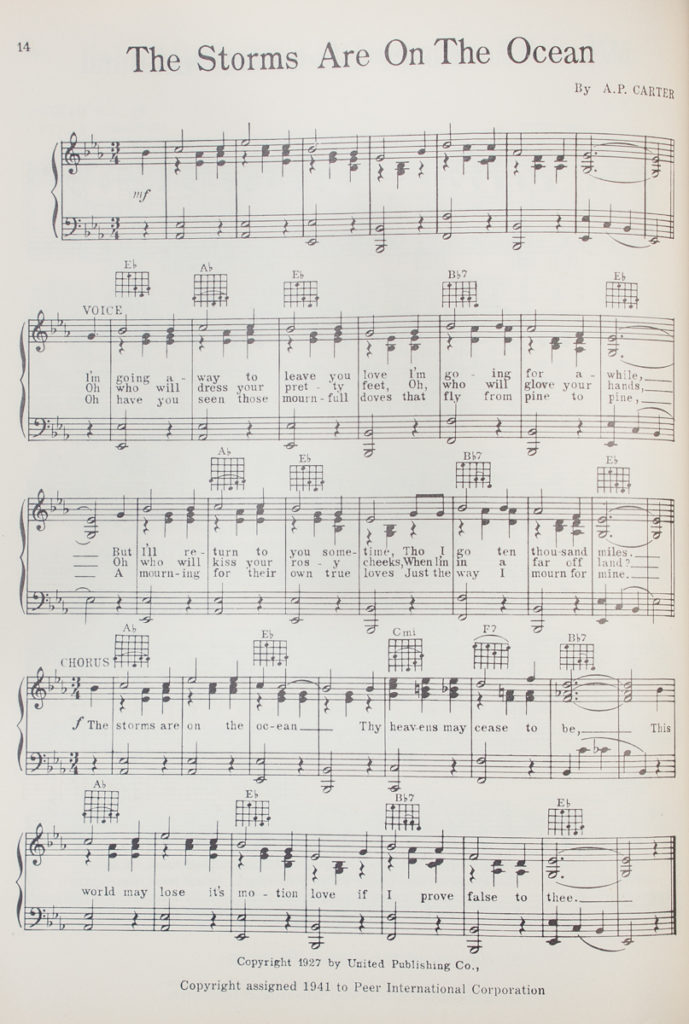
Image of "The Storms are on the Ocean" sheet music.
“The Storms Are on the Ocean,” sung by The Carter Family at the 1927 Bristol Sessions recordings, was published by Ralph Peer’s Southern Music Publishing Company in the Carter Family songbook Album of Smoky Mountain Ballads. Copyright 1927 by United Publishing Co., copyright assigned 1941 to Peer International Corporation; courtesy of peermusic

Here are the opening lyrics of “The Storms Are on the Ocean”:

I’m going away to leave you dear,
I’m going away for a while,
But I’ll return to you my dear,
Though I go 10,000 miles.

Who’s gonna shoe my pretty little foot,
And who’s gonna glove my hand,
And who’s gonna kiss my red rosy cheek,
Till you return again.

The “Storms” version was long established in the family tradition of the Carters, who also claim ancestry from the British Isles, and the first verse, with its reference to 10,000 miles, might also call to mind Robert Burns’ poem “A Red, Red Rose” Different renditions of the second verse can also be found in many of the earlier versions of this song across the years.

The ballad “Lord Gregory,” also known as “The Lass of Loch Royal,” is listed as number 76 in Francis James Child’s famous collection, English and Scottish Popular Ballads. Child also details a number of mainly Scottish variants. In one the lady sails with her baby from Capoquin to her beloved’s castle, only to be told by his duplicitous mother that he’s away. Sailing back to her home, she is drowned, but not before lamenting over who will shoe her foot, glove her hand, etc.

When Bertrand Harris Bronson produced his collection The Traditional Tunes of the Child Ballads, he included several “Lord Gregory” variants more reminiscent of “The Storms are on the Ocean.” Like most American descendants of Scottish ballads, the story got stripped down to become shorter and simpler, while the tunes were jollied up in tempo and rhythm.

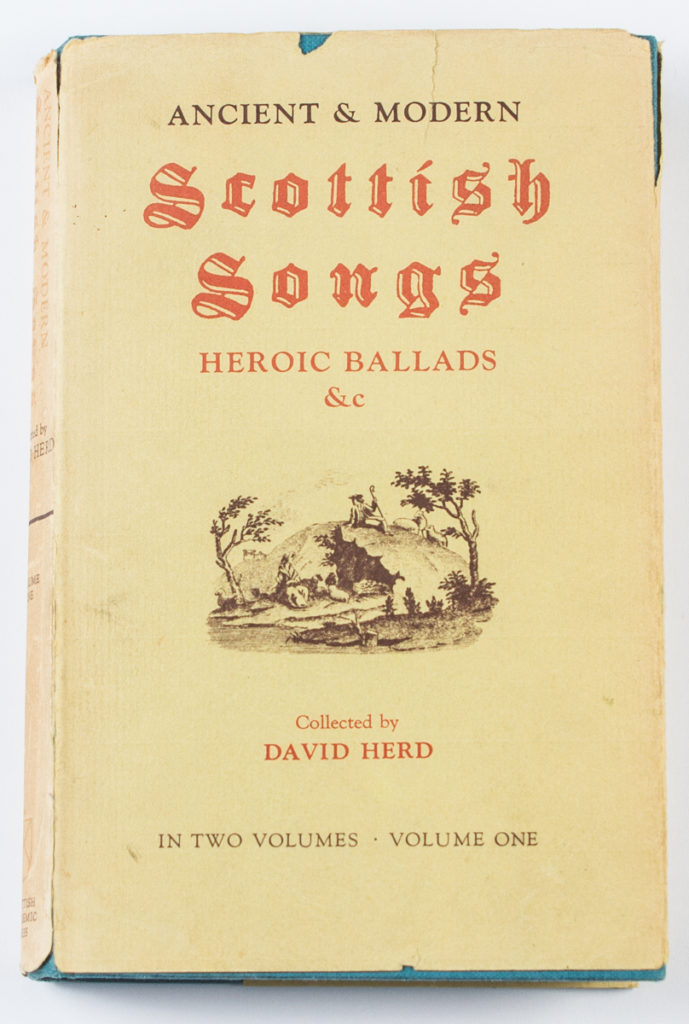
Cover of David Herd's book, showing
Photograph of David Herd’s Ancient and Modern Scottish Songs, Heroic Ballads, &c, currently on display in the museum’s special exhibit about Cecil Sharp.

We were delighted to be able to lend a number of books to the Birthplace of Country Music Museum for their new special exhibit The Appalachian Photographs of Cecil Sharp, 1916 to 1918, focused on the ballad collecting done in Appalachia by Englishman Cecil Sharp at the beginning of the 20th century. The books trace the journey of “Lord Gregory” (under various titles) from Scotsman David Herd’s Ancient and Modern Scottish Songs, Heroic Ballads, &c from the late 1700s to Bronson’s record of the tunes from the 1950s, along with the afore-mentioned and famous Child’s English and Scottish Popular Ballads, Sharp’s English Folk-Songs from the Southern Appalachians, and a book about the Greig-Duncan Folk Song Collection from Aberdeenshire in Scotland. We hope you’ll check out the exhibit to explore the journey of the “Lord Gregory” variants across these different books!

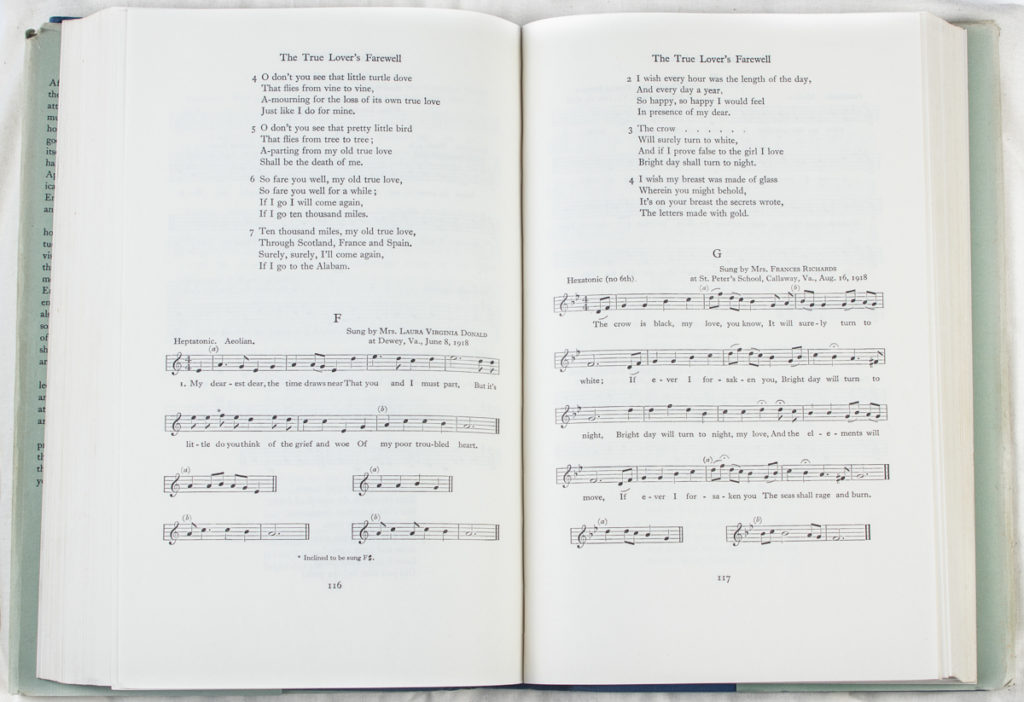
Cecil Sharp book, open to "The True Lover's Farewell" pages
Cecil Sharp’s English Folk-Songs from the Southern Appalachians is also on display in the Cecil Sharp special exhibit. It records the variants of “Lord Gregory” under the song title of “The True Lover’s Farewell. The version seen here under F was sung by Mrs. Laura Virginia Donald, one of the women featured in Sharp’s photographs in the exhibit.

The recording of “Lord Gregory” by Maddy Prior on the Silly Sisters album is magnificent, based on an earlier recording by Ewan MacColl. As for “The Storms are on the Ocean,” while many singers have followed in their footsteps, nothing compares to the original by The Carter Family. You can hear both these versions below:

Nor does anything surpass a visit to the Carter Family Fold, a favorite pilgrimage spot for visitors to Appalachia from across the water. For those unfamiliar, the Carter Family Fold runs Saturday night music and dance events, and we’ve enjoyed many a weekend there, listening to the old-time music and watching the amazing local dancers flat foot – from a woman who often dances with her (willing) dog to an elderly couple tearing up the floor with their moves!

The Carter Family Fold and The Carter Family’s song “The Storms Are on the Ocean” – and the history shared by the Birthplace of Country Music Museum and exhibits like The Appalachian Photographs of Cecil Sharp – illustrate just a few of the many connections between Appalachia and the British Isles. If the subject interests you, start with Child’s book. A world of discovery awaits!

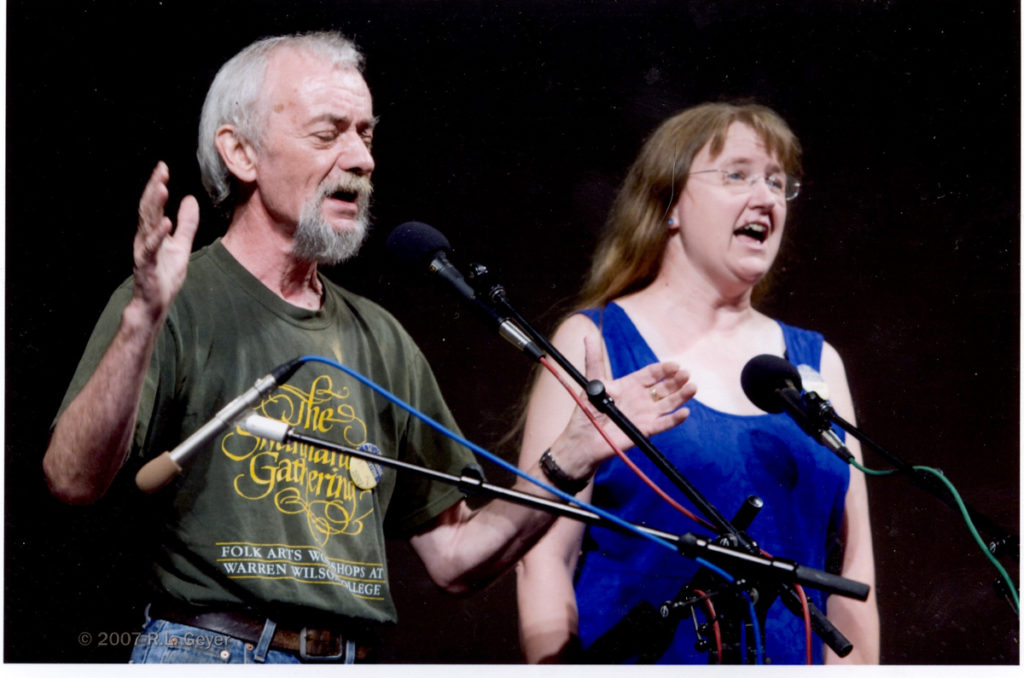
Jack Beck and Wendy Welch singing together on stage
Jack Beck and Wendy Welch performing at the Swannanoa Gathering a few years ago. The photograph was taken by the resident photographer R. L. Geyer, who gave permission for its use here.

Thank you to our guest bloggers Jack Beck and Wendy Welch, who wrote this blog post touching upon the journey of the “Lord Gregory” ballad, the perfect post to accompany our new special exhibit!

Jack was born in Dunfermline, Scotland, and lived most of his life there. A founding member of Heritage, one of the seminal traditional Scottish bands of the 1970s and 1980s, he was also the musical partner of Barbara Dickson. Awarded an honorary lifetime membership in the Traditional Music and Song Association for his services to Scottish traditional music, he spent five years as external examiner in Scots Traditional song at the Royal Scottish Conservatoire in Glasgow. Jack has lived for the last twelve years in Big Stone Gap, Virginia with his wife Wendy Welch, in the heart of Appalachia and old-time mountain music. Wendy is the author of four books, the most recent Fall or Fly detailing effects of the opioid crisis on foster care. She has a PhD in Folklore, is book editor for the Journal of Appalachian Studies, and was founding director of a storytelling non-profit in Scotland. Together they run a bookstore – Tales of the Lonesome Pine – the subject of Wendy’s memoir The Little Bookstore of Big Stone Gap from St. Martin’s Press.