Museum Archives - Page 25 of 34 - The Birthplace of Country Music
Listen
Play
Loading station info...

Reading is Music to the Ears!

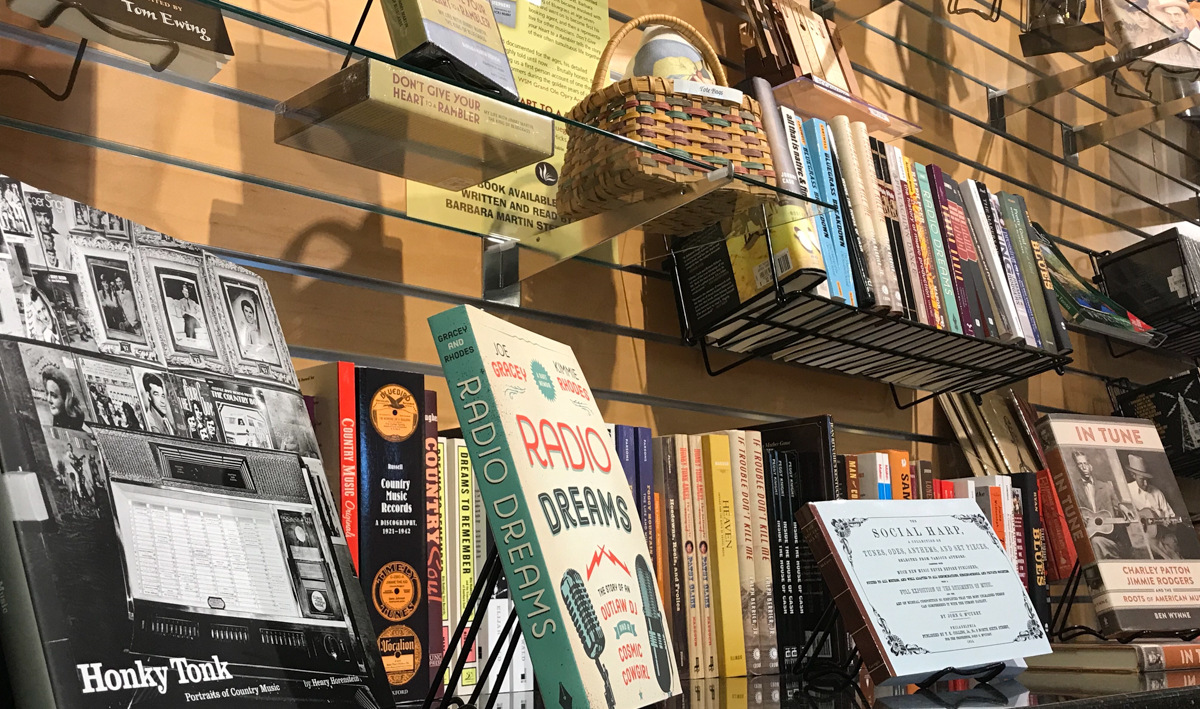
Each year on September 6, bookworms across America celebrate National Read A Book Day. Though this is a fine thing to celebrate, reading is, of course, important and pleasurable every day of the year. If one wants to learn more about country music history, what better place to start than with a book? While you can find all of the selections below through online sellers, these and other fine selections can also be found at the Birthplace of Country Music Museum in our museum store – so stop on by and pick one up. Here are just a few of my favorites to get you started!
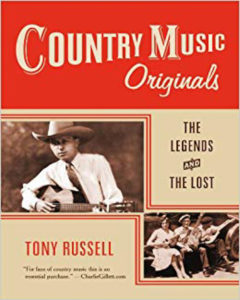
Cover image of Country Music Originals showing the title and two pictures of country music singers/bands.

Country Music Originals: The Legends and the Lost by Tony Russell

If you want to learn more about the important players in the world of country music, Tony Russell’s Country Music Originals is a great place to start. World-renowned scholar Russell presents biographies of figures in country music from the earliest days of recordings until the late 1940s. Highlighting superstars such as Jimmie Rodgers and The Carter Family and celebrating obscure figures such as Bernard “Slim” Smith and John Dilleshaw, Russell provides articles that are short enough to be approachable for the casual reader, but also in depth enough to spark interest for further reading. It’s a great place to start your country music reading journey!
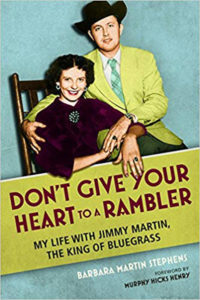
Cover image of Don't Give Your Heart to a Rambler showing title and the author with Jimmy Martin.

Don’t Give Your Heart to a Rambler: My Life with Jimmy Martin, the King of Bluegrass by Barbara Martin Stephens

While bluegrass music is widely regarded as having been born in late 1945, one could argue that the music did not achieve the “high lonesome” sound until a young guitar player and singer from Sneedville, Tennessee, joined Bill Monroe’s Bluegrass Boys in late 1949. Jimmy Martin is widely regarded as “The King of Bluegrass” and is one of most charismatic and controversial figures in bluegrass. Don’t Give Your Heart To A Rambler was written by Barbara Martin Stephens, Martin’s longtime partner and the driving force behind his rise to success in the music business. Barbara spares her readers no gritty details as she gives an inside look into life with the King. Through all the abuse and hardship she suffered in her personal life, Barbara was still able to become the first female booking agent on music row. Nothing short of inspiring, this book is a must-read for all bluegrass fans and those interested in women in country music.
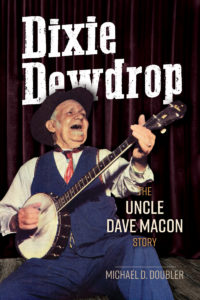
Cover image of Dixie Dewdrop showing title and Uncle Dave Macon playing the banjo.

Dixie Dewdrop: The Uncle Dave Macon Story by Michael D. Doubler

Uncle Dave Macon is one of the most iconic figures of early country music, and his style of banjo playing and showmanship has inspired countless musicians – and so Dixie Dewdrop tells the story of one of country music’s first stars. Michael Doubler, the great-grandson of Uncle Dave, spins a narrative that ties together Uncle Dave’s personal life and the music and culture of the world in which Uncle Dave lived, giving readers a glimpse into a different side of this legendary performer. If you’re curious about this book and Uncle Dave Macon, you can join Doubler at the Birthplace of Country Music Museum at 1pm on Sunday, November 4 for a special talk and book-signing.
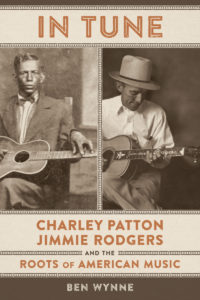
Cover image of In Tune showing title and pictures of Charley Patton and Jimmie Rodgers.

In Tune: Charley Patton, Jimmie Rodgers and the Roots of American Music by Ben Wynne

Before record companies began marketing music to specific audiences, music flowed across cultural lines, and the line between traditional African American and white rural music was blurred. With the wonderfully informative In Tune, Ben Wynne compares and contrasts these two giants of roots music within that context. Both men were born in Mississippi around the same time, and both passed away much too early in their musical careers and their lives, dying within a year of each other. Though from separate sides of a deeply segregated society, these men lived hard lives and had experiences that were remarkably similar. This book provides commentary on the social dynamics that shaped country music, and it gives readers a detailed look into the lives and legacies of these two important figures.
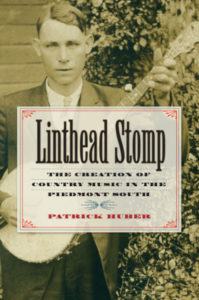
Cover image of Linthead Stomp with title and picture of banjo player.

Linthead Stomp: The Creation of Country Music in the Piedmont South by Patrick Huber

Geography and country music go hand-in-hand, and regionalisms are part of what makes early country music so diverse. Bristol with its significant music history is heralded as the “Birthplace of Country Music,” but in reality, American roots music was shaped all across the nation. Patrick Huber explores the impact of textile mills in the Piedmont region of the Carolinas in Linthead Stomp. With a high population of displaced rural southerners seeking work in the mills, a new market for early country music entertainment was opened. Rural music moving to town also changed the music, and the changes that were taking place in the 1920s and 1930s in the Piedmont set the stage for country music as we know it. This book is a must-read for anyone interested in the commercialization of country music.
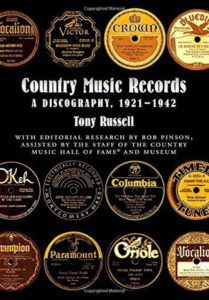
Cover image of Country Music Records with pictures of various record labels and the title.

And finally a “special mention”: Country Music Records: A Discography, 1921–1942 by Tony Russell

All of the books previously mentioned are easily digestible reads for the casual country music fan. However, if you find yourself hungering for all the facts about early county music records, this is the book for you. Roughly the size of your local phone book and twice as dense with information, this book contains the dates, locations, and personnel of every commercial country record recorded before 1942. A must have for any diehard country music fan and connoisseur of fine shellac.

So…I’ve given you my favorites. Now tell us: what are your favorite music reads?!
From Devoted Terrier to International Icon: The Story of Nipper

It’s #NationalDogDay today so what better time to indulge in a little doggy detection?

If you love dogs – as I do – you can’t help but love the logo made up of a small terrier dog sitting in front of an old gramophone. As a curator at a museum focused on music history, I see this logo on a daily basis on the many Victrolas and 78s we have on display and in our collections. And so I was ready and willing to turn terrier myself and dig deep to find out more about that dog and one of the most recognizable logos in the world.

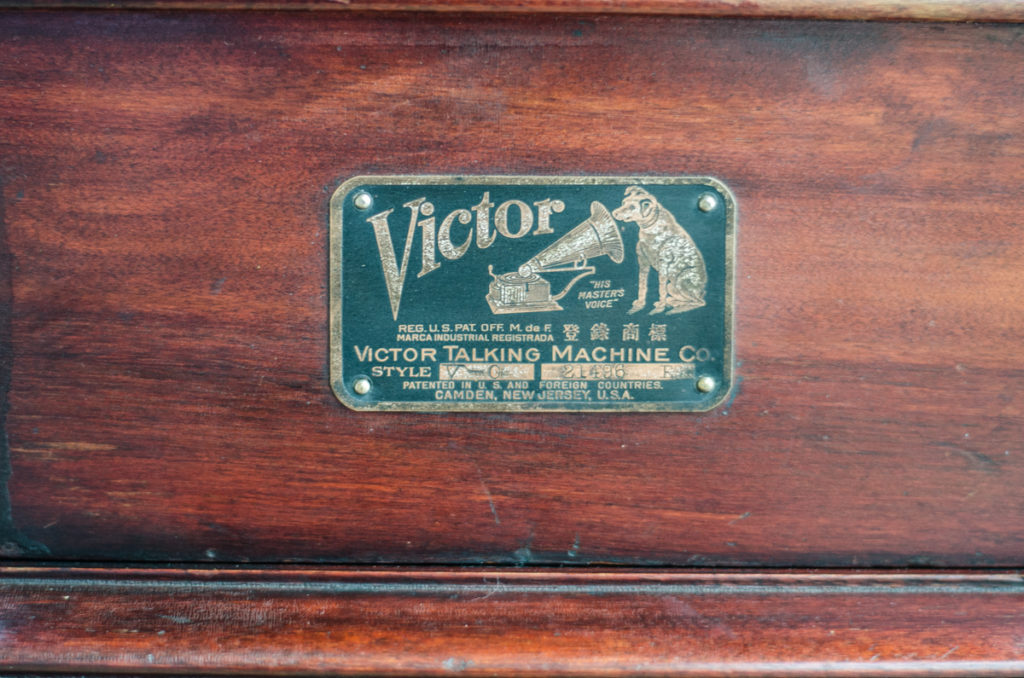
Close up of small metal plaque bearing the Victor logo.
The Victor Talking Machine Company logo on one of the Victrolas in the museum’s collections. © Birthplace of Country Music; photographer: Haley Hensley

First things first: who is the dog in the logo? The pup in question was a real live dog owned by a theatrical scenic artist named Mark Barraud in Bristol, England in the late 1800s. He was called Nipper, inspired by his penchant for nipping people’s heels. Apparently, as with many terriers, Nipper was also a ratter of great success. He was devoted to his master, often following Barraud on stage for transformation scenes and when he was called to be recognized at the end of the play. After Barraud passed away, Nipper went to live with his brother Francis Barraud, a painter who lived in London.

While obviously a terrier, there has been some debate about Nipper’s exact breed. Some have identified Nipper as a Jack Russell, while others have claimed fox terrier or bull terrier. While looking much like a Jack Russell in the face, Nipper’s long legs seem to disprove that identity. The discussion has even found its way into the pages of the New Yorker and the website of the American Kennel Club, and many now agree that Nipper was actually a mixed-breed made up of the stately fox terrier and the charming bull terrier.

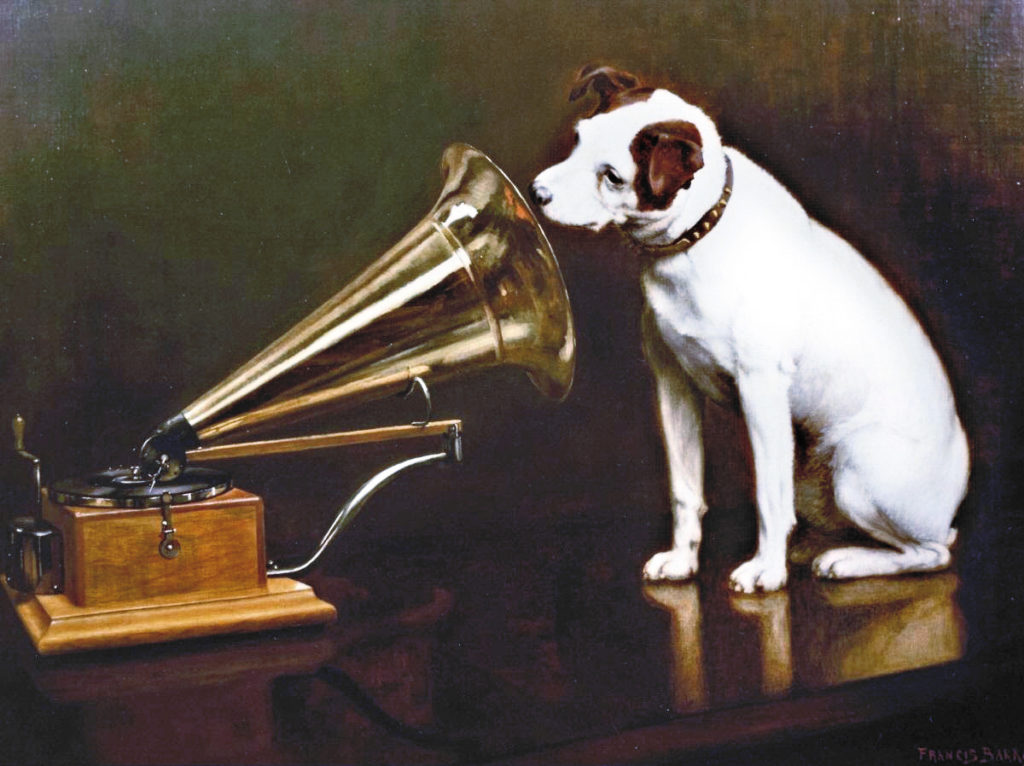
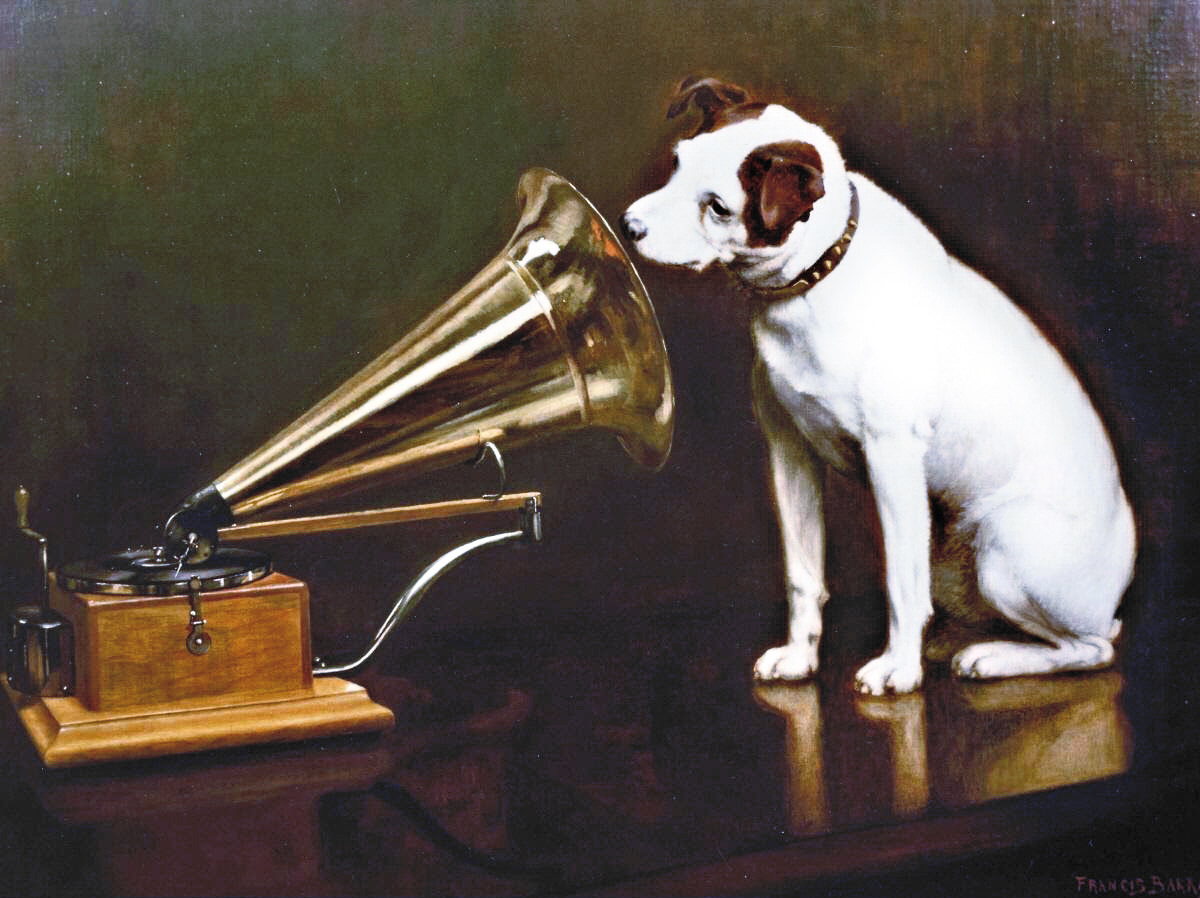
But how did Nipper end up as the model for the Victor logo? In the 1890s, Francis Barraud painted Nipper’s portrait with the dog looking at the horn of a cylinder phonograph, head cocked quizzically as if listening intently to whatever sound it was emitting. The painting was originally called “Dog Looking at and Listening to a Phonograph,” but he later paired the painting with the slogan “His Master’s Voice,” the idea being that the picture showed a dog who missed his dead owner listening to a recording of his master’s voice. Indeed, there were even stories that Nipper was found atop his master’s coffin listening to his voice through a phonograph, but this is just a tall tale.

This being the era of the new technology of phonographs and gramophones, Barraud saw an opportunity and he filed a copyright on the image in February 1899. Soon after he approached the Edison-Bell Company in England to see whether they would be interested in buying the painting to use for advertising their phonograph machines, but they didn’t bite. He then went to Emile Berliner’s Gramophone Company, also in England – executives there expressed interest as long as he could replace the phonograph in the painting with one of their gramophones instead. Easily done and agreed, Barraud was paid 100 pounds sterling for the painting and the copyright, including the slogan “His Master’s Voice.”

Painting of a disc gramophone, Nipper sitting in front of it looking into the shiny brass horn.
“His Master’s Voice” by Francis Barraud, updated with The Gramophone Company’s disc gramophone and its shiny brass horn. Public domain image available on Wikimedia Commons

The design of a dog listening to a gramophone, based on Francis Barraud’s painting, was soon being used to market disc gramophones by Berliner’s company in America, and it helped to launch the products of the Victor Talking Machine Company in 1901. Nipper the trademark became a rallying cry for Victor quality: “Look for the dog, on the horn, on the record, on the cabinet” and “Don’t buy a record without a dog. Imitations have neither the dog nor the loud and clear tone of our records.”

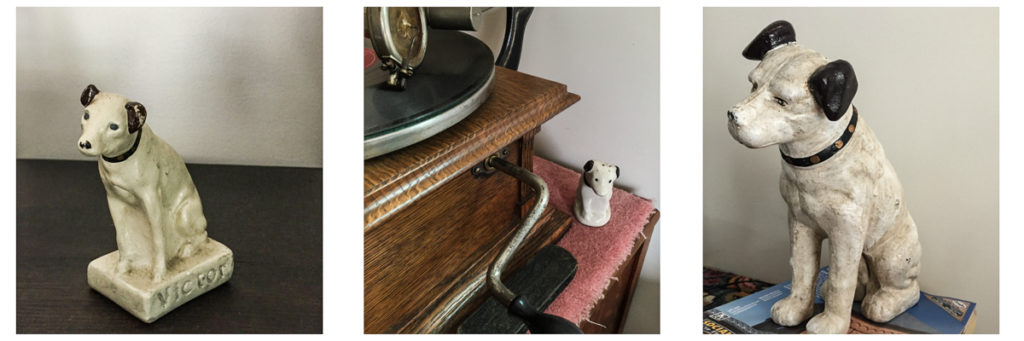
Not only was Nipper seen on the company’s products, but he also adorned their letterhead and envelopes, along with a host of advertising and promotional materials. And of course, the company’s marketers quickly realized that Nipper was an image that would sell other things too. He could be found on reproductions of the paintings and on postcards, and as souvenirs such as paperweights and pen trays. He was even used in satirical cartoons and images such as “His Master’s Vice” where he sits amongst whisky bottles to highlight the dangers of alcohol. And today dedicated Nipper collectors look for his many manifestations in antique stores and on eBay, at collector’s fairs and while digging through estate sales. Indeed, there is an entire book to aid collectors in their search – Nipper Collectibles: The RCA Victor Trademark Dog (a big help in this blog post!).

Three images of small Nipper statuettes, including one beside a Victor gramophone.
A few Nipper collectibles, courtesy of Bob Bledsoe. © Birthplace of Country Music

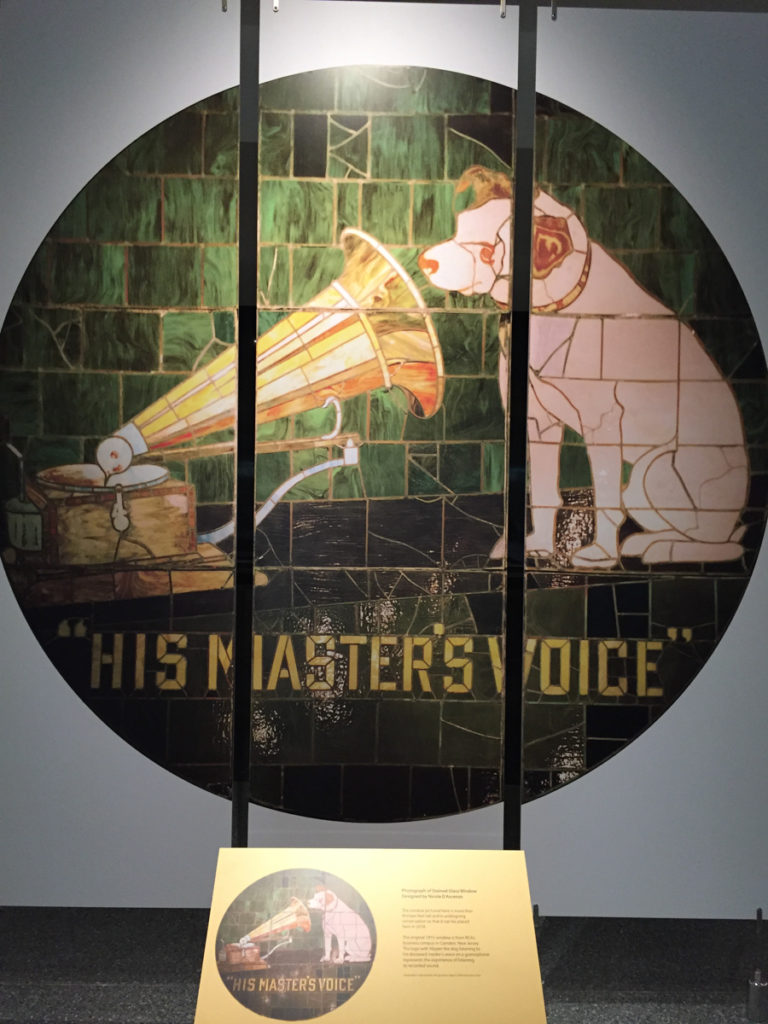
And the painting of Nipper served as a model for other, more grandiose advertisements for the company over the years, including one of my favorites: a beautiful stained glass window from Victor’s headquarters in Camden, New Jersey, now one of the landmark objects on display in the Smithsonian’s National Museum of American History. And even more impressive: a 28-foot tall, 4-ton Nipper can also be seen on top of a warehouse in Albany, New York.

Round stained-glass window, beautiful colors highlighting the design of the Nipper painting and with the word's His Master's Voice beneath the image. A museum label is seen in front of the window.
Stained glass window from the Victor Company building in Camden, New Jersey, showing Nipper listening to the gramophone now on display at the Smithsonian. Courtesy of Rene Rodgers

There is a long and convoluted history of the evolution of the Victor trademark bearing Nipper to the use of the logo by later iterations of the company and beyond, including RCA Victor, EMI, and HMV (standing for “His Master’s Voice”). But despite Nipper’s significance in the history of the recording industry and of advertising and branding, for me it all comes back to Nipper the dog: a dog that went from being a loyal companion to his two owners and a tenacious hunter of rats and other small beasts to an international icon, recognized the world over.

Finally, just for fun, my search for Nipper info led me to this wonderfully silly video called “Nipper Runs Amok.” Probably not the image best-suited for selling gramophones…


The Banjo Gathering: Exploring Banjo History and the American Experience

I came to the banjo in the early months of 1994, at the age of 19, when I saw a PBS broadcast of the documentary The Weavers: Wasn’t That a Time! (1981). In addition to being entranced by depictions of the banjo in the hands of the great Pete Seeger (1919—2014), I was also deeply moved by what I felt to be a positive sense of community projected in the film. It was a major turning point as I became transfixed, learning about how the power of music shaped various social movements in the 20th century. Within the next year, after getting my own banjo, I discovered that the instrument could serve as a gateway to learning about American history in ways that I had never before experienced.

Now, after 24 years of chasing the banjo and its long, complex history, I often reflect on the incredible people I’ve collaborated with through the years, building on that sense of community that attracted me to the banjo in the first place. I’ve enjoyed many rich opportunities to learn from a great diversity of individuals and traditions in the Americas, West Africa, and Europe. Here in the United States, some of the most significant people I’ve known in the banjo world are associated with the annual Banjo Gathering. Formerly called the Banjo Collectors Gathering, this event has informed many aspects of my life as an archivist, ethnomusicologist, and musician.

Since 1998, this informal network of collectors, researchers, instrument builders, and musicians has shaped the way people understand and appreciate the banjo’s deep links within the greater American experience. What makes the Banjo Gathering distinct from other banjo-centric events is that its founders – banjo collectors and scholars Peter Szego and Jim Bollman – have maintained the event to focus entirely on the banjo ​as a historical, cultural, and design object.

Each Gathering has met in a range of locations along the east coast with geographic significance to banjo history, such as Rochester, Boston, Long Island, Philadelphia, Baltimore, Washington, D.C., Nashville, Knoxville, Tennessee, and Williamsburg, Virginia. This year, the Banjo Gathering is celebrating its 20th anniversary (1998—2018) on November 1—4 by convening at Bristol’s Birthplace of Country Music Museum (BCMM). Here, registered participants will experience the Gathering’s signature activities while exploring the banjo’s intersections with the museum’s mission to illuminate Bristol’s role in the birth and development of country music.

One of those signature activities is an “expo,” which will occupy the museum’s Special Exhibits Gallery. In this space, attendees will display instruments and ephemera predominantly from the 19th and early 20th centuries, and they will also get the chance to network and to talk in a more casual atmosphere.

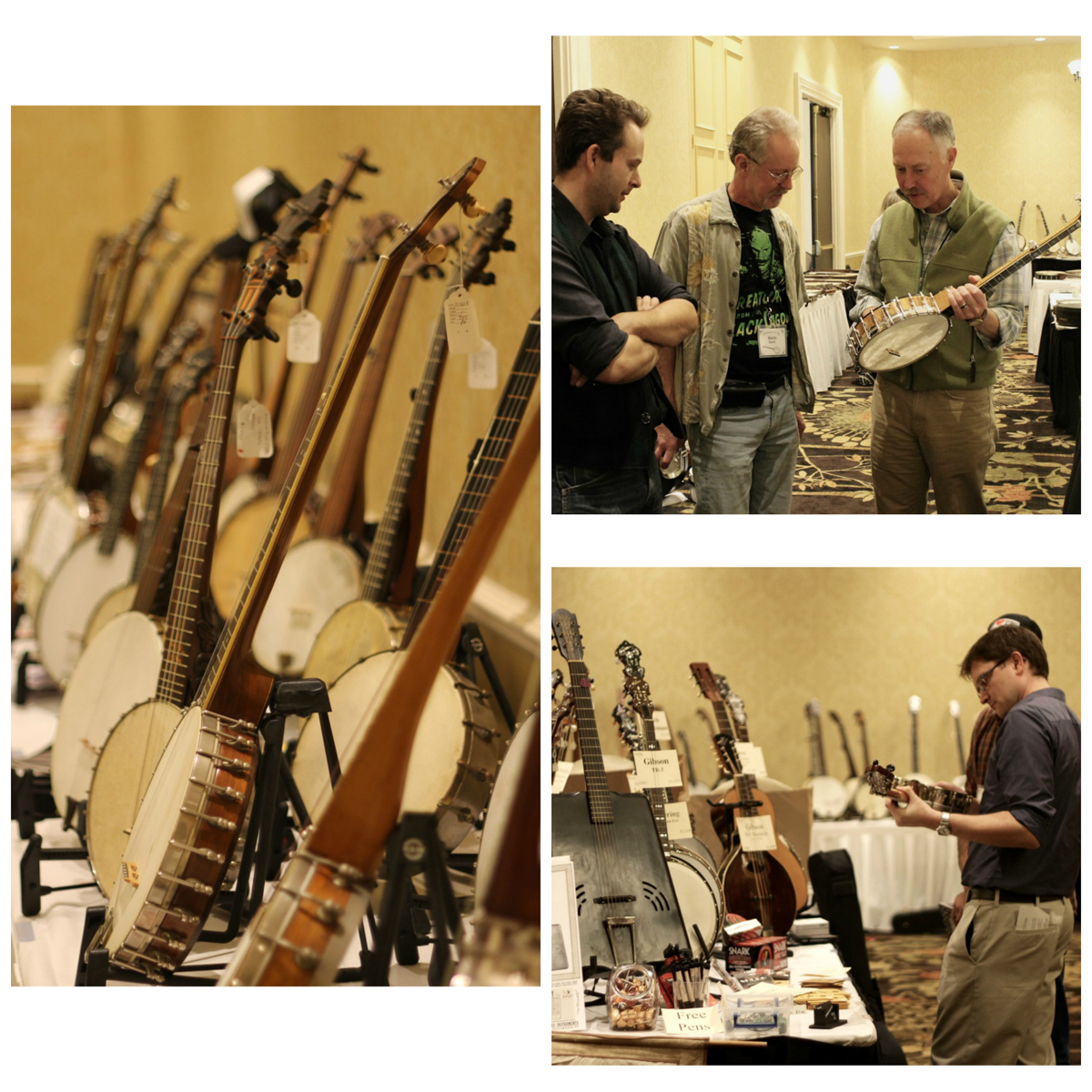
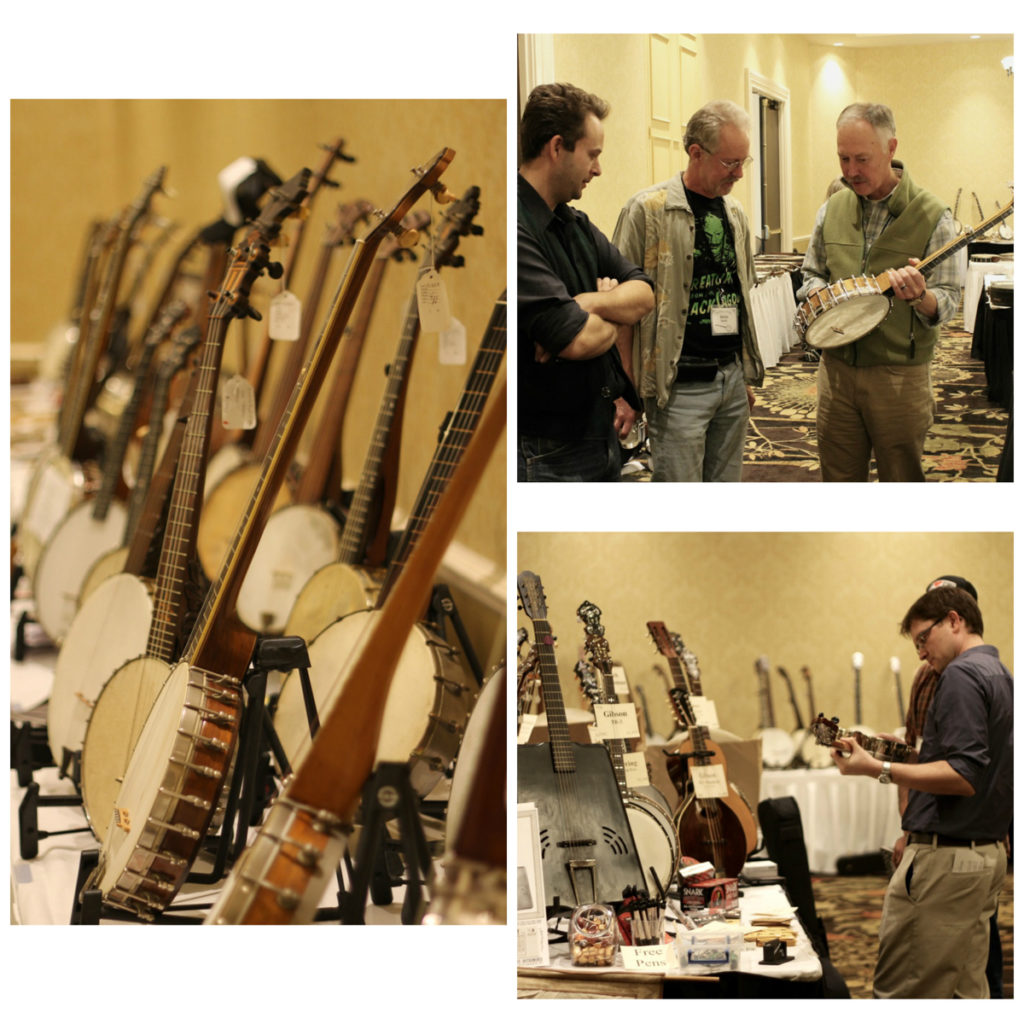
Three pictures from Banjo Gathering 2017: Several banjos displayed on stands at the expo (left); two men looking at a banjo being held by a third man (top right); a display of banjos and related ephemera on a table with one male visitor (bottom right).
The “expo” at the 2016 Banjo Gathering: Display tables filled with banjos (left); attendees Andy Fitzgibbon, Kevin Enoch, and Richard Jones-Bamman discussing a banjo during a break between presentations (top right); attendee Chris Witulski visits display tables filled with banjos and related instruments (bottom right). Photographs courtesy of Kristina Gaddy / Banjo Gathering

The Gathering also provides a platform for the latest scholarship, talks, and panel discussions on banjo history. As outlined on the Banjo Gathering website, the event welcomes presentation proposals that cover:

* The art and craft of banjo-making from early gourd instruments to contemporary banjos

* The banjo’s role in the early recordings and music and dance in genres such as minstrelsy, jazz, country, old time, and bluegrass

* The American experience through banjo history, including the African Diaspora; America’s history of slavery, racism, and resistance; and social class and cultural stereotypes

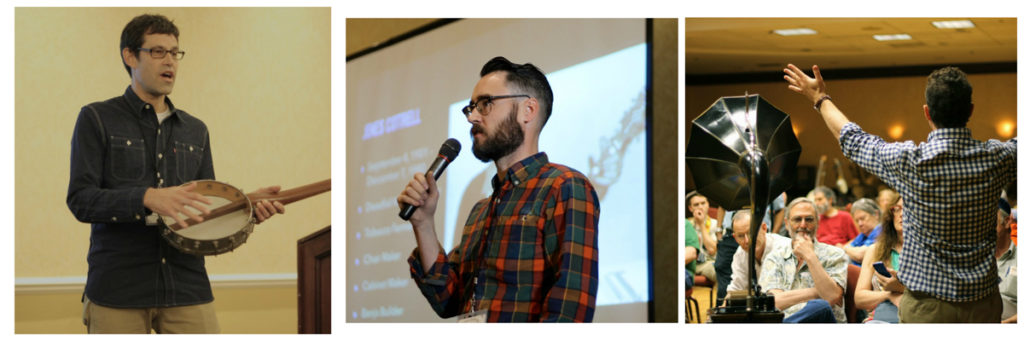
Three pics: Man holding a banjo while discussing it in a presentation (left); man holding a mic in front of a PowerPoint presentation (center); man facing a large audience with his arms held wide and a Edison recording machine with morning glory horn to his left (right).
Two presenters from the 2016 Banjo Gathering – Brooks Masten (left) and Christopher Dean (center) – share their knowledge about banjo-building traditions. Jerry Fabris, a 2014 Banjo Gathering presenter, explains early Edison recording equipment that was used at the Gathering to demonstrate historical recording techniques for the banjo (right). Photographs courtesy of Kristina Gaddy / Banjo Gathering

Every Gathering also typically includes site visits and field trips to locations that add value to the narratives surrounding banjo history.

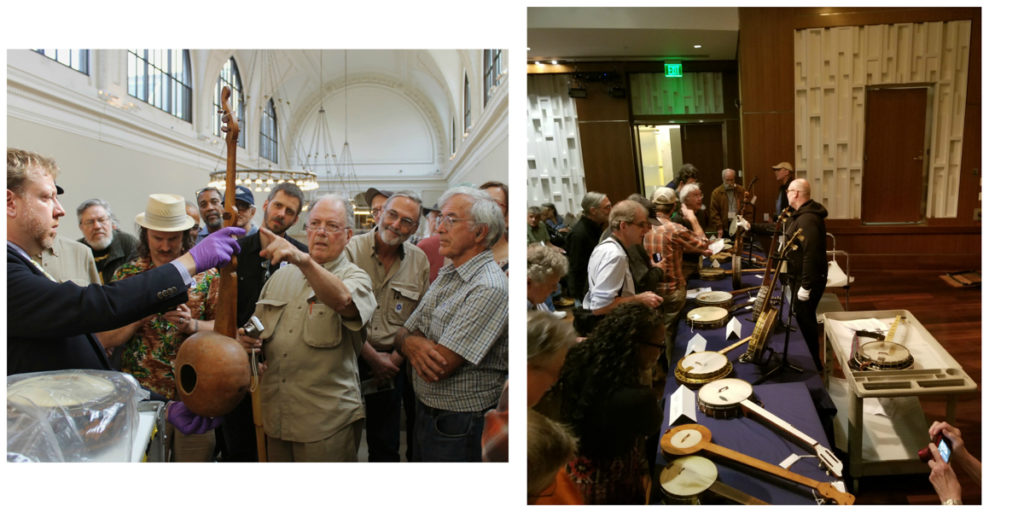
Two pics: Several Banjo Gathering attendees in the one of the Met Museum's galleries being shown a banjo by a curator (left); several participants looking at a variety of banjos and related ephemera on a table in a museum education room (right).
In 2014 Banjo Gathering attendees visited the banjo holdings at the Met in New York City (left), and in 2017 participants got the chance to view a cross-section of the banjos and related ephemera in the collections of the Smithsonian National Museum of American History (right). Photographs courtesy of Kristina Gaddy / Banjo Gathering (left) and Greg Adams (right)

I attended my first Banjo Gathering in 2001 at the invitation of banjo builder and historian George Wunderlich, and I’ve only missed one Gathering since that time. I keep coming back year after year because I see the constant potential of tapping into the knowledge of other attendees, exploring the instruments and ephemera they bring, and brainstorming ways of applying that knowledge in public-facing outputs. A goodly number of exhibits, books, and recordings have grown out of this event, and 2018 looks like it will maintain this trend.

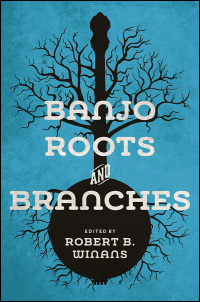
What makes the 20th Anniversary Banjo Gathering particularly special for me is that it coincides with the University of Illinois Press publication of Banjo Roots and Branches, edited by Robert B. Winans. Many of the authors of this highly anticipated book are regular Banjo Gathering attendees. The book’s subtitle – West African precursors, African-Caribbean origins, North American journeys – measures the breadth of dedication and influence that the Banjo Gathering represents. The book not only pays homage to another University of Illinois Press author – Dena Epstein and her book Sinful Tunes and Spirituals – but it is also dedicated to Shlomo Pestcoe (1958—2015), who was a part of the greater Banjo Collectors community and a driving force behind the book.

Book cover of Banjo Roots and Branches -- blue background with a banjo shape bearing tree branches and roots.
The book cover of Banjo Roots and Branches makes a strong statement with its graphic design. Image from the University of Illinois Press website, where the book can be purchased.

For some attendees, the Banjo Gathering is just a good time to get together with friends who like to collect similar things and to talk about their passion. For others, this event provides access to primary source materials that illuminate banjo history in ways that do not exist anywhere else. For me, I see the Banjo Gathering as an opportunity to ask questions about what it means to understand the American experience using an instrument whose history has the power to challenge and inspire.

Come explore what banjo history and the American experience means to you when you reserve your place at the Banjo Gathering!


Celebrating You! The Birthplace of Country Music’s Favorite Holiday

Happy Get to Know Your Customers Day! Or at least one of them (they happen every third Thursday of each quarter)! While every day is special to us because of the people who walk through our doors, it seems only right today to share a celebration of these customers – near and far, young and young-at-heart, new visitors and old friends – who come to see us at the Birthplace of Country Music.

And so I decided to consult our frontline staff, our best and most relatable customer associates, to ask them about their experiences working at the museum and their favorite moments with our patrons. I hope you enjoy learning about their experiences as much as I did!

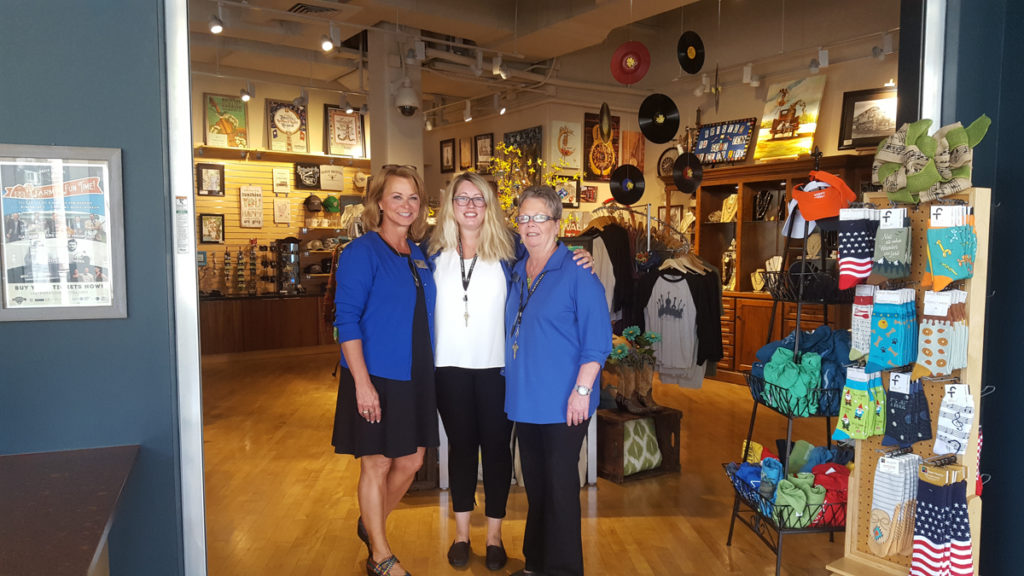
A photograph of the three frontline staff associates standing in The Museum Store.
Frontline staff Cheryl Wedel, Baylor Hall, and June Marshall. © Theresa Mitten

I met first with Baylor Hall, our museum manager. A native of Lebanon, Virginia, Baylor oversees all of our frontline staff, assists in customer service and special events, and keeps The Museum Store stocked with a variety of wonderful gifts and souvenirs. Baylor has been working as BCM’s museum manager since January 2018. At first, when I asked her about her favorite museum memory, she drew a blank – it was hard to pinpoint just one! Then she went on to say that “things are exciting and always changing,” which she likes, but she has found that a high point of her position is being able to meet the many artisans that partner with us to sell their work in the store as they are always so thankful to have an opportunity to showcase their work here at the Birthplace of Country Music Museum.

Baylor also always enjoys interacting with our museum visitors and seeing how music can be a unifier for all types of people. She said, “One day a couple who loves country music came in and they were talking about when they saw Johnny Cash at The Carter Fold. Another customer in The Museum Store had also been there as a bassist and one of our guest DJ radio hosts had been there too, enjoying the same musical experience.” Baylor thought it was wonderful to see three strangers bonding over their shared musical ties!

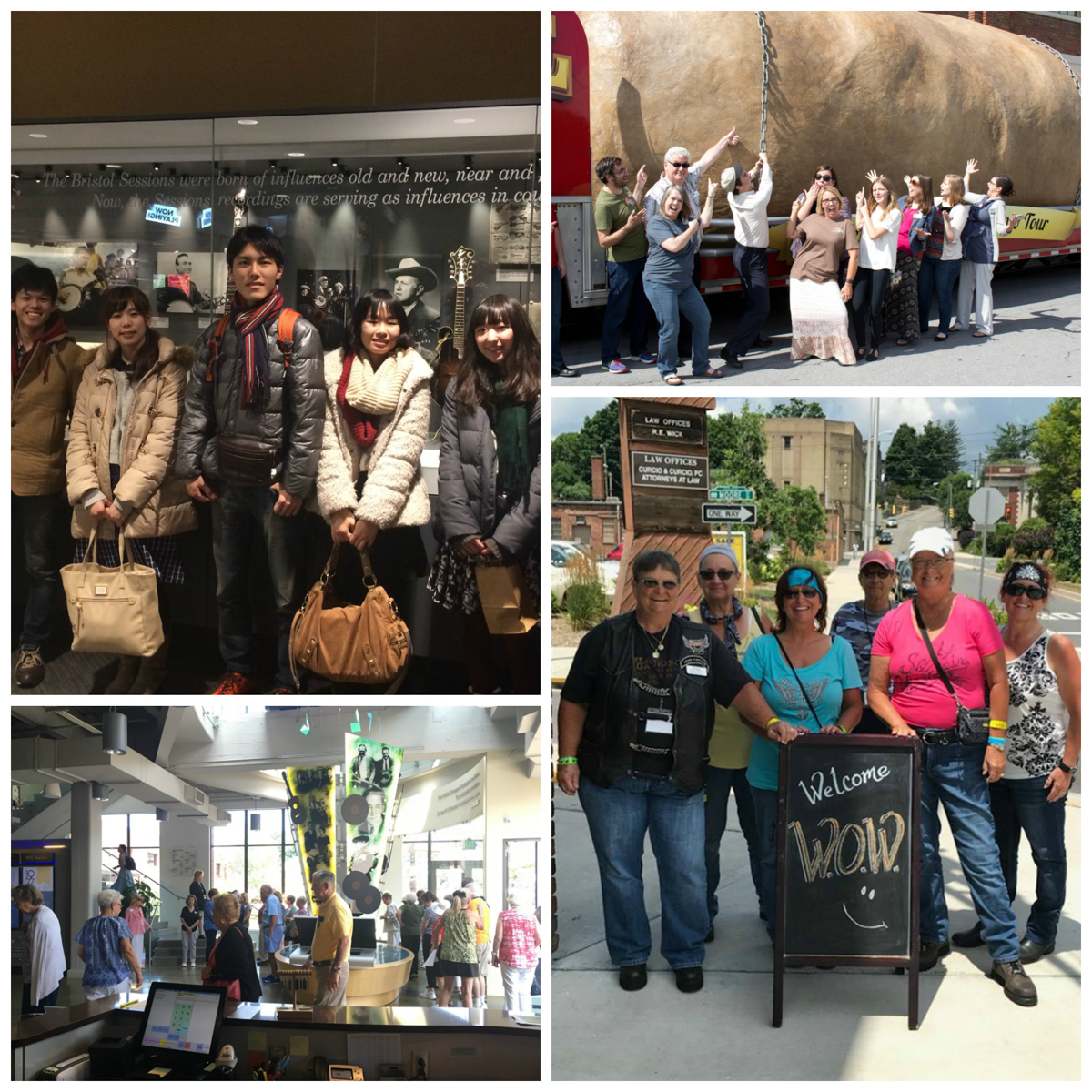
Four photographs: 1) Several Japanese university students standing in front of the instrument case in the museum's permanent exhibits; 2) BCM staff striking funny poses in front of the Big Idaho Potato truck in front of the museum; 3) Several WOW motorcycle riders, all women, standing outside the museum beside a Welcome sign; 4) A view from the frontline reception desk into the lobby, filled with group tour visitors.
Just a few of the visitors to the museum over the past few years, clockwise from top left: Students from Nagoya University Bluegrass (Country Music) Circle in Japan; the Big Idaho Potato, which got our staff pretty excited; Women on Wheels, a women’s motorcycle organization; and a tour group from Excursions Unlimited. © Birthplace of Country Music

Next, I spoke with Cheryl Wedel and June Marshall, two of our other welcoming frontline associates, both from Bristol, Tennessee. Of all the frontline staff, Cheryl has been at BCM the longest, with this year’s Bristol Rhythm & Roots Reunion marking her third year with the organization. Cheryl told me that her favorite part of the museum is the Immersion Theater, which screens The Unbroken Circle film, and that her favorite part of her job is encountering people from all over the world – the museum has seen visitors from all 50 states and over 45 countries! Cheryl’s only wish is that locals were more aware of the museum and what it can offer them. And despite the museum’s many world travelers, one of her favorite customer encounters isn’t one from across the world, but one in our own backyard: “There were two elderly ladies from Southwest Virginia that came in one day who told amusing stories about going to music performances in the late 1980s. They were so full of excitement as they reminisced.” This story underlines the enthusiasm our visitors have for the music of this area and how a visit to the museum often prompts them to share that love and enthusiasm with us – a real perk of our jobs.

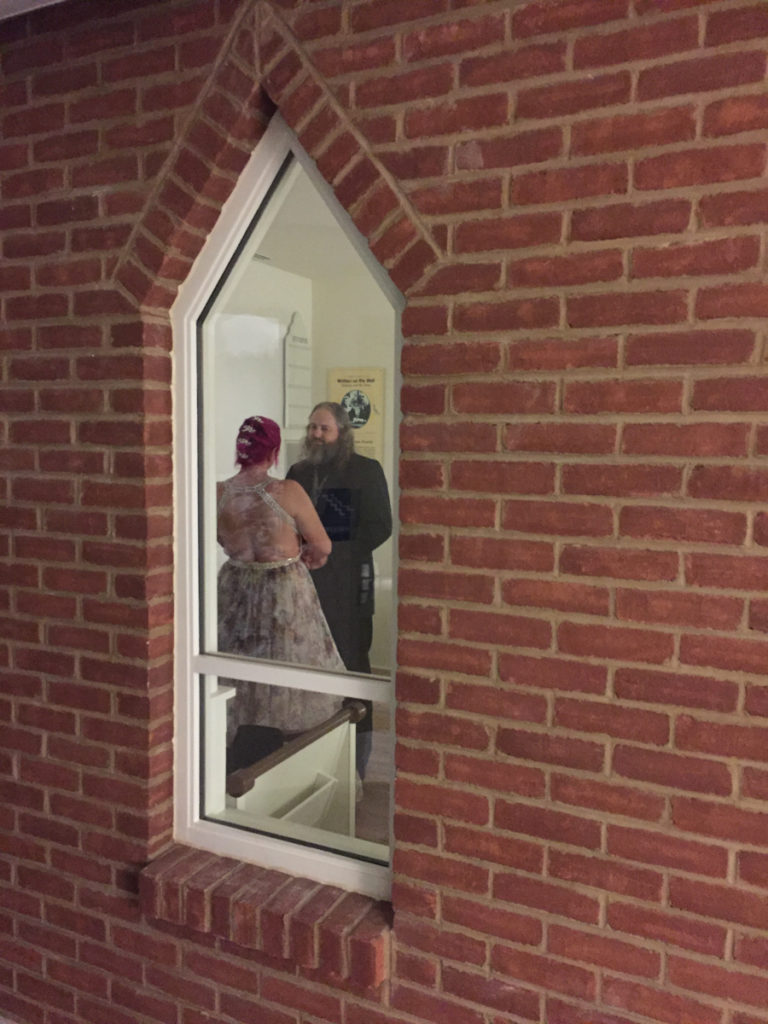
June began working at the museum in October 2017 and thoroughly enjoys working with customers daily. When I asked what her favorite part of her job was, she emphasized that it was both fun and exciting. One of her favorite facets of the museum is that it has a working radio station as part of its permanent exhibits – Radio Bristol – which gives visitors the chance to see the work of the station and often to see and hear the music it plays live. She also has many great memories about her customers, but one sticks with her the most: a visitor named Ellie. She met Ellie, a woman from Australia, one day when she was visiting the museum, and the two instantly hit it off. Recently, Ellie got married in the museum’s chapel exhibit, and she still continues to catch up with June on her visits here – the beginnings of a beautiful friendship!

The bride and groom can be seen facing each other during their vows through the small chapel window in the museum exhibits.
Our first wedding at the museum with the happy couple viewed through the chapel window, part of the museum’s permanent exhibits. © Birthplace of Country Music

I also spoke with Tracey Childress – she works primarily at the BCM offices as the administrative assistant and group tour sales associate. Tracey has been with the Birthplace of Country Music for five years, and her favorite memory is of her very first day working for the organization. She said, “I was so excited and honored to be a part of this organization; I was over the moon!” Tracey feels privileged to meet people from all over the world, but some of her favorite customers are a sweet set of twins that come to visit her every year to buy tickets and a poster for the Bristol Rhythm & Roots Reunion festival. They could do this online or at the museum easily, but they come to the offices so that they can take the time to visit with Tracey.

A picture of the Scouts posing with their sled in front of the museum -- the sled looks like a guitar laying on its side with a musical note as the handle.
A local Boy Scouts troop participating in the Klondike Derby in downtown Bristol tricked out their sled in honor of the birthplace of country music! It’s wonderful to see the inspiration our visitors get from their musical heritage.

Finally, Scotty Almany, formerly a frontline associate and now the museum’s digital resources manager, joined the museum in July 2014 right before it opened. As a frontline associate, Scotty’s favorite part of his job was interacting with visitors, learning about what brought them into the museum, whether it was a planned or spontaneous trip, and hearing visitor reactions to the museum before and after their tours.

Scotty has also enjoyed meeting country music fans from across the world – especially from Scandinavia, where country music is alive and thriving! His favorite customer memory, however, is of a man from Northern California who knew all about the Birthplace of Country Music’s content – a true fan of the history and the music – and was on the board for a shipyard museum. They kept in touch, and the man helped Scotty during a project for his master’s degree in Museum Studies.

As the collections management intern here at the Birthplace of Country Music Museum, I loved hearing from our staff about their daily happenings and the incredible people they get to meet every day. I don’t get to meet our visitors as frequently as I’d like, but I’m always glad to hear about you from our welcoming staff. I hope to get to know more of you soon!

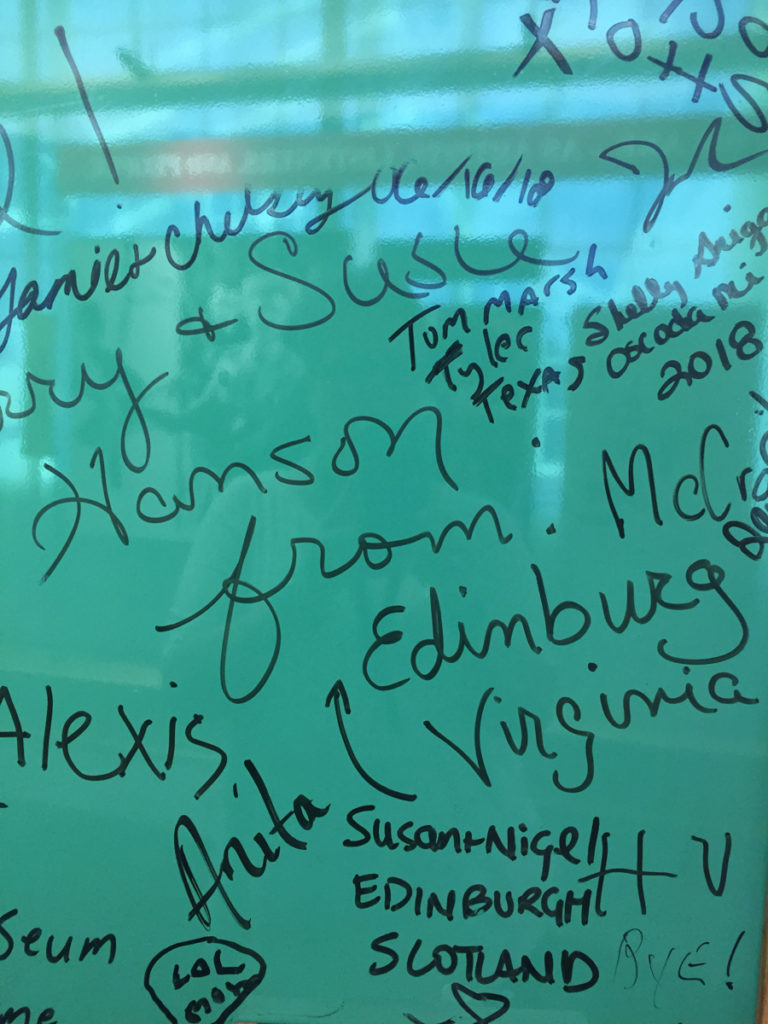
A picture of two of the signatures on the museum's interactive Green Board -- one from someone in Edinburgh, Scotland, and the other from someone in Edinburg, VA!
Our frontline staff love meeting visitors from near and far. Above, visitors from Edinburg, Virginia, and Edinburgh, Scotland unite over their visit to the museum. © Birthplace of Country Music