Museum Archives - Page 23 of 34 - The Birthplace of Country Music
Listen
Play
Loading station info...

Radio Bristol Book Club: Sounder

Welcome to Radio Bristol Book Club! Inspired by the museum’s current special exhibit – Reading Appalachia: Voices from Children’s Literature – readers from BCM and the Bristol Public Library are coming together each month to celebrate and explore one book featured in the exhibit. We invite you to read along and then listen in on Radio Bristol (via 100.1 FM, the website, or the app) on the 4th Thursday of each month at 11—11:30am when we will dig deep into the feelings and questions raised by the books, learn more about the authors, and celebrate the joys of being a bookworm!

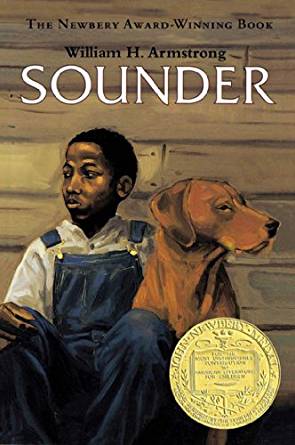
Our first book is Sounder by William H. Armstrong, which we will be discussing on-air on Thursday, March 28.

Sounder is the award-winning book that tells the tale of a sharecropper family and their beloved coonhound Sounder in the late 19th-century South. Life as a sharecropper is hard, and the father and Sounder must hunt for food for the family every night. When food is scarce, the father resorts to stealing to provide for his starving family. Not long after, the sheriff and his deputies come to arrest the man, and Sounder is shot in the process. What follows is a story that is at times gut-wrenching and yet hopeful as we learn lessons in the loyalty, love, and courage one needs in the face of overwhelming adversity.

William H. Armstrong’s Sounder was the recipient of several awards, most notably the 1970 Newbery Medal; this award honors the “most distinguished contribution to American literature for children” and is celebrated annually by the Association for Library Service to Children, a division of the American Library Association. In this installment of Radio Bristol Book Club, we will discuss the place that Sounder holds in literature, especially Appalachian literature. We will also discuss the way the author chose to tell this story and how effective this method was, both then and now.

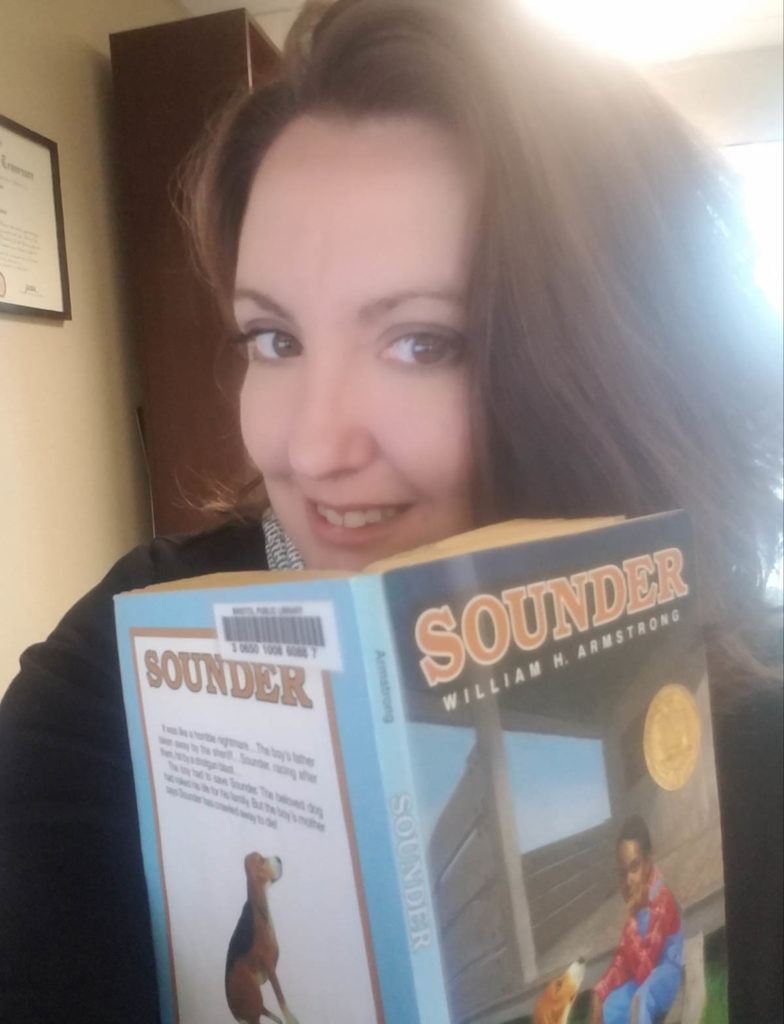
Selfie of Amy Kimani peeking over the top of her copy of Sounder
You’ll find me always with a good book, and here I am reading Sounder! Photograph courtesy of Amy Kimani

We are so excited to bring Radio Bristol Book Club to you and cannot wait to discuss our first book! We hope you will join us and read Sounder for yourself. You can pick up a copy at your favorite local bookstore or stop by the Bristol Public Library and check out a copy of Sounder today! The librarians at the library will be happy to help you find a copy of the book in the format that suits you best, from book to audiobook to e-book.

Make plans to join us at 11:00am on Thursday, March 28 for Radio Bristol Book Club! And be sure to visit the Reading Appalachia exhibit, on display at the museum now through June 30, 2019!

Selfie Expression: #MuseumSelfie Day at the Birthplace of Country Music Museum

Today is #MuseumSelfie Day, a chance for museums across the globe to show the fun side of museums – and it’s not just for museum people! You can join in the fun by sharing your own selfie in our museum, or others!

Our BCM staff are pretty passionate about the Birthplace of Country Music Museum, and they’ve stepped up on #MuseumSelfie Day before. This year I asked them to take a selfie in front of a panel, photograph or object in the museum’s exhibits that shared some surprising or particularly interesting information. Check out their picks below – and then come out to the museum, take your own selfie, and share it on social media with the tags #MuseumSelfie and #BCMMuseum.

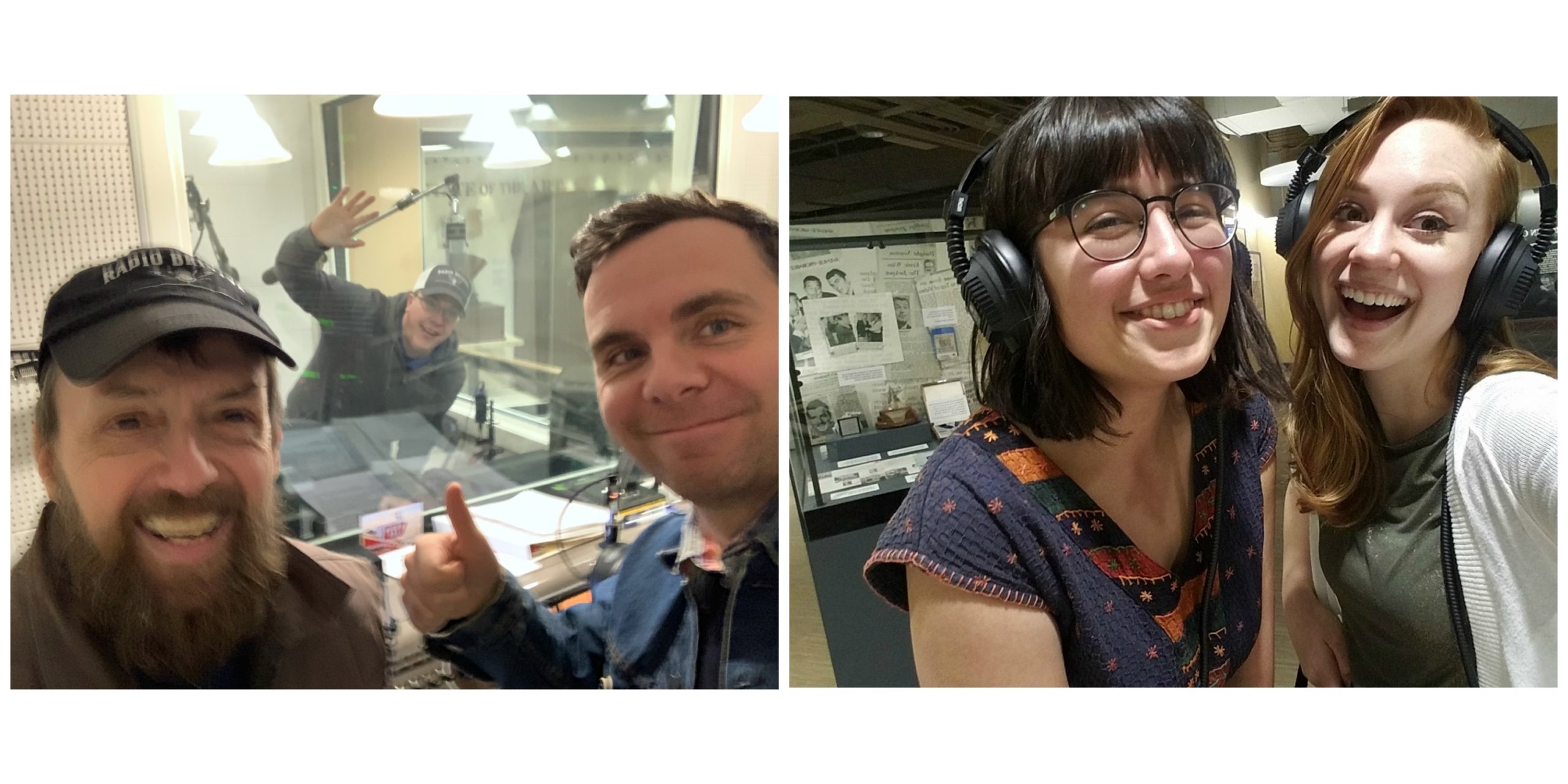
Summer Apostol, Toni Doman, Kris Truelsen (Producer), Josh Littleton (Engineer & Technical Administrator), and Lawrence Inscho

You might have listened to our in-house radio station, Radio Bristol, but if you haven’t visited the museum yet, you might not know that not only is it a live, working radio station but it is also an integral part of our museum exhibits. Visitors can regularly see our DJs at work and be part of the audience for some of their live performance shows. Guests like Lawrence Inscho, a regular on On the Sunny Side, always bring a new and interesting perspective to our radio listeners, and Kris, Josh, and other members of the Radio Bristol team share their enthusiasm for their work every day! As Toni notes, it’s wonderful to see so many talented artists and guests visit the station and be continuously inspired by the museum, and hosting her own radio program, Mountain Song & Story, is also a blast especially when Summer stops in to help her out with sound effects for the show!
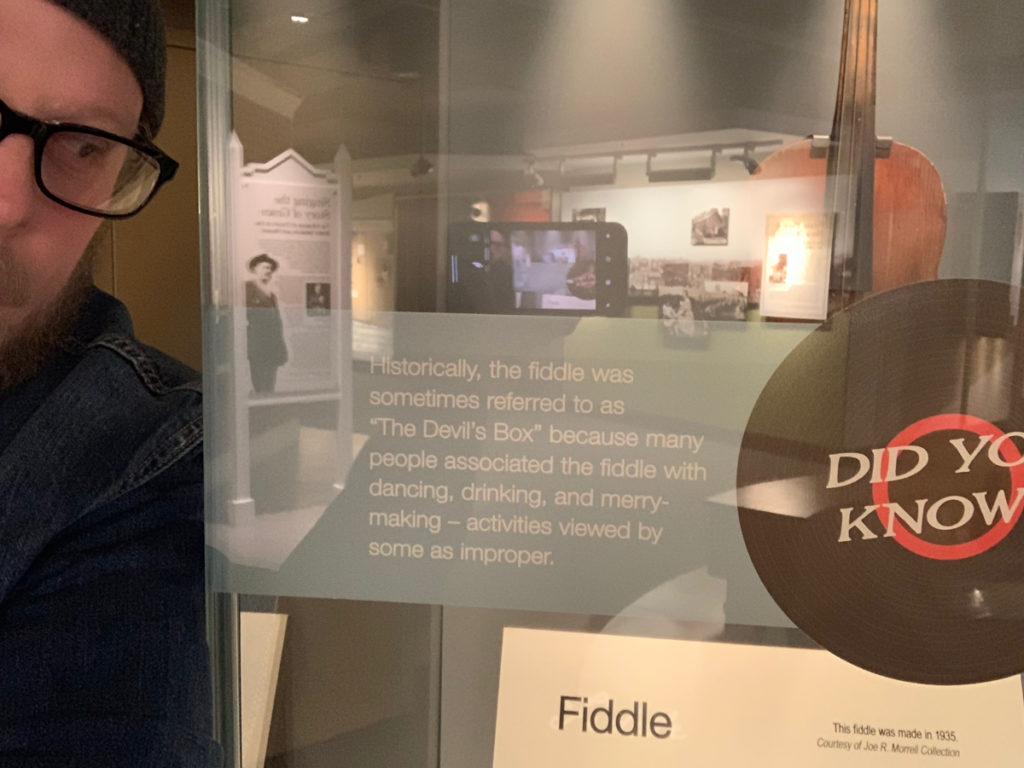
Scotty Almany, Digital Resources Manager & Catalog Associate

Did you know that the fiddle has also been called “the devil’s box”? This is my favorite piece of information in the museum. It has been used to stump many who have wagered that they knew the answer, be they docent, visitor or co-staff member. Diabolical knowledge!
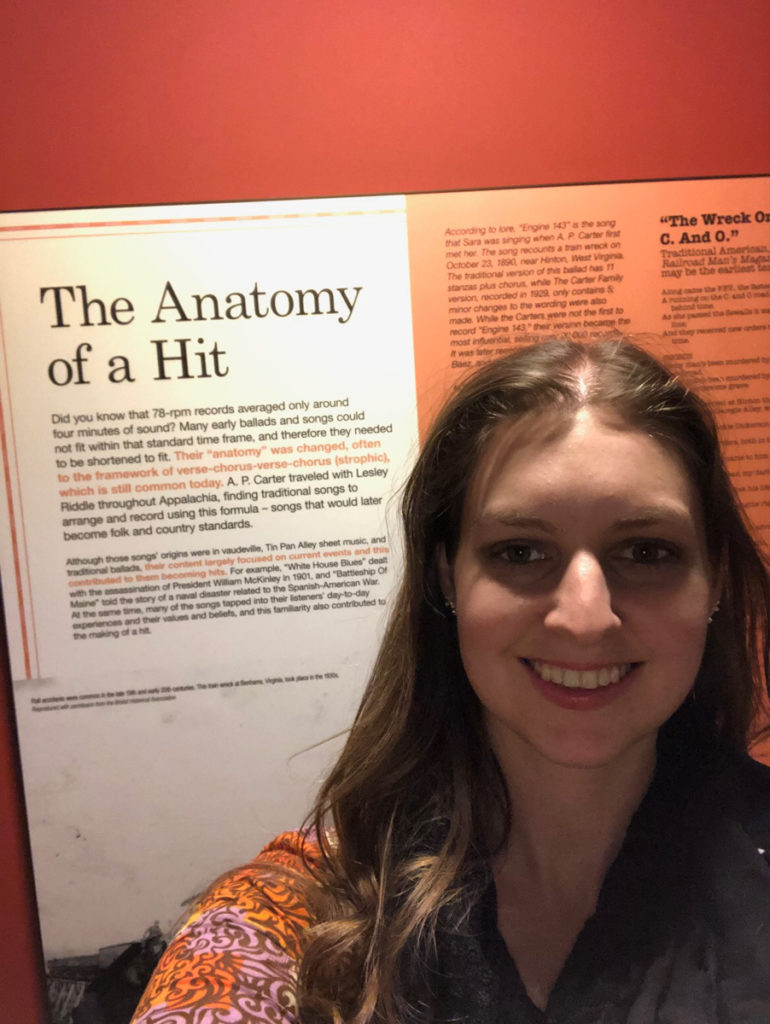
Erika Barker, Sales & Business Development Manager

The Anatomy of a Hit panel talks about how 78rpm records could only play about four minutes of sound on average. Most early songs and ballads are much longer than that, and therefore they had to be rewritten and shortened to fit on the records accordingly. I had known since I was young that most songs on my old CDs and on the radio even today are about 3-4 minutes long, but I never knew why that length had been chosen as the music standard until reading this panel. Just goes to show how much early record recording techniques and equipment still influence the music industry today!
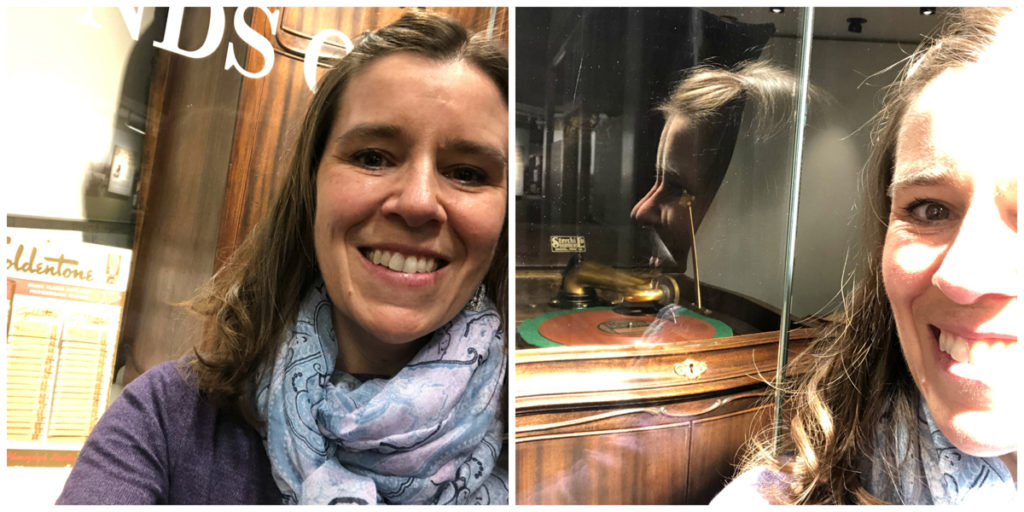
Rene Rodgers, Head Curator

There are so many wonderful objects in the museum, and I particularly love the early music playback machines from large phonographs within cabinets as can be seen here to phonographs with visible morning glory horns to portable cylinder players. What’s interesting to me is that these machines, along with the cylinders and records played on them, were usually sold in furniture stores, rather than dedicated music stores. Phonograph needles are also slightly surprising in that they were only good for a certain number of “plays” – so you had to keep buying them!
Summer Apostol, Frontline Associate

As a history major, and general lover of history, I think it’s critical to connect the past to the present – to show people that history is relevant and important! The museum does a beautiful job of showing its visitors that the 1927 Bristol Sessions are, in fact, very important and relevant. One way this feat is achieved is with the kiosks that let you listen to covers more modern musicians (like Nirvana) have arranged. One of the coolest spots in the museum, in my opinion!
Emily Robinson, Collections Manager

I’ve always associated old-time music with banjos and fiddles, so when you visit the museum and see the wide range of instruments that are part of that music, such as kazoos and ukuleles, it comes as a bit of a surprise. I was particularly interested to see that Alfred Karnes (possibly) played a harp guitar at the Bristol Sessions!
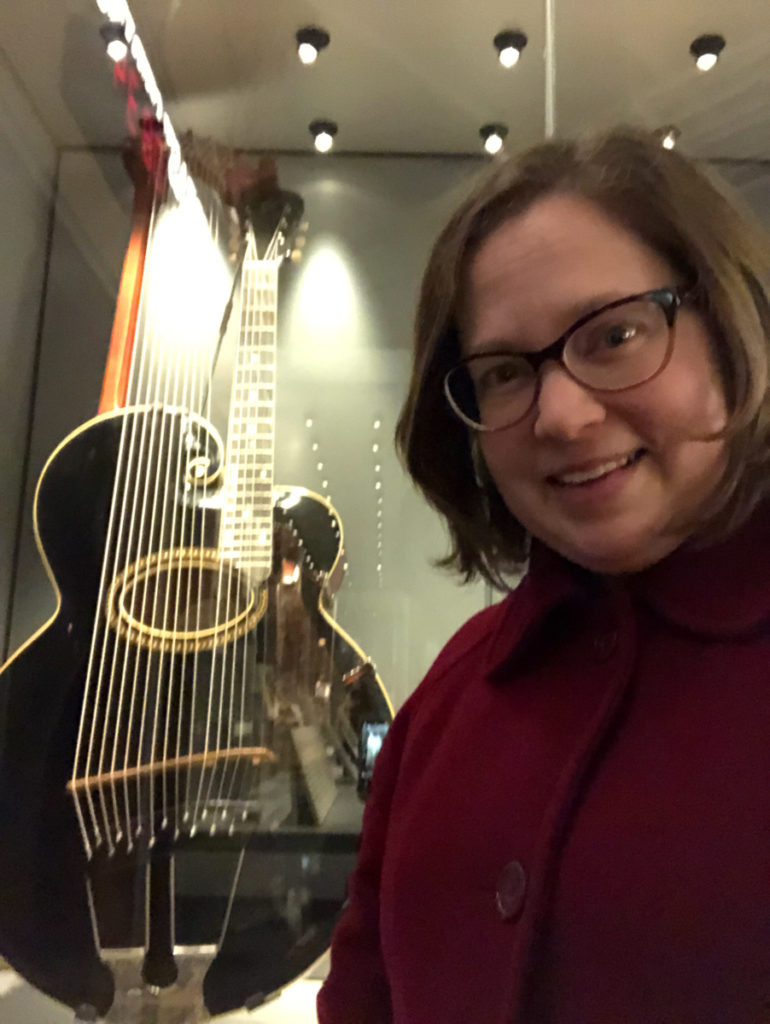
Toni Doman, Frontline Associate

Any time I get the chance to dance, I’ll take it! Here I am swinging with Pokey LaFarge in the museum’s Immersion Theater. Several of the images in the museum have been taken at Bristol Rhythm & Roots Reunion, and it’s great when people come to visit and then get to see themselves as part of the museum’s exhibits. A wonderful surprise!
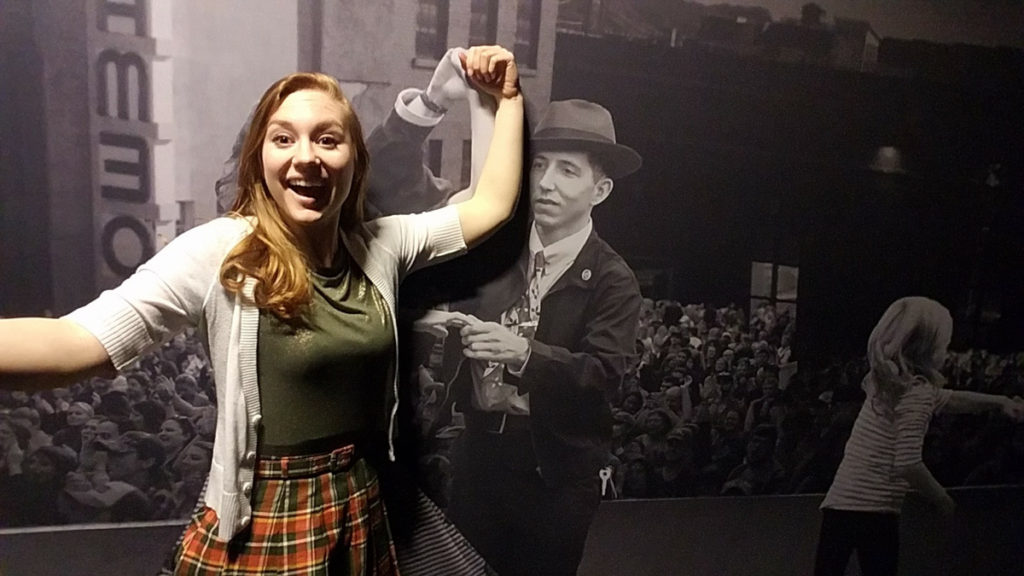
Nathan Sykes, Production Assistant

One of my favorite ideas that is explored in the museum is the idea that genre is a concept that was made up to sell records. Before the record industry put terms such as “Hillbilly” and “Race” on the music, it flowed freely and transcended culture, and musicians played whatever music was called for. From breakdowns to blues to ballads, musicians adjusted their set lists to fit the occasion. To put it simply, good music is good music, and everything from polka to hip hop to bluegrass has value. When we set aside our preconceived notions of genre, our ears and minds are opened to new ideas and experiences we couldn’t imagine if we only think of music along strict genre lines.
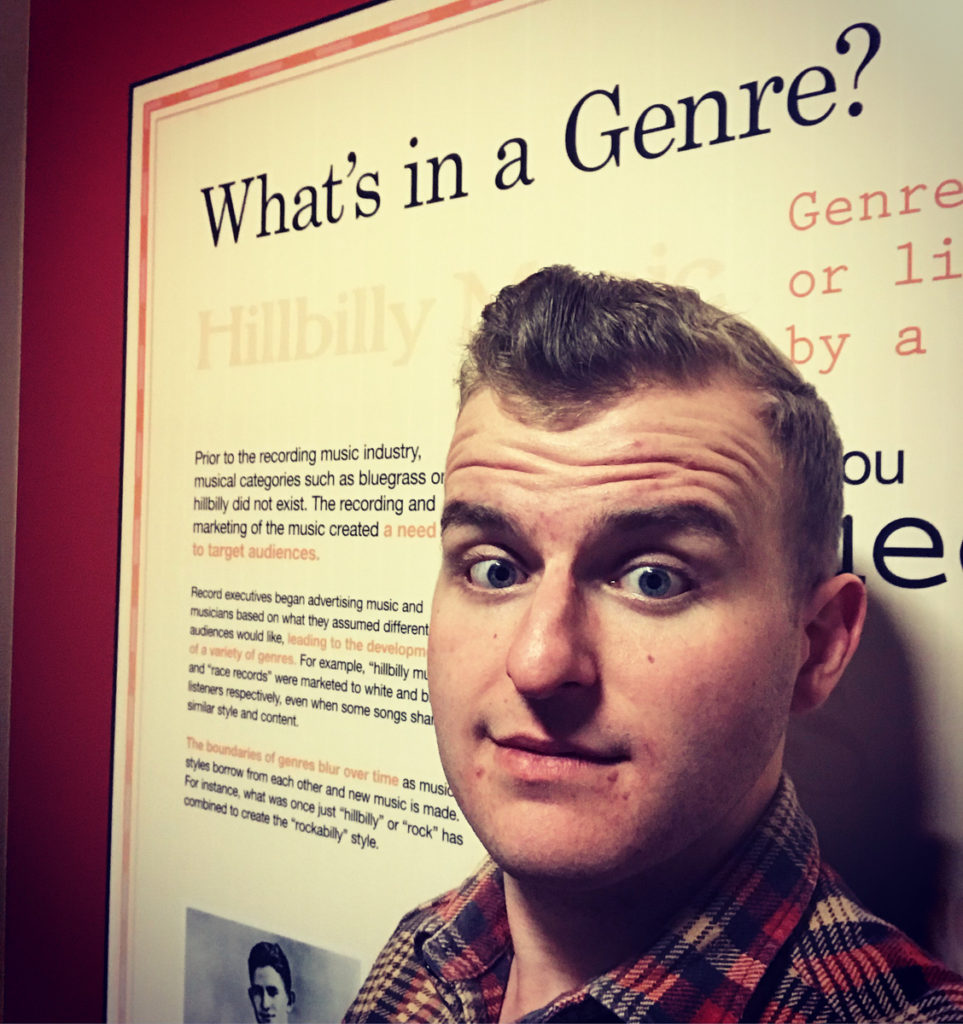

High-Tech Vintage: Technology and the Delivery of Old-Time Sound

January 6 is National Technology Day – and so it seemed the perfect time to explore some of the Birthplace of Country Music Museum from the technology side of things! We’ve picked five elements of the content or the museum itself that tell just a little of the technology story here:

Recording and Playback Machines

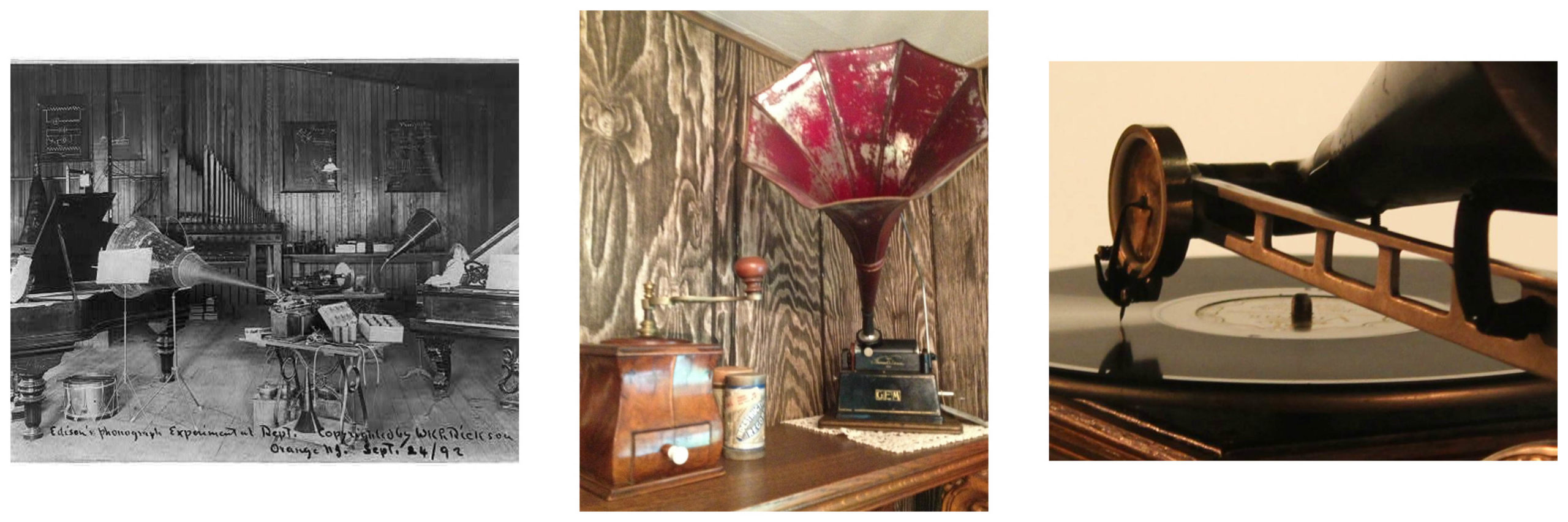
The museum shares the story of the 1927 Bristol Sessions, but it also explores how sound technology shaped their success and evolved over the years. Inventions such as recording and playback machines played important roles. For instance, in 1877, Thomas Edison invented the phonograph, which was instrumental in distributing music in the early 20th century, including the songs recorded at the 1927 Bristol Sessions. Writing an article in 1878 on “The Phonograph and its Future,” Edison listed other possible uses for his invention beyond playing music, including elocution and other educational lessons; audio books (before Audible and iTunes!); to create sound effects for children’s toys; and most intriguingly, “family records,” where the last words of dying family members could be saved for posterity, like that of other great characters of the day.

Other innovators contributed to the development of this type of playback technology. In 1881, Alexander Graham Bell invented the graphophone, an improved version of the phonograph developed by Edison, and in 1894, Emile Berliner invented the disc gramophone method, which used different machines to record and then to play back the sound. Where earlier recording and playback machines used cylinders, either coated in tin foil or wax, Berliner’s gramophone used flat disc records.

Left: Large room filled with musical instruments, a large phonograph and other equipment and furniture; center: A cylinder phonograph with rose red horn with cylinders and another machine nearby; right: A close-up showing the needle on a record disc.
Left: Thomas Edison’s Phonograph Experimental Department in the early 1890s; Center: A cylinder phonograph with rose red horn; Right: Record playing on a disc phonograph. Images are Library of Congress, Prints & Photographs Division, [reproduction number, e.g., LC-USZ62-90145] (left) and © Birthplace of Country Music (center, right)
Acoustic Design

The museum is a high-tech, interactive experience, one that is filled with music and sound. And because of that, it had to be designed strategically and carefully in order to provide the best possible experience to our visitors. For instance, the acoustic engineer advised the architects and exhibit designers on ways to define walls and ceilings to contain sound or keep it from bouncing around the open gallery spaces or the theater. The firm also worked closely with the technology team and media producers to define how the sound of each audio or audio/video production is delivered into the space. The goal was to provide an immersive experience, yet minimize unwanted “bleed” of sound between programs. Innovative acoustic wall panels and fabric mean that the acoustic technology is seamless and becomes a part of the museum experience itself, while speakers embedded underneath the pews in the chapel theater space mean that visitors feel like they are right in the middle of the congregation and they can often even feel it in their seats!

Left: The curved wall of the timeline with an oval white disc hanging above it; center: Several patrons sit in the pews of the chapel as they view the chapel film; right: The acoustic tile is a light beige color with several cut-out dots in a variety of patterns on its surface.
Left: A hanging acoustic panel above the timeline in the museum’s atrium exhibit space focuses the soundscape down towards visitors who stand in this area; Center: The sound design in the chapel helps patrons to feel like they are part of the congregation as they watch the film; Right: High-tech acoustic tile in the museum’s Performance Theater helps to make the sound experience in this space truly special. © Birthplace of Country Music, photographer: Neil Staples; © Hillmann & Carr; © Birthplace of Country Music

Orthophonic Technology

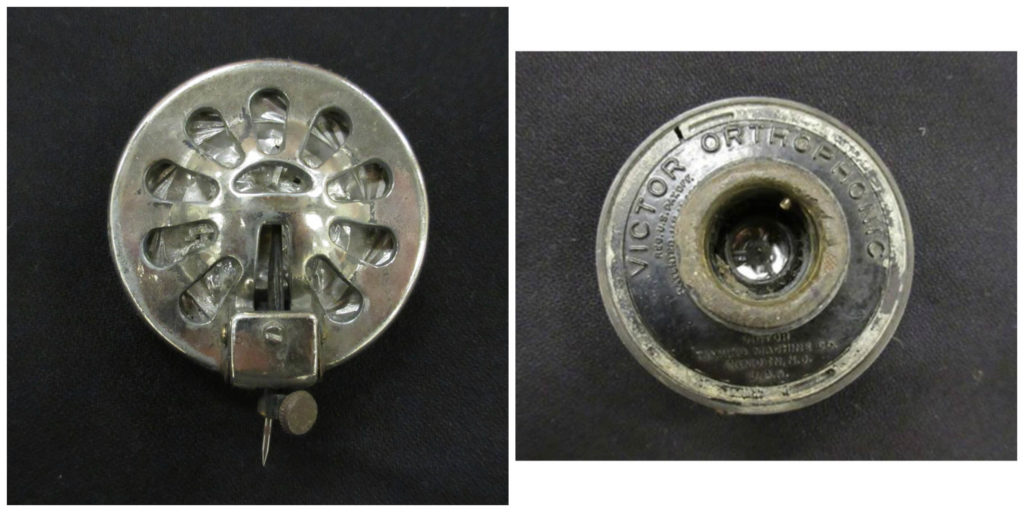
Orthophonic reproducers were an outgrowth of the electric microphones being used to record performers in the late 1920s. Electric recording captured a wider range of sound frequencies and produced recordings in which the instruments and voices sounded much more like live instruments and voices than they had on previous acoustic recordings. These reproducers were designed to be more sensitive to the nuances in the electric recordings, making the listener’s experience more pleasurable and true-to-life. The Bristol Sessions in 1927 were recorded using this process and many claimed that the Orthophonic recordings sounded even better than the live performances! Electric recording and Orthophonic machines, like later compact discs or HDTV, were a technological revolution that helped change the shape of the music industry.

Two sides of an Orthophonic reproducer -- one looks like the front of an old-time microphone, while the other bears the name Victor Ortophonic. Both sides are made of silver metal.
These Victor Orthophonic reproducers (front and back), donated by Bob Bledsoe, are the pieces of the Orthophonic Victrola that connected the record to the sound horn. A listener would insert a needle into the reproducer, which would follow the groove on the record. The groove created vibrations that were made into sound waves by the reproducer and amplified by the sound horn. © Birthplace of Country Music

The Radio Station

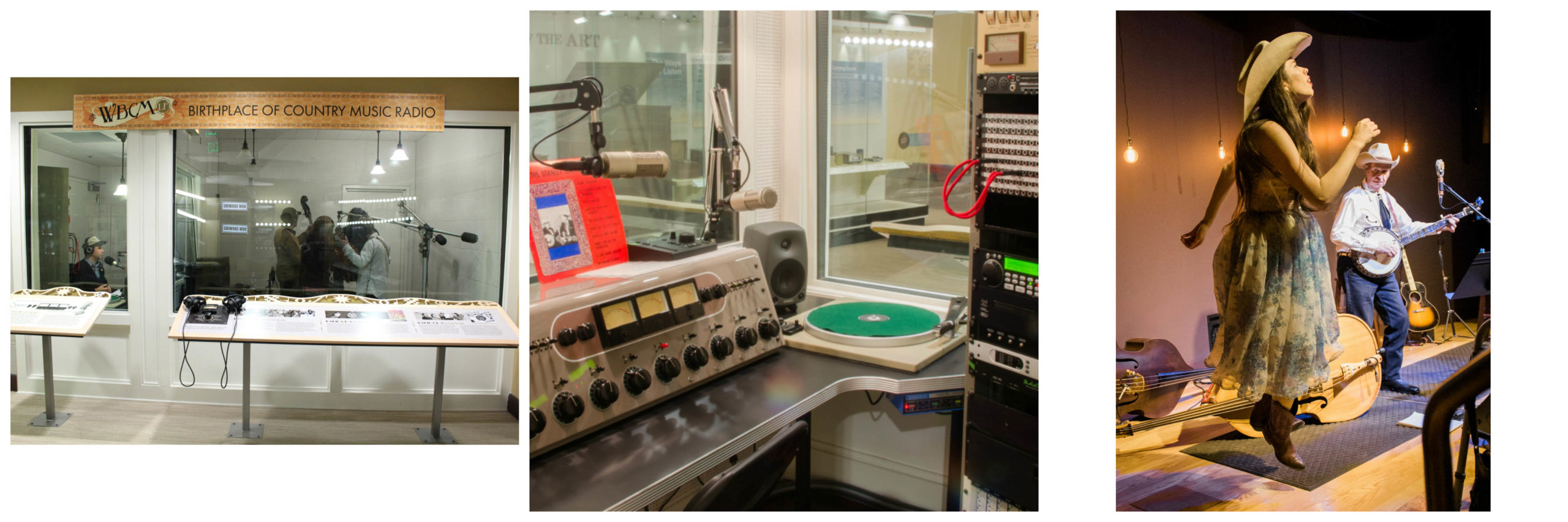
During the planning stage of the museum, the exhibit content team discussed ways to make the space focused on radio history into an engaging experience for our visitors. The result? Radio Bristol, a live radio station! With help from a team of radio industry advisers, BCM applied to the FCC for a low-power FM license, secured the antennae, transmitter and equipment necessary for broadcasting, and created a working radio studio in the museum. And that’s where the technology gets really interesting because the station uses vintage equipment from older Bristol radio stations, refurbished and repurposed for today. For instance, a Raytheon console from 1940s WCYB Radio, sourced from local radio buff and collector William Mountjoy, was rebuilt by engineer Jim Gilmore, retired engineer from TNN. One of the mics in the radio studio is from local station WOPI and was used by Tennessee Ernie Ford when he was a DJ there. And there are numerous ways to deliver music in the station – from a record turntable to a live recording booth to the digital ease of tablets and MP3s. The station is what we call high-tech vintage!

Left: A view of the radio station from outside the booths showing a DJ in the smaller room to the left and a band recording live in the larger space to the right; center: A view of the console, turntable, and other equipment in the DJ booth; Right: A musician on banjo plays while Martha Spencer flatfoots live on the Farm and Fun Time stage.
Left and center: The radio station in the museum has a booth for the radio DJ and a larger room for performers and musicians to record live; the DJ booth is fitted out with 1940s equipment upgraded to digital capability. Right: Live performances in the Performance Theater, such as this Farm and Fun Time show, can also be broadcast live from the museum and streamed on Facebook. © Birthplace of Country Music (left and center); © Birthplace of Country Music, photographer: Billie Wheeler

Technology Lessons

Finally, sometimes the technology isn’t an object from our collections or an innovative way to present the museum’s content. Rather it is found in educational programs where we share the story of that technology. For instance, for the past two years, museum staff and volunteers have participated in the Kingsport Mini Maker Faire where we have presented information about the museum’s exhibits and engaged in a variety of sound demonstrations, including an example of amplification and a homemade Chladni plate! We also offer a “History of Listening” lesson, available in the museum and to schools and other groups. Throughout history music has been experienced in a variety of ways, especially as advances in technology have developed over time. This lesson explores these technological changes and then compares how listening to music transitioned from being a mostly community-based activity, often through live performance, to listening either alone or together in person via technology and the virtual environments of cyberspace.

Left: A young girl listens to an explanation of amplification while looking at the equipment held by the head curator; Top right: A metal plate covered in blue sand sits between a museum volunteer and a young girl in one picture while the second shows the geometric pattern formed by the sound from the sound waves that have been directed to the metal plate; Bottom right: A drawing of the acoustic and electric methods of recording on a white board at a school in the first pic, while the second pic shows two tables bearing a variety of different playback machines such as a record player, a CD player, a tape player, and several cylinders and records.
Left: Museum head curator Rene Rodgers demonstrating sound amplification to a young visitor at the Kingsport Mini Maker Faire in 2017. Top right: Museum volunteer Matt Wood explains the Chladni plate to a child at the Kingsport Mini Maker Faire in 2018; the resulting pattern produced by sound waves. Bottom right: A basic drawing (very basic!) to differentiate the acoustic and electric recording methods during the “History of Listening” lesson at a local school; museum staff and volunteers demonstrate the lesson to teachers during a summer in-service. © Birthplace of Country Music


The Power of Music: Five Songs for Civil Rights

Here at the Birthplace of Country Music Museum, we’ve spent the past month and a half exploring the power and impact of visual imagery through the NEH on the Road exhibit For All the World to See: Visual Culture and the Struggle for Civil Rights (on display until January 7, 2019). But we’re a music museum, and one thing we know for sure: music has power and impact too.

And that is certainly true when you think about the music of the Civil Rights movement. Many of these songs had their origins in traditional hymns and African American spirituals, and while they weren’t all originally about freedom and social justice, their message was clearly relevant. Some were also revised to include new lyrics that spoke directly to the issues people were facing, such as voting rights. Others grew out of the musicians’ personal experiences or observations of the discrimination around them.  These songs – often and rightfully called anthems – inspired determination and bravery, helped to lessen fears and steady nerves, focused activists’ passion and energy on the task at hand, and acted as motivators to protesters and observers alike. They were delivered by professional musicians and groups like the Freedom Singers, but more importantly they became the unified voice of ordinary people displaying extraordinary courage at rallies, marches, and protests and in churches, meetings, and workshops.

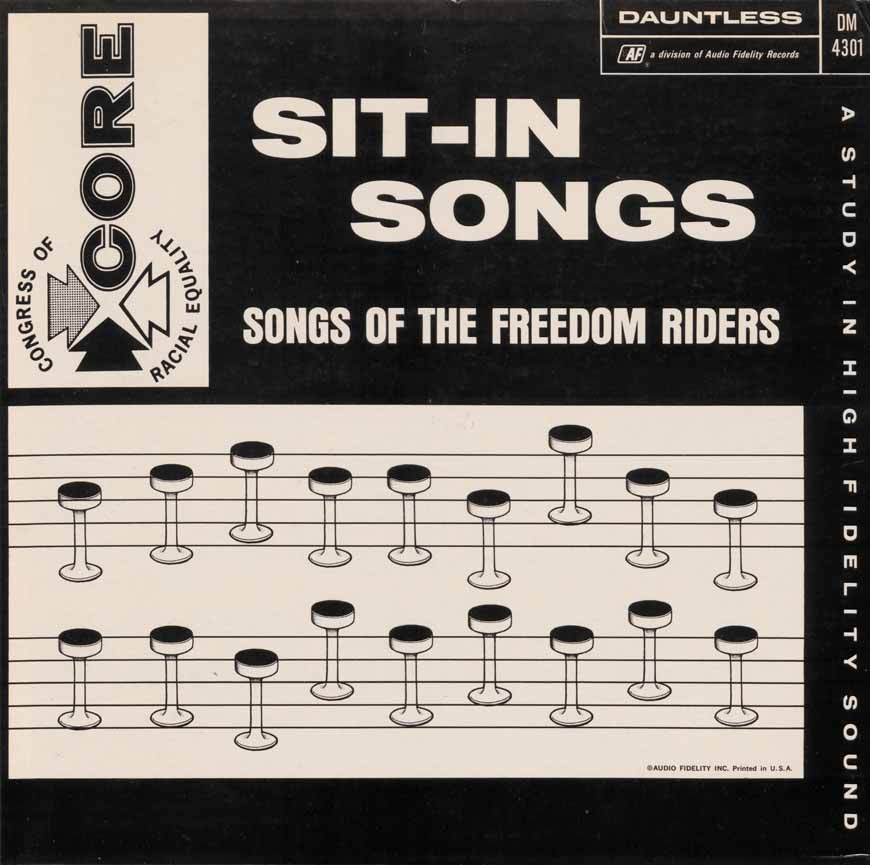
The album cover shows the CORE logo, the title, and a series of music notes in the form of diner counter stools.
The Congress of Racial Equality (CORE) produced a record of “sit-in songs” in 1962, which included “We Shall Overcome.” The musical notes are in the form of diner counter stools. This record went along with the Freedom Highways project, when activist volunteers worked to integrate chain restaurants along the main federal highways. Image from https://library.duke.edu/exhibits/johnhopefranklin/civilrights.html

There are many accounts of this music history and the songs of the Civil Rights struggle in books, audio collections, and films such as Strange Fruit: The Biography of a Song, We Shall Overcome: A Song That Changed the World, Let Freedom Sing: The Music of the Civil Rights Movement, Sing for Freedom: The Story of the Civil Rights Movement Through Its Songs, Voices of the Civil Rights Movement: Black American Freedom Songs, 1960-1966, Freedom Song: Young Voices and the Struggle for Civil Rights, and Soundtrack for a Revolution (screened at the museum in November). All of these are worth exploring to get a better understanding of the place and significance of music in the fight for civil rights over the years.

A blog post about this music would be incredibly long – it’s a long and interesting history and each song has a story! And so, we’ve chosen just five songs that highlight the power of this music, including a brief history or description of each, to get you started on an incredibly inspiring musical journey.

“Uncle Sam Says,” Josh White (1941)

Josh White’s 1941 record Southern Exposure: An Album of Jim Crow Blues, co-written with poet Waring Cuney, was called “the fighting blues” by author Richard Wright, who wrote its liner notes. One of its songs, “Uncle Sam Says,” highlighted the frustration felt by African Americans when faced with the continuing effects of Jim Crow even as they fought and gave their lives for their country. It was inspired by White’s visit to his brother at Fort Dix in New Jersey where he saw the segregated barracks and unequal treatment of the black servicemen. After the album was released, White was invited by President Franklin Delano Roosevelt to the White House for a command performance, the first black artist to do so.

“This Little Light of Mine,” Rutha Mae Harris

For many of us, “This Little Light of Mine” is a song of our childhood sung at school or church. But the song has a much more interesting history within the Civil Rights movement and beyond as a “timeless tool of resistance” – check out this NPR piece from August 2018 that celebrated the song as a true “American Anthem.” The song, both a spiritual popular in the black churches and a folk song, became even more impactful when it was employed by Civil Rights protesters and activists who often personalized the lyrics to the situation or as a way to name the oppressors they were facing. Original Freedom Singer Rutha Mae Harris demonstrates the energy and power of the song as she leads a contemporary group in its verses at the Albany Civil Rights Institute:

“I Shall Not Be Moved,” The Harmonizing Four (1959)

This African American spiritual is based on Jeremiah 17:8—9, reflecting the idea that the singers’ faith in God will keep them strong and steadfast. The song became a popular resistance anthem during the Civil Rights movement, especially in relation to sit-ins; it was also used as a labor union protest song. As with “This Little Light of Mine,” the lyrics were sometimes altered to speak to the specific cause. Maya Angelou’s poetry collection I Shall Not Be Moved was named after the song.

“Why Am I Treated So Bad?,” The Staple Singers (1966)

The Staple Singers met Dr. Martin Luther King Jr. in 1963 after a performance in Montgomery, Alabama. Roebuck “Pops” Staples, the band’s patriarch, said afterwards: “I really like this man’s message. And I think if he can preach it, we can sing it.” The group went on to write and perform many Civil Rights songs, including “March Up Freedom’s Highway” and “Washington We’re Watching You.” “Why Am I Treated So Bad” was written in reference to the treatment of the nine African American children at the forefront of integration in Little Rock, Arkansas, in 1957. It became a particular favorite of King’s and was often sung before he spoke to a crowd.

“We Shall Overcome,” Mahalia Jackson (1963)

One of the most well-known songs of the Civil Rights movement, “We Shall Overcome” exemplifies the resilience, determination, and hope of the activist leaders and the everyday protesters alike. Its origins stretch back to the early 20th century with Charles Tindley’s “I Will Overcome.” Striking workers took up the song in the 1940s, later sharing it with Zilphia Horton at the Highlander Folk School in Tennessee, a center for social justice and activism. White and black activists came together at Highlander for workshops and planning during the Civil Rights movement, and some of that work involved learning songs and how to employ them in protests. Musical director Guy Carawan learned a version of the song from Pete Seeger; Carawan later introduced the song at the founding convention of the Student Non-Violent Coordinating Committee. (To hear Candie Carawan talk about the work at Highlander and the power of music during the Civil Rights movement, check out December 19’s archived On the Sunny Side show on Radio Bristol; her interview is towards the end of the show.)

https://www.youtube.com/watch?v=vTyKJjj2oC0

Finally, did you know that there is a connection between Carter Family favorite “Will the Circle Be Unbroken?” and civil rights? The song has been sung by various activist musicians, including Jimmy Collier and the Movement Singers and Freedom Singer Bernice Johnson Reagon, and an audio history of the Civil Rights movement takes the song title on as its name.