Museum Archives - Page 12 of 34 - The Birthplace of Country Music
Listen
Play
Loading station info...

Instrument Interview: The Kazoo

“Instrument Interview” posts are a chance to sit down with the instruments of traditional, country, bluegrass, and roots music – from different types of instruments to specific ones related to artists, luthiers, and songwriters – and learn more about them. Ten questions are posed, and the instruments answer! Today we mark National Kazoo Day by talking to the kazoo!

I thought kazoos were just silly party favors, but you’re an actual musical instrument?

Well, I do have a reputation as a birthday party favor, probably to the extreme annoyance of many parents! But I am so much more than that. Kazoos are membranophones, where the tonal qualities of the instrument are produced as the player hums. I am also related to mirlitons, which are vibrating membrane instruments.
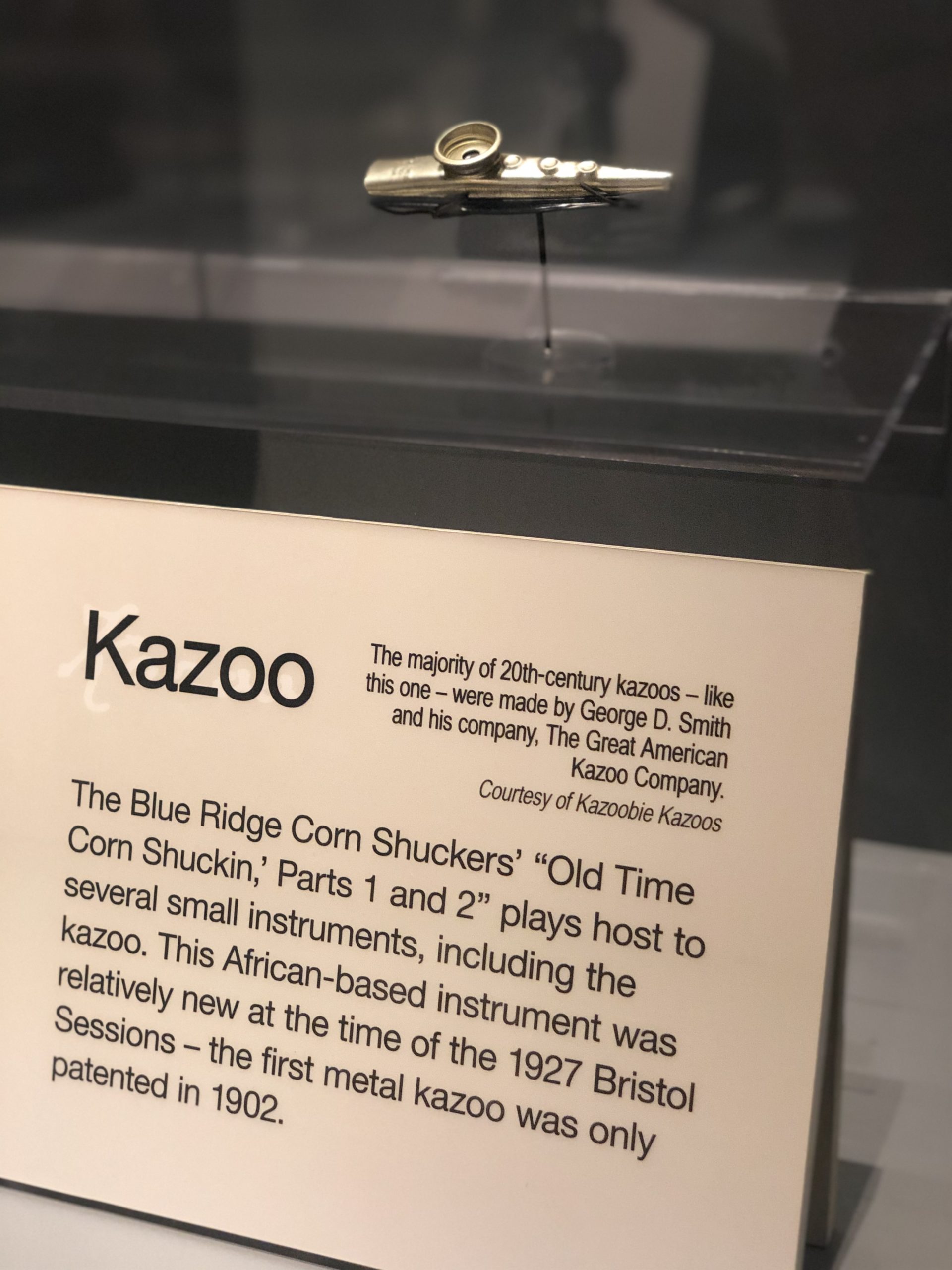
A metal kazoo on a display stand within a glass case with an interpretive label in front of it with a brief text about the kazoo.

The Birthplace of Country Music Museum has a George D. Smith metal kazoo in our instrument gallery. It is on display courtesy of Kazoobie Kazoos, a plastic kazoo manufacturer in Beaufort, South Carolina. © Birthplace of Country Music

Where do you come from?

My ancestors go back to early mirlitons from Africa. They were made from cow horns or gourds, and their membranes were from spider egg silk. It must have been a tricky business to make them! These African horn-mirlitons were used for ceremonial purposes as a way to distort or mask the human voice.

Kazoo-like instruments are also known in ancient Mexico, though these looked more like recorders and the membrane was made from slivers of corn husk.

A lot of people think of the kazoo as an American instrument. How did you come about here in the States?

Different types of kazoo-like instruments, based on the African mirlitons and common in folk music, could be found in North America in the 1800s. But the kazoo as we know it is attributed to an African-American man named Alabama Vest who came up with the idea of this small instrument and then worked with Thaddeus von Glegg, a German clock manufacturer, to make his concept into reality in the 1840s.

How the kazoo went from Alabama Vest to mass production follows a couple of possible routes. The Historical Folk Toys site notes that a traveling salesman named Emil Sorg was charmed by Vest and von Glegg’s instrument, and so took the concept to create his own kazoos in New York, partnering with die-maker Michael McIntyre and starting production in 1912. McIntyre knew that to succeed, mass production was necessary and so he soon went into business with Harry Richardson, a large metal factory owner. By 1914 they were mass producing kazoos as the instrument’s popularity, and sales, skyrocketed. In 1916 their company became known as The Original American Kazoo Company, and McIntyre was awarded a patent on their kazoo in 1923. In 1994 The Original American Kazoo Company was producing 1.5 million kazoos per year! The company stayed in business until 2003, and the factory site now houses a kazoo museum.

However, the Vest-Sorg-McIntyre-Richardson kazoos were not the only ones being developed in America over this period. Another instrument – a “toy trumpet” that worked in a manner similar to the kazoo – was patented by Simon Seller in 1879. And the first instrument patented under the name “kazoo” was one created by Warren Herbert Frost – his patent was issued in 1883. However, the first metal kazoo was patented by George D. Smith in 1902.

What do you look like?

My basic shape is a tube where one end is larger and slightly flattened and the other is in the shape of a circle; both of my ends are open and uncovered. On top, I have another circular hole – known as the membrane hole – and a wax membrane can be found in the small chamber below this hole. I’ve been called “the Down South Submarine” because my shape resembles these underwater vessels.

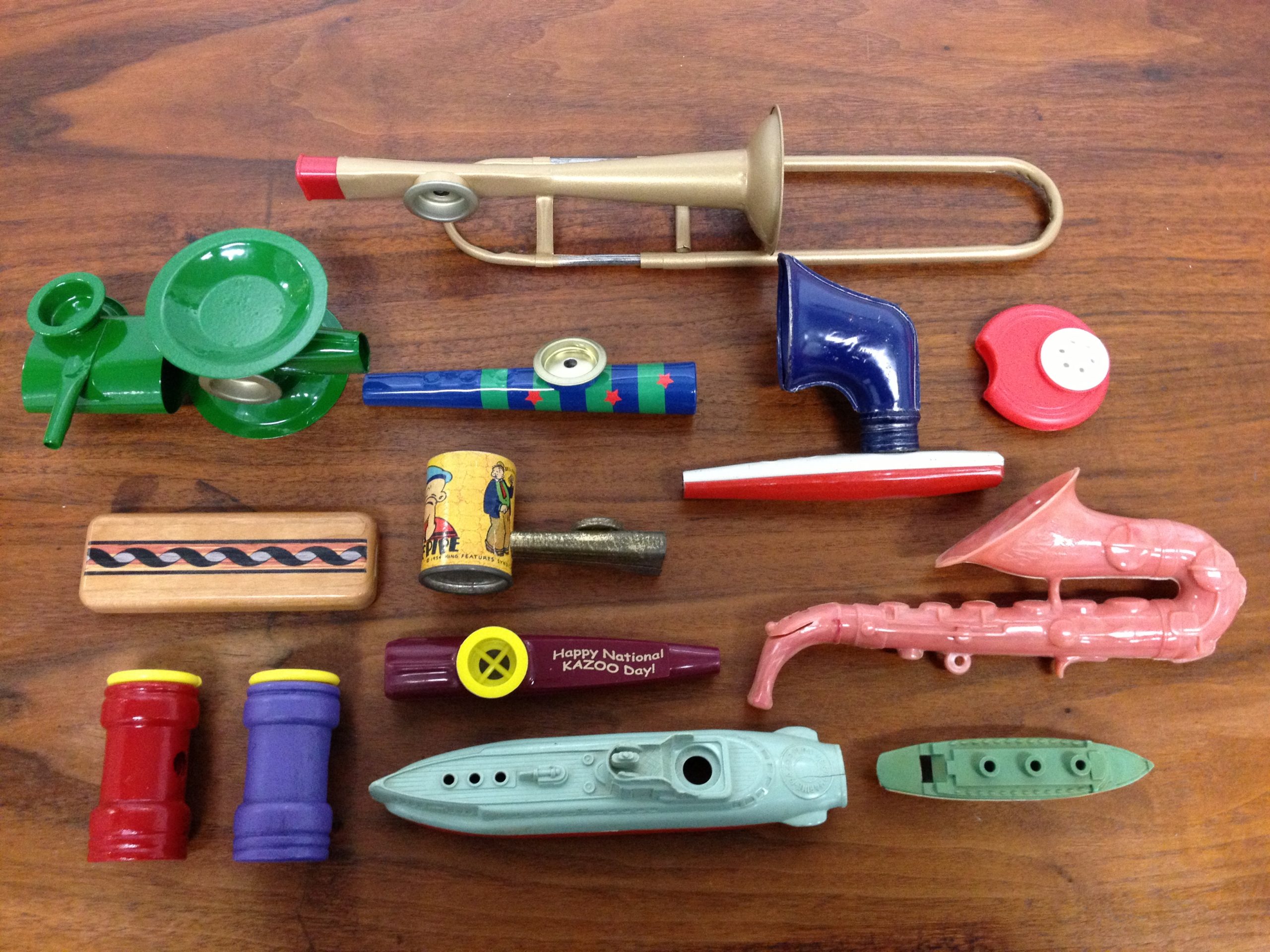
Over the years, however, I have taken on many other shapes and forms, including being made directly in the shape of a submarine. Another example, a circa 1930 paper kazoo, was shaped like a 1920s-era microphone. Many kazoos have also been made in the shape of saxophones – Scott Paulson of the UC San Diego Library notes that “a good player could easily imitate a saxophone and create a debate: ‘kazoo or saxophone’”!
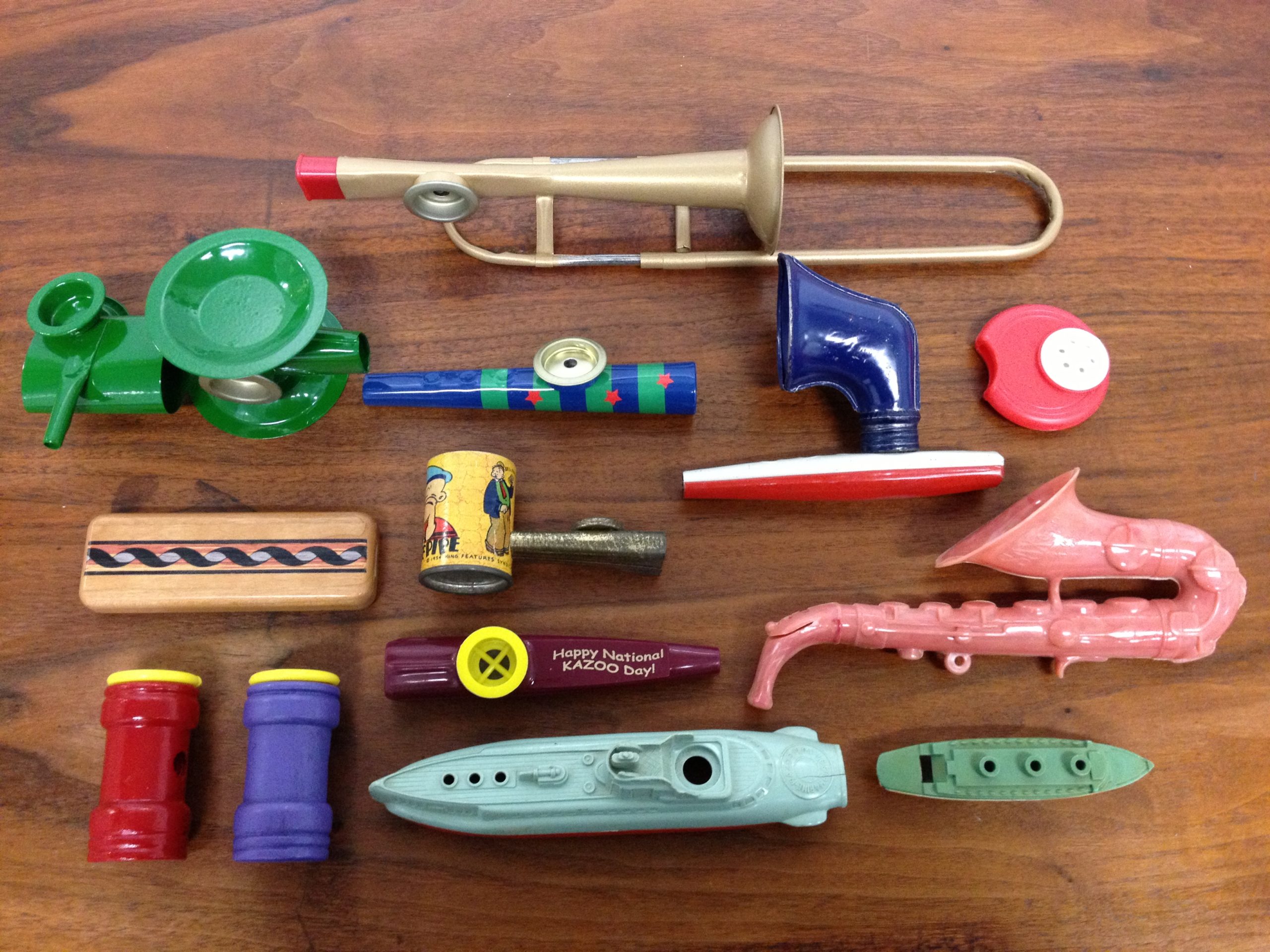
A variety of colorful plastic kazoos -- from common kazoo shapes to a pink saxophone shape to submarine/military ship shapes, to a trombone shape.

A collection of differently shaped kazoos. Courtesy UC San Diego Library

How are you played?

To play me, you should hum into the flattened opening. This makes the membrane vibrate, creating a sound that can be changed by the pitch, loudness, and nature of your humming. You can also alter the sound I make by covering the membrane hole, either in part or completely. Check out this video for a tutorial.

Many people make the mistake of blowing into me and then thinking I am broken as no sound comes out, but this will not work for creating kazoo music!

Are there any famous kazoo players or performances?

There are! Unsurpisingly you can hear the kazoo’s comic effect on Frank Zappa’s first album, Freak Out! Comb-and-paper kazoos appeared on the Beatles’ song “Lovely Rita” from the Sgt. Pepper’s Lonely Hearts Club Band album, and Sir Paul McCartney played the kazoo on the 1975 Ringo Starr single “Sweet 16.” World Wrestling Federation duo Edge and Christian often brought their kazoos into the ring, driving their foes to distraction with their playing and often winning the bout as a result. Jimi Hendrix used a comb-and-paper kazoo on his 1968 recording of “Crosstown Traffic.” Kazoos – to imitate the sound of electric razors in an executive washroom – were also used in the song “I Believe in You” in the Broadway comedy How to Succeed in Business Without Really Trying.

Some performers made a career of their kazoo playing, such as Barbara Stewart who even performed at Carnegie Hall! And some composers have written their own kazoo music – for example, Mark Bucci composed his “Kazoo Concerto,” which premiered at a Leonard Bernstein Young Peoples’ Concert with the New York Philharmonic in 1960.

I’ve named just a few, but if you look for them you can find all sorts of famous kazoo performers or performances!

Were you played at the Bristol Sessions?

I sure was! Kazoos were commonly used in jug bands and comedy songs, and that is where you will find me on the 1927 Bristol Sessions recordings. Ernest Stoneman joined together with different configurations of friends and family to record several songs for Ralph Peer in 1927. One of those configurations was made up of Stoneman, Bolen Frost, George Stoneman, Iver Edwards, Kahle Brewer, and Uncle Eck Dunford to form the Blue Ridge Cornshuckers singing “Old Time Corn Shuckin,’ Parts 1 and 2.” As the song progresses, Stoneman invites each musician to introduce himself, play a little bit, and then take a sip from the passing jug!

Even though you are a light-hearted – and fun to play – instrument, do you get used for serious purposes too?

Yes, indeed, I am sometime used in speech therapy to help strengthen oral and speech skills – for instance, kazoos can help children in the production and awareness of speech. We can also be used to help speech recovery for people who have suffered a brain injury, and to help in speech production and awareness for the deaf or hard of hearing. Kazoo use can even play a role in increasing respiration and oxygenation.
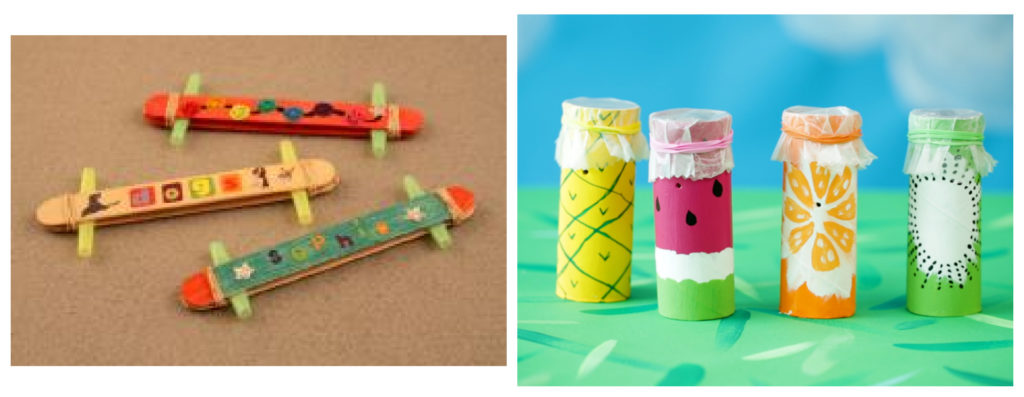
Left: Three popsicle kazoos decorated with stickers and colored markers. Right: Four toilet paper roll kazoos, painted to look like different fruits.
Fun and colorful make-at-home kazoos.

How do I make my own kazoo?

There are a few ways to make your own kazoo. You can make one using popsicle sticks, a straw, and rubber bands as seen here; using a toilet paper tube and wax paper as seen here; or the classic comb-and-paper version as seen here. Get crafting!

Anything else you want to share with us?

Special thanks to Scott Paulson of the UC San Diego Library for his help with kazoo facts and photos! The Library has hosted special events around National Kazoo Day for the past few years. Starting off from a challenge to use “serious library tools to investigate a light, playful topic,” the Library’s “kazoo salute” has included exhibits, live kazoo performances, and the commissioning of original kazoo music.

Finally, the kazoo is known as “the most democratic of all instruments” because ANYONE who can hum can play it! So give me a try!
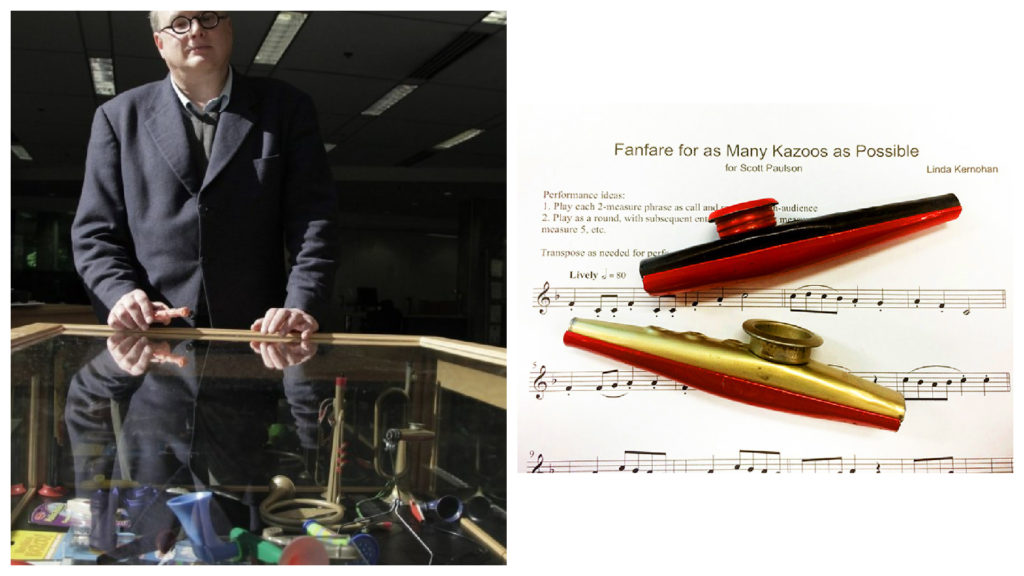
Left: A man wearing a dark suit and glasses stands behind a tabletop glass case filled with kazoos. Right: A piece of kazoo music with two kazoos superimposed on top.

Scott Paulson with a UC San Diego Library kazoo display; “Fanfare for as Many Kazoos as Possible,” an original composition by Linda Kernohan. Courtesy UC San Diego Library
Walk the Line in Bristol, TN-VA

Exploring the Birthplace of Country Music & Beyond

Navigating travel during a pandemic can be tricky, but it’s not impossible. So if you’re itching to get out on the open road for an overnight or weekend, why not visit Bristol and learn why we are world-renowned as the birthplace of country music? While you’re here, there are some must-sees in the region that you may not want to miss – including good spots around Bristol’s Historic Downtown where photo opportunities are just too good to be missed!

First Things First: Travel Safely!

One thing I learned early on was that state-run Welcome Centers are the cleanest and safest places to make a pit stop on the way to your destination. Most of them have automatic doors, sinks, toilets, soap and paper towel dispensers so you don’t have to touch common surfaces, and cleaning crews work around the clock to keep them sanitary.

Always remember to wear your mask, carry hand sanitizer, and distance from others in public spaces, and all our favorite restaurants in Downtown Bristol offer carry-out!

Where to stay?

A view of the bar at The Sessions Hotel in Historic Downtown Bristol, Virginia-Tennessee depicting bar stools at a bar with a phonograph, guitar, and amplifier.
The music-themed Sessions Hotel bar.
Photo credit The Sessions Hotel.

The Sessions Hotel

Themed with Bristol’s music history in mind, The Sessions Hotel transformed and connected several old buildings Downtown (including the former Bristol Grocery and Jobbers Candy Factory) to create a warm and restful place to lay your head while you explore. The rooms have a modern, industrial feel and come equipped with a Victrola Bluetooth radio. Once restrictions are lifted, you can bet there will be live music in each of the hotel’s spacious venues. There’s also an on-premises spa, a rooftop bar, and the award-winning Southern Craft BBQ restaurant. The hotel is also within walking distance to the Birthplace of Country Music Museum and everything Downtown!

What to see?

Birthplace of Country Music Museum
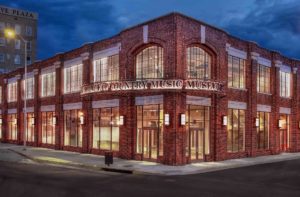
The Birthplace of Country Music Museum in Historic Downtown Bristol.
Photo credit Birthplace of Country Music.

Birthplace of Country Music Museum

The Birthplace of Country Music Museum, an affiliate of the Smithsonian Institution, tells the story of the 1927 Bristol Sessions recordings, explores how evolving sound technology shaped their success, and highlights how this rich musical heritage lives on in today’s music. Through text and artifacts, multiple theater experiences, and interactive displays – along with a variety of educational programs, music performances, and community events – the exciting story of these recording sessions and their far-reaching influence comes alive. Rotating exhibitions from guest curators and other institutions, including the Smithsonian, are featured throughout the year in the Special Exhibits Gallery. The museum also houses a collection of related objects, photographs and paper ephemera, and digital items. The Birthplace of Country Music (BCM) has achieved Healthy Business Certification from the Tennessee Chamber of Commerce & Industry, certifying that both its business office and the Birthplace of Country Music Museum has a disease prevention plan in place that meets guidelines set forth by the World Health Organization (WHO), the Centers for Disease Control (CDC), and the Occupational Safety & Health Administration (OSHA) for workplace health and pandemic response. Click here to view our health and safety guidelines.

Where to Eat?

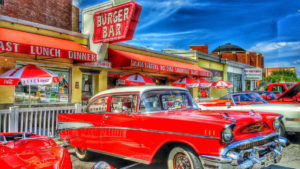
Classic cars appropriately on display in front of The Burger Bar, established in 1942.
Photo credit The Burger Bar.

The Burger Bar

There are a number of great restaurants in Historic Downtown Bristol, all within walking distance of the museum, but The Burger Bar is required eating – not just for the amazing food, but for its country music history. Legend has it, The Burger Bar was the place Hank Williams had his last meal. This Bristol staple has a retro diner feel and a few items on the menu named for Hank’s songs, including the Hey Good Looking with savory mushrooms and grilled onions, the Your Cheatin’ Heart with green chiles, and the Move it on Over with BBQ sauce. My personal favorite, however, is the Burger Bar Famous Reuben on marble rye with corned beef so fresh it melts in your mouth! And don’t forget a side of parmesan fries…delish!

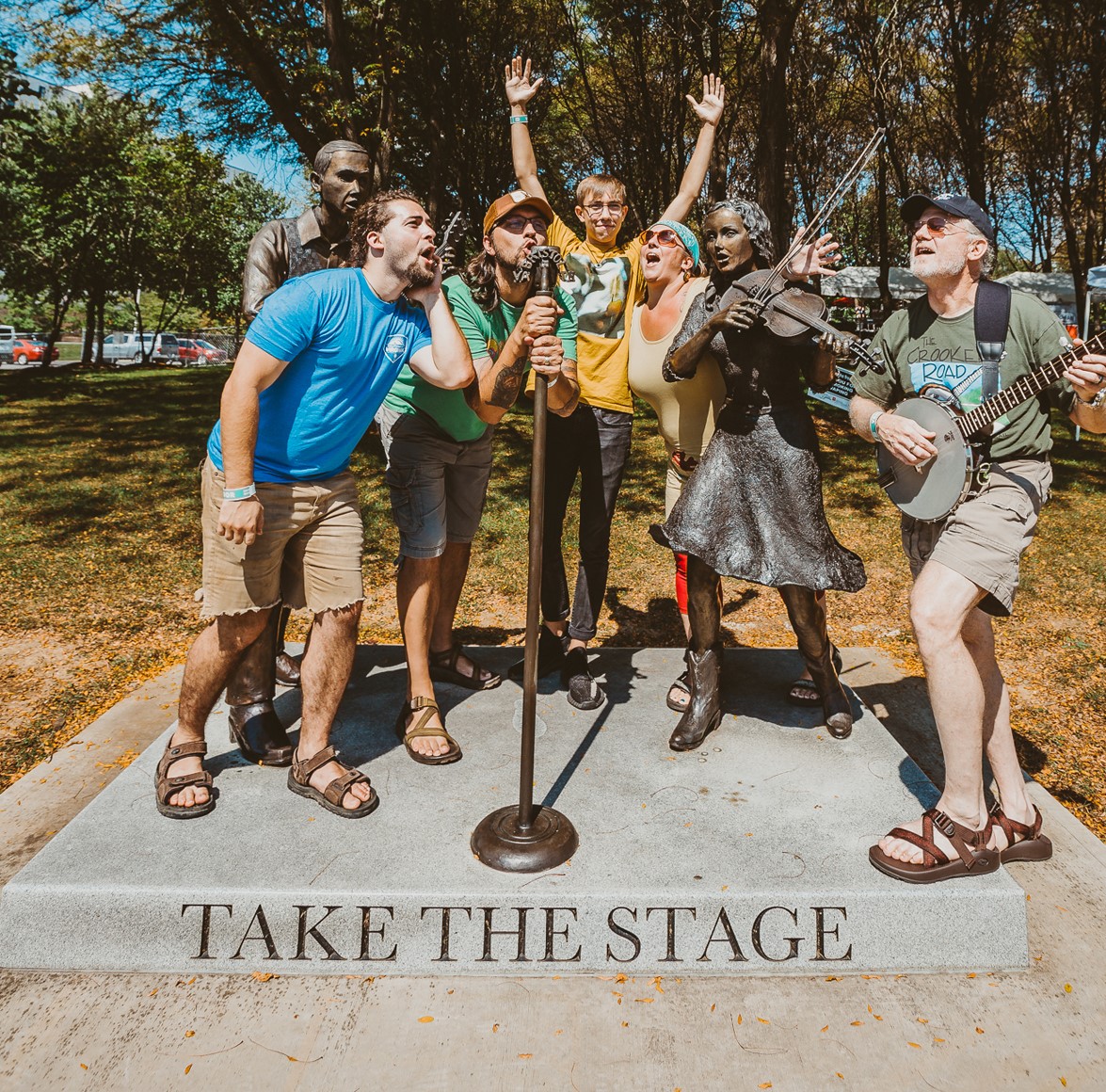
A collage of three photos, the first of a young girl posing by the Bristol sign, the second is a group of folks pretending to sing at the Take the Stage statue, and the third photo is of a man's feet straddled over the Tennessee-Virginia marker found in the middle of the road on State Street.
(L to R) Photo taken from selfie spot marked on the sidewalk near the Bristol sign,
a group “jam” at the Take the Stage statue, and walking the line in two states on State Street.
Photo credit Birthplace of Country Music.

Photo Ops
There are a number of selfie spots around Bristol that make for the perfect IG post:

  • The Bristol Sign – We recommend the magic hour around sunset when the lights first come on!
  • State Street’s Tennessee/Virginia markers – Located in the middle of State Street between the 400 and 800 blocks of State Street, visitors like to take pics of their feet “walking the line” between two states! Safety first recommended, but locals are used to seeing visitors pose and will often stop traffic for you!
  • Take the Stage Statue – Located on the edge of Cumberland Square Park across from the Birthplace of Country Music Museum, make like an old-time crooner and sing into the microphone between a guitarist and fiddler immortalized in bronze.
  • Country Music Mural – located in the Downtown Center on the 800 block of State Street, artist Tim White’s depiction of the major players behind the legendary 1927 Bristol Sessions just got a facelift and is ready for your close-up!

We highly recommend checking out Discover Bristol’s website for a Downtown walking tour, in addition to instructions for the self-guided Caterpillar Crawl scavenger hunt for kids! Kids can also make a little music of their own at Jerry Goodpasture Plaza.

Believe in Bristol is the best source Downtown Bristol events, attractions, restaurants, shops, and galleries. Be sure and visit their website before you visit!

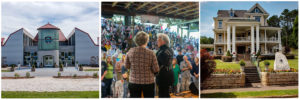
Photo collage of three photos, the first of the exterior of the Southwest Virginia Cultural Center, an interior shot of the Carter Fold with Rita Forrester and Marty Stuart on stage facing a large crowd, and an exterior shot of the Ralph Stanley Museum
(L to R) The Southwest Virginia Cultural Center & Marketplace, Rita Forrester (owner of The Carter Fold) and Marty Stuart at The Carter Family Fold, and the Ralph Stanley Museum.
Photo credits Southwest Virginia Cultural Center & Marketplace, Carter Family Fold, Ralph Stanley Museum

Beyond Bristol
To make the most of your music-themed experience, we highly recommend taking time to visit a few other sites along The Crooked Road: Virginia’s Heritage Music Trail near Bristol:

  • The Carter Family Fold
    Temporarily closed due to the pandemic, The Carter Family Fold is 45 minute drive from Bristol to Hiltons, Virginia and a must-see for music lovers. Janette Carter, one of three children of A. P. and Sara Carter, established the Carter Family Fold to honor the memory of her parents and Maybelle Carter who played a historic role in helping give birth to the age of country music beginning in 1927. The Fold is known for its Saturday night performances where children of all ages dance to old-time, bluegrass, and early country music. There is a small museum on the property that was once a store ran by A. P. Carter, and A. P.’s family cabin was moved there from its remote site for visitation as well. Considered hallowed ground by country music artists and enthusiasts, Johnny Cash performed his final show there in 2003.
  • Southwest Virginia Cultural Center & Marketplace (formerly Heartwood)
    A 20-minute drive from Historic Downtown Bristol to Abingdon, Virginia, Southwest Virginia Cultural Center & Marketplace provides a welcome mat for travelers to Southwest Virginia and serves as a visitor center, retail center for local crafts, music venue and community space. You’ll find exhibits that highlight local artisans and sample the sights and sounds of the region through film in the facility’s experiential theater. Musicians can also pluck tunes in the center’s porch stage, and taste locally sourced foods in the cafe. Regular Thursday night performances are also held, visit their website for schedules.
  • Ralph Stanley Museum and Traditional Mountain Music Center
    Located in Clintwood, Virginia (a scenic one-hour and thirty-five minute drive from Bristol), travelers are encouraged to take an interactive musical journey through the career of Dr. Ralph Stanley at the museum named for the legendary performer. The Ralph Stanley Museum continuously preserves and promotes bluegrass music through workshops, seminars, and conventions. For workshop information and event schedules, check their events calendar often for updates. (Please note, this museum is closed until Spring 2021.)

    Want to know more about exploring Bristol and Southwest Virginia and Northeast Tennessee? Visit our travel partner websites:

    Discover Bristol
    Believe in Bristol
    Visit Southwest Virginia
    Northeast Tennessee Tourism Association


Thomas Edison: From “Mary Had a Little Lamb” to Recorded Music

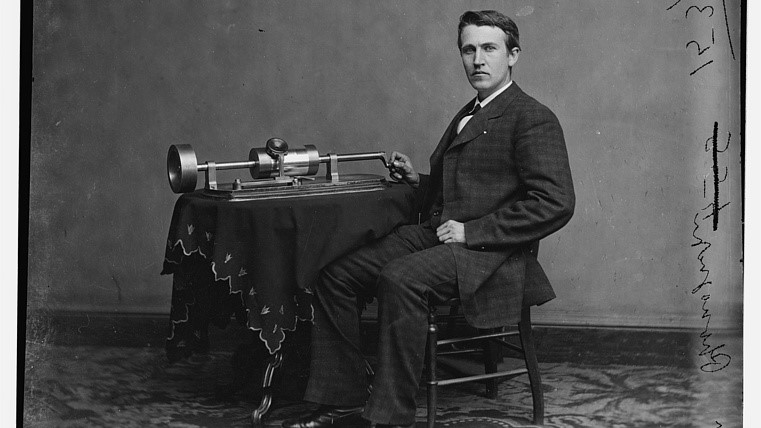
On December 24, 1877, inventor Thomas Edison filed for a patent for his “talking machine” or cylinder phonograph. This technology was transformative, successfully reproducing recorded sound and thus setting the stage for our experience of listening to the music we love whenever and wherever we want to!

To celebrate this important date in sound history, it is worth briefly exploring the story of Edison’s early work in recorded sound. Other inventors had already made inroads with different technologies that facilitated communication and transmitted sound – for instance, Samuel Morse with the telegraph in 1844, and Alexander Graham Bell with the telephone in 1876. However, the recording and playback of sound had not been achieved before Edison’s work, the result of several months of diligent labor on the concept of the phonograph. He marked his success with the recording and playback of his own recitation of the nursery rhyme “Mary Had a Little Lamb,” and his remembrance of this occasion can be heard below. Later Edison noted: “I was never so taken aback in my life – I was always afraid of things that worked the first time.”

Two months after filing, the patent for Edison’s phonograph was issued on February 19, 1878. At first, Edison thought that his machine would be primarily useful in the business world as a correspondence and dictation device. Along with that function, however, he envisioned various other uses, including the connection to playing music:

  • Phonographic books for blind people
  • A device for teaching elocution
  • The reproduction of music
  • A “family record” machine to record memories, sayings, last words of dying relatives, etc.
  • Music boxes and toys
  • “Talking” clocks that could keep you on schedule
  • To preserve languages and their pronunciation
  • An educational resource to preserved teachers’ lessons and explanations for later referral
  • To record telephone conversations
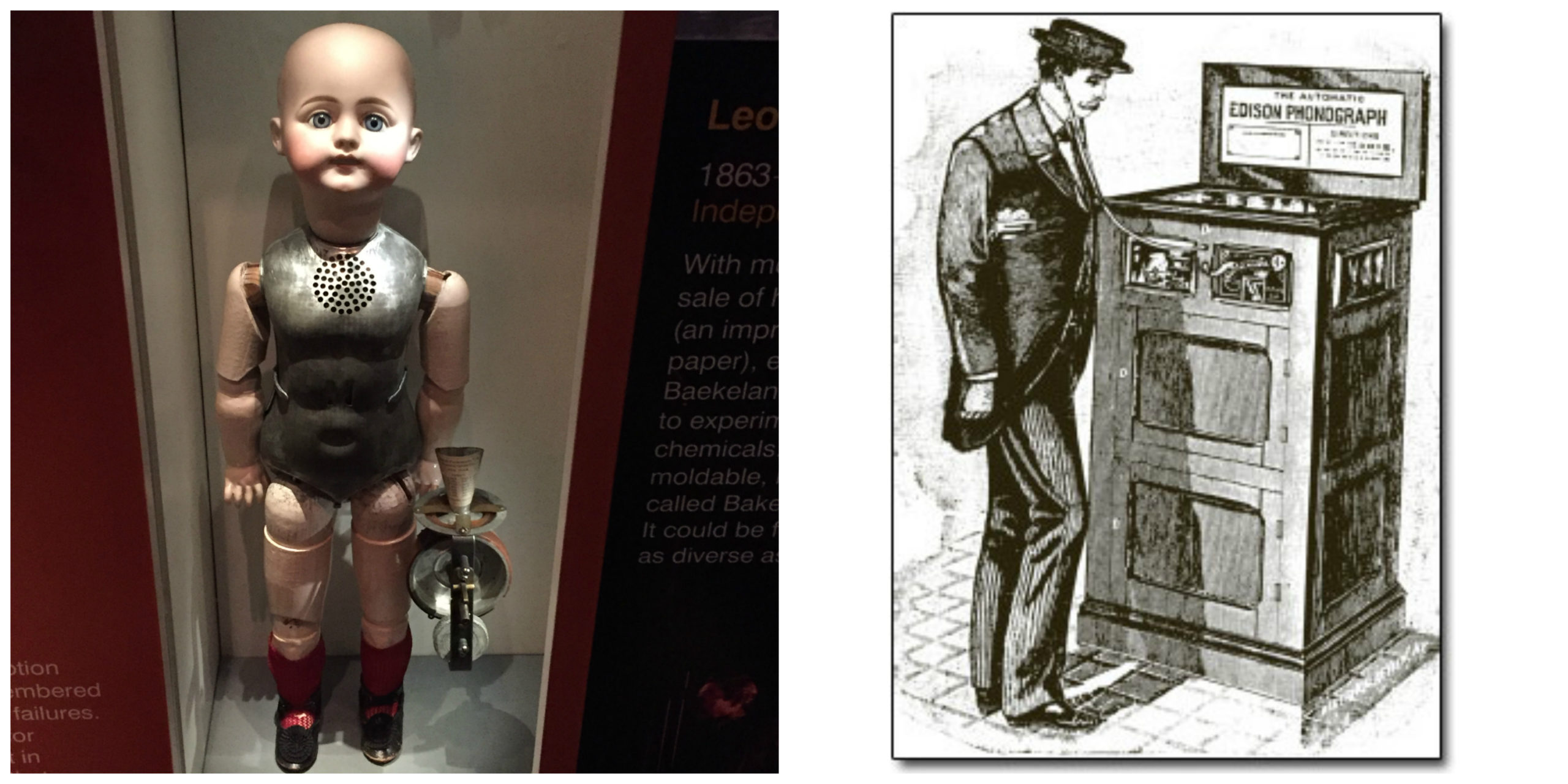
Left: A baby doll with porcelain head (bald), metal body with speaker area at top of torso, and articulated wooden limbs. Right: A 19th-century drawing of a man standing in front of a large cabinet Edison phonograph with what look like earphones plugged into the machine.
Left: In 1890, Edison’s company began producing “talking” doll toys that contained small wax cylinder playback machines. Frankly, this is the stuff of nightmares… Right: In late 1889, “coin-in-the-slot” phonographs were introduced in San Francisco, giving people the chance to listen to songs at 5 cents each. The first of these used an Edison phonograph as its base machine. Photograph taken at the National Museum of American History; artist’s rendering of a coin-slot phonograph from radiomuseum.org

The general way these early cylinder phonographs worked was that a person would talk (or sing) into the large end of an acoustic recording horn, which fit into a machine housing a diaphragm and stylus. The sound wave vibrations caused a carriage arm to move across a metal cylinder wrapped in tinfoil (later these became wax cylinders) upon which the stylus inscribed a continuous vertical groove – thus recording the sound being made, which could then later be played back and listened to with delight!

Edison bowed out of the phonograph field for almost 10 years as he concentrated on creating and mass-producing the electric light bulb – creating light out of the darkness in wealthy homes and many cities. But when he returned to the technology of recorded sound, he was continually innovating and producing new models and types of phonographs, and one of his subsidiaries – Columbia Phonograph Company – had also been producing cylinder recordings of popular music of the day. As with most technology, competitors arose and new versions and innovations were developed throughout this time, including the graphophone of Alexander Graham Bell, Chichester Bell, and Charles Sumner Tainter and Emile Berliner’s disc gramophone, and the switch from acoustic horn to electric microphone recording. And with them, and over the following years, came more and more musical recordings by different companies and within a variety of genres – from what is widely considered the first “satisfactory” musical recording (of Italian tenor Enrico Caruso) in 1902 to the later early “hillbilly” tunes of the 1920s that we know and love.

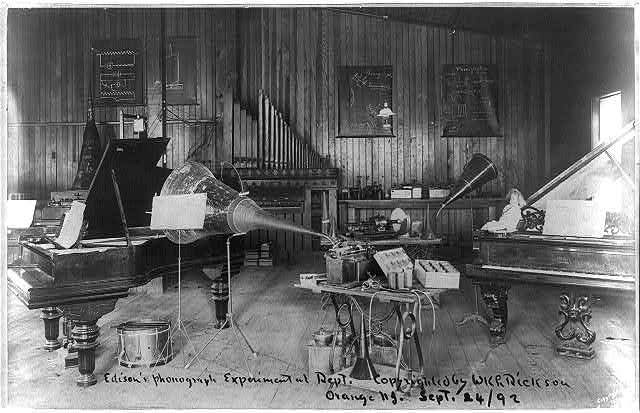
A black-and-white photograph of a large room filled with different musical instruments, including two pianos, a small drum, and what looks to be a small organ, along with several phonograph machines.

Edison’s phonograph experimental laboratory in Orange, New Jersey, in 1892. Image from the Library of Congress

This blog post shares only one small part of Edison’s story – and an even smaller part of the story of recorded sound. If you want a much fuller history of Edison’s work and impact, there is much to be found on the internet – including a great article from the Library of Congress. Interestingly, research has also uncovered several older instances of recorded sound – that of the French inventor Edouard-Leon Scott, whose invention, the phonautograph or phono-autograph, produced a sound recording almost 20 years before Edison’s phonograph, including a snipped of the song “Claire de Lune.” Check out this NPR transcript of an interview with Patrick Feaster, one of the researchers, as he describes the discovery, noting: “It’s the earliest recognizable recording of the human voice, the earliest recording of a vocal musical performance, the oldest recognizable snippet of sound in any recognizable language. So, it’s a lot of firsts.”

Museum Store Artisan Spotlight: Debbie Grim Yates, Susan Prior Fields & John Gunther

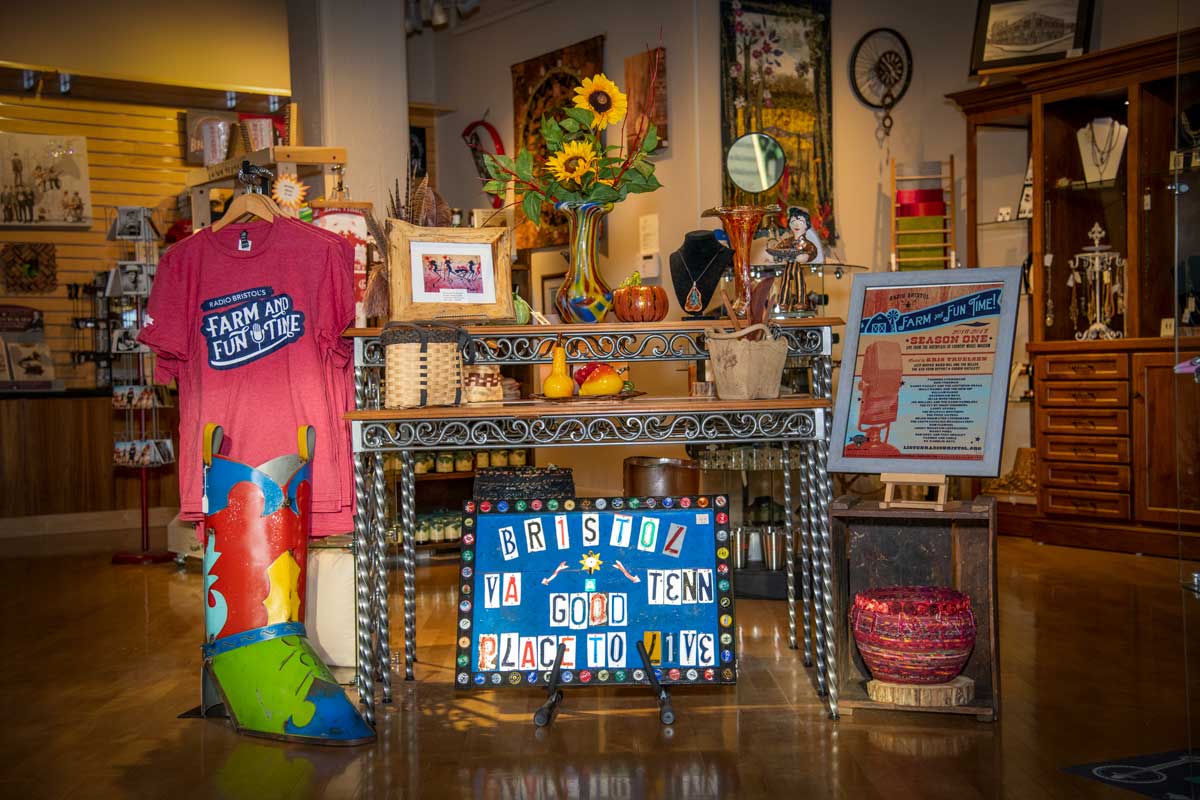
A general shot of The Museum Store focused on the front display table -- goods seen here include a large colored metal boot, a folk art piece based on the Bristol Sign, wood and fabric baskets, Farm & Fun Time t-shirts and a Season 1 print, glassware, and jewelry.
The Museum Store in the Birthplace of Country Music Museum.
© Birthplace of Country Music; photographer: Earl Neikirk

Back in November, we began our first in a series of blogs highlighting three talented artisans whose work we have commissioned to sell in The Museum Store at the Birthplace of Country Music Museum. These creatives elevate the idea of a souvenir to heirloom status, and this month we continue our series by featuring three more artists whose unique, handmade pieces are true masterpieces.

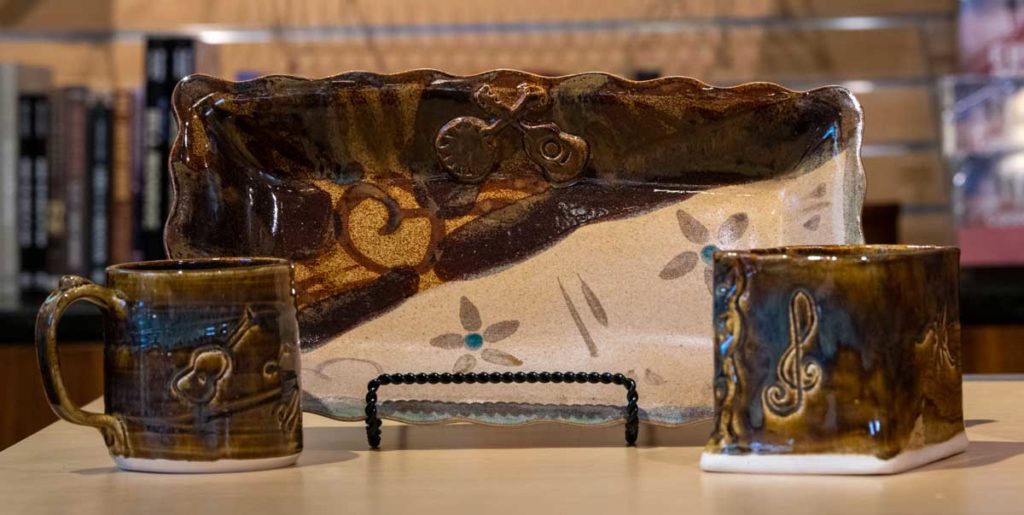
Photo of a ceramic tray with flower designs and a crossed banjo and guitar with musical themed mug and flower vase.
Debbie Grim Yate’s music-themed pottery.
© Birthplace of Country Music; photographer: Earl Neikirk

Debbie Grim Yates

Debbie Grim Yates began her pottery career with an apprenticeship under Robin and Bet Mangum of Sparta, North Carolina in 1993. Like most potters, Debbie quickly became addicted to the clay and, over time, her pottery work evolved into a full-time pottery business in her home studio in beautiful Konnarock, Virginia near Whitetop Mountain. Her love of the work and the resulting quality of her finished pottery has helped her business to grow each year. Debbie’s shop is a trail site on the Smyth County Artisan Trail, and she is a member of ‘Round the Mountain Artisan Network. In addition to The Museum Store, Debbie also sells her pottery at the Southwest Virginia Cultural Center & Marketplace and Holston Mountain Artisans in Abingdon, along with numerous other craft shops in Virginia, Tennessee, and North Carolina. She works primarily with stoneware clay, making wheel-thrown and slab-built functional and decorative pottery.

In addition to her pottery, Debbie is also an accomplished musician combining a soft but powerful singing voice with the ability to play the banjo, fiddle, guitar, and mandolin. She and husband Tim perform as Acoustic Heritage. Both Debbie and Tim came from musical families, and she hopes to pass on both her pottery trade and her family’s legacy of music-making to her two daughters.

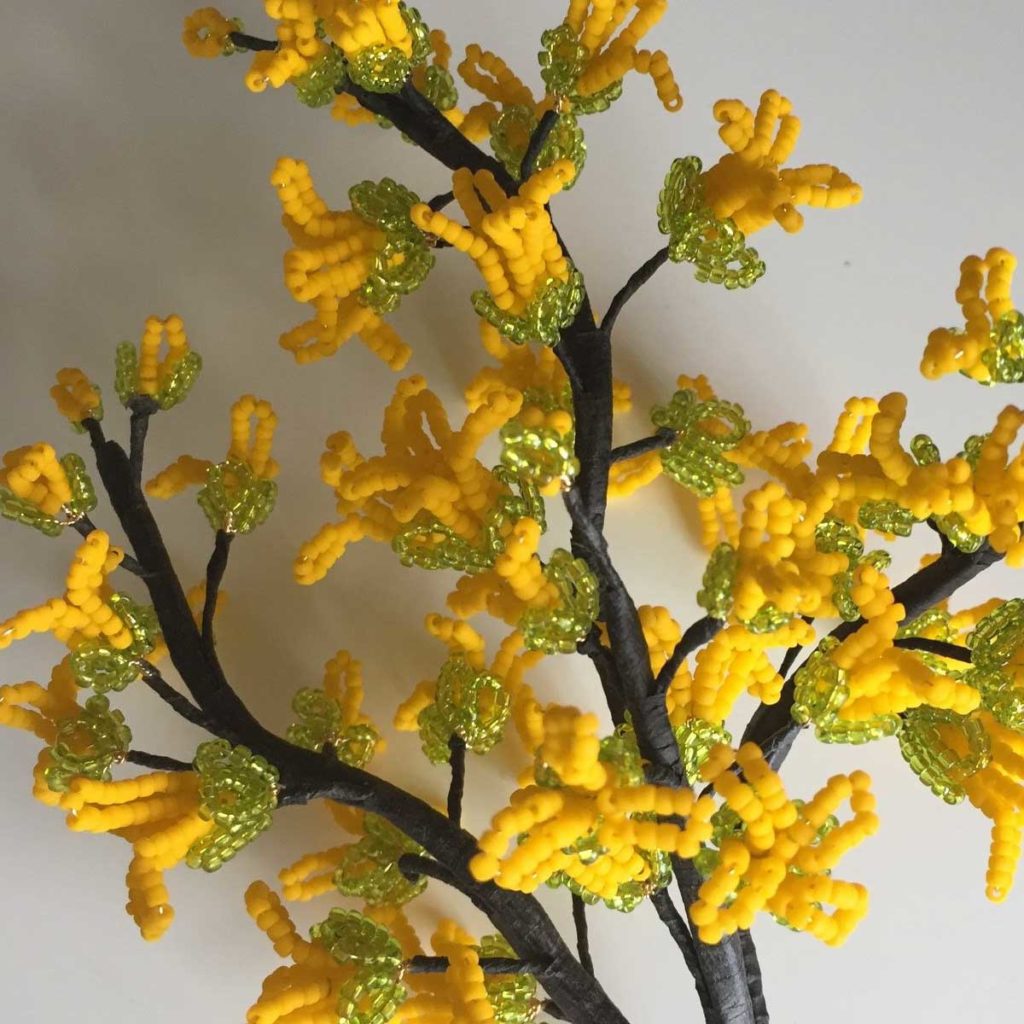
Honeysuckle flowers made from intricate yellow and green beads.
Susan Prior Fields’ floral beadwork.
Photo credit: Susan Prior Fields

Susan Prior Fields

One of The Museum Store’s most prolific and popular artisans is Susan Prior Fields. Susan is self-taught and highly skilled in the craft known as beadwork or “beading” and has utilized that talent to create handcrafted art pieces for more than 30 years. To create her beaded flower and tree sculptures and floral-inspired jewelry, she says that she utilizes “repetition, pattern, precise technique, color, sheen, and translucency, all inspired by nature and thousands of tiny seed beads.” Susan’s flowers are done in the “French method” using wire and beads. The flowers appear fragile but are very robust, strong, and permanent. Her trees are very labor-intensive and most take up to three months to complete. Susan’s jewelry consists of a variety of different tiny beads stitched one bead at a time to create a wearable piece of art.  Each of Susan’s jewelry pieces normally takes one to two full days to create.

Susan has lived in Abingdon, Virginia, for 50 years. She and her husband Charles have two daughters, Suzanna (Richmond, VA) and Gwen (Chattanooga, TN), and one grandson. Suzanna Fields is an award-winning artist whose work is in notable public and private collections. Check her out at www.suzannafields.com. You can also visit Susan Prior Fields on Facebook to see more beautiful creations by the artist.

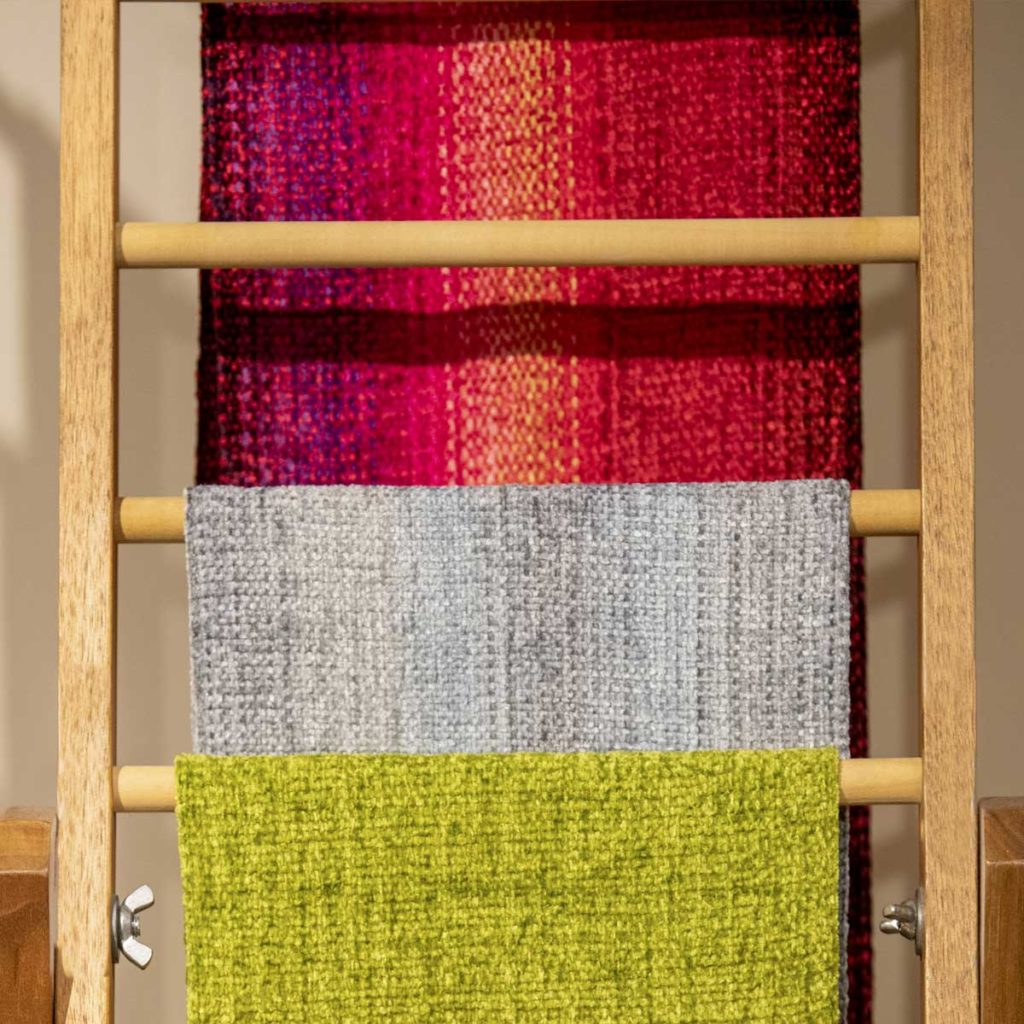
A wooden ladder-like pieces displaying several different colored scarves on the rungs.
John Gunther’s colorful scarves.
© Birthplace of Country Music; photographer: Earl Neikirk

John Gunther

A native of Flint, Michigan, one time self-described “peace and love hippie” John Gunther now resides on the outskirts of Abingdon, Virginia, with his wife Janet. John was one of the original juried artisans signed to The Museum Store in 2014. His colorful, luxurious, affordable, and hand-woven chenille scarves have proven popular with museum patrons for themselves and as gifts. Each scarf is a colorful work of art with a cozy, silky feel that becomes even softer with age. The Museum Store also carries some of John’s woven aluminum art pieces, which he has sold coast-to-coast.

John received a loom as a gift while still a student at Michigan State University and began to learn and understand the diverse uses and possibilities of woven fabrics mixed with other materials such as woods or metals. He graduated MSU in 1972 and lived in Wyoming for a short time before moving to this region. Early in his weaving career, John focused totally on “functional” weaving, making things like shelving, lighting, floor coverings, and wearable clothing, which he sold at local and regional craft shows. Since the 1990s, John has been more focused on “artistic” weaving with his scarves, landscapes using dyed merino wool, and woven creations using aluminum sheeting as his medium. He continues to find new directions to express his art. Visit his website at GuntherWeavings.com to see more examples of his beautiful work.

Each of these artisans, along with around 50 others, are featured in The Museum Store at the Birthplace of Country Music Museum. Museum admission is not needed when visiting The Museum Store, and it’s a great destination for holiday shopping. Most artisan items for sale in The Museum Store are not sold online due to inventory limitations. To peruse other items sold in The Museum store, click here.

*Note: There’s perhaps nothing more personal than a gift of the arts, so be sure and stop by the museum – and our wonderful downtown – to support local artisans and small businesses!