Welcome to Radio Bristol Book Club where readers from BCM and the Bristol Public Library come together each month to celebrate and explore a book inspired by our region’s rich Appalachian cultural and musical heritage! We invite you to read along and then listen to Radio Bristol on the fourth Thursday of each month at our NEW TIME of 12:00pm when we dig deep into the themes and questions raised by the books, learn more about the authors, and celebrate the joys of being a bookworm!
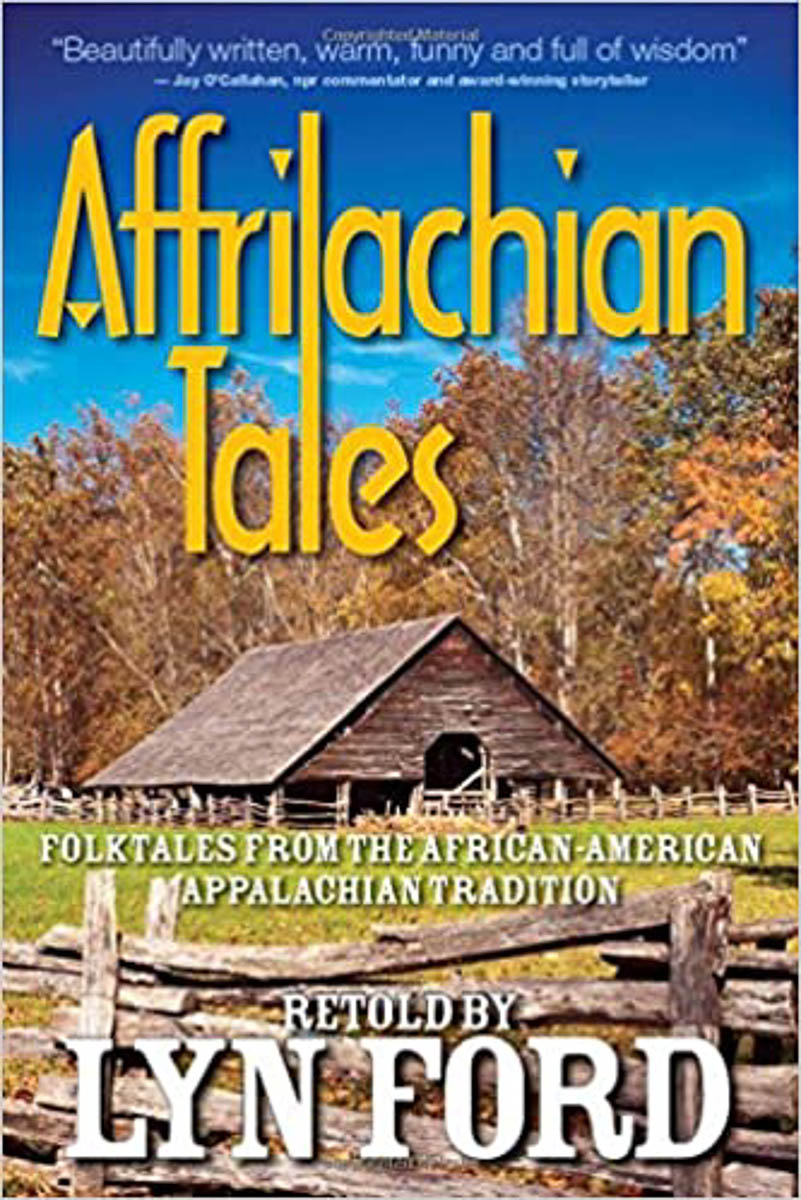
This month’s Radio Bristol Book Club pick is Lyn Ford’s Affrilachian Tales: Folktales from the African-American Appalachian Tradition. While the stereotypical Appalachian person is of Scots Irish or German descent, Ford’s wonderful collection of folktales reveals the region’s sometimes hidden diversity in this collection of delightful tales derived from African-American Appalachian oral tradition. While the stories have universal appeal, it’s their rustic charm that lifts the collection – including tales such as “Why Possum’s Tail is Bare,” “Turtle Wants to Fly,” and “Jack and the Old Woman.” Even though the book is only about 150 pages long, it includes important autobiographical and historical information to put the tales in context.
The cover of Lyn Ford’s Affrilachian Tales.
This is a book to be shared with family, whether in front of a fire or wrapped in a blanket on the porch under the stars. These tales are meant to be loved, learned, and passed down to the next generation.
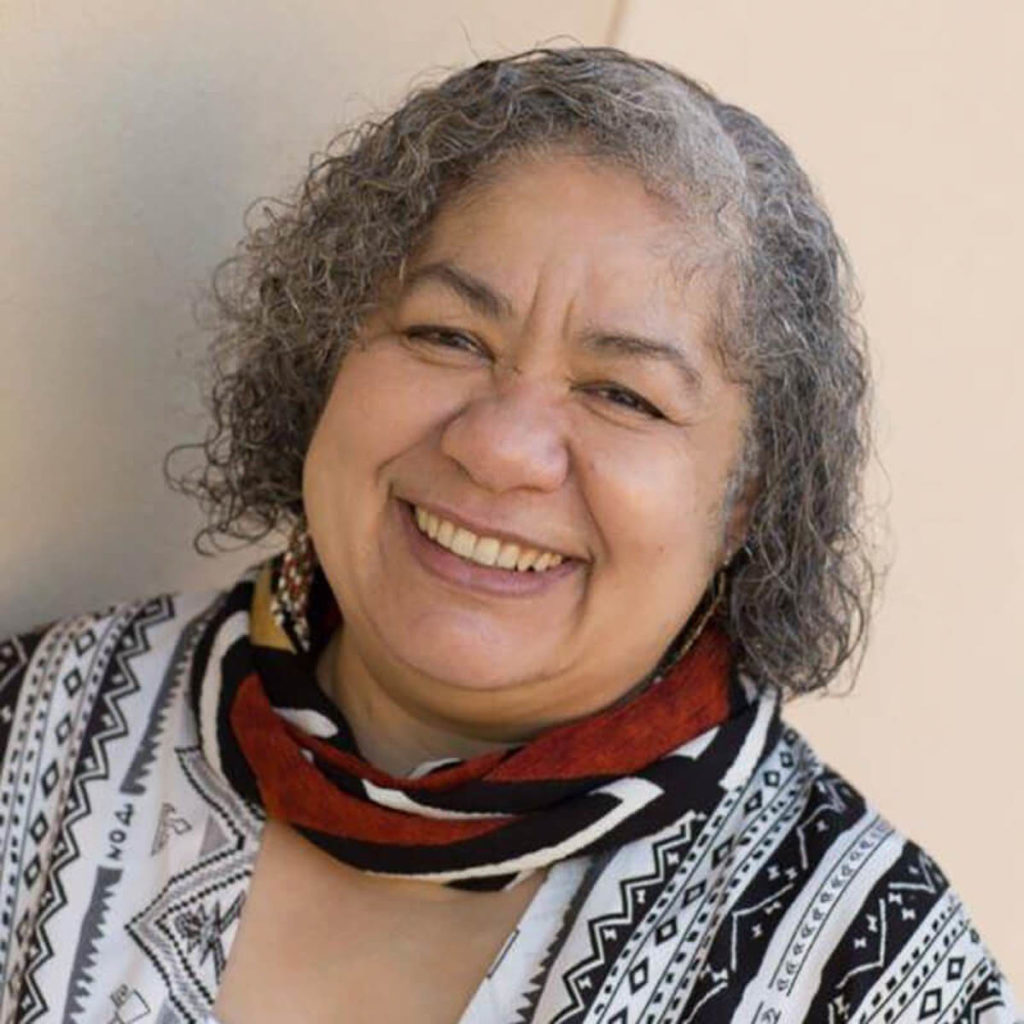
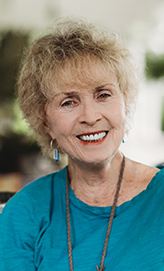
Lyn Ford is nationally recognized as an award-winning fourth-generation storyteller, author and educator. She is an Affrilachian storyteller and a “keeper and adapter” of her family’s stories. She has shared her stories in 29 states and Ireland, and she says that her career as a storyteller has been fortuitous because storytelling has been a part of her family’s tradition for generations. Her stories are “adaptations of folktales, spooky tales, and original stories rooted in her family’s multicultural African-American Appalachian (Affrilachian) heritage.” Lyn’s favorite storyteller is her father, Edward M. Cooper, whom she says was “the best storyteller she ever heard, and the worse cook in the family” – which sounds like the beginnings of a story itself! You can check out one of Lyn’s stories here.
Author Lyn Ford.
Please make plans to join us on Thursday, April 22 at 12:00pm! You can find us on the dial at 100.1 FM, streaming live on Radio Bristol, or via the Radio Bristol app. The book is available at the Bristol Public Library so be sure to pick up a copy and read it ahead of time. The librarians will be happy to help you find the book. We look forward to sharing our thoughts on the stories and tales told by Ford, and we’ll also be talking to the author after our discussion so you can also get her perspective!
If you have any thoughts or questions about this book that you would like to share with our readers (and listeners!), you can email info@birthplaceofcountrymusic.org (subject line: Radio Bristol Book Club) – your insights might appear on air with us!
Looking ahead, we will be reading Trampoline by Robert Gipe for our May book club, airing on Thursday, May 27, 12:00pm. And you can see the full 2021 Radio Bristol Book Club list and listen to archived book clubs here.
Welcome to Radio Bristol Book Club! Readers from BCM and the Bristol Public Library come together each month to celebrate and explore a book inspired by our region’s rich Appalachian cultural and musical heritage. We invite you to read along and then listen to Radio Bristol on the fourth Thursday of each month at 11:00am when we dig deep into the themes and questions raised by the books, learn more about the authors, and celebrate the joys of being a bookworm!
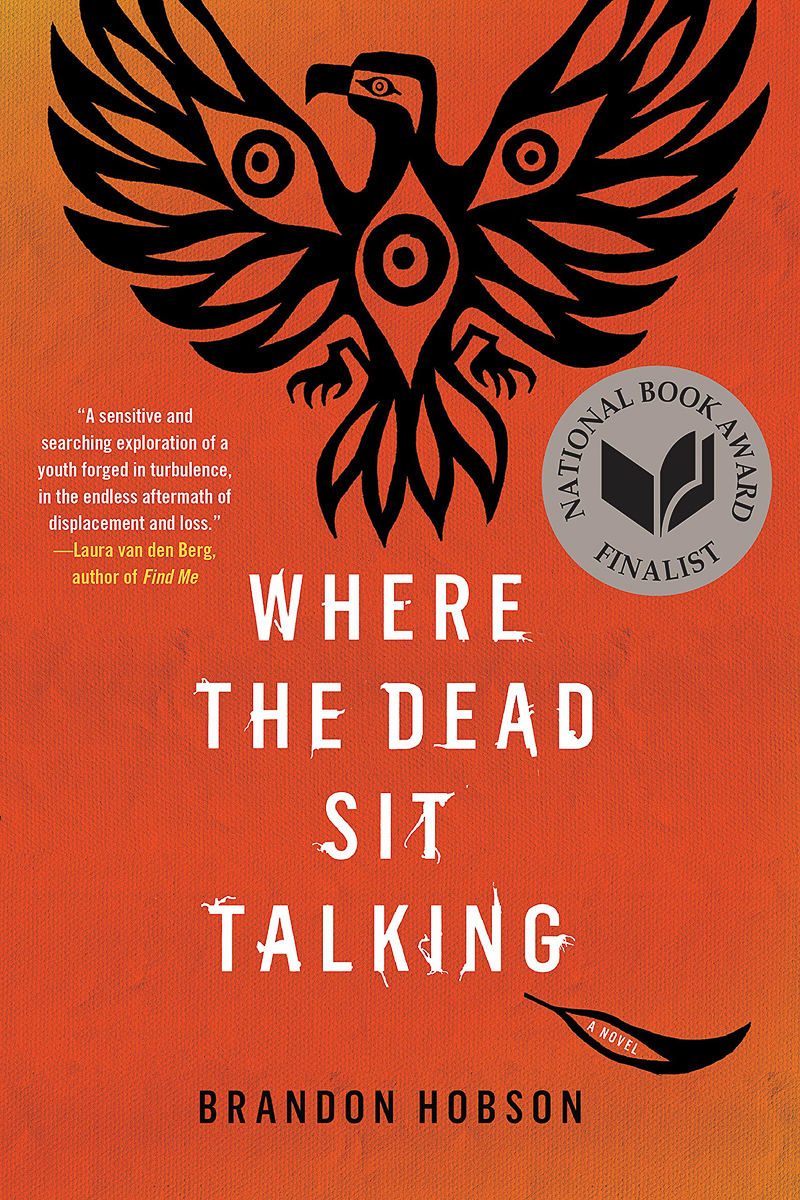
A beautifully written Native American coming-of-age story, Where the Dead Sit Talking follows 15-year-old Sequoyah’s journey through the foster care system in rural Oklahoma in the late 1980s. Scarred by years of trauma living with a mother struggling with drug addiction, Sequoyah keeps mostly to himself in his new foster home until he meets fellow house-mate Rosemary, a 17-year-old artist. The two connect over their shared Indigenous heritage and journey through the foster care system, but the uncertainty of their living situation and the trauma that has come from that presents itself as a major hurdle the two will have to face – together or on their own.
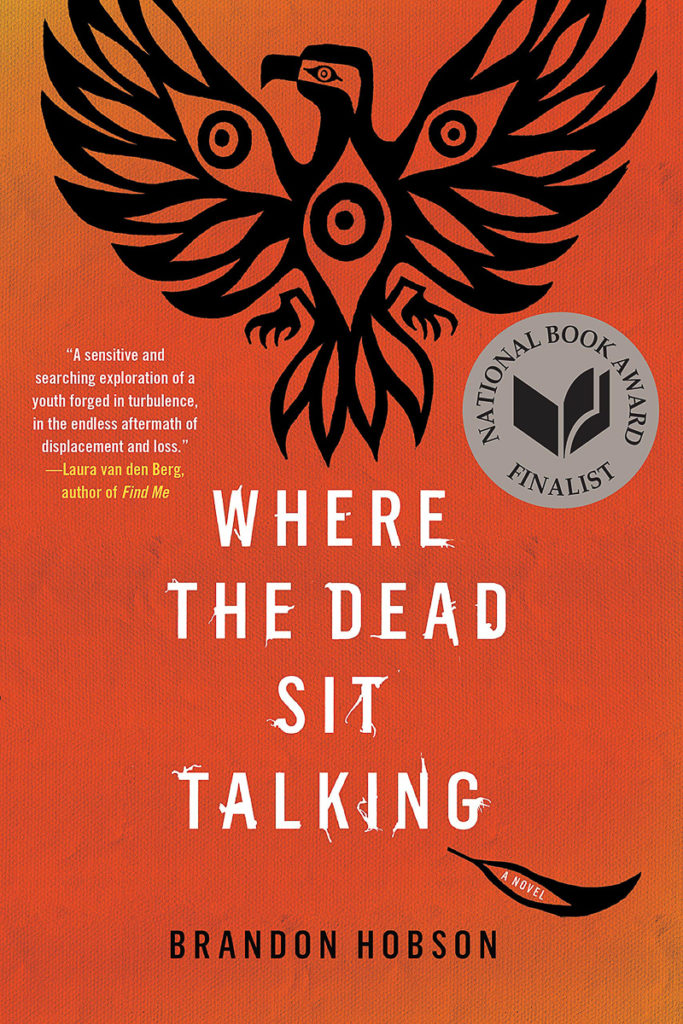
The cover of Where the Dead Sit Talking by Brandon Hobson bears a striking Indigenous art-inspired graphic.
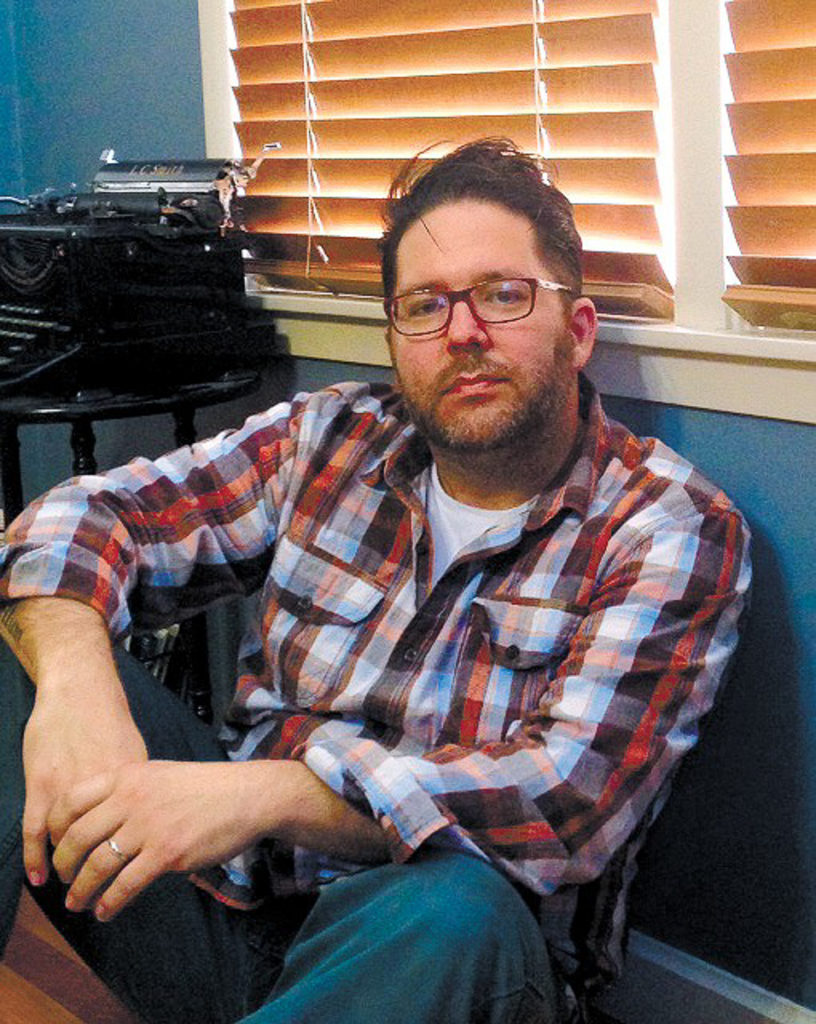
Author Brandon Hobson is an assistant professor of Creative Writing at New Mexico State University and a teacher at the Institute of American Indian Arts. He has three other published novels – the most recent one, The Removed, has been lauded as “a striking new benchmark for fiction about Native Americans” by the LA Times. Where the Dead Sit Talking, published in 2018, was a finalist for the National Book Award for Fiction, winner of the In the Margins Book Award for Fiction, and an NPR Code Switch Best Book of the Year. Hobson is also an enrolled citizen of the Cherokee Nation Tribe.
Author Brandon Hobson.
Please make plans to join us on Thursday, March 25 at 11:00am! You can find us on the dial at 100.1 FM, streaming live on Radio Bristol, or via the Radio Bristol app. The book is available at the Bristol Public Library so be sure to pick up a copy and read it ahead of time. The librarians will be happy to help you find the book. We look forward to sharing our thoughts on Hobson’s difficult and important story!
If you have thoughts or questions about this book that you would like to share with our readers (and listeners!), you can email info@birthplaceofcountrymusic.org (subject line: Radio Bristol Book Club) – and your insights might appear on air with us!
Looking ahead, we will be reading Affrilachian Tales: Folktales from the African-American Appalachian Tradition by Lyn Ford for our April book club, airing on Thursday, April 22, 11:00am. You can see the full 2021 Radio Bristol Book Club list here.
Each year the American Alliance of Museums organizes Museums Advocacy Day, an event aimed at preparing and enabling public history professionals and individuals who are passionate about museums to speak directly with their Congressional representatives about policy issues that directly affect museums. This year, the event starts today – February 22 – with several sessions focused on the issues and how to advocate, which will then be followed tomorrow by a day of Congressional meetings to talk to representatives and/or their staff about why they should support museums and their work. Due to the COVID-19 pandemic, the whole event this year will be virtual, which may seem like a disadvantage, but actually it makes speaking with elected officials and advocacy easier and more accessible. In fact, it is the first year that members of our curatorial staff have been able to attend!
But, what makes museums so important? Why should we advocate for museums? And what can you do today to support your local museum?
Why Are Museums Important?
In all probability, if you’re reading this blog post, you already have a love for museums. So I want you to think about the first time you went to a museum. Did you feel giddy with excitement and wonder as you looked in the beautiful glass cases that housed items ancient and seemingly ripped from our collective imagination? Did you tell your friends and teachers about all of the neat facts you learned and all of the cool objects you saw? Did you perhaps decide to go to your local museum’s summer camp or their other public events after this initial visit? I always come out of museums refreshed and grounded by a deeper understanding of the represented community and also a deeper understanding of myself. And then I want to see and learn more.
Museums contribute $50 billion to the U.S. economy each year.
Children who visited a museum during kindergarten had higher achievement scores in reading, mathematics, and science in third grade than children who did not. Children who are most at risk for deficits and delays in achievement also see this benefit.
Americans view museums as one of the most important resources for educating our children and as one of the most trustworthy sources of objective information. According to a study by Indiana University, museums are considered a more reliable source of historical information than books, teachers, or even personal accounts by grandparents or other relatives.
In determining America’s Best Cities, Bloomberg Business Week placed the greatest weight on “leisure amenities [including density of museums], followed by educational metrics and economic metrics…then crime and air quality.”
More people visited an art museum, science center, historic house or site, zoo, or aquarium in 2018 than attended a professional sporting event.
Museums also provide many social services, including programs for children on the autism spectrum, English as a Second Language classes, and programs for adults with Alzheimer’s or other cognitive impairments.
Since 2014, more than 500 museums nationwide have facilitated more than 2.5 million museum visits for low-income Americans through the Museums for All program.
To learn more about the awesome effects of museums at the individual, communal, and global level, visit the American Alliance of Museums’ website here – it’s full of great information!
What does it even mean to advocate? On the most basic level to advocate is to publicly recommend or support – this definition of advocate could cover everything from recommending a friend to your current employer for an open position within the organization to supporting a local artist you love by sharing their work on your social media pages. On the political level, to advocate means to actively support a change to an issue or creation of program or solution on a local, state, or federal level. Political advocacy includes emailing, writing letters to, or calling your lawmakers; voicing your opinions or sharing other calls to action on your social media pages and tagging lawmakers in those posts; or participating in or supporting advocacy or action groups who are dedicated to specific issues.
But why get involved? AAM outlines several great reasons to advocate:
It is your right (and duty) as an American citizen to advocate for what you believe in.
It can bring about policy change that will make others’ lives better.
You can help speak up for those who may not be able to speak for themselves.
It is evidence of our political system at work – it helps fulfill checks and balances on the government.
It underlines that you are an active member of the community – politicians may be too far removed to really understand the issues and what is going on in communities.
It can actually accomplish something!
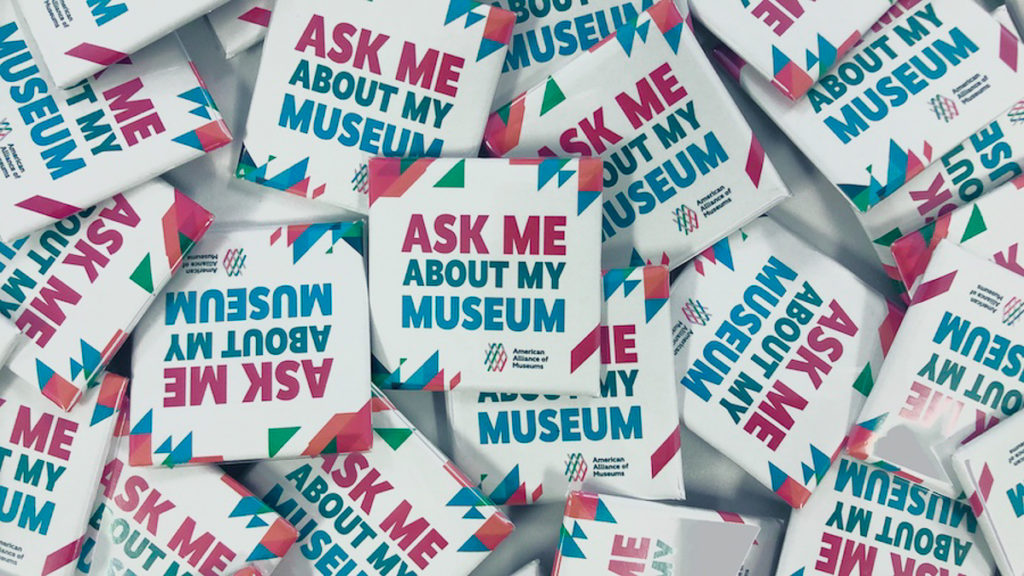
Buttons provided by AAM for a past Museums Advocacy Day encouraged those representatives and aides met on Capitol Hill to learn about individuals and their museums. Source: https://blooloop.com/museum/news/aam-museum-advocacy-day/
Finally, remember to keep an open mind about advocacy. It is no different than an institution participating in donor cultivation – museums are community centers that preserve, celebrate, and engage a community as a whole and as such it is acceptable to share that impact and advocate for these organizations.
What Can You Do as an Individual?
So…you think museums are amazing, and hopefully now advocacy doesn’t sound so intimidating, but what are some tangible action items you can do to help your local museum on the individual, rather than the institutional, level? Again, the American Alliance of Museums has a list of do-ables to help you advocate for the museums you love:
Contact your Congressional representative (contact information and templates can be found here) and tell them why your local museum is important to you and your community. And don’t just look at the national level – you can also contact your state and local representatives, where your words might have even more impact.
Learn from others about why they advocate and what issues they think are important.
Make advocacy a habit, not just a one-off action.
Stay informed on the issues important to your community.
Visit your local museum to learn more about their work and their contributions to your community.
Ask your favorite museum or historic/cultural organization how you can help!
For more information, check out the sources used for this post:
Welcome to Radio Bristol Book Club! Readers from BCM and the Bristol Public Library come together each month to celebrate and explore a book inspired by our region’s rich Appalachian cultural and musical heritage. We invite you to read along and then listen to Radio Bristol on the fourth Thursday of each month at 11:00am when we will dig deep into the themes and questions raised by the books, learn more about the authors, and celebrate the joys of being a bookworm!
The Devil’s Dream explores Appalachian culture, traditions, and family ties through the multi-generational saga of the Bailey family. Preacher’s son Moses Bailey believes that the fiddle is the voice of the devil and tries to quash his wife Kate Malone’s deep love of music. But there are some things that may be too powerful to deny… Avoiding Appalachian stereotypes, Smith tells the story – loosely based on the Carter Family – through strong characters whose voices are as distinct and as spiritual as the high lonesome sound.
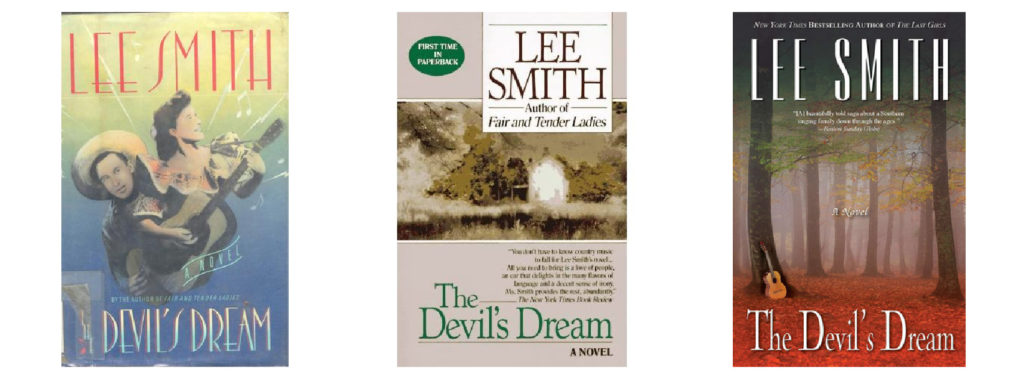
The various manifestations of the cover of Lee Smith’s novel The Devil’s Dream evoke the story the book tells in different ways over the years.
Lee Smith is a native of Grundy, Virginia. She has written many novels, including the New York Times bestseller The Last Girls, along with Fair and Tender Ladies, Guests on Earth, Saving Grace, and Blue Marlin. She is a recipient of the Academy Award in Literature from the American Academy of Arts and Letters, the North Carolina Award for Literature, and a Southern Book Critics Circle Award.
Please make plans to join us on Thursday, February 25 at 11:00am! You can find us on the dial at 100.1 FM, streaming live on Radio Bristol, or via the Radio Bristol app. The book is available at the Bristol Public Library so be sure to pick up a copy and read it ahead of time. The librarians will be happy to help you find the book. We look forward to sharing our thoughts on this book’s interesting story, told in the Appalachian voices of the people themselves. And if you have thoughts or questions about this book that you would like to share with our readers, you can email info@birthplaceofcountrymusic.org (Subject line: Radio Bristol Book Club) – and your book insights might appear on air with us!
Looking ahead: Our book pick for March is Where the Dead Sit Talking by Brandon Hobson; we’ll be discussing it on Thursday, March 25. Check out our full list of 2021 Radio Bristol Book Club picks here, where you can also listen to archived shows!