

Instruments Archives - The Birthplace of Country Music
Listen
Play
Loading station info...

Medieval to Metal: A Look at the William King Museum of Art’s latest exhibit

Anna Buchanan is the Head Curator at the William King Museum of Art located in Abingdon, Virginia. Buchanan is a graduate from Clemson University where she received her MFA with a concentration in drawing.
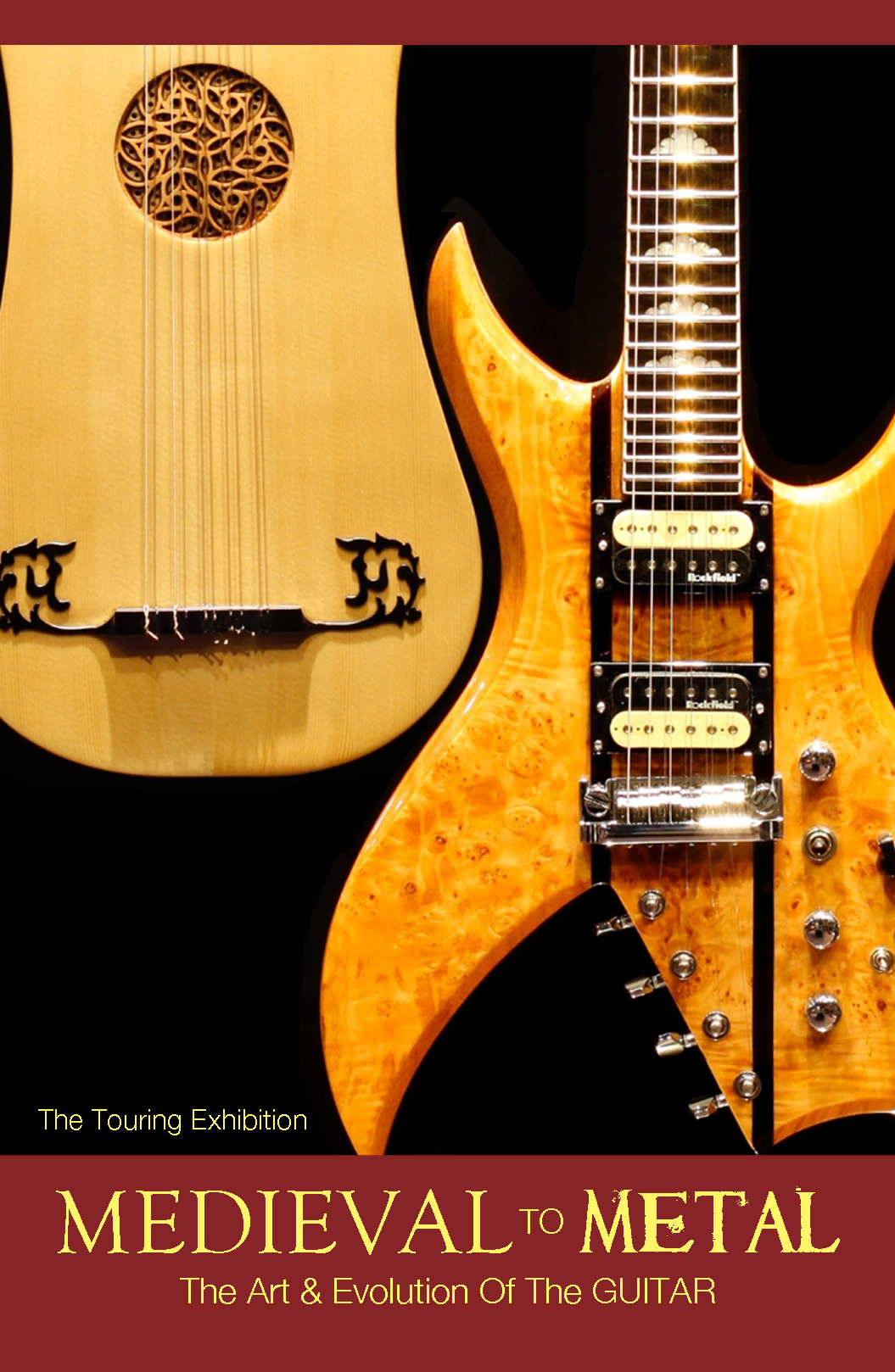

"Medieval to Metal" exhibit poster featuring a medieval precursor to the guitar next to a modern model of the instrument.
The exhibit “Medieval to Metal: The Art and Evolution of the GUITAR” is a touring exhibition by the National Guitar Museum. Copyright: The National Guitar Museum (NGM).

The William King Museum of Art (WKMA) is no stranger to the age-old question: What is art? It’s a question that art historians still grapple with today. At WKMA, we believe that museums have a responsibility to push the boundaries of that question in order to broaden our understanding of creativity and foster empathic connections across cultures and communities. One of my favorite quotes comes from  Yolngu Aboriginal Australian artist Wandjuk Marika: 

“There is no distinction between art and life.” 

The Fralin Museum and the Kluge-Ruhe Aboriginal Art Museum reflected on this quote, noting how it challenges the distinctions often made in Western culture between “fine art” and “craft,” or “design” and “decoration.” As museums, I think that it’s important to recognize the traits and histories of each creative category, but question the hierarchy that is so often a part of the visual arts. 
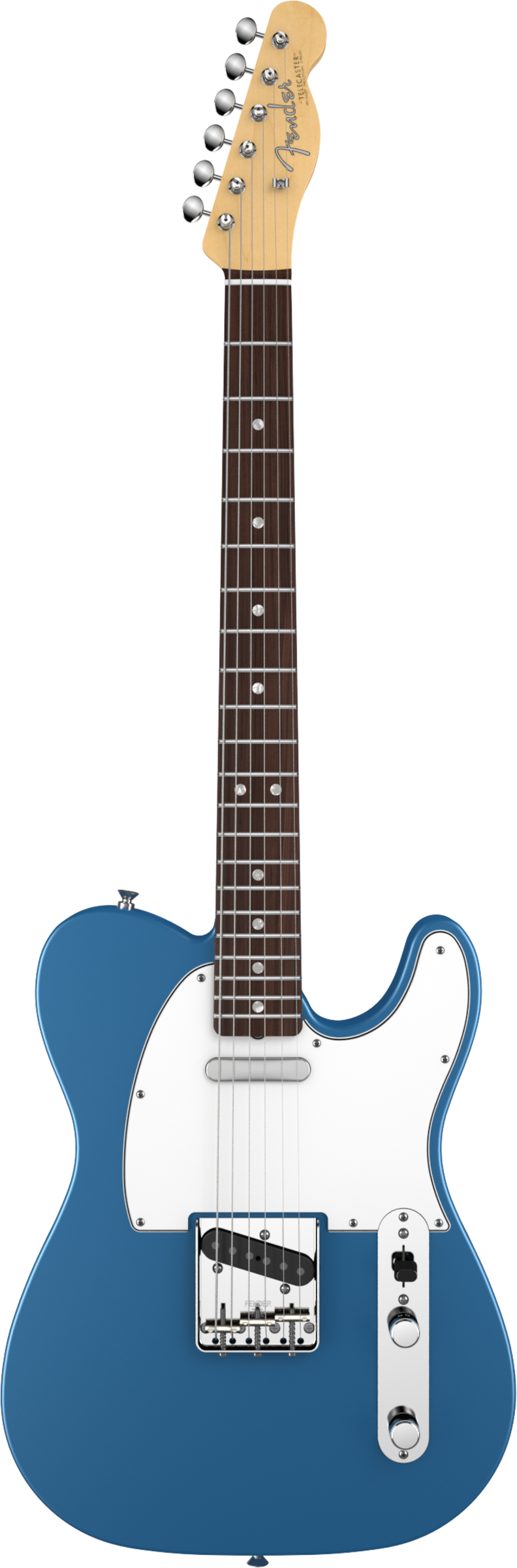
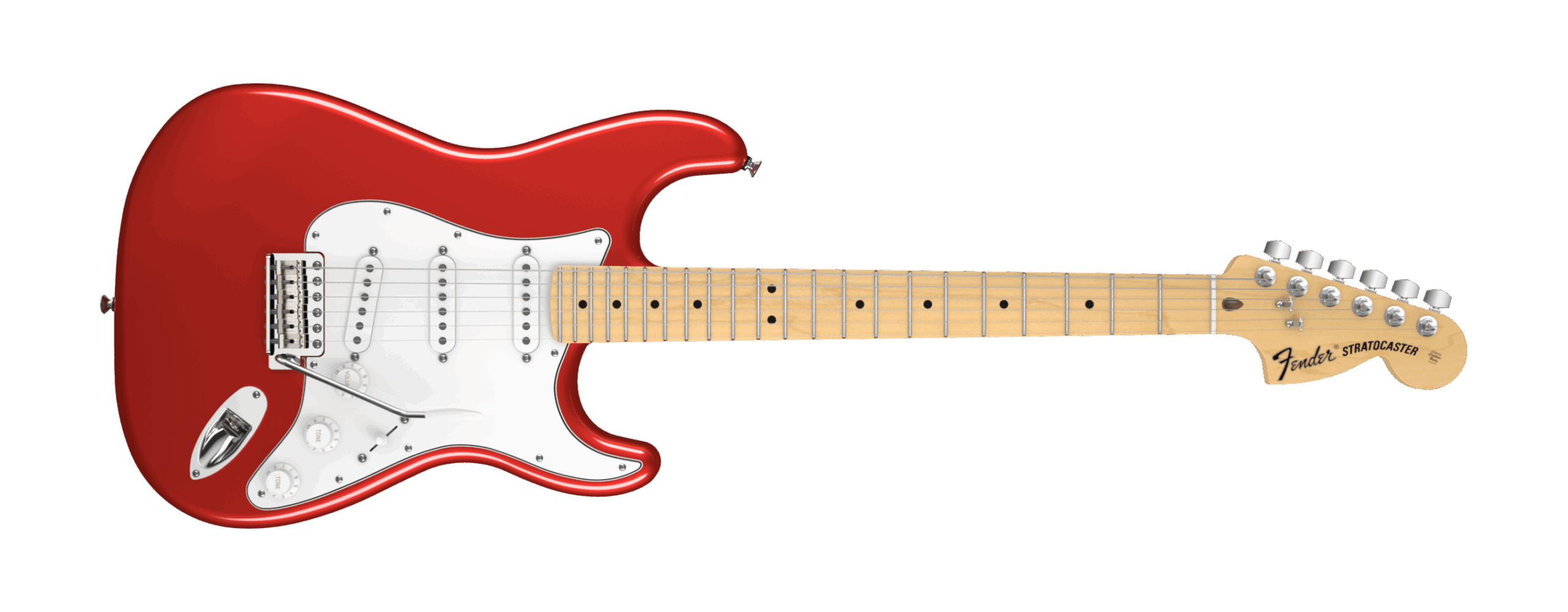
A Fender Telecaster, with Lake placid Blue furniture.
Fender Telecaster, Lake Placid Blue, Copyright: National Guitar Museum (NGM)

WKMA invites visitors to reconsider their definition of art through our current exhibition, “Medieval to Metal: The Art and Evolution of the Guitar,” on view from May 15 to August 17. This vibrant traveling exhibition–developed by the National Guitar Museum (NGM)–showcases 40 instruments that tell the story of the guitar’s artistic transformation over centuries. Spanning from medieval lutes to modern electric guitars, the exhibition highlights how creative engineering has driven the instrument’s evolution. Whether you’re a lifelong music fan or new to the guitar’s history, the diversity of designs and materials sparks curiosity.

Visitors will recognize some famous names–like Fender, one of the most iconic brands in music. Clarence Leonidas “Leo” Fender (1909-1991) was an American inventor and founder of the Fender Musical Instruments Corporation. Based in Fullerton, California, Fender opened a repair shop in the 1940s that became a hub for local musicians. Local bands brought him music equipment and acoustic guitars for repair. Hearing all the complaints from the musicians about their instruments, Fender set out to create a guitar like no other. The result was the “Telecaster,” named in homage to the growing popularity of television. 

Fender’s repair shop flourished in the 1950s and 60s, particularly in the SoCal hot rodding scene that erupted after WWII. Fender knew his clientele and his designs often drew inspiration from car culture, featuring chrome accents and bold colors like Fiesta Red and Lake Placid Blue–the same hues found on 1950s Cadillacs. Fender even partnered with auto paint manufacturers like DuPont. Ironically, despite revolutionizing the instrument, Leo Fender never learned to play or tune a guitar himself. 
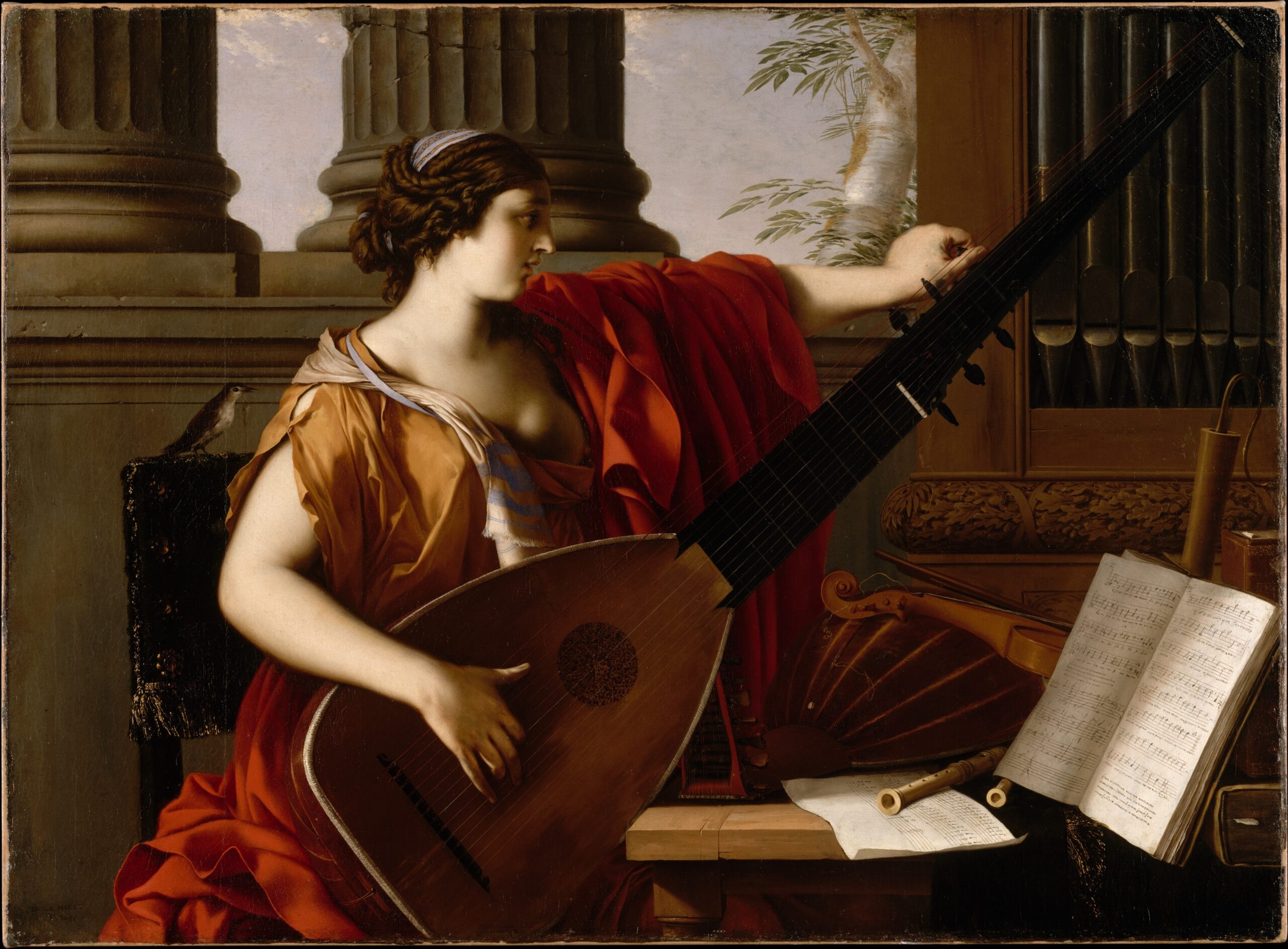
An artwork by the French Baroque painter Laurent de La Hyre. It depicts a woman in Greco-Roman clothing, tuning a theorbo, a 6-foot long instrument with 13 strings. On her chair, over her left shoulder is a small bird observing her tuning. Next to her is a table with various instruments including a lute, two flutes, and a violin, as well as sheet music. On the wall behind her is a pipe organ.
Allegory of Music by Laurent de la Hyre, 1649. Public domain image from the Metropolitan Museum of Art.

A lesser known instrument that is sure to pique everyone’s interest is the theorbo. The theorbo is a larger than life Renaissance instrument that evolved from the lute. Often six feet long with up to 30 strings, the theorbo was developed to accompany the deep voices of male opera singers in Italy. Featuring a second, extended neck without frets and bass strings, it produced a rich, resonant sound that filled concert halls. Players strummed the upper strings while plucking melodies on the lower neck, creating music that was as visually dramatic as it was ethereal. Though it fell out of favor in the 18th century, the theorbo remains a powerful reminder of how function and artistry can intertwine. 

So, what is art? Art can be a way of communication. Art is often used as a tool for the distribution of ideas and the guitar is no different. The guitar is a creative tool used to disseminate messages, thoughts, and even protests just as the visual arts have done for millennia. Alex Nygers, Director and CEO of the Virginia Museum of Fine Arts notes that, “…the guitar holds not only an evergreen presence as a source of entertainment, but becomes a vehicle for these connections to our histories and our communities–-a way to share stories, express emotion, respond to politics…” At WKMA, we see the guitar as more than just an instrument–it’s a work of art, and by exploring its evolution, we hope visitors leave with a broader appreciation for how creativity shapes the world around us. In questioning the boundaries of “what counts” as art, we aim to open the door to deeper engagement, inclusivity, and inspiration. 

Additional Links/Resources:
www.nationalguitarmuseum.com

Emmylou Harris and Her Guitars

Ellie Davis is an intern at the Birthplace of Country Music Museum and a student at East Tennessee State University where she studies Human Studies with a minor in Old Time Music Studies.


As an avid old-time and folk musician, I thought I’d share some interesting background behind one of my lifelong inspirations, Emmylou Harris, and more specifically, the story behind her guitars. As a young girl, I was always so drawn to Emmylou because of her beautiful voice, her unapologetic stage presence, and her big, powerful guitar.

An image of Emmylou Harris, standing between two other musicians with her guitar. She has white hair, is smiling, and lightly strumming the guitar.
Picture of Emmylou with her guitar.

For those who might need an introduction or refresher on Emmylou Harris, she is a fourteen-time Grammy Award winner and Country Music Hall of Fame inductee, and has been a pioneering women musician in country and folk music for decades. Emmylou’s career was transformed when she was discovered by country music legend Gram Parsons in the early 1970s, and when he invited her to join his band, their duet harmony singing immediately captivated listeners. Another one of Emmylou’s most memorable collaborations was with Dolly Parton and Linda Ronstadt, where their iconic 1987 album, “Trio”, featured unforgettable harmonies that remain a landmark in country music history.

Gram Parsons & Emmylou Harris performing “Big Mouth Blues” live in 1973 at the Liberty Hall in Texas. In 1973, Gram Parsons, a pioneering country rock artist, passed away at age 26. There are few recordings of him performing live.

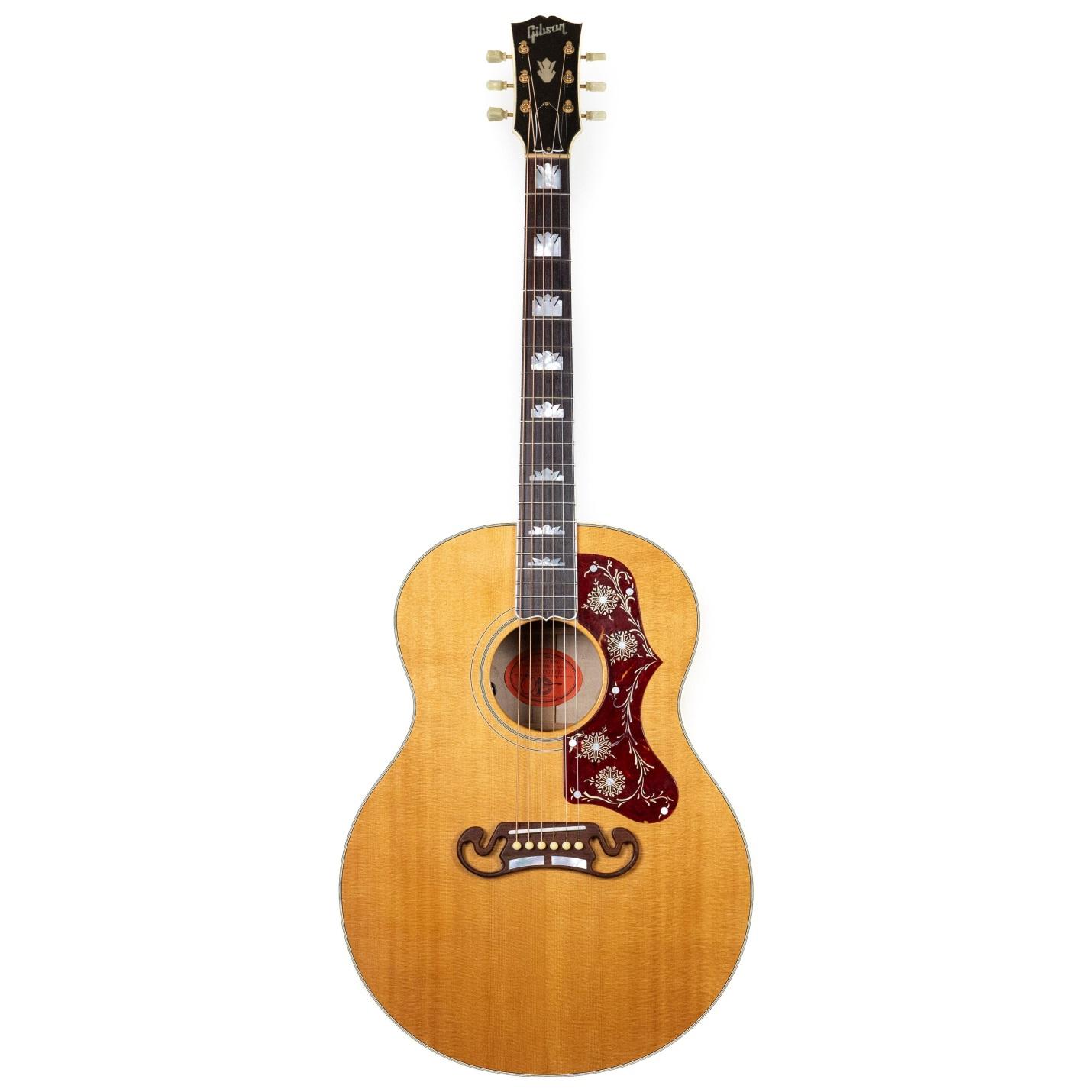
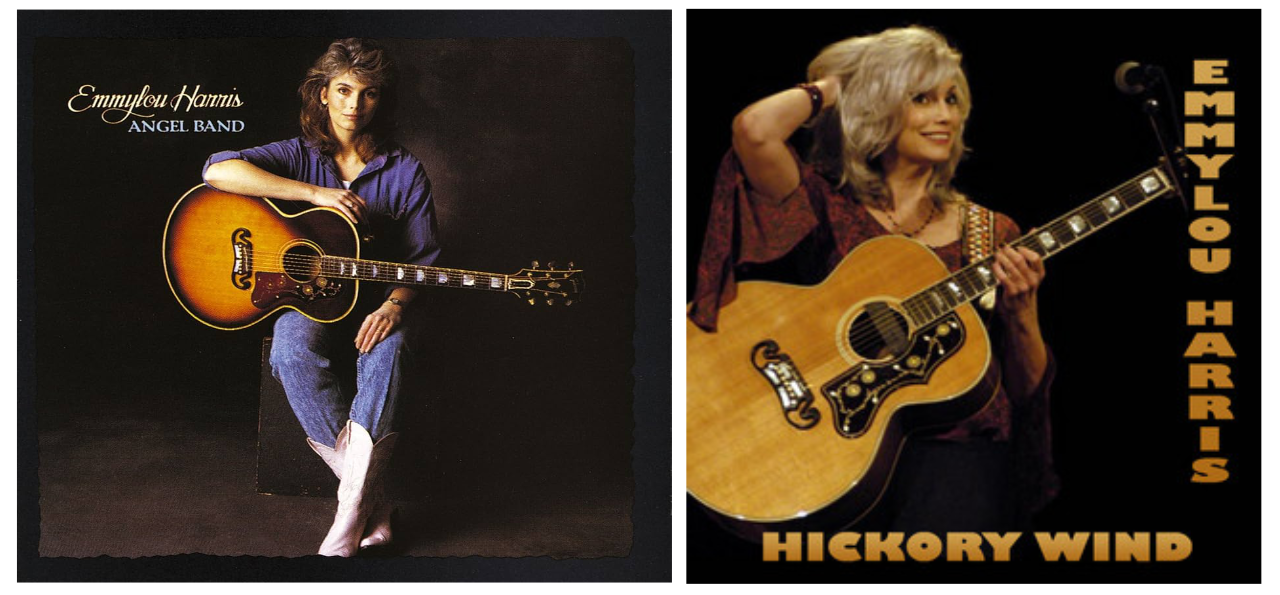
Now, let’s get back to Emmylou’s guitar. Because the music industry has notoriously been unwelcoming to women musicians, it’s too often generally accepted that women should not take up as much space, or be heard as loudly as their male counterparts. This is one of the reasons women rarely performed solo for many years and you still don’t often see women performing with big guitars. Like a lot of country artists, Emmylou found her signature guitar early on, and it remained her staple instrument for decades. This guitar for Emmylou was the. With the S and J standing for “Super Jumbo” this guitar is large bodied, with a rosewood neck, maple sides and back, mother-of-pearl inlay, and has strong bracing inside the body of the guitar. For non-guitar nerds, bracing refers to a guitar’s internal support system; essentially the bones of the guitar. It’s made of thin pieces of wood that are glued to the inside of the guitar’s top, and they help to both strengthen the instrument and control the vibrations of the strings, making the sound better and stronger. Gibson calls this guitar the “King of the Flat Tops” due to its popularity with American artists, but you almost never see a woman playing one. You can see Emmylou’s SJ-200 pictured on her 2001 album, Hickory Wind and a darker stained version of the same model on the cover of her 1987 album Angel Band.

Two albums by Emmylou Harris, "Angel Band" and "Hickory Wind." She appears posing with her guitar on both, while much younger on "Angel Band," and in front of a microphone on "Hickory Wind."
Picture of Angel Band and Hickory Wind albums

Because Emmylou made this guitar model so famous, Gibson even created a limited edition custom model dedicated to her, called the Gibson L-200. It’s a slightly smaller and lighter weight model of the exact same guitar with the exact same bracing inside it, making it more accommodating to smaller musicians while still preserving the full and striking sound. Emmylou now performs most often with the L-200. Gibson introducing a new custom model in honor of Emmylou shows how she has led by example and carved out space in the music industry for other women musicians to rise up and feel more of a sense of belonging.

Image of the Gibson L-200, a light-colored acoustic guitar. The pick guard is adorned with flowers and vines.
This image of a Gibson 2004 L-200 Emmylou Harris guitar is from rudysmusic.com.

Just like Gibson did with their custom, guitar, I hope to honor Emmylou’s unique musicianship with this ode to her instrument and how she likes to be heard. Emmylou is admired because of the duality in her musicianship. She can sing so tenderly and allow her femininity to be so prominent, and at the same time, she takes up space with her big guitar and her strong voice. The harmonious balance she strikes between vulnerability and strength paves the way for so many women musicians following in her footsteps.

International Guitar Month Part 2: Jimmie Rodgers’ Oscar Schmidt Guitar

By Ed Hagen,  volunteer gallery assistant and guest blogger at the Birthplace of Country Music Museum.


The Birthplace of Country Music Museum in Bristol, Virginia celebrates Bristol’s rich musical heritage surrounding the 1927 Bristol Sessions, a series of recordings that launched the careers of the Carter Family and Jimmie Rodgers. With April being International Guitar Month”, this two part blog post will take a deep dive into the guitars of these famous musicians and stories surrounding these instruments. 

Jimmie Rodgers’ Oscar Schmidt Guitar

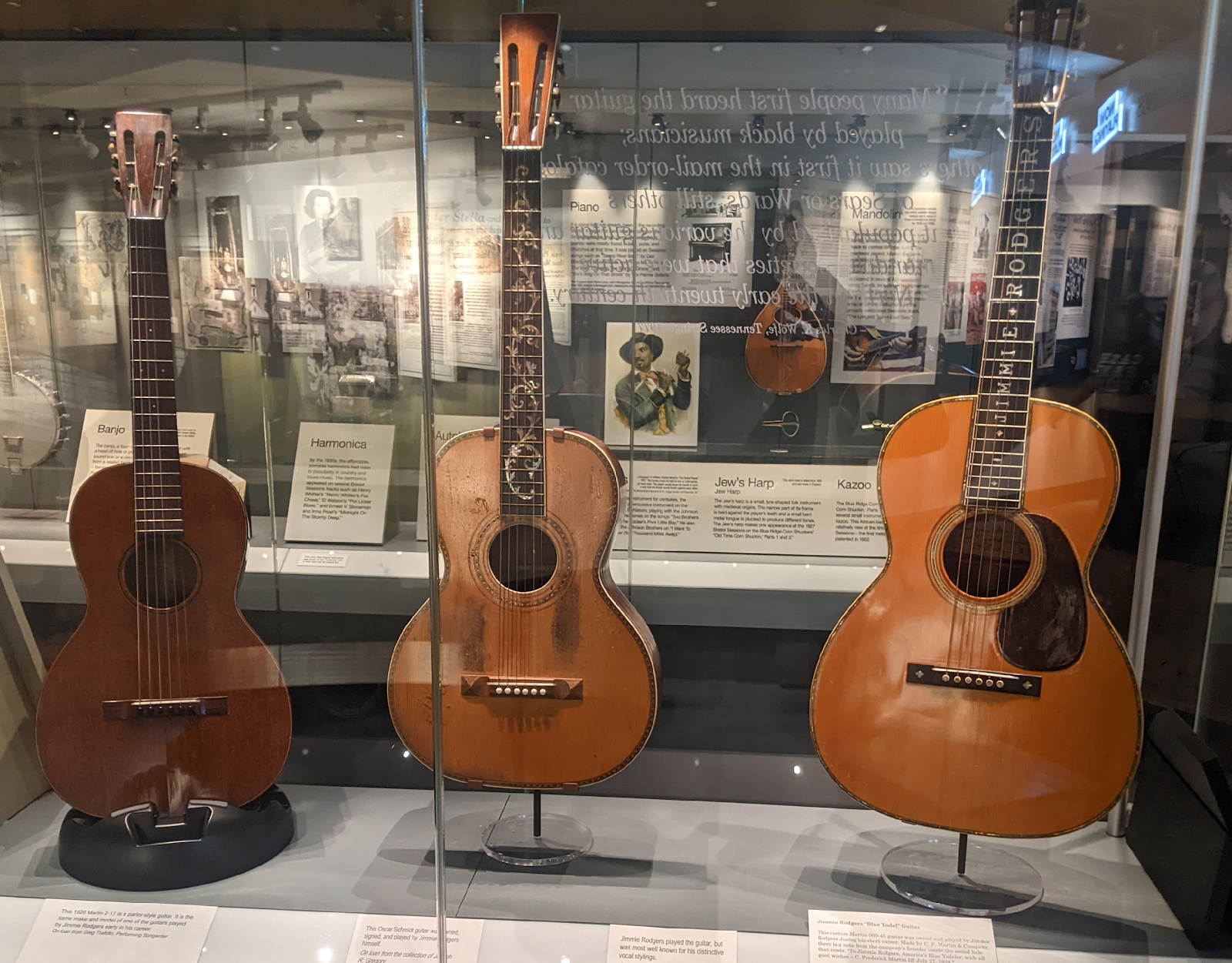
The three “Jimmie Rodgers guitars” at the BCMM: Martin 2-17, Oscar Schmidt, and Blue Yodel.

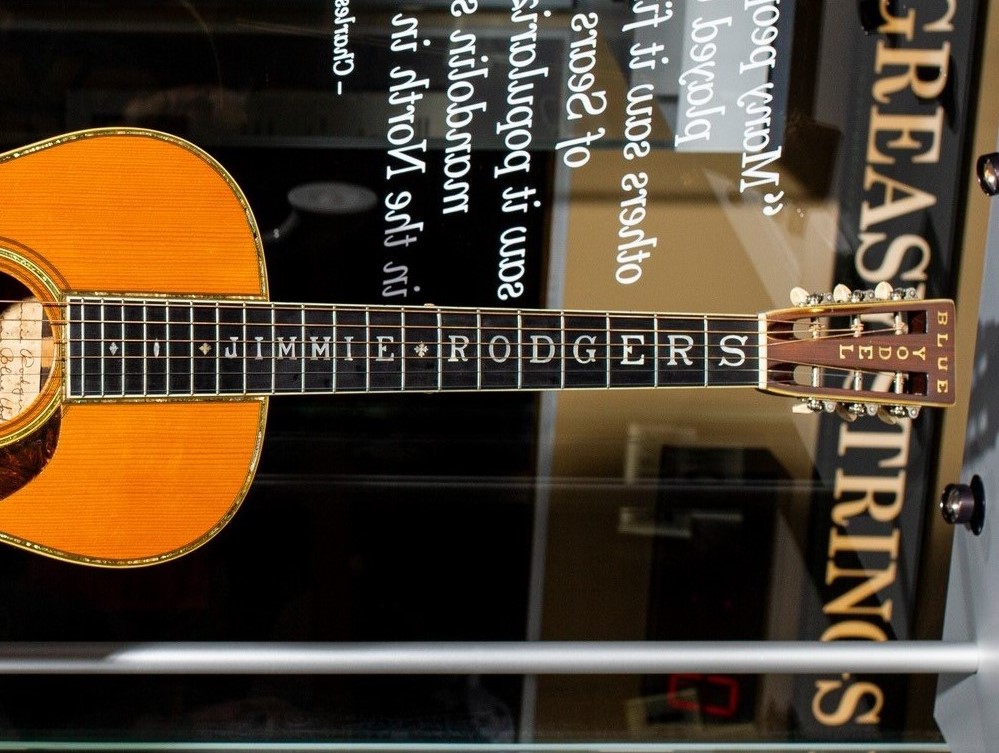
Jimmie Rodgers was the biggest solo star to emerge from the 1927 Bristol sessions. The Birthplace of Country Music Museum is proud to exhibit the three “Jimmie Rodgers” guitars pictured above. The most famous guitar by far is the one on the right, the Blue Yodel” 1928 Martin 000-45 (read a previous blog post about this guitar here). The guitar on the left, a Martin 2-17 parlor guitar, was not owned by Rodgers but closely resembles the guitar Rodgers played at the Bristol sessions (the actual Bristol Sessions guitar is in the Country Music Hall of Fame and Museum in Nashville). The one in the middle, an Oscar Schmidt model with fancy “tree of life” inlay on the fingerboard, is one of Rodgers’ guitars (it has his signature). It is no doubt the guitar with the best stories.

The original Oscar Schmidt company, founded in 1871, sold guitars at prices most people could afford. By the 1920s it was manufacturing 150 different instruments at five different manufacturing plants under its own and a number of other brand names (notably the Stella brand; Maybelle Carter played a Stella at the Bristol sessions). Rodgers’ Oscar Schmidt was a fancy one, likely purchased in 1928 after his career started to take off.

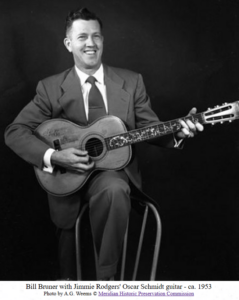
In February 1929 Jimmie Rodgers, headlining a tent show touring the South, played his hometown, Meridian, Mississippi. A 17-year-old Western Union messenger boy named Bill Bruner was in the audience. Bruner was a Jimmie Rodgers fanatic who bought all of Rodgers’ records when they came out. He would spend hours learning the songs note by note and copying Rodgers’ guitar and vocal style, and sometimes played them at a local café.

Rodgers suffered from the tuberculosis that would take his life just four short years later. There were good days and bad days, and this was one of the bad days. He collapsed in his dressing room and the owner of the show would have to tell an unhappy crowd that Rodgers was ill and could not perform.  

But here is where things get interesting. It turns out that a tent show clown had heard Bruner play at the café, knew that he was in the audience, and told the show owner that the kid was pretty good. Much to Bruner’s (and his date’s) astonishment, Bruner was escorted backstage and given cab fare to go home and retrieve his guitar.

So after the audience was told about Rodgers being too sick to play, the show owner told them that “we have another Meridian boy who is also a fine entertainer. He sings and plays in Jimmie’s style, and we think he deserves a chance to show what he can do.” The crowd was restive. Then he told the crowd that anybody who wanted to could have their money back if they were dissatisfied after hearing “Bill Bruner, the Yodeling Messenger Boy.” This settled things down a bit.

You can guess the rest. Bruner gave a sensational performance, was called back for six encores, and nobody asked for a refund. The following evening he was invited to Rodgers’ dressing room, where Rodgers gave him $10, decent money in those days. Bruner started to leave but was summoned back, and Rodgers gave Bruner the autographed Oscar Schmidt guitar. 

Bill Bruner with Jimmie Rodgers Oscar Schmidt guitar, ca 1953.

Bruner went on to have a minor vaudeville career and made a couple of records with his prized Jimmie Rodgers guitar. In 1953 Meridian put on a Jimmie Rodgers Memorial Day Gala. The concert featured performances by Country and Western stars Roy Acuff, the Carter Family, Lew Childre, Cowboy Copas, Jimmy Dickens, Jimmie Davis, Tommy Duncan, Lefty Frizzell, Bill Monroe, George Morgan, Moon Mullican, Minnie Pearl, Webb Pierce, Marty Robbins, Jimmie Skinner, Carl Smith, Hank Snow, and Charlie Walker. It was the final performance for the original Carter Family (A.P., Sara, and Maybelle). 

Bruner appeared as well, playing the Jimmie Rodgers guitar. Caught up in the excitement of the event, Bruner presented the guitar to another 17-year-old singer, Jimmie Rodgers Snow, the son of country western star Hank Snow, “because I felt like that was what Jimmie would have wanted me to do.” 

Jimmie Rodgers Snow went on to have a career as a country western star in the 1950s, palling around with folks like Elvis Presley and Buddy Holly, but gave it up in 1958 to study for the ministry. For many years he preached at the Evangel Temple in Nashville, often referred to as “The Church Of The Country Music Stars” (below is a short YouTube clip of Snow preaching about the connection between rock and roll and juvenile delinquency). 

During all of this, the Oscar Schmidt guitar was displayed in the Snow home, nailed to a wall. Years later it was taken down, leaving an outline of the guitar on the painted wall. 

The next time you stop by the Museum, take a close look through the sound hole at the back of the Oscar Schmidt. You will see a small shaft of light. The nail hole is still there!


This account was largely taken from Nolan Porterfield’s 1970s interview with Bill Bruner, recounted in Chapter 10 of Porterfield’s book, Jimmie Rodgers: The Life and Times of America’s Blue Yodeler.


International Guitar Month Part 1: Guitars of the Carter Family

By Ed Hagen,  volunteer gallery assistant and guest blogger at the Birthplace of Country Music Museum.


The Birthplace of Country Music Museum in Bristol, Virginia celebrates Bristol’s rich musical heritage surrounding the 1927 Bristol Sessions, a series of recordings that launched the careers of the Carter Family and Jimmie Rodgers. With April being International Guitar Month”, this two part blog post will take a deep dive into the guitars of these famous musicians and stories surrounding these instruments. 

The first Carter guitar

Maybelle Carter is remembered today as one of the most influential country guitar players of all time. Maybelle learned to play guitar on a Stella guitar. “Stella” is one of many brand names used by the Oscar Schmidt guitar company, a major manufacturer of budget guitars in the 1920s, often sold by catalog or door-to-door and were cheap and affordable instruments.  Maybelle’s brother had purchased the guitar when Maybelle was thirteen. She was still playing the Stella five years later when the then unknown Carter Family made their first records at the Bristol sessions. 

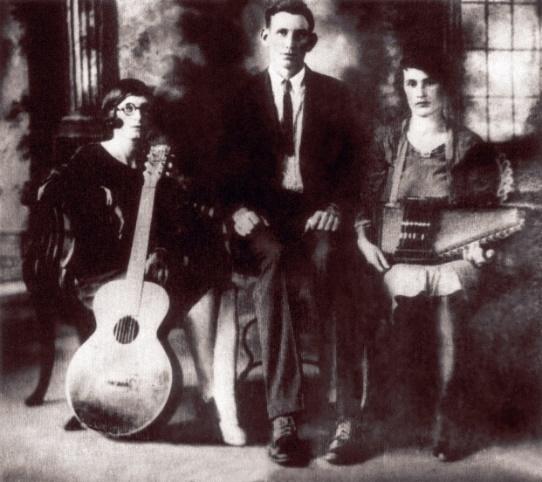
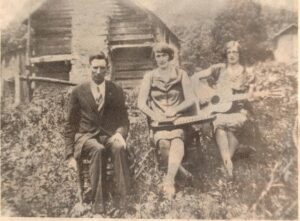
We don’t know much about that guitar. The pictures we have of it are quite grainy (we only know for sure that it was a Stella because Maybelle, in interviews years later, identified it as such).

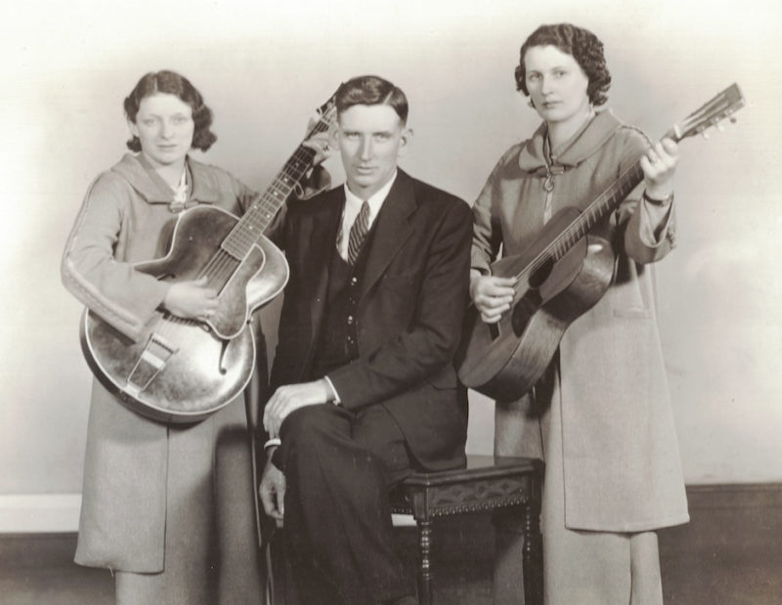
Two photos of the original Carter family showing Maybelle’s Stella guitar.

Maybelle’s L-5

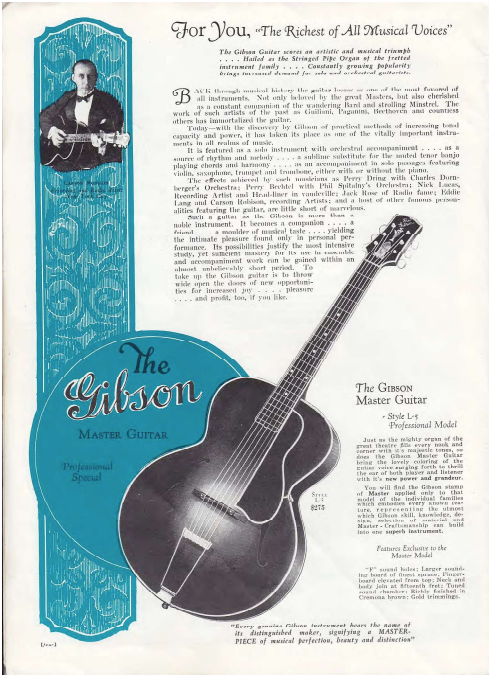
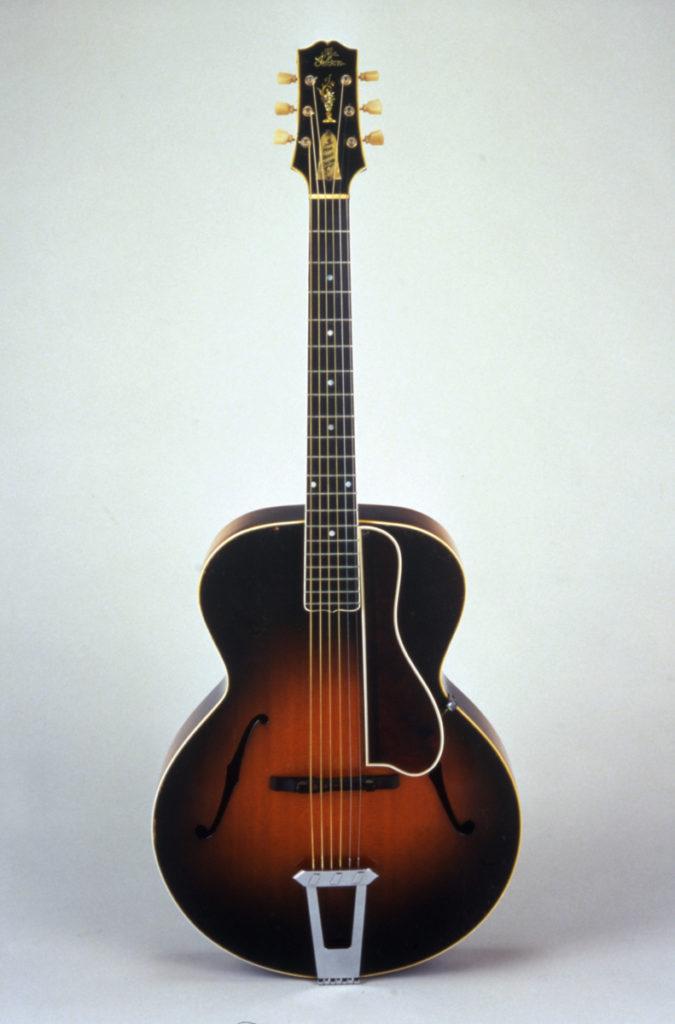
Shortly after the Bristol sessions, with record royalties coming in and show bookings picking up, Maybelle’s husband Eck bought her a customized 1928 Gibson L-5 guitar. Carter family reminisces and Internet sleuthing indicate that the guitar was ordered at Lamb Music, then a Gibson affiliate, in Kingsport, Tennessee.

From the 1929 Gibson Catalog
Maybelle and her 1928 Gibson L-5 are on the left side of this publicity still of The Carter Family from the collection of the Center for Popular Music, Middle Tennessee State University.

This was an extraordinary purchase for a rural Virginia family in the late 1920s. Introduced in 1923, the L-5 was the very top of the Gibson guitar line and cost $275 ($5,000 in 2023 dollars). 

Note the white strip between the crossbars of Maybelle’s tailpiece, something I have never seen on a Gibson archtop. I’ve exchanged emails with early Gibson guitar expert Paul Alcantara, who maintains the superb “Pre-War Gibson L-5 . He believes that it was a label or advertising insert from the music store. 

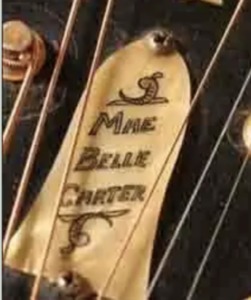
Maybell Carter’s truss rod cover

Another unusual feature of Maybelle Carter’s L-5 tells us that it was a custom order. The truss rod cover on the headstock has fancy inlay with Maybelle’s name, misspelled as “Mae Bell Carter.” I had assumed that this was something done later by a local craftsperson, but Paul Alcantara has the inside story on his Web site. It was likely crafted by William C. Schrier, who did similar etchings and engravings for Gibson from 1928 to 1931, working independently from the basement of his home. Examples of his work, including Maybelle’s truss rod cover, can be found here.

A 1928 Gibson L-5 in original condition would be quite valuable today. Working musicians back in the day would be more interested in a guitar’s playing condition than its originality, though, and would replace parts on the guitar from time to time. Maybelle certainly did this. By the 1960s (and perhaps earlier) we can see that the tailpiece had been replaced with a “triple parallelogram” tailpiece (Gibson used these with midrange guitars like the L-7 and ES-175 models), and the tuners had been replaced with Kluson tulip tuners.


More Carter guitars

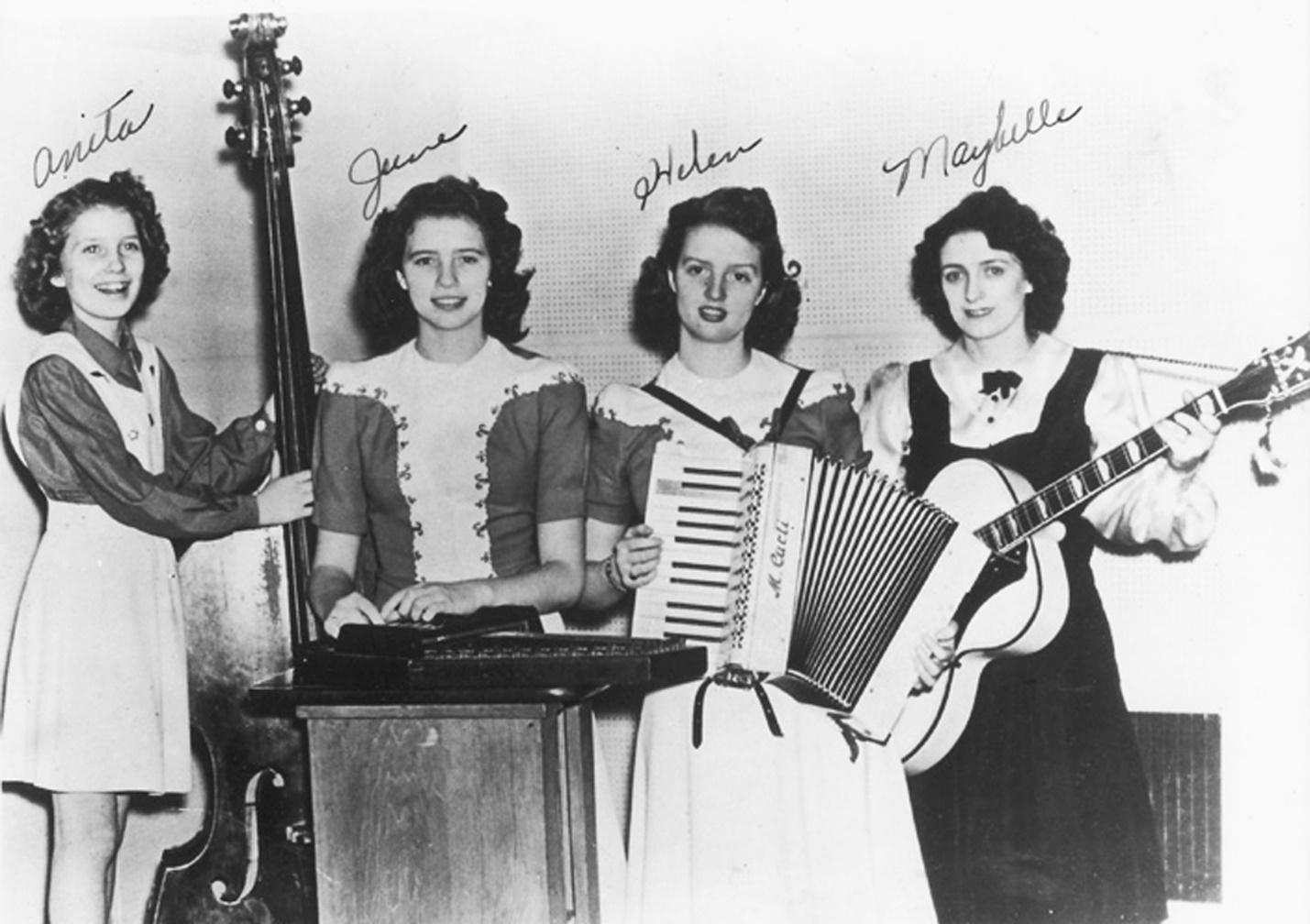
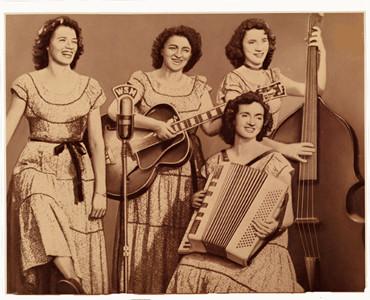
The original Carter family – A.P., Sara, and Maybelle – broke up in the early 1940s. Maybelle’s three daughters, Helen, June, and Anita, had sung with the original Carters over the years. Maybelle loved show business, and took her daughters out on the road as “Mother Maybelle and the Carter Sisters,” where they had great success, eventually landing a spot on the Grand Ole Opry in Nashville.


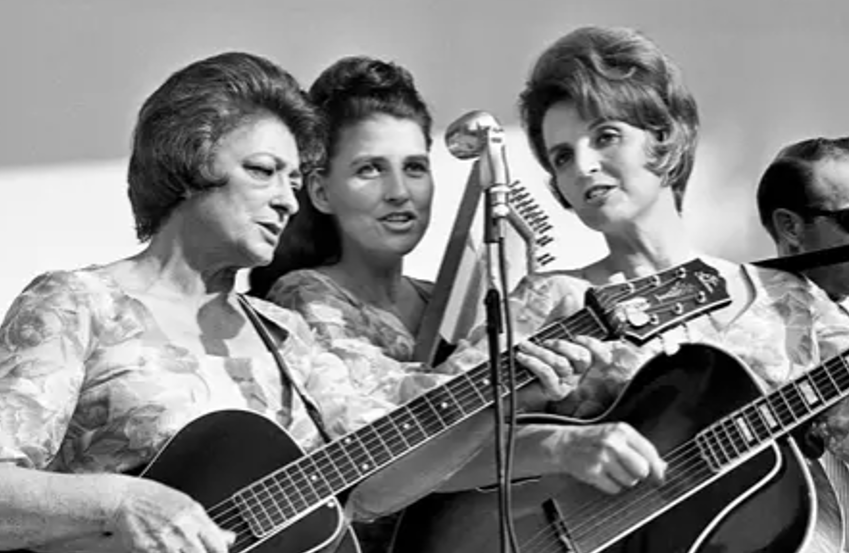
Maybelle’s daughter Anita playing her mother’s  1928 L-5 in 1966, and a picture of the guitar now at the Country Music Hall of Fame. Note the replaced tailpiece and tuners. Source: https://www.tennessean.com/picture-gallery/entertainment/music/2016/06/21/nashville-then-mother-maybelle-highlights-park-concert-in-june-1966/86186754/

Here’s a picture of the group in 1944. Maybelle is playing a blonde Gretsch Synchromatic 400, the very top of the Gretsch guitar line. These were big guitars, 18″ wide, with “cats-eye” sound holes, stairstep bridges, harp tailpieces, gold-plated parts, and a chili-pepper inlay on the headstock.


Maybelle’s 1928 L-5 had a 16” lower bout and dot inlay. In 1934 the Gibson company “advanced” the L-5, giving it a 17” body and block inlays. This picture, taken in the late 1940s, shows Maybelle playing a post-1934 17” L-5.

The Rock and Roll Hall of Fame and Museum in Cleveland also has a Maybelle Carter guitar that they date to 1964; If that’s accurate, there were at least three L-5s acquired by the family over the years.

A 1966 photo of Maybelle on the 1928 L-5, Anita on the autoharp, and Helen on a 17” L-5. Source: https://www.tennessean.com/picture-gallery/entertainment/music/2016/06/21/nashville-then-mother-maybelle-highlights-park-concert-in-june-1966/86186754/ 


Part two of this blog will be posted next Tuesday, April 9th and is all about Jimmie Rodgers’ Oscar Schmidt Guitar. 


Would you like to read more about Maybelle Carter’s 1928 L5? See also:

Instrument Interview: Maybelle Carter’s Guitar – The Birthplace of Country Music

Lamb’s Music Store may have sold famous guitar | Local News | timesnews.net