


History Archives - Page 22 of 25 - The Birthplace of Country Music
Listen
Play
Loading station info...

Hot Buttered Biscuits, Spicy Sausage Gravy: Southern Cooking at Its Best

I bet many of our readers don’t know this, but the second week of September is designated as National Biscuits and Gravy Week.

Now, in the south, biscuits and gravy are a home-cooked delight worth celebrating. In my family, the tradition of gravy making has been passed down from mother to daughter, and earlier this year on Radio Bristol’s Farm and Fun Time, I talked about my Grandma’s gravy recipe during the “Heirloom Recipe” segment – a storytelling part of the show when a favorite recipe reflecting Appalachian and southern food culture is shared with our radio listeners and live audience. And so we thought we’d dish out that recipe here to mark this special culinary week.

The best breakfast involves biscuits and gravy. Image by mccartyv on Pixabay

But this is not just a recipe for gravy; it is also a story about inadequacy because one of the things that serves as a reminder of my inadequacies is my Grandma’s gravy. Of course, I’m talking about sausage gravy – that magic breakfast potion of the south that, spooned on biscuits, the rest of the world wrinkles their noses at as a soggy mess. But to a lot of people in the south, and definitely to me, it is a favorite food.

I’m not talking about the powdered gravy with big, fake black pepper flakes, but real, made-from-scratch gravy. Sadly, try as I might, however, mine never tastes as good as my Grandma’s. My Grandma is in her 90s, still living with my Grandpa on the farm where they raised their four children. They have been married 71 years. Up until a few years ago, she made gravy every morning except Sundays when she got ready for church and knew a big Sunday dinner was on the horizon later that day. I grew up eating gravy at her house, before catching the school bus, or on stints home from college – basically any time I could get it.

Now, I’ve tried to make Grandma’s gravy with varying degrees of success, and it’s never been outstanding. What could be so hard about such a simple recipe: sausage, flour, milk, salt, pepper. Some people may get fancy and add other things, but this is not necessary. You fry up slices from a tube of Tennessee Pride of Jimmie Dean sausage (I recommend the “hot” variety) and remove them from your skillet. To that hot grease, you add one heaping tablespoon of flour for every cup of milk. Stir that to cook it until it’s very brown – roux they call that in some places. Then you add your milk. Some folks like to use cream, but my Grandma uses what she has on hand.

It doesn’t have to be fancy to be the best thing you ever had. “It’s that simple,” she says. My question: How can something that simple be so difficult? The tricks are in the details. Salt and pepper? “Yes,” she says. “Plenty.” And she likes to add it to the flour and stir that up really good. And the sausage really matters. You have to brown it well, almost burn it, so that you have a lot of flavor in the grease.

I shared this recipe with our Farm and Fun Time listeners, and now our blog readers, but good luck getting close! I follow the steps my Grandma laid out, and my gravy turns out…serviceable. There’s an unspoken science to gravy that southerners do not discuss. Like lumps, and how to get those lumps out of your gravy. I admit that sometimes I privately run my gravy through a sieve to get out the lumps. I’m not sure if my Grandma has ever had to do that; I’ve never asked, because I’m too polite. Maybe I just need more practice. I can’t imagine making gravy for my husband every day for nearly 70 years. Even if I started right now, I could never catch up to her.

There’s a lot to live up to when you come from a bunch of strong women, and Grandma’s gravy could be a metaphor for anything, although there really isn’t anything better than that. My own kids like my gravy just fine, but they really prefer my mom’s, their Mamaw’s gravy. Sometimes I tell them “Mamaw cooked the sausage and I just added the milk.” Sometimes that’s true. If I’m lucky, someday I’ll be making my own version worthy to be called Grandma’s Gravy for little people who think it’s the best thing in the world.

And if you need inspiration as you get ready to try this recipe, have a listen to the original gravy jingle that was performed by house band Bill and the Belles after my “Heirloom Recipe” segment at the Farm and Fun Time show:

That covers the gravy, but what about the biscuits? They, of course, are equally important to make this dish just right. Twenty years ago as a graduate student at Indiana, I was homesick for my family and good southern cooking (Indiana has a great food culture, but I missed the foods of my Appalachian home). I tried making biscuits several times, and they turned out flat, stale, just not good. And so, once again, I turned to the expert: my Grandma.

She listened patiently to my problem and gave her assessment confidently: “Are you using While Lily Flour?” I said no, because my grocer in southern Indiana didn’t carry that brand. “You need White Lily flour,” she said. A couple of weeks later a package arrived: a five-pound bag of White Lily Self-Rising Flour. I was skeptical, but I tried it with the same biscuit recipe. And she was right. White Lily Flour made good biscuits.
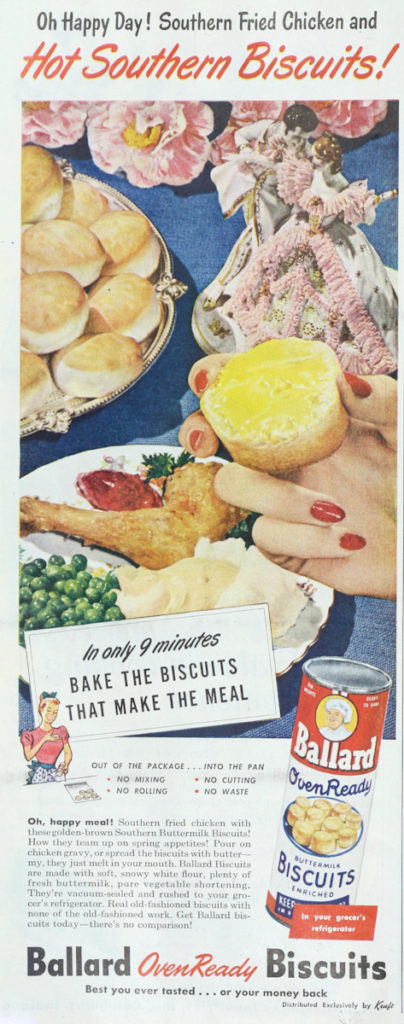
An advertisement for canned southern biscuits in a 1948 Ladies Home Journal — definitely not the same thing as made-from-scratch biscuits. Image from Wikimedia Commons

Since then I’ve learned that the type of flour really matters in a dish, and flours grown in different regions are different in their chemical makeup and in their milling. Having later lived in China and made dumplings there with Chinese flours, and then coming back to the U.S. where I struggle to replicate that consistency here, I have seen how flours make a difference.

Here’s the recipe from the White Lily Flour Company using their self-rising flour. It’s a simple recipe that is nearly identical to how my Grandma makes it – though it is worth noting that my Grandma doesn’t use a recipe for her biscuits, because once you’ve made thousands of biscuits you get a feel for the proportions of the ingredients. You can also use all-purpose flour and add your own leavening.

If your mouth is now watering, I urge you to celebrate National Biscuits and Gravy week with a plate of your very own. Feel free to take my Grandma’s recipes and make them your own family tradition!

Jessica Turner is the Director of the Birthplace of Country Music Museum.
Jimmie Rodgers: Reflections on the Musical Genius of The Singing Brakeman

Today marks what would have been the 120th birthday of America’s Blue Yodeler, the Father of Country Music – Jimmie Rodgers.

Take a second out of your busy day today and listen to just one song from Jimmie Rodgers. Any song. I promise you’ll be happy you did. That’s what I’m doing right now, listening to “I’m Free from the Chain Gang Now,” a sentimental heartbreaker of a tune, a song so powerfully delivered that in the past it has moved me to tears.

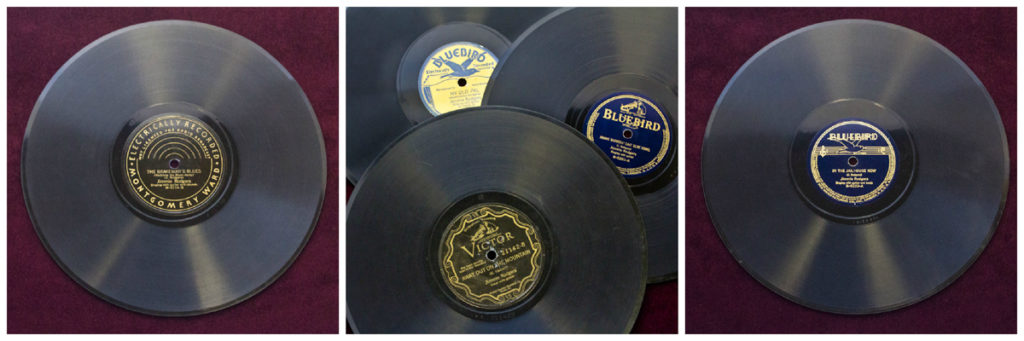
We have several Jimmie Rodgers records in the museum’s collection. As can be seen here, his songs were recorded and distributed on a variety of labels. © Birthplace of Country Music; Records are the gift of Betty Lou Dean and Roger Allen Dean, and Jim and Joyce Prohaska

It’s hard to not become immersed in the scenes Jimmie paints through his ease of delivery and phrasing, his smooth yet edgy and warbled vocals, the sincerity of a person who truly believes in what he’s singing. But what amazes me more than anything about Jimmie’s music is how relevant and fresh it still seems today. I guess many would call his music timeless, which it certainly is – but more than that, his music has a depth that has seldom been captured on record. Jimmie’s music hits you right in the gut. It has the ability to make you laugh out loud and then make you cry; it makes you yearn for the past and look forward to the future. His music is music for the heart and soul. It’s alive. Every time I put a needle to one of his records or when the sound of his signature blue yodel cuts through my car radio speakers, I can’t help but think Jimmie is giving me a wink and a nod.

As you may already know, Jimmie Rodgers is one of the most celebrated country musicians of all, and deservedly so. Possibly no other country artist has been so heavily imitated or influential. He was much more than a hillbilly artist that could yodel (though his yodel was top of the line). Jimmie was an innovator, and a walking musical juxtaposition in the most beautiful of ways. When I think of Jimmie I think of the complex and often conflicting images he portrayed through his music – the rambler, the sentimental crooner, the caring son, and the rounder, just to name a few. Many speculate that had he lived longer, and as his appeal and development as a musician continually grew, he would have been one of the most celebrated American musicians without the constraints of genre.

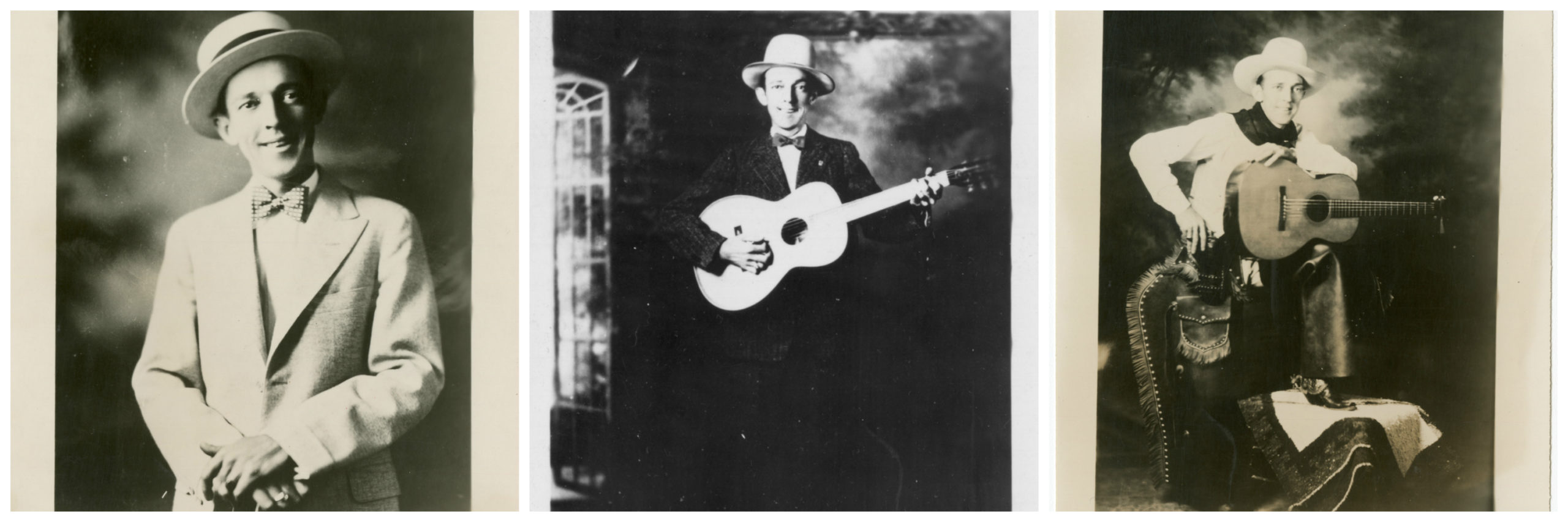
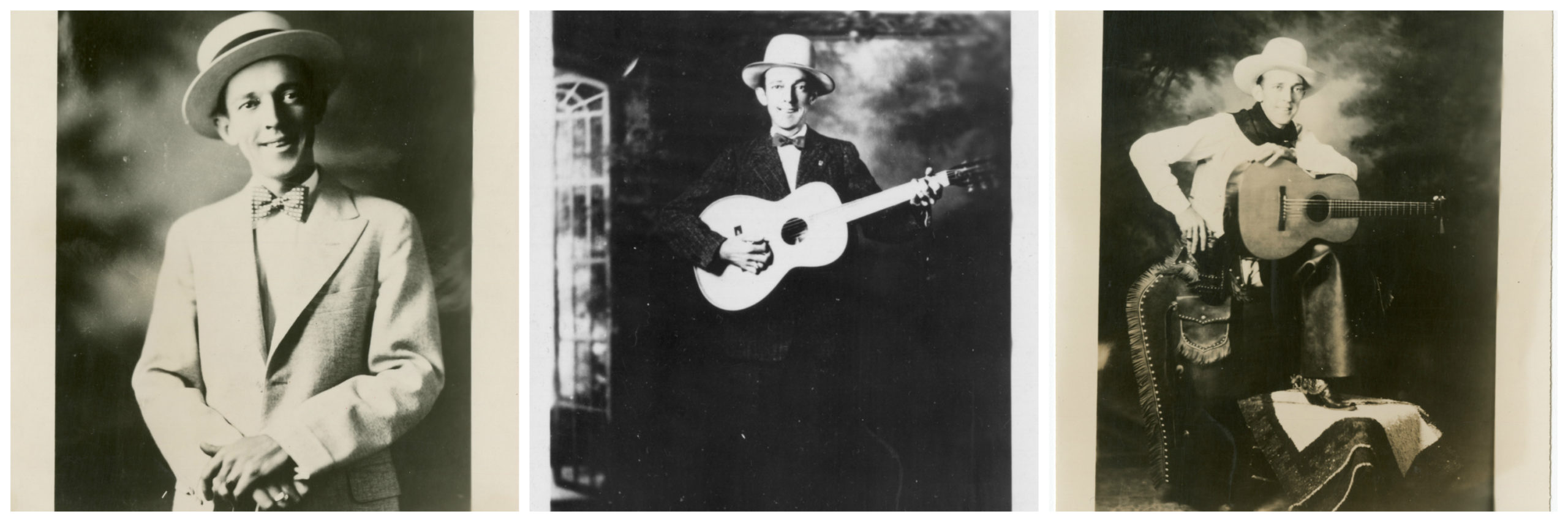
Publicity shots of Jimmie Rodgers, including one where he is in “cowboy” persona. From the John Edwards Memorial Foundation Records, #20001, Southern Folklife Collection, Wilson Library, University of North Carolina at Chapel Hill

Many of us in Bristol and central Appalachia are familiar with Jimmie’s story and his music. One of the reasons our organization, including the radio station, museum, and festival, exists is in large part due to the impact Jimmie had on the world. Of course, he had his first big break here in Bristol recording two sides: “Sleep Baby Sleep” and “The Soldier’s Sweetheart.” That record, just an average seller, was recorded on August 4, 1927, part of what would eventually become known as the celebrated Bristol Sessions.

Let’s be honest: those two sides didn’t exactly turn the world upside down upon their release. But the music that would soon follow sure did. Lucky for us Victor Talking Machine Company executive Ralph Peer had insight and vision, and he followed a hunch that Jimmie had a lot more to offer, inviting him for a follow-up session just a few months later at the Victor studio in Camden, New Jersey. Jimmie would hit his stride at the next session, which would yield a massive seller – “Away Out on the Mountain” and “Blue Yodel No. 1 (T for Texas)” – and from this point, he didn’t slow down. He even appeared in a movie short called The Singing Brakeman, released in 1929 for Columbia Pictures; this short is the only known video footage of Jimmie singing and features three of his well-known tunes: “Waiting for a Train,” “Daddy and Home,” and “Blue Yodel No 1.” His distinctive sound continued to develop up to his final recording session just a few days before his death from tuberculosis on May 26, 1933 at the age of 35.

But instead of giving you a recycled history lesson of the greatness that is Jimmie Rodgers, I thought it would be much more interesting and fitting to mark this day by talking to musicians who love his music like I do. And so in celebration of Jimmie on his 120th birthday, I asked some of today’s greatest country and roots musicians to reflect on his music, to talk a little about how Jimmie Rodgers influenced them and how he might be found in the music they create today. A huge thanks to all those musicians for taking the time to share their thoughts on the genius of Jimmie Rodgers:

Tim O’Brien 

“Jimmie Rodgers just had the juice. He guided Ralph Peer to a real sweet spot in southern music. He played the part of the rake and ramblin’ boy and may not have needed to act that much to do so. Listen to most of the other Bristol Sessions singers and you’ll hear that swagger break through the pops and crackles. Jimmie Rodgers knew he was cool, and every recording gave him a way to show everyone.”

John Lilly 

“I was initially struck by Jimmie Rodgers’s yodeling, which I still find to be amazing. As I explore his recordings, however, I am captivated with the immense variety of accompanists he recorded with and the range of musical emotions he was able to express. He sounded great whatever the setting, from a full orchestra to just his own voice and guitar.”

Jerron “Blind Boy” Paxton 

“The music of Jimmie Rodgers has gone across culture since it was introduced to the world. There are musicians all the way in India that have copied Jimmie Rodgers’s sound note-for-note. While record companies marketed him towards white and hillbilly audiences, his records often found their way into black homes. The irony that a person who was rumored to have gotten the ‘blues’ in his blue yodel from listening to Tommy Johnson as he entertained white patrons at hotel parties in Mississippi and have it repackaged and purchased by people in the black community is of a particular queerness that can only exist in America. With the conversation being had at the present time about white people playing blues and other forms of black music, I wonder if we would be having this conversation if they sounded as good as Jimmie. His respect and take on music from outside of his culture should be an inspiration.”

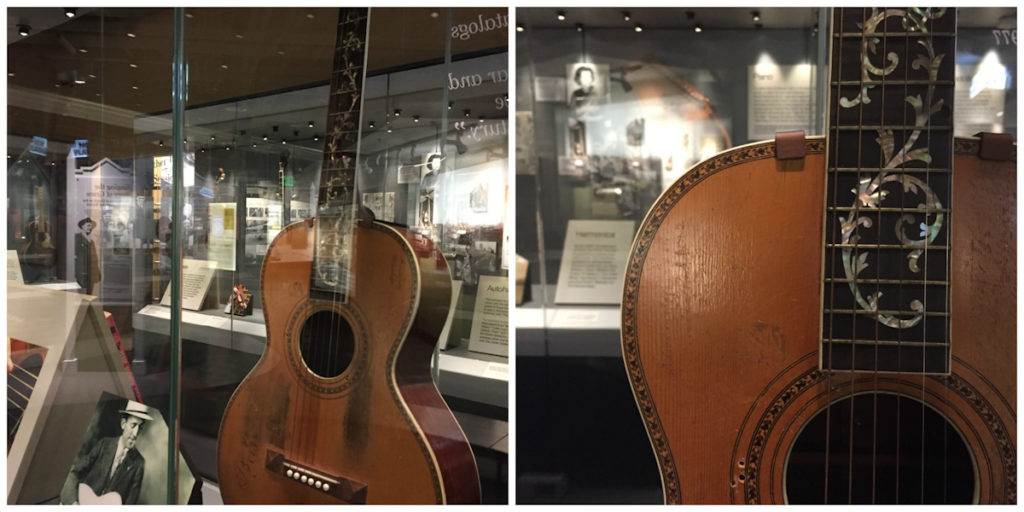
This Oscar Schmidt guitar, on display in the museum’s permanent exhibit, was owned, played, and signed (in the upper left corner, faintly legible now and not easily seen in this photograph) by Jimmie Rodgers. © Birthplace of Country Music; on loan from the collection of Joseph R. Gregory

Alice Gerrard 

“It seems as though Jimmie and his songs have been part of my musical life as long as I can remember. That bluesy voice, that yodel, and those songs…. I never much liked the Swiss type of yodeling but Jimmie’s made sense to me and was so much more accessible. Plus it had so much feeling in it.”

Roy Book Binder 

“First heard Jimmie Rodgers back in the ‘60s… I was really getting into old-time country blues…and was a fan of Emmett Miller. Jimmie Rodgers was a white guy who played and sang some blues, he was a yodeler, a singer of sentimental ballads…you name it, and he could make it his own! I admired that, he was hard to categorize! I do believe in some ways Jimmie Rodgers had an impact on my approach to building a pretty eclectic repertoire.”

David Peterson 

“Jimmie Rodgers made his way into my music most directly through Bill Monroe and his interpretation of those songs. Of course, a serious study of Rodgers himself has followed over the years. Anyone studying modern 20th-century western music will realize just what an influence Rodgers was on almost every form of popular music, including rock n roll.”

Marty Stuart 

“I think Jimmie Rodgers exists. Perhaps he’s a reclusive ghost who lives somewhere beyond the edge of the universe. Of course, proof that the Father of Country Music walked among us can be found in his Victor recordings made in the early days of the 20th century. His guitar hangs in a vault in Meridian, Mississippi. I once sat in a chair he made. I’ve held his striped railroader’s hat. I have one of his brakeman’s lanterns, and the briefcase that contained his songs and was laid inside his casket on the funeral train from New York City back to Mississippi. As his marker in Meridian reads: ‘His is the music of America.’  Although the average American doesn’t know his name, Jimmie Rodgers is an integral part of our atmosphere. He is synonymous with country music.”

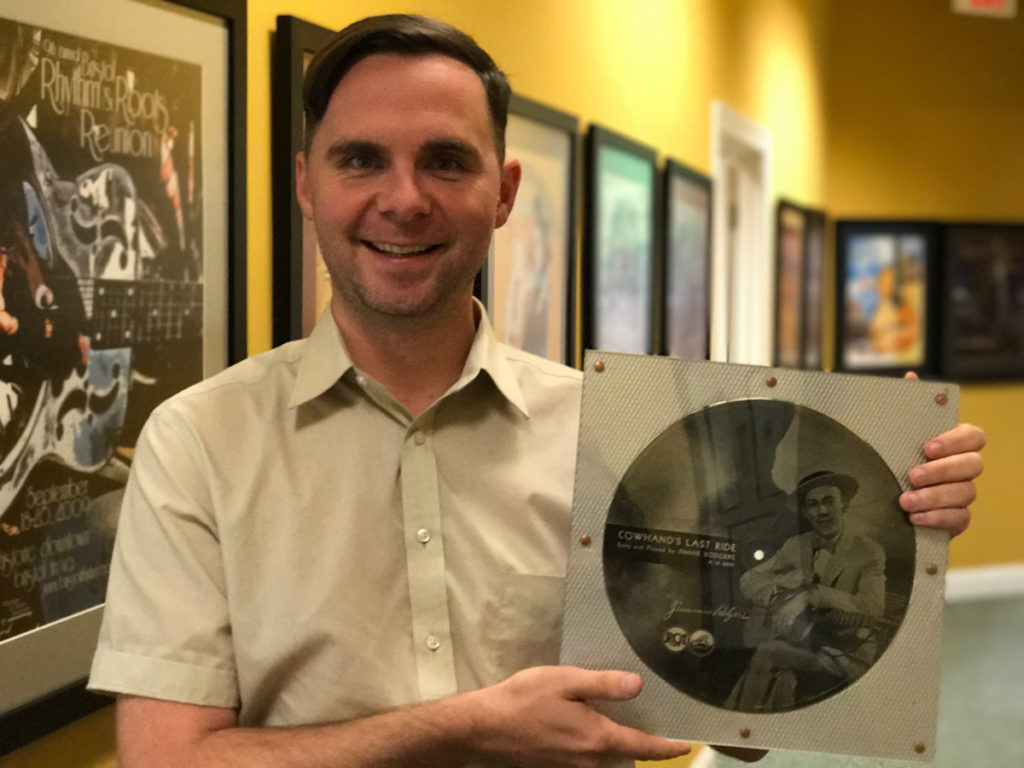
Kris holding a Jimmie Rodgers picture disc, the first disc of this type known in country music. This disc appeared at the end of Jimmie’s career – only a few hundred copies were made, and it was released after his death – and bears his recordings of two songs: “Cowhand’s Last Ride” and “Blue Yodel No. 12.” © Birthplace of Country Music

And so this brings us full circle – if you’re taking the time to read this, I urge you to spend just a few more minutes today and seek out Jimmie’s music. Listening to a Jimmie Rodgers record is much more powerful than anything I can possibly write. Seriously. Put on a song of his you’ve never heard. He has a surprisingly vast catalog for having a recording career of only five and a half years. Listen to “Gambling Polka Dot Blues” or “Prairie Lullaby” or “Blue Yodel No. 9” or “I’m Sorry We Met” or “Never No Mo” or…really any of his songs.

Take it from someone who has listened to his catalogue back and forth on repeat for years – there’s always something new to discover. And if you listen close enough, you’ll soon find the Singing Brakeman can still be heard in the voices and sounds of musicians across the country, and for that matter across the world.

Happy Birthday, Jimmie.

Kris Truelsen is the Producer at Radio Bristol. Tune in to the station today to hear Jimmie Rodgers on the hour all day long.

Ernest Stoneman’s First Hit: “The Titanic”

The unsinkable RMS Titanic sank in the cold Atlantic waters on April 15, 1912, claiming over 1,500 lives of its passengers and crew, and capturing the attention and imagination of the world from that moment forward. After years of searching, the wreckage of the Titanic was discovered on September 1, 1985; researchers continue to study the wreckage and ephemera that connects to the ship and its passengers, and the story of the Titanic still resonates today.

1912 engraving by Willy Stöwer: Der Untergang der Titanic. Public domain image from Wikimedia Commons

To mark the date of that discovery, we wanted to explore the retelling of the Titanic’s story in song – as with many disasters of the day, the wreck of the Titanic gave rise a few years later to a song detailing this contemporary history, one that was part of people’s lives and memories. In early September 1924, Appalachian musician Ernest “Pop” Stoneman traveled to New York to make his first recordings with OKeh Records, part of a few days of recording that also included Fiddlin’ John Carson and several other musicians as OKeh continued to build their catalog of popular American music. Stoneman chose two songs for this session, one of which was “The Titanic.”

That first recording in 1924 was not released – Stoneman and the OKeh executives thought that it was too fast, so he agreed to travel back to New York to do another recording of the song. On January 8, 1925, he recorded it again, and it was released later that year. This version of “The Titanic” (OK 40288) was a success, which led to further trips to New York to cut new records. He then recorded the song again in 1926, this time under the title “The Sinking of the Titanic” for the Edison label (Ed 51823, 5200).

Stoneman’s lyrics to “The Titanic” tell the story well, including a bit of social commentary about the difference between rich and poor on the voyage:

It was on Monday morning just about one o’clock,
That the great Titanic begin to reel and rock.
Then the people began to cry, saying, “Lord I’m a-going to die.”
It was sad when that great ship went down.

Chorus:
It was sad when that great ship went down,
Husbands and wives, little children lost their lives.
It was sad when that great ship went down.

When they were building the Titanic, they said what they could do.
They were going to build a ship that no water could not go through,
But God with his mighty hand showed to the world it could not stand.
It was sad when that great ship went down.

Chorus

When they left England, they were making for the shore.
The rich they declared they would not ride with the poor.
So they sent the poor below, they were the first that had to go.
It was sad when that great ship went down.

Chorus

When the people on the ship were a long ways from home,
With friends all around them, didn’t know their time had come,
For death came riding by, sixteen hundred had to die.
It was sad when that great ship went down.

Chorus

Stoneman wasn’t the only artist to record a song detailing the Titanic’s sad fate. Tony Russell’s Country Music Records: A Discography, 1921—1942 details the various recordings of the song:

“The Titanic,” Ernest Stoneman September 4, 1924 (unissued) and January 8, 1925

“The Sinking of the Titanic,” Vernon Dalhart, June 4, 1925

“The Sinking of the Titanic,” George Reneau, October 14, 1925

“The Sinking of the Titanic,” Ernest Stoneman, June 22, 1926

“The Sinking of the Titanic,” Richard “Rabbit” Brown, March 11, 1927

“Sinking of the Great Titanic,” Vernon Dalhart, May 23, 1928

Long after these early hits of hillbilly and blues records, the Titanic lives on in imaginations. Celine Dion’s “Love Theme from Titanic” (also called “My Heart Will Go On”) won a Grammy in 1999 for Record of the Year; the song was the theme song from James Cameron’s 1997 blockbuster film Titanic, which won 11 Oscars. And visitors pour into the many exhibits that chronicle the Titanic‘s history and display its once-seabound artifacts, including the Titanic museum attraction just down the road in Pigeon Forge, Tennessee.

And in 2013, Ernest Stoneman’s “The Titanic” was recognized with its own Grammy award when it was inducted into the Grammy Hall of Fame and recognized for its historical significance in recording history.

Jessica Turner is the Director of the Birthplace of Country Music Museum.
Fiddlin’ Cowan Powers and His Family String Band: Pioneers in Early Country Music

Back in the early 1920s, there was a quest for “hillbilly music.” A&R men – A&R stood for artists & repertoire – were heading out of their studios in New York and other big cities to find recording talent that played the traditional music they knew would sell.

And there were plenty of musicians who were ready to play their tunes into the acoustic horn (and later the electric microphone) and lend their music and voices to a cylinder or 78 recording that carried that tune to others. One of those artists was Fiddlin’ Cowan Powers, who led The Powers Family, hailed as the first family string band to be commercially recorded.

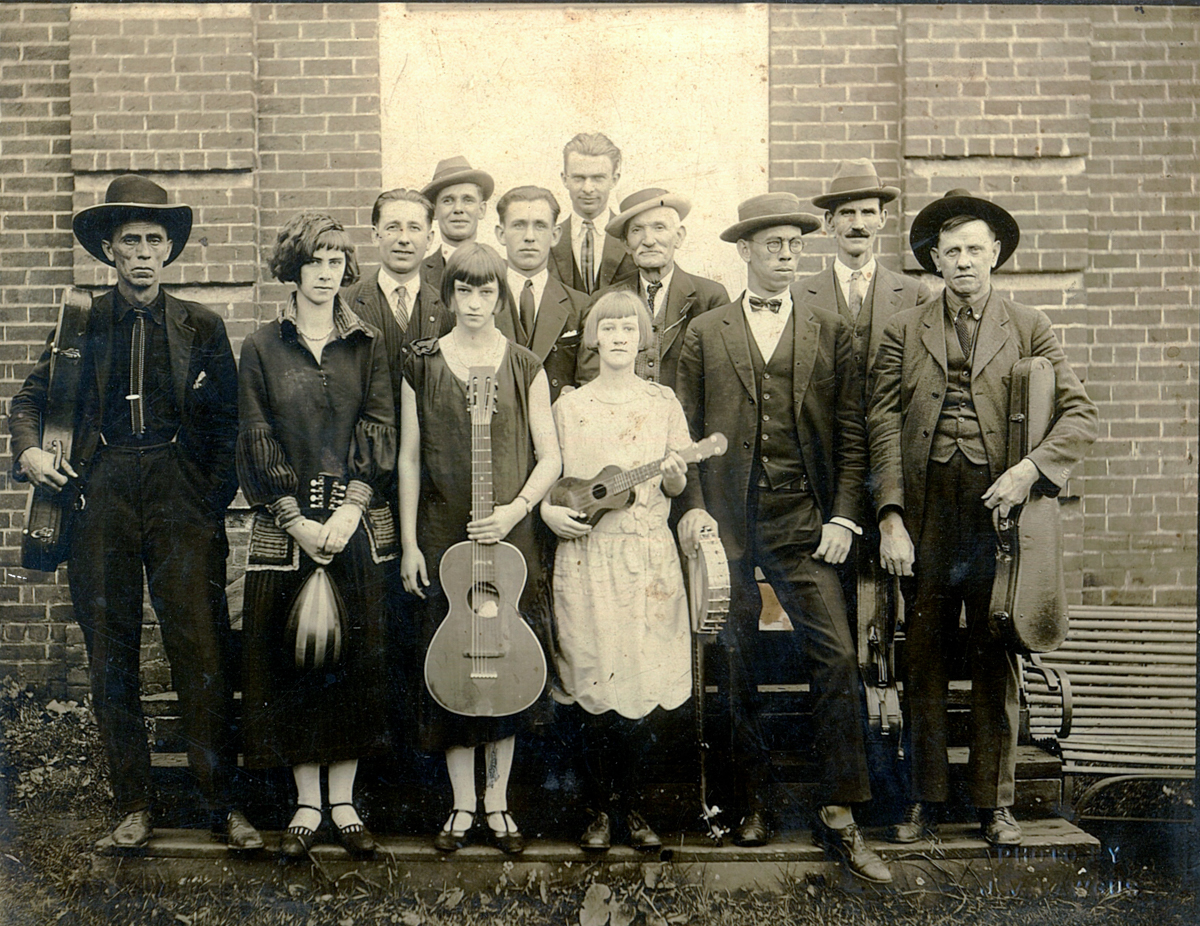
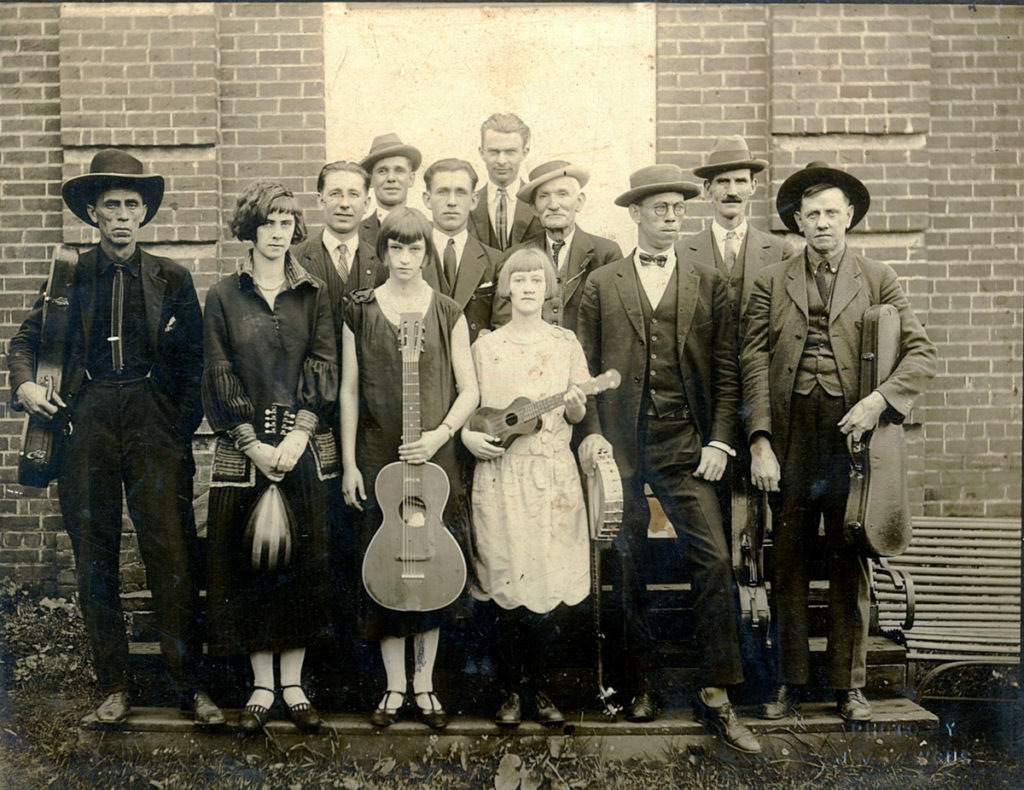
The Powers Family are on the front row of this group of musicians with, from left to right, Cowan Powers, daughters Orpha, Carrie, and Ada, and son Charlie. Photograph courtesy of James Powers, Patty Powers, and Stephanie Collins

Fiddlin’ Cowan Powers was born James Cowan Powers in October 1877 in Russell County, Virginia (as with many old-time musicians, birth dates vary depending on the source; I’ve also seen 1879). He married Matilda Lambert, and they had four children together. Powers was a musician, and he also worked the land and as a carpenter and leather worker – making leggings and underarm holsters, amongst other things.

With a father who played fiddle and a mother who played banjo, it was inevitable that the children would also play a host of instruments: Charlie on banjo, Orpha on mandolin, Carrie on guitar, and Ada on ukulele. After Matilda died in 1916, Powers looked to music as a profession and took his children on the road with him as members of the family string band.

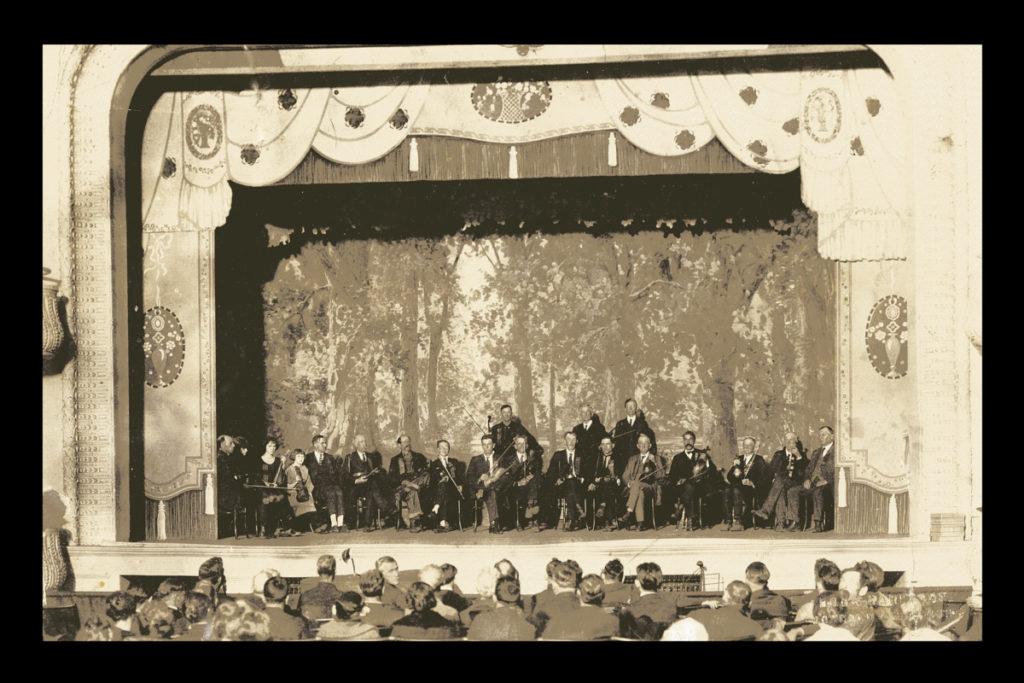
The Powers Family first made their mark in a Johnson City, Tennessee, music competition in the early 1920s. They were soon traveling around southwest Virginia, northeast Tennessee, and neighboring states, performing at a variety of stage shows and dances, and also playing in fiddle and music competitions. James Powers, youngest son of Fiddlin’ Cowan Powers, tells us that he found around 25 $10 gold coins in his father’s belongings after he passed, all winnings from fiddle contests. The band also played on local radio stations, including WOPI in Bristol, Tennessee-Virginia.

The Powers Family got their “big break” at a music competition in Johnson City, Tennessee, in the early 1920s. They are seen here to the far left of the stage. Photograph courtesy of James Powers, Patty Powers, and Stephanie Collins

After the Johnson City competition, a Victor Talking Machine Company representative singled The Powers Family out, asking them to do a test field recording. Their stint behind the mic impressed, and in August 1924, they rode the train up to the Victor studio in Camden, New Jersey, and made their first commercial recordings. In all, The Powers Family recorded 17 songs over two days there, including “The Little Old Cabin in the Lane,” “Sour Wood Mountains,” “Sallie Goodin,” and “Cripple Creek.”

In 1925, The Powers Family recorded for the Edison label in New York City – performing several of the same songs recorded with Victor – and then in September 1928, they recorded six sides for the OKeh company. One of the recordings for OKeh was “Old Virginia Reel,” which was unusual in its length – around six minutes – and thus divided into two parts, one on each side of the 78 record. This piece also features each member of the family performing solo, highlighting the band’s individual talents and personalities. Part 1 of “Old Virginia Reel” starts off with a “master of ceremonies” saying:

“Folks, we’re goin’ to have a real old-time square dance. And while the crowd is gathering and everybody getting their partners, we will have a little rehearsal by Fiddlin’ Powers and Family. First, Miss Orpha with the mandolin…”

Orpha was followed by her brother and then her sisters, each playing their own instruments. Fiddlin’ Cowan Powers – with the anonymous emcee calling him a “fiddlin’ ace” – came next with his version of “Buck Creek Girl,” and then Part 1 ended with a harmonica player. Part 2 brought the whole string band together to play a selection of dance tunes. One can imagine that this recording – the last of The Powers Family’s career – was a pretty good rendition of what a live Powers Family show would have been like.

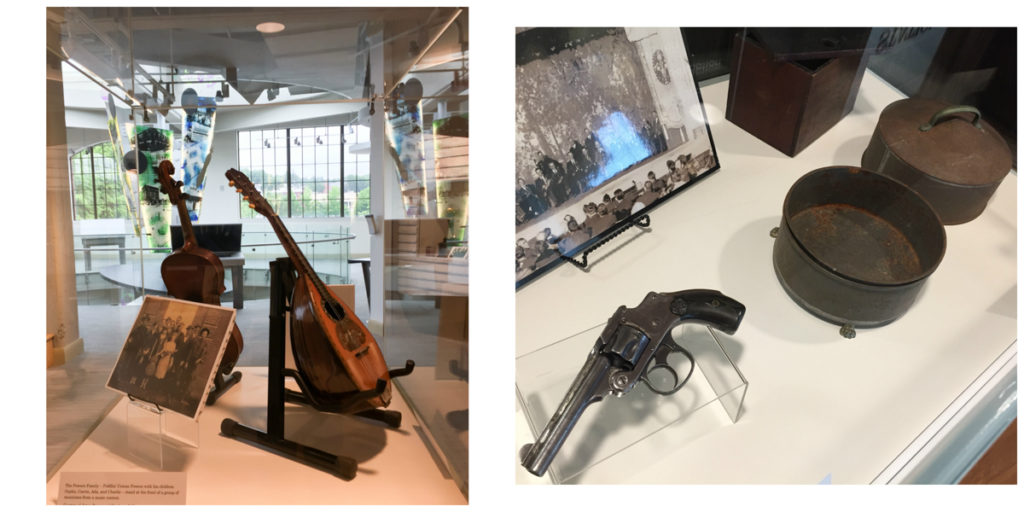
Photographs of Fiddlin’ Cowan and his children show a very serious-looking bunch – they stare out at the camera with dark eyes and rarely a smile. But from the stories told to us by the family and accounts from those who remember their performances, we know that a Powers Family show was filled with jokes and laughter, a variety of magic tricks performed by Fiddlin’ Cowan Powers, and clog and buck dancing by little Ada. And also sometimes a bit of drama: another family story tells us that Powers shot a man in the leg at one of their shows after the man got fresh with one of his daughters. The man wasn’t killed, but he surely learned a lesson, and Powers had to pay a fine of around $1,000 dollars for his paternally protective action.

Powers Family artifacts and photographs are currently on temporary display in the museum, including Cowan Powers’s fiddle and some of his magic tricks, Orpha’s mandolin, and the gun shot by Powers at a fresh young man at one of the Powers Family’s performances. Objects on loan from James Powers and Stephanie Collins; photograph © Birthplace of Country Music

The Powers Family stopped performing together in the 1930s when the children began to marry. Cowan Powers continued to play his fiddle with other groups, including the Stanley Brothers, until his death in 1953; the story goes that he died of a heart attack while playing “Cluck Old Hen” on stage at a Stanley Brothers show. Son Charlie had enlisted in the United States Air Corps in the late 1920s, and he passed away in 1942 in a Japanese prisoner-of-war camp. Daughters Orpha, Carrie, and Ada (now playing the autoharp rather than the ukulele) came back together, along with Orpha’s husband Eugene Ireson, as a band, in the 1970s. They performed on local radio and television, and at a number of festivals in the region. Later, after Orpha’s health affected her ability to travel and perform, Carrie and Ada continued together as a duo.

The story of the Powers Family and their music underlines their place as pioneering figures in the history of early commercial country music. They made their mark as the first family string band to record commercially when they took that train up to New York City to record for Victor. And their performance of “Old Virginia Reel” – with Part 1 showcasing each musician on their respective instrument and Part 2 featuring their performance of popular string band tunes – underlined the level of talent in each member of the family and the harmony and energy of the music when they came together.

Most importantly, the memory of The Powers Family and their place in music history is being carried on by their descendants, and luckily for us, shared with the museum and our visitors through objects, stories, and photographs.

René Rodgers is Curator of Exhibits & Publications at the Birthplace of Country Music Museum.