History Archives - Page 2 of 25 - The Birthplace of Country Music
Listen
Play
Loading station info...

Both Kinds of Music: What is the difference between Country and Western?

By Ed Hagen, Gallery Assistant and Guest Blogger


What’s the difference between Country and Western?

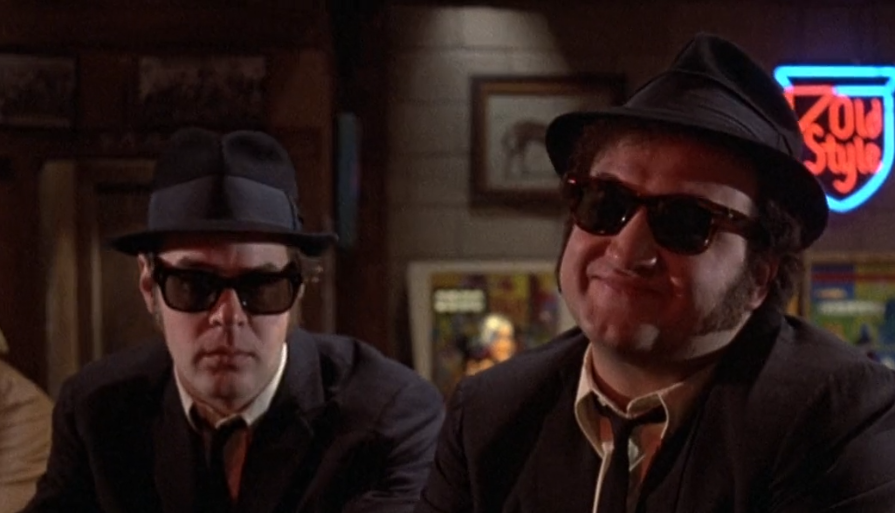
Many people are familiar with a popular scene in The Blues Brothers movie where the character played by Dan Ackroyd asks the woman tending bar, “what kind of music do you usually have here?” She responds, “Oh, we got both kinds, country and western.” Although intended as a joke, the question can be taken seriously. They are two distinct musical styles. And both styles were popularized by musicians from the 1927 Bristol sessions. 

The words we use to describe music have changed almost as much as the music itself. In the 1920s, the music we now refer to as country was known as hillbilly music. The phrase “country and western” first started to appear in print in 1944, with peak usage in 1973. Billboard charts, which initially had listings for “folk” and “hillbilly” records, switched to “country and western” in 1949, and used that label before settling on “Hot Country Singles” in 1962. Listeners in the 1950s knew what you meant when you said “country and western.” Today, not so much.
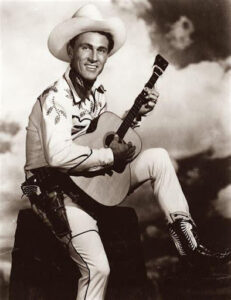
Singer and actor Ken Curtis, posing in a white cowboy outfit and holding a guitar.
Ken Curtis posing in costume. Image found on Hollywood Page Of Death on facebook. Click for one of his songs.

Country music has its roots in Appalachian music, which in turn can be traced to Scotch and Irish folk music and African musical traditions. It typically involves storytelling. Popularized by the Carter family, it is the music associated with Nashville and the Grand Ole Opry. The emphasis in country music is on melody and lyrics. Think of songs like He’ll Have to Go, I Can’t Stop Loving You, He Stopped Loving Her Today, and Jolene. These songs are country, not western.

It is a bit harder to define western music. Many listeners would think of cowboy songs sung by artists like Gene Autry and the Sons of the Pioneers. Autry started out as an obscure radio singer in Chicago. His big break came in 1935 when he was signed by Republic Pictures to make low budget Westerns. These films featured Autry using his own name, breaking into a song from time to time, often while riding his horse Champion. His theme song was Back in the Saddle Again, but he is also remembered for his popular Christmas songs: Santa Claus Is Comin’ to Town, Here Comes Santa Claus, Frosty the Snowman, and Rudolph, the Red-Nosed Reindeer.

The Sons of the Pioneers was a vocal group formed in 1933 in the Los Angeles (LA) area. The original trio consisted of Bob Nolan and Tim Spencer and was led by a truck driver and fruit picker named Leonard Slye. They soon added the brothers Karl and Hugh Farr. These five are often referred to as the “Original” Sons of Pioneers since the band has continued to rotate members and is still active today! LA in the 1930s was a good place to be for talented cowboy singers. The group found work in western movies and recorded a best-selling record, Tumbling Tumbleweeds. In 1937, Slye left the group, changed his name to Roy Rogers, and became one of America’s favorite singing cowboy stars. His place in the Sons of the Pioneers was taken by Ken Curtis, who is better known today for his role as Festus in the TV show Gunsmoke.

These cowboy songs were typically accompanied by simple first-position triads played on a guitar. In fact, first-position triads are often called “cowboy chords” today.

But that’s just one type of western music. Another variant can be traced to the Bristol sessions, specifically to up-tempo tunes recorded by Jimmie Rodgers. Rodgers, a native of Mississippi, was strongly influenced by African American acoustic blues players that he met and played with when he worked on railroads in the South and West. Rodgers often played songs that featured bass runs between the chords that swing hard. 
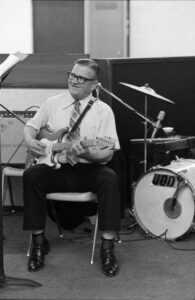
white man with glasses wearing a white short-sleeved button down shirt and tie sit in a chair playing a guitar.
Picture of Eldon Shamblin, Western music pioneer and member of the Texas Playboys. Photo is from AskZac.com “The Story of Eldon Shamblin’s 1954 Gold Stratocaster – The First Custom Colored Strat” Click to hear him play!

In the 1930s and 40s the big jazz bands of stars like Benny Goodman and Count Basie dominated popular music, and a number of them started specializing in western songs. The most famous of these western swing bands were organized by Bob Wills (the Texas Playboys) and Spade Cooley. Western swing bands featured fiddles, horns, brass, and piano players. Playing in giant ballrooms like the Aragon in Santa Monica, they got the volume they needed with drums and modern electric and steel guitars, instruments that drowned out conventional acoustic basses. So guitar players like the Texas Playboys’ Eldon Shamblin, playing in the Jimmie Rodgers style, mixed bass runs with the rhythm chords. This style worked for Rodgers and Shamblin because they both swung those bass lines hard.

Western swing, unlike cowboy songs, was dance music. It differed from big band swing because wasn’t based on jazz music. Take, for example, a song like Take Me Back to Tulsa, which was originally a traditional fiddle tune, Walkin’ Georgia Rose. The Texas Playboys changed the words and had a hit with it as a big band tune. The underlying harmony of the song was just two cowboy chords. Western swing bands didn’t play complex extended chords or rhythm changes. But they got you out of your chair.

The big western swing bands died out at about the same time that the popular jazz swing big bands broke up, probably due to the economics of keeping a large band together. But western music stayed popular with the next generation of smaller combos led by western stars such as Ernest Tubb, Buck Owens, and Merle Haggard. Powered by drums and electric instruments, these more modern western stars kept people dancing.

So when the bartender told the Blues Brothers they have both kinds of music, perhaps she meant the bar featured old-time and traditional country musicians as well as western and western swing acts! Either way Jake and Elwood probably were not what the crowd at Bob’s Country Bunker was expecting.
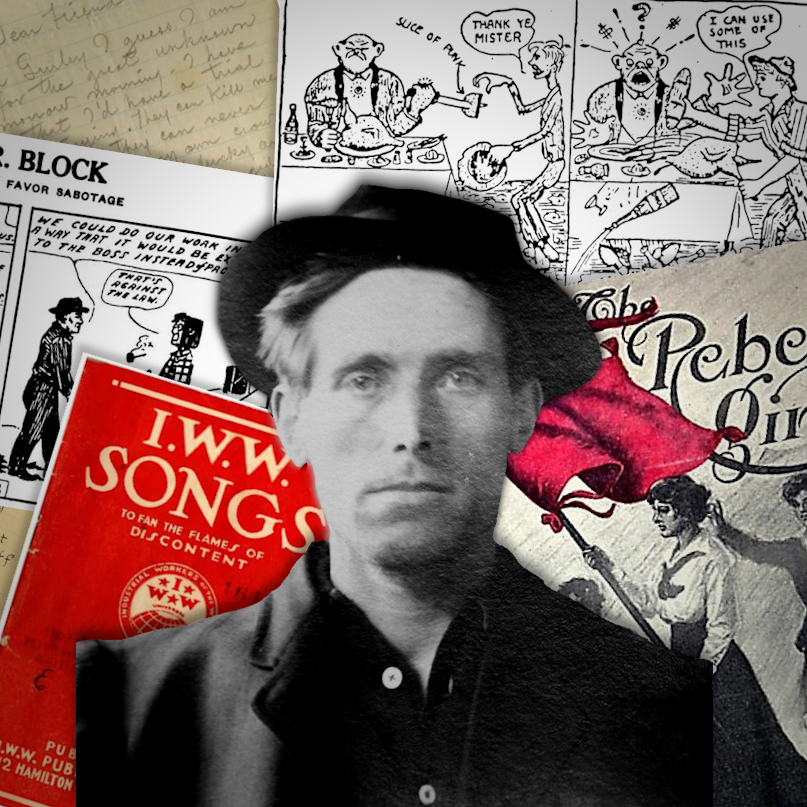
Troubadour or Tramp? The Protest Songs of Joe Hill

By Sam Parker, AV & Technology Specialist at the Birthplace of Country Music Museum.


Protest and labor have been common themes of American folk music for a long time. Woody Guthrie, Pete Seeger, and Phil Ochs are all notable for their recordings of old union ballads and folk tunes, as well as the many songs they each wrote detailing the struggles of America’s poor and downtrodden. One musician penned nearly thirty songs and poems within the span of just four years that remain in the American folk lexicon to this day. In the century after his death, he’s been remembered as a troubadour, a rebel, and a martyr. His music has been sung by numerous artists for decades, and tributes to him have been performed by artists such as Billy Bragg, Paul Robeson, Bruce Springsteen, and most famously Joan Baez at the 1969 Woodstock Music and Art Fair. To commemorate May 1st – known around the world as International Workers’ Day – let’s dive into the life and music of Joe Hill.

Joel Emmanuel Hägglund was born in Sweden in 1879. His father died when he was just nine years old, a tragedy that forced Joel and all of his siblings out of school and into the workforce. As a child laborer, Joel worked in a rope factory and later as a stoker for a steam-operated crane until his mother passed away in his early twenties. After her death, the six Hägglund siblings decided to sell the family home and went their separate ways. Joel and his brother Paul emigrated to New York, and from there he traveled with the millions of other itinerant workers thronging the nation’s cities, farms, and railroads.

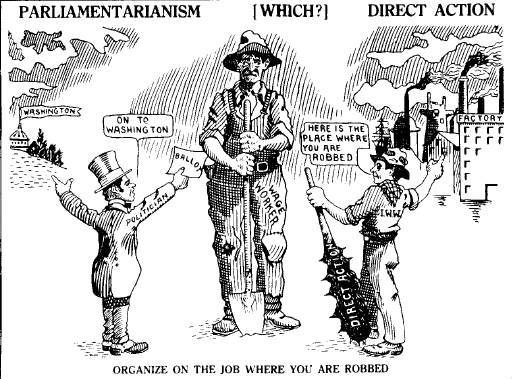
A cartoon published in the IWW's newspaper, the Industrial Worker. It shows an American worker between two men, one a politician holding a ballot and the other a Wobbly holding a club labeled "Direct Action." The cartoon is meant to suggest that direct action (strikes, sabotage, and the like) at the workplace is more effective than political reform.
Cartoons such as this one were commonplace in the IWW’s newspaper, the Industrial Worker, promoting the IWW’s views that direct action was a more effective way of achieving better rights and working conditions.

As Joel walked and train-hopped westward, his hopes of America being a land of wealth and opportunity quickly faded. He lived and worked among the deep wealth disparity that dominated the receding Gilded Age of the United States, working for dollars a day and facing discrimination as an immigrant. By the time he reached San Francisco, Joel was going by the name “Joseph Hillstrom,” later shortened to “Joe Hill,” likely to protect himself from anti-union blacklisting. By this time, Joe had become a “Wobbly”, a member of the Industrial Workers of the World (IWW), a labor union rising in both membership and notoriety at the time.*

The IWW differed from other unions of the period. They advocated for One Big Union across all industries, workplace democracy – where workers collectively decided on pay and conditions, and vehemently opposed scabbing – when workers cross a picket line to fill jobs left by those on strike. They advocated for direct action, valuing strikes and sabotage to force rapid changes over gradual reforms through political avenues. These characteristics led Wobblies to be called radicals, and anyone carrying the IWW’s little red membership card was viewed as a troublemaker and rabble-rouser.

Cover of "The Rebel Girl" music sheet, written by Joe Hill. It depicts a woman, based on Elizabeth Gurley Flynn, carrying a red banner with a pennant reading "One Big Union" flying from its flagpole.
Cover of “The Rebel Girl” music sheet, from the Library of Congress’s online catalog.

Since childhood, Joe demonstrated musical talent, which he continued to do when he became a Wobbly. Joe often wrote lyrics set to the melodies of popular songs, including  “The Preacher and the Slave,” which is set to the tune of “In the Sweet by-and-by.” This song attacked the Salvation Army, which IWW members referred to as the “Starvation Army,” for focusing on workers’ spiritual rather than their material well-being. The song even coined the phrase “pie in the sky” with its lyrics.

One of Joe’s most famous songs is “The Rebel Girl,” which he wrote for fellow Wobbly and suffragette Elizabeth Gurley Flynn to expand IWW recruitment among women. Joe believed the organization was incomplete without the representation of working women. In the Wobbly newspaper Solidarity, Joe wrote that without women, “We have created a kind of one-legged, freakish animal of a union.” In 1990, Hazel Dickens, another musician and activist, recorded the song for the Smithsonian Folkways album Don’t Mourn, Organize! Songs of Labor Songwriter Joe Hill.

"Mr. Block" comic strip from the IWW's newspaper, the Industrial Worker. In the strip, Block refuses to take part in strikes or sabotage to force a mine owner to adopt safer work practices, leading to the death of a miner.
A Mr. Block strip from the IWW’s Newspaper, the Industrial Worker. Block was often a stand-in for workers opposed to more radical actions like strikes and sabotage. Click to enlarge.

Joe also wrote a song for “Mr. Block,” a cartoon character appearing in the IWW’s newspaper. Mr. Block is a literal blockhead meant to represent workers tricked by capitalism and patriotism, or sometimes who just belonged to the wrong union. Many comic strips involved Mr. Block praising the United States, hoping he’ll get rich if he works hard enough, or decrying the IWW’s radicalism, only to end up unemployed, destitute, injured, or a combination of the three. Almost all of Joe’s songs had political undertones. He saw music as the best way of reaching other working-class people, as he wrote: “A pamphlet, no matter how good, is never read more than once, but a song is learned by heart and repeated over and over. And I maintain that if a person can put a few common sense facts into a song and dress them up in a cloak of humor, he will succeed in reaching a great number of workers who are too unintelligent or too indifferent to read.”

During the night of January 10th, 1914, Joe arrived on the doorstep of a Salt Lake City doctor, bleeding from a gunshot wound. He claimed it was from an angry husband, but across town, local police had been investigating the shooting of a former policeman. One of the shooters had been wounded, and this was enough for the police to pin the crime on Joe. Though no witness could identify Joe conclusively, and the murder weapon was never recovered, he was found guilty and sentenced to death. Joe chose to be executed by firing squad, remarking, “I have been shot a few times in the past and I guess I can stand it again.” While in Prison, he wrote to one of the IWW founders, Big Bill Haywood: “Goodbye Bill: I die like a true rebel. Don’t waste any time mourning, organize! It is a hundred miles from here to Wyoming. Could you arrange to have my body hauled to the state line to be buried? I don’t want to be found dead in Utah.”

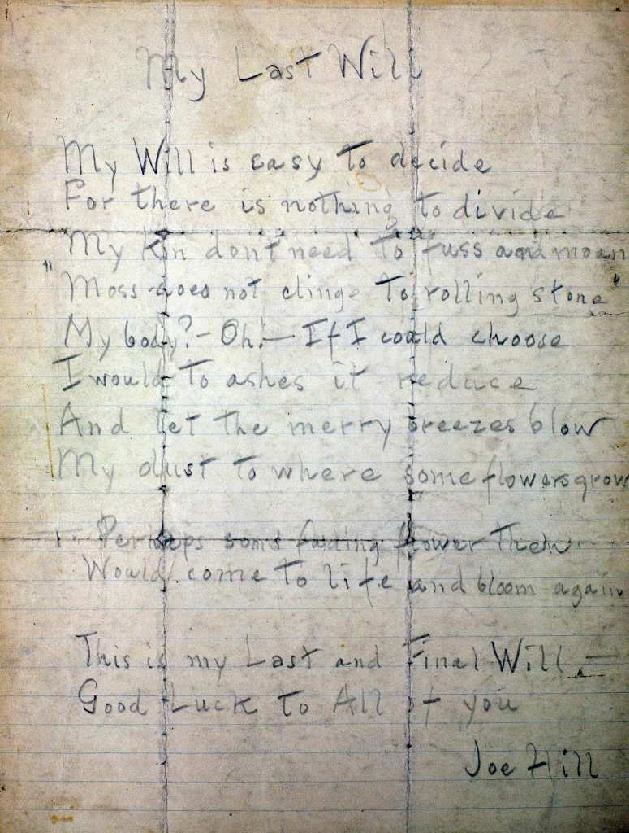
Joe Hill's final will, written while he was waiting for his execution. It reads: "My will is easy to decide For there is nothing to divide My kin don't need to fuss and moan "Moss does not cling to rolling stone" My body? Oh, if I could choose I would to ashes it reduce And let the merry breezes blow My dust to where some flowers grow Perhaps some fading flower then Would come to life and bloom again. This is my Last and final Will. Good Luck to All of you Joe Hill"
Joe Hill’s will, and final poem, written while awaiting execution. Click to enlarge and read.

Joe wrote a short poem on the day of his execution, requesting to be cremated and his ashes spread. While blindfolded and tied to a chair, Joe shouted the order to fire himself. There was a small service in Salt Lake City before his remains were moved to Chicago, where thousands of supporters listened to his songs and followed his casket to the cemetery where he was cremated. His ashes were divided up and mailed to IWW locals and supporters across the globe – Utah was exempted per his wishes. Most were spread in the wind, while other parcels were collected, confiscated, and in a few unusual cases even consumed.

Joe Hill’s musical legacy didn’t die with him. After his death, poet and screenwriter Alfred Hayes wrote the poem “Joe Hill,” later put to music by Earl Robinson and performed by artists such as Paul Robeson, Joan Baez, and Bruce Springsteen. The song tells of a vision of Joe Hill visiting the narrator in their sleep. The ghost’s message echoes his final letter to Bill Haywood: Don’t waste any time mourning, organize!


Some Labor/Protest Musician Museums in the US to check out:

The American Labor Museum

National A. Philip Randolph Pullman Porter Museum

West Virginia Mine Wars Museum

Woody Guthrie Center


*For more on a 1916 strike the IWW was involved in check out our interview with the American Labor Museum from 8/15/2024 on Museum Talk!

The Earth is a Garden: Environmentalism in Country and Folk Music

By Sam Parker, AV & Technology Specialist at the Birthplace of Country Music Museum.


A genre like country music relies heavily on the land and our natural surroundings for inspiration. Most country, bluegrass, and old-time music artists have written about the beauty and simplicity of rural life in some form, but a few go even further. Many artists have used their music to inspire change and speak out about environmental issues. Since today is Earth Day, we want to highlight a few of these environmentalist artists and the causes they sang for. 

A number of songs distinctly focus on the growing effects of pollution, human interference in ecosystems, and unsustainable development. In the decades since the 1927 Bristol Sessions, more and more artists have taken a stance on environmental issues and spoken out about being better custodians of the land.

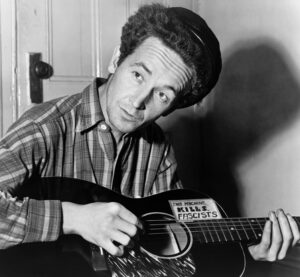
Woody Guthrie in 1943
Photo by Al Aumuller
From the Library of Congress

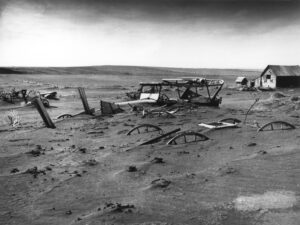
Woody Guthrie, one of folk music’s most famous artists, focused many of his early songs on the Dust Bowl. The hardships of the Great Depression were only compounded for farmers living in the American Great Plains as overuse of the land and improper farming methods led to the destruction of the topsoil. This, in turn, left the region susceptible to wind erosion, leading to winds kicking up massive dust storms that ravaged the plains for most of the 1930s. One of his most famous songs, “So Long, it’s been Good to Know Yuh,” originally titled “Dusty Old Dust,” focused on the Dust Bowl’s ravaging effects on the communities in Northern Texas. In one verse, he sings about how the local preacher invited the townspeople to pray for their salvation, but as the black dust storm blocks out all light and he can’t read his Bible, he tells the congregation, “So long, it’s been good to know yuh.”

Automobile buried by dust storm in Dallas, South Dakota, 1936
Photo by Sloan
From the United States Department of Agriculture

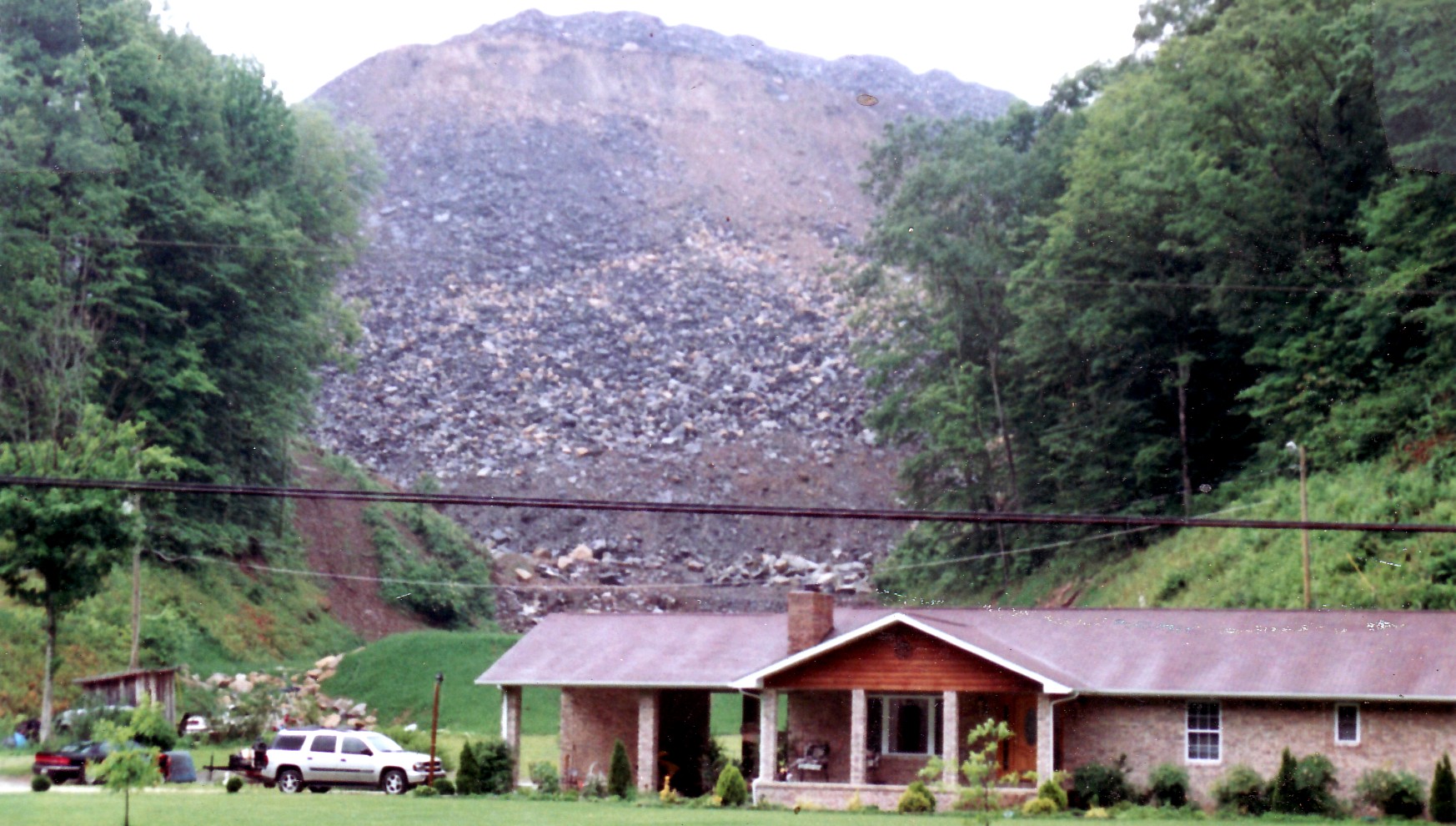
Jean Ritchie, known for collecting British and Irish folk songs as well as the many songs she wrote and recorded with the Appalachian dulcimer, did not stay silent on the growing dangers of pollution and overdevelopment. Primarily focusing on the effects of the mining industry in her native Kentucky, Ritchie wrote “Black Waters,” detailing the destruction of the natural environment due to unsustainable mining practices:


In the coming of springtime we planted our corn

In the ending of springtime we buried our son

In the summer come a nice man saying everything’s fine

My employer just requires a way to his mine

Then they tore down my mountain and covered my corn

Now the grave on the hillside’s a mile deeper down

And the man stands a talking with his hat in his hand

While the poison black waters rise over my land


One of the more famous environmental songs Ritchie recorded is“Now Is the Cool of the Day,” a hymn urging people to be better custodians of the Earth and treat each other with respect. While both songs have powerful messages set to beautiful music, “Now Is the Cool of the Day” became the unofficial song of those opposing mountaintop removal mining. Ritchie even allowed the song to be used by Kentuckians for the Commonwealth, a working-class organization focusing on limiting strip-mining and mountaintop removal mining in the area, along with a myriad of other progressive causes.

Jean Ritchie in 1950
Photo by George Pickow
From the American Folklife Center George Pickow and Jean Ritchie Collection

John Prine, whose family came from Kentucky coal country, grew up in the Chicago suburbs and in the summer visited his parents’ aptly named hometown of Paradise in Muhlenberg County. While some mining operations had existed in the county since the early 19th century, it wasn’t until the 1960s that heavy coal mining operations began as they discovered multiple shallow coal seams, which lead to large coal companies buying up swaths of land for high-intensity mining operations. What little environmental protections followed in the 60s were very loosely enforced as the mining caused soil erosion and pollution of the county’s groundwater. The Tennessee Valley Authority opened a coal-fired power plant in Paradise around the same time. Pollution from its smokestacks became so bad that locals would hang their laundry out to dry, only to return to find their clothing and linens turned gray from the ash. Shortly after, Paradise became a ghost town. The last three families were told by TVA that they had to leave the town by December 30, 1967, so that they could expand their coal plant enough to make it the largest in the world at the time.

Prine wrote “Paradise” about the destruction of his parents’ home, not only the community but the natural landscape as well. 


Then the coal company came with the world’s largest shovel

And they tortured the timber and stripped all the land

Well, they dug for their coal till the land was forsaken

Then they wrote it all down as the progress of man


And Daddy, won’t you take me back to Muhlenberg County?

Down by the Green River where Paradise lay

Well, I’m sorry my son, but you’re too late in asking

Mister Peabody’s coal train has hauled it away

John Prine in 2016
Photo by Matt Ludin
From the United States National Park Service

The year after “Paradise” came out, coal output in Muhlenberg peaked at 26 million tons, but Prine’s song quickly raised awareness of the destruction in Muhlenberg County. By 1991, two decades after the song’s release, coal production in the county dropped to 5 million tons, and the lush green landscape had begun to return to Muhlenberg. Today, the three coal-firing units at the Paradise power plant have been shut down and demolished, and have been replaced with cleaner natural-gas units, along with plans to install a solar farm. However, the only part of Paradise that remains is a lone cemetery near the plant site.

C.W. McCall, most famous for his hit “Convoy,” also advocated for environmentalist causes through his music. In his 1976 album Wilderness, he features the song “There Won’t Be No Country Music,” in which the singer warns that time is running out before the last bits of nature are overcome by human greed. Every verse, the time left shrinks, with the consequences of inaction becoming more and more dire:


Yeah, it’s only gonna take about a minute or so

‘Til the factories blot the sun out

You gonna have to turn your lights on just to see

And them lights are gonna be neon, sayin’

“Fly Our Jets To Paradise”

And the whole damn world is gonna be made of styrene


“There Won’t Be No Country Music” features the usual driving rhythm and supporting chorus that fans of McCall will be familiar with, though with a more grim message, warning listeners that “When they take away our country, they’ll take away our soul.” 

These are just a few of the songs written by a handful of artists within the broad country genre about environmental issues, and there are so many more! Such as John Denver,  who recorded songs about conservation and treating the Earth better, and even Alabama recorded “Pass It On Down, again calling on people to be more mindful of the environment and take responsibility for its conservation. All of these artists understood that if we don’t take care of the land now, nurture and protect it, then one day it might not be around to inspire music. 

A Brief Overview of Sacred Harp Music

By Sam Parker, Curatorial Specialist at the Birthplace of Country Music Museum.


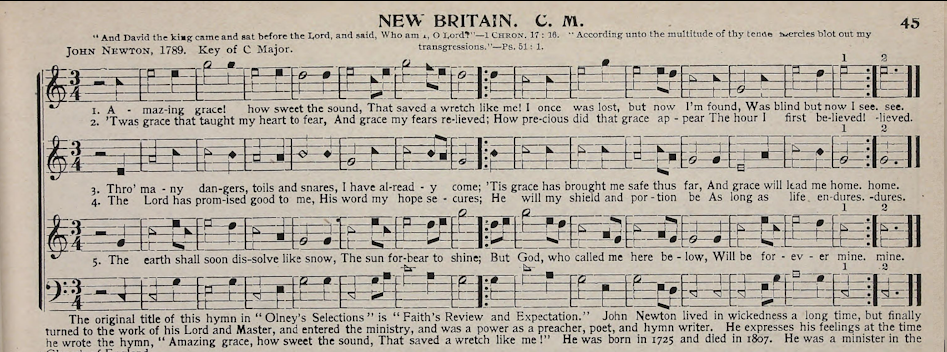
Around the time of the 1927 Bristol Sessions, it wouldn’t have been too out of the ordinary to find oddly-shaped musical notes in your church’s hymnal. In the United States, a lack of formal musical education led to the use of shape-note systems, which combined with Puritan religious traditions in the early frontier to create a unique form of vocal worship music, most commonly referred to as sacred harp singing. Some of the musicians who recorded at the sessions, like The Tennessee Mountaineers, were church groups who might have used shape-notes or began their interest in music with shape-note singing in church.

The cover of the original "Sacred Harp" hymn book. It is old and worn, reading "The Sacred Harp, a Collection of Psalm and Hymn Tunes, Odes, and Anthems; selected from the most eminent authors, together with nearly one hundred pieces never before published. Suited to most metres, and well adapted to Churches of every denomination, singing schools, and Private [word obscured]. With Plain Rules for Learners. By B.F. White and E.J. King
Cover of the first edition of The Sacred Harp. Image from Southern Spaces.
The term “sacred harp” comes from a specific songbook published in 1844, but its roots are much deeper than that. It started in New England, inherited from English Protestant movements– called “Dissenters”– who separated from the Church of England and left to colonize the Americas. In the late 1700s years of stagnation in Puritan religious music led to singing schools being established to teach laypeople how to read and perform music.

In these schools older rules of musical composition were ignored, allowing newer styles to flourish, but as those in the cities pushed back in an effort to cling to more traditional European-styled music, these newer styles moved south and west, finding fertile ground in the Appalachian region around the beginning of the 19th century.

At this time, a vital component of sacred harp music was adopted: the shape note. Assigning specific shapes to different notes assisted in sight reading for those new to music, and allowed music to flourish on the frontier where formal musical education was rare. Many books used these shape notes, but none would be so influential as the eponymous The Sacred Harp.

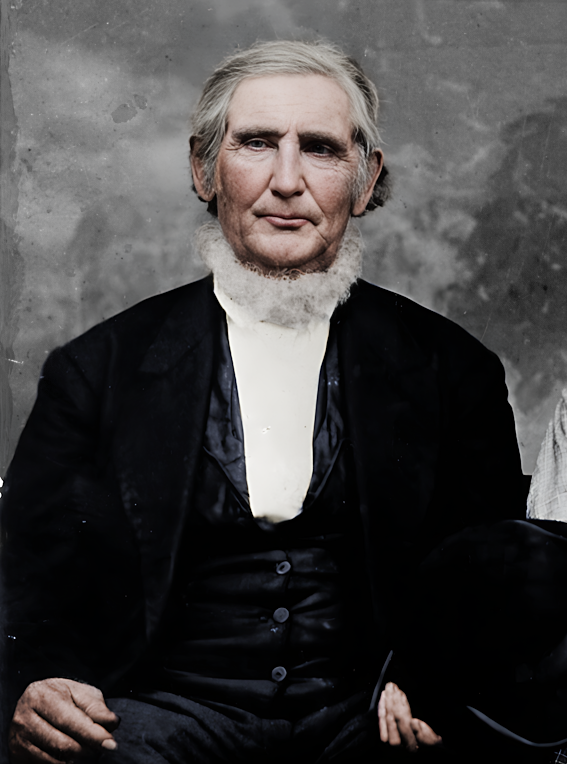
A picture of Benjamin Franklin White. He is an older man, sitting in a three-piece suit, with white, wispy hair and a beard around the base of his neck.
Image of Benjamin Franklin White, from Sacred Harp Publishing Company. Image colored by Sam.

Printed in 1844, The Sacred Harp was originally published in Philadelphia, but it eventually found its way to Northern Georgia, where it spread along the Appalachian mountains along Alabama, Mississippi, and Tennessee. George Pullen Jackson, a Musicologist specializing in Southern Hymns, surmised that at one point, besides the Holy Bible, The Sacred Harp was the most widely-owned book in the rural South.

The Harp itself was put together by two Georgia Baptists, Benjamin Franklin White and Elisha J. King, the latter of whom composed more songs inside the book than any other, and died the year it was published. White also founded the Southern Musical Convention, which served to promote the sacred harp style of music. During the two decades he led the Southern Musical Convention, White expanded The Sacred Harp greatly, almost doubling the number of songs within. 

Much of the music found in The Sacred Harp retains Calvinistic themes from its Puritan origins, stressing the natural sin of man while glorifying the sovereignty of God. Many hymns also focus on the afterlife, shunning this world and longing for death, as in the piece “I’m Going Home” —“I’m glad that I am born to die, From grief and woe my soul shall fly, and I don’t care to stay here long.”

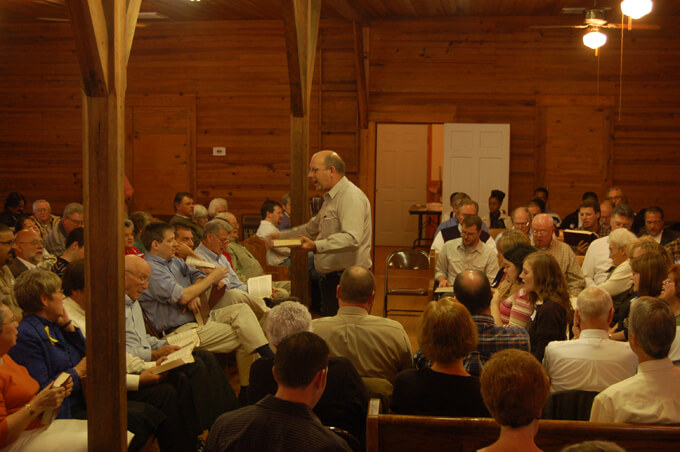
One of the more unique aspects of sacred harp singing is the organization of the singers. Performances are very informal, emphasizing fellowship and singing as a group over individuals, with the singers arranged in a square facing each other, grouped by what part they sing: tenor, treble, alto, and bass. Instead of a conductor, a volunteer leads the group for one or two songs before another stands to replace them in keeping time. Anyone is welcome to lead the group, regardless of gender or age. Sacred harp singing typically takes up most of the day, so all who want to lead get a chance.

Typically, a song starts with just vocalization, each part singing the syllable instead of the word for each note. You might already know the do-re-mi solfège from The Sound of Music, but sacred harp uses only fa-sol-la-mi, each assigned to the four shapes used in its shaped note music. There is also the complete absence of instruments, the songs are usually sung a cappella, as it’s believed the term “sacred harp” refers to voices raised together in song. The singing is emotional, and it’s loud—sacred harp singers prefer the acoustics of a small, wooden church compared to the large concert hall, and it creates a sound unlike any other.

An image of people singing Sacred Harp music. It is the interior of a wooden church, where pews are arranged in a square around the leader, who stands and conducts the singing.
A group of Sacred Harp Singers at Holly Springs Primitive Baptist Church in Bremen, Georgia. Image from Southern Spaces.

As mentioned before, a usual sacred harp performance is an all-day affair. Singing begins in the morning, and then there is a break at lunch, where the congregation exits the church for the Dinner on the Grounds. An outdoor meal spread over many tables awaits them outside, after which they return indoors to continue singing until the afternoon. It isn’t uncommon for the closing piece to be “Parting Hand,” a slow piece bidding farewell to each other. One video of a performance of the Irish Sacred Harp Convention shows the group standing and embracing one another as they sing: “Oh could I stay with friends so kind, how would it cheer my drooping mind! But duty makes me understand, that we must take the parting hand.” 

Sacred harp survives both in church services in the South, as well as conventions where singers travel long distances to take part in many performances over multiple days. Altogether, sacred harp evokes the ideas of pan-denominational worship and American innovation of traditional European ideas, as well as being a persevering hallmark of the combination of religious influence and material hardship in American music. Though it has come a long way from its Dissenter origins, you can still find hints of its Puritan roots in its lyrics and messages—when listening to the song Babylon is Fallen” talk of the destruction of the enemies of God, and how Christ will return to rule with a rod of iron, it isn’t difficult to imagine the Puritans huddled in the lower hold of a ship in a storm, singing together as they make their way to the New World.