

History Archives - The Birthplace of Country Music
Listen
Play
Loading station info...

Toe-Tappin’ Terminology for Boot-Scootin’ History

Lisa Sorrell is an award-winning master bootmaker and fine artist whose canvas is the cowboy boot. Based in Oklahoma, her works are inspired by the art of the cowboy boot and its heritage and tradition, and distinguished by intricate leather inlay, overlay, and topstitching.


This fall, the museum will host a cowboy boot exhibition featuring my work entitled Boot Scootin‘ History: The Craft and Stories of Cowboy Boots. In advance of the exhibit, let’s learn some cowboy boot-making terminology!

We’ll start with one of the most important phrases: BOOT TOPS. The upper part of a boot, where most of the decorative work happens, is the boot top. Each boot has one front panel and one back panel; together, they form the boot top. The boot tops are not called the Shaft.
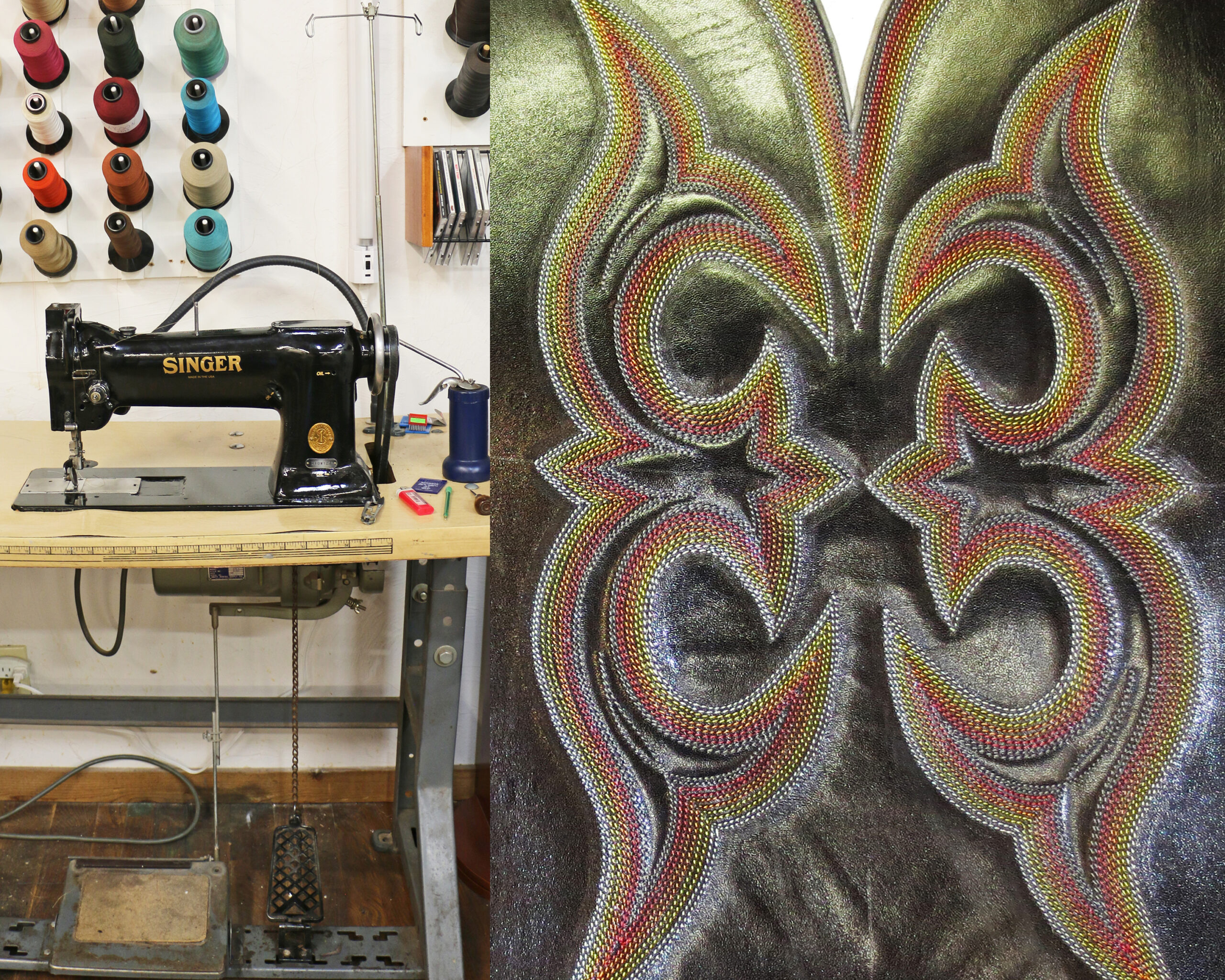
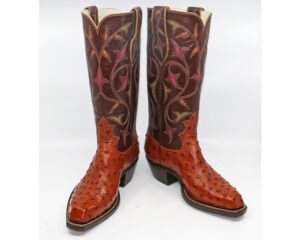
   The original embellishment to grace the tops of cowboy boots, the least expensive and the most common, is DECORATIVE STITCHING. The stitching can range from one single row to around ten rows. In my shop, the rows of stitching are done one row at a time on a single-needle, uncomputerized sewing machine. The machine that I personally use is a Singer from the 1940s. In this example, you can see ten rows of stitching, done on my old Singer.

The first design technique that includes additional pieces and colors of leather, in addition to stitching, is INLAY. If you cut out a hole, such as a star, a flower, or a butterfly, and you put a different color of leather behind that hole, that’s inlay. It wasn’t long before cowboy boots sprouted colorful inlaid flowers and butterflies. It’s important to note that flowers and butterflies are traditional themes for cowboy boot tops. They were not considered feminine; they were simply common and accepted boot designs.
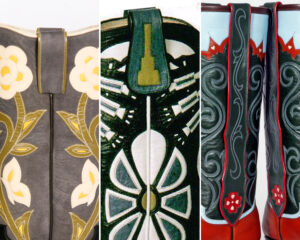
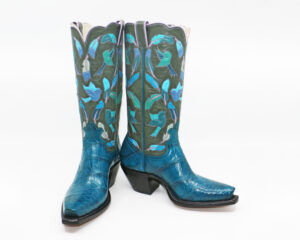
OVERLAY is an alternate way to add different colors of leather to a design. Inlay involves cutting a hole into a piece of leather and laying another piece of leather behind; overlay is cutting a shape and laying it on top. Once you master stitching, inlay, and overlay, they can be combined to create incredibly intricate designs.

Since cowboy boots are pull-on boots, with no laces or buckles to adjust the fit once they’re on, there is resistance for the proper fit when pulling them on, so the heel doesn’t slide around once it’s inside the boot. You need something to grab as you’re pulling on your boots, and those are called PULLS or EARS.
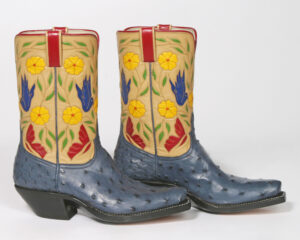
 

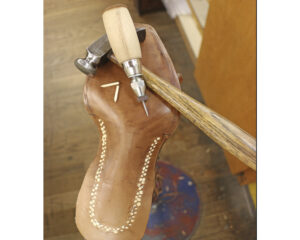
A cowboy boot sole is PEGGED with small wood pegs. Have you ever heard the saying “A square peg in a round hole?” Perhaps you thought that referred to someone who’s out of place, but really, it’s a good thing. The awl that punches the hole is round, but the wood pegs are square and larger than the awl. When you drive a square peg into the slightly smaller round hole, the tension created holds them tightly. 
In closing, let’s talk more about that high cowboy boot heel. Jay Griffith, my first boot-making mentor, was born in Texas around 1920, and he made his first pair of boots at age 13. He worked in multiple boot shops over the course of his career, for and with some of the original architects of the cowboy boot. In other words, he was closely 

connected to the origin of cowboy boots. I remember one day when a would-be customer came into the shop and unwisely began explaining to Jay the function of the high heel on a cowboy boot. Jay didn’t suffer fools gladly. I can clearly recall him practically chasing the guy out of the shop while yelling, “The purpose of a high heel is to look purty! And that’s spelled P – U – R – T – Y — PURTY!”

The Special Exhibit, Boot Scootin‘ History: The Craft and Stories of Cowboy Boots, will be on display at the Birthplace of Country Music Museum from October 14, 2025 – April 6, 2026.
 

The Complicated Origins of Recorded Sound: Phonograph vs Phonautograph

By Sam Parker, AV & Technology Specialist at the Birthplace of Country Music Museum.


This month marks the 148th anniversary of Thomas Edison’s cylinder phonograph, which was assembled on August 12th, 1877. But did you know, the history of sound recording technology doesn’t start with Edison, but rather was the culmination of decades of research and innovation? The anniversary of Edison’s phonograph inspired us to take a look at a French inventor whose device, although not commercially successful, is a landmark in the history of recorded sound that pre-dates the phonograph. 

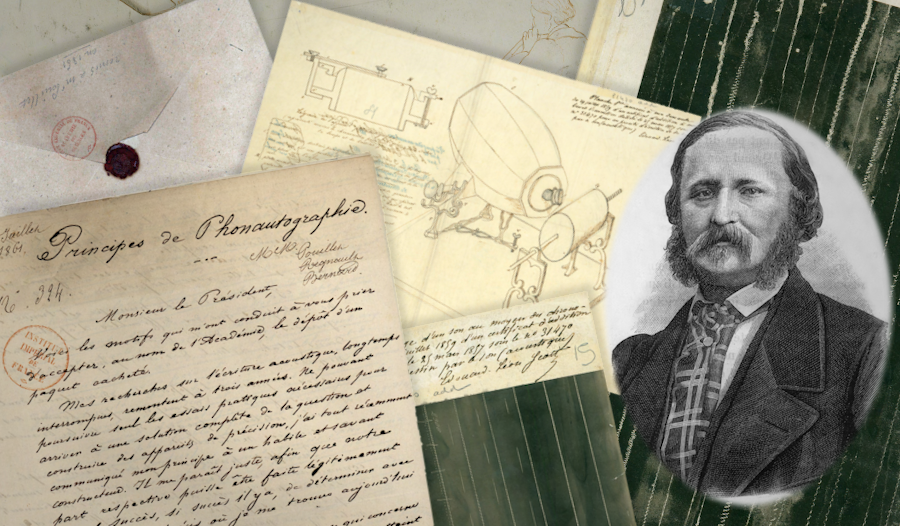
A drawing of Eduoard-Leon Scott de Martinville. He is an older man with a drooping mustache and thick sideburns, wearing a suit and ascot tie in the style of the late 19th century.
Édouard-Léon Scott de Martinville from Les Merveilles de la science, a book on scientific innovations. The plaid ascot tie isn’t just a fashion statement- the “Scott” in his name is reference to his family’s Scottish heritage.

The earliest known song recorded by a man-made device was sung while Edison was still a newsboy, but who was responsible for this momentous accomplishment? Édouard-Léon Scott de Martinville worked as an editor at a publishing company specializing in texts about scientific research and news in Paris. While reading about scientific innovations, he was inspired to replicate what the camera did, but for words instead of images.

Similar to Edison, Scott’s work built on the innovations and technologies of his predecessors and contemporaries. In a letter to the President of the French Academy of Sciences, he wrote about some of his predecessors: 

 As precedents, I had before me the siren of Cagniard-Latour, the toothed wheel of Savart, both suitable for counting the vibrations of the sounding body; Wertheim’s process for writing the vibrations of a tuning fork; the electromagnetic tour described by Mr. Pouillet for the same object. I have taken a step further: I write not only the vibrations of the bodies that primitively vibrate, but those transmitted mediately by a fluid — that is, by the surrounding air.

This letter was more than just a description of his idea; it was part of a process in 19th-century French academia to establish primacy when credit is given for an invention. At the time, when an inventor had an idea for a new innovation, they write it down, place it in a sealed envelope, and deposit it at the Academy’s office in Paris. These letters are not intended to be read– at least not immediately. The letters can only be opened by the person who left them, or their family, after the inventor’s death. This system was created so that, in a situation where two different people claim to have made the same invention, the one who invented it first can prove it with a dated letter verifying when they developed the concept. This came into play a decade later when Edison began working on his phonograph. Once it began to attract attention in the papers, a Parisian inventor requested the Academy open his letter, in which he wrote about a process of replicating sound very similar to Edison’s nearly two weeks before Edison did. 

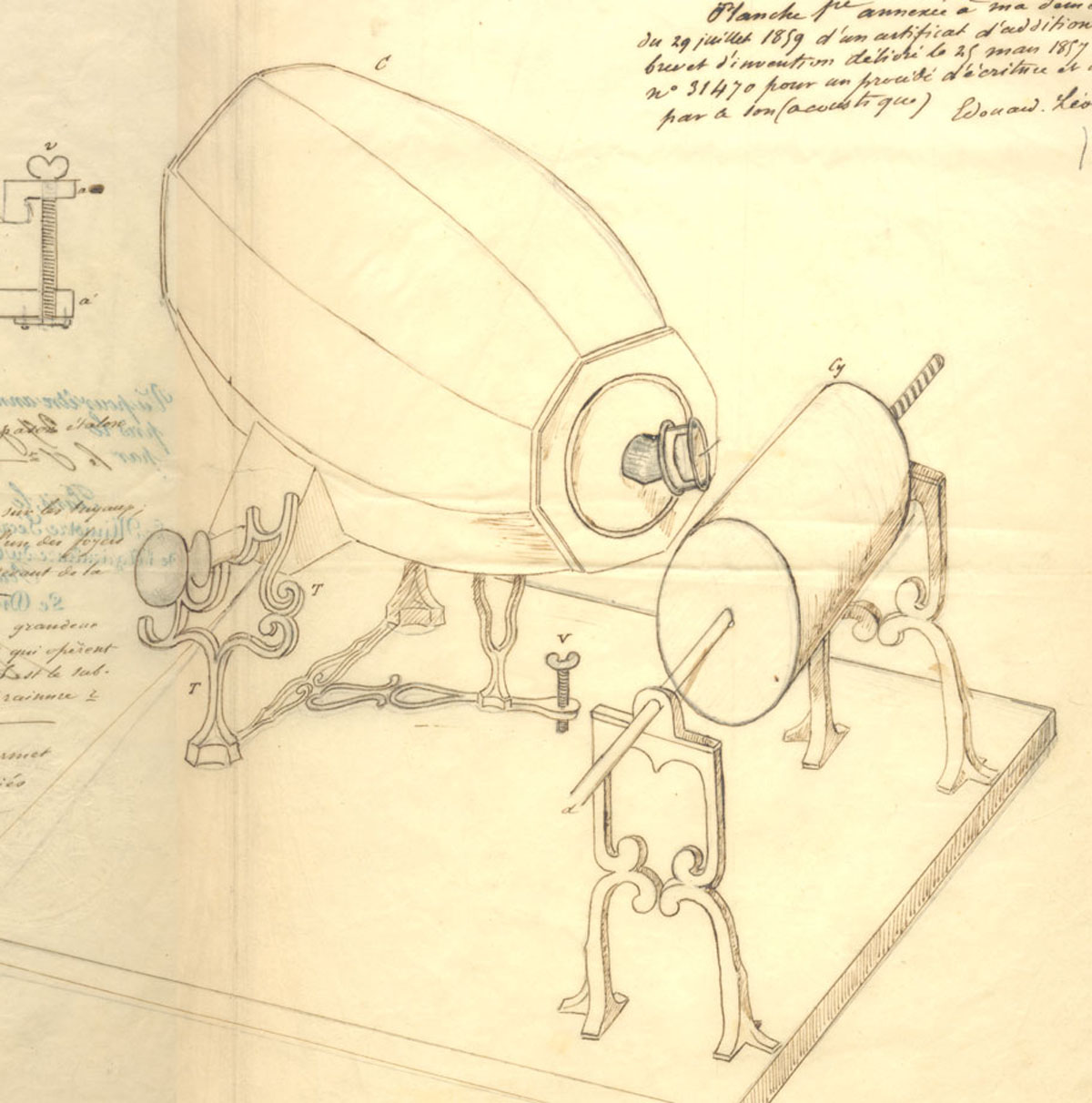
A sketch of the phonautograph.
A sketch of the phonautograph made by Scott in 1859, notice the cylinder and the plaster “barrel” horn’s similarity to Edison’s later phonograph.

After combining the technologies and discoveries of his predecessors, Scott and a “skillful and learned manufacturer” built what was essentially a large mechanical version of a human ear. They called it the phonautograph. The phonautograph used an acoustic horn (similar to Edison’s phonograph) attached to a diaphragm to vibrate a boar’s bristle, inscribing the vibrations on a plate of glass covered with a thin layer of lampblack. For the first time, a physical record of sound waves had been captured.

So then, why do we celebrate the phonograph and not the phonautograph? 

There is one key factor that kept the phonautograph classified as a scientific curiosity instead of a culturally revolutionary invention. Sure, the phonautograph created recordings, called phon­autograms, but Scott had not yet devised a way to play them back. Scott’s recordings looked, to the untrained eye, like scribbles on a plate of dark glass or piece of paper. Scott hoped that he would be able to develop a method to read the sound waves, but this never came to fruition. Despite not being able to read sound, Scott was aware that his new technology was groundbreaking. He once remarked, “I see the book of nature opened before the gaze of all men, and, however small I may be, I dare hope to be permitted to read it.” 

A phonautograph of a tuning fork, showing the steady soundwaves against lampblack.
A phonautograph, displaying the soundwaves of a tuning fork. Scott and other early sound engineers used tuning forks to calibrate the speed of their recordings, as they resonate at a constant frequency. Images from the French Academy of Sciences.
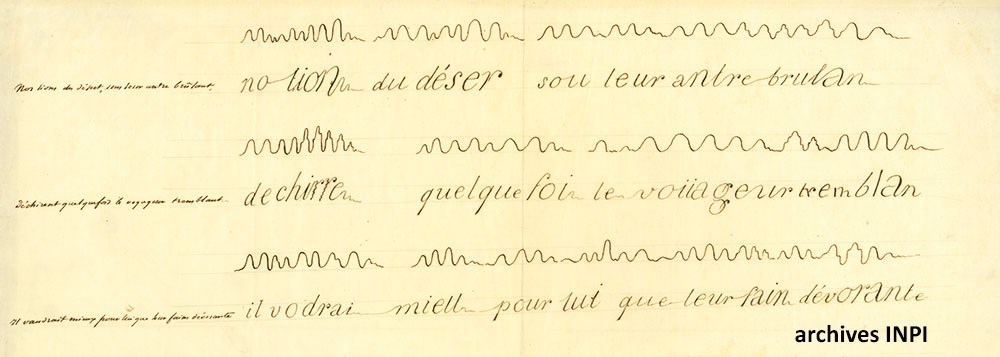
Notes by Scott matching soundwaves with the words he had recorded.
A study by Scott attempting to match up soundwaves to the specific syllables in the words he recorded. Image from the archives of the Institut national de la propriété industrielle.

Scott worked with the French Société d’Encouragement pour l’industrie Nationale (Society for the Encouragement of National Industry) and German Physicist Rudolph Koenig to further develop the phonautograph, moving from a small plate of glass to a cylinder that could capture around 20 seconds of sound. They marketed the phonautograph as a research tool for further understanding acoustics and the nature of sound waves, and recorded numerous phonautograms to examine the represented changes in pitch, tone, and timbre in speech and song.

For a long time, we were unable to recover the sound from phonautograms, but in 2008, researchers with FirstSounds developed a way to reproduce the recorded audio. For the first time in over a century and a half, we can listen to the first ever song recorded by mankind: a French folk tune, “Au Clair de la Lune,” sung by Scott himself. The biggest challenge was that the phonautograms were not recorded with the intention of being played back. They contained smudges and skips, and the speed of the recording often changed depending on how fast the phonautograph’s crank was being turned, which led to wildly varying pitches. FirstSounds was able to overcome these challenges using modern technology similar to the process recently used to recover our own transcription disc.

Medieval to Metal: A Look at the William King Museum of Art’s latest exhibit

Anna Buchanan is the Head Curator at the William King Museum of Art located in Abingdon, Virginia. Buchanan is a graduate from Clemson University where she received her MFA with a concentration in drawing.


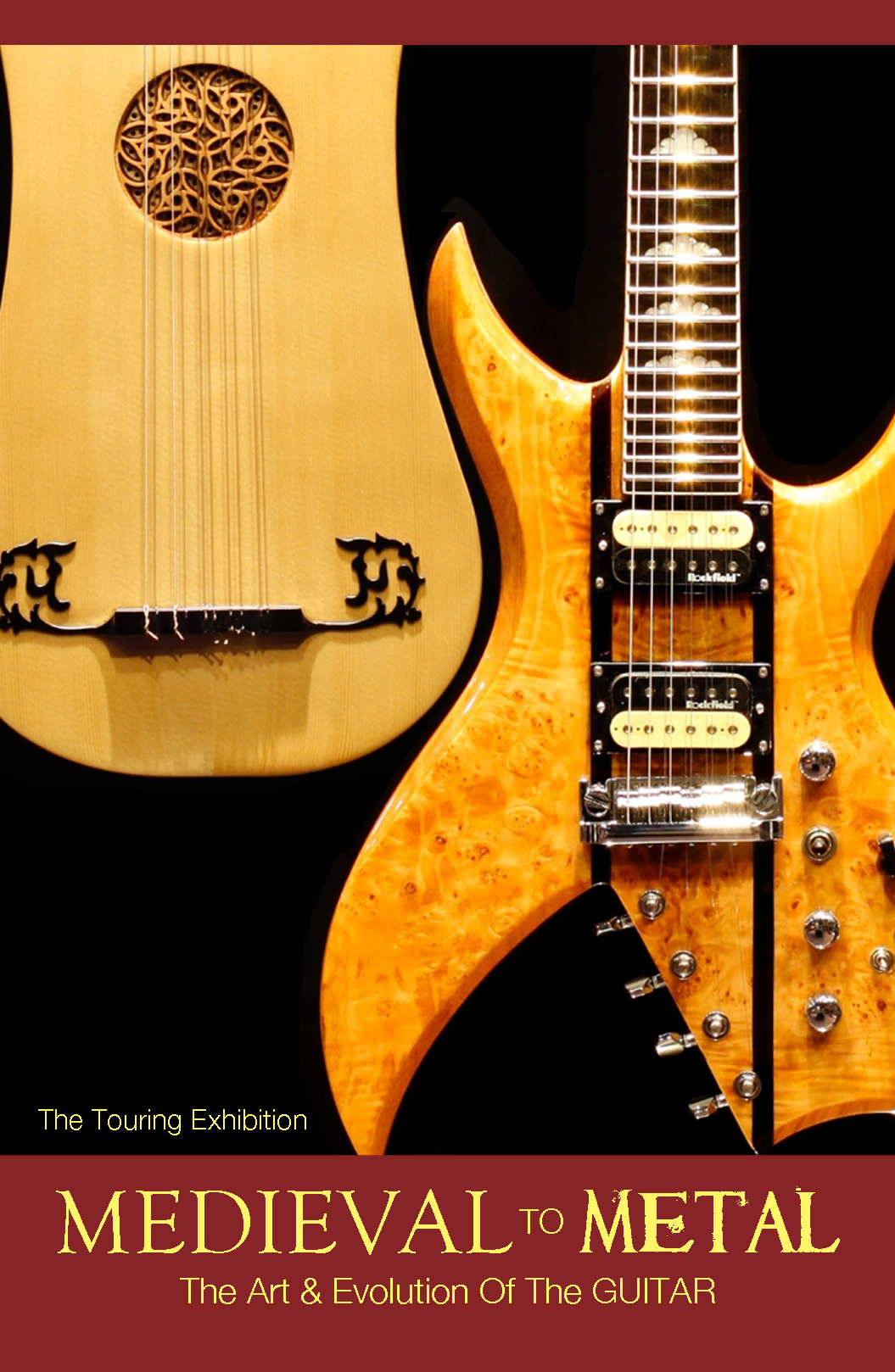
"Medieval to Metal" exhibit poster featuring a medieval precursor to the guitar next to a modern model of the instrument.
The exhibit “Medieval to Metal: The Art and Evolution of the GUITAR” is a touring exhibition by the National Guitar Museum. Copyright: The National Guitar Museum (NGM).

The William King Museum of Art (WKMA) is no stranger to the age-old question: What is art? It’s a question that art historians still grapple with today. At WKMA, we believe that museums have a responsibility to push the boundaries of that question in order to broaden our understanding of creativity and foster empathic connections across cultures and communities. One of my favorite quotes comes from  Yolngu Aboriginal Australian artist Wandjuk Marika: 

“There is no distinction between art and life.” 

The Fralin Museum and the Kluge-Ruhe Aboriginal Art Museum reflected on this quote, noting how it challenges the distinctions often made in Western culture between “fine art” and “craft,” or “design” and “decoration.” As museums, I think that it’s important to recognize the traits and histories of each creative category, but question the hierarchy that is so often a part of the visual arts. 

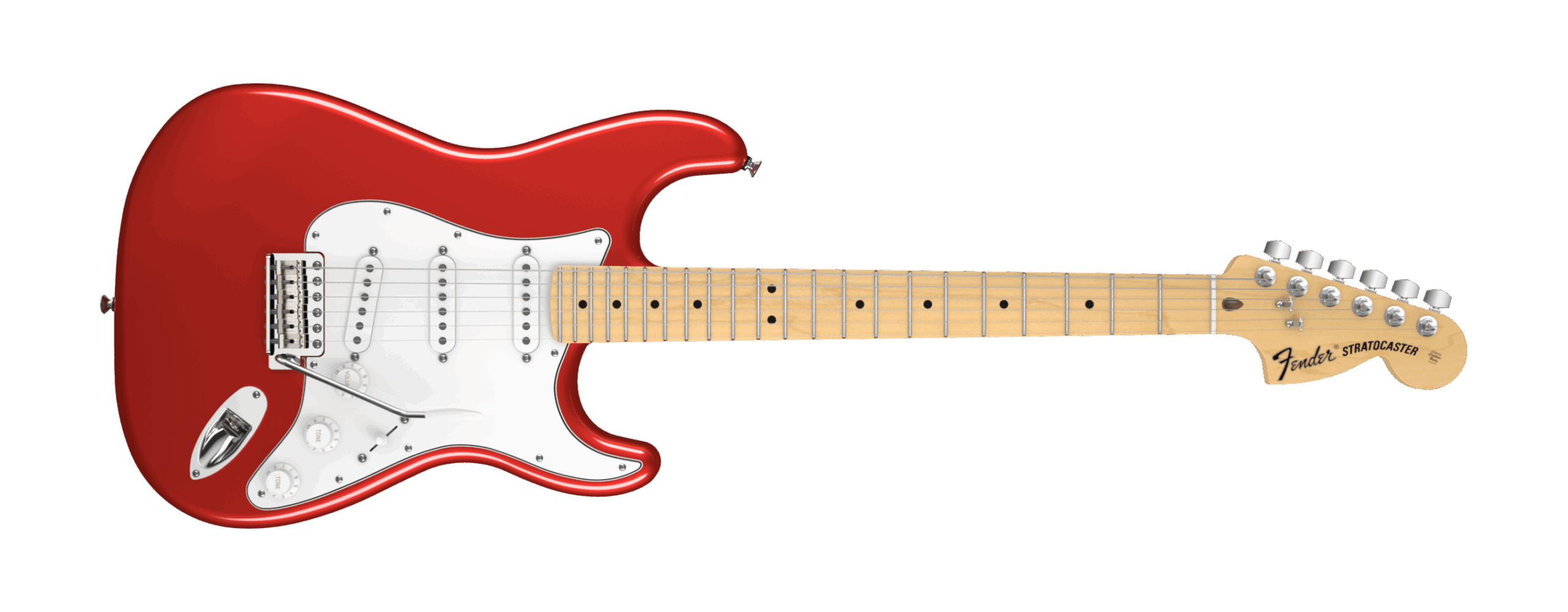
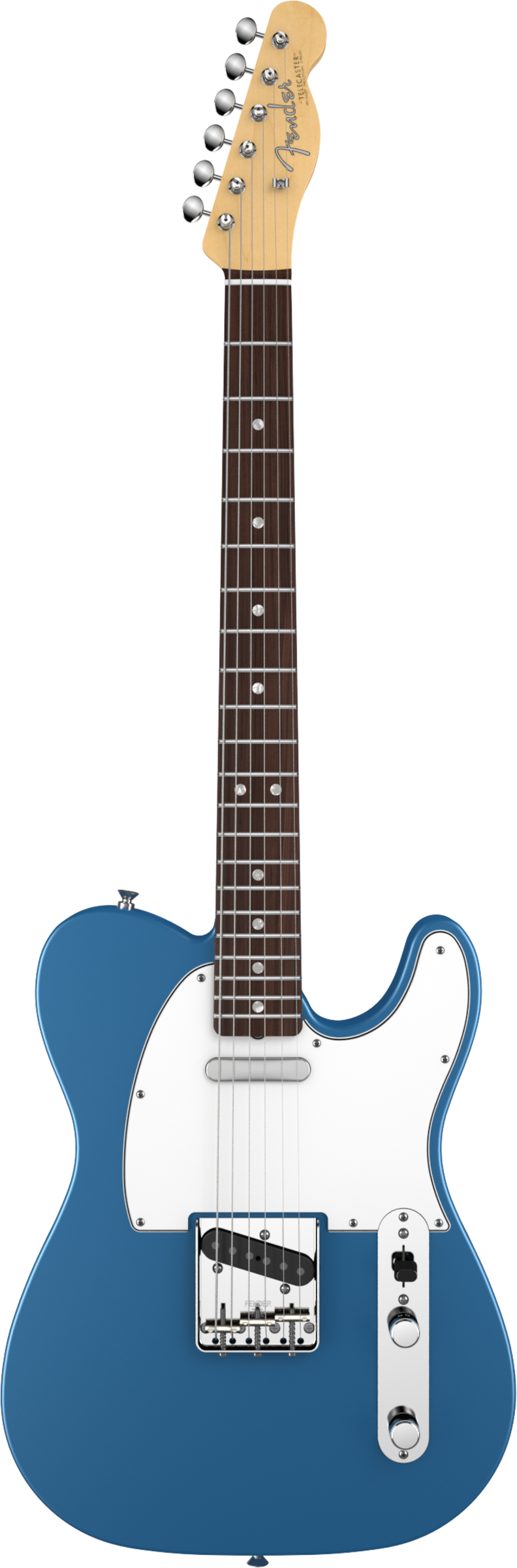
A Fender Telecaster, with Lake placid Blue furniture.
Fender Telecaster, Lake Placid Blue, Copyright: National Guitar Museum (NGM)

WKMA invites visitors to reconsider their definition of art through our current exhibition, “Medieval to Metal: The Art and Evolution of the Guitar,” on view from May 15 to August 17. This vibrant traveling exhibition–developed by the National Guitar Museum (NGM)–showcases 40 instruments that tell the story of the guitar’s artistic transformation over centuries. Spanning from medieval lutes to modern electric guitars, the exhibition highlights how creative engineering has driven the instrument’s evolution. Whether you’re a lifelong music fan or new to the guitar’s history, the diversity of designs and materials sparks curiosity.

Visitors will recognize some famous names–like Fender, one of the most iconic brands in music. Clarence Leonidas “Leo” Fender (1909-1991) was an American inventor and founder of the Fender Musical Instruments Corporation. Based in Fullerton, California, Fender opened a repair shop in the 1940s that became a hub for local musicians. Local bands brought him music equipment and acoustic guitars for repair. Hearing all the complaints from the musicians about their instruments, Fender set out to create a guitar like no other. The result was the “Telecaster,” named in homage to the growing popularity of television. 

Fender’s repair shop flourished in the 1950s and 60s, particularly in the SoCal hot rodding scene that erupted after WWII. Fender knew his clientele and his designs often drew inspiration from car culture, featuring chrome accents and bold colors like Fiesta Red and Lake Placid Blue–the same hues found on 1950s Cadillacs. Fender even partnered with auto paint manufacturers like DuPont. Ironically, despite revolutionizing the instrument, Leo Fender never learned to play or tune a guitar himself. 

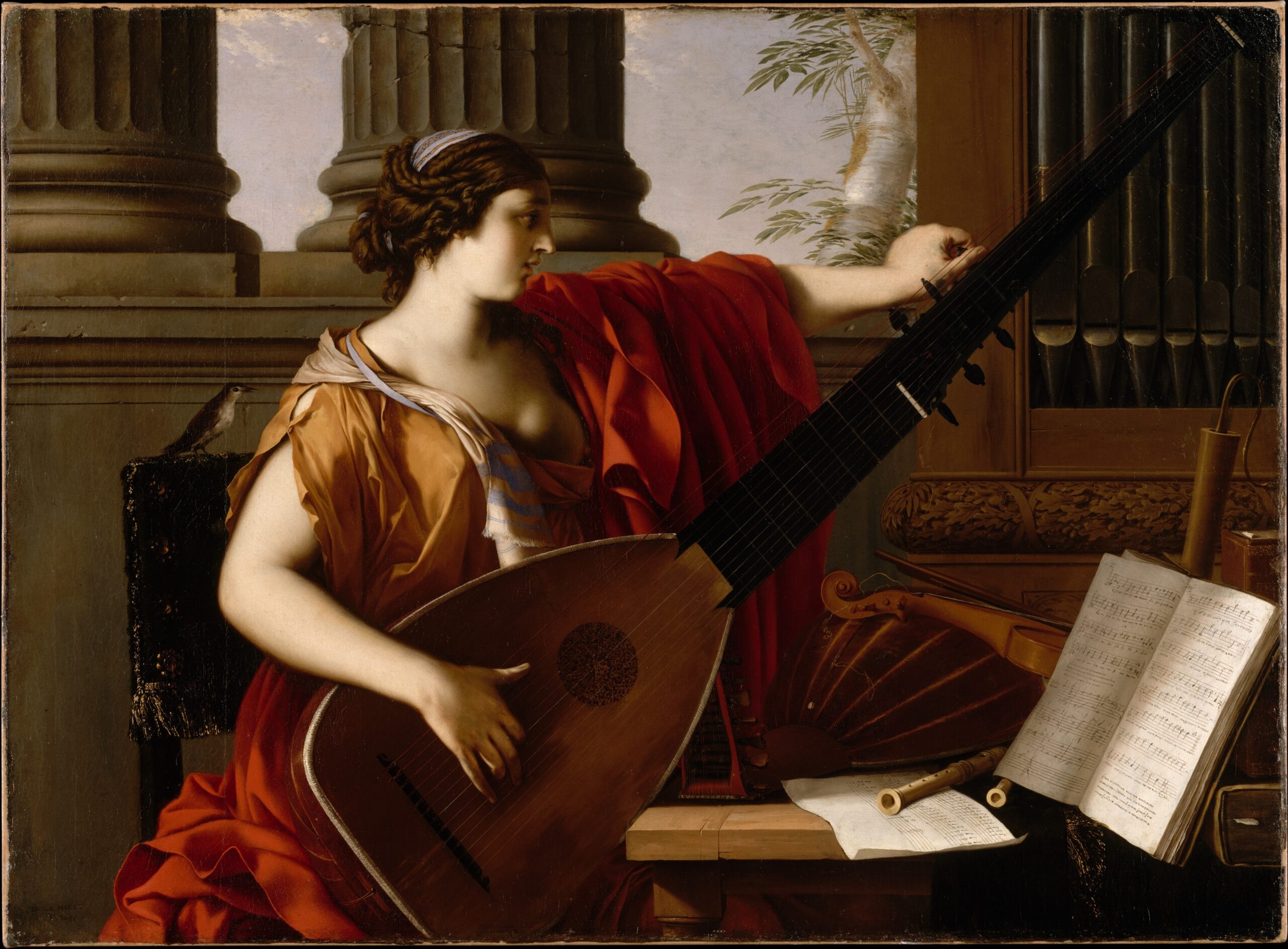
An artwork by the French Baroque painter Laurent de La Hyre. It depicts a woman in Greco-Roman clothing, tuning a theorbo, a 6-foot long instrument with 13 strings. On her chair, over her left shoulder is a small bird observing her tuning. Next to her is a table with various instruments including a lute, two flutes, and a violin, as well as sheet music. On the wall behind her is a pipe organ.
Allegory of Music by Laurent de la Hyre, 1649. Public domain image from the Metropolitan Museum of Art.

A lesser known instrument that is sure to pique everyone’s interest is the theorbo. The theorbo is a larger than life Renaissance instrument that evolved from the lute. Often six feet long with up to 30 strings, the theorbo was developed to accompany the deep voices of male opera singers in Italy. Featuring a second, extended neck without frets and bass strings, it produced a rich, resonant sound that filled concert halls. Players strummed the upper strings while plucking melodies on the lower neck, creating music that was as visually dramatic as it was ethereal. Though it fell out of favor in the 18th century, the theorbo remains a powerful reminder of how function and artistry can intertwine. 

So, what is art? Art can be a way of communication. Art is often used as a tool for the distribution of ideas and the guitar is no different. The guitar is a creative tool used to disseminate messages, thoughts, and even protests just as the visual arts have done for millennia. Alex Nygers, Director and CEO of the Virginia Museum of Fine Arts notes that, “…the guitar holds not only an evergreen presence as a source of entertainment, but becomes a vehicle for these connections to our histories and our communities–-a way to share stories, express emotion, respond to politics…” At WKMA, we see the guitar as more than just an instrument–it’s a work of art, and by exploring its evolution, we hope visitors leave with a broader appreciation for how creativity shapes the world around us. In questioning the boundaries of “what counts” as art, we aim to open the door to deeper engagement, inclusivity, and inspiration. 

Additional Links/Resources:

www.nationalguitarmuseum.com

Come Out Singing: The Music and Activism of Patrick Haggerty

By Sam Parker, AV & Technology Specialist at the Birthplace of Country Music Museum.


From the campfires of Valley Forge, to religious reformers in the First Great Awakening, to even our journey into space, LGBTQ+ people have been present and participating throughout American history. The American music industry, and even country music, are not exempt from their influence. While strict social norms and regular violence forced many early queer musicians to hide their identities, some decided to take a stand regardless of the consequences. To celebrate Pride Month, let’s explore the life and work of country music’s first openly gay musician, Patrick Haggerty.

Patrick Haggerty was one of ten children born on a Washington dairy farm in 1944. His father, whom Patrick would later refer to as the “Saint of Dry Creek,” understood that his son was different. Not many farmer’s sons in the 50s were asking their fathers to help them make wigs out of baling twine for a drag performance at a talent show.  It was also not very common for farmers to give their sons tips on how to do better at the next one on the drive home. In his youth, Patrick won a 4-H cooking contest and was invited to Canada to demonstrate his skills for Queen Elizabeth II. When his father saw Patrick practicing his curtsies in a cooking apron, he wasn’t bothered by his son behaving like a proper lady, what bothered him was that his son was curtsying to the Queen of England! The Haggertys were Irish, after all. Patrick’s father didn’t want his son to be ashamed or hide himself as he later recalled his father telling him, “Over and over again in a hundred different ways … not to sneak; he said it would ruin my immortal soul.”

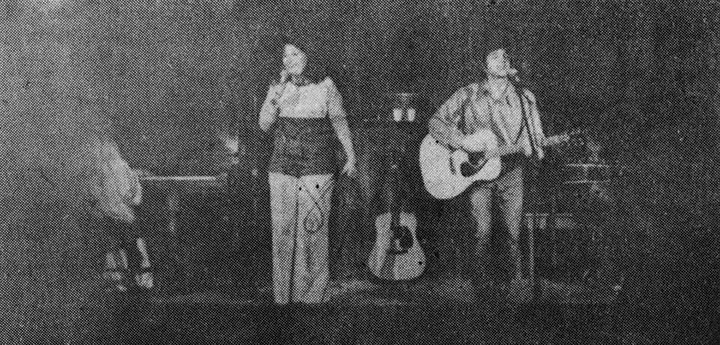
A grainy, black-and-white photo of a young Patrick Haggerty performing with Lavender Country. Only Patrick, playing guitar, and Eve Morris singing are easily visible.
The only surviving image of a Lavender Country performance, early 1970s. From Paradise of Bachelors.

Patrick took his father’s words to heart and credits the moral as his inspiration for creating the first gay country music album in the early 1970s, Lavender Country. In the years following the Stonewall Uprising, the American LGBTQ community was energized, producing numerous works of art and protest collectively. Patrick’s band, also called Lavender Country, was one of these efforts, combining Patrick’s singing with Michael Carr on keyboard, Robert Hammerstrom on guitar, and Eve Morris singing and playing fiddle. Seattle’s LGBTQ community entirely funded their self-titled first album– the studio, promotion, and distribution of the album’s 1,000 copies was all a community effort to get their message out in the open. This decision was made to avoid those in the country music industry who would have refused to produce their music, or demanded significant changes to it. Patrick believed that Lavender Country would be his first and last album due to its controversy– “I knew Lavender Country would define me musically, and I couldn’t have a career anywhere in music because I wrote it. … But I knew that when I made it and I’ve never regretted that decision.”

Patrick Haggerty, singing while holding up his cowboy hat. He is wearing a lavender-colored western outfit, with white tassels and accents, and holding a microphone.
Patrick performing during Lavender Country’s comeback. From Paradise of Bachelors.

Notably, Lavender Country’s music was written to speak directly to its queer audience, especially those living closeted lives in rural areas, those who did not understand their feelings, what they meant, or what to do about them. The songs addressed the intersectionality of gay liberation, the necessity of anonymity in gay relationships at the time, and the prospect of a future where people can live and love as they please.

Lavender Country album cover.
Lavender Country’s album cover. Before you listen, note that due to the experiences of the LGBTQ+ community in the US and the nature of protest music, the lyrics contain adult language.

Yet, Patrick treats the question of “is it real country?” with derision. “If you challenge my credentials on my country-ness,” he said in an interview, “do so at your own peril.” Along with the rest of Lavender Country, Patrick performed at the first Seattle Gay Pride celebration in 1974, along with numerous other Pride events in the Pacific Northwest over the next two years. Shortly after the album’s release, a DJ for a Seattle radio station was fired for playing one of their songs, which featured an explicit title and lyrics in line with their campy, proud, and out theme.

The band broke up in 1976, and Patrick began to focus on working as an activist for anti-racism and pro-LGBTQ causes. He ran unsuccessfully for Seattle City Council, as well as the Washington House of Representatives. He co-parented two children and eventually met his future husband, Navy veteran J.B. Broughton, with whom he continued his activism as the AIDS crisis set upon the American queer community. 

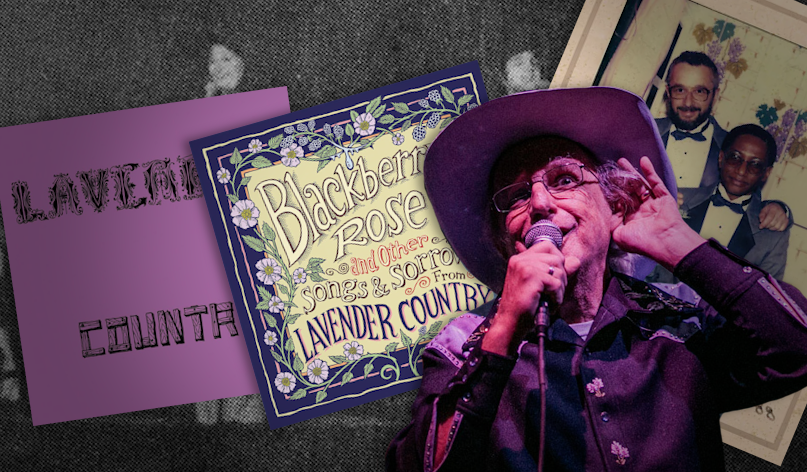
Patrick continued performing here and there, mostly at retirement homes for older audiences, and a couple publications made some mention of Lavender Country as the first openly gay country group. Still, Patrick’s comeback wouldn’t really come until someone uploaded one of his album’s songs to YouTube in 2014, leading to renewed interest in Lavender Country. Their original 1973 album was re-released under the Paradise of Bachelors label, and Patrick’s music experienced an explosion of popularity. Patrick toured across the country, gave interviews on the radio, appeared in documentaries about himself, and the album Lavender Country was even adapted into a modern ballet performance. In 2019, after 46 years, Lavender Country released their second full-length album, Blackberry Rose and Other Songs and Sorrow. Patrick died of complications following a stroke on Halloween of 2022, though his legacy as an activist and musician lingers. When asked how he feels about his music’s comeback during Lavender Country’s 2014 revival, he said, “…before I go to my grave, I’m getting the last laugh, because Lavender Country is going to outlive me.”