Exhibits Archives - Page 7 of 7 - The Birthplace of Country Music
Listen
Play
Loading station info...

Things Come Together for Things Come Apart

Whew! It’s been a long few weeks – even months – here at the Birthplace of Country Music Museum. We’ve planned and designed materials. We’ve hammered and painted. We’ve found parking spots for tractor trailers and forklifted huge crates into the museum. We’ve hung photographs and artfully arranged objects. We’ve made messes and tidied up.

All of these efforts have been working towards our new special exhibit Things Come Apart, which comes to us from the Smithsonian Institution Traveling Exhibition Service and opens today. The exhibit features the work of artist Todd McLellan – 39 extraordinary photographs, 4 disassembled objects, and 5 short videos, all exploring the inner workings of common, everyday possessions. From a record player to a telescope to a two-seater light aircraft – and more – the images and objects invite the viewer to reflect on how things are designed and made and how technology has evolved over time. The exhibit also includes three fun and educational activity kits created by the Smithsonian’s Lemelson Center for the Study of Invention and Innovation’s Spark!Lab.
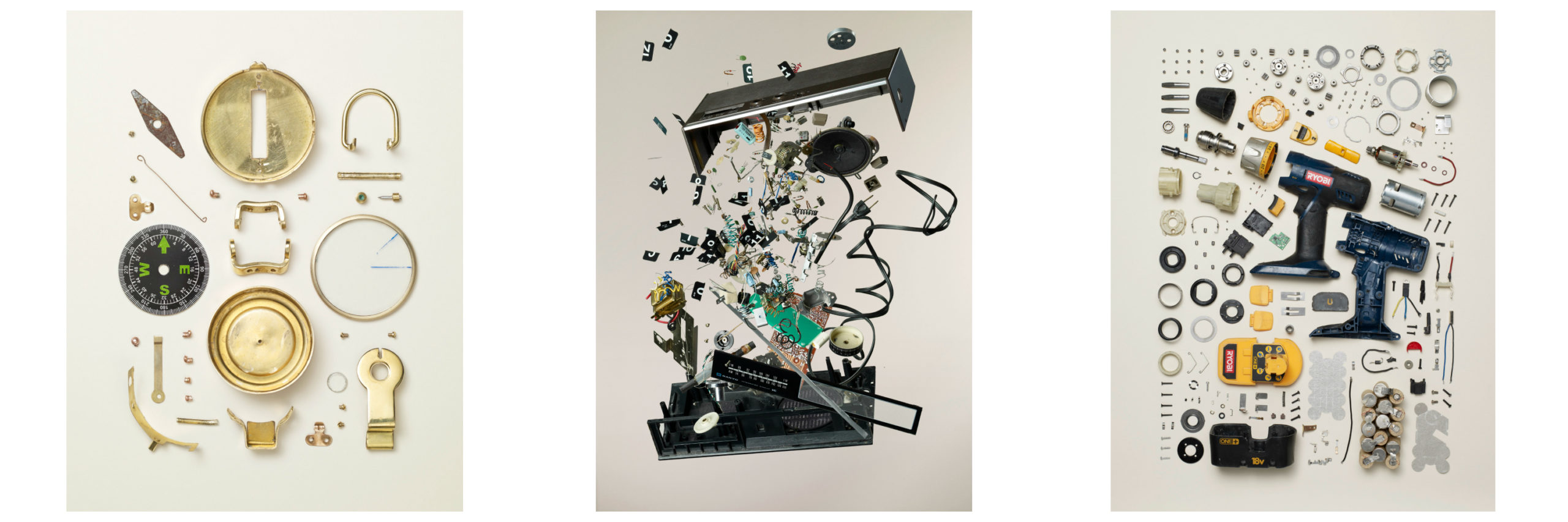
Three of the photographs by Todd McLellan from Things Come Apart: Lensatic compass made by Indian Nautical Instruments in the 2000s, component count: 33; Flip clock made by Sanyo in the 1970s, component count: 426; Power drill made by Ryobi in 2006, component count: 216. © Todd McLellan

Things Come Apart is not our “usual” type of exhibit, one where the focus is on the history of early country music, the musical legacy of this region, or other related social and cultural topics. However, one of our aims with the museum’s Special Exhibits Gallery is to also choose interesting and engaging exhibits that will serve to bring new audiences into the museum and expand the educational resources offered to our local community. With this type of exhibit, we also work hard to find ways to relate the exhibit’s subject to our content or to music, for instance through panels and artifact supplements or the related programming and outreach.

Things Come Apart effectively fits those goals through its distinctive subject matter – one that should appeal to a different audience along with our everyday visitors – and through its focus on STEAM (science, technology, engineering, art, and math) content. The activity kits are a tangible and hands-on manifestation of that STEAM focus, perfect for working with schools and youth groups, and combined with the exhibit, they offer a unique supplement to the curricula in our local schools. And while we have spent months bringing Things Come Apart to fruition and are wonderfully excited to have this very special Smithsonian exhibit here at the museum, it’s been the supplementing that has really caught our imaginations and given us opportunities to create some truly interesting displays and plan a host of engaging programs.

The exhibit highlights several musical instruments and sound-related gadgets in its exploration of design and technological innovation, which gives us a great opportunity to relate the exhibit to our content. For one thing, the photographs of the piano and accordion taken down to their component parts will hopefully prompt our visitors to also consider the complexity and functionality of the instruments used in the 1927 Bristol Sessions recordings – from the Frankenstein-like harp guitar to the more basic kazoo.

Secondly, the focus on technology in Things Come Apart can be related to an important part of the story told in our permanent exhibits – that of the importance of technological developments to the success and legacy of the 1927 Bristol Sessions, and how technology was instrumental in the distribution of these early commercial country music recordings.
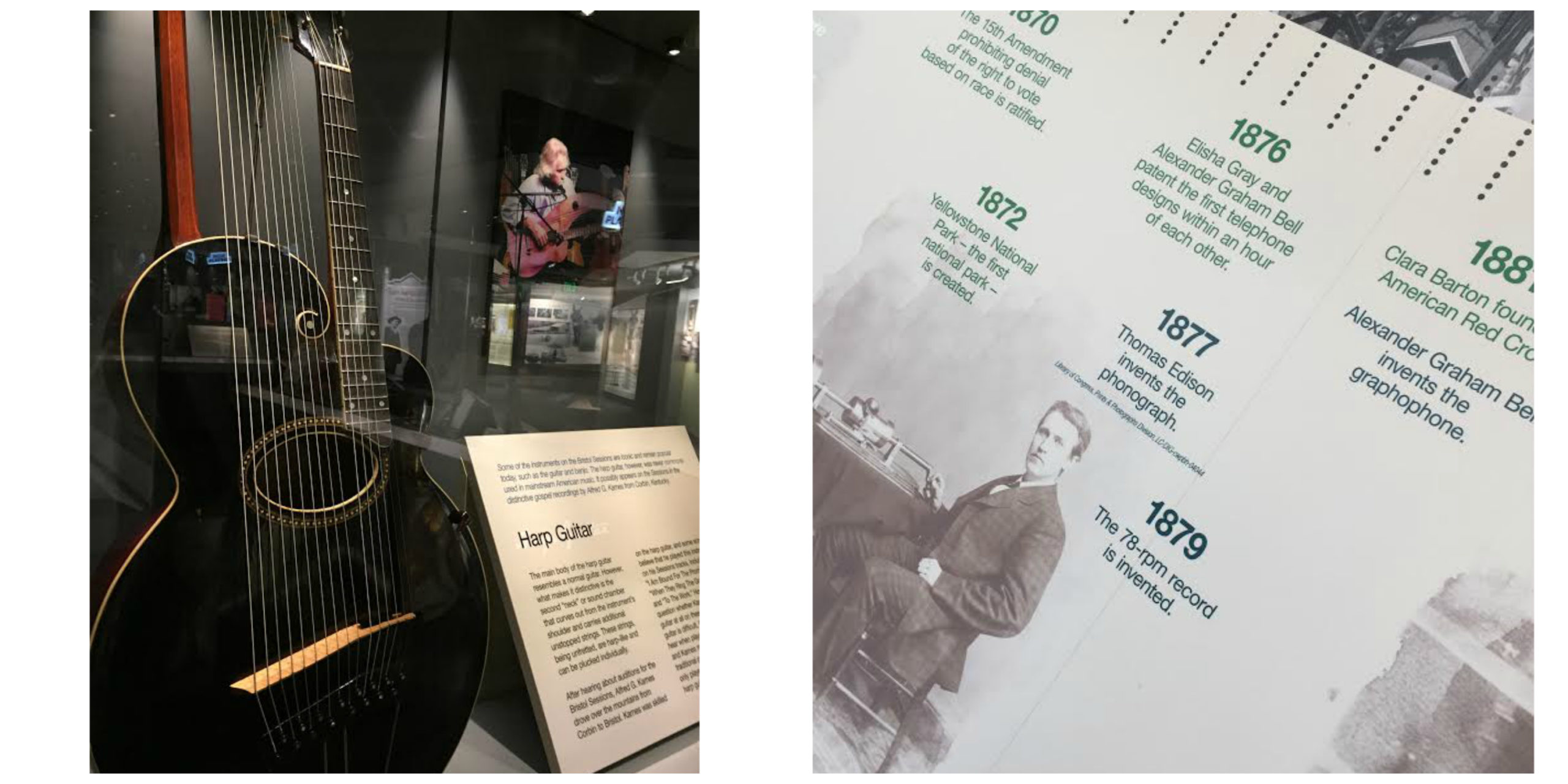
In the museum’s permanent exhibits, a harp guitar is on display with several other instruments, and a timeline highlights important milestones in sound and radio technology. © René Rodgers

We also decided early on in the planning process that we would include an object or two related to the museum’s content, taking apart and displaying them to go along with the four disassembled objects already present in Things Come Apart. The first object we tackled was a circa 1900—1910 phonograph, donated to us by Bob Bledsoe, a favorite friend of the museum and an expert on all things to do with early cylinder players and phonographs, and his son John. We spent a happy morning with them both, taking a Columbia Graphophone phonograph down to its three largest components: base, top and turntable with attached motor, and horn, along with a second non-working motor down to its smaller components. It was dirty but interesting work – two days later I still had 100-year old grease underneath my fingernails! We also took apart a broken guitar, even sawing it in half so that the inner struts, bracing, and tone bars could be seen by our visitors.
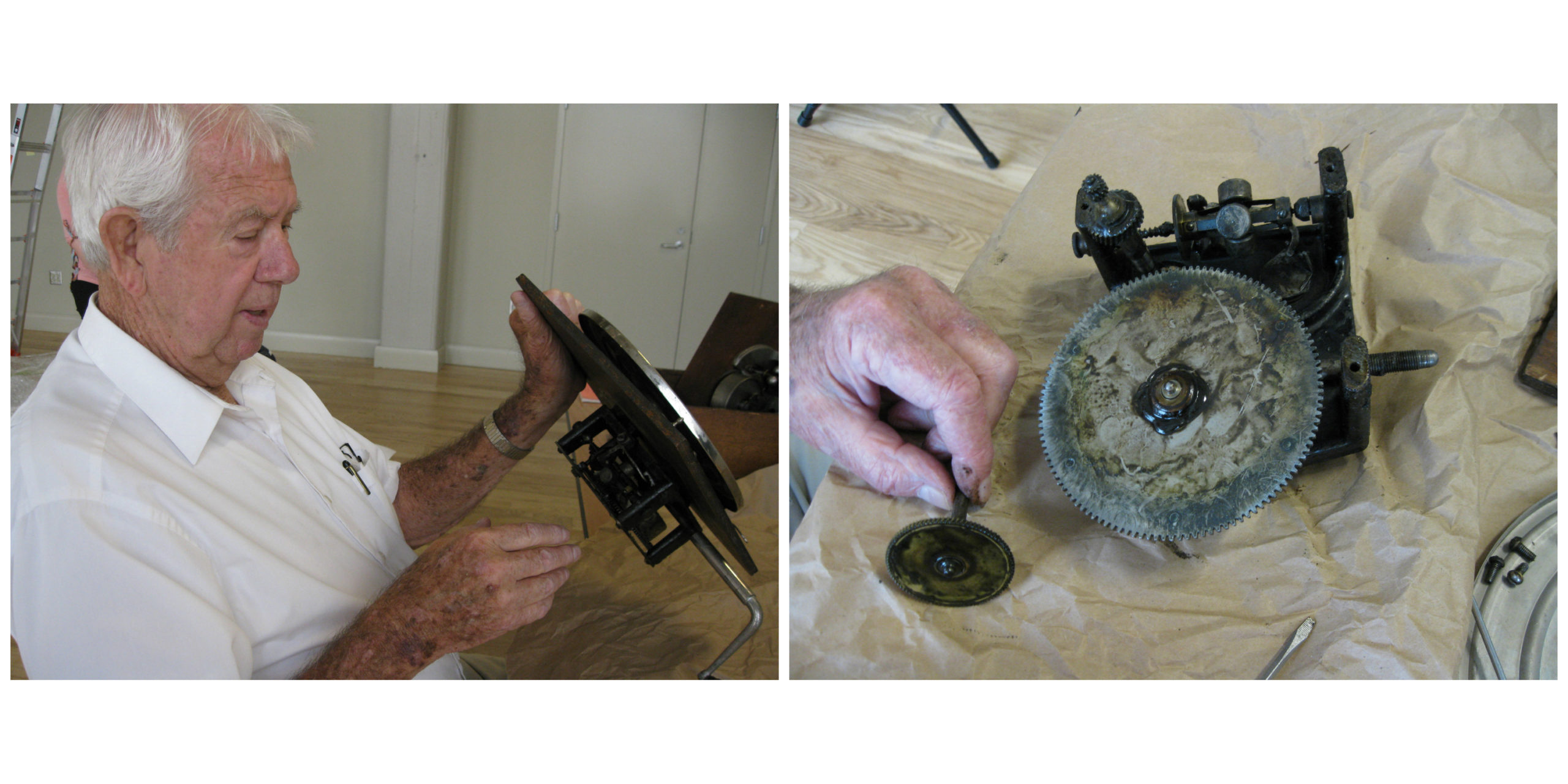
Mr. Bledsoe taking apart the phonograph now on display with Things Come Apart. © René Rodgers

Planning museum programs is always a challenge as there are so many “moving parts” – creating engaging activities and experiences that tie into the museum content and mission; tapping into limited staff, volunteer, and financial resources in order to hold those programs; marketing the events effectively and widely; working with partner organizations; and so much more. For Things Come Apart, we spent a lot of time thinking about those challenges and how best to share the resource of this exhibit with a wide variety of visitors. We decided to focus on the invention / maker side of things, including participating in the Kingsport Mini Maker Faire, screening films about Edison, Tesla, and the making of a Steinway piano, and hosting our own Family Fun Day maker-type event. The Family Fun Day is the event I am most excited about – a chance for us to do a different type of programming and work with some great partners to pull together a host of activities including an introduction to 3D printing by the folks at the Bristol Public Library, an “art from found objects” demo by local artisan Terry Clark, and a recycling craft from the Bristol Rhythm & Roots Green Team – and more!

For the museum, an exhibit like Things Come Apart presents a golden opportunity to bring a really wonderful educational resource to our community, one that they might not otherwise be able to access, and to invite new – and old – visitors into our space to experience this wonderful exhibit and our museum. But it also gives us the chance to learn more ourselves and to stretch outside our usual wheelhouse, which is always exciting.

This exhibit is a visual display of what we do as a museum every day: take things apart and dig deeply into their content, look at how things fit together, and ask visitors to share in those experiences. At our museum, it’s the ongoing taking of things apart and exploring them that brings real meaning to our work. These are the things that keep us going!

René Rodgers is Curator of Exhibits & Publications at the Birthplace of Country Music Museum. You can visit the Things Come Apart exhibit from July 15 to October 8, 2017.
Challenging the Ideas that Bear Our Name: Why Museums Give Us More than the Elevator Speech on History

Today is International Museum Day, a day that reminds us to reflect on the purpose of museums, to really dig into the idea of why museums matter. After all, can’t we find all the information we need online these days? Can’t we use Google to find answers to the facts we seek, look at images and media that shape histories of the world, and read countless commentaries on these ideas that are written by scholars? Isn’t all the recorded music explored in the museum available online somewhere? Basically, yes. But in a world where the answers are at our fingertips, museums remain important institutions.

Museums bring relevance to our communities and remind us why history matters and how art speaks in numerous voices. Museums are spaces to gather, investigate, collect, interpret, and debate. Yes, debate! Museums are not spaces to find the answers, but to seek, experience, explore, and connect. In fact, the theme for International Museum Day in 2017 is contested histories – and, importantly, museums do not shy away from contested histories; they provide a space for debate and discussion. And at a museum that calls itself The Birthplace of Country Music Museum, you can bet there’s a lot to discuss!

When developing the permanent exhibits for our museum, we focused much attention on the debates and the nuances that are an important part of the complex, multifaceted history of American popular music. And while we like to think of ourselves as experts – content specialists, museum designers, experienced graphic artists, and museum media producers, amongst others – we also consulted the written scholarship, other historians, our colleagues, and our communities.

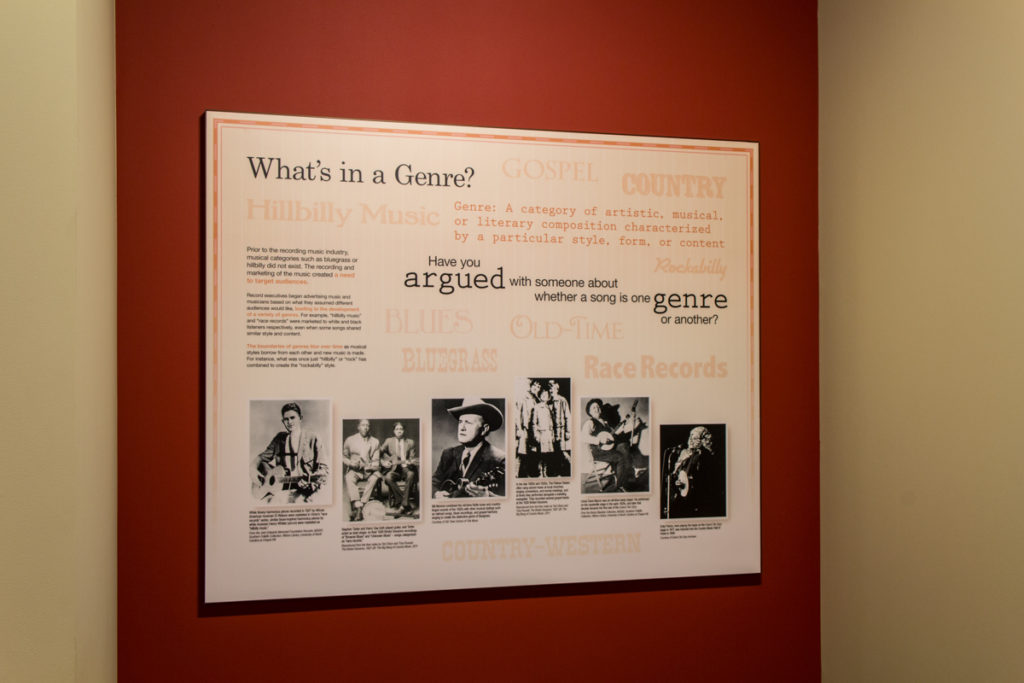
Inviting arguments about genre gets people to think about how the early recording industry categorized musical style by musical characteristics, marketability, and race. © Birthplace of Country Music; photographer: Neil Staples

With this many voices,  everyone didn’t always agree, and it’s the ongoing, day-to-day interpretive work that is truly invigorating and defines us as an institution. No one wants to go into a museum and read the facts through a dominant narrative written by scholars. Even scholars don’t want this, as they will continue to debate and discuss these histories from their perspectives and training. (And yes, we scholars think that’s fun!)  Everyday visitors also like to understand the shades of the story, debate the facts, and marvel at how a moment in musical history that was not significant enough at the time for Mother Maybelle to even consider keeping the guitar she used to record there could then influence so many of the musicians who followed.

In the final gallery of the museum, images of festivals past and present, song lyrics, and questions such as these offer a space for contemplating how country music has shaped American history and continues to invite participation and ownership. © Birthplace of Country Music

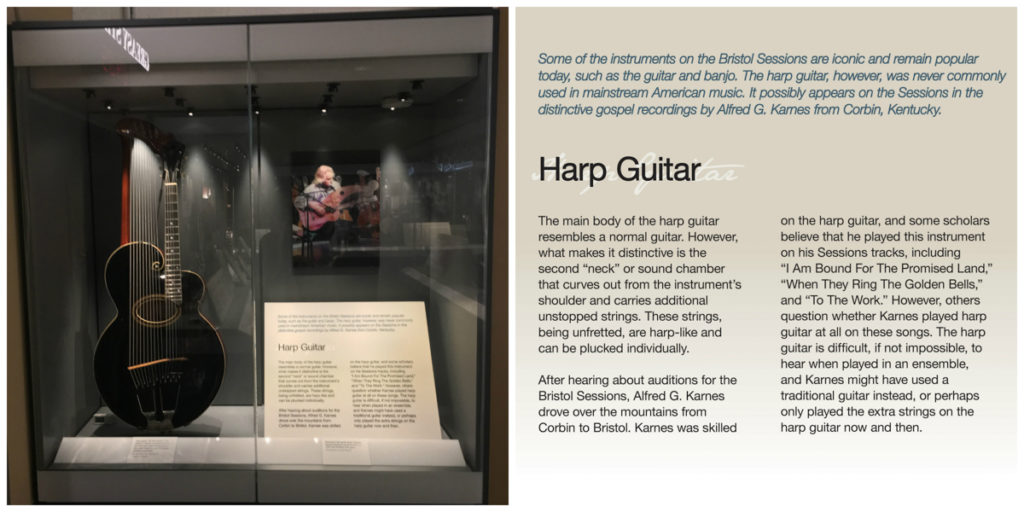
In our exhibit design, the museum content team tried to raise more questions than we answered. Did Alfred Karnes really play a harp guitar on his Bristol Sessions recordings, or did he just own one at the time? Would these recordings have been as successful without the new microphone technology, especially given the quick popularity of the songs of Jimmie Rodgers and The Carter Family? How long would the hillbilly music industry have been delayed if Fiddlin’ John Carson hadn’t recorded a few years prior to the Bristol Sessions in Atlanta? Would the Stonemans have been more successful if Ernest “Pop” Stoneman claimed composition ownership of the songs he recorded and not attributed the hymnbooks where he learned them?

One of the museums cases shares the debate about the harp guitar’s appearance on the Bristol Sessions. © Birthplace of Country Music

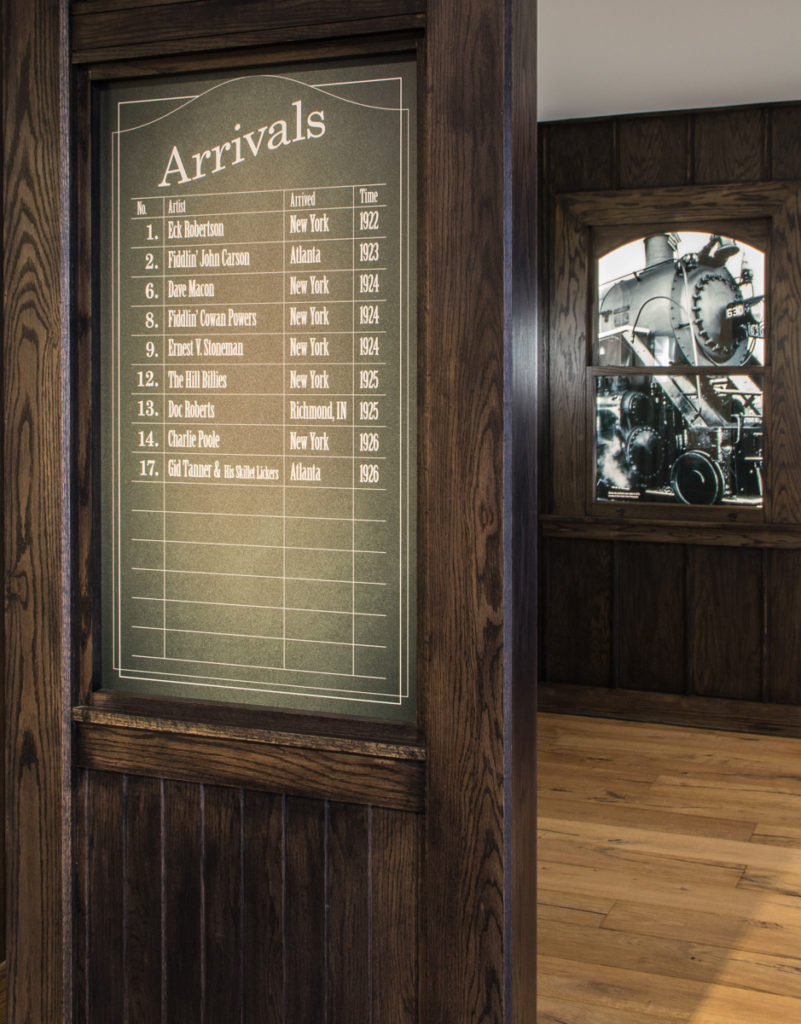
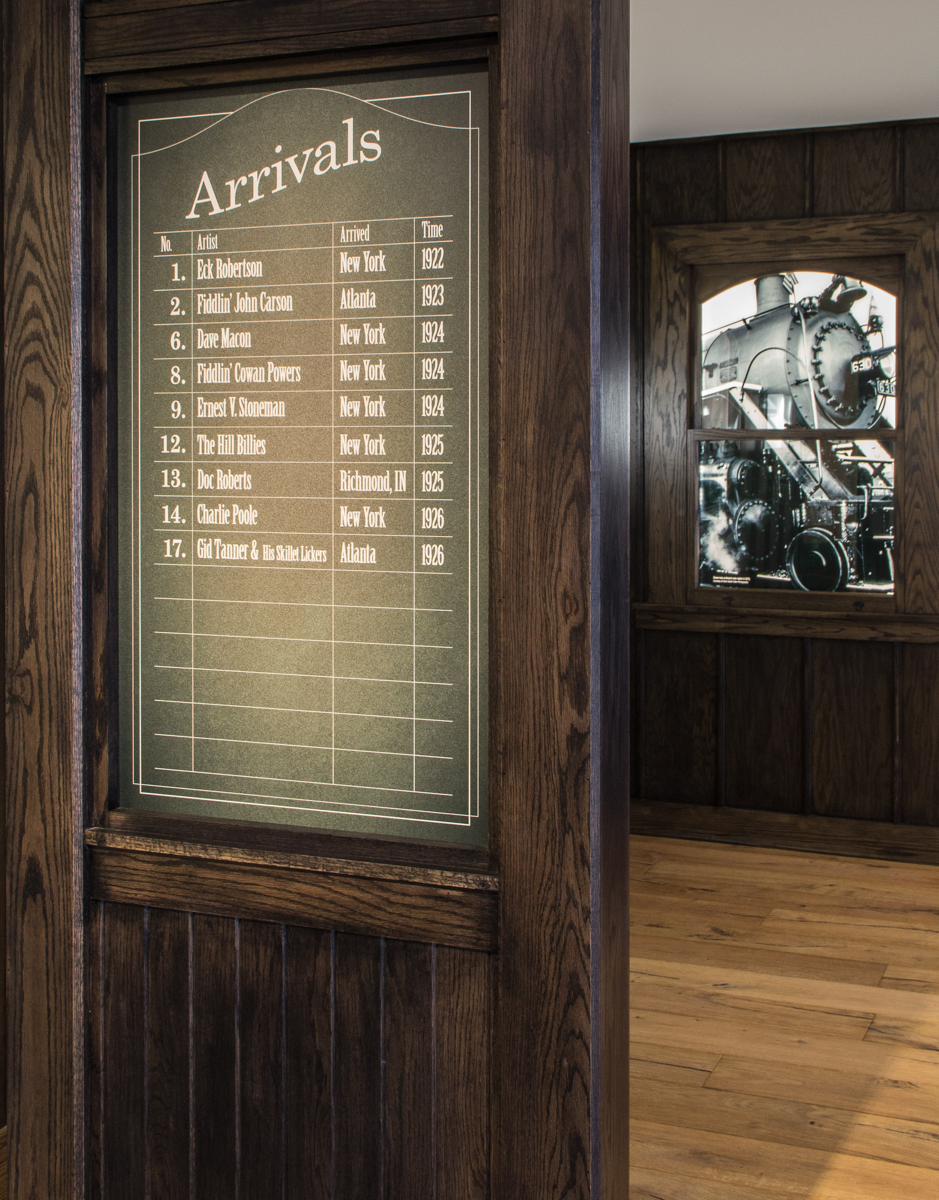
And where is the Birthplace of Country Music? The 1927 Bristol Sessions provide a significant anchor and the museum explores this impact, but we also dig into earlier arrivals into the hillbilly music industry, such as Atlanta and New York. Should Atlanta be considered the birthplace? Or somewhere else? What about the Stonemans’ home in Monarat, Virginia? Or the Carter’s home place in Maces Springs, Virginia? Our earliest conversations about a museum in Bristol acknowledged the entire region as the birthplace. And hillbilly music/early country/traditional Southern Appalachian music began long before it was recorded, right?!?

In a simulated train station, the museum playfully explores the “earliest arrivals” in country music through an arrivals board that notes where a sampling of the earliest country music records were recorded. There is also a soundscape in this exhibit, including early songs of Fiddlin’ John Carson, Vernon Dalhart, Ernest Stoneman, and others. © Birthplace of Country Music; photographer: Neil Staples

Can we also consider the British Isles as the Birthplace of Country Music? Many of the ballads that became the songs of early traditional music came from there, after all. And, with the roots of the banjo, shouldn’t we also consider West Africa? I’d say sure, it’s all part of an amazing and intricate history, and the Birthplace of Country Music Museum exhibits acknowledge the complex interaction of musical styles and social history that fostered the vernacular musical styles that ended up being recorded in Bristol.

It’s in these debates that museums offer relevance and dialogue. Where we can learn something new as we listen deeply and engage with history. Where we also discover something about ourselves when we attend live programs that celebrate community music-making. And where we can pass along inquisitiveness, appreciation, and a deeper understanding of place to our kids. It’s why museum staff work long hours even after a museum opens, and why the work going forward is just as important as the foundation we sit on.

Adding more nuance to an already-wordy name playfully acknowledges the many ways scholars have discussed the birth of country music. Many recognize that country music existed long before it was recorded, and some say Bristol should be called the birthplace of “commercial” country music, emphasizing its impact on the commercial country industry. © Birthplace of Country Music

Jessica Turner is the Director of the Birthplace of Country Music Museum. She reminds us that this is a blog post, so it’s a mere 800 words. For further reading, turn to Bill Malone, Barry Mazor, or Charles Wolfe and Ted Olson, amongst others… Just keep digging and debating!