Exhibits Archives - Page 6 of 7 - The Birthplace of Country Music
Listen
Play
Loading station info...

Giving the Dame Her Due: Olive Dame Campbell and the History of Ballad Collecting

Olive Dame Campbell appears sometimes as a ghostly figure in the world of folk music: half champion, half a forgotten footnote. She came to our attention by different routes. While undertaking her PhD in Ethnography in Newfoundland, Wendy met her as a strong feminist icon doing great work; Jack discovered her as we prepared to teach ballads and folktales at the John C. Campbell Folk School in Brasstown, North Carolina, a few years ago. Olive had established the school in memory of her late husband, and they had both been involved in establishing settlement schools in Appalachia in the early 1900s.

Olive first encountered Appalachian ballads and fiddle tunes as she and John began their good works, and a little sidetracking goes a long way – Olive was the first to start collecting the old mountain ballads that had migrated from Scotland and England via the Scots-Irish pioneers, and she also created a manuscript collection of words and music. Experts debate how her work came to the attention of the famous English folk song enthusiast Cecil Sharp, who came to the Appalachians to do similar work in 1916 to 1918 and, with his secretary Maud Karpeles, built on the collecting work done by Olive. Eventually this combined work would be published as English Folk Songs from the Southern Appalachians; however, since its publication, the collection has mostly been referred to as Sharp’s work – rarely do we see Olive given much credit beyond her name in small print on the book’s title pages.
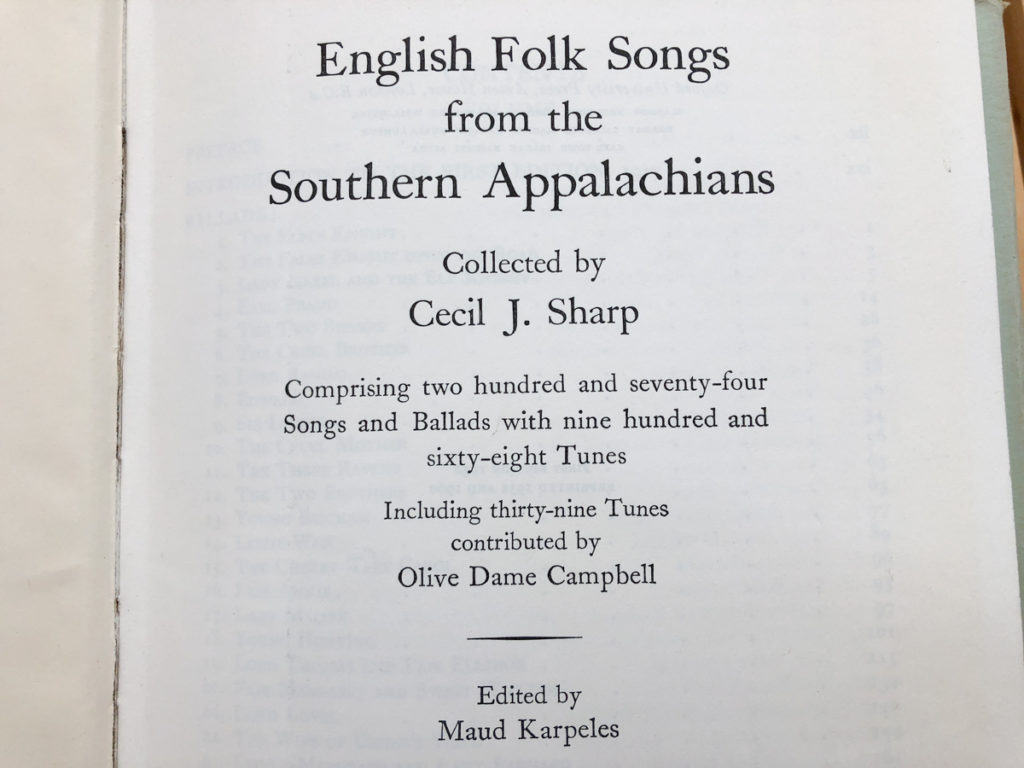
Title page from 1932 edition of English Folk Songs from the Southern Appalachians. It reads as: Collected by Cecil J. Sharp...Including thirty-nine tunes contributed by Olive Dame Campbell
This version of English Folk Songs from the Southern Appalachians, published in 1932, relegates her to a contributor role. Photograph © Birthplace of Country Music Museum

Until Hollywood got hold of the story, that is….

The lead character of a movie called Songcatcher was loosely based on Olive Dame Campbell. The film focuses on the mountain music of Appalachia and uses many very fine local musicians in supporting roles, including Sheila Kay Adams and Phil Jamieson. In the final scene, as the ballad collector heads down the mountain to conquer city life with her new Appalachian family, they meet an English gentleman headed up. He is obviously based on Cecil Sharp.

It was seeing Songcatcher that rekindled our interest in someone we felt should be better known. It may be that she was rather sidelined simply because she was a woman carrying out studies at a time when men were seen as more ‘serious’ academics. It’s certainly interesting how difficult finding information about her song collecting can be. Internet searches divert to information about her husband or Sharp. She does have a page on Wikipedia, but once again it’s mostly about the men in her life.

When we make musical presentations, we like to point out that most tradition bearers are women, in music and song as well as in story and dance. Women are frequently the sources of the ballads, the stories, the recipes, the remedies, etc. How often has an archived recording of home visits featured a male source breaking down in the middle of a ballad, only for the sister, wife or mother to shout the next line from the kitchen where she is preparing food for the guests who have come to record the singer?

The series of books that we lent to the museum for its current exhibition, The Appalachian Photographs of Cecil Sharp, span 1700–1950. All are published by men, although their song and ballad sources are mostly women. Sir Walter Scott got the majority of his ballads from ‘Mrs Brown of Falkland’ – a clergyman’s wife, who was famously scathing in her condemnation of his alterations to her texts. She was an educated intelligent woman but she didn’t have the connections or reputation that Scott had. Like Olive, she became a footnote and an amusing story to tell about how charming source behavior can sometimes be.

That being said, we don’t condemn the many fine male folk-song collectors and scholars within this field, from David Herd to Bertrand Bronson. They produced important collections during times when women weren’t expected – nor allowed the opportunities – to do other than shout the next line from the kitchen. And when we think about that, perhaps Olive Dame Campbell actually did blaze a trail by getting her name with Cecil Sharp’s on the title page of the first edition of English Folk Songs from the Southern Appalachians.
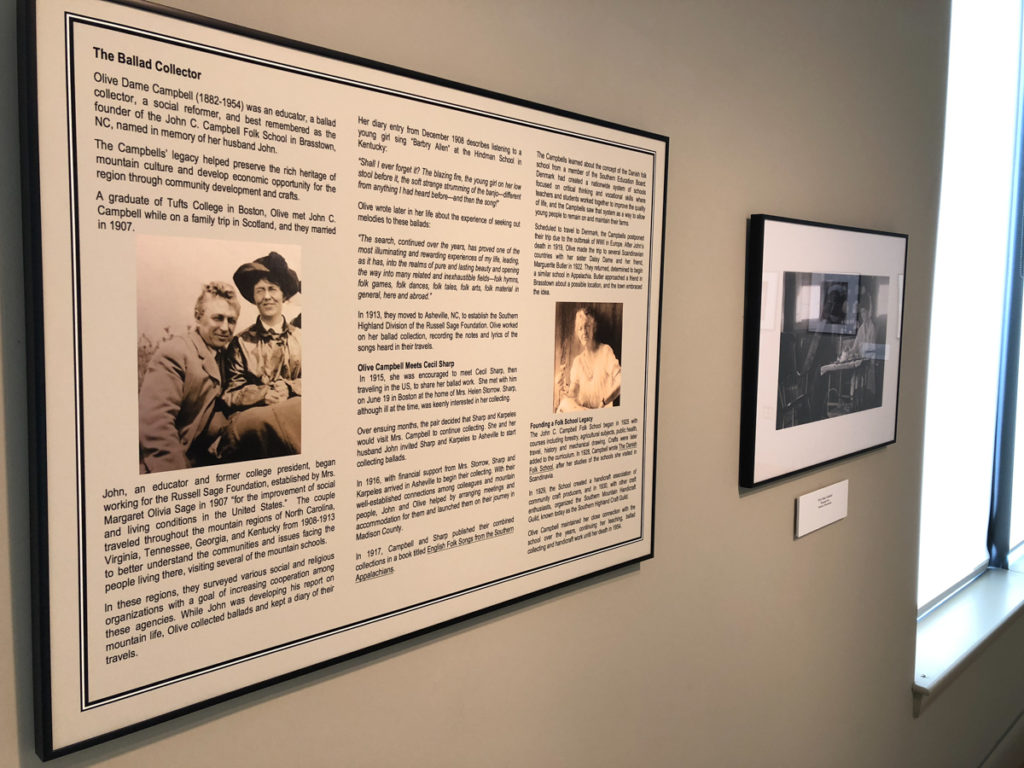
Photograph shows the panel from the Cecil Sharp exhibit focused on Olive Dame Campbell beside a photograph of Campbell.
It is good to see that Olive Dame Campbell’s significant role in this song collecting history is recognized in the Cecil Sharp exhibit on loan from the Country Dance and Song Society and currently on display in the museum’s Special Exhibits Gallery. Photograph © Birthplace of Country Music

What’s sad for us is that her truly pioneering work, which predated Sharp by years, seems to have often been systematically sidelined. Sharp on his collecting travels throughout Appalachia was accompanied by his “secretary” Maud Karpeles, who in these more enlightened times has come to be recognized as more important than Olive Dame Campbell. Olive has faded, a ghost whose power and influence are as yet unsung. We have hope and confidence that future scholars will fill out her life and recognize her contributions to preserving and perpetuating the songs we still sing today.

Thank you to our guest bloggers Jack Beck and Wendy Welch, who wrote this blog post about Olive Dame Campbell, the perfect post to accompany our current special exhibit, on display through May 31, 2018.

Jack was born in Dunfermline, Scotland, and lived most of his life there. A founding member of Heritage, one of the seminal traditional Scottish bands of the 1970s and 1980s, he was also the musical partner of Barbara Dickson. Awarded an honorary lifetime membership in the Traditional Music and Song Association for his services to Scottish traditional music, he spent five years as external examiner in Scots Traditional song at the Royal Scottish Conservatoire in Glasgow. Jack has lived for the last twelve years in Big Stone Gap, Virginia with his wife Wendy Welch, in the heart of Appalachia and old-time mountain music. Wendy is the author of four books, the most recent Fall or Fly detailing effects of the opioid crisis on foster care. She has a PhD in Folklore, is book editor for the Journal of Appalachian Studies, and was founding director of a storytelling non-profit in Scotland. Together they run a bookstore – Tales of the Lonesome Pine – the subject of Wendy’s memoir The Little Bookstore of Big Stone Gap from St. Martin’s Press.

Follow the Ballad: From Scotland’s “Lord Gregory” to The Carter Family’s “The Storms Are on the Ocean”

Just 30 minutes south of Big Stone Gap, Virginia, where our bookstore Tales of the Lonesome Pine is located, you will find Hiltons, Virginia, and the Carter Family Fold, home of the famous musical family that started with A.P., Sara, and Maybelle, and included Maybelle’s daughter June Carter. June went on to marry Johnny Cash, whose ancestors immigrated to America from the village of Strathmiglo in Scotland. Just down the road an hour or so is Bristol, Tennessee-Virginia, known as the “birthplace of country music” due to its place in early commercial country music history. A wee bit north is the hometown of Ralph Stanley, who among other accomplishments famously sang “Oh Death” in the movie O Brother Where Art Thou. Just to the west in Kentucky is where the wonderful ballad singer Jean Ritchie grew up.

As you can see, it’s an area rich in musical heritage – and one that can be connected to the Old World through song. For instance, one of the most fascinating musical links between Scotland and Appalachia is through the Scottish ballad “Lord Gregory” and its American versions. No less than 30 of the 82 variants listed in the Roud Folk Song Index records are from our adopted state of Virginia. Chief among these is a song recorded by The Carter Family back in 1927 in Bristol, Tennessee, called “The Storms Are on the Ocean”– despite the fact that this part of Appalachia is a few hundred miles inland.

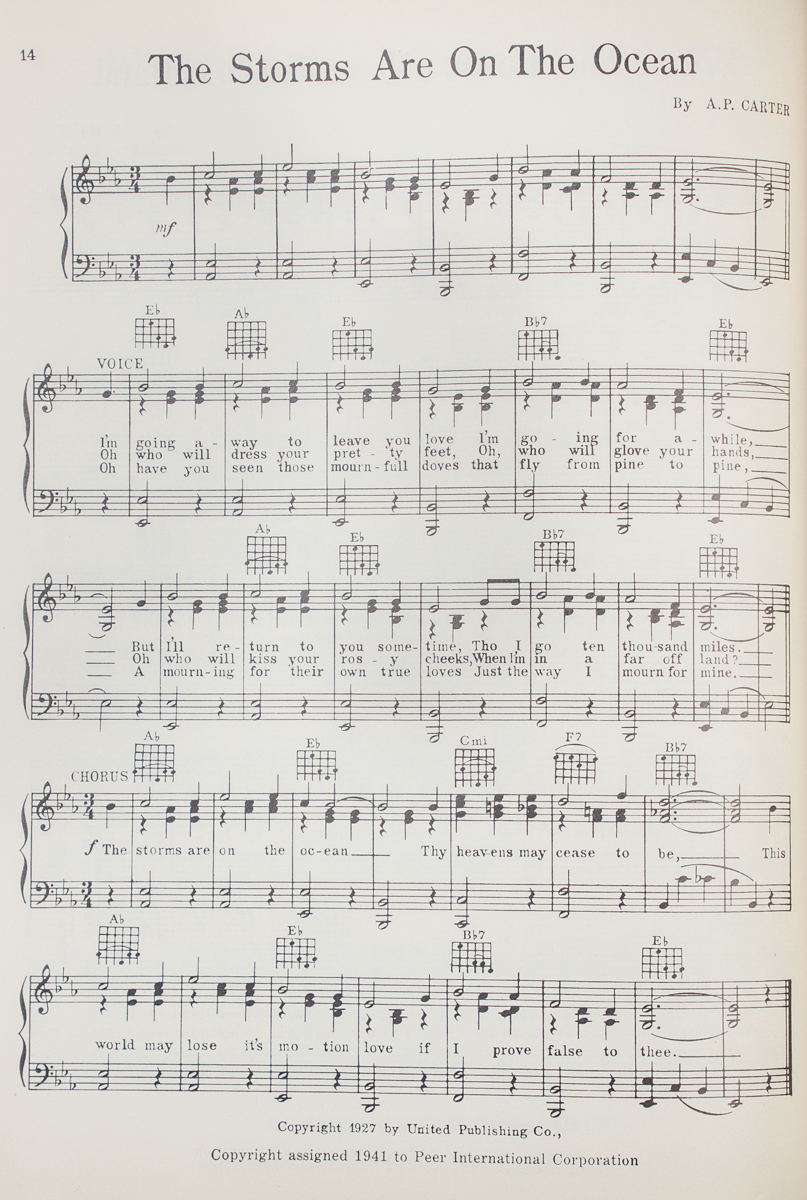
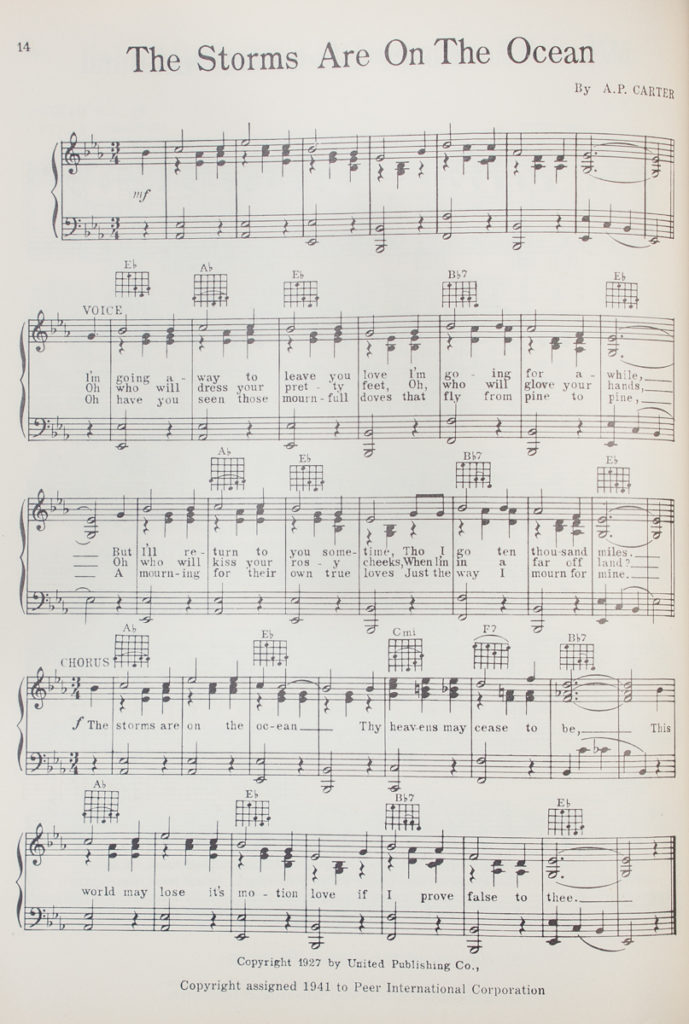
Image of "The Storms are on the Ocean" sheet music.
“The Storms Are on the Ocean,” sung by The Carter Family at the 1927 Bristol Sessions recordings, was published by Ralph Peer’s Southern Music Publishing Company in the Carter Family songbook Album of Smoky Mountain Ballads. Copyright 1927 by United Publishing Co., copyright assigned 1941 to Peer International Corporation; courtesy of peermusic

Here are the opening lyrics of “The Storms Are on the Ocean”:

I’m going away to leave you dear,
I’m going away for a while,
But I’ll return to you my dear,
Though I go 10,000 miles.

Who’s gonna shoe my pretty little foot,
And who’s gonna glove my hand,
And who’s gonna kiss my red rosy cheek,
Till you return again.

The “Storms” version was long established in the family tradition of the Carters, who also claim ancestry from the British Isles, and the first verse, with its reference to 10,000 miles, might also call to mind Robert Burns’ poem “A Red, Red Rose” Different renditions of the second verse can also be found in many of the earlier versions of this song across the years.

The ballad “Lord Gregory,” also known as “The Lass of Loch Royal,” is listed as number 76 in Francis James Child’s famous collection, English and Scottish Popular Ballads. Child also details a number of mainly Scottish variants. In one the lady sails with her baby from Capoquin to her beloved’s castle, only to be told by his duplicitous mother that he’s away. Sailing back to her home, she is drowned, but not before lamenting over who will shoe her foot, glove her hand, etc.

When Bertrand Harris Bronson produced his collection The Traditional Tunes of the Child Ballads, he included several “Lord Gregory” variants more reminiscent of “The Storms are on the Ocean.” Like most American descendants of Scottish ballads, the story got stripped down to become shorter and simpler, while the tunes were jollied up in tempo and rhythm.

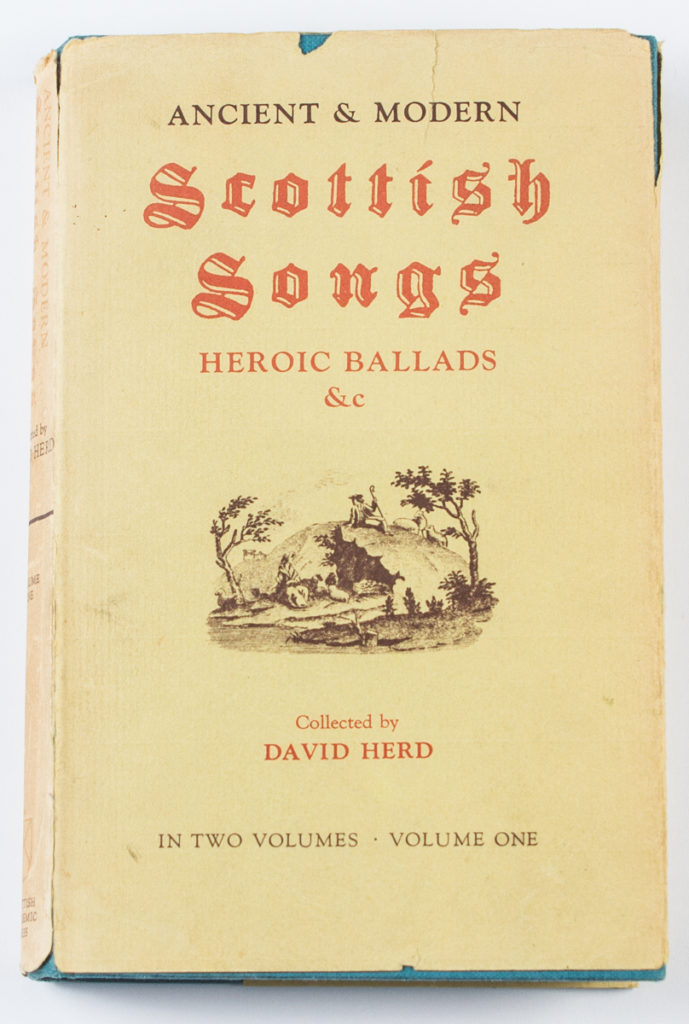
Cover of David Herd's book, showing
Photograph of David Herd’s Ancient and Modern Scottish Songs, Heroic Ballads, &c, currently on display in the museum’s special exhibit about Cecil Sharp.

We were delighted to be able to lend a number of books to the Birthplace of Country Music Museum for their new special exhibit The Appalachian Photographs of Cecil Sharp, 1916 to 1918, focused on the ballad collecting done in Appalachia by Englishman Cecil Sharp at the beginning of the 20th century. The books trace the journey of “Lord Gregory” (under various titles) from Scotsman David Herd’s Ancient and Modern Scottish Songs, Heroic Ballads, &c from the late 1700s to Bronson’s record of the tunes from the 1950s, along with the afore-mentioned and famous Child’s English and Scottish Popular Ballads, Sharp’s English Folk-Songs from the Southern Appalachians, and a book about the Greig-Duncan Folk Song Collection from Aberdeenshire in Scotland. We hope you’ll check out the exhibit to explore the journey of the “Lord Gregory” variants across these different books!

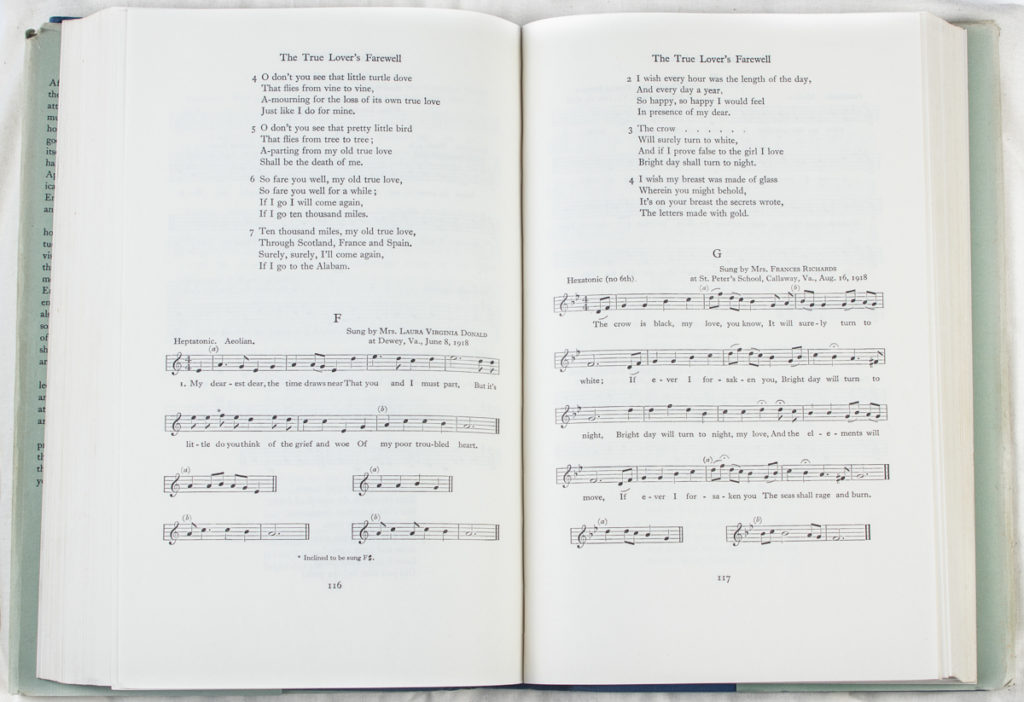
Cecil Sharp book, open to "The True Lover's Farewell" pages
Cecil Sharp’s English Folk-Songs from the Southern Appalachians is also on display in the Cecil Sharp special exhibit. It records the variants of “Lord Gregory” under the song title of “The True Lover’s Farewell. The version seen here under F was sung by Mrs. Laura Virginia Donald, one of the women featured in Sharp’s photographs in the exhibit.

The recording of “Lord Gregory” by Maddy Prior on the Silly Sisters album is magnificent, based on an earlier recording by Ewan MacColl. As for “The Storms are on the Ocean,” while many singers have followed in their footsteps, nothing compares to the original by The Carter Family. You can hear both these versions below:

Nor does anything surpass a visit to the Carter Family Fold, a favorite pilgrimage spot for visitors to Appalachia from across the water. For those unfamiliar, the Carter Family Fold runs Saturday night music and dance events, and we’ve enjoyed many a weekend there, listening to the old-time music and watching the amazing local dancers flat foot – from a woman who often dances with her (willing) dog to an elderly couple tearing up the floor with their moves!

The Carter Family Fold and The Carter Family’s song “The Storms Are on the Ocean” – and the history shared by the Birthplace of Country Music Museum and exhibits like The Appalachian Photographs of Cecil Sharp – illustrate just a few of the many connections between Appalachia and the British Isles. If the subject interests you, start with Child’s book. A world of discovery awaits!

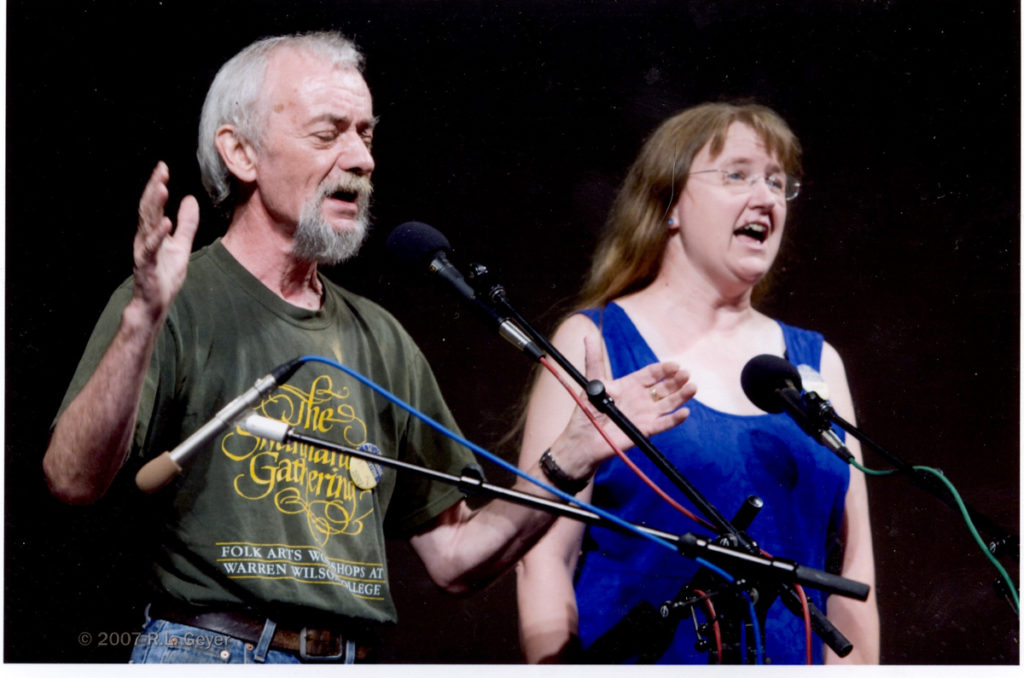
Jack Beck and Wendy Welch singing together on stage
Jack Beck and Wendy Welch performing at the Swannanoa Gathering a few years ago. The photograph was taken by the resident photographer R. L. Geyer, who gave permission for its use here.

Thank you to our guest bloggers Jack Beck and Wendy Welch, who wrote this blog post touching upon the journey of the “Lord Gregory” ballad, the perfect post to accompany our new special exhibit!

Jack was born in Dunfermline, Scotland, and lived most of his life there. A founding member of Heritage, one of the seminal traditional Scottish bands of the 1970s and 1980s, he was also the musical partner of Barbara Dickson. Awarded an honorary lifetime membership in the Traditional Music and Song Association for his services to Scottish traditional music, he spent five years as external examiner in Scots Traditional song at the Royal Scottish Conservatoire in Glasgow. Jack has lived for the last twelve years in Big Stone Gap, Virginia with his wife Wendy Welch, in the heart of Appalachia and old-time mountain music. Wendy is the author of four books, the most recent Fall or Fly detailing effects of the opioid crisis on foster care. She has a PhD in Folklore, is book editor for the Journal of Appalachian Studies, and was founding director of a storytelling non-profit in Scotland. Together they run a bookstore – Tales of the Lonesome Pine – the subject of Wendy’s memoir The Little Bookstore of Big Stone Gap from St. Martin’s Press.
The Guitar Man: Luthier and Musician Chuck Tipton

Sometimes it ain’t easy living with a musician. Amps and instruments are your furniture. There are long, late nights of waiting at home or holding up a bar stool while he/she is out practicing with the band or playing a gig. Music will always be their first love, so you’re always a little jealous when it takes time away from you. Though, of course, there is also the bonus of strangers telling you how awesome your musician is – which is actually pretty cool. And I can attest to all of the above because I am Chuck Tipton’s kid.

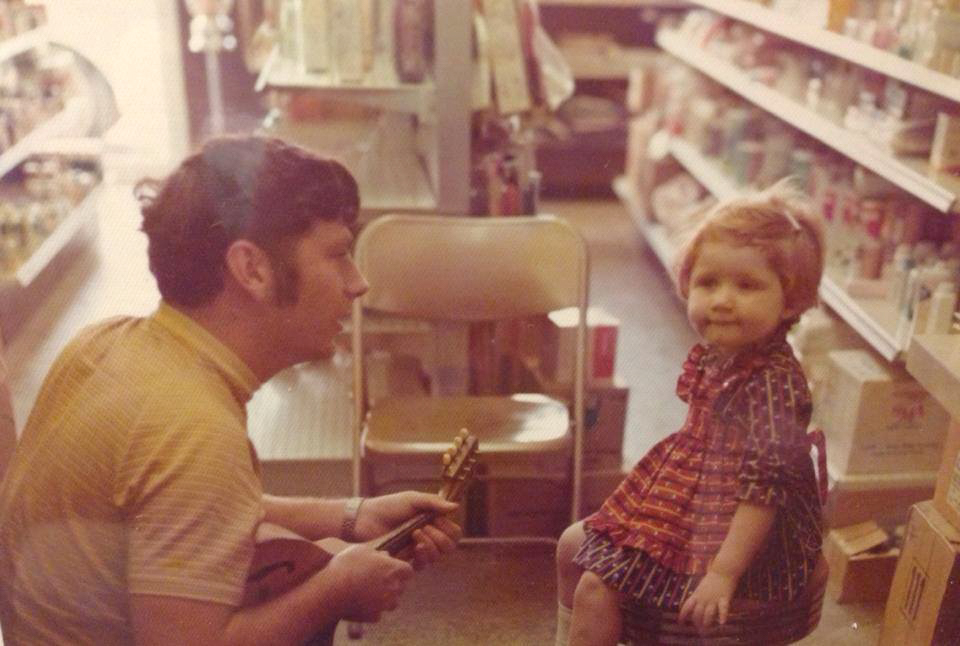
Chuck Tipton with instrument and his young daughter
Dad and me at a jam session at Doc Morgan’s Pharmacy in Bristol, formerly located at 101 Memorial Drive, circa 1973. I look like I need a nap. Photograph courtesy Chuck Tipton

Growing up, the duality of Dad’s daytime profession as a sought-after commercial videographer/photographer was only slightly eclipsed by his nighttime side-hustle as a renowned guitarist, studio musician, and luthier. (For those who don’t know, a luthier is a maker of stringed instruments.) On any given day I am blessed to receive accolades for my Dad’s work from people who know him from both worlds, so to see him honored by having two of his Tipton Custom Guitars on display in the current special exhibit at the Birthplace of Country Music Museum – The Luthier’s Craft: Instrument Making Traditions of the Blue Ridge – alongside some of the best instrument makers in our region means a great deal to me.

Sometime in the late 1980s Dad declared: “If I can’t fix my own guitar, then I shouldn’t play one!” So he read everything he could get his hands on about the craft, converted my parents’ garage into a workshop, and never sent another guitar off for repair again. Soon he was doing repairs for friends and taking in work from local music stores. Around that time he also started building guitars, both acoustic and electric, and electric basses as well. Dad is among the elite few to achieve certification from C. F. Martin & Co. to service their guitars; he is also an authorized Fender repair technician. (And by the way, he does an awesome Tele replica!)

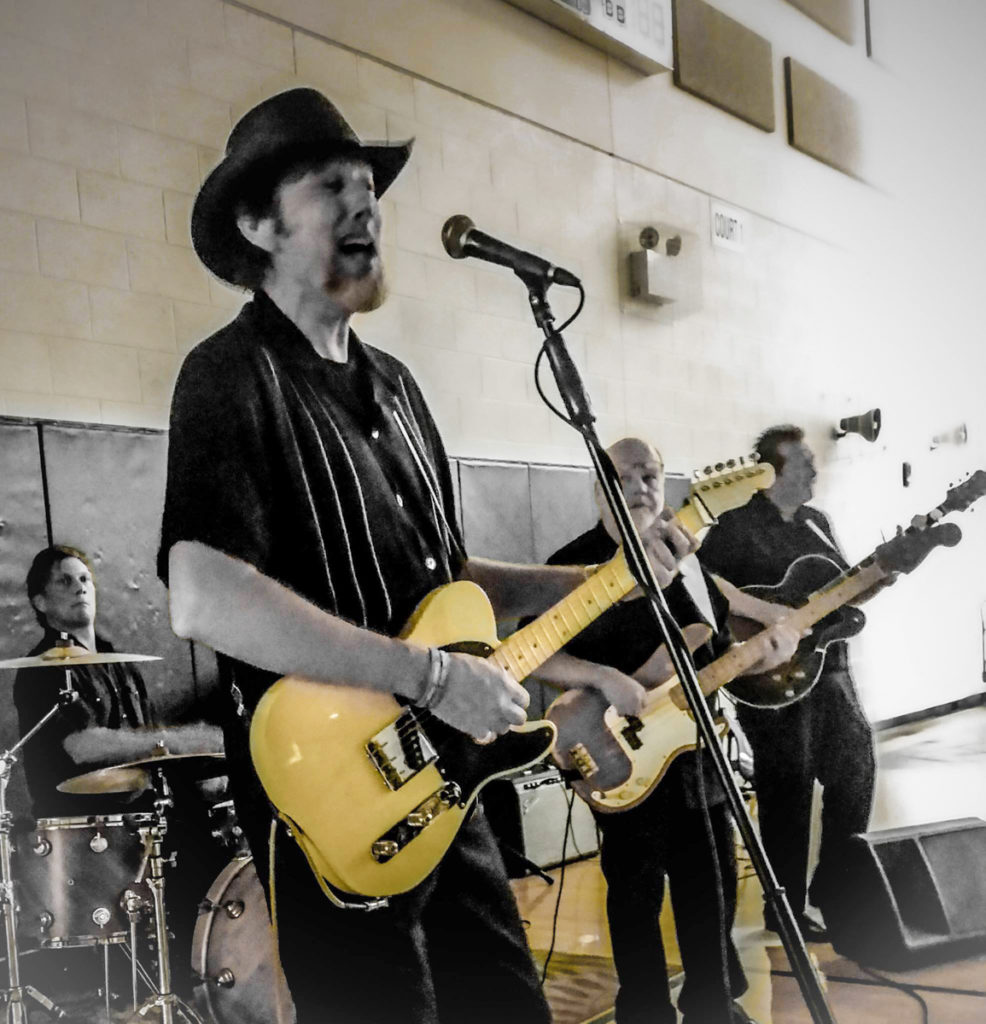
Lightnin' Charlie with his band performing in what looks to be a high school gymnasium.
Lightnin’ Charlie playing his Tipton Custom electric, a replica of a Telecaster. Photograph courtesy Lightnin’ Charlie Real

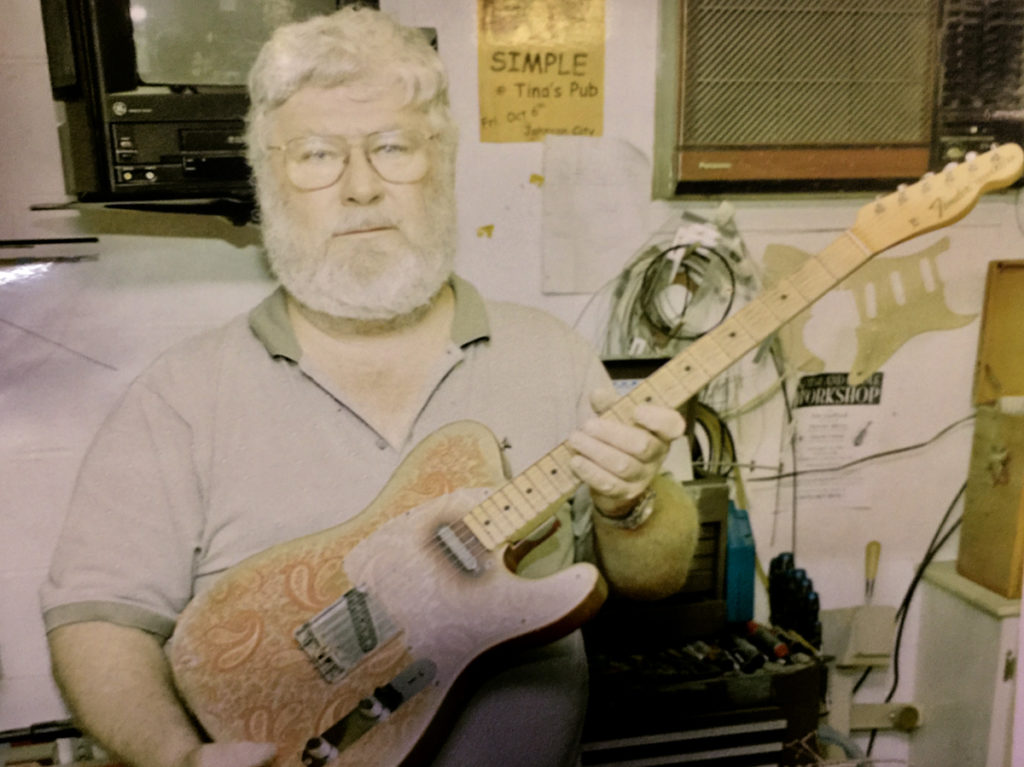
Dad’s expertise has brought some wonderful guitars into his workshop over the years. Chad Weaver, a family friend, was a local musician who moved on to work for many years as Brad Paisley’s guitar tech. Chad once trusted Dad to do some work on Brad’s famous 1968 Fender Pink Paisley Telecaster. Dale Jett, grandson of A. P. and Sara Carter, is another family friend and a customer of Dad’s. Dale inherited A. P.’s 1935 C. F. Martin & Co. 000-28 and has brought it over to Dad’s shop for work in the past. Dad loves working on instruments that have some history, and A. P.’s Martin was put on display and included in the programming for The Carter Family: Lives and Legacies, the first special exhibit curated by the Birthplace of Country Music Museum back in 2014.

Chuck Tipton holding an electric guitar, covered in a paisley design.
Chuck Tipton in his shop holding Brad Paisley’s 1968 Tele, nicknamed “Pink.” Photograph courtesy Chuck Tipton

Musician Webb Wilder has made a stop or two in Dad’s workshop, and country music singer/songwriter Terri Clark owns an electric Tipton Custom Guitar, as does award-winning blues guitarist Deborah Coleman. And both Clark and Coleman listed Tipton Custom Guitars in their album liner notes – Clark’s Pain to Kill and Coleman’s Soft Place to Fall.

Image to left shows Chuck Tipton with Terri Clark; image to right shows three men together -- Tom Comet, George Bradfute, and Webb Wilder.
Dad pictured with country artist Terri Clark (left); Tom Comet, George Bradfute, and Webb Wilder (right). Photographs courtesy Chuck Tipton

Dad is also a studio musician, and I’ve been told that Dad has likely a thousand album credits to his name. A thousand! He learned to play by ear at a very young age, and he’s played on a ton of records, primarily gospel and country. He once told me that he had to teach himself how to read and write music so he could lead recording sessions – whatever that entails. Sadly, the availability and affordability of DIY recording technology has rendered recording studios across the country an endangered species.

Dad doesn’t do much, if any, studio work these days, and a few of the shops Dad recorded in have either changed hands or no longer exist. He did a lot of work for Joe Deaton, owner of Tandem Records in Bristol, Virginia, in the studio that became Classic Recording Studio when Deaton retired. I remember napping in a chair while Dad laid down tracks during a marathon recording session there. Thankfully Classic is still in operation, though it has changed hands a few times.

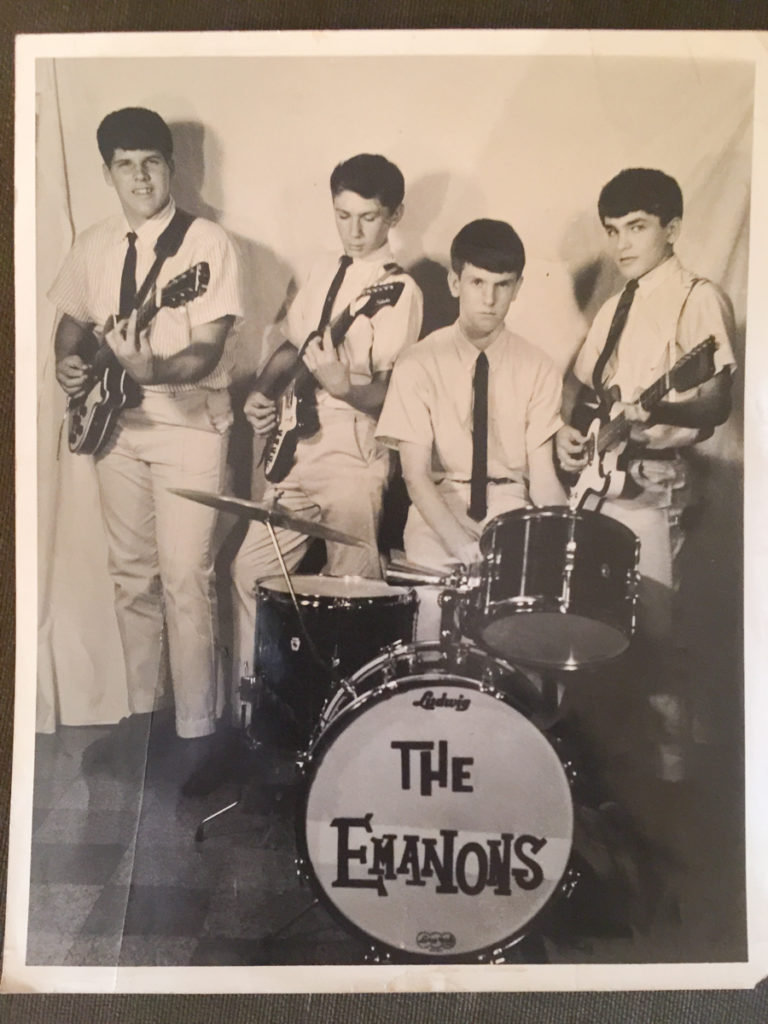
Four young musicians with their instruments, including their drum set bearing the band name, The Emanons.
While Dad was a studio musician for years, he got his start in high school with his first band The Emanons (no name spelled backwards). Band members Doug Hale, Chuck, Jerry Linberger, and Mike Peters are pictured here, left to right. Photograph courtesy Chuck Tipton

I also recall my brother Matt and I playing with the gooey chunks of vinyl that had dripped to the floor from the old record press they had at Tri-State Recording Studio in Kingsport, Tennessee. Tri-State no longer exists, but I did find them listed on Discogs.com, along with a number of records the company produced on their label. Lasting Sounds is another local studio that Dad spent a lot of time in over the years.

Outside the Tri-Cities he recorded at The Loft in Boone, North Carolina, Mark Five Recording Studios in Greenville, South Carolina, The Sounding Board in Easley, South Carolina, Church House Studios in Middlesboro, Kentucky, and Dawn Recording Studio in Ashville, North Carolina, where he played on the original recording of “Sweet Beuhlah Land” by Squire Parsons.

I was usually the first person to grab the phone when it rang in our house, and Dad got lots of calls from people like Charlie Maggard of Maggard Sound Studios and Joe Morrell of Morrell Music. They were always very nice to me and sometimes made small talk while we waited for Dad to pick up. I didn’t think much of it then, but looking back I see what a big chunk of this area’s music history I was witnessing without even realizing how significant it was. Sadly, neither Charlie nor Joe is still with us, but those men left a great legacy to the music culture of this region. Thinking about it now, perhaps some of these studios and their owners deserve blog posts of their own in the future!

Charlie Maggard standing in front of a large display of cassette tapes with photographs of musicians who have recorded in Maggard Sound Studio on the wall.
The late, great Charlie Maggard at his recording studio, Maggard Sound, Inc.  Photograph courtesy Chuck Tipton

From music to camera work, my Dad has maintained the ability to eke out a living through his hobbies, and he is always finding a way to enjoy them too. Last year he even built a one-inch scale model steam traction engine that actually works! The truth is I’ve never known anyone with more ingenuity and determination. From his eye for lighting and shot composition to his keen ear for music, every skill Chuck Tipton has gained has been self-taught. I only feel shortchanged by the fact that I inherited ZERO of his genetic guitar genius or concentration; my younger brother got all that – he’s an amazing picker in his own right.

Dad is a man of few words and tends to shy away from the spotlight. He rarely talks about his accomplishments, so I didn’t appreciate the full scope of his work until I was older. And at the opening reception for The Luthier’s Craft special exhibit, I noticed the other luthiers who were there had the same quiet nature as my Dad until you got them talking about their work. I suppose they feel most at ease in the solitude of their workshops as opposed to big parties in their honor – which may explain why none of them were smiling in the photo I took at the reception!

Chuck Tipton, Randal Eller, and Kevin Fore standing in front of the opening panel to The Luthier's Craft exhibit.
Luthiers Chuck Tipton, Randal Eller, and Kevin Fore at the opening reception for The Luthier’s Craft. Photograph courtesy Charlene Tipton Baker

Rob Nicar and Doug Sims are the proud owners of the two Tipton Custom Guitars displayed in The Luthier’s Craft special exhibit. One of them – called “Redneck” – is the first guitar he ever built from scratch. When asked by the museum if they would loan the instruments for a while, both were anxious to know how long they would have to part with them. Doug said his only regret about having his guitar behind glass is that people won’t be able to hear how good Dad’s guitar sounds!

Chuck Tipton to left and Doug Sims to right, in front of the museum case displaying two of Tipton's guitars.
Dad in front of the display holding his Tipton Custom Guitars with Doug Sims, the owner of “Redneck.”

To say that I’m proud of my Dad would be an understatement. And though he would never say so, I know that being part of this special exhibit at the museum means a great deal to him. It’s the culmination of all the hard work he has done over the past three decades. He told me he has built around 90 instruments since he built his first guitar from a kit, though he doesn’t own a single one. He doesn’t do builds anymore – he says the repair work at the shop keeps him too busy – but I’m hoping being in this exhibit may inspire him to build at least one more for himself so that someday his grandkids will have a piece of this wonderful legacy, made with his own hands!

The Luthier’s Craft exhibit, produced by the Mount Airy Museum of Regional History, is open through March 4, 2018, in our Special Exhibits Gallery. Be sure to take the time to come see Chuck Tipton’s guitars, along with instruments from a host of wonderful local and regional luthiers!


National Radio Day: Connecting Old and New Through Radio Bristol

Today is National Radio Day, the perfect time to reflect back on the creation of our radio station, WBCM Radio Bristol. Radio Bristol is an active radio station with ongoing live programming in the museum, but this growing branch of our organization started as an exhibit about radio history.

When the museum’s team of content researchers, scholars, and writers who shaped the core exhibits of our museum came together to interpret and present the importance of early radio, we discussed ways to make radio history more engaging than the original plan: a static exhibit on radio displayed in a mock studio. We considered how we could make the studio interactive instead, and from these early conversations and after much thoughtful consideration, BCM staff and board decided that a working radio station would highlight that history much better and so we applied to the FCC for a low power FM license. A team of advisers from the radio industry helped shape that application and the subsequent launch of Radio Bristol.

What better way to make radio history interactive than through an actual radio station?

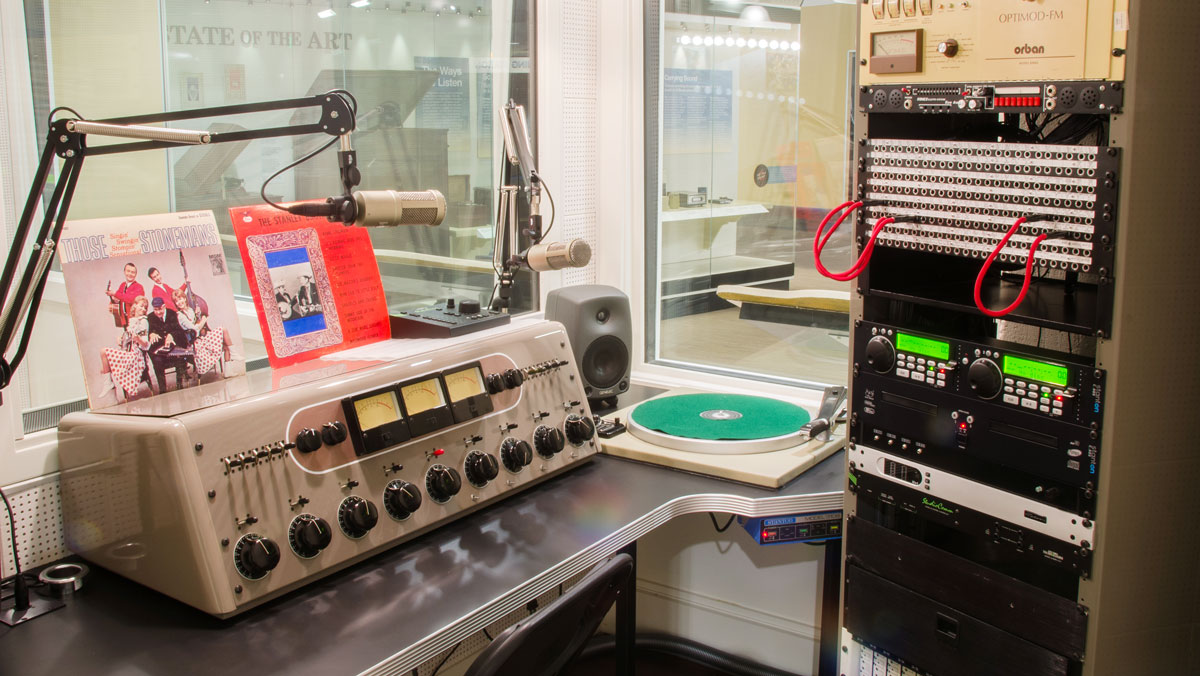
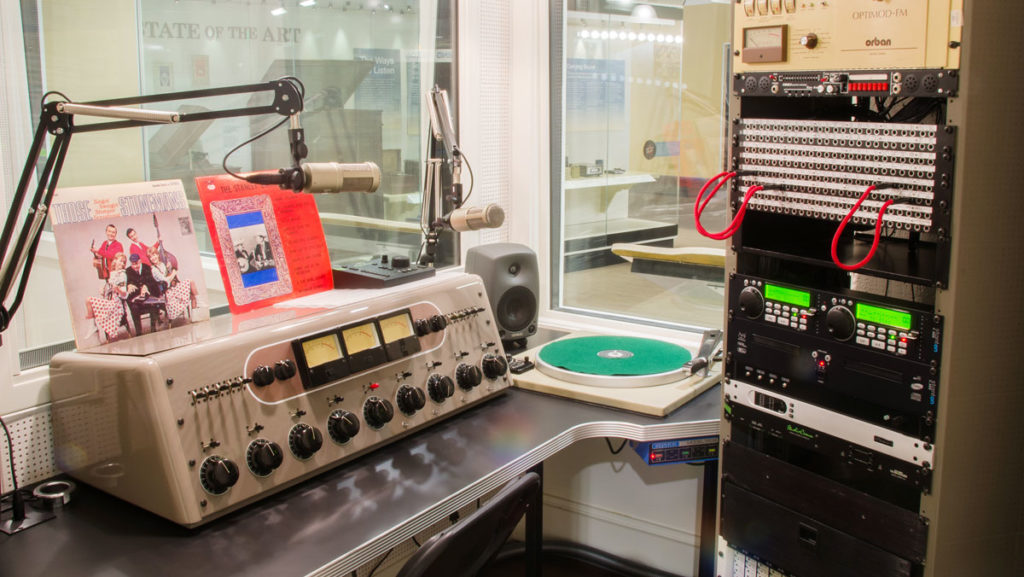
The control room of Radio Bristol, located in the exhibits of the Birthplace of Country Music Museum. © Birthplace of Country Music

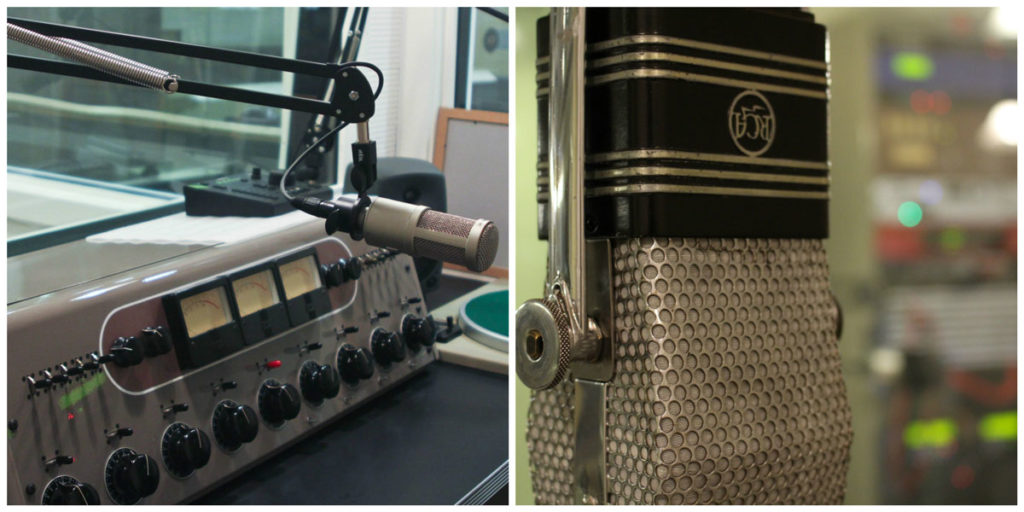
One of the most important steps was fitting out the radio studio space. Radio Bristol’s equipment isn’t just stock equipment. The station uses vintage equipment from Bristol radio stations, refurbished and repurposed for today. Sourced from local radio buff and collector William Mountjoy, a Raytheon console from 1940s WCYB Radio was painstakingly rebuilt by engineer Jim Gilmore, retired engineer from TNN. You can read Gilmore’s piece about his work on the console – “Rework of a Classic” – in the Tennessee Radio Hall of Fame September 2014 newsletter. Gilmore, along with colleagues Ron Worrell, Tom King, and Mike Flood, worked hard to help outfit our station with period equipment that performs in the kinds of ways our radio team needed, with the grace of a 1940s radio station and the innovation of the digital. We call it high-tech vintage.

The 1940s Raytheon console and an RCA 44 microphone were once used in earlier radio stations in Bristol. © Birthplace of Country Music

King (of Kintronics Labs) and George DeVault (of Holston Valley Broadcasting), both industry leaders, worked with BCM Technical Director Josh Littleton to install and test equipment. Our antenna, transmitter, and other equipment were donated. This work – which grew far beyond normal museum content curation – really was a labor of love for the radio community who came together on the project. Most importantly, the end result showcases both local radio history and an ongoing commitment to community through the innovation of Radio Bristol.

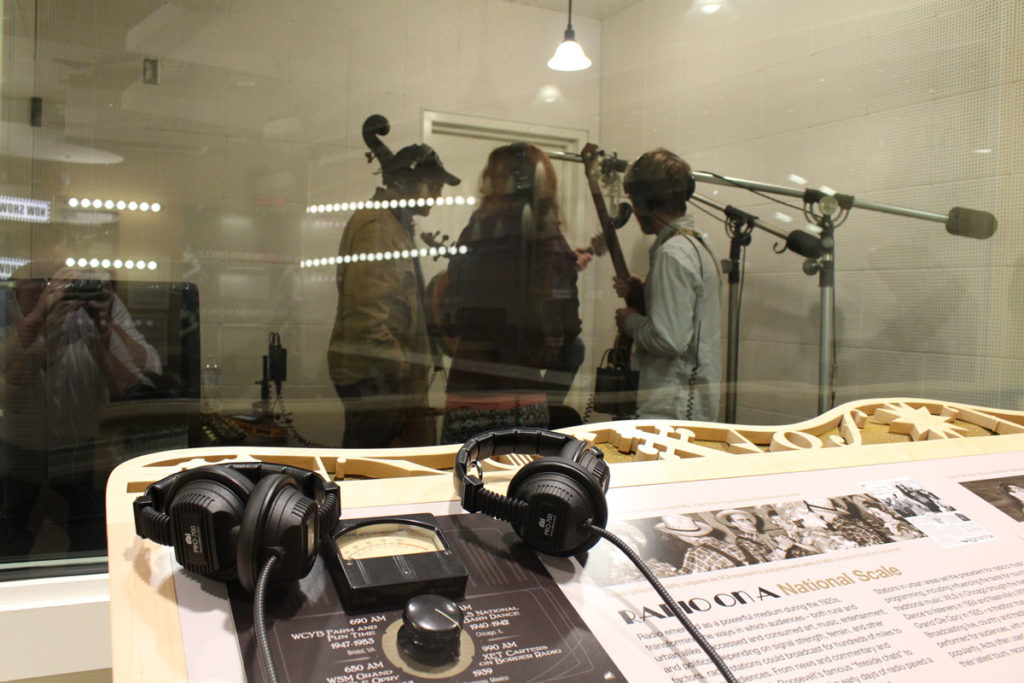
Radio Bristol, which officially launched with music 24/7 in 2015, has grown out of much effort and the cooperation and expertise of many advisers, and it stands as an example that cultural institutions like ours can harness media and technology to share history and engage community. With Radio Bristol you’ll find far more great music and video content than you can possibly consume. But Radio Bristol isn’t just a great station. It’s also a living part of our museum, broadcasting out of an exhibit space that provides context for our visitors with information on early live radio performances such as Border Radio, The Grand Ole Opry, National Barn Dance, and Bristol’s original Farm and Fun Time. And the station is engaging our museum visitors and radio listeners with historic content and contemporary, often live performances every day. And when radio staff and artists are in this space, as they often are, it gives our visitors a direct window into the working of the station, making what they’ve learned about radio history even more relevant.

Live studio session in the radio station – a wonderful experience for our museum visitors and radio listeners. © Birthplace of Country Music

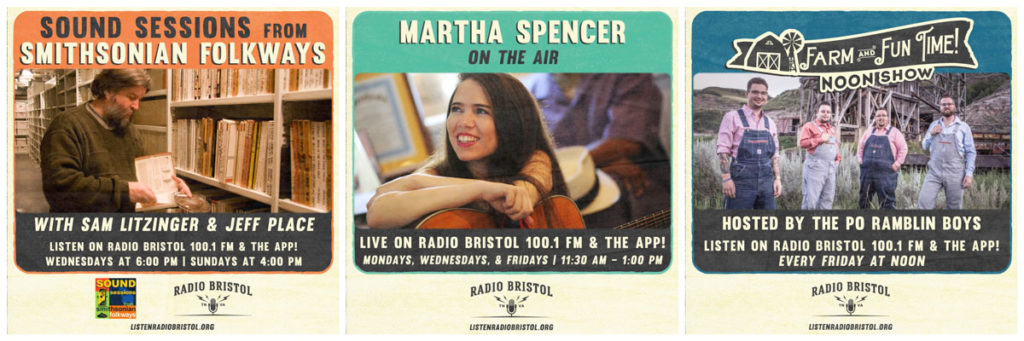
Producer Kris Truelsen works tirelessly to ensure broadly diverse programming that digs deeply into music from this area; these are shared across the station’s different music and video channels. Live programs throughout the week feature music ranging from regional roots music (old-time and many other styles) to contemporary Americana. Radio Bristol DJs come from a variety of music backgrounds – many are musicians themselves – and all steeped in local music practices and communities of our region. It’s rich listening.

A sampling of programs on Radio Bristol. © Birthplace of Country Music

One of Radio Bristol’s signature programs, Farm and Fun Time, draws on the historic 1940s—1950s radio program on WCYB in Bristol and has been featured on this blog several times. Radio Bristol’s Farm and Fun Time is a monthly live radio program introducing and familiarizing listeners with regional music and contemporary Appalachian culture. While music sets the foundation of the show, farming and food culture play an important role too. With the inclusion of various segments related to food access and responsible and sustainable farming, Farm and Fun Time showcases the region and its people, honoring the past, the present, and the place simultaneously through an incredible live program.

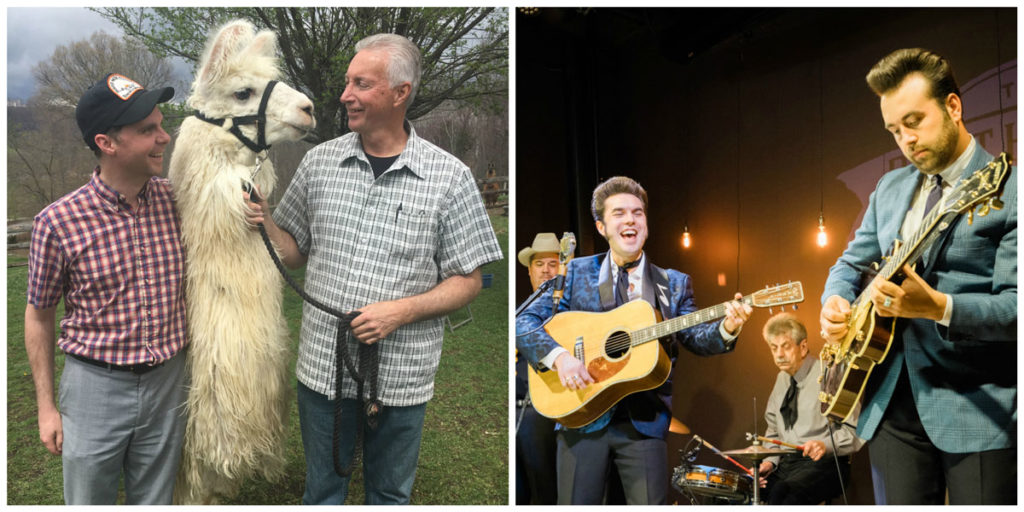
Farm and Fun Time host Kris Truelsen visits a llama farm for the show’s “ASD Farm Report” segment, and the Malpass Brothers perform on the April 2017 Farm and Fun Time. © Birthplace of Country Music.

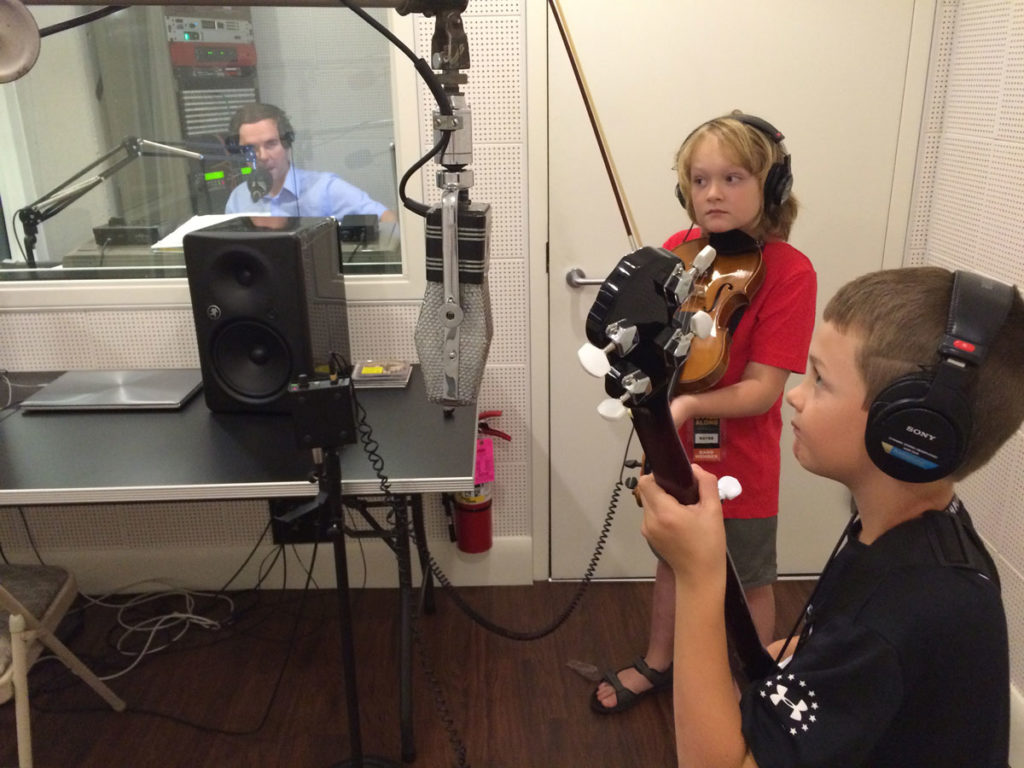
And in addition to the polished programming and live music sessions Radio Bristol produces, the museum taps into the radio station as an interactive tool for education as part of our programming. We often have students in the studio and in production spaces, such as with our annual Pick Along summer camps or special outreach programs with local youth organizations.

Summer camp students perform live on the radio with Producer Kris Truelsen. © Birthplace of Country Music.

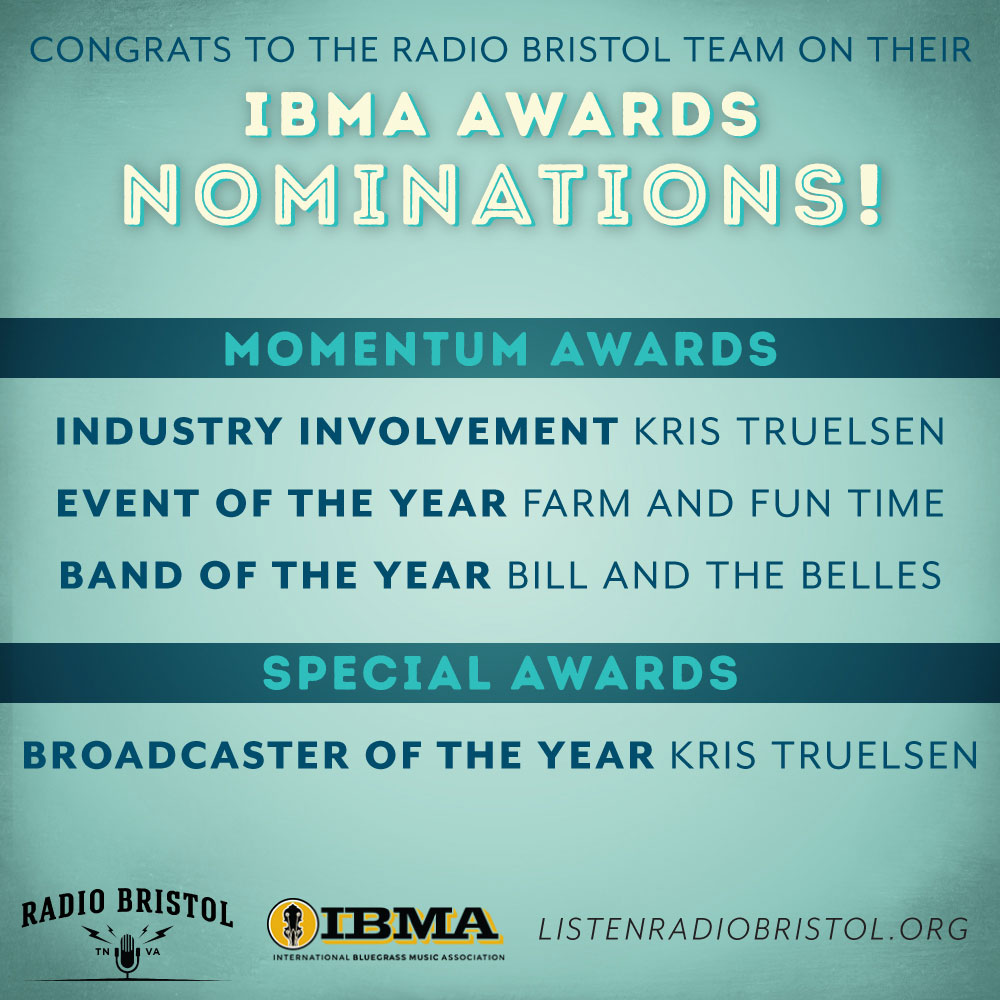
Early on, when we first started this journey, some people wondered why start a radio station when streaming online is cheap and music sources saturate the Internet? These folks argued that building a NEW radio station is a risky investment using an old-school platform. But Radio Bristol is anything but old-school, and it is unique in its focus on local community and the diversity of this region’s music. It is deep and engaging, just as the museum curators hoped it could be. At the Birthplace of Country Music, we took a gamble a few years ago when we began work to develop Radio Bristol. Now just two years after the station launched, Radio Bristol has recently been honored with several nominations from the International Bluegrass Music Association for its innovation and leadership – IBMA’s Momentum Awards for Producer Kris Truelsen, the Farm and Fun Time show, and Farm and Fun Time’s house band Bill and the Belles, and IBMA’s Special Award nomination of Broadcaster of the Year for Producer Kris Truelsen.

A graphic shout-out to our Radio Bristol team in recognition of all their hard work and achievements. © Birthplace of Country Music

We congratulate our team for the recognition of their efforts and continue to be amazed at how this station has exceeded our expectations. And so today, on National Radio Day, we honor the history and innovation of radio in America, and we also honor the way radio platforms focused on community make those communities more vibrant and engaging.

If you haven’t listened to Radio Bristol, stop reading and get to it. I challenge you to choose just one favorite program!

Jessica Turner is the Director of the Birthplace of Country Music Museum.