Exhibits Archives - Page 4 of 7 - The Birthplace of Country Music
Listen
Play
Loading station info...

Real Folk: A Few of My Favorite Things

On March 6, the museum opened a special exhibit called Real Folk: Passing on Trades & Traditions Through the Virginia Folklife Apprenticeship Program, in partnership with the Virginia Folklife Program. While the COVID-19 situation meant that for three months no one was able to visit the exhibit – except virtually – we have now reopened, and the exhibit is waiting to be enjoyed through its closing date in August!

This is one of my favorite special exhibits that we’ve had on display at the museum – the images by photographers Pat Jarrett and Morgan Miller are stunning, the stories of the master artists and apprentices told by Virginia State Folklorist Jon Lohman are fascinating, and the range of crafts, trades, and traditions astounding.

Here are just a few of the interesting things I’ve learned from Real Folk:

A Virginia Town’s Salty Past

Saltville – found in the Southern Appalachians – is named for its unusually high number of salt marshes, or as locals call them, salt licks. Not only is the salt source extensive here, but the salt from Saltville is also especially salty – around 10 times saltier than ocean water! Saltville’s natural salt deposits have influenced the history of the region from the late Pleistocene period, when they attracted Ice Age mammals and Paleoamericans to the area, to early European traders to the Civil War when nearly two-thirds of the South’s salt was produced in Saltville and two bloody battles were fought here.
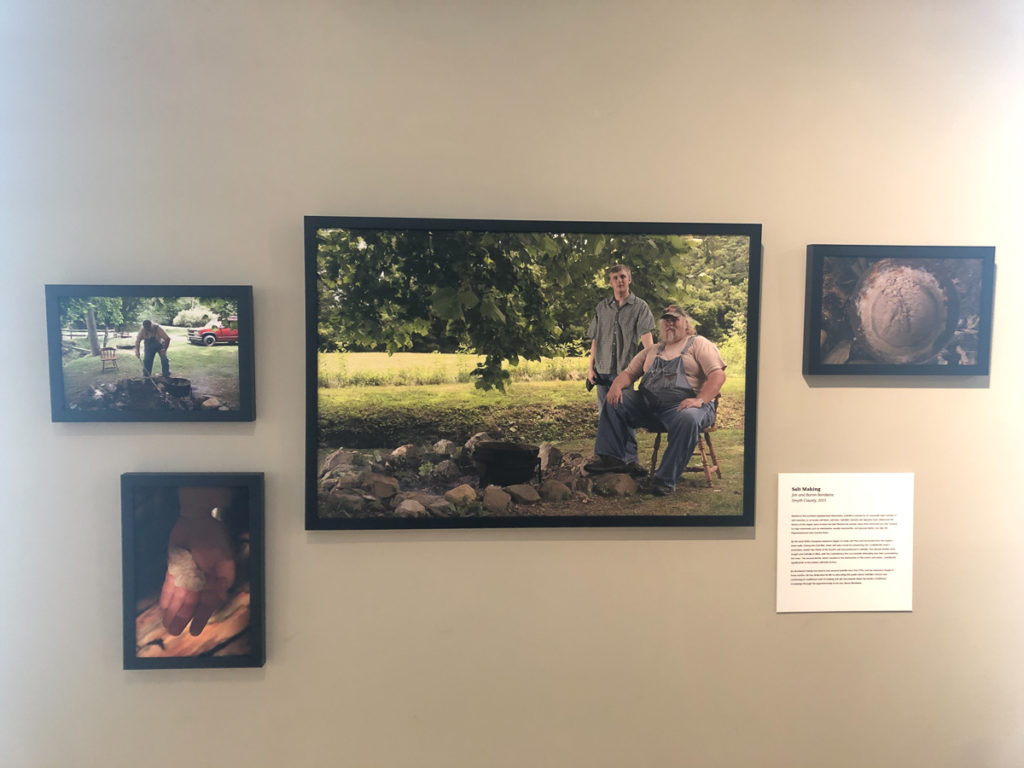

Jim Bordwine’s family has lived in and around Saltville since the 1770s. He has dedicated his life to educating the public about Saltville’s history and continuing its traditional craft of making salt, including passing down this knowledge to son Baron through an apprenticeship. © Birthplace of Country Music Museum

Quilt Signals

We have quite a few quilt connections in our museum – from the huge Birthplace of Country Music quilt hanging in our atrium to the quilt “tapestries” on sell in The Museum Store to the museum’s color scheme based on old quilts and flour sacks. Master Artist Sharon Tindall has conducted substantial research in support of the theory that African American quilts contained coded messages integral to the success of the Underground Railroad, codes that told enslaved people about what to expect next on their journey and how to find safe haven.
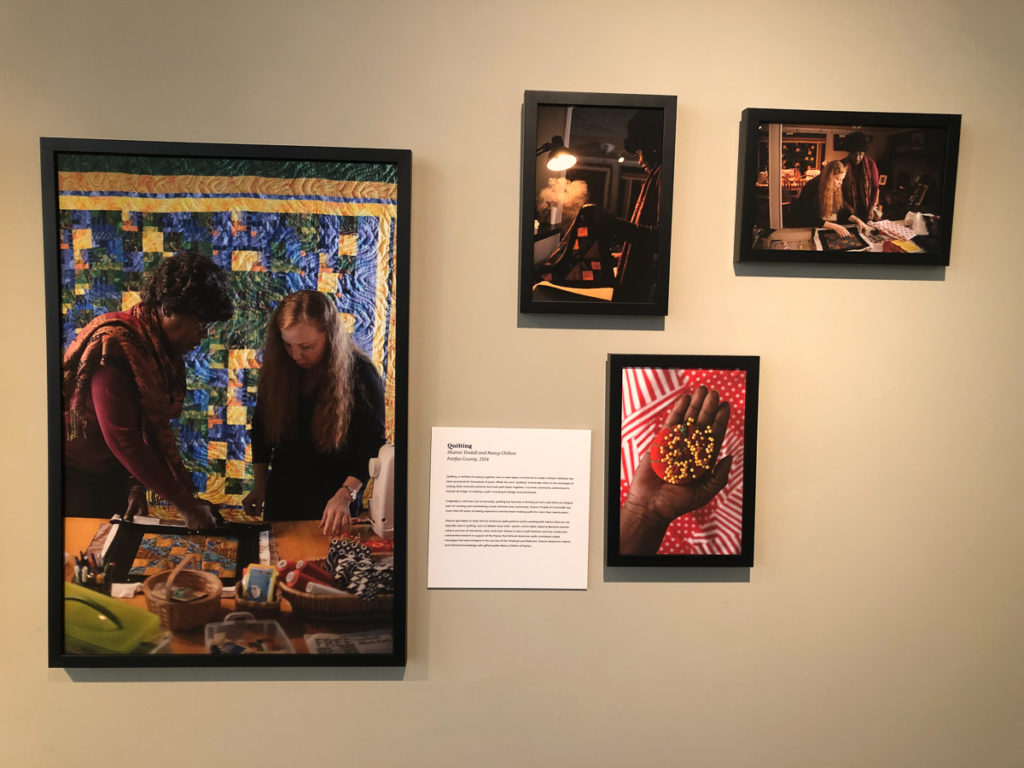

Sharon Tindall specializes in early African American quilt patterns and in working with fabrics that aren’t typically used in quilting, such as Malian mud cloth. She shared her experience with apprentice Nancy Chilton. © Birthplace of Country Music Museum

A Connection Between Music and Language

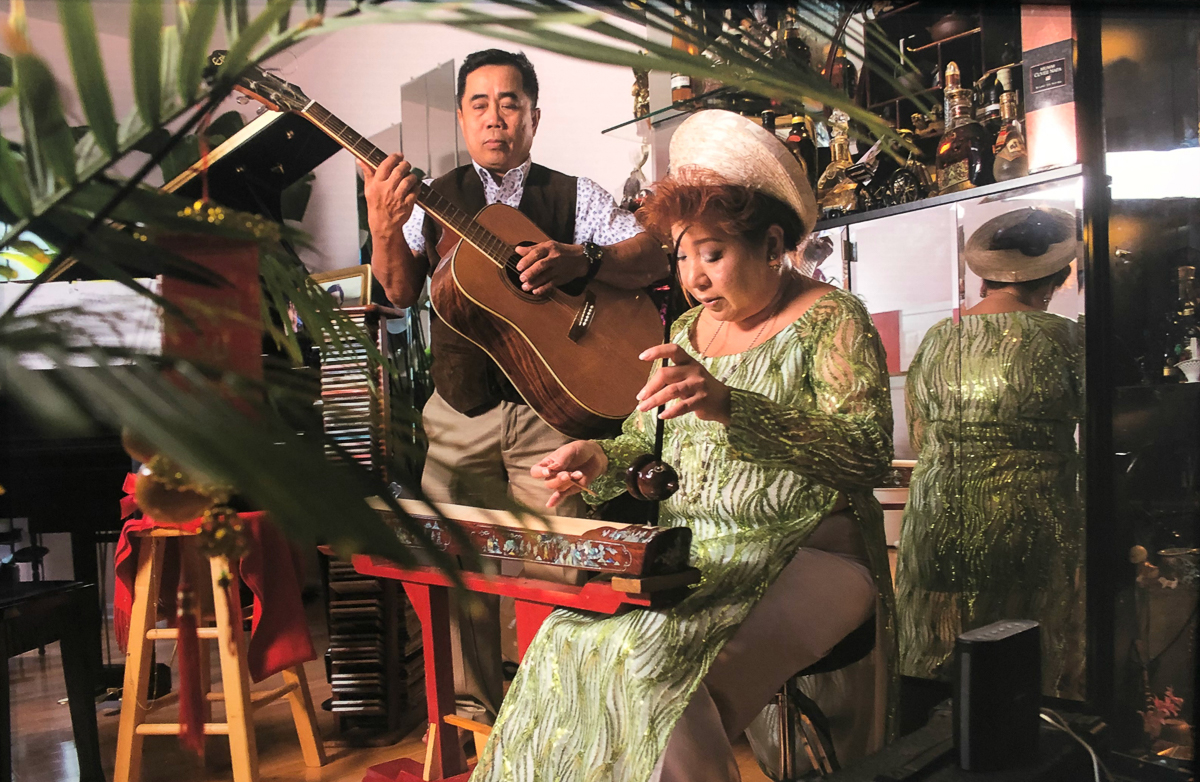
The đàn bâu – translated to mean “gourd lute” – is a monochord or one-stringed instrument, which plays a central role in Vietnamese music. Playing the đàn bâu can create microtones capable of imitating the six essential tones and variations of the Vietnamese language, nearly impossible to achieve with any other instrument. Traditionally, it is also used as an accompaniment to Vietnamese poetry readings.
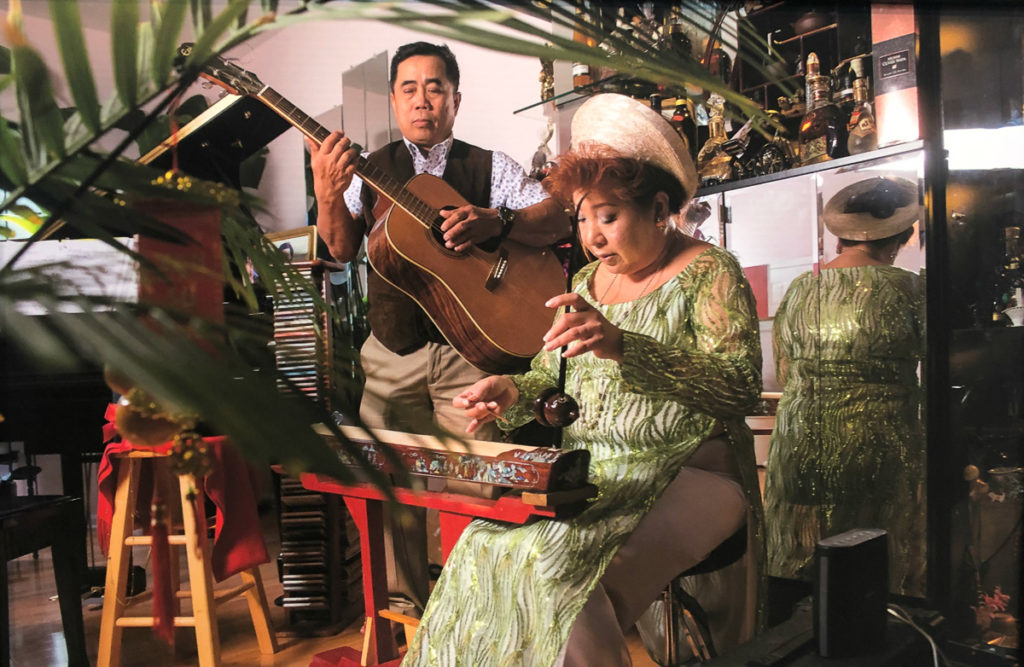

Nam Phuon Nguyen began playing an instrument called the đàn bâu at 17, later touring and performing throughout the United States with her family. She is seen here with her apprentice Anh Dien Ky Nguyen. © Pat Jarrett/Virginia Folklife Program

From Everyday Object to Musical Instrument

Music has often been made from everyday objects – for instance, think of a washtub bass or the spoons. The steel drum, or “pan” as it is called in the Caribbean, was invented in Trinidad around World War II, when island locals resourcefully crafted these instruments from oil drums left behind by the U.S. Navy. Contemporary pans are created when a 55-gallon steel oil drum is hammered concave, a process known as sinking. The drum is then tempered and notes are carefully grooved into the steel, resulting in a melodic percussive instrument that can play three full octaves.
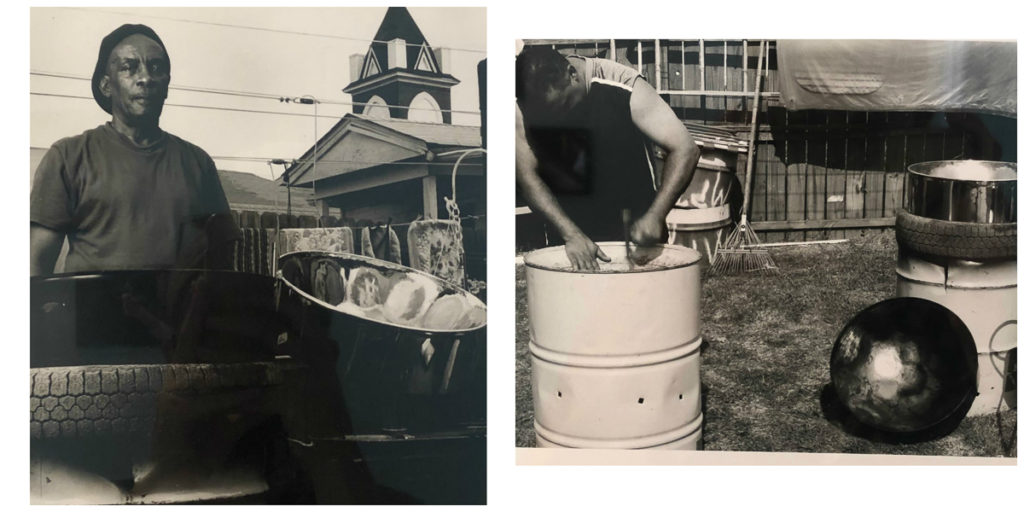

Master Artist Elton Williams, who worked with apprentice Earl Sawyer, grew up in Trinidad and immersed himself in every aspect of steel bands. He is a musician, composer, tuner, and now one of the few steel pan makers in the U.S. © Morgan Miller/Virginia Folklife Program

For the Love of Fonts

Prior to the advent of photocopiers, short-run quick print, email, and social media, the local letterpress was the primary producer of the vast majority of materials for mass communication – from church bulletins to wedding announcements to commercial advertisements, and so much more. My favorite elements of letterpress are the individual letters used in the printing process (and so many possible fonts!) and the wonderful act of rolling out the ink ready to print. We have our own letterpress studio here in Southwest Virginia at the Burke Print Shop in the Wayne C. Henderson School of Appalachian Arts.
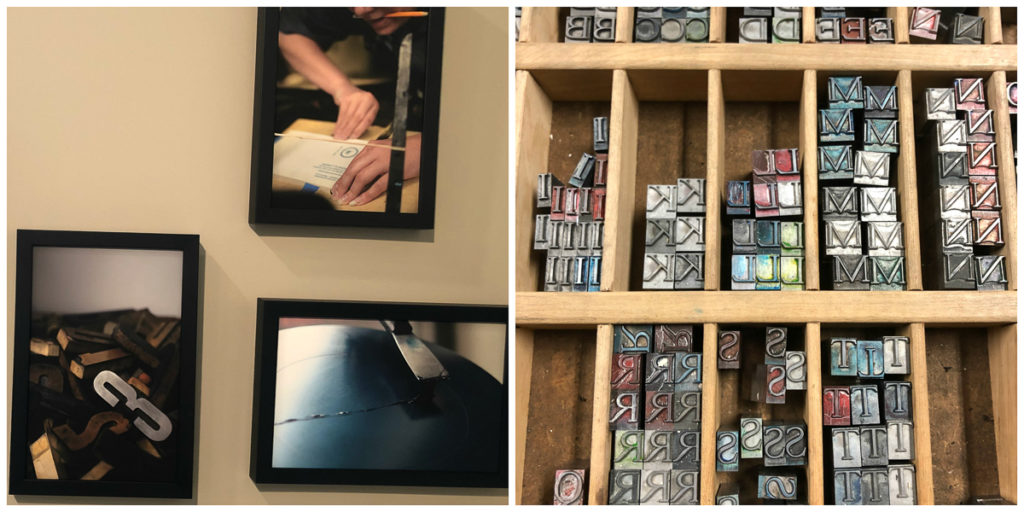

Left: Images from the letterpress apprenticeship between Garrett Queen and Lana Lambert in the Real Folk exhibit. Right: Letter blocks at the Burke Print Shop. © Pat Jarrett/Virginia Folklife Program; © Rene Rodgers

Different Dulcimers

When I used to think of a dulcimer, I thought of one particular type – an hourglass-shaped instrument – because we had one like that hanging in our home when I was a child. Since then, I’ve learned there are many types of dulcimers (all from the zither family) that are played in many places throughout the world – from the Appalachian or mountain dulcimer and the hammered dulcimer to the banjo dulcimer and the bowed dulcimer – with different shapes and different ways of being played. The dulcimer from my house – and the one most familiar around our area – is the mountain dulcimer, a fretted string instrument that first appeared in the 19th century among Scots-Irish communities. It is also known as the lap dulcimer.
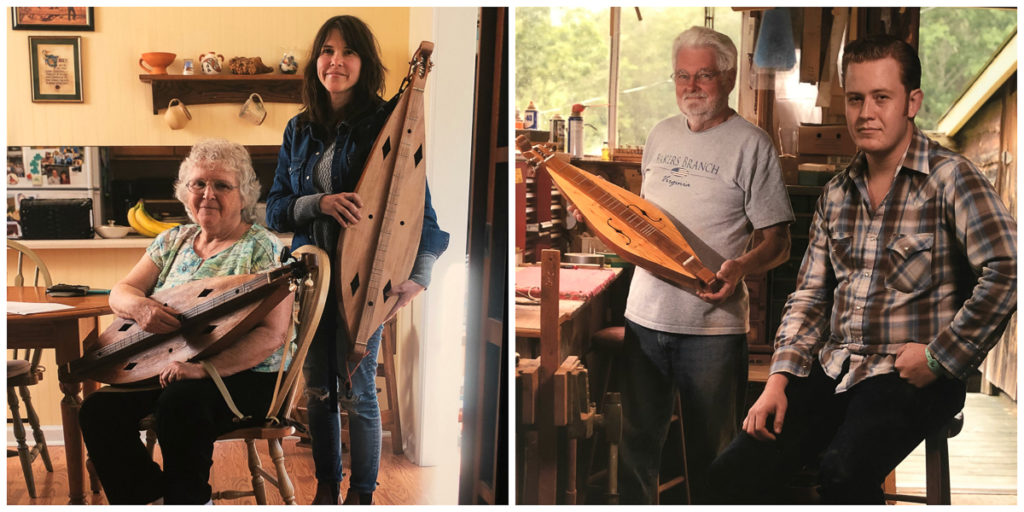

Left: Phyllis Gaskins, seen here with apprentice Anna Stockdale, plays the Galax dulcimer, which is lozenge-shaped, has four strings all tuned to the same note, and is played with a turkey or goose quill. The Galax dulcimer is intended to be an equal instrument in old-time string bands, mirroring the fiddle. Right: Master Dulcimer Maker Walter Messick apprenticed Chris Testerman, an award-winning fiddler who is already considered one of the great up-and-coming luthiers in the region. © Pat Jarrett/Virginia Folklife Program

An Unorthodox Route to Creativity

The late Pastor Mary Onley, known as “Mama-Girl,” was a self-taught artist who came from generations of farm laborers, working in the fields herself at the age of 12. Severe allergies resulted in several hospitalizations, and during one of these, she reported being visited by a spirit who instructed her to create art out of paper and found objects – something she had never done before. She went on to become one of the most celebrated folk artists on the East Coast, creating lyrical newspaper and glue sculptures that reflected her inner visions and unique creativity.
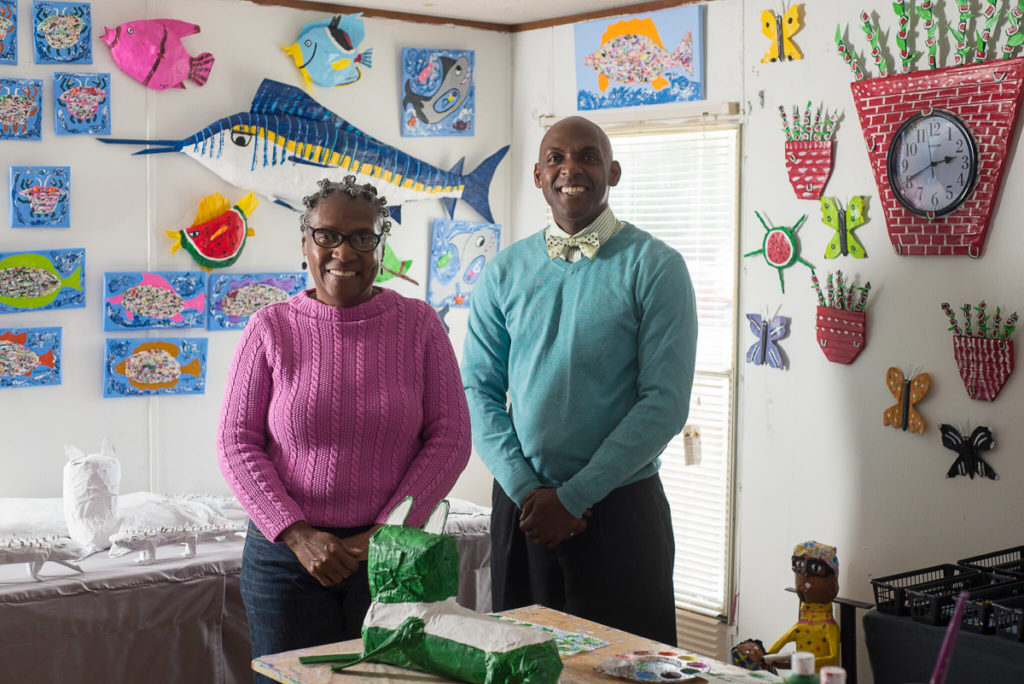

In 2016, Mama-Girl taught son David Rogers her unorthodox artistic techniques and how to open his mind to receive his own divine artistic inspirations. © Pat Jarrett/Virginia Folklife Program
Catching Up with Virginia’s Real Folk

On March 6, the museum opened a special exhibit called Real Folk: Passing on Trades & Traditions Through the Virginia Folklife Apprenticeship Program. Two weeks later the museum closed its doors in accordance with the state mandate in response to the COVID-19 situation. Sadly that has meant we haven’t been able to share this wonderful exhibit with very many on-the-spot visitors, but happily we are able to share some of it with our virtual visitors! The curatorial team is hard at work on pulling together a virtual tour of Real Folk (so watch this space!), but in the meantime, we wanted to give you the chance to learn a little bit about the exhibit and the apprenticeship program right now.

Since 2002, the Virginia Folklife Apprenticeship Program has drawn from a wide range of communities and traditional folkways to pair more than 150 experienced master artists with dedicated apprentices for one-on-one, nine-month learning experiences, in order to help ensure that particular art forms are passed on in ways that are conscious of history and faithful to tradition. The master artists are selected from applicants in all forms of traditional, expressive culture in Virginia – from decoy carving to fiddle making, from boat building to quilt making, from country ham curing to old-time banjo playing, from African American gospel singing to Mexican folk dancing. These crafts and traditions come from the Appalachian hills to the Chesapeake shore to new immigrant traditions brought to the state  – and everywhere in between! The Folklife Apprenticeship Program helps to ensure that Virginia’s treasured folkways continue to receive new life and vibrancy, engage new learners, and reinvigorate master practitioners.

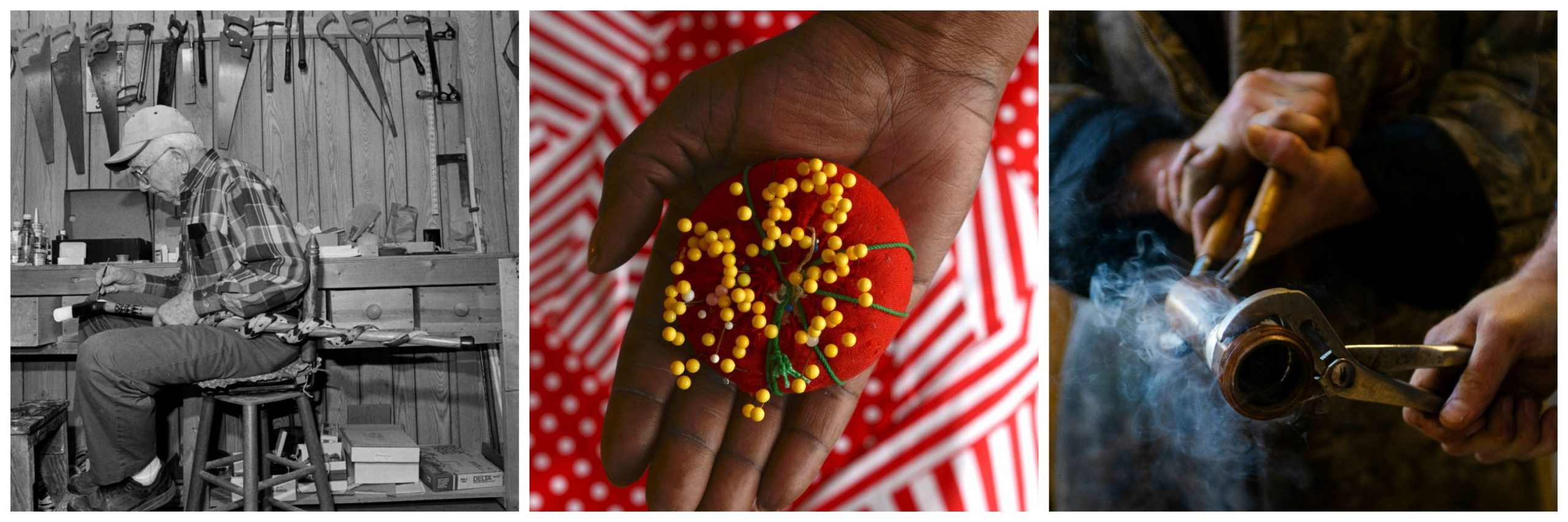
Out of these apprenticeship pairings, deep friendships and relationships have grown as the master artists pass on their knowledge, skills, and passion for the various crafts and traditions, along with the history and cultural importance that attaches to each. For instance, Sharon Tindall, who worked with gifted quilter Nancy Chilton in 2014, specializes in early African American quilt patters and in working with fabrics that aren’t typically used in quilting, such as Malian mud cloth. She is also a quilt historian and has conducted substantial research in support of the theory that African American quilts contained coded messages that were integral to the success of the Underground Railroad.

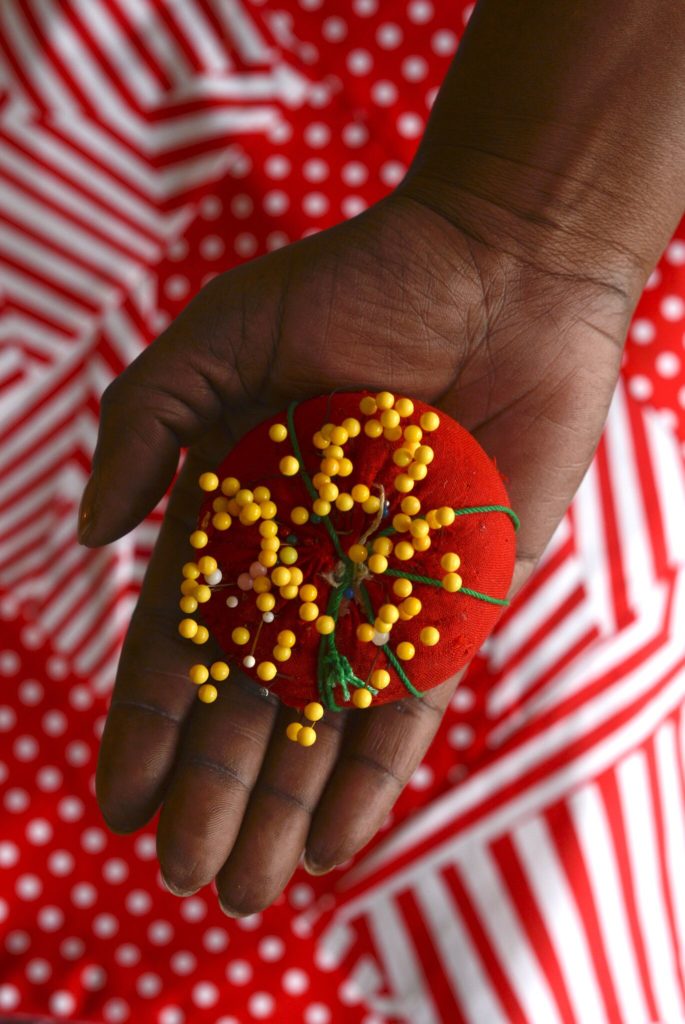
Close up of Sharon Tindall's hand holding a bright red pin cushion, filled with yellow head pins, over a red and white cloth.
Sharon Tindall holds a pin cushion above some brightly colored cloth. © Virginia Folklife Program; photographer: Pat Jarrett

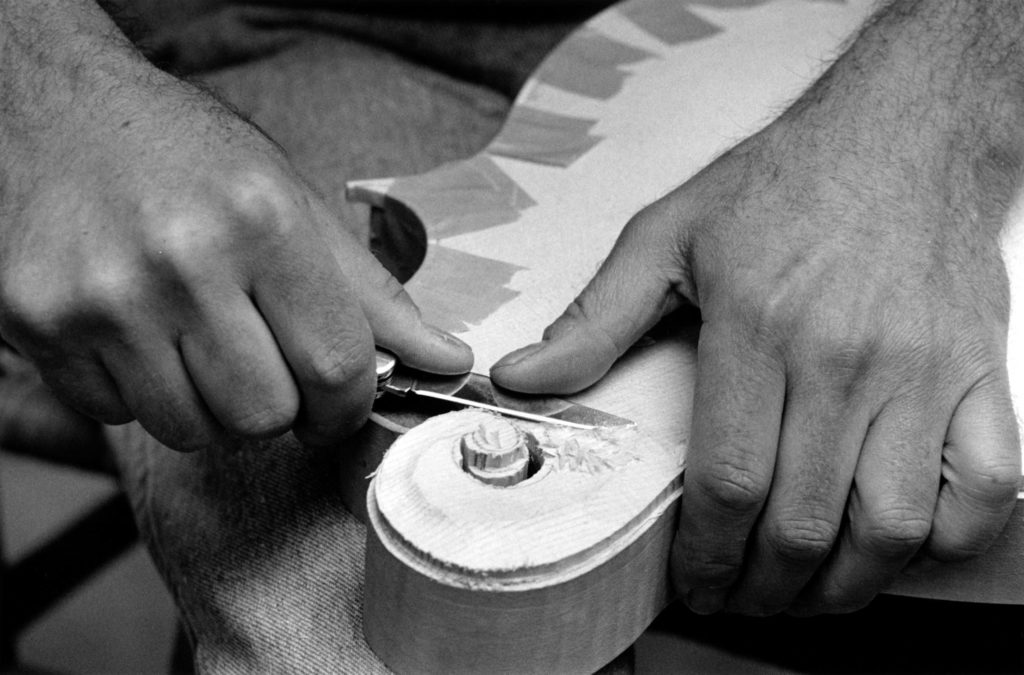
Several apprenticeships have focused on music, from music making to instrument building to the related art of dance. The variety of traditions on display within this realm is astounding, including African American gospel, Chickahominy dance, bluegrass fiddling, mandolin making, Sephardic ballad singing, steel drum making, and so much more. Because music is so central to the cultural heritage of southwest Virginia, numerous musicians, singers, and makers from this area have taken part in the program. Musician and luthier Gerald Anderson spent more than 30 years apprenticing in the shop of legendary instrument builder Wayne Henderson in Rugby, Virginia. Fellow musician Spencer Strickland recognized his mastery and skills, and asked if Gerald would take him on as an apprentice. Their time working together in 2005 turned into a deep friendship, musical partnership, and one of the longest running and most successful apprenticeships in the program’s history. Though barely out of his teens at the time, Spencer took to building instruments immediately, and the two soon opened their own shop in Gerald’s home in Troutdale. They also played and toured together as a duo and with the Virginia Luthiers. Gerald passed away unexpectedly in 2019, and Spencer has continued to build instruments and carry on Gerald’s memory.

Black-and-white image with a close up of two hands carving the body of a mandolin.
Working on a mandolin in Gerald Anderson’s workshop. © Virginia Folklife Program; photographer: Morgan Miller

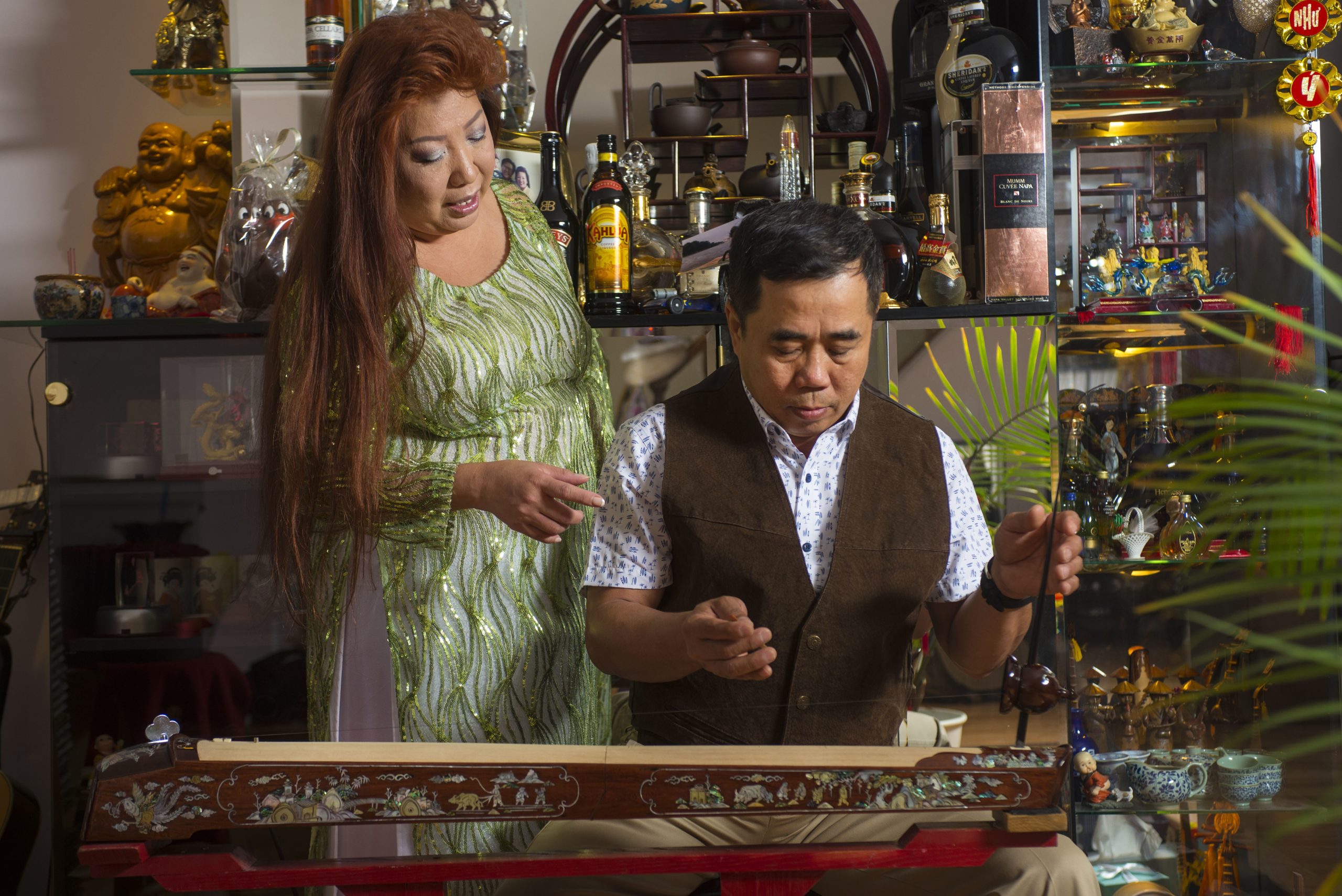
Many of Virginia’s cultural traditions have been brought here by immigrant communities, and the state is all the richer from this. These immigrants have shared their heritage not only within their own communities, but also more widely through educational programs, touring and performances, the creation of larger cultural organizations, and partnerships with other groups. For instance, Nam Phuon Nguyen began playing the đàn bâu at 17, later touring throughout the United States with her family as the Nguyen Đinh Nghĩa Family and performing at prestigious concert halls and festivals. The đàn bâu – translated to mean “gourd lute” – is a monochord (one-stringed) instrument, which plays a central role in Vietnamese music. Guitarist Anh Dien Ky Nguyen met Nam Phuong while playing at a music club, and he asked her to teach him the đàn bâu, partnering with her in the apprenticeship program in 2011.

Nam Phuon Nguyen in a green dress stands beside a seated Anh Dien Ky Nguyen in a brown vest. He is playing the instrument while she instructs. The shelves behind them are full of knick knacks, bottles, and sculpture.
Nam Phuon Nguyen and Anh Dien Ky Nguyen work together on mastering the art of the đàn bâu. © Virginia Folklife Program; photographer: Pat Jarrett

These few images are just a taste of this fascinating and beautiful exhibit, and we hope that you will be able to visit it later in the year. In the meantime, you can engage with the exhibit in another way by listening in to Radio Bristol’s Toni Doman as she talks with Virginia Folklife photographer Pat Jarrett about his work with the apprenticeship program — check out Episode 60 on March 12, 2020 in the Mountain Song & Story archives here. And you can support the artists who are so important to Virginia’s cultural heritage by going to Virginia Folklife’s website and exploring TRAIN (Teachers of Remote Arts Instruction Network). Created in response to the global COVID-19 pandemic and its devastating impact on the livelihoods of artists, TRAIN connects interested students of all skill levels with a diverse range  of master musicians, craftspeople, and tradition bearers offering online instructional opportunities. Start your lessons today!

Finally, keep an eye on our website for a virtual tour of Real Folk coming soon!

The Origin Project: Children Telling Appalachian Stories

Every people has to have its own stories…
If we don’t have our own stories then we don’t have our own soul:
we don’t have our own deepest possession, which is ourselves and our own unfolding…
Unless we cherish and savour our own [stories],
then we’re not going to know who we are and…we’ll become strangers to ourselves…
We’ve got to hold up a mirror to ourselves and create our own stories.
                                                                        ~ Leonard N Cohen

Writing is a valuable, sometimes vital, tool in human endeavour. 

Story writing is a particular talent: the memorialisation of personal experiences, tales, and narratives bequeathed by family or friends, teachers or mentors. 

The Origin Project is an in-school writing program co-founded by best-selling author and film director Adriana Trigiani and myself, an education advocate and long-time friend. It sprouted six years ago from the idea that Appalachia’s stories are national treasures, and its children should celebrate their roots. Our program inspires young people to discover and liberate their inner voices through the craft of writing about their unique origins; it celebrates diversity and inclusion. The Origin Project provides young people with the literary tools and confidence to harvest their unique heritages; it galvanizes their curiosity about, and respect for, each other.

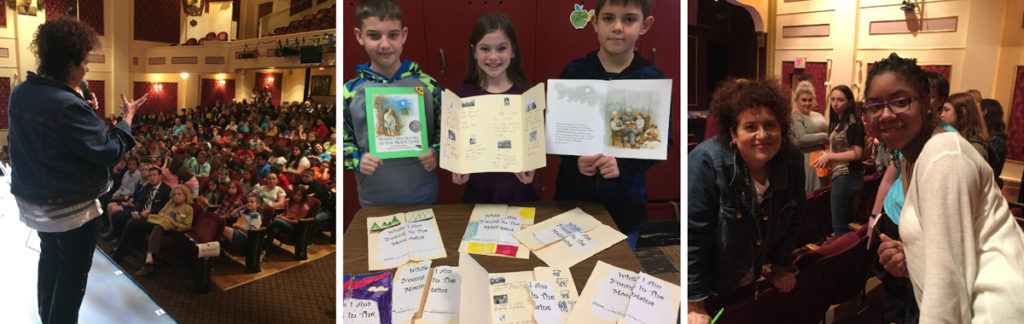
Left: Adriana Trigiani standing on stage at the Barter Theater with an audience full of school children. Center: Three 4th-grade students holding Cynthia Rylant's book and copies of the school project lap books. Right: Adriana Trigiani posing with a young student in the Barter Theater.
Left and right: Adri and The Origin Project students at the Barter Theatre Kickoff Celebration in 2018. Center: Flatwoods Elementary School 4th-grade reading students with lap books made in response to When I Was Young in the Mountains by Cynthia Rylant. Photographs courtesy of Linda Woodward

Starting from 40 students in Big Stone Gap, Adri’s hometown, The Origin Project has grown organically to serve more than 1,500 students in 17 schools. We regularly import renowned authors – so far, David Baldacci, Meg Wolitzer, Margot Lee Shetterly, Mary Hogan, and Laurie Eustis – to meet with the students and share their personal writing experiences. 

Each fall, our students are given a personal journal and thereafter work on multiple projects or stories that speak of and to their heritage. Their work is professionally published at the end of the year in an anthology, presented to each student and made available in school and public libraries. The Origin Project is integrated with the Virginia Standards of Learning curriculum and collaborates with each student at her/his skill level to conceive, develop, and hone ideas into short stories, poems, plays, interviews, or other art.

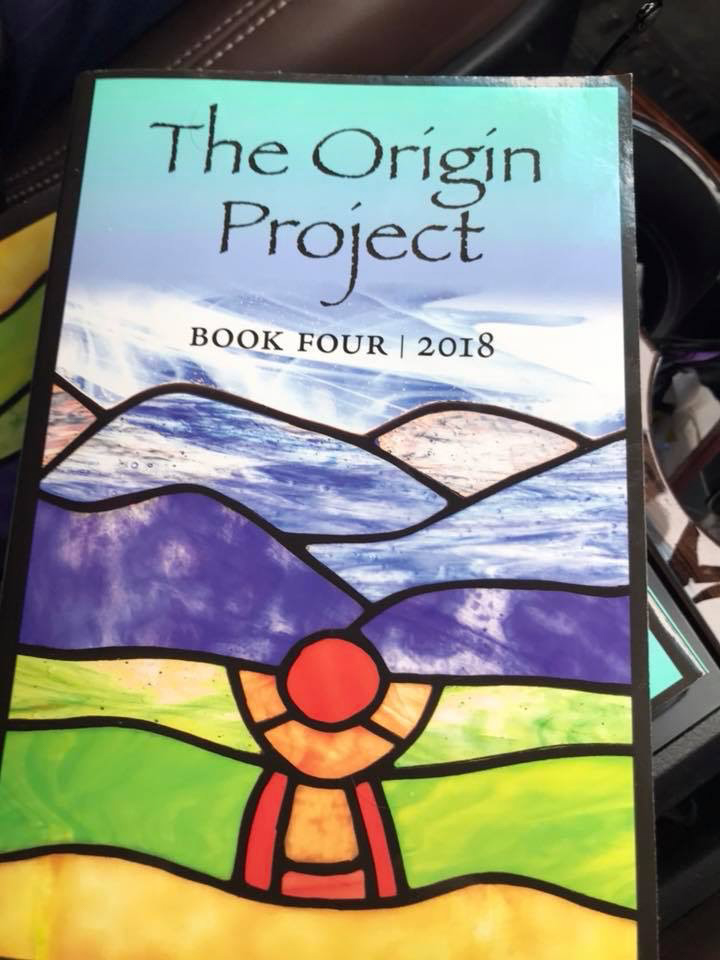
The cover of The Origin Project Book Four (2018), which looks like a stained glass view of the Blue Ridge Mountains.
The Origin Project Book Four, published May 2018. Photograph courtesy of Linda Woodward

It is a joyful surprise to read our students’ work, witness their growth, and observe the budding of their self-esteem. Through their creative writing with The Origin Project, our students “hold up a mirror” to themselves and thereby reclaim their “own deepest possession”: themselves and their “own unfolding.”

When Adri asked me to join her in founding The Origin Project, I had never been to Appalachia; upon my arrival, I even mispronounced its name. Over the past six years, I have fallen in love with the rolling blue mountains framing this extraordinary place that is home to magical people with unique stories to tell. Listening to students share tales of their heritage – of celebrations of Mamaws and Papaws and of personal successes and heartaches – has enriched my own life. I believe other readers of our annual anthologies experience similar reactions. Virginia has become my home-away-from-home.

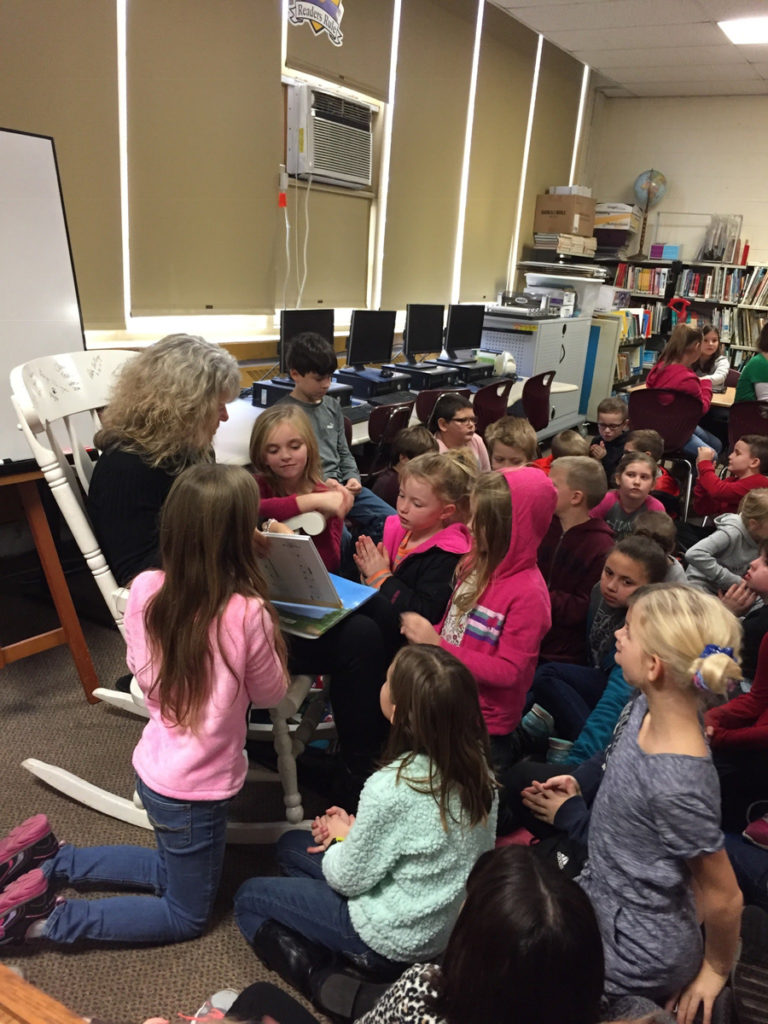
Nancy sitting in a rocking chair in a school classroom, surrounded by 2nd-grade students as she reads to them.
Reading Lorraine: The Girl Who Sang the Storm Away by Ketch Secor to Flatwoods Elementary School 2nd graders. Photograph courtesy of Linda Woodward

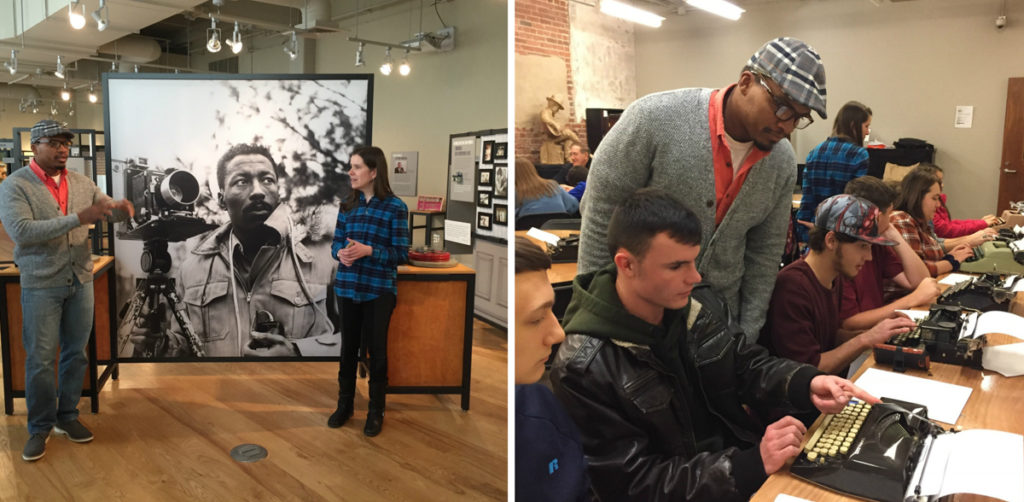
Last year The Origin Project embarked on a collaboration with the Birthplace of Country Music. We brought a group of our students to the Birthplace of Country Music Museum to tour For All the World to See: Visual Culture and the Struggle for Civil Rights, a temporary special exhibit made possible through NEH on the Road, a special initiative of the National Endowment for the Humanities, and Mid-America Arts Alliance. The experience provided a unique opportunity for our young writers to discover, through imagery portraying eye-opening events, some of the history of the Civil Rights movement in Appalachia and beyond. As Head Curator René Rodgers guided and informed our students, we learned that much of what was portrayed in this exquisite exhibit was rarely read or discussed in their curriculum. The culmination of the visit to the museum was a poetry workshop led by Langley Shazor, poet and president of The Casual Word. Langley provided the students with typewriters to drop them into the timeframe of the exhibit, and after a lesson on how to operate them, the students created emotional, profound poems that will be published in this year’s anthology.

Left: Langley Shazor, wearing a cloth cap, and Rene Rodgers, in a plaid flannel shirt, standing in front of the opening panel to For All the World to See (a picture of Gordon Parks with his camera). Right: Langley stands behind several students working on typewriter's in the museum's Learning Center.
Left: Langley Shazor and René Rodgers talk to The Origin Project students about For All the World to See and using the exhibit’s visual imagery for inspiration. Right: Students use old-fashioned typewriters to tap into their creativity after visiting the exhibit. Photographs courtesy of Linda Woodward

In the weeks ahead, we look forward to exposing as many of our students as possible to Reading Appalachia: Voices from Children’s Literature, another temporary special exhibit on loan from the East Tennessee Historical Society and currently on display at the museum – one that will provide a priceless opportunity for them to “walk into the pages of a story of childhood in Appalachia!”

Eagerly awaiting the arrival of The Origin Project Book Five, we are busy planning five unveilings to celebrate the creations of our published authors. We are thrilled and excited to hold one of these events at the Birthplace of Country Music Museum in May. We are deeply grateful to these new partners and friends, and look forward to many collaborations in the future!

Radio Bristol Book Club: Sounder

Welcome to Radio Bristol Book Club! Inspired by the museum’s current special exhibit – Reading Appalachia: Voices from Children’s Literature – readers from BCM and the Bristol Public Library are coming together each month to celebrate and explore one book featured in the exhibit. We invite you to read along and then listen in on Radio Bristol (via 100.1 FM, the website, or the app) on the 4th Thursday of each month at 11—11:30am when we will dig deep into the feelings and questions raised by the books, learn more about the authors, and celebrate the joys of being a bookworm!

Our first book is Sounder by William H. Armstrong, which we will be discussing on-air on Thursday, March 28.

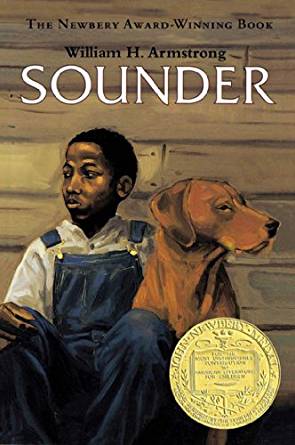
Sounder is the award-winning book that tells the tale of a sharecropper family and their beloved coonhound Sounder in the late 19th-century South. Life as a sharecropper is hard, and the father and Sounder must hunt for food for the family every night. When food is scarce, the father resorts to stealing to provide for his starving family. Not long after, the sheriff and his deputies come to arrest the man, and Sounder is shot in the process. What follows is a story that is at times gut-wrenching and yet hopeful as we learn lessons in the loyalty, love, and courage one needs in the face of overwhelming adversity.

William H. Armstrong’s Sounder was the recipient of several awards, most notably the 1970 Newbery Medal; this award honors the “most distinguished contribution to American literature for children” and is celebrated annually by the Association for Library Service to Children, a division of the American Library Association. In this installment of Radio Bristol Book Club, we will discuss the place that Sounder holds in literature, especially Appalachian literature. We will also discuss the way the author chose to tell this story and how effective this method was, both then and now.

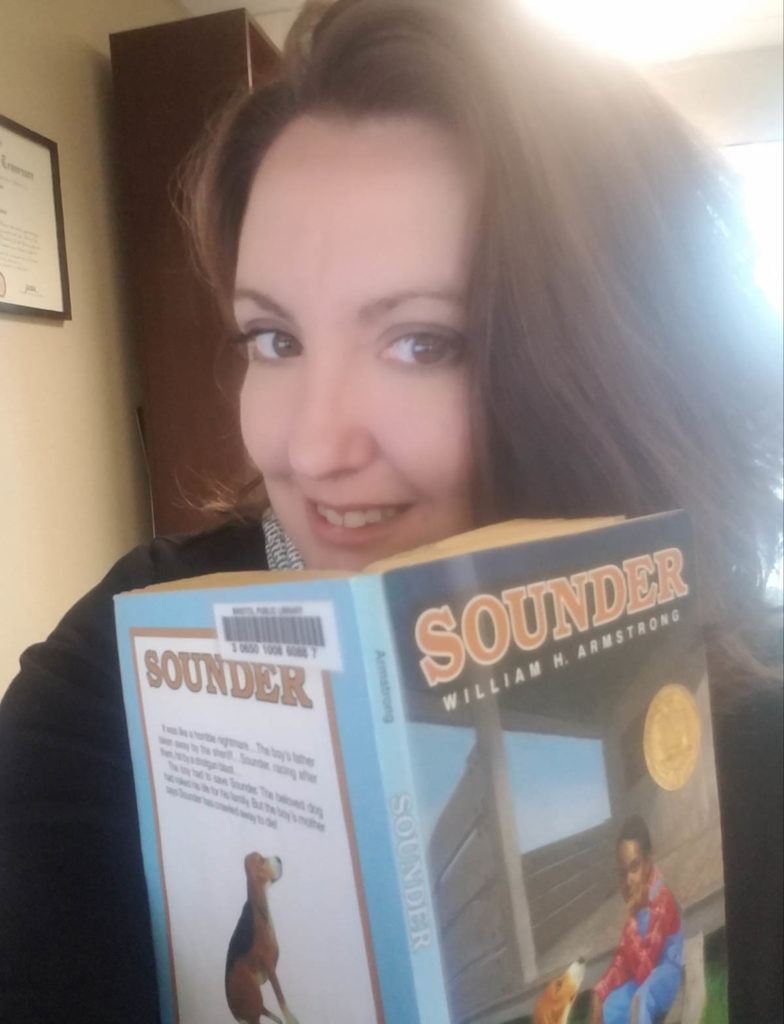
Selfie of Amy Kimani peeking over the top of her copy of Sounder
You’ll find me always with a good book, and here I am reading Sounder! Photograph courtesy of Amy Kimani

We are so excited to bring Radio Bristol Book Club to you and cannot wait to discuss our first book! We hope you will join us and read Sounder for yourself. You can pick up a copy at your favorite local bookstore or stop by the Bristol Public Library and check out a copy of Sounder today! The librarians at the library will be happy to help you find a copy of the book in the format that suits you best, from book to audiobook to e-book.

Make plans to join us at 11:00am on Thursday, March 28 for Radio Bristol Book Club! And be sure to visit the Reading Appalachia exhibit, on display at the museum now through June 30, 2019!