Education Archives - Page 5 of 6 - The Birthplace of Country Music
Listen
Play
Loading station info...

Teachers and Museums Go Together Like Peanut Butter and Jelly (And All the Other Good Things!)

Today is National Teacher Appreciation Day!

And while the museum views itself as an educational resource, some of OUR most important resources are the teachers who bring their students through our doors and take what they learned in the museum back to their classroom. And so today, we wanted to share a blog post about the educator’s experience in our museum – and say a HUGE thank you to all the teachers who enhance their students’ learning through a variety of creative lessons and activities, who support the kids in their classrooms in ways big and small, and who work hard to set the foundation to make the next generation into curious, interested, and engaged adults!

The Birthplace of Country Music is always looking to find great ways to engage with students and teachers and with families looking for entertaining learning experiences. This is an essential part of our mission. We do this in a variety of ways from school tours to educational programming to fun family activities and through all three of our outlets: the museum, the radio station, and the festival. Check out our blog post here to learn more about some of these activities. We are also fortunate that our museum’s permanent exhibit enables us to approach our content from multiple angles – for instance, music and its history, Appalachian culture, local history, and technology, to name a few.

Museum staff member showing a group of female students the instruments in the museum's permanent exhibits.
American Heritage Troop TN5624 touring the museum in July 2017. © Birthplace of Country Music Museum

But we also have the wonderful resource of our Special Exhibits Gallery and the variety of traveling and temporary exhibits that are displayed there – and these present us with the opportunity to bring a variety of other interesting and relevant educational opportunities to our local and regional schools and our community. We hosted the Smithsonian’s Things Come Apart exhibit last summer and fall, and it is a great example of how a special exhibit can address a host of learning goals – due to its heavy STEAM focus, we saw several school groups visit the exhibit and we experienced firsthand how teachers can use our content as a supplement to their curriculum.

One school – Sullins Academy – decided to make the most of all that Things Come Apart offered, and we asked their Head of School Roy Vermillion to blog about their experience, sharing with us and our readers how the exhibit enhanced their learning goals – and was just all around good fun!

“Sullins Academy’s faculty and staff had a chance to experience the wondrous exhibit Things Come Apart last summer right as it opened. We came to the museum for one of our faculty workdays, which gave us the chance to dig deep into this Smithsonian exhibit firsthand and to actually see how touring and working with the content of this exhibit could benefit our students.
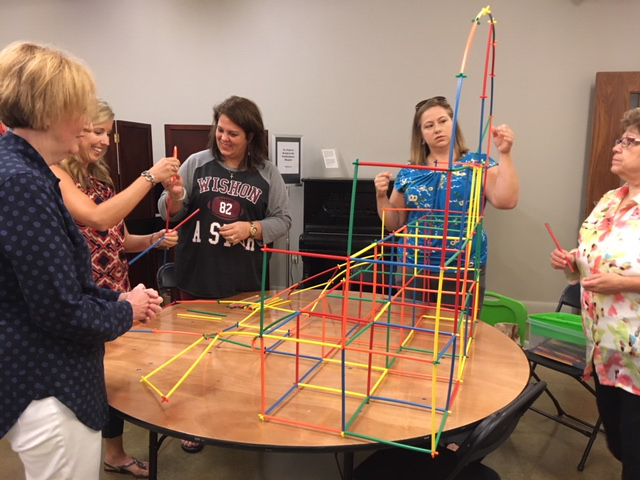
Group of teachers working together at a round table to build a structure of colorful straws.
Sullins Academy teachers used their faculty workday to explore the Spark!Lab activity kits that came with the Things Come Apart exhibit. As can be seen here, they took the task of building a structure from bendy, colorful straws seriously! © Birthplace of Country Music

After having lots of fun ourselves, we booked several of our classes to visit the Birthplace of Country Music Museum to see this exhibit focused on various common items that had been taken apart and presented in a most unique and artistic format. STEAM (Science, Technology, Engineering, Art and Math) education is such an important part of our school’s curriculum, and the Things Come Apart tour supported and affirmed the importance of providing such opportunities for our students. The experience gave our students the opportunity to view things differently and to begin to understand the complexity of items and the engineering that goes into the manufacturing of such objects.

The tour enjoyed by our faculty, as well as our students, was enhanced with a fortuitous chance to have a hands-on experience through a variety of Smithsonian Spark!Lab activities where groups worked together to create a product specific to a particular need. These makerspace centers encouraged the groups to collaborate in order to solve a problem, which further enhanced what was taken away from this educational “Beyond the Classroom” experience.
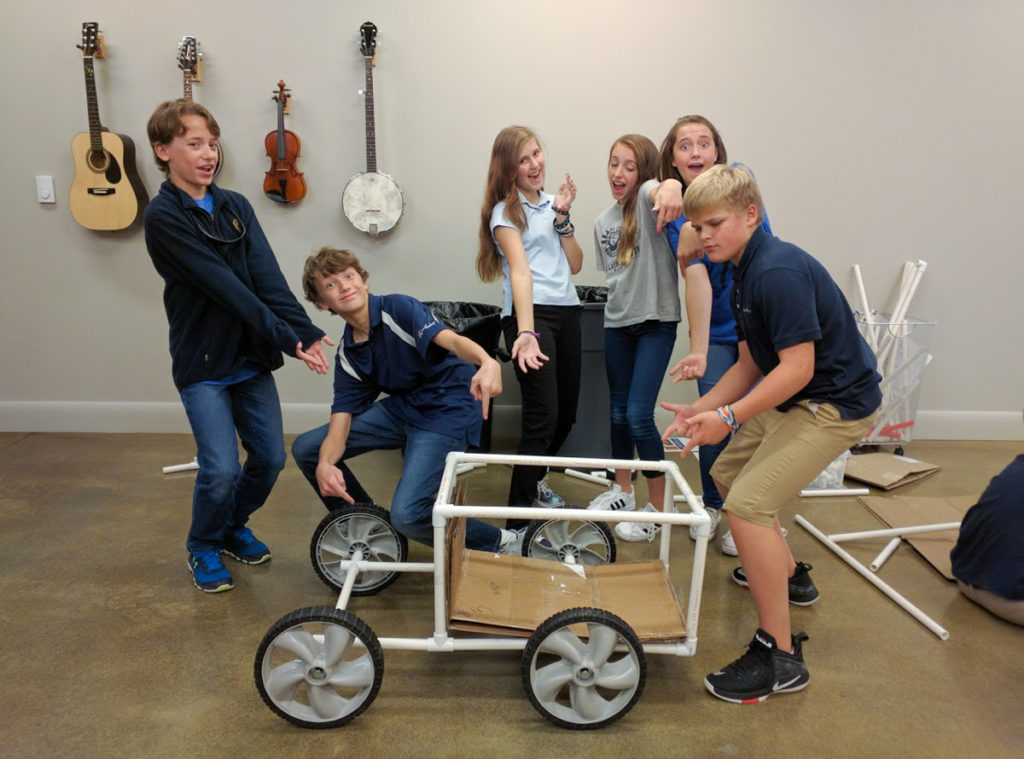
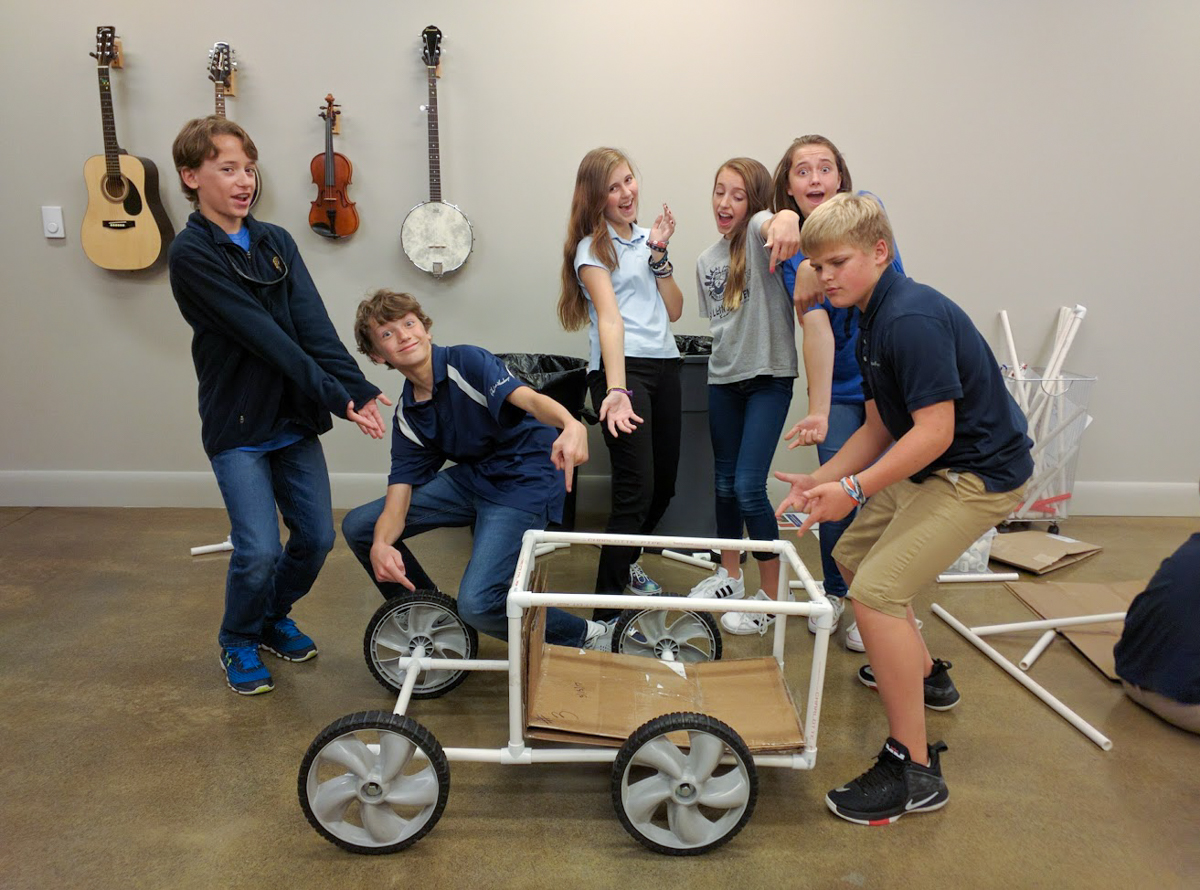
A group of students grouped around their finished Invent-a-Vehicle, all making silly faces and poses!
A group of Sullins students used the Smithsonian Spark!Lab activity kit to build a functional vehicle from wheels and plastic pipe. Photograph courtesy of Sarah Hampton

The principles highlighted in this exhibit also carried through into our classrooms back at Sullins – for instance, prior to visiting the museum, our eighth-grade students actually disassembled a broken cell phone to see all the components and applied what they would see at the exhibit to a real-life experience.

This exhibit was important to Sullins because it gave us a unique educational opportunity to enhance our students’ learning experience. It also served as an inspiration for our students to explore and to experiment as they participated in their own Things Come Apart projects back at school.
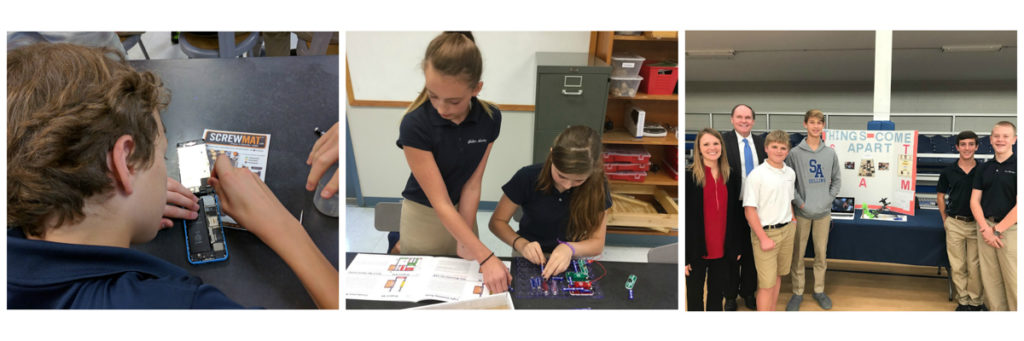
Left pic: Male student taking apart a cell phone; center pic: Two female students working on a circuit board; right pic: A group of students with their Things Come Apart science fair display, along with their teacher and school principal.
Sullins teacher Sarah Hampton used the faculty workday, the student visits to the Things Come Apart exhibit, and its related STEAM concepts as inspiration for a variety of learning lessons back in the classroom. Photographs courtesy of Sarah Hampton

We encourage everyone to take advantage of the myriad of opportunities a facility like the Birthplace of Country Music Museum is able to bring to our community. We are fortunate to have the availability of such an innovational entity from which we can garner these unique and important educational opportunities for ourselves and the children we serve.”

The experiences of Sullins Academy’s students and teachers really reflect the goals of our museum: to provide an educational and inspirational experience, one that brings real engagement to those who visit us and acts as a support for learning within our local community and schools. And they also reflect the dedication of our teachers and educators to bring out the curiosity of our children and get them excited about learning.

As we move forward, we embrace the excitement of engaging with students – and all of our every day visitors – in order to share our resources with them and highlight the value that museums – and teachers – bring to communities like ours on a daily basis.

Guest blogger Roy Vermillion is Head of School at Sullins Academy in Bristol, Virginia. Head Curator René Rodgers provided context to his guest post. Thank you to teacher Sarah Hampton for sharing her wonderful pictures of the students at the museum and in the classroom.

African American History in a Country Music Museum? Exhibits and Programs Explore the Connections

Each year February is highlighted as Black History Month. This call to recognize the central role of African Americans in our history was first put forward by Dr. Carter Goodwin Woodson in 1926. As a blog post on the National Museum of American History website notes: “When mainstream history either largely ignored or debased the Black presence in the American narrative, Dr. Woodson labored to inject a fair portrayal of African Americans into the national record.”

At first glance, you might not think that the history of early country music intersects a great deal with African American history. However, the intersections exist and are significant, and we’ve explored some of these in the Birthplace of Country Music Museum – for example, in the development of genre, with musicians who had impact on early commercial country music, and of course, through the African origins of the banjo, an instrument now indelibly linked to country and bluegrass music. And there has been a continuing presence of African Americans in country music beyond the early commercial years, for instance with artists like DeFord Bailey, Charley Pride, Linda Martell, and the celebration of black stringband music by the Carolina Chocolate Drops. Books like Diane Pecknold’s Hidden in the Mix: The African American Presence in Country Music and Francesca Royster’s Black Country Music: Listening for Revolutions explore these connections more deeply.

Prior to the recording music industry, musical categories such as blues or rock or country did not really exist. However, the recording and marketing of music created a need to target audiences in order to make money, and so record executives began advertising music and musicians based on what they assumed different audiences would like, leading to the development of a variety of genres.

Detail from Decca record sleeve listing several genre types such as Hill Billy, Race, Sepia, Mexican, Irish, and Scotch, along with their price.
This Decca record sleeve in the museum collections includes a list of various genres and the price of records within each series. © Birthplace of Country Music; gift of Betty Lou Dean and Roger Allen Dean

One of these genres was known as “race records,” commercial recordings that were aimed specifically at African American audiences. Mamie Smith’s “Crazy Blues,” produced by OKeh Records in 1920, was one of the first recordings in this new genre. Selling around 8,000 copies per week over several months, the popularity of “Crazy Blues” proved to record executives that there was a market and an audience for “race records.” Companies began developing catalogues aimed at these audiences, and they often hired black talent scouts and agents to find musicians to record. Much of these early recordings were focused on blues artists.

Despite the seeming segregation of audiences – with black audiences targeted through “race records” and “hillbilly records” marketed to white audiences – the lines between genres were often crossed with musicians, styles, and songs from each influencing the other. And, of course, just because a record was marketed to a particular audience doesn’t mean that other audiences didn’t listen to and buy that record.

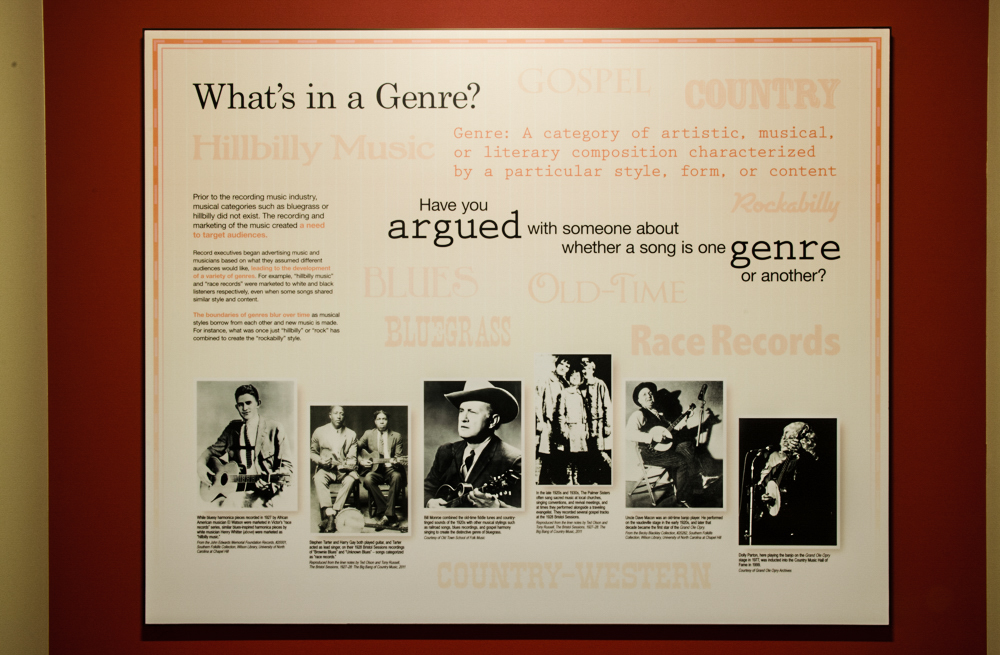
Photograph of "genre" panel in the museum exhibits with listing of different genres, descriptive text, and several images illustrating artists from these genres.
The museum panel on genre explores some of the different types of music that have been marketed to different audiences, including “hillbilly records” and “race records.” © Birthplace of Country Music; photographer: Haley Hensley

The Bristol Sessions involved few African American musicians. Each of the two Bristol recording sessions held by Ralph Peer of the Victor Talking Machine Company – the 1927 and 1928 Bristol Sessions – featured only one such act. At the 1927 Sessions, El Watson recorded two instrumental harmonica pieces, “Pot Licker Blues” and “Narrow Gauge Blues.” The fairly arbitrary categorization of genre is reflected in the marketing of Watson’s recordings – Victor released Watson’s two sides in the label’s “race records” series, while two similar blues-inspired harmonica pieces by white musician Henry Whitter were marketed as “hillbilly records” and promoted predominantly to white audiences. Watson also played the bones on some Johnson Brothers (a white duo) recordings at the 1927 Bristol Sessions, and Charles Johnson played guitar on Watson’s sides; these are some of the earliest integrated recordings of country and blues music. There is little information about El Watson to be found in the historical record, but we do know that Peer was very much impressed by Watson’s sound and musical skills, inviting him to record four more songs with Victor in New York: “Fox Chase,” “Sweet Bunch of Daisies,” “Bay Rum Blues,” and “One Sock Blues.” It’s also likely that he recorded with Columbia Records in Johnson City, Tennessee, in 1928.

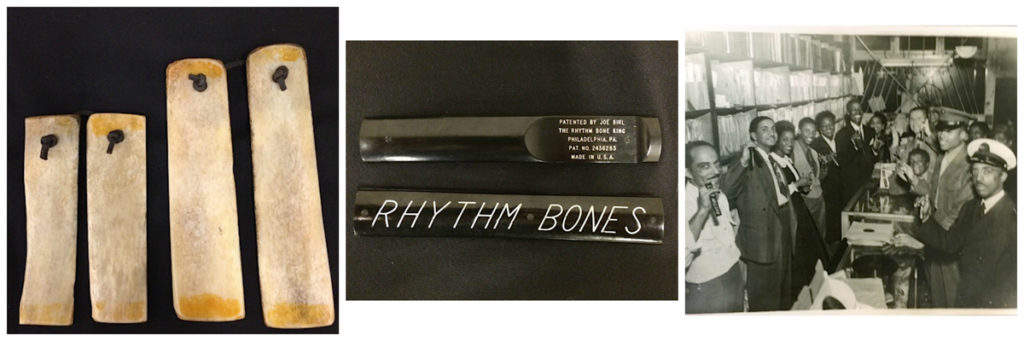
Left: Two sets of historic bones; center, a set of manufactured bones; right, a photograph of a group of customers in a record shop holding manufactured bones.
In 2015 musician Dom Flemons, cofounder of The Carolina Chocolate Drops and known as “The American Songster,” donated to the museum two sets of bones (ca. 1927), a set of manufactured bones patented by Joe Birl, “The Rhythm Bone King,” and a photograph of a group of customers in a music shop with their sets of rhythm bones. © Birthplace of Country Music; gift of Dom Flemons

The duo of Tarter & Gay recorded the next year at the 1928 Bristol Sessions. As with Watson’s recordings, the two numbers recorded by these talented musicians – “Brownie Blues” and “Unknown Blues” – were also issued in Victor’s “race records” series. Before they recorded in Bristol, Stephen Tarter and Harry Gay had performed live for white and black audiences at dances, and the style reflected on their Bristol Sessions recordings touches upon ragtime and stringband music, amongst others.

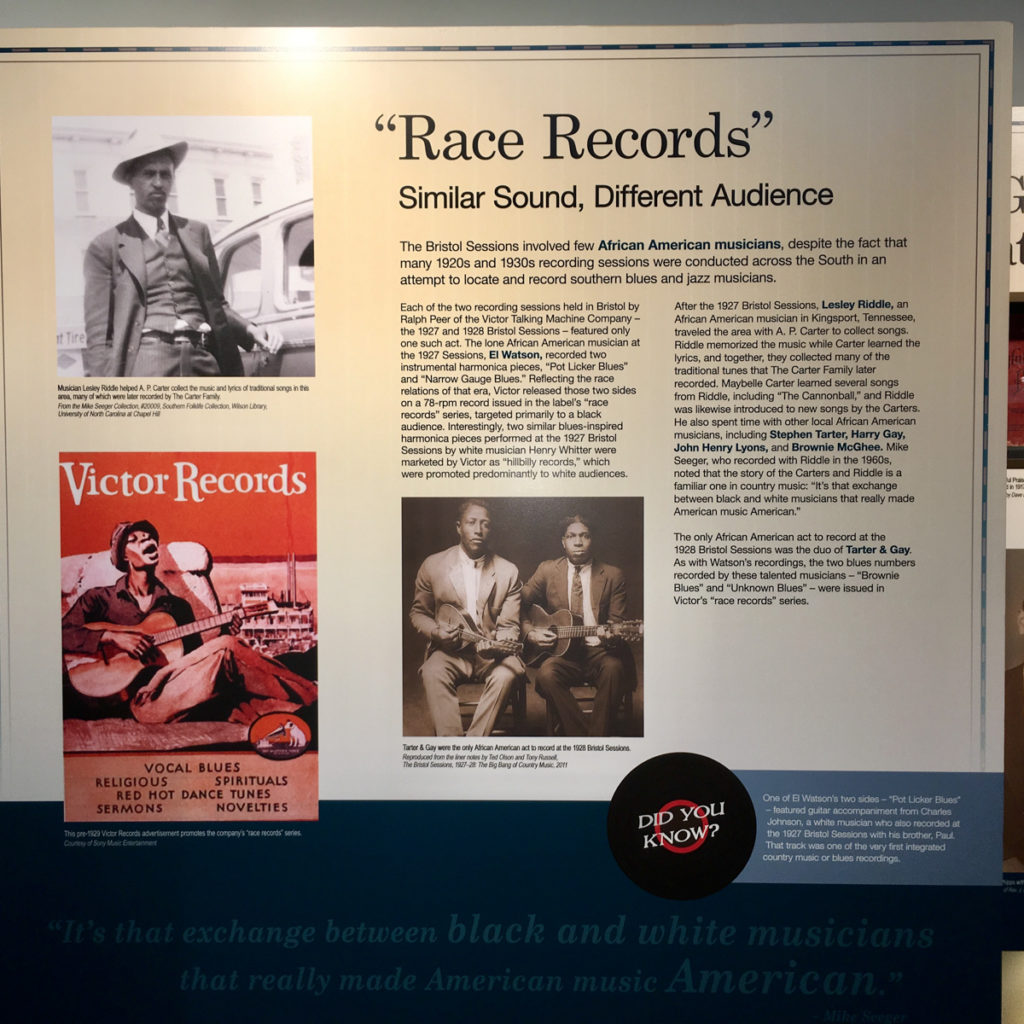
Race records panel in museum, with descriptive text and three images: Lesley Riddle, a Victor race records catalog cover, and Stephen Tarter with his cousin
This panel in the museum explores “race records” – an image of one of the Victor marketing pieces for their “race records” series can be seen here. The photograph to the upper left is of Lesley Riddle; the other photograph had been previously identified as Steven Tarter and Harry Gay, but new information tells us that it might be Tarter with his cousin Carson Anderson. There are no known photographs of El Watson. © Birthplace of Country Music

And then, of course, there’s Lesley Riddle, a hugely influential musician who worked closely with A. P. Carter in his search for songs and music worth playing and turning into hits. And don’t forget: Riddle has also been credited with sharing his style of guitar picking with Maybelle Carter, who built on this learning with the now well known and revered Carter scratch. His significance to the history of early commercial country music cannot be overstated – you can read all about his impact and influence in our blog post here and here.

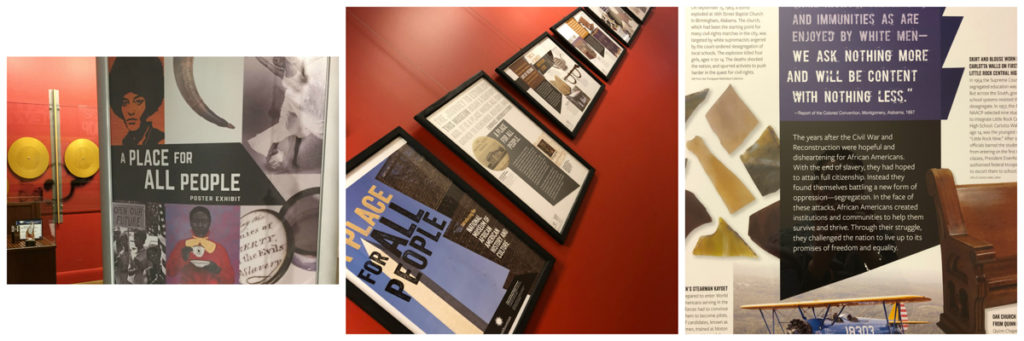
While Black History Month may be a starting point for talking about African American history in early country music, it is not the stopping point. This is why we have worked to share relevant content within the museum’s permanent exhibits and also to continue the conversation through special exhibits and public programming outside of this one month of the year – for example, the special exhibit We are the Music Makers: Preserving the Soul of American Music in 2016, our display of the Smithsonian poster exhibit A Place for All People, the live simulcast of the opening ceremony for the National Museum of African American History and Culture, a roundtable discussion about the history of the local African American community, and engaging performances by a host of artists. to name a few.

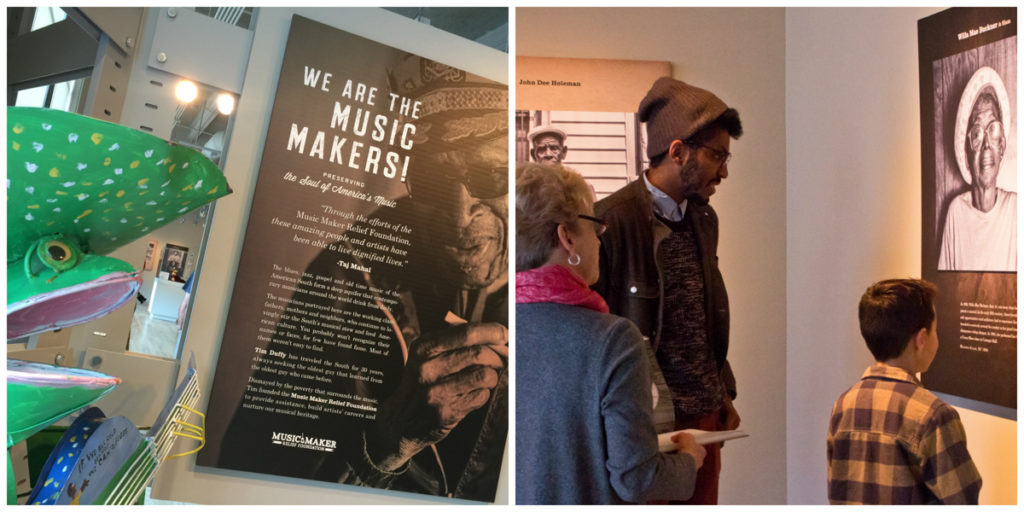
Two photographs of the Music Maker exhibit in the museum's Special Exhibits Gallery; the one to the right shows visitors enjoying the exhibit.
Museum visitors to the We Are the Music Makers exhibit really connected with Music Maker Relief Foundation founder Tim Duffy’s images and stories of southern old-time and blues artists. During the exhibit, the museum also hosted a performance by NEA National Heritage Fellow John Dee Holeman, a Music Maker Piedmont blues guitarist, and we got the chance to interview Dom Flemons about his work with the foundation and why its mission is so important. © Birthplace of Country Music Museum
Three shots showing different parts of A Place for All People, a poster exhibit from the Smithsonian.
The A Place for All People poster exhibit – a survey of the African American community’s powerful, deep and lasting contributions to the American story – marked the historic opening of the Smithsonian’s National Museum of African American History. This poster exhibit is now a permanent part of our collection, and we rehung 10 of the posters this January to mark the anniversary of Dr. Martin Luther King’s death. © Birthplace of Country Music
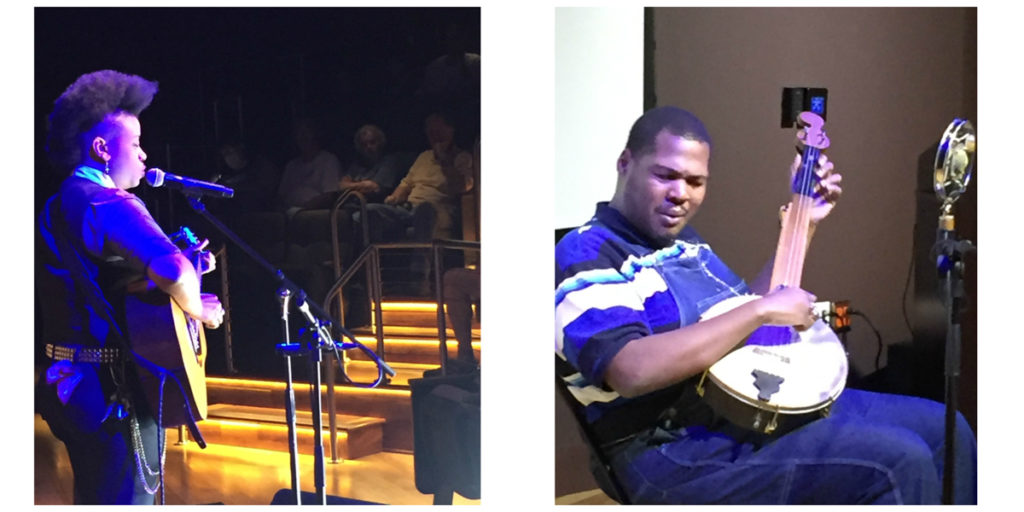
Photographs of Amythyst Kiah and Jerron "Blind Boy" Paxton performing in the museum's Performance Theater.
We held several events as part of our “Lift Every Voice” series, based around a global initiative highlighting organizations co-celebrating the Grand Opening of the National Museum of African American History and Culture. These included a powerful performance by Southern gothic, alt-country blues singer/songwriter Amythyst Kiah, a fan favorite in Bristol, and an academic lecture by Dr. Cece Conway on the African roots of the banjo followed by a concert by Jerron “Blind Boy” Paxton, a multi-instrumentalist who not only shared some amazing music with us but also had everyone in the audience enthralled by his wonderful storytelling and his deep knowledge of the history of his craft. © Birthplace of Country Music

Today there are criticisms aimed at setting aside a month or a week or a day of the year to commemorate important historical subjects – for instance, the question of whether setting aside a designated time to explore those histories means that they aren’t fully integrated into the study and understanding of American history. While in some ways the name of our museum – the Birthplace of Country Music Museum – might seem to narrow our focus, through exhibits, programming, and even collections we have tried to bring together the histories and voices of a variety of musicians and communities in order to underline just how much American music has been built and created from the intersection of different styles, different stories, different artists, and different backgrounds.


With a Little Help From My Friends: Creating Equal Opportunity Enjoyment for All

We all need assistance at some point in our everyday life, no matter the range of our abilities. Often, these needs ultimately put us in a position of relying on the consideration and preparation of others, usually strangers.

Some examples where there could be a need for assistance are minor injuries like a sprained ankle, maybe something like an eye procedure that causes temporary sight issues, or even accommodations for a small child. These types of things are situations that we all encounter at least at some point in our lives. But there are other members of our community who need accommodations that may not always come to mind when we are planning events, experiences, or programs – for instance, individuals with seeing, hearing, or mobility challenges. However, don’t let the word challenges misguide you – these fellow citizens are very motivated and as “able” as most of us. They enjoy the same things, and with the same small amounts of consideration, they can take part in all that the world has to offer.

I have always thought myself to be sensitive to those who are considered to be dis- or differently abled, and I guess this is most likely a result of minor physical birth defects that I have and the over-reactions to these that I have experienced throughout my life. Even though I had my own experiences, I recently learned a lot and gained some valuable insights from working with a couple of local agencies who serve these community members and from some of their individual clients as well. These relationships and exercises came about as part of the museum’s recent completion of the Museum Assessment Program, or MAP, through the American Alliance of Museums.

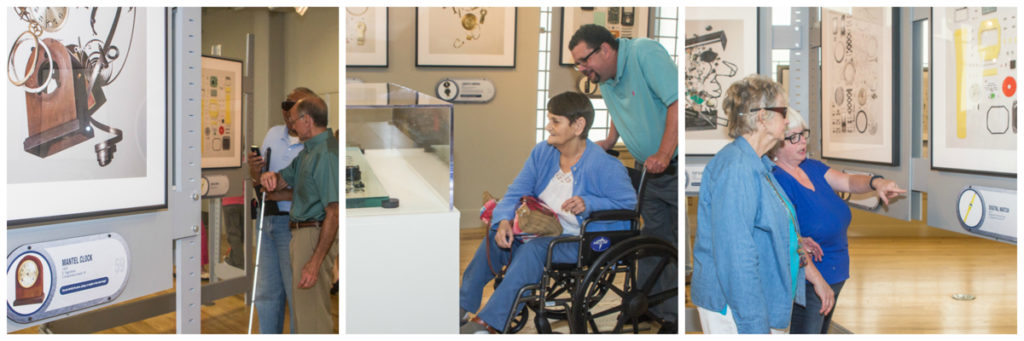
When our museum first opened in 2014, I assisted with some of the efforts in making sure that we are ADA compliant in the area of mobility, and as part of my graduate studies, I also researched the areas of visual and hearing compliance. Therefore, I was happy to take the lead on the accessibility learning and activity that was part of our MAP experience. Part of this activity was to reach out to members of the community to come in to the museum as visitors and give us feedback on their experiences. I was able to recruit two area organizations – the Appalachian Independence Center (AIC) in Abingdon, Virginia, and the Virginia Department for the Blind and Vision Impaired (DBVI) here in Bristol. Both agencies were very gracious in bringing multiple staff members and clients who provided us with extremely valuable information regarding accessibility elements that were already in place in the museum as well as candid suggestions for things that needed improvement.

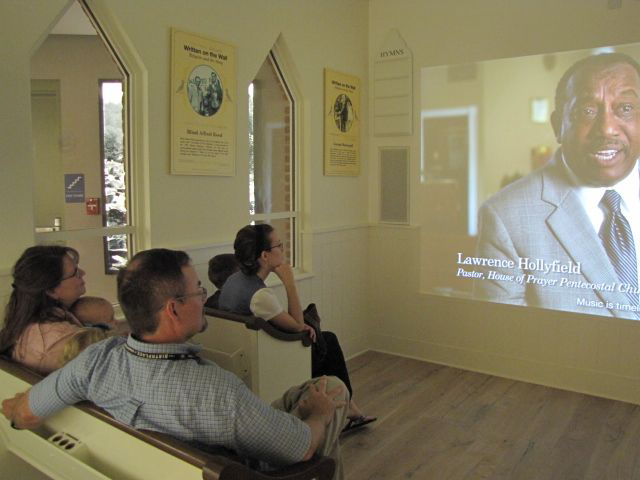
All of the films in the museum’s permanent exhibits have closed captioning for the hearing impaired. © Hillmann & Carr

One conversation between Museum Director Jessica Turner, myself, and a DVBI employee named Debbie Able packed a particularly powerful punch. Debbie, who happens to be blind, told us that she had visited the museum previously with a companion to assist her and that she joined as a member at the same time. I asked her about her overall experience in her previous visits to the museum – she obviously enjoyed the museum but I was surprised to hear her say that she felt like she had missed out and express a wish that she could have experienced more during those visits.

I remember looking at Jessica, and we both had the same expression of concern on our faces. This was a big deal – and something that we both agreed needed immediate attention – and so we asked for more feedback on ways to improve a museum visit for someone who might need to approach our content in a different manner than we had planned for within the exhibit layout or format. The first things that we talked about were ways to address interpretation of our content for those with visual and aural challenges. This led us to discuss technology-based solutions like audio tours, Braille captioning, and large-text labeling and gallery guides. From our conversation, it also became apparent that even when people with disabilities visit a museum with a companion who we may think will assist them, we should not assume that their companion has the knowledge or even intent to help with interpreting our exhibits and content. With the depth of time and energy that we can provide in a scheduled guided tour that addresses our visitors’ needs, we can assure that they have the best experience possible.

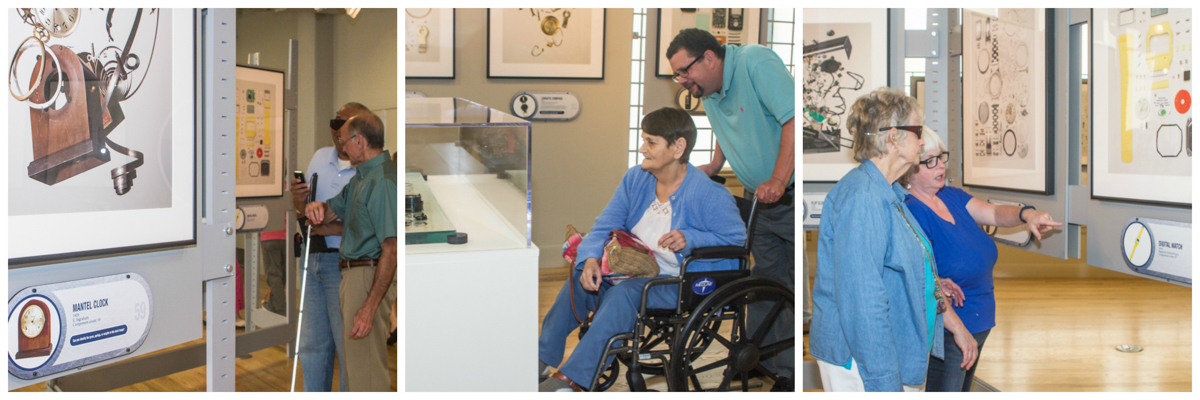
Since these initial visits during the MAP exercise, we have held training classes for museum staff and docents conducted by the AIC and DBVI, and these have provided invaluable information and perspectives for us to use in preparing solutions for making our museum accessible and enjoyable for everyone. During these trainings, museum staff and docents were given the opportunity to experience the museum in the same way a disabled visitor might.

Our docents and staff explored our recent special exhibit with clients of ACI and DBVI, gaining valuable insights on ways to make our content accessible and enjoyable to all of our visitors. © Birthplace of Country Music

Docent Mary Geiger was especially moved by the experience, saying: “The instructors were informative on how to approach a visually impaired visitor, how to physically contact them, how to lead, and why various movements and verbiage were necessary.  Additionally, I found invaluable the experience with the blindfold, learning the feel of degrees of darkness and to trust a person leading. Coupled with this was the exercise of actually leading an 11-year-old visually impaired visitor. This visitor was mature and articulate regarding what I was doing correctly or not (I flunked “doors,” which gave us both a good laugh!). All in all, I will feel more comfortable leading such visitors now.” Docent Barbara Smith agreed, saying: “Touring with a visually impaired person changed my perspective. I noticed things I had not seen before, I was asked about things I took for granted, and I needed to explain things for which I had no words. After this tour I had an even better understanding of the museum’s content.”

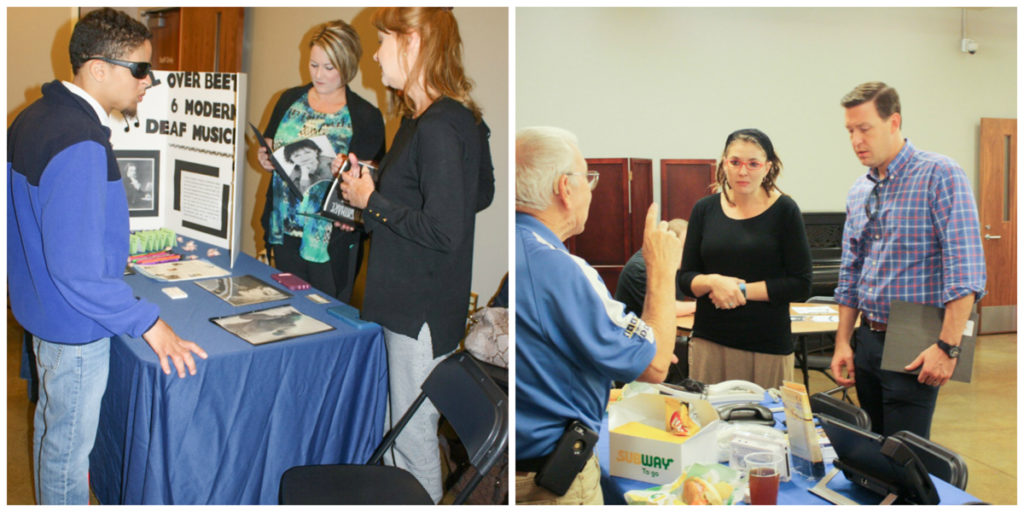
To follow up on this training – and in line with October being Disability Employment Awareness Month – the museum also held an event on October 6 to encourage our community to view their everyday surroundings and experiences through the eyes of a differently abled person. Various agencies set up tables with information to share with interested parties, enabling us to make important contacts with these agencies and for them to talk to each other about possible ways to work together in the future.

A client listens as Department for Aging and Rehabilitative Services counselors discuss individuals with disabilities in the music industry (left). Jack Owens explains Virginia Relay’s services to Delegate Israel O’Quinn (right). Photographs courtesy of Kathy Malone, DBVI

All of these activities and training sessions have helped us to see our museum in a new light, to look at different ways to approach our content, and to begin working on solutions that take us beyond simple ADA compliance to providing a museum experience that brings enjoyment to all!

Scotty Almany is the Digital Resources Manager & Catalog Associate for the Birthplace of Country Music Museum. He would like to thank all of the nonprofit agencies who donated their time to attend the event on October 6 with special appreciation to the DBVI and AIC, who have given so freely and generously of their time. For more information on accessibility tours, please contact the Birthplace of Country Music Museum at (423) 573-1927 or info@birthplaceofcountrymusic.org. And if you have any suggestions or ideas for how our museum can become a more inclusive environment for those with different abilities, please feel free to contact us!

Fun, Fun, Fun: Families Make, Take, and Create at the Museum

At the end of the day this past Saturday we found nine marbles in the museum vault area, locked to the public, inaccessible to all but the few of us who have a key. How on earth did those marbles get there?

It sounds like a mystery or a riddle – you know like the one where you find a body in a pool of water in a locked room with a cat in the window and you have to figure out what happened.* Our story is much simpler, the result of having around 150 children and adults in the museum for our Family Fun Day maker event, held on Saturday as complementary programming to Things Come Apart, our current special exhibit from the Smithsonian Institution Traveling Exhibition Service (SITES).

We have worked hard to find cool ways to engage the public with this SITES traveling exhibit, and one of our earlier blog posts went into more detail about the planning that went into this exhibit and the related programming. Our biggest event during the exhibit has been Family Fun Day – filled to the brim with a variety of maker-type activities. Check out the pictures and videos below to get a real sense of the fun, invention, and sheer enthusiasm that kids of all ages, from 2 to 92, brought to the event – and to find out how those marbles got in the vault!

© Birthplace of Country Music; photographer: Billie Wheeler

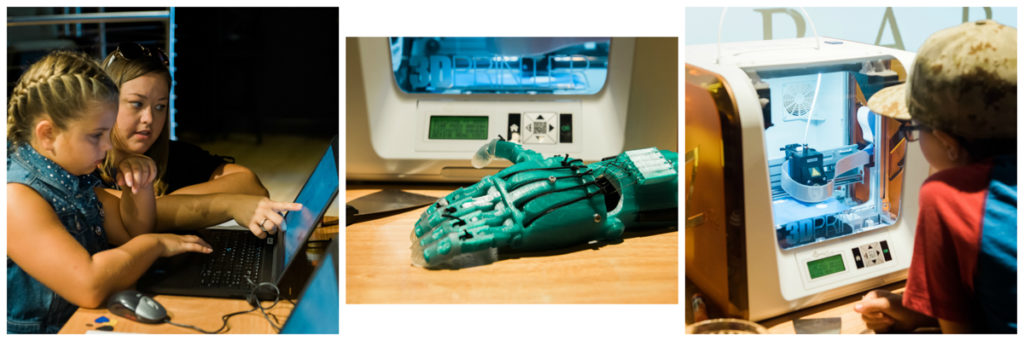
The Bristol Public Library brought their 3D printer to the museum, giving kids and adults the chance to explore the software used to create 3D designs and then see the printer in action. To illustrate the printer’s capabilities, they had a variety of printed objects on display from small hearts to a flower in a vase to a megalodon tooth – and even a prosthetic hand, made for the charity Prosthetic Kids Hand Challenge. Individual guitar picks embellished with text chosen by each person were also designed, printed, and given out – perhaps inspiration for future engineers AND musicians!

© Birthplace of Country Music; photographer: Billie Wheeler

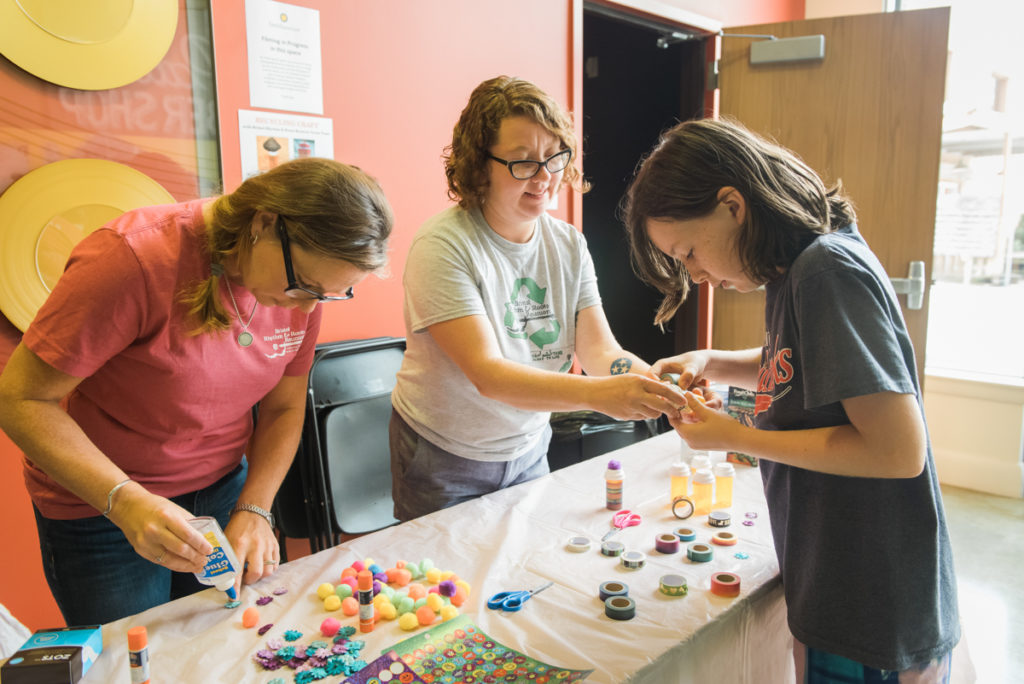
Upcycling is cool these days; all you have to do is hit Pinterest to find hundreds of craft ideas to make from common recyclables. Our Bristol Rhythm & Roots Green Team is always looking for new ways to be crafty with kids, and they brought out the washi tape, stickers galore, pom poms, and cloth flowers – plus a 5-pound bag of rice and a box of dry macaroni (because it’s never a real craft project until you use dry macaroni…) – to make old plastic bottles into maracas. There was a whole lot of shaking going on throughout the day!

Wood and metal worker extraordinaire Terry Clark, along with his wife Deb, brought items big and small with them to show our visiting families the cool and functional art you can make from a host of “found” objects. From the dragon weather vane to the lamp made from World War I helmets, the creativity on display was fantastic. And while kids got the chance to take away colorful iron spigots, I got the chance to see a steampunk spinning wheel in action.

© Birthplace of Country Music; photographers: Billie Wheeler and Rene Rodgers

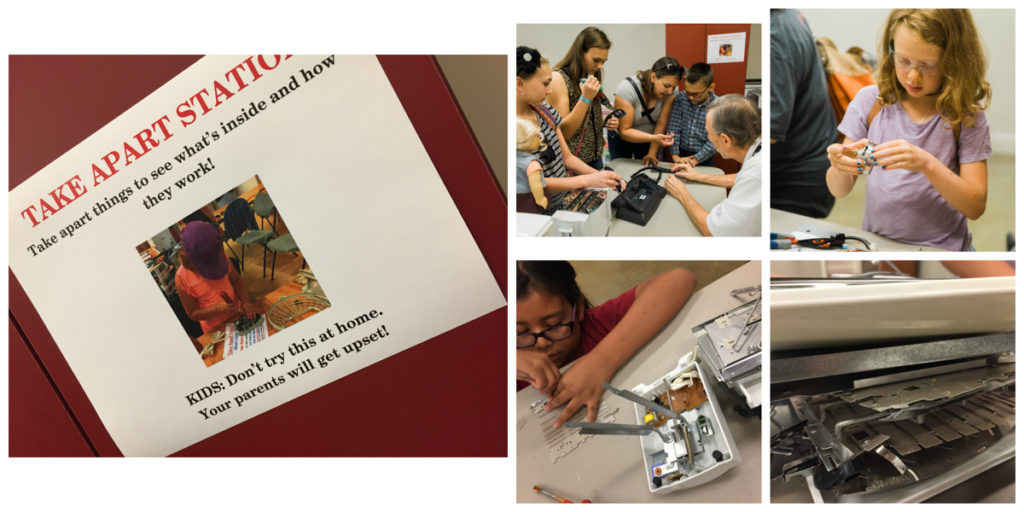
A “take apart” table proved to be one of our most popular activities. We had kids clustered round the table for the entire event, brows wrinkled, tongues sticking out, intense concentration on display as they unscrewed, pried open, pulled off layers, and took every single electronic completely and totally apart. At hour three of the day, I had to run to the local thrift store and buy some more items. Several of the kids took home bits and bobs from their taken apart objects, excited to show other members of their families and their classmates at school what they got up to at the museum over the weekend. It was wonderful to watch the excitement the kids felt as they examined the innards of all these common, everyday objects. And just in case that excitement carried over to home, we put up a sign saying “KIDS: Don’t try this at home. Your parents will get upset!”

© Birthplace of Country Music; photographer: Billie Wheeler

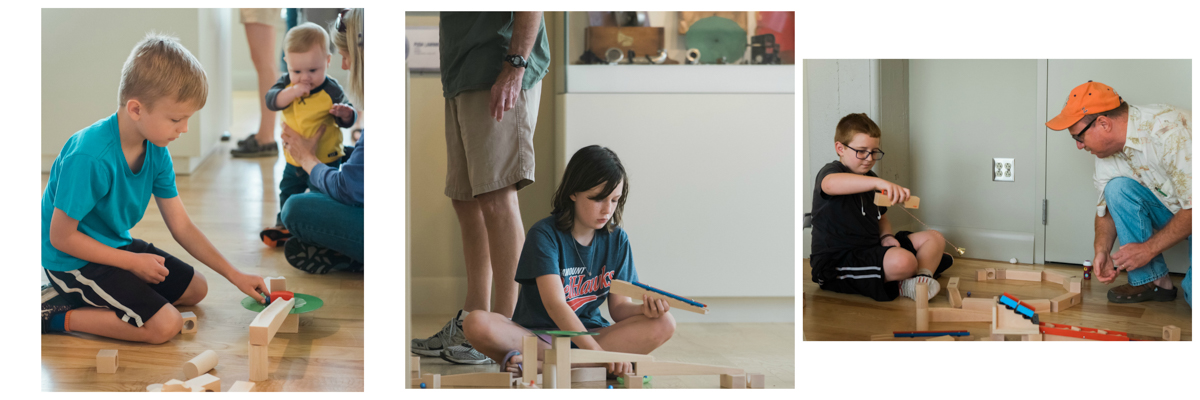
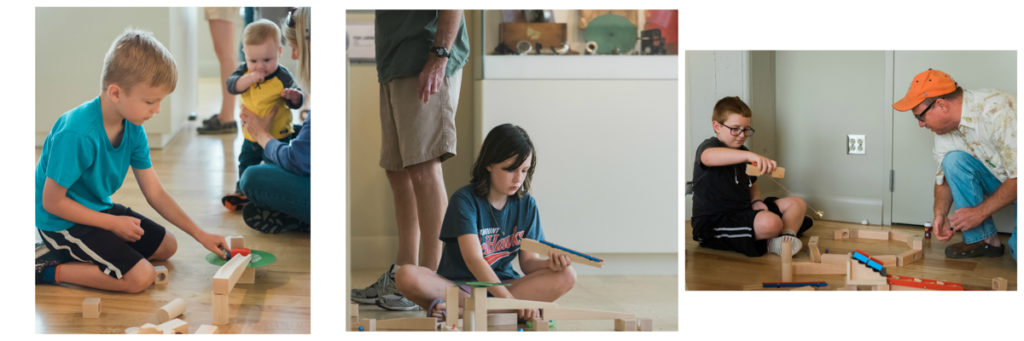
The Smithsonian’s Lemelson Center for the Study of Invention and Innovation’s Spark!Lab provided three activity kits with the Things Come Apart exhibit. One of these is focused on creating soundscapes by sending marbles along a variety of wooden pathways that have different methods of producing sound. This soundscape activity has proved hugely popular with all ages, from toddlers to teachers. For Family Fun Day we set up the soundscape activity kit in the gallery, not too far from where the locked doors to our vault are found. Long pathways, tall pathways, curving around on themselves pathways were built; marbles were launched; bells rang, xylophones clanged, metal clinked, and wood knocked – and marbles went absolutely everywhere. Despite our eagle eyes and unbeknownst to us, quite a few escaped, shooting through the small crack under the vault door, only to be found later by Emily, our collections manager. We might still be finding marbles for days to come.

Photograph by Jessica Turner

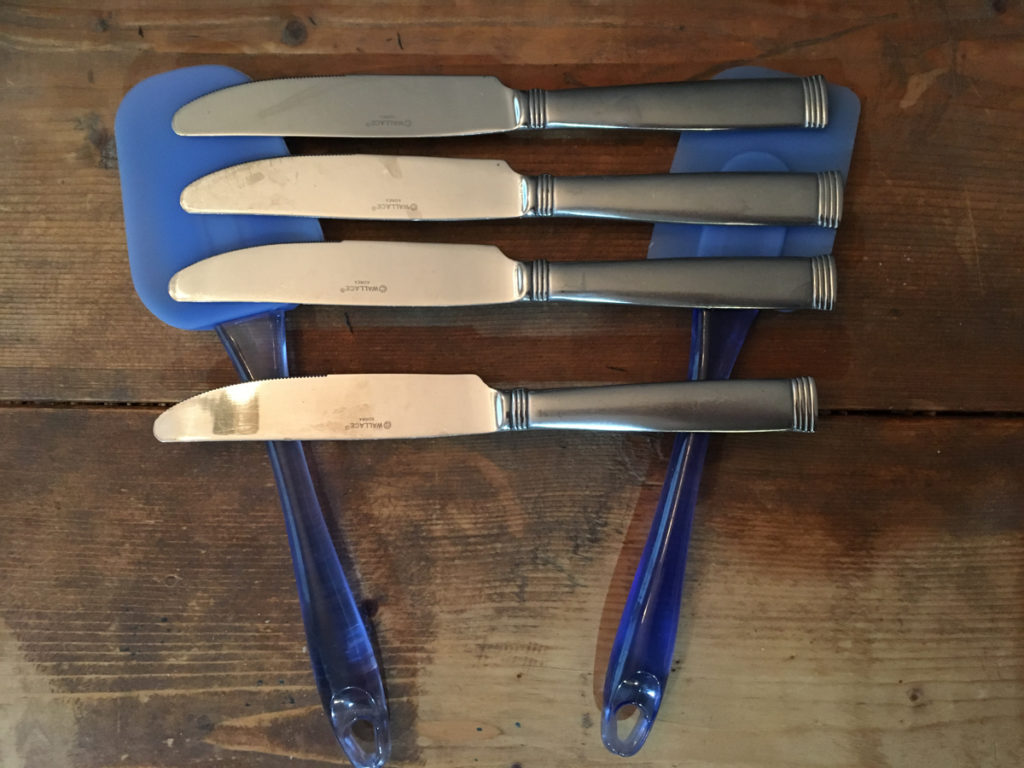
Families also got the chance to take a maker project home with them – we had a take-home instructable on how to create your own “wrenchophone,” generously shared with us by Maker Media from the book Make: Musical Inventions, DIY Instruments to Toot, Tap, Crank, Strum, Pluck and Switch On by Kathy Ceceri. This project showed kids how to make their own musical instrument at home – in the instructions, wrenches were used, but our museum director’s son Ian got creative, making his own version with butter knives and rubber spatulas. Apparently the spatulas helped to make the knives really ring out!

While all of the activities held on Family Fun Day were great, and the enthusiasm and engagement from the participants was especially wonderful, it was also really satisfying to see the other ways that kids were inspired to create and make in the museum. One of our visitors bought a small Lego kit from The Museum Store and built a small ukulele. But being in a museum meant that he didn’t stop there – he then used the plastic packaging (upcycling!) from the washi tape to create a display case for his ukulele, and wrote out his very own museum label for it to be on display during the event. A future curator perhaps!

© Birthplace of Country Music; photographer: Rene Rodgers

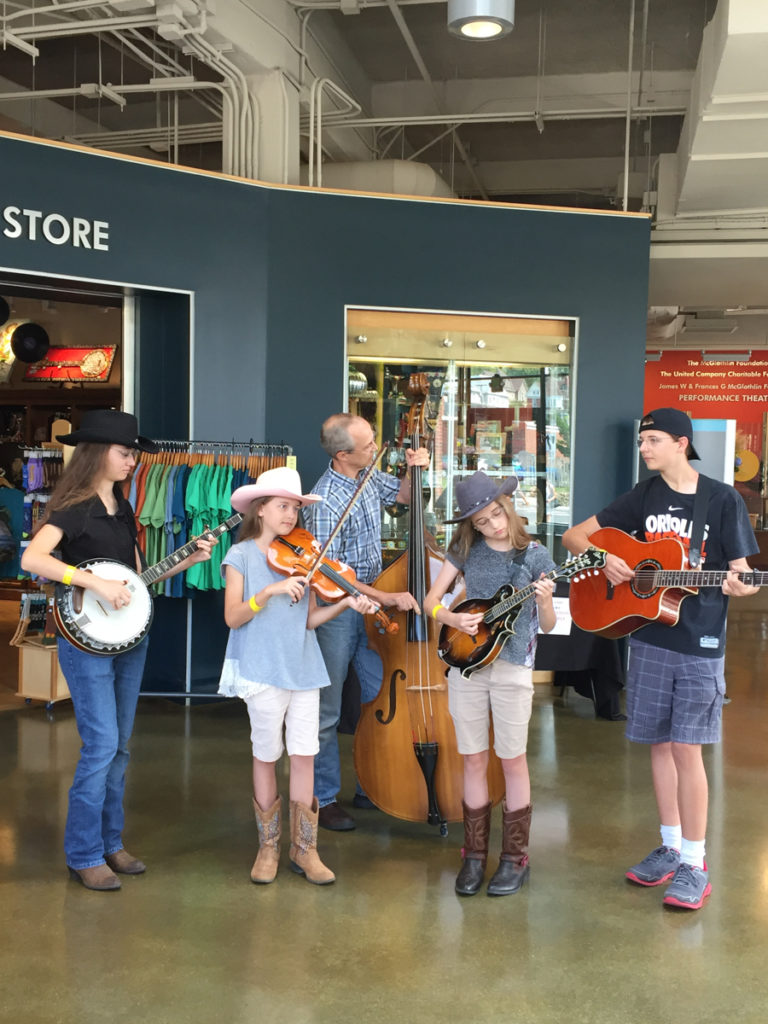
Finally, to cap it all off and to really underline that music is the center of all that we do, a family of five musicians stopped in and asked if they could share some of their tunes with our visitors. With songs from the 1927 Bristol Sessions and The Carter Family in their repertoire, it was a spontaneous and perfect end to a fun day!

René Rodgers is the Curator of Exhibits & Publications at the Birthplace of Country Music Museum.*And by the way, the answer is that the body is that of a goldfish…