Education Archives - Page 4 of 6 - The Birthplace of Country Music
Listen
Play
Loading station info...

The Origin Project: Children Telling Appalachian Stories

Every people has to have its own stories…
If we don’t have our own stories then we don’t have our own soul:
we don’t have our own deepest possession, which is ourselves and our own unfolding…
Unless we cherish and savour our own [stories],
then we’re not going to know who we are and…we’ll become strangers to ourselves…
We’ve got to hold up a mirror to ourselves and create our own stories.
                                                                        ~ Leonard N Cohen

Writing is a valuable, sometimes vital, tool in human endeavour. 

Story writing is a particular talent: the memorialisation of personal experiences, tales, and narratives bequeathed by family or friends, teachers or mentors. 

The Origin Project is an in-school writing program co-founded by best-selling author and film director Adriana Trigiani and myself, an education advocate and long-time friend. It sprouted six years ago from the idea that Appalachia’s stories are national treasures, and its children should celebrate their roots. Our program inspires young people to discover and liberate their inner voices through the craft of writing about their unique origins; it celebrates diversity and inclusion. The Origin Project provides young people with the literary tools and confidence to harvest their unique heritages; it galvanizes their curiosity about, and respect for, each other.
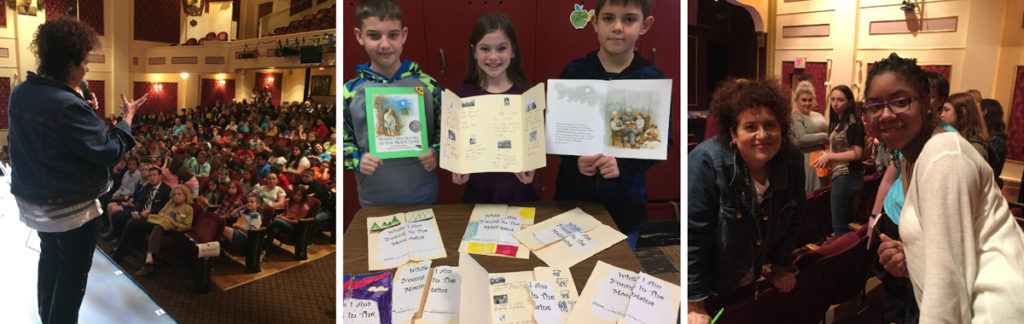
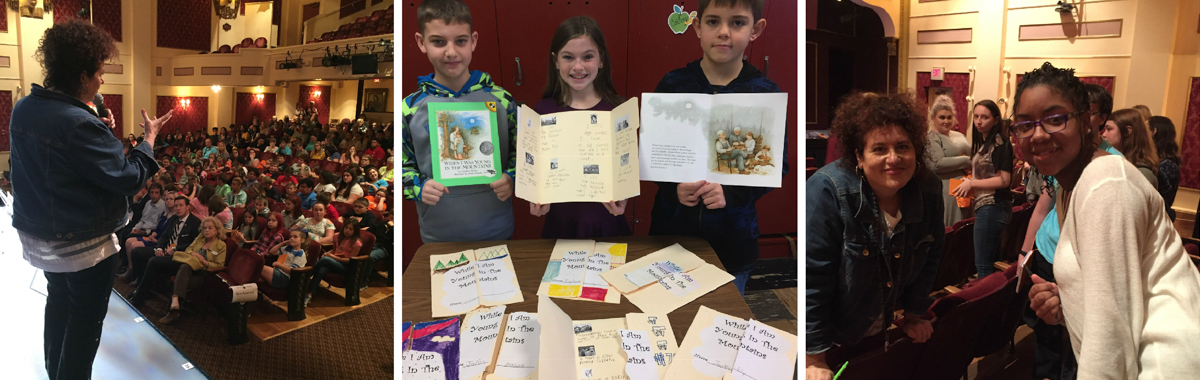
Left: Adriana Trigiani standing on stage at the Barter Theater with an audience full of school children. Center: Three 4th-grade students holding Cynthia Rylant's book and copies of the school project lap books. Right: Adriana Trigiani posing with a young student in the Barter Theater.
Left and right: Adri and The Origin Project students at the Barter Theatre Kickoff Celebration in 2018. Center: Flatwoods Elementary School 4th-grade reading students with lap books made in response to When I Was Young in the Mountains by Cynthia Rylant. Photographs courtesy of Linda Woodward

Starting from 40 students in Big Stone Gap, Adri’s hometown, The Origin Project has grown organically to serve more than 1,500 students in 17 schools. We regularly import renowned authors – so far, David Baldacci, Meg Wolitzer, Margot Lee Shetterly, Mary Hogan, and Laurie Eustis – to meet with the students and share their personal writing experiences. 

Each fall, our students are given a personal journal and thereafter work on multiple projects or stories that speak of and to their heritage. Their work is professionally published at the end of the year in an anthology, presented to each student and made available in school and public libraries. The Origin Project is integrated with the Virginia Standards of Learning curriculum and collaborates with each student at her/his skill level to conceive, develop, and hone ideas into short stories, poems, plays, interviews, or other art.
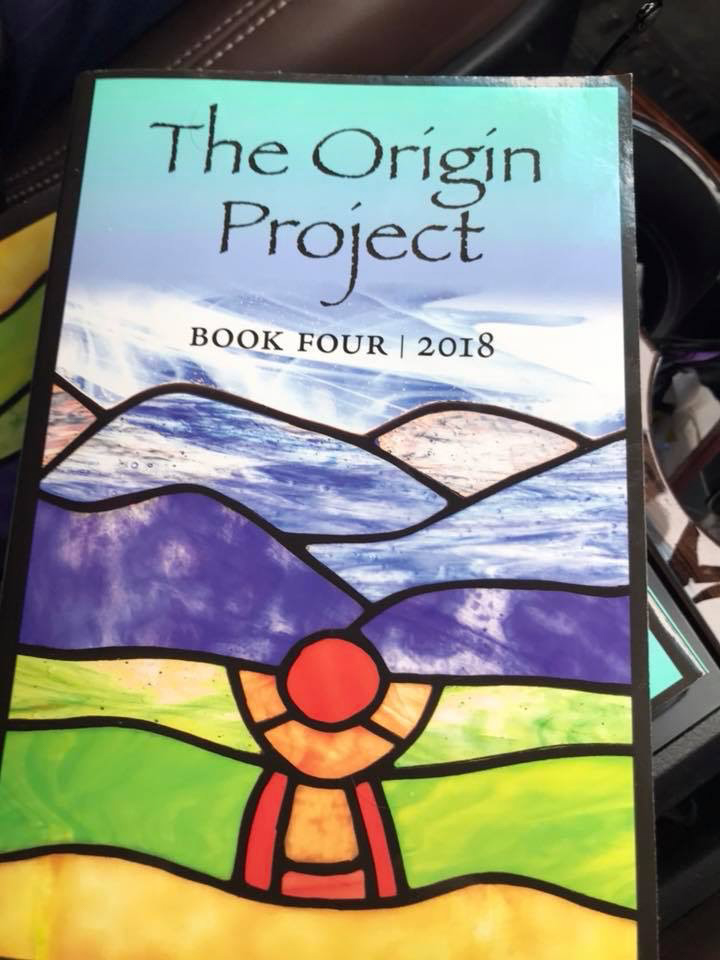
The cover of The Origin Project Book Four (2018), which looks like a stained glass view of the Blue Ridge Mountains.
The Origin Project Book Four, published May 2018. Photograph courtesy of Linda Woodward

It is a joyful surprise to read our students’ work, witness their growth, and observe the budding of their self-esteem. Through their creative writing with The Origin Project, our students “hold up a mirror” to themselves and thereby reclaim their “own deepest possession”: themselves and their “own unfolding.”

When Adri asked me to join her in founding The Origin Project, I had never been to Appalachia; upon my arrival, I even mispronounced its name. Over the past six years, I have fallen in love with the rolling blue mountains framing this extraordinary place that is home to magical people with unique stories to tell. Listening to students share tales of their heritage – of celebrations of Mamaws and Papaws and of personal successes and heartaches – has enriched my own life. I believe other readers of our annual anthologies experience similar reactions. Virginia has become my home-away-from-home.
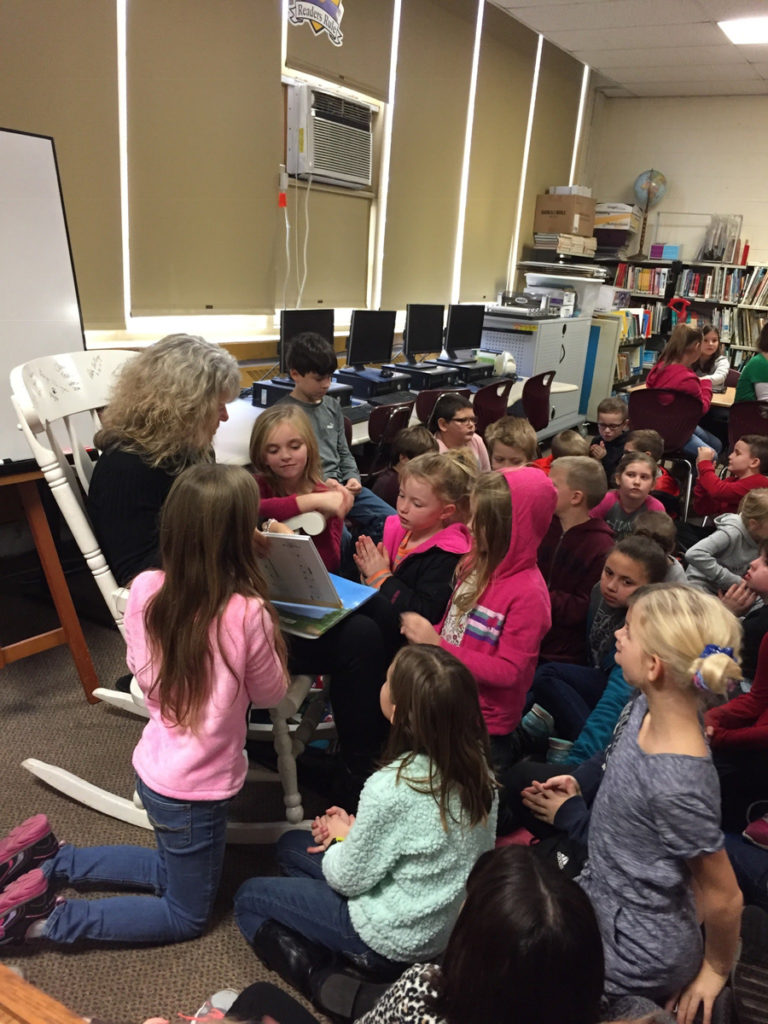
Nancy sitting in a rocking chair in a school classroom, surrounded by 2nd-grade students as she reads to them.
Reading Lorraine: The Girl Who Sang the Storm Away by Ketch Secor to Flatwoods Elementary School 2nd graders. Photograph courtesy of Linda Woodward

Last year The Origin Project embarked on a collaboration with the Birthplace of Country Music. We brought a group of our students to the Birthplace of Country Music Museum to tour For All the World to See: Visual Culture and the Struggle for Civil Rights, a temporary special exhibit made possible through NEH on the Road, a special initiative of the National Endowment for the Humanities, and Mid-America Arts Alliance. The experience provided a unique opportunity for our young writers to discover, through imagery portraying eye-opening events, some of the history of the Civil Rights movement in Appalachia and beyond. As Head Curator René Rodgers guided and informed our students, we learned that much of what was portrayed in this exquisite exhibit was rarely read or discussed in their curriculum. The culmination of the visit to the museum was a poetry workshop led by Langley Shazor, poet and president of The Casual Word. Langley provided the students with typewriters to drop them into the timeframe of the exhibit, and after a lesson on how to operate them, the students created emotional, profound poems that will be published in this year’s anthology.
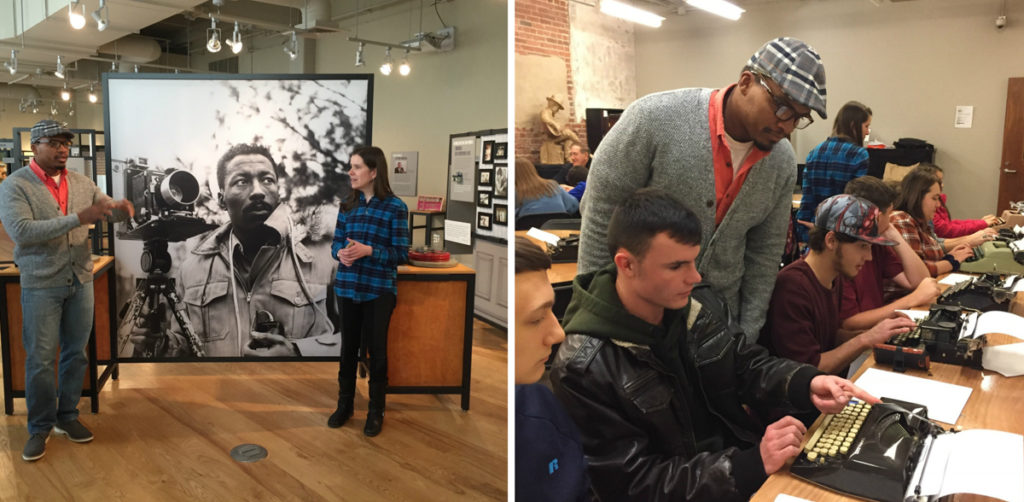
Left: Langley Shazor, wearing a cloth cap, and Rene Rodgers, in a plaid flannel shirt, standing in front of the opening panel to For All the World to See (a picture of Gordon Parks with his camera). Right: Langley stands behind several students working on typewriter's in the museum's Learning Center.
Left: Langley Shazor and René Rodgers talk to The Origin Project students about For All the World to See and using the exhibit’s visual imagery for inspiration. Right: Students use old-fashioned typewriters to tap into their creativity after visiting the exhibit. Photographs courtesy of Linda Woodward

In the weeks ahead, we look forward to exposing as many of our students as possible to Reading Appalachia: Voices from Children’s Literature, another temporary special exhibit on loan from the East Tennessee Historical Society and currently on display at the museum – one that will provide a priceless opportunity for them to “walk into the pages of a story of childhood in Appalachia!”

Eagerly awaiting the arrival of The Origin Project Book Five, we are busy planning five unveilings to celebrate the creations of our published authors. We are thrilled and excited to hold one of these events at the Birthplace of Country Music Museum in May. We are deeply grateful to these new partners and friends, and look forward to many collaborations in the future!
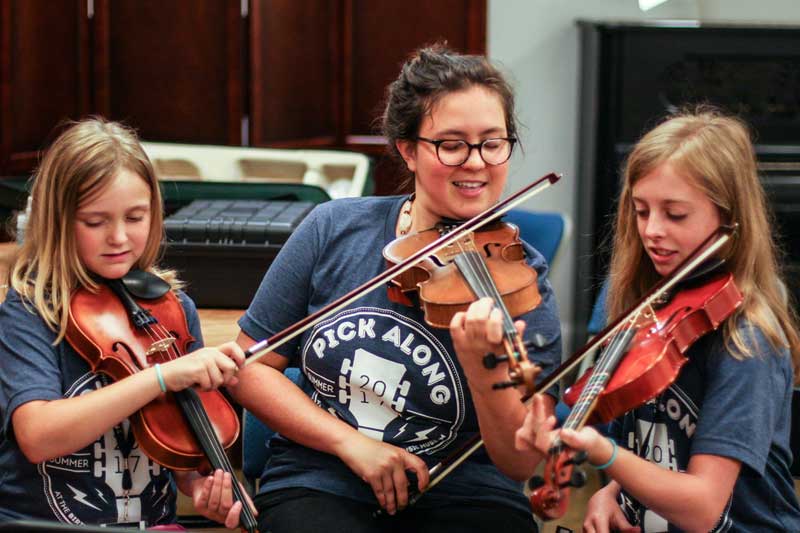
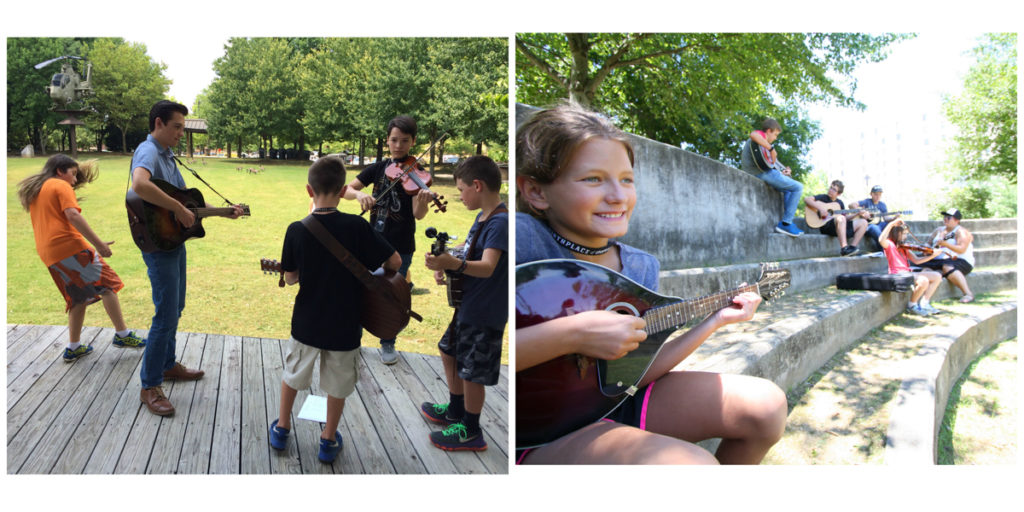
Past Music Heritage, Present-Day Learning and Fun, Future Musicians: Pick Along Summer Camp with the Birthplace of Country Music

As a group of campers were finishing up lunch one day, I was preparing to take everyone to the park for some recreation time and a bit of a mental break from their hard work. As I was about to ask who wanted to carry the sidewalk chalk, a few students approached me with a request.

“Miss Erin, instead of playing games, can we bring our instruments to the park so we can practice?”

The first time I heard this question, I was surprised and impressed by the desire of our Pick Along students to continue playing instruments rather than a game of kickball. But as the days and weeks continued, I begin to receive this request over and over again. In hindsight, I realize that it is not surprising at all that a child would want to play their instrument over other activities. Learning a musical instrument is engaging. It is a connection to others. It’s actually…A LOT of fun.

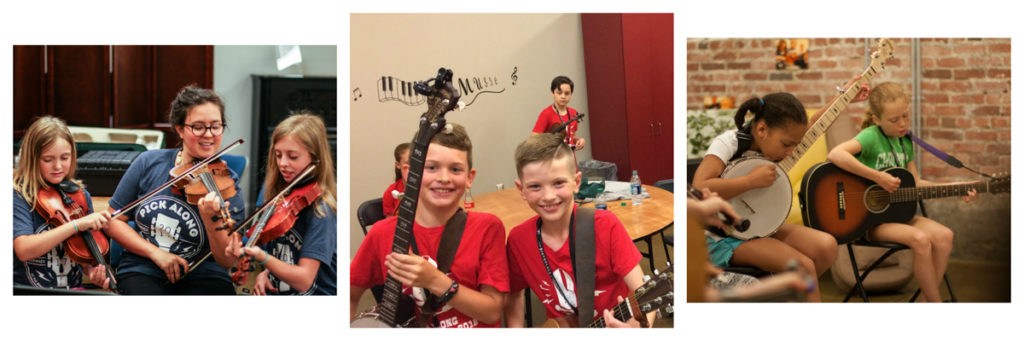
Campers enjoy the fresh air – and playing their instruments – during a break at Cumberland Square Park. © Erin Dalton

Each summer for the past four years, the Birthplace of Country Music has welcomed aspiring young musicians with an eagerness to learn more about traditional folk instruments and regional music history to our annual Pick Along Summer Camps. This is my third year working as director for these camps, and I am thrilled to share a bit about what we do here in June and July.

Pick Along Summer Camps offer an option of beginner or intermediate instruction on the camper’s instrument of choice: acoustic guitar, banjo, or fiddle. Campers are given a wonderfully engaging introduction to the old-time music that is so closely bound to the history of this region. They play and sing songs that are not only ballads and folk songs passed down through generations, but also many that were a part of the 1927 Bristol Sessions.

Throughout the camp week, campers get familiar with their instruments and playing techniques, learn to play a variety of songs, and work together as a “band.” © Erin Dalton

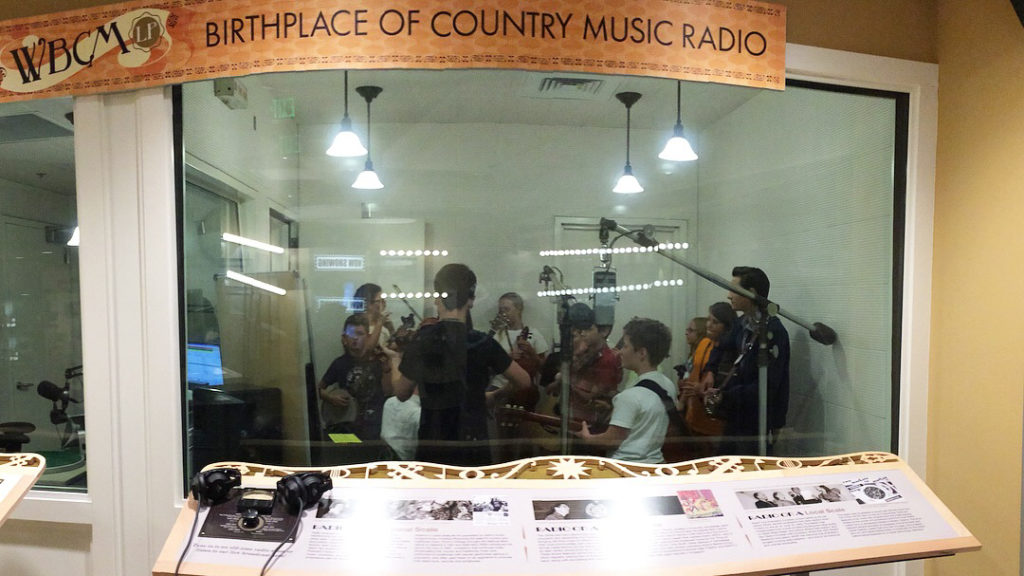
We start our beginner weeks by having an “instrument zoo,” where campers are given a brief introduction to each instrument offered for study. They are then assigned to their groups for the week and spend the mornings learning skills in technique, chords, melodies, and group collaboration. In the afternoons, they work with staff from the museum’s radio station, Radio Bristol, in creating their own radio program, which is recorded and played at their final group performance, which is open to their families, BCM staff, and museum visitors.

The week wraps up with performance opportunities, including the most popular one – “busking” at Blackbird Bakery. They perform tunes for all of the visitors grabbing baked goods and doughnuts. We have a great time playing and singing, and we always have requests to play more regularly! And, of course, they get a sweet treat for themselves!

Last summer, in a twist of good fate, Radio Bristol’s Farm and Fun Time program lined up with the same week as our intermediate camp. The campers created their own Farm and Fun Time Junior program and were asked to perform it during the live broadcast that Thursday evening. You can watch their stellar performance here.

One Friday, during a rare moment of downtime, several of the beginner students asked if they could share songs they had written that week. One of our special guest instructors had asked the students to try their hand at telling a story through song, which proved to be inspiring! To perform this song publicly was optional, so I was impressed with the handful that chose to stand in front of their fellow campers and not only play, but also sing their own words and music.

Campers also get the chance to play live on-air for the
weekly On the Sunny Side show. © Erin Dalton

Many of these students take their excitement and love of music outside of our Pick Along camps with continued private instrument lessons, playing local open mic nights, volunteering for BCM’s Family Fun Days, and attending community jams, including the one held monthly at the museum. Some of our campers have also been invited to play with Tyler Hughes at Bristol Rhythm & Roots Reunion and at the Southwest Virginia Cultural Center & Marketplace (formerly Heartwood) in Abingdon, Virginia (now Southwest Virginia Cultural Center & Marketplace). A handful of return campers have also worked with us as Junior Counselors, assisting instructors and working with beginner camp attendees.

Each week of camp creates its own stories and memories. There are quiet, subtle breakthroughs, and there are the exciting, flashing lights-type of moments. In the process of learning music, one is just as important as the other. I’m very grateful to be a part of this arts education program that sets the stage for big and small victories – and for a lifetime of loving to learn and play music.

****************************************************************

It was the last day of our Pick Along Camps, and our final program had just finished. I was walking out of the museum when I spotted one of the campers walking with her family.

“Well, we’re headed to the guitar store now,” the mother called out. “We told her we would look at getting a guitar if she enjoyed playing it at camp. She couldn’t wait, so we are on our way now!”

*****************************************************************

If you are interested in signing your budding musician up for Pick Along Summer Camps, click here for more information and the application.

High-Tech Vintage: Technology and the Delivery of Old-Time Sound

January 6 is National Technology Day – and so it seemed the perfect time to explore some of the Birthplace of Country Music Museum from the technology side of things! We’ve picked five elements of the content or the museum itself that tell just a little of the technology story here:

Recording and Playback Machines

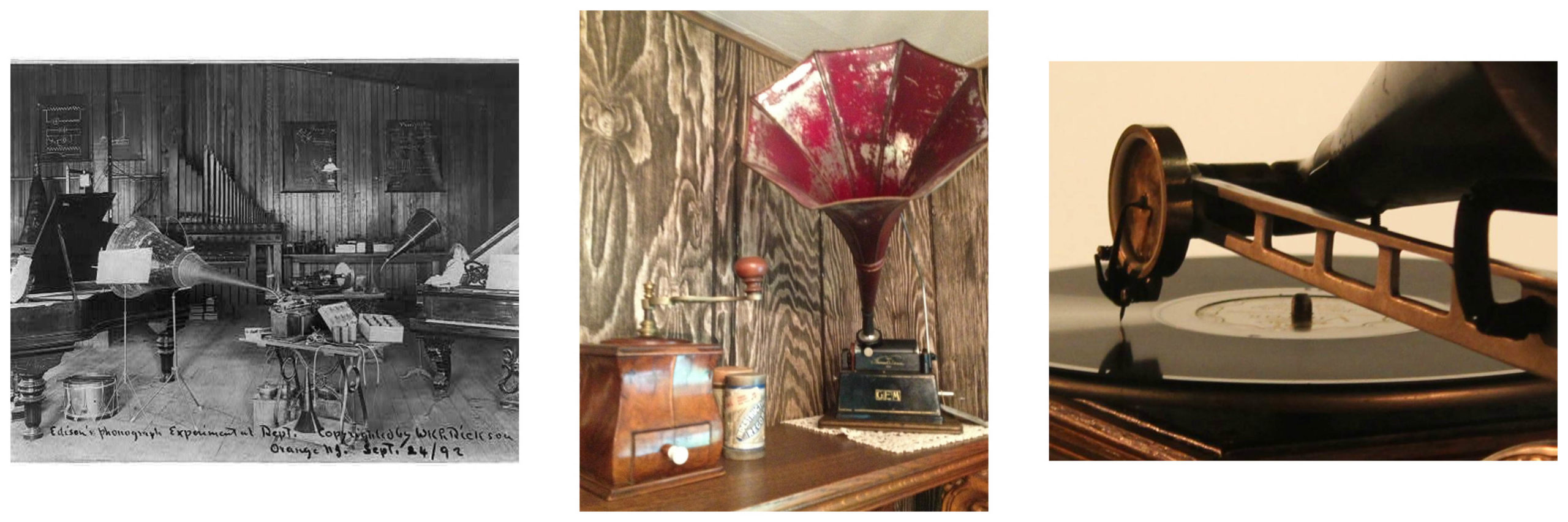
The museum shares the story of the 1927 Bristol Sessions, but it also explores how sound technology shaped their success and evolved over the years. Inventions such as recording and playback machines played important roles. For instance, in 1877, Thomas Edison invented the phonograph, which was instrumental in distributing music in the early 20th century, including the songs recorded at the 1927 Bristol Sessions. Writing an article in 1878 on “The Phonograph and its Future,” Edison listed other possible uses for his invention beyond playing music, including elocution and other educational lessons; audio books (before Audible and iTunes!); to create sound effects for children’s toys; and most intriguingly, “family records,” where the last words of dying family members could be saved for posterity, like that of other great characters of the day.

Other innovators contributed to the development of this type of playback technology. In 1881, Alexander Graham Bell invented the graphophone, an improved version of the phonograph developed by Edison, and in 1894, Emile Berliner invented the disc gramophone method, which used different machines to record and then to play back the sound. Where earlier recording and playback machines used cylinders, either coated in tin foil or wax, Berliner’s gramophone used flat disc records.

Left: Large room filled with musical instruments, a large phonograph and other equipment and furniture; center: A cylinder phonograph with rose red horn with cylinders and another machine nearby; right: A close-up showing the needle on a record disc.
Left: Thomas Edison’s Phonograph Experimental Department in the early 1890s; Center: A cylinder phonograph with rose red horn; Right: Record playing on a disc phonograph. Images are Library of Congress, Prints & Photographs Division, [reproduction number, e.g., LC-USZ62-90145] (left) and © Birthplace of Country Music (center, right)
Acoustic Design

The museum is a high-tech, interactive experience, one that is filled with music and sound. And because of that, it had to be designed strategically and carefully in order to provide the best possible experience to our visitors. For instance, the acoustic engineer advised the architects and exhibit designers on ways to define walls and ceilings to contain sound or keep it from bouncing around the open gallery spaces or the theater. The firm also worked closely with the technology team and media producers to define how the sound of each audio or audio/video production is delivered into the space. The goal was to provide an immersive experience, yet minimize unwanted “bleed” of sound between programs. Innovative acoustic wall panels and fabric mean that the acoustic technology is seamless and becomes a part of the museum experience itself, while speakers embedded underneath the pews in the chapel theater space mean that visitors feel like they are right in the middle of the congregation and they can often even feel it in their seats!

Left: The curved wall of the timeline with an oval white disc hanging above it; center: Several patrons sit in the pews of the chapel as they view the chapel film; right: The acoustic tile is a light beige color with several cut-out dots in a variety of patterns on its surface.
Left: A hanging acoustic panel above the timeline in the museum’s atrium exhibit space focuses the soundscape down towards visitors who stand in this area; Center: The sound design in the chapel helps patrons to feel like they are part of the congregation as they watch the film; Right: High-tech acoustic tile in the museum’s Performance Theater helps to make the sound experience in this space truly special. © Birthplace of Country Music, photographer: Neil Staples; © Hillmann & Carr; © Birthplace of Country Music

Orthophonic Technology

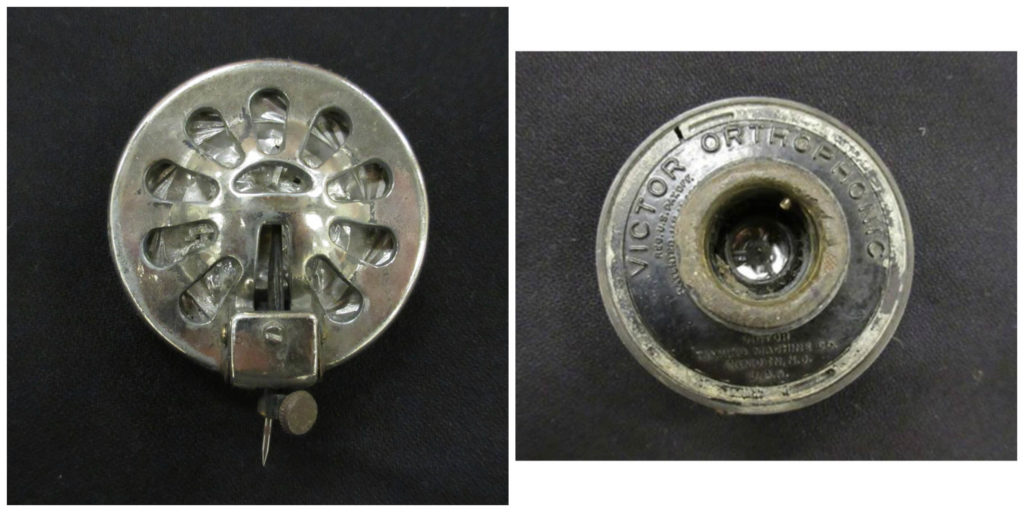
Orthophonic reproducers were an outgrowth of the electric microphones being used to record performers in the late 1920s. Electric recording captured a wider range of sound frequencies and produced recordings in which the instruments and voices sounded much more like live instruments and voices than they had on previous acoustic recordings. These reproducers were designed to be more sensitive to the nuances in the electric recordings, making the listener’s experience more pleasurable and true-to-life. The Bristol Sessions in 1927 were recorded using this process and many claimed that the Orthophonic recordings sounded even better than the live performances! Electric recording and Orthophonic machines, like later compact discs or HDTV, were a technological revolution that helped change the shape of the music industry.

Two sides of an Orthophonic reproducer -- one looks like the front of an old-time microphone, while the other bears the name Victor Ortophonic. Both sides are made of silver metal.
These Victor Orthophonic reproducers (front and back), donated by Bob Bledsoe, are the pieces of the Orthophonic Victrola that connected the record to the sound horn. A listener would insert a needle into the reproducer, which would follow the groove on the record. The groove created vibrations that were made into sound waves by the reproducer and amplified by the sound horn. © Birthplace of Country Music

The Radio Station

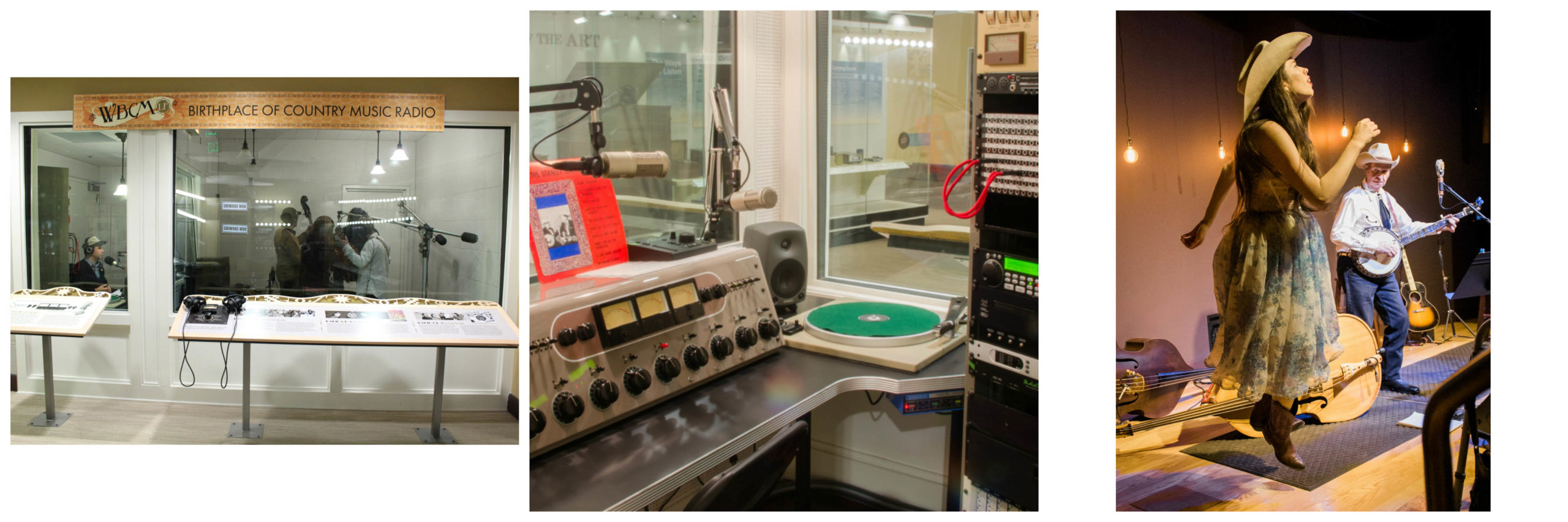
During the planning stage of the museum, the exhibit content team discussed ways to make the space focused on radio history into an engaging experience for our visitors. The result? Radio Bristol, a live radio station! With help from a team of radio industry advisers, BCM applied to the FCC for a low-power FM license, secured the antennae, transmitter and equipment necessary for broadcasting, and created a working radio studio in the museum. And that’s where the technology gets really interesting because the station uses vintage equipment from older Bristol radio stations, refurbished and repurposed for today. For instance, a Raytheon console from 1940s WCYB Radio, sourced from local radio buff and collector William Mountjoy, was rebuilt by engineer Jim Gilmore, retired engineer from TNN. One of the mics in the radio studio is from local station WOPI and was used by Tennessee Ernie Ford when he was a DJ there. And there are numerous ways to deliver music in the station – from a record turntable to a live recording booth to the digital ease of tablets and MP3s. The station is what we call high-tech vintage!

Left: A view of the radio station from outside the booths showing a DJ in the smaller room to the left and a band recording live in the larger space to the right; center: A view of the console, turntable, and other equipment in the DJ booth; Right: A musician on banjo plays while Martha Spencer flatfoots live on the Farm and Fun Time stage.
Left and center: The radio station in the museum has a booth for the radio DJ and a larger room for performers and musicians to record live; the DJ booth is fitted out with 1940s equipment upgraded to digital capability. Right: Live performances in the Performance Theater, such as this Farm and Fun Time show, can also be broadcast live from the museum and streamed on Facebook. © Birthplace of Country Music (left and center); © Birthplace of Country Music, photographer: Billie Wheeler

Technology Lessons

Finally, sometimes the technology isn’t an object from our collections or an innovative way to present the museum’s content. Rather it is found in educational programs where we share the story of that technology. For instance, for the past two years, museum staff and volunteers have participated in the Kingsport Mini Maker Faire where we have presented information about the museum’s exhibits and engaged in a variety of sound demonstrations, including an example of amplification and a homemade Chladni plate! We also offer a “History of Listening” lesson, available in the museum and to schools and other groups. Throughout history music has been experienced in a variety of ways, especially as advances in technology have developed over time. This lesson explores these technological changes and then compares how listening to music transitioned from being a mostly community-based activity, often through live performance, to listening either alone or together in person via technology and the virtual environments of cyberspace.

Left: A young girl listens to an explanation of amplification while looking at the equipment held by the head curator; Top right: A metal plate covered in blue sand sits between a museum volunteer and a young girl in one picture while the second shows the geometric pattern formed by the sound from the sound waves that have been directed to the metal plate; Bottom right: A drawing of the acoustic and electric methods of recording on a white board at a school in the first pic, while the second pic shows two tables bearing a variety of different playback machines such as a record player, a CD player, a tape player, and several cylinders and records.
Left: Museum head curator Rene Rodgers demonstrating sound amplification to a young visitor at the Kingsport Mini Maker Faire in 2017. Top right: Museum volunteer Matt Wood explains the Chladni plate to a child at the Kingsport Mini Maker Faire in 2018; the resulting pattern produced by sound waves. Bottom right: A basic drawing (very basic!) to differentiate the acoustic and electric recording methods during the “History of Listening” lesson at a local school; museum staff and volunteers demonstrate the lesson to teachers during a summer in-service. © Birthplace of Country Music


Reading is Music to the Ears!

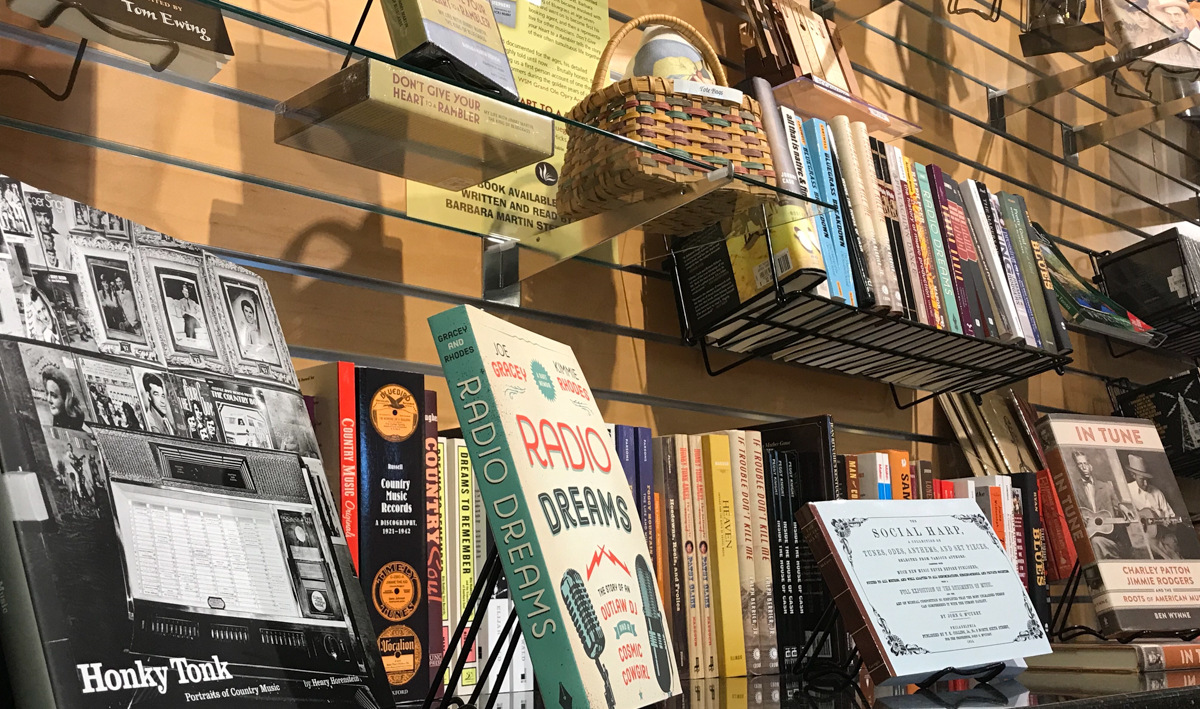
Each year on September 6, bookworms across America celebrate National Read A Book Day. Though this is a fine thing to celebrate, reading is, of course, important and pleasurable every day of the year. If one wants to learn more about country music history, what better place to start than with a book? While you can find all of the selections below through online sellers, these and other fine selections can also be found at the Birthplace of Country Music Museum in our museum store – so stop on by and pick one up. Here are just a few of my favorites to get you started!

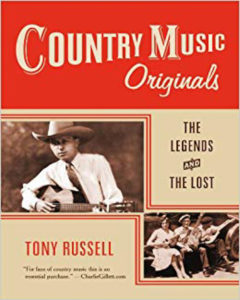
Cover image of Country Music Originals showing the title and two pictures of country music singers/bands.

Country Music Originals: The Legends and the Lost by Tony Russell

If you want to learn more about the important players in the world of country music, Tony Russell’s Country Music Originals is a great place to start. World-renowned scholar Russell presents biographies of figures in country music from the earliest days of recordings until the late 1940s. Highlighting superstars such as Jimmie Rodgers and The Carter Family and celebrating obscure figures such as Bernard “Slim” Smith and John Dilleshaw, Russell provides articles that are short enough to be approachable for the casual reader, but also in depth enough to spark interest for further reading. It’s a great place to start your country music reading journey!

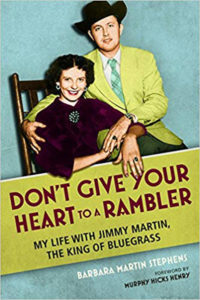
Cover image of Don't Give Your Heart to a Rambler showing title and the author with Jimmy Martin.

Don’t Give Your Heart to a Rambler: My Life with Jimmy Martin, the King of Bluegrass by Barbara Martin Stephens

While bluegrass music is widely regarded as having been born in late 1945, one could argue that the music did not achieve the “high lonesome” sound until a young guitar player and singer from Sneedville, Tennessee, joined Bill Monroe’s Bluegrass Boys in late 1949. Jimmy Martin is widely regarded as “The King of Bluegrass” and is one of most charismatic and controversial figures in bluegrass. Don’t Give Your Heart To A Rambler was written by Barbara Martin Stephens, Martin’s longtime partner and the driving force behind his rise to success in the music business. Barbara spares her readers no gritty details as she gives an inside look into life with the King. Through all the abuse and hardship she suffered in her personal life, Barbara was still able to become the first female booking agent on music row. Nothing short of inspiring, this book is a must-read for all bluegrass fans and those interested in women in country music.

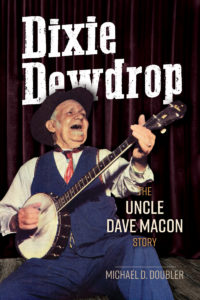
Cover image of Dixie Dewdrop showing title and Uncle Dave Macon playing the banjo.

Dixie Dewdrop: The Uncle Dave Macon Story by Michael D. Doubler

Uncle Dave Macon is one of the most iconic figures of early country music, and his style of banjo playing and showmanship has inspired countless musicians – and so Dixie Dewdrop tells the story of one of country music’s first stars. Michael Doubler, the great-grandson of Uncle Dave, spins a narrative that ties together Uncle Dave’s personal life and the music and culture of the world in which Uncle Dave lived, giving readers a glimpse into a different side of this legendary performer. If you’re curious about this book and Uncle Dave Macon, you can join Doubler at the Birthplace of Country Music Museum at 1pm on Sunday, November 4 for a special talk and book-signing.

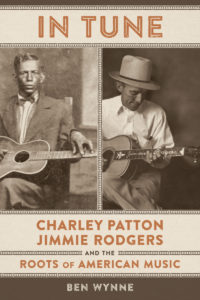
Cover image of In Tune showing title and pictures of Charley Patton and Jimmie Rodgers.

In Tune: Charley Patton, Jimmie Rodgers and the Roots of American Music by Ben Wynne

Before record companies began marketing music to specific audiences, music flowed across cultural lines, and the line between traditional African American and white rural music was blurred. With the wonderfully informative In Tune, Ben Wynne compares and contrasts these two giants of roots music within that context. Both men were born in Mississippi around the same time, and both passed away much too early in their musical careers and their lives, dying within a year of each other. Though from separate sides of a deeply segregated society, these men lived hard lives and had experiences that were remarkably similar. This book provides commentary on the social dynamics that shaped country music, and it gives readers a detailed look into the lives and legacies of these two important figures.

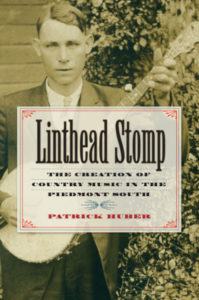
Cover image of Linthead Stomp with title and picture of banjo player.

Linthead Stomp: The Creation of Country Music in the Piedmont South by Patrick Huber

Geography and country music go hand-in-hand, and regionalisms are part of what makes early country music so diverse. Bristol with its significant music history is heralded as the “Birthplace of Country Music,” but in reality, American roots music was shaped all across the nation. Patrick Huber explores the impact of textile mills in the Piedmont region of the Carolinas in Linthead Stomp. With a high population of displaced rural southerners seeking work in the mills, a new market for early country music entertainment was opened. Rural music moving to town also changed the music, and the changes that were taking place in the 1920s and 1930s in the Piedmont set the stage for country music as we know it. This book is a must-read for anyone interested in the commercialization of country music.

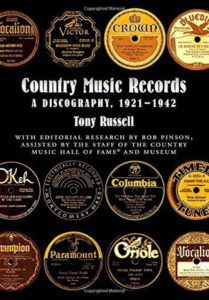
Cover image of Country Music Records with pictures of various record labels and the title.

And finally a “special mention”: Country Music Records: A Discography, 1921–1942 by Tony Russell

All of the books previously mentioned are easily digestible reads for the casual country music fan. However, if you find yourself hungering for all the facts about early county music records, this is the book for you. Roughly the size of your local phone book and twice as dense with information, this book contains the dates, locations, and personnel of every commercial country record recorded before 1942. A must have for any diehard country music fan and connoisseur of fine shellac.

So…I’ve given you my favorites. Now tell us: what are your favorite music reads?!