Education Archives - Page 3 of 6 - The Birthplace of Country Music
Listen
Play
Loading station info...

To App-uh-latch-uh or To App-uh-lay-shuh…That is the Question

Yes, both are correct, but here is why I urge you to still say “App-uh-latch-uh.”

It’s something that has caused perhaps nearly as many arguments as politics. No one has (hopefully) ever gotten into an argument about whether or not they ordered a “car-mel” or “care-ah-mel” latte, but disagreements about Appalachia can become very heated very easily. Appalachia has several different pronunciations across the United States, but the two most common (and contentious) are “App-uh-latch-uh” and “App-uh-lay-shuh.” The former has traditionally been linked with the south, while the latter is more associated with the north.

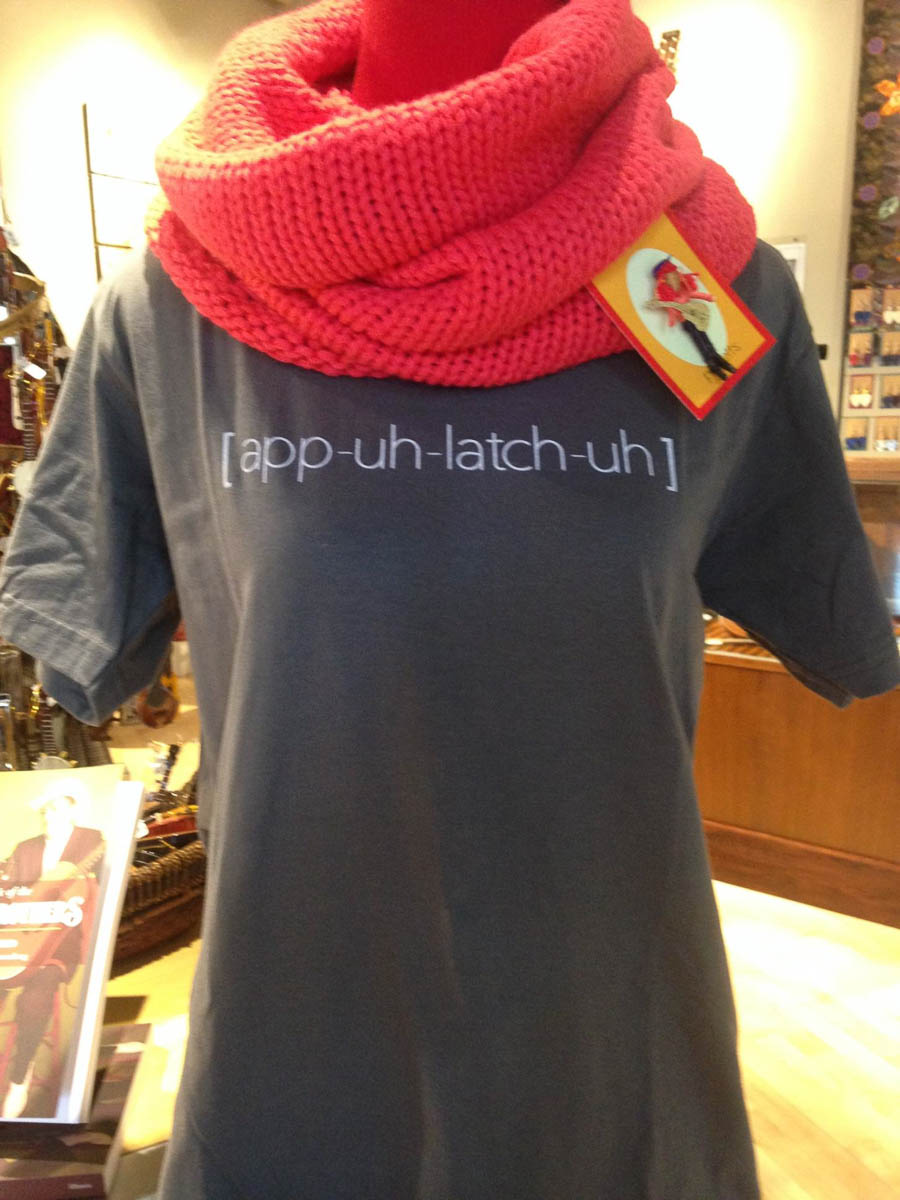
The photograph show a display mannequin showcasing a grey t-shirt, red scarf, and musician brooch. The t-shirt has the word [app-uh-latch-uh] on it.

Soon after the museum opened, we sold t-shirts that spelled out the “correct” pronunciation of Appalachia – it generated debate from our visitors and also 435 shares on the related social media post! © Birthplace of Country Music

So, who is right? To quote writer John Green: “The truth resists simplicity.” Both ways are correct, but which way you choose to say it can say more about you than you may realize.

Much like its pronunciation, the etymology of the word “Appalachia” is also debated. Before the Europeans arrived in North America, the Appalachian Mountains and their geographical components had a multitude of names. The Cherokee or Tsalagi called the Smoky Mountains Shaconage. Algonquin-speaking peoples called the White Mountains in New Hampshire Wobanadenok. To the Powhatan of eastern Virginia, the Blue Ridge Mountains were known as Quirank. The first people to live in the region were all independent nations with different languages and cultures. It wasn’t until later that the entire mountain range was grouped as a single region.

The consensus is that the current name derives from “Apalachee” (App-uh-latch-ee), the Spanish romanization of the name of a Native American people that lived in the Florida Panhandle, though exactly upon which expedition the Spanish encountered these Indigenous people is debated. Either way, variations of the name – such as “Apalachen” – began appearing on Spanish maps of the area in the 1560s. By the 1700s, the name was used to refer to the southern section of the mountain range, and the name “Appalachia” was eventually used for the entire mountain range by the end of the 19th century.
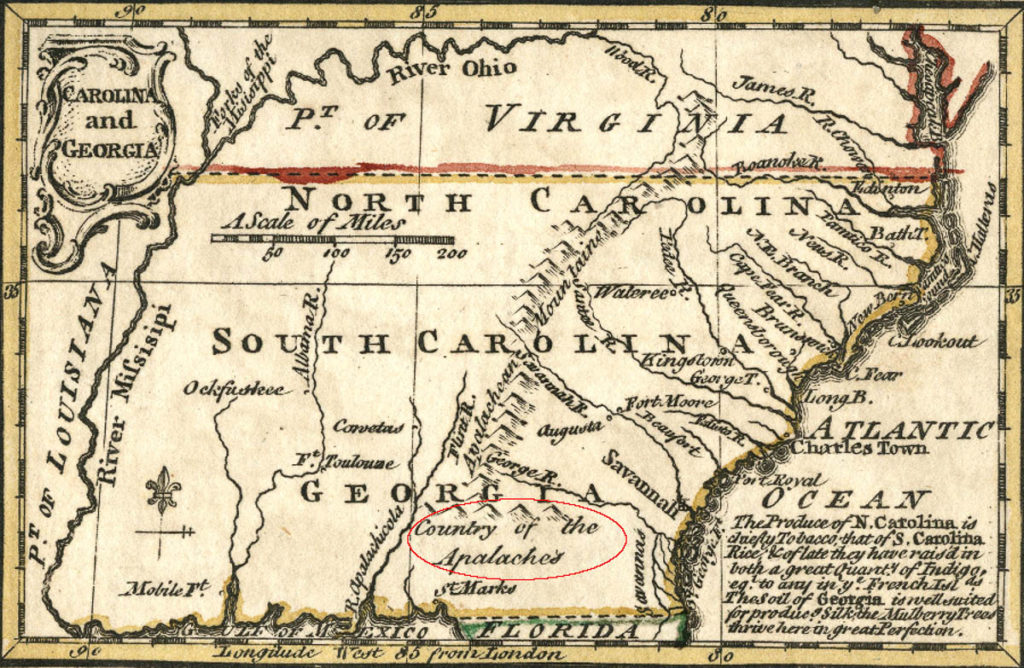
A vintage map focused on the Carolinas and Georgia, with Virginia  showing at the top of the map. Various regions, rivers, and other topographical features are marked, including the Appalachian Mountains chain, which are marked as Apalachean Mountains.

A map from the mid-1700s with “Country of the Apalaches” and “Apalachean Mountains” labeled. Found on http://www.virginiaplaces.org/geology/appalachians.html, source: David Rumsey, Historical Map Collection, Carolina and Georgia (by Emanuel Bowen and John Gibson, 1758)

Southern Appalachia and Northern Appalachia may share a general geographical continuity, but could not be more different regarding culture, accents, and media portrayal. Popular media often makes a mess of the south, frequently portraying it as feral, uneducated, and backward. The way we speak appears to be particularly hard for Hollywood to nail down. Take, for example, Brad Pitt’s questionable “Smoky Mountain” accent in the 2009 film Inglorious Basterds. Southerners with a keen ear would have no trouble differentiating the tight Appalachian accent of someone like Dolly Parton from the hazy drawl of popular characters like Scarlet O’Hara. However, both of these accents can be heard in the beloved 1989 film Steel Magnolias – from Parton herself (Tennessee) and Julia Roberts (Georgia) respectively. To complicate matters even further, the film takes place in Louisiana, a linguistically and culturally distinct geographical area.

There are people living in Northern Appalachia – and beyond – who say “App-uh-lay-shuh.” Those people are not wrong, even though that is not how I say it. Just like there is no single southern accent, there is no single Appalachian identity. The fact that I grew up in East Tennessee is the main reason I say “App-uh-latch-uh.” Southern Appalachia is very much its own beast with its own culture, stereotypes, and – yes – dialect. The way we speak is as much a part of our way of life as the food we eat, the stories we tell, and the music we make. Just like sharing music can bridge the gap between people of two different cultures and heritage, so can something as simple as saying the name of our home the way we say it.

In other words: When in Southern Appalachia, do as the Southern Appalachians do.


Writer Sharyn McCrumb opines on the ways to pronounce “Appalachia.”
Safer Travels to Bristol, Above and Below!

Exploring the Birthplace of Country Music & Beyond

In our previous blog post, Walk the Line in Bristol, TN-VA, we offered an itinerary of must-sees if you’re looking for a safe weekend getaway to the birthplace of country music. In that article we hit a lot of highlights, but there is definitely more to see in Bristol and the surrounding area! Read on to discover what else there is to see when visiting:

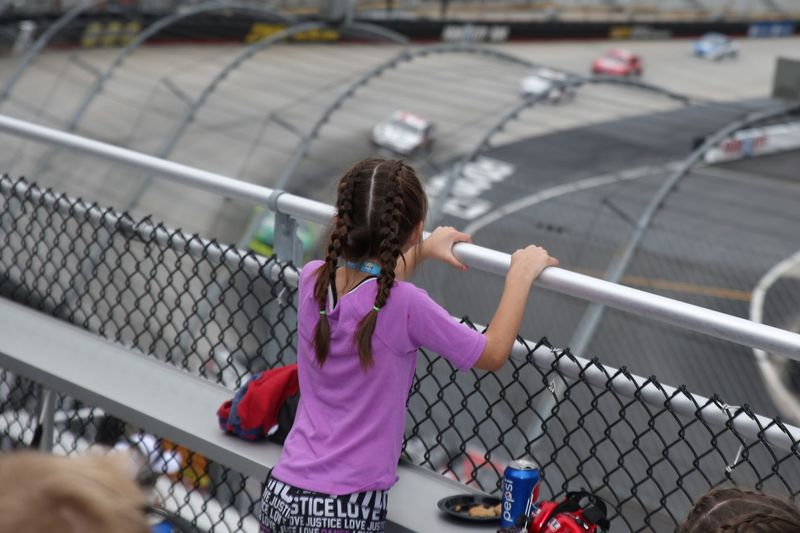
A young girl with long braids stands up in her seat to take in the view of a NASCAR race at Bristol Motor Speedway.
Racing at Bristol Motor Speedway is a bucket list event the whole family will enjoy!
Photo courtesy of Bristol Motor Speedway

Bristol Motor Speedway

NASCAR drivers and fans alike will tell you that there is nothing so thrilling as a race on the high banks at Bristol Motor Speedway. Known as “The Last Great Colosseum,” BMS has been a main attraction in Bristol since its very first race in 1961 – and there isn’t a bad seat in the house! BMS has taken enhanced safety measures for fans, drivers, crew, vendors, employees, and other guests to help keep everyone safe from COVID-19. Check out their policies by clicking here.

A black Corvette competes in Bristol Motor Speedway's Thunder Valley Street Fights event.
Street Fights at Bristol Motor Speedway’s Thunder Valley.
Photo courtesy of Bristol Motor Speedway

Bristol hosts races in several NASCAR touring series, including two major NASCAR Cup Series. Legendary drivers like Dale Earnhardt, Darrell Waltrip, Richard Petty, Jeff Gordon, and many more have all earned victories at the track, and – whether you are a sports fan or not – we highly recommend adding a night race at Bristol to your bucket list. If you have a camper, there are campgrounds all around the track where you can tailgate and celebrate or commiserate with fellow fans. The track hosts amazing vendors and special events all around the facility throughout race weekend to keep the family entertained. Between NASCAR events, BMS’s Thunder Valley dragway hosts NHRA Drag Racing, dirt track racing, and street fight racing events that are high-octane adventures all their own!

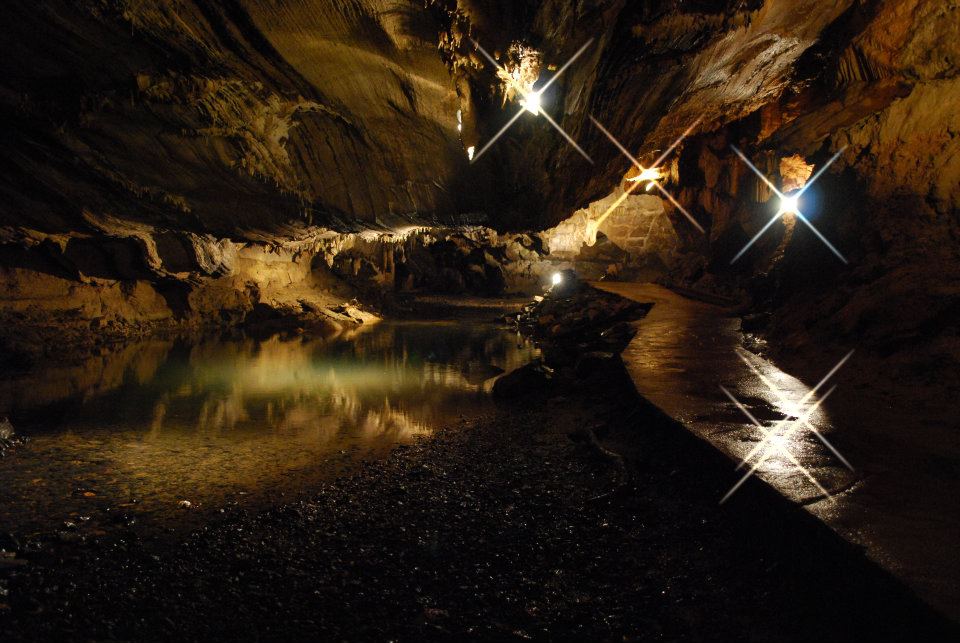
A stunning view of the Underground River inside Bristol Caverns.
The breathtaking Underground River inside Bristol Caverns.
Photo courtesy of Bristol Caverns

Bristol Caverns

If you think Bristol is amazing on the surface, just wait until you explore what’s underneath at Bristol Caverns! Formed by the ancient Underground River 200 to 400 million years ago, Bristol Caverns is one of the oldest and most beautiful attractions in Northeast Tennessee.

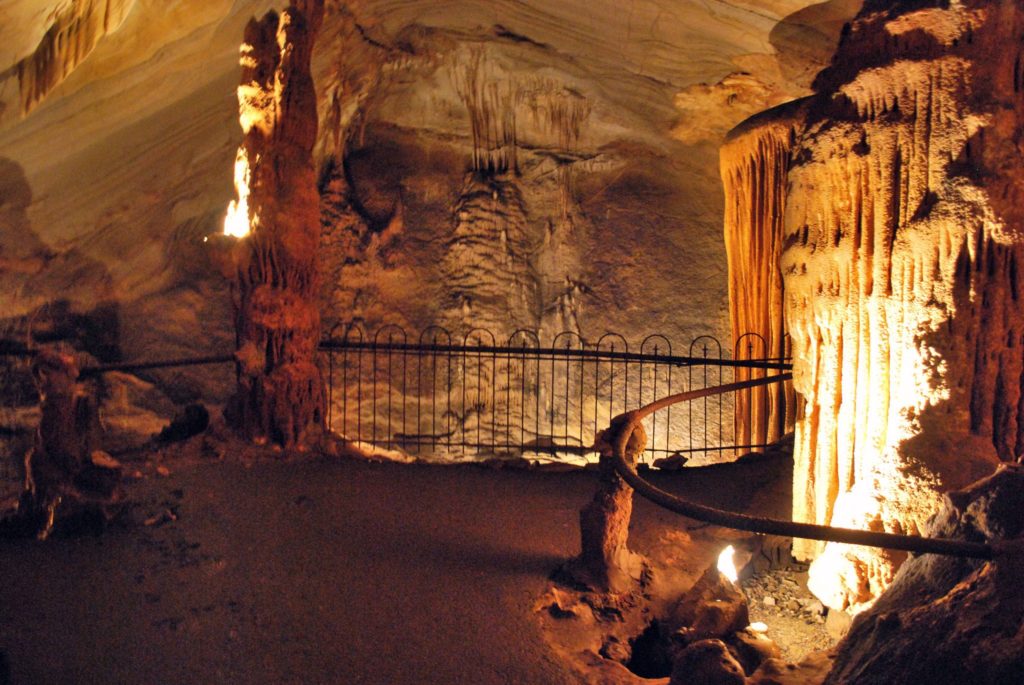
A lit and gated pathway inside Bristol Caverns.
A lit walkway inside Bristol Caverns highlights the beauty underground.


Legend has it that Native Americans used the caverns as an escape route during clashes with settlers. Cameras are welcome, and you’ll definitely want to glimpse back upon the wonderous and dramatic sights found inside all three levels of the colorful chambers that wind 180 feet below to the cavern floor. Bristol Caverns is opened year-round, seven days a week (except certain holidays). Call ahead to book a tour and inquire about health and safety rules for social distancing in the wake of COVID-19: 423-878-2011.

Beyond Bristol
To make the most of your experience, we highly recommend taking time to visit a few other sites in the region:

  • Bays Mountain Park & Planetarium
    Just down the road in Kingsport, Tennessee, Bays Mountain Park & Planetarium offers a plethora of nature- and science-focused adventures including hiking trails, a state-of-the-art Planetarium Theater, and animal habitats including wolves, bobcats, raptors, and reptiles.
  • Barter Theatre
    Barter Theatre opened in Abingdon, Virginia, in 1933 and is the longest-running professional Equity theatre in the United States. Also the State Theater of Virginia, the Barter got its name because theatergoers were able to pay for tickets to shows in vegetables, dairy products, and livestock. Known as a launching pad for the careers of many iconic actors and actresses and its award-winning productions, the Barter is making use of the outdoor Moonlite Drive-In to host shows during the pandemic.
  • Hands On! Discovery Center and Gray Fossil Site
    The Hands On! Discovery Center at Gray Fossil Site is an all-ages science center full of fun and interactive exhibits including a musical Tesla coil, giant building blocks, a three-story Paleo Tower, and an art studio. Guests are invited to engineer a rocket, create a masterpiece, and get up close and personal with an active fossil dig site dating back 5 million years. The facility is open with modified COVID-19 safety precautions and an adjusted schedule for your safety.

Want to know more about exploring Bristol, Northeast Tennessee, and Southwest Virginia? Visit our partner websites and plan your trip!

Discover Bristol 
Believe in Bristol 
Northeast Tennessee Tourism Association
Visit Southwest Virginia 

Earth Day 2020: Sustainability, Museums, and Their Communities

Today is Earth Day – and not just any Earth Day, but the 50th anniversary of Earth Day – a date that is traditionally marked by environmental action and conversations about sustainability.

In this time during a devastating pandemic, where each day seems to last a year in itself, thinking about sustainability can be difficult. However, we in the museum community still need to look towards the future and plan to meet that challenge. First, as museum professionals our job is to preserve and interpret cultural objects or intangible heritage – from vintage sheet music to the tune and lyrics themselves. This is why we exist, receive donations, and are funded by tax dollars, corporate monies, and private contributions. The mission of a museum is to hold the public’s trust utilizing ethical, educational, and sustainable methods, and to measure plans for the future so as to never lose that public trust and support.

Second, in a world besieged with climate change, water shortages, trash pile ups, and other environmental impacts, museums need to look to the future to further assist their communities – and to preserve their own holdings – by demonstrating proactive sustainable measures. As a representative of their town, city, or other local area, museums must do their part and continue their role as public educator.

So what things can we do to help while working in a museum? First, a few simple things, amongst others: recycle, use less water, watch our paper use (e-newsletters are our friend!), reuse what we can (wash the plastic forks after an event), make good choices in our supplies, and monitor our electricity usage as far as possible – for instance, using LED lights in exhibit cases not only conserves energy but it helps to preserve artifacts. And sustainability can also be addressed in larger ways. For example, some museums are being redesigned to be more environmentally friendly, or in some cases completely carbon-neutral such as the new science museum being built in Lund, Sweden.

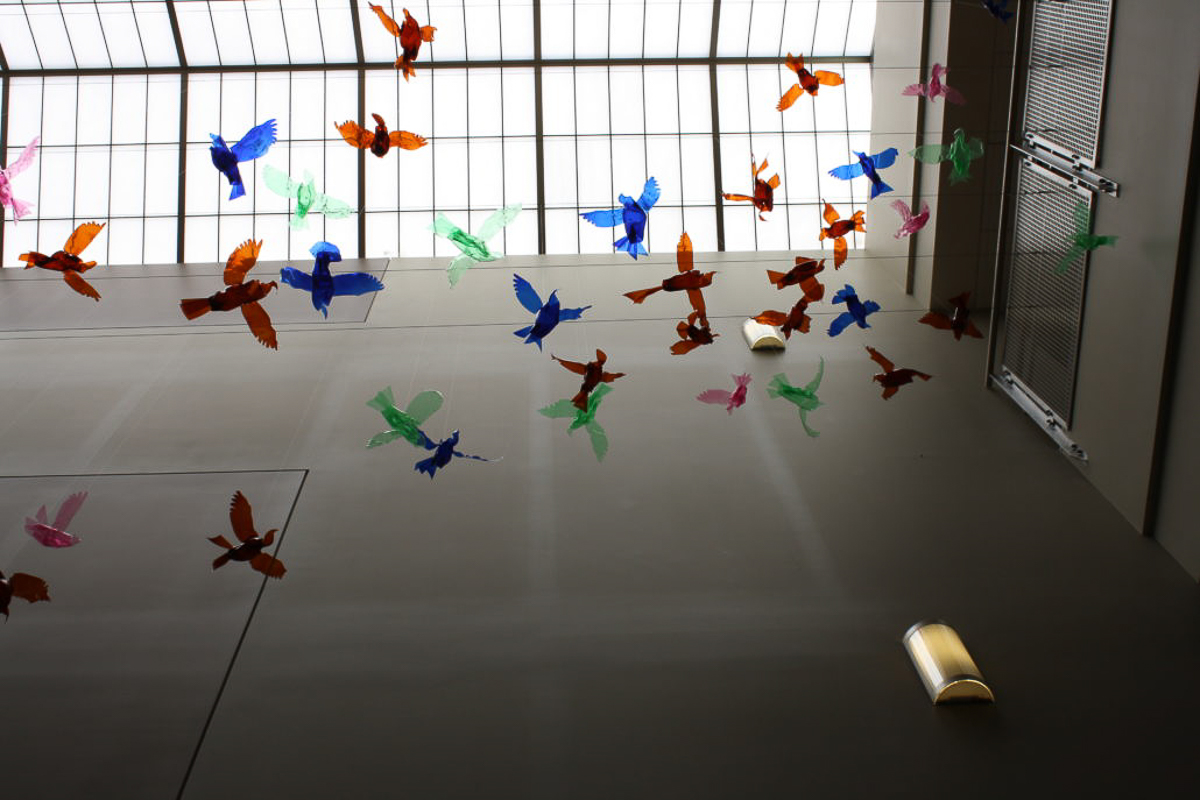
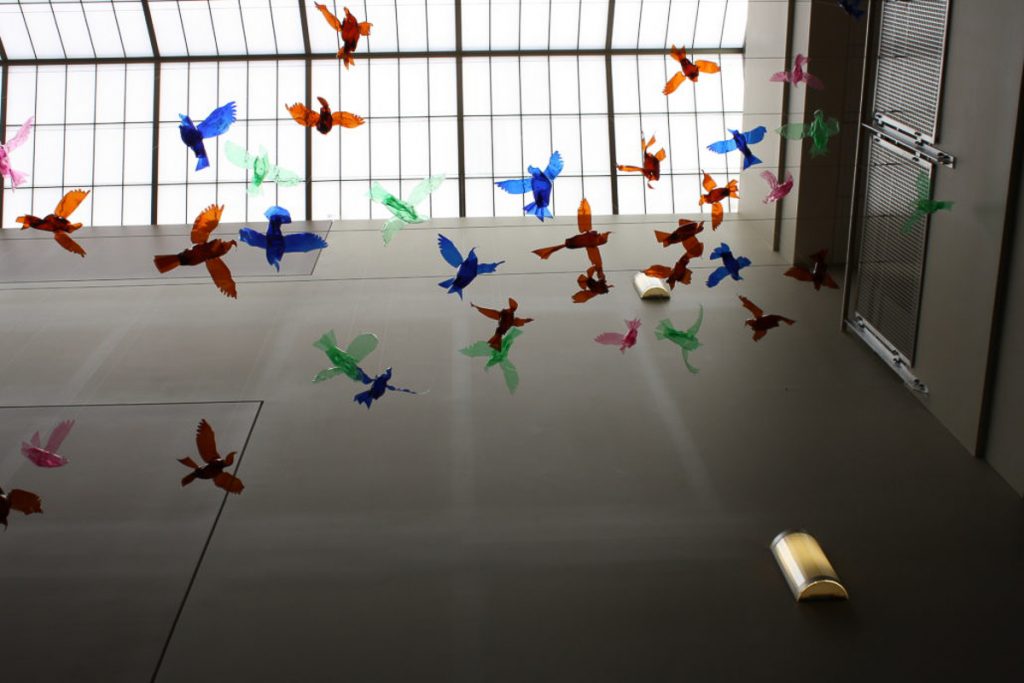
Looking up towards the glass ceiling of the building, the photo shows several colorful birds (blue, green, pink, orange, and red) in flight made of plastic bottles.

This display called Birds of a Feather is by Patti Lawrence. Made out of reused plastic bottles, it highlights environmental issues. Photo courtesy of Kingsport Office of Cultural Arts and the City of Kingsport Higher Ed. Center

And as central educational centers for the public, what we do to lessen our environmental impact is viewed by our public. Those of us whose mission intersects with the natural and scientific world can, of course, produce programming and exhibits that teach environmental care and principles. But even if our mission is not focused that way – for example, a music museum like us – leading by example is another pathway to sharing sustainability goals and actions with our community. We can even use what we know to assist those in our community take similar steps. For instance, through BCM’s festival branch, our Green Team works to make green changes and encourage recycling at our annual music festival.

And so, museums today are working on a better future environmentally and taking what steps we can to help. But besides this, what other goals can museums express for sustainability? We hold collections of culture, science, and art – tangible and intangible – and educate the public on their value, for those here now and for generations afterwards. But to continue to exist and be relevant, we need to be responsive to changes in our world. In what ways can we do this? To answer this, museums are going to need to fully open their doors, all too often appearing, at least to some, as intrusive monoliths in a city’s landscape compared to the daily activities performed around them. For instance, the Georgian-styled archives, the Greek Revival art museum, etc. A redesign is needed by many institutions, not just of their façade, but of how the community views the museum itself.

We in museums have to ask many, many, questions. Who is our audience? What are their expectations? Where do we fit in our community? And how can we help? How can we sustainably preserve the history, art, and cultural heritage for future generations? How can we make our mission resonate with different ethnic, religious, and cultural groups? How do we not become obsolete in a quickly changing world?

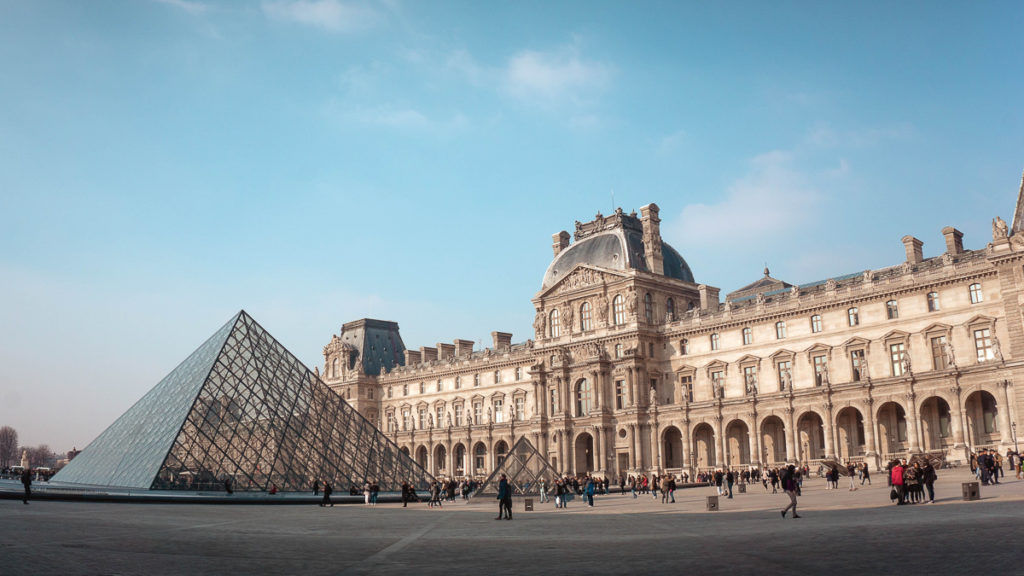
A picture of the Louvre's front facade with the glass pyramid Louvre extension in front of it.

The Louvre Museum and Pyramid, a temple next to a modern interpretation of a temple.
Photo by Yeo Khee on Unsplash

Even during this time of Covid-19 taking over our “normal” lives, museums are proving how necessary they are. Yes, most – if not all – are closed, but still they are active in their communities. Some are offering their large parking lots for testing or food pickup. Many museum professionals are assisting with supply gathering or sewing of masks. Museums are using social media and their own websites to offer activities for children (and adults) now at home full time, or to demonstrate science experiments, or to show virtual exhibits. And the public is responding and consuming all this extra content with gusto. And while doing so, museums are still deemed important and needed, even when closed. Hopefully, due to these creative and innovative ways museum professionals are still interacting with their audiences, people will return when we open back up.

And our communities will continue to support us as we evolve with our community. Sustainability is based on change, resilience, and an understanding that normal can shift to something new in the face of different attitudes, resources, situations, and perspectives. This can be seen right now as we are all dealing with the uncertainties of this pandemic – in the midst of this, museums are proving that they can work with other organizations and community partners to help and be relevant, even with their doors closed to the public. The future is more uncertain than ever right now, but we museum professionals are on the front lines and will continue to assist our communities in many diverse ways.

And so, on this 50th anniversary of Earth Day, we will continue to search for other methods we can help lessen our negative impact on the environment and plan for future changes our museum can do such as updating an HVAC system or using natural light to illuminate and heat the museum. But as well, we will reach out to our community, and the community of museums, schools, libraries, and other institutions, to set programs and exchange ideas on how we can have a better impact on our audiences and – well, the whole earth – to sustain our importance and social need. 

For more information, here are some great resources: Principles for Sustainable Museums; Sustainability and Museums; and Museums, Environmental Sustainability, and Our Future.

Be a Part of the Birthplace of Country Music at Home!

We are living in extraordinary times right now, making many feel unsettled and anxious as we face a host of uncertainties. For me, music often acts as a balm to troubled thoughts and worries, and so while the museum is closed and we are all working to protect each other, we wanted to share a variety of ways that you can experience the Birthplace of Country Music at home by connecting with us through music, stories, activities, and history!

Radio Bristol

While our DJs aren’t able to come into the studio for live broadcasts, we are still sharing new segments of most of our Radio Bristol programs via the dial at 100.1FM, our smartphone app, and the website. Radio Bristol is the perfect place to get your music and history fix. We’ve got daily shows like Early Morning Americana and On the Sunny Side; shows focused on regional music such as Old Kentucky Bound, Appalachian Travels, and Born in the Mountain; shows that delve into different musical genres such as Grass Cuttin’ Time, Folk Yeah!, Transmissions Under the Wire, and Hillbilly Wonderland; shows that share deep dives into music history and Appalachian tales like Mountain Song and Story, Ozark Highlands Radio, and Sound Sessions from Smithsonian Folkways; Radio Bristol’s old-fashioned radio variety show Farm and Fun Time via the Farm and Fun Time Noon Show and Farm and Fun Time Weekly; and more. For a full list of Radio Bristol offerings, including archived shows, check out this link and start listening – you are sure to find your musical nirvana!

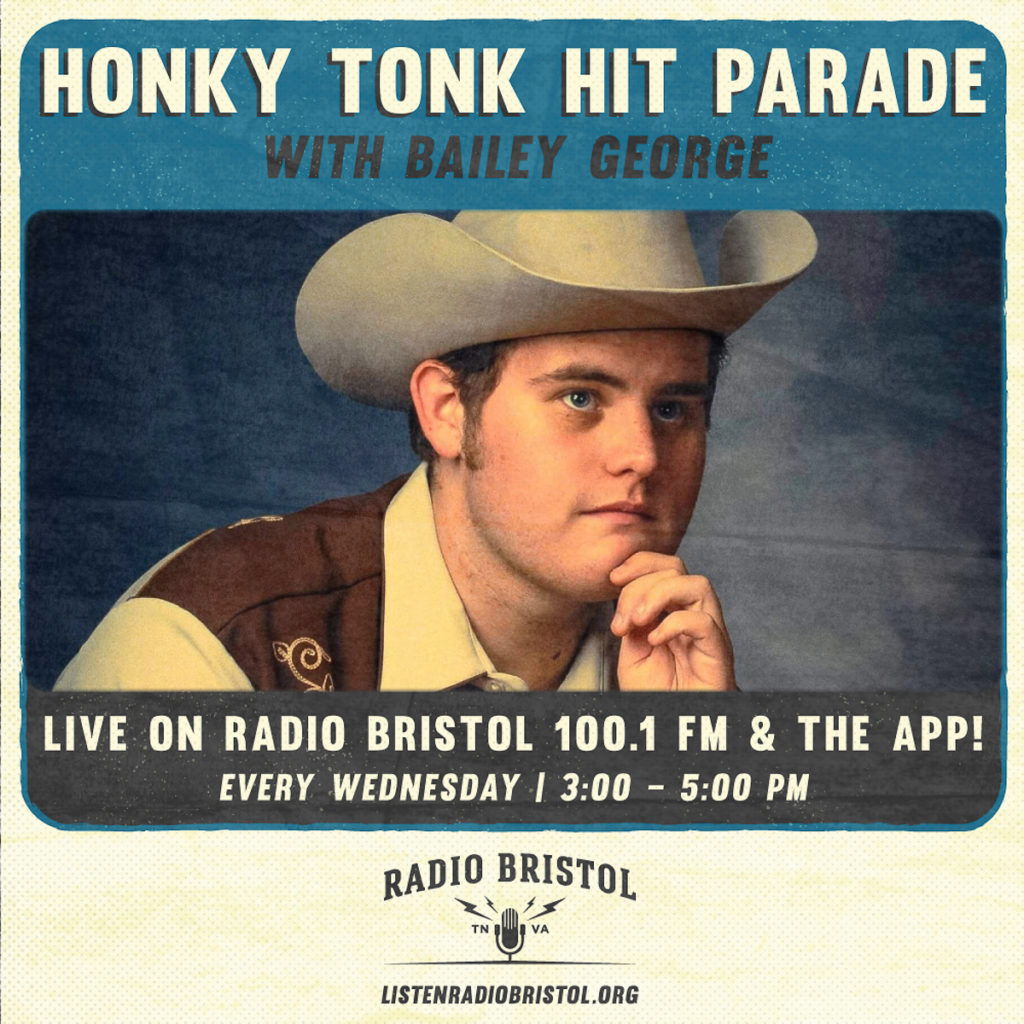
The official graphic for Bailey George's Honky Tonk Hit Parade shows an image of Bailey wearing cowboy-style shirt and hat.

Bailey George’s Honky Tonk Hit Parade is another genre-specific Radio Bristol show. © Birthplace of Country Music Museum

Listen While I Tell

The BCM blog – Listen While I Tell: From Bristol’s Birthplace of Country Music & Beyond – is a great place to explore BCM’s work and content further. Sharing several posts each month, the blog brings you behind-the-scenes views into the work that we do each day at the Birthplace of Country Music Museum, Bristol Rhythm & Roots Reunion music festival, and Radio Bristol; content-driven stories related to early country music history; features on instruments and musicians; and explorations of the continuing music traditions in this region. For instance, you can check out our “Instrument Interviews” where different and sometimes famous instruments are asked 10 interview-style questions. Or perhaps you want to learn more about some of the artists who performed in Bristol in 1927. You can find out about our DJs’ favorite songs, albums, and musicians through “Pick 5” or “Off the Record,” or hear stories from our annual music festival. We also dig deep into our collections with our “From the Vault” posts, share insights into exhibit content and educational programming, and sometimes just look at some quirkier things. Check out the blog today – and feel free to let us know if there’s a topic you’d like to see us cover in the future!

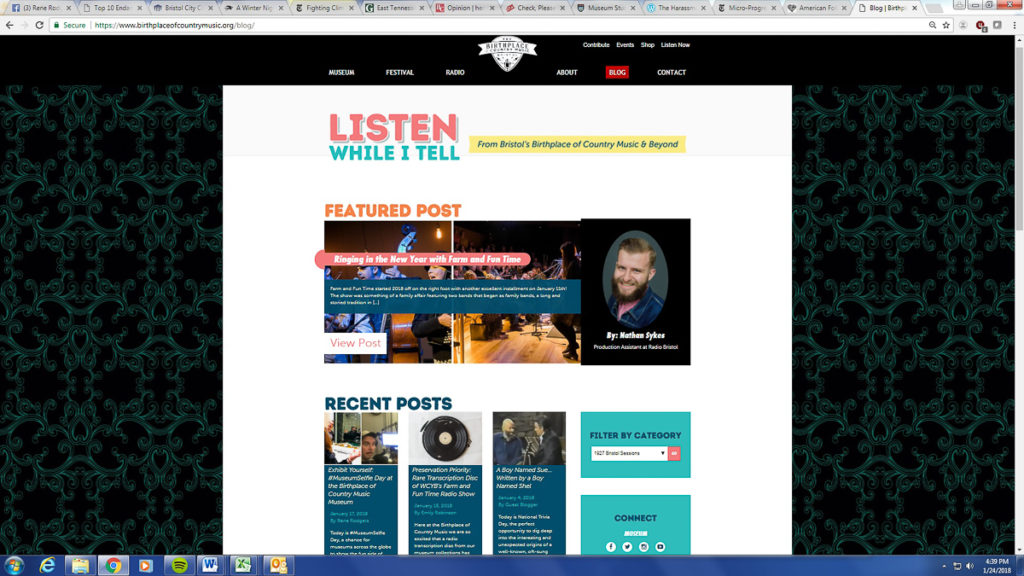
The blog's landing page on the website has the title above, a featured post below, and then several links to recent posts underneath that.

The landing page for the Listen While I Tell blog. © Birthplace of Country Music
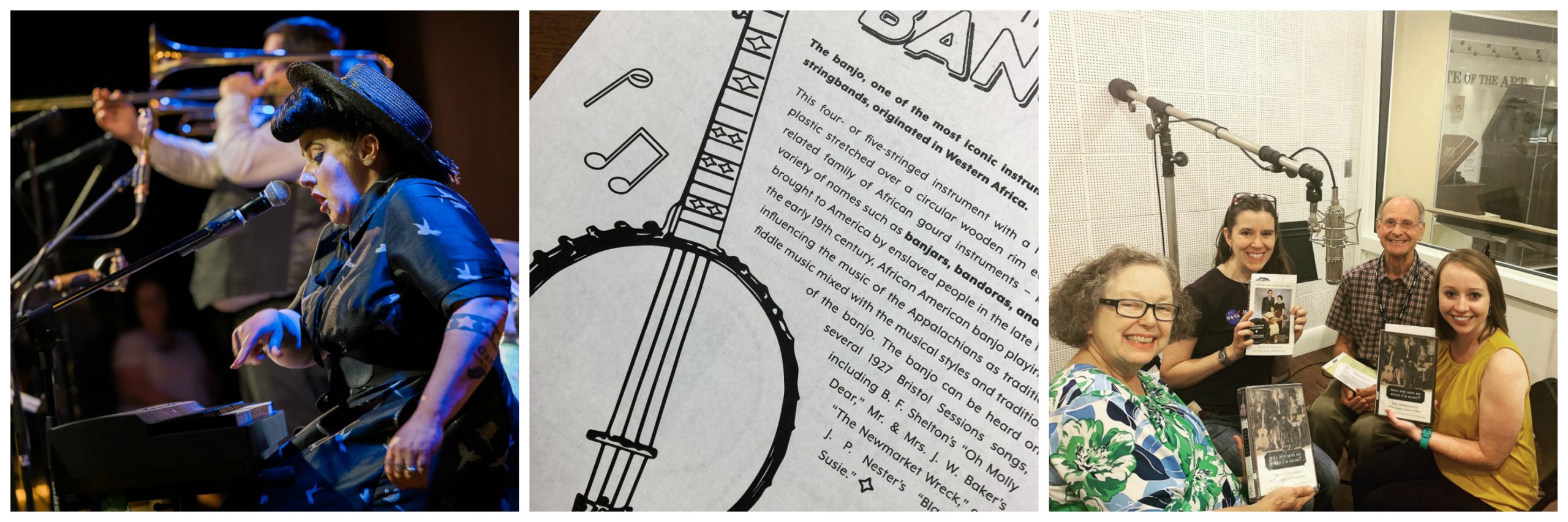
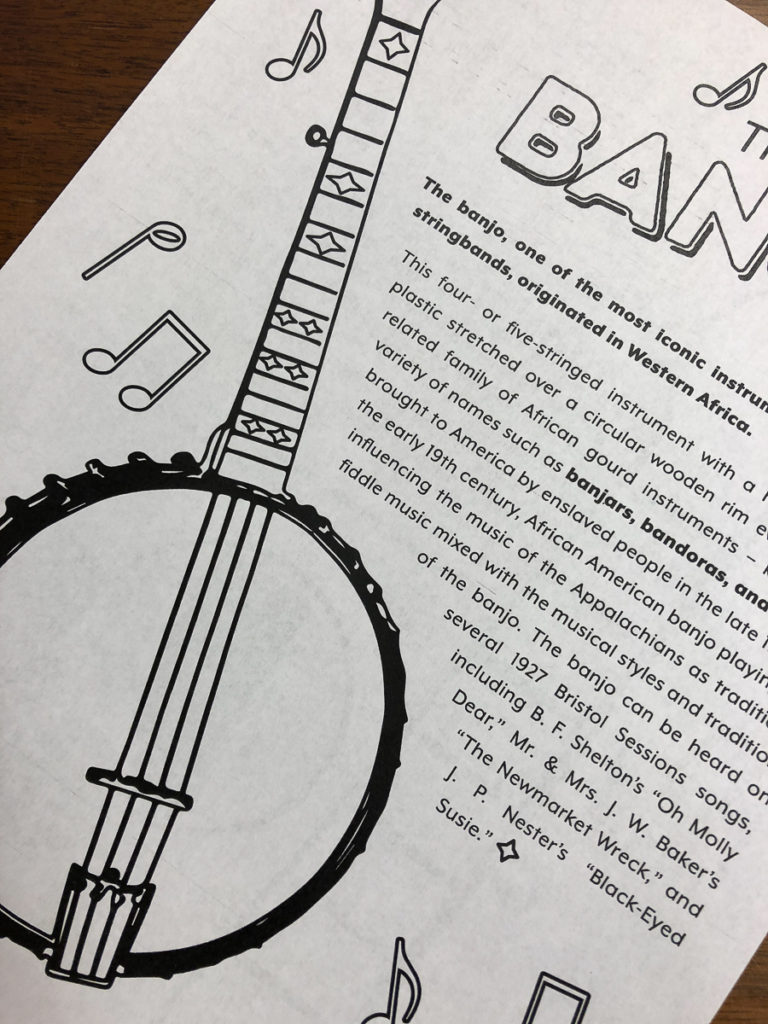
The BCM banjo coloring sheet includes information about the banjo's origins along with the picture for coloring in.

A BCM coloring sheet: the banjo. © Birthplace of Country Music

Museum Content

Obviously, the best way to engage with the museum’s content is to come through our doors and spend time in the permanent exhibits. However, when that’s not possible, we wanted to be sure that people had the chance to learn more about the Birthplace of Country Music Museum and the history we celebrate – and so we have created a series of content-focused videos that share short introductions into aspects of that history, enough to whet your appetite for visiting us in the future! You can check these out on the BCM YouTube channel or as they are released onto our social media pages. We are also in the process of creating some virtual content related to our current special exhibit – Real Folk: Passing on Trades & Traditions Through the Virginia Folklife Apprenticeship Program – which opened only two weeks before the museum closed due to COVID-19. We hope to have that ready that soon!

Educational and Fun Activities

Along with the content-focused videos, we’ve also started sharing educational and fun resources on our website. We have downloadable coloring sheets and activities, along with videos of a mini banjo-making craft and 78 record trivia. Check out this link to access these. And keep checking back as we hope to share more puzzles, coloring sheets, and other fun items in the future.

Radio Bristol Book Club

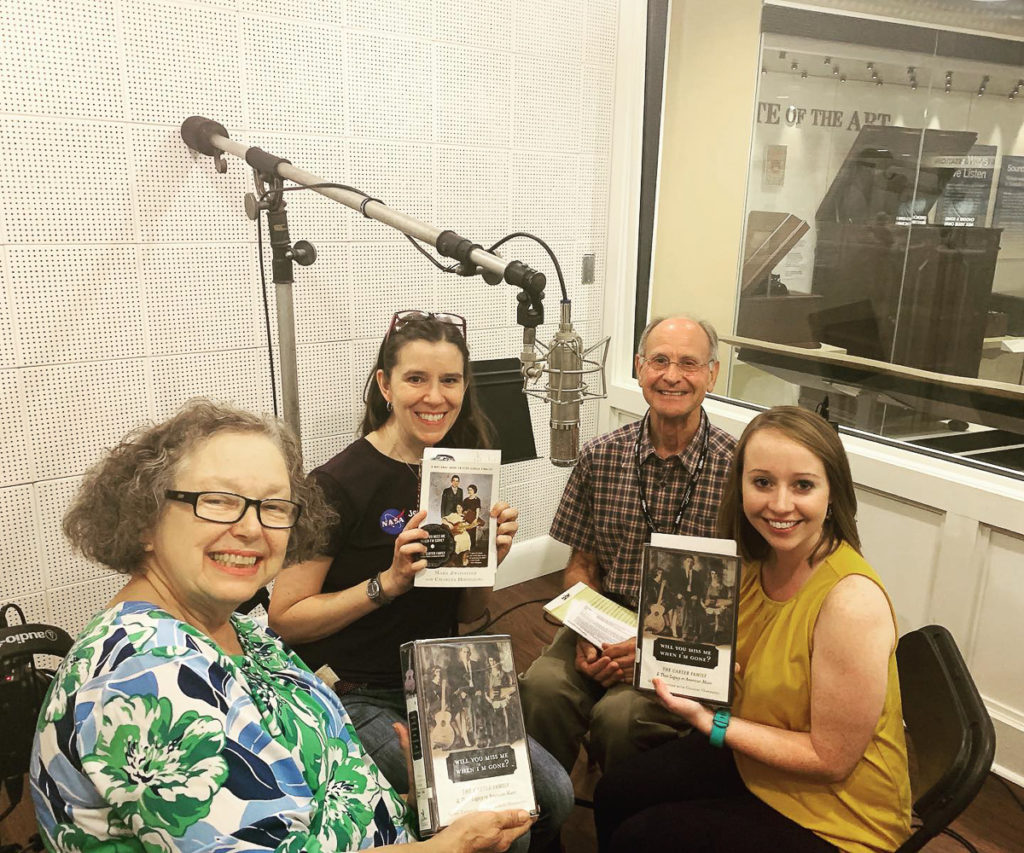
Each fourth Thursday of the month, four readers from the museum and the Bristol Public Library come together for a live on-air conversation about a book that ties into the museum’s content, regional and wider music heritage, and Appalachian culture and stories. Since the Radio Bristol Book Club started in 2019, we’ve read children’s and adult books, fiction and non-fiction, and all of the discussions have dug deep into the themes and questions raised in the books, the author’s style and voice, how it connects to our community or our own histories, and more. Each episode also includes related music, and we sometimes also get the chance to talk to the author! You can access several of our previous book club shows here, and we invite you to start reading with us and listen in to future shows, including Rocket Boys by Homer Hickam Jr. (April 23), Clapton’s Guitar: Watching Wayne Henderson Build the Perfect Instrument by Allen St. John (May 28), Halfway to the Sky by Kimberly Brubaker Bradley (June 24), and Charlatan: America’s Most Dangerous Huckster, the Man Who Pursued Him, and the Age of Flimflam by Pope Brock (July 23), to name just a few of the next book picks.

The four readers for the July 2019 book club are pictured around the Radio  Bristol studio mic; three readers are holding the book up.

July 2019’s book club read Will You Miss Me When I’m Gone? about the Carter Family. © Birthplace of Country Music

On-Line Performances

As a music organization, we are able to share some wonderful performances via our YouTube channel. Over the past few years, we’ve uploaded a whole host of videos of artists and bands who have performed at the museum, on Radio Bristol, and at our festival and other venues. You can access these performances here. We are also sharing Quarantine Sessions – while Bristol Rhythm and Roots Reunion is still months away, festival artists are getting together to contribute music for these special performances. You can view the videos on our YouTube channel, and subscribe and share from there! And our downtown partner Believe in Bristol is also sharing Facebook Live performances from a variety of local and regional favorites via their Border Bash Social Distancing Series. These are just another way music is bringing us all together during this time of uncertainty. Don’t forget to support these hardworking and talented artists by buying their CDs and merchandise online.

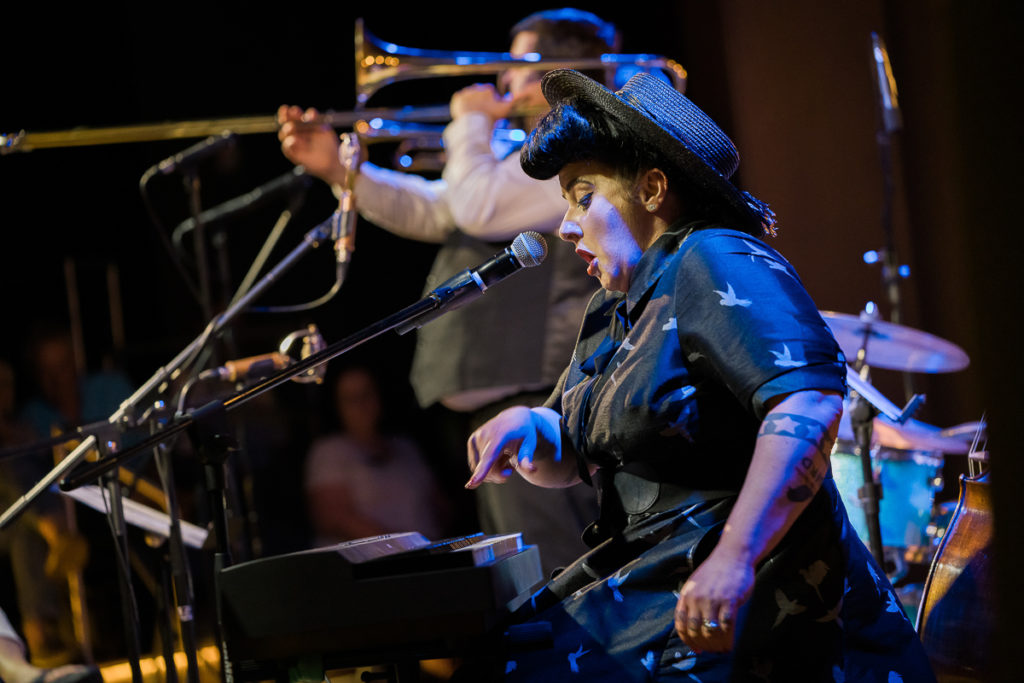
A close-up of Davina playing the keyboards, dressed all in black and with a hat. The band's trombonist is seen in the background.

Davina and the Vagabonds on the museum’s Performance Theater stage during Farm and Fun Time. © Birthplace of Country Music; photographer: Billie Wheeler

Social Media

Be sure to connect with us on social media for daily content from all three branches of the organization – the museum, festival, and radio station are all active on Facebook, Instagram, and Twitter. All of our platforms are great places to learn about “this day in country music,” the legacy of Bristol Sessions and related musicians, early links to many of our other online resources, and more.

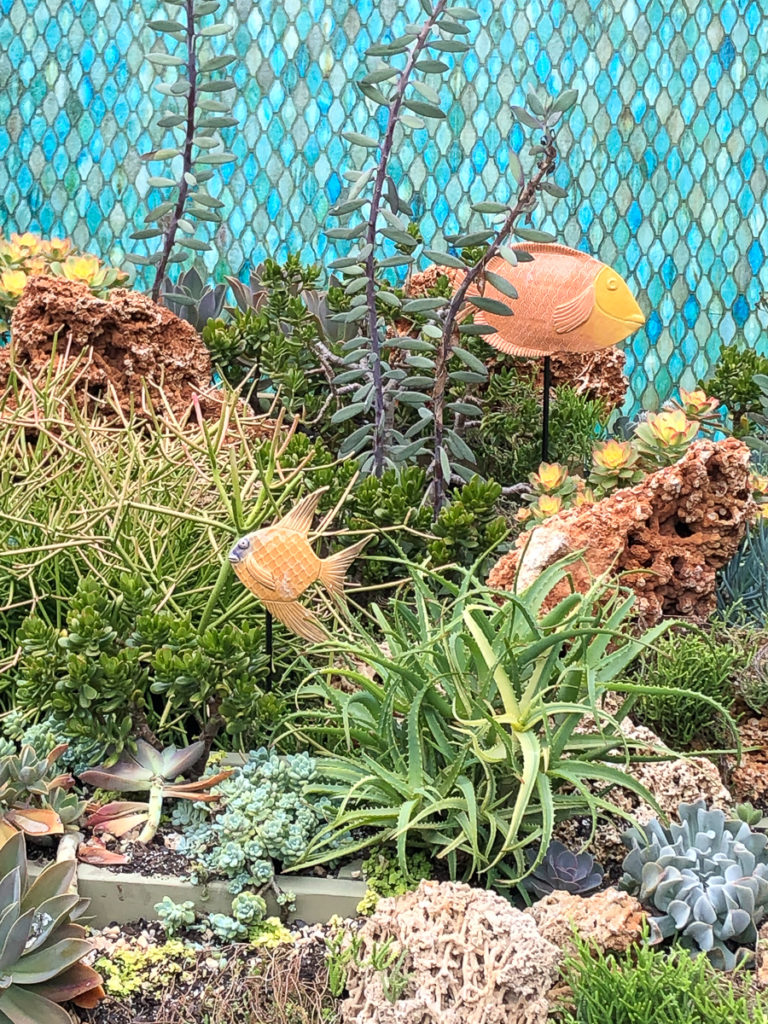
A close-up of one of the Smithsonian garden displays where the plants have been chosen and arranged to look like an under-sea coral reef, including metal fish sculptures.

One of the many Smithsonian gardens along the National Mall in Washington, DC. Image by René Rodgers

Smithsonian Resources

The Birthplace of Country Music Museum is a Smithsonian Affiliate, and as such, we want to honor that connection by sharing just a few of the free digital resources that are available through the Smithsonian. The Smithsonian Learning Lab has a whole host of distance learning opportunities. Our personal favorite is their Smithsonian Learning Activities Choice Board, which provides several fun and educational activities related to science, social studies, culture, and the arts. There is a new issue released each week – check out Issue 3 to find one of our contributions, a songwriting mad lib, in the culture section! Another great resource is the National Museum of American History’s O Say Can You See blog, filled with great reads about American history and the amazing items and stories found in the Smithsonian collections. The Smithsonian’s newest museum, the National Museum of African American History & Culture, has created several “collections” via the Learning Lab that explore history, art, life, and culture through the African American lens. And while you’re stuck at home, it’s a great chance to grow your very own flowers and vegetables – Smithsonian Gardens has some classroom resources that can help.

Thank You!

Not being open to visitors is a strange experience for us – we miss welcoming the public through our doors to explore the museum’s exhibits, participate in our public programs, enjoy live performances, and more. While we are closed, we are committed to sharing great online content with you, a little respite from the day-to-day uncertainties. We hope that it brings a smile to your face and that you learn something new – if so, please share with your friends and networks and give us a “like.” That will give US a smile! And in the meantime, thank you for being an important part of the Birthplace of Country Music community.

A special thanks to the many museums out there creating amazing digital content while their doors are closed, especially the Field Museum whose “Experience the Field at Home” inspired this blog post.