1927 and 1928 Bristol Sessions Archives - Page 8 of 10 - The Birthplace of Country Music
Listen
Play
Loading station info...

Ernest Stoneman’s First Hit: “The Titanic”

The unsinkable RMS Titanic sank in the cold Atlantic waters on April 15, 1912, claiming over 1,500 lives of its passengers and crew, and capturing the attention and imagination of the world from that moment forward. After years of searching, the wreckage of the Titanic was discovered on September 1, 1985; researchers continue to study the wreckage and ephemera that connects to the ship and its passengers, and the story of the Titanic still resonates today.
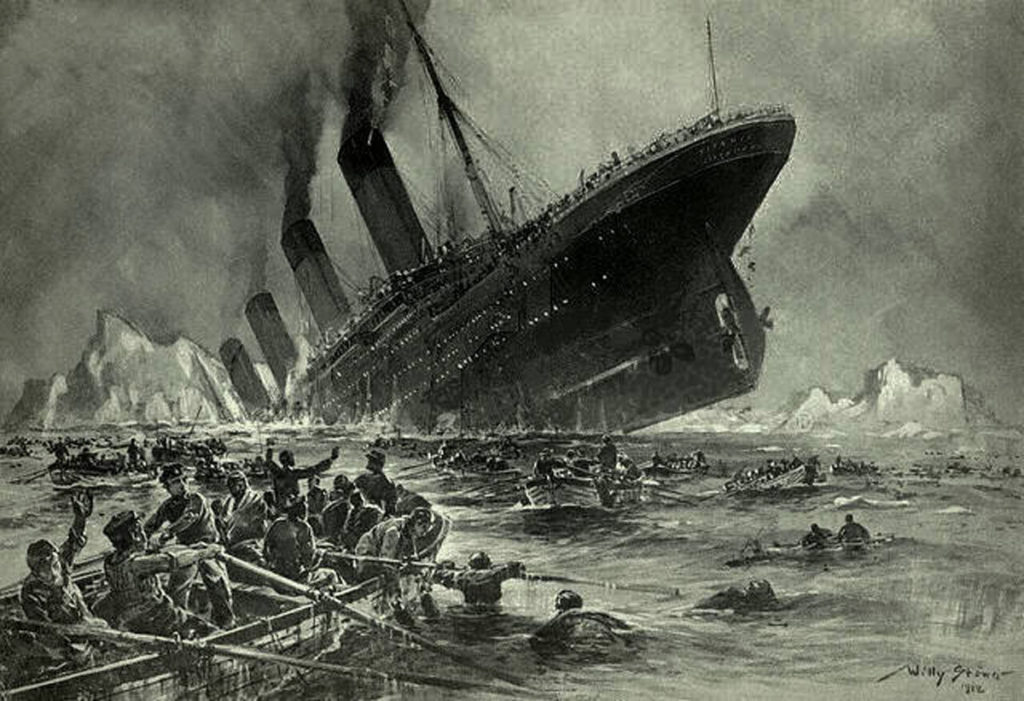
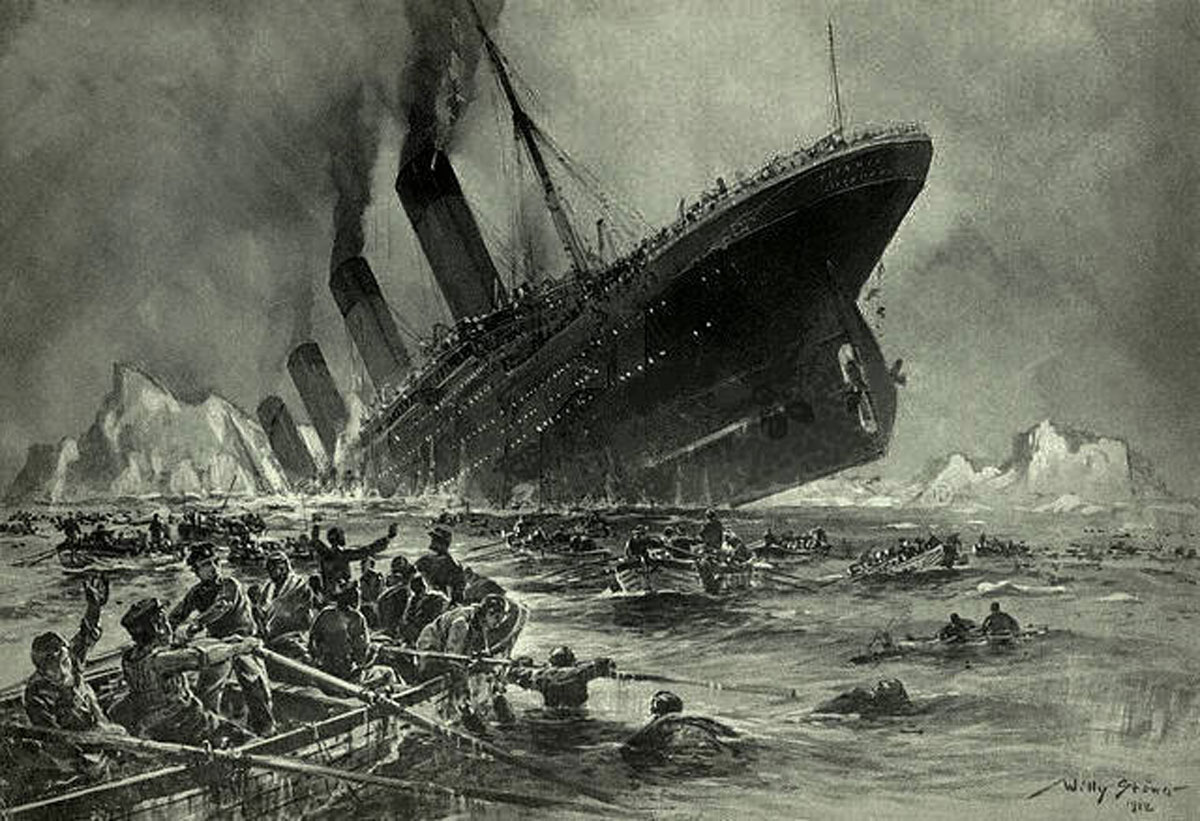
1912 engraving by Willy Stöwer: Der Untergang der Titanic. Public domain image from Wikimedia Commons

To mark the date of that discovery, we wanted to explore the retelling of the Titanic’s story in song – as with many disasters of the day, the wreck of the Titanic gave rise a few years later to a song detailing this contemporary history, one that was part of people’s lives and memories. In early September 1924, Appalachian musician Ernest “Pop” Stoneman traveled to New York to make his first recordings with OKeh Records, part of a few days of recording that also included Fiddlin’ John Carson and several other musicians as OKeh continued to build their catalog of popular American music. Stoneman chose two songs for this session, one of which was “The Titanic.”

That first recording in 1924 was not released – Stoneman and the OKeh executives thought that it was too fast, so he agreed to travel back to New York to do another recording of the song. On January 8, 1925, he recorded it again, and it was released later that year. This version of “The Titanic” (OK 40288) was a success, which led to further trips to New York to cut new records. He then recorded the song again in 1926, this time under the title “The Sinking of the Titanic” for the Edison label (Ed 51823, 5200).

Stoneman’s lyrics to “The Titanic” tell the story well, including a bit of social commentary about the difference between rich and poor on the voyage:

It was on Monday morning just about one o’clock,
That the great Titanic begin to reel and rock.
Then the people began to cry, saying, “Lord I’m a-going to die.”
It was sad when that great ship went down.

Chorus:
It was sad when that great ship went down,
Husbands and wives, little children lost their lives.
It was sad when that great ship went down.

When they were building the Titanic, they said what they could do.
They were going to build a ship that no water could not go through,
But God with his mighty hand showed to the world it could not stand.
It was sad when that great ship went down.

Chorus

When they left England, they were making for the shore.
The rich they declared they would not ride with the poor.
So they sent the poor below, they were the first that had to go.
It was sad when that great ship went down.

Chorus

When the people on the ship were a long ways from home,
With friends all around them, didn’t know their time had come,
For death came riding by, sixteen hundred had to die.
It was sad when that great ship went down.

Chorus

Stoneman wasn’t the only artist to record a song detailing the Titanic’s sad fate. Tony Russell’s Country Music Records: A Discography, 1921—1942 details the various recordings of the song:

“The Titanic,” Ernest Stoneman September 4, 1924 (unissued) and January 8, 1925

“The Sinking of the Titanic,” Vernon Dalhart, June 4, 1925

“The Sinking of the Titanic,” George Reneau, October 14, 1925

“The Sinking of the Titanic,” Ernest Stoneman, June 22, 1926

“The Sinking of the Titanic,” Richard “Rabbit” Brown, March 11, 1927

“Sinking of the Great Titanic,” Vernon Dalhart, May 23, 1928

Long after these early hits of hillbilly and blues records, the Titanic lives on in imaginations. Celine Dion’s “Love Theme from Titanic” (also called “My Heart Will Go On”) won a Grammy in 1999 for Record of the Year; the song was the theme song from James Cameron’s 1997 blockbuster film Titanic, which won 11 Oscars. And visitors pour into the many exhibits that chronicle the Titanic‘s history and display its once-seabound artifacts, including the Titanic museum attraction just down the road in Pigeon Forge, Tennessee.

And in 2013, Ernest Stoneman’s “The Titanic” was recognized with its own Grammy award when it was inducted into the Grammy Hall of Fame and recognized for its historical significance in recording history.

Jessica Turner is the Director of the Birthplace of Country Music Museum.

Four Films Highlighting the Bristol Sessions to Watch Again and Again

Four recent and upcoming films brilliantly document the depth and reach of the 1927 Bristol Sessions. Each of these films deserves a space on your media shelves, and each of the filmmakers displays a love of the music and history running through these visual tributes.

The Winding Stream: The Carters, the Cashes, and the Course of Country Music, 2014

The Winding Stream was released in 2014 and has received numerous glowing reviews. Image courtesy of Beth Harrington; graphics by Brian Murphy

Released in 2014 and the oldest film on this list, the acclaimed 90–minute documentary The Winding Stream traces the careers of A. P. Carter, his wife Sara, and his sister-in-law Maybelle, heralded as three of the earliest stars of country music. The film documents how The Carter Family, from their earliest days as Victor recording artists to their international success via the phenomenon of Border Radio, made their mark on the history of American recorded music.

The Winding Stream illuminates the foundation-forming history of this multi-generational musical family. It achieves this through careful research and well-crafted storytelling and with filmmaking techniques that help the viewer feel connected to The Carter Family and to those telling their stories.

Beth Harrington, award-winning producer, director, and writer, tells these stories and others through narrator-less interviews and performances by celebrated roots music practitioners like Johnny and June Carter Cash, George Jones, Rosanne Cash, Sheryl Crow, Kris Kristofferson, and others. Harrington’s work often explores American history, music, and culture, and the decade she spent working on this film is evident in the depth of the history she documents. To read more about the film, check out this review from Variety magazine.

Producer and director Beth Harrington. Image courtesy of Beth Harrington; photo by Amy McMullen

The Winding Stream reminds us that The Carter Family story is one that captured America’s attention starting with the family’s first recordings, and one that continues to capture imaginations in country music history and scholarship to this day.

American Epic: The First Time America Heard Itself, 2017

American Epic: The First Time America Heard Itself has been selected for screening at numerous film festivals, winning awards at Calgary, Tryon, and Sydney. Credit: PBS

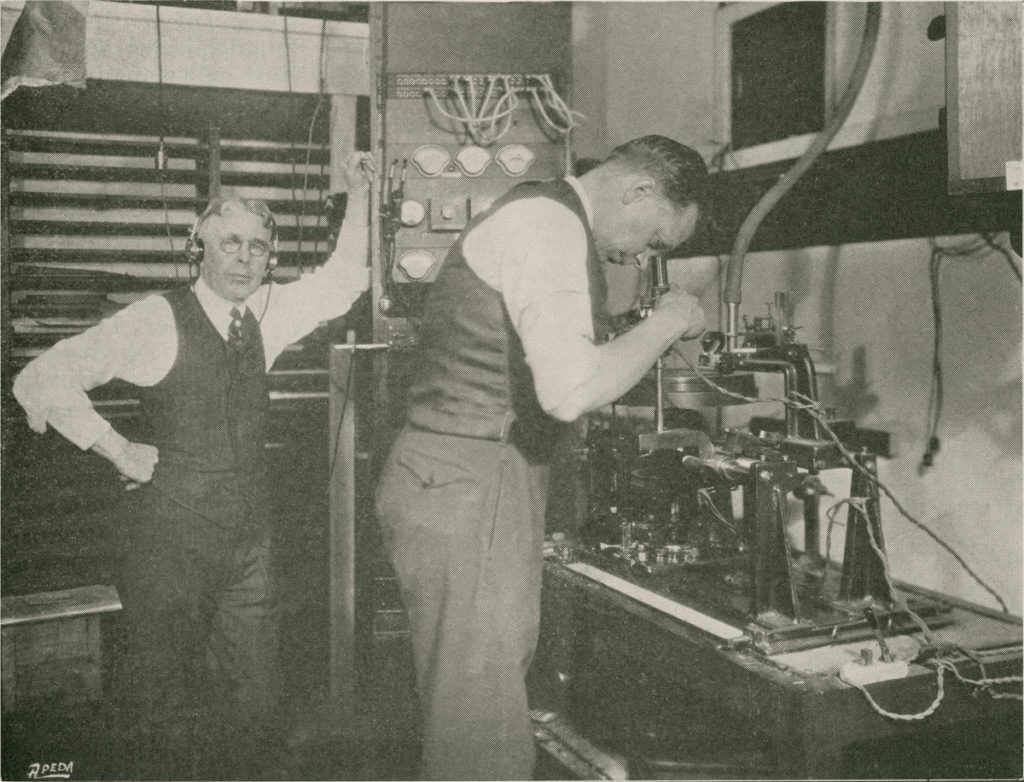
Writer and director Bernard MacMahon calls American Epic his love letter to America. With this PBS documentary series, he explores the history of recording technology and American innovation of the 1920s and also celebrates it through contemporary performances. This work – which painstakingly recreates the recording technology of the 1920s and then creates new recordings using this technology – is visually stunning, carefully documented, and a beautifully creative way of honoring early recordings. This is a series to enjoy (the visuals are stunning!) and to study.

Okeh Engineers Charles L. Hibbard and Peter P. Decker with a Western Electric amplifier and cutting lathe from American Epic: The Big Bang. Image courtesy of Maida Vale Music

With executive producers T Bone Burnette, Jack White, and Robert Redford, the film has some major brains and talent behind it. The film was produced and directed by Lo-Max Films, led by Allison McGourty, Duke Erikson, and MacMahon, who bring their filmmaking skills and knowledge of music history to a project that was over 10 years in the making. You can watch the trailer to American Epic here, and learn more about the research and recreation of the technology that went into the film here.

Born in Bristol: The Untold Story of the Birth of Country Music, 2017

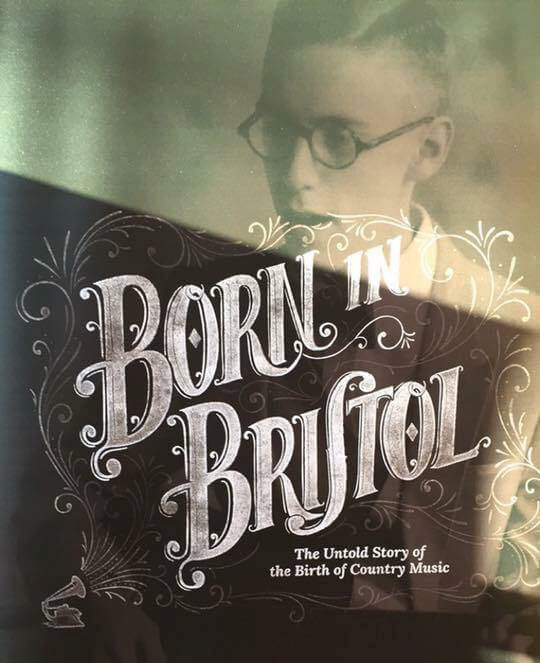
Born in Bristol earned recognition at the 2016 Cannes Lions International Festival of Creativity, and the film premiered in Bristol with several screenings on August 3–6, 2017. Image courtesy of VML

Born in Bristol is a 53-minute documentary and drama profiling the 1927 Bristol Sessions; it also highlights the 2015 production of Orthophonic Joy: The 1927 Bristol Sessions Revisited, an album where contemporary country artists put their own spin on the songs of the Bristol Sessions. The film was produced by the Tennessee Department of Tourist Development, with support from the Virginia Tourism Corporation, and it features performances by and interviews with Dolly Parton, Vince Gill, Eric Church, Emmylou Harris, Steve Earle, Marty Stuart, Sheryl Crow, Doyle Lawson & Quicksilver, and many more. Hearing the musicians speak about the impact these recordings have had on them, and the reverence they feel for the music of this region, underlines the legacy of the Bristol Sessions and the ways in which they still resonate today.

Filming began in 2014 by Plan A Films, and several locations in and around Historic Downtown Bristol were chosen to recreate the story of the legendary 1927 Bristol Sessions recordings. A number of local musicians, actors, and extras were cast in the film. The film earned shortlist honors at the 63rd Annual Cannes Lion International Festival of Creativity in Cannes, France in the category of Film Craft – Use of Licensed or Adapted Music. You can read more about the film here.

Country Music, to be released in 2019

This much anticipated new documentary series by award-winning filmmaker Ken Burns is scheduled to be released in 2019. The film’s team is stellar: Country Music will be directed and produced by Ken Burns; written and produced by Dayton Duncan; and produced by Julie Dunfey – Emmy Award-winning creators of several of PBS’s most-acclaimed and most-watched documentaries.

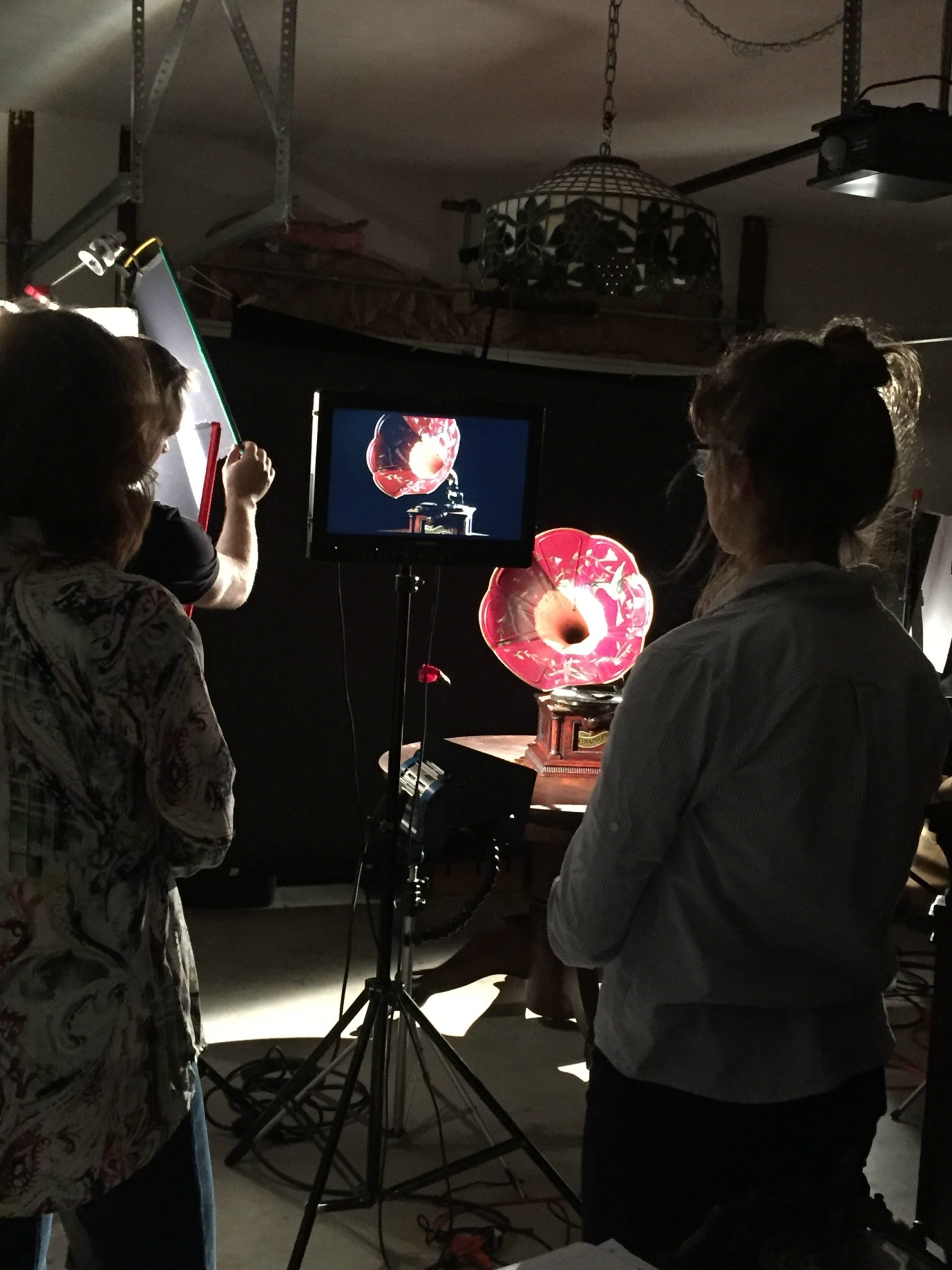
The Country Music crew, led by Julie Dunfey, visited Bristol during their research. They can be seen here setting up a shot of a phonograph playing a 78 record. © Birthplace of Country Music, photographer: Rene Rodgers

The filmmakers state that Country Music will “chronicle the history of a uniquely American art form, rising from the experiences of remarkable people in distinctive regions of our nation. From southern Appalachia’s songs of struggle, heartbreak and faith to the rollicking western swing of Texas, from California honky tonks to Nashville’s Grand Ole Opry, we will follow the evolution of country music over the course of the twentieth century, as it eventually emerged to become America’s music. Country Music will be a sweeping, multi-episode series, exploring the questions “What is country music?” “Where did it come from?” while focusing on the biographies of the fascinating characters who created it – from The Carter family, Jimmie Rodgers, and Bob Wills, to Hank Williams, Johnny Cash, Loretta Lynn, Charley Pride, Willie Nelson, Dolly Parton, Emmylou Harris, Garth Brooks and many more – as well as the times in which they lived.”

In the search for valuable memories and experiences that make up this story, gathering firsthand interviews for the Country Music series has often been a race against time – you can read more about this work here.

Ken Burns. Photo credit: Florentine Films

Each of these films takes a reverent approach to visualizing country music history and exploring the early history of this genre and its many influences and (winding) paths. With considerable research and respect for the musicians and their craft, each takes a different approach to telling the complex story of country music.

So watch these films, and savor their stories and the history that made them – we guarantee you’ll want to listen to the music and learn more.

Kim Davis is Director of Marketing and Jessica Turner is the Director of the Birthplace of Country Music Museum.


The Summer of 2017: The 90th Anniversary of the 1927 Bristol Sessions

In the summer of 1927, the movie The Jazz Singer was released and heralded as the first talkie (a film featuring dialogue between characters). Charles Lindbergh also flew the first transatlantic flight. It was an eventful and innovative time, as writer Bill Bryson marvels about in his book One Summer: America, 1927.*

It was also the summer that Ralph Peer of the Victor Talking Machine Company came to Bristol and recorded the now-famous Bristol Sessions.

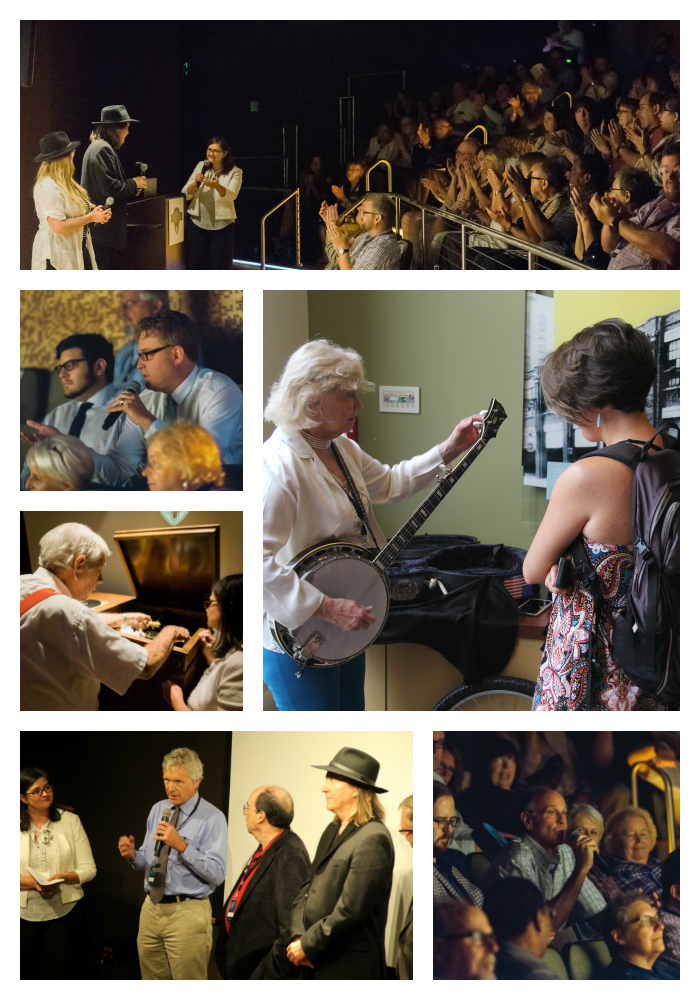
This year the Birthplace of Country Music marks the 90th anniversary of those sessions with several special events, including films, concerts, and special admission prices to the museum. Recently we held a symposium about the 1927 Bristol Sessions that included special events to honor family members of the artists who recorded for Ralph Peer back in 1927. The symposium reflected on the convergences of technology, talent, and business prowess that made possible one of the most significant recording sessions in commercial music history.

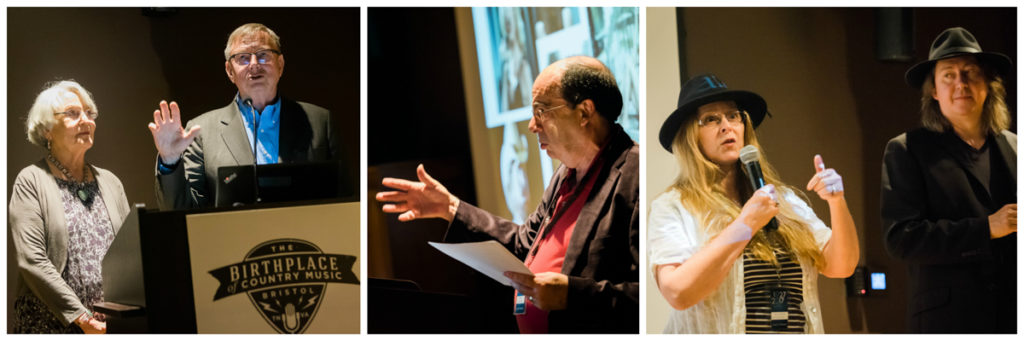
Symposium speakers Ralph Peer II and Liz Peer, author Barry Mazor, and American Epic producer Allison McGourty and director Bernard MacMahon. © Birthplace of Country Music, photographer: Billie Wheeler

We were honored to have as keynote speakers Ralph Peer II and his wife Liz Peer, whose family continues the Peer legacy of music publishing at peermusic. They were accompanied by their three children, Mary Megan Peer, Elizabeth Ann Peer, and Ralph Peer III. From the film American Epic, director Bernard MacMahon and producer Allison McGourty gave a talk and screened parts of their film, which documents a journey that painstakingly recreates the recording technology of the 1920s and then creates new recordings with this technology. This PBS film is a visually stunning, carefully documented, and beautifully creative way of honoring early recordings. The symposium also featured scholars and authors Barry Mazor and Ted Olson, whose research and writings highlight and explore in detail the important history surrounding the 1927 Bristol Sessions.

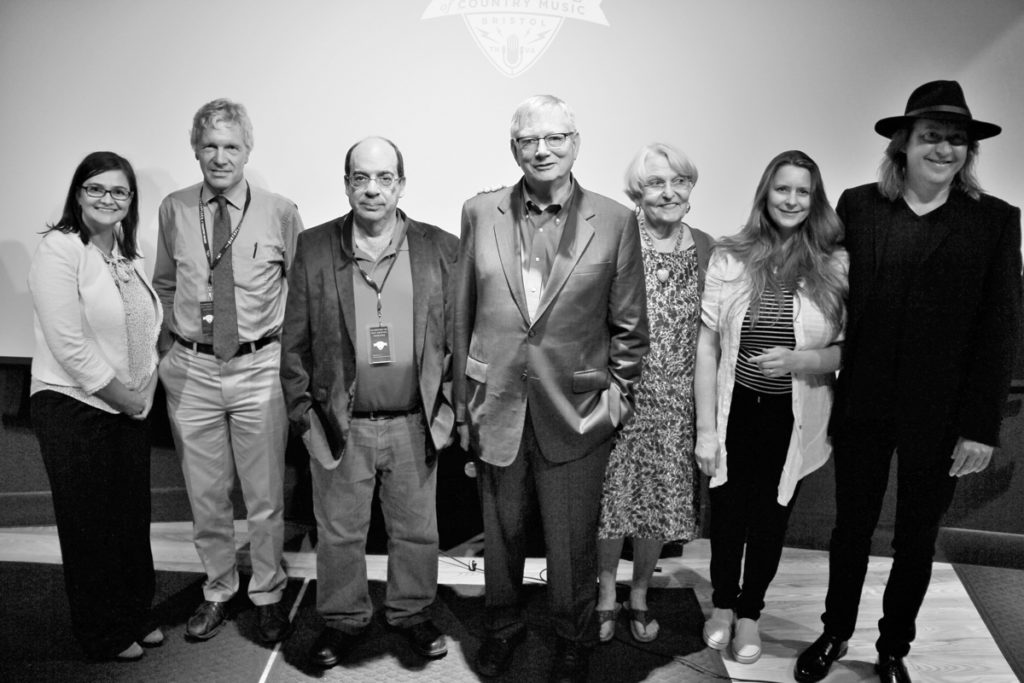
Symposium speakers Dr. Jessica Turner, Dr. Ted Olson, Barry Mazor, Ralph Peer II, Liz Peer, Allison McGourty, and Bernard MacMahon. © Birthplace of Country Music, photographer: Mark Logsdon

There are no photographs that document the Bristol Sessions. Only a handful of musical instruments remain that were recorded in the Sessions, and few artifacts exist that can be traced back to those recordings. Yet the Bristol Sessions continue to shape country music history through our musical lineages and in our imaginations. And the 1927 Bristol Sessions form the key content of the Birthplace of Country Music Museum, to which we anchor our permanent exhibits and which we continue to dig into and explore.

Those recordings capture a musical moment that is arguably one of the most influential country music recording sessions in history. The Sessions launched the careers of The Carter Family and Jimmie Rodgers. They illustrate the versatility of Ernest and Hattie Stoneman, whose long career in country music is reflected by the fact that the Stoneman Family has songs on every recording format there is, from wax cylinders to digital files.

They reflect traditional Appalachian music styles and sacred music as these styles were just beginning to be recorded, such as the holiness music recorded on the Bristol Sessions. And they capture the variety of music styles before early country music was more standardized – before bluegrass even existed – and are full of creativity, replete with entrepreneurialism, and filled with many voices.

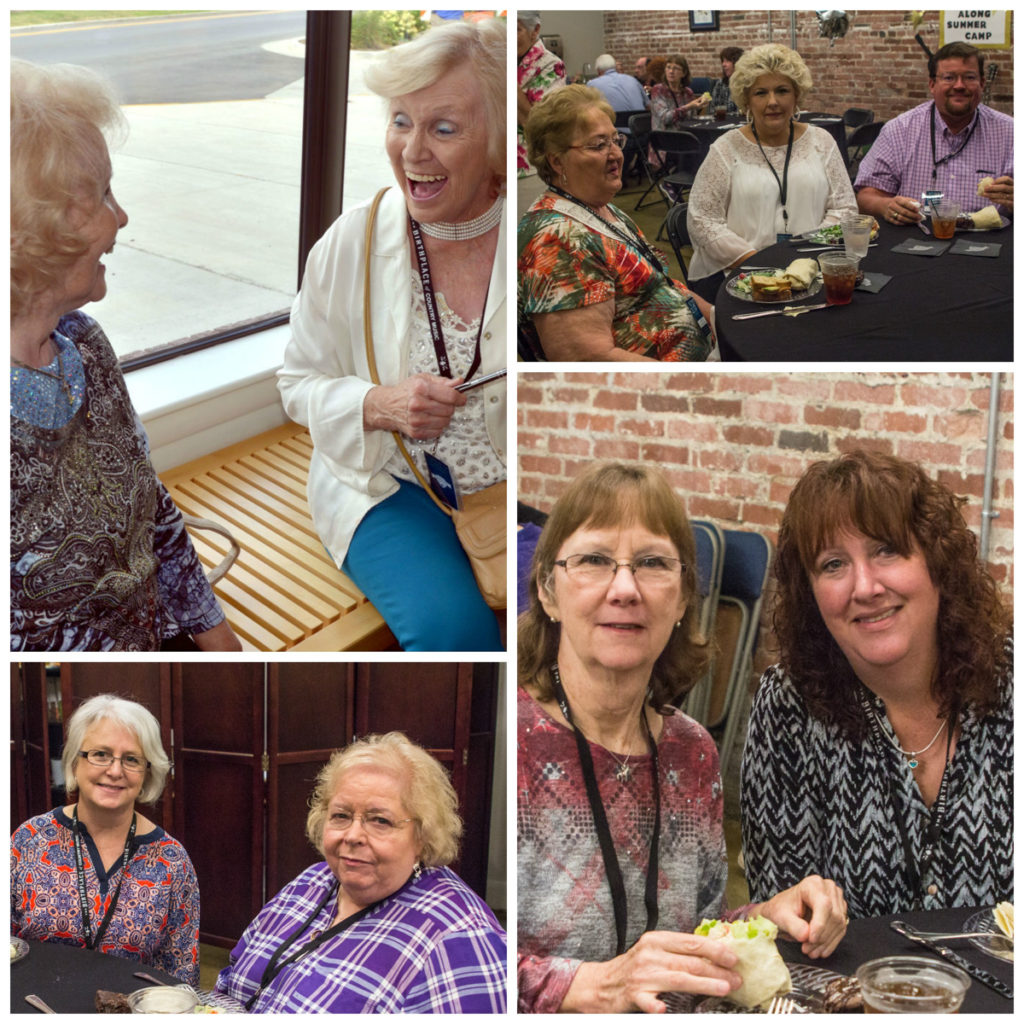
Those voices carry on in many of the communities from which they came, and we were honored to be joined at the symposium by many family members of Bristol Sessions artists. Museum staff spent the morning doing oral history interviews with family members for our archives (and for future blog posts!), and we honored our guests with a special luncheon. Members of The Stoneman Family, The Carter Family, Jimmie Rodgers Family, Blind Alfred Reed Family, Ernest Phipps Family, Alfred Karnes Family, and Georgia Warren Family (Warren was 12 years old when she sang with the Tennessee Mountaineers at the Sessions) were present, all of whom carry the legacy and memories of the many musicians who came to Bristol in 1927. It’s these connections – to our past, to our history, and to the family members who carry on this musical legacy – that made this symposium extraordinary, and make our jobs, where we delve into these connections every day, truly special.

Clockwise from top left: Donna and Roni Stoneman; Nancy Taylor, LeAnne Davis and Timothy Davis, family members of Georgia Warren of the Tennessee Mountaineers; Ernest Phipps’s granddaughter Teresa Phipps Patierno and daughter Amie Brittain; and Blind Alfred Reed’s family members Tina Hunter and Jane Kelly. © Birthplace of Country Music, photographer: Billie Wheeler
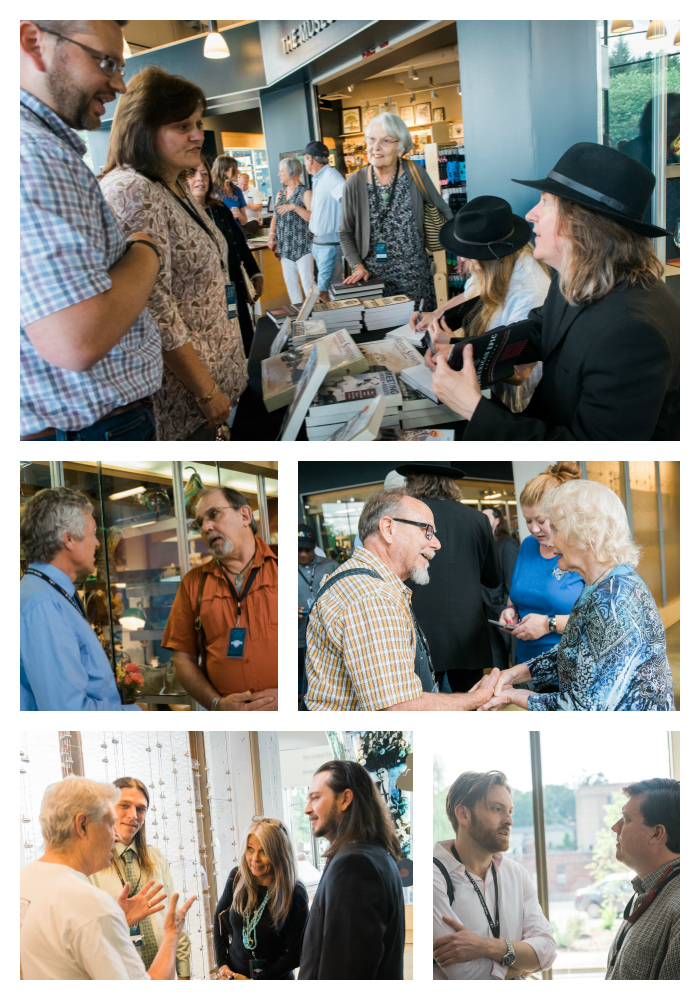
From top, left to right: Karnes family members speaking with Bernard MacMahon and Allison McGourty, with Liz Peer; Ted Olson and Dale Jett; an attendee speaking with Donna Stoneman; playwright Doug Pote speaking with Jimmie Rodgers family Austin Court, Karen Court, and James Cody Court; Ralph Peer III chats with an attendee. © Birthplace of Country Music, photographer: Billie Wheeler
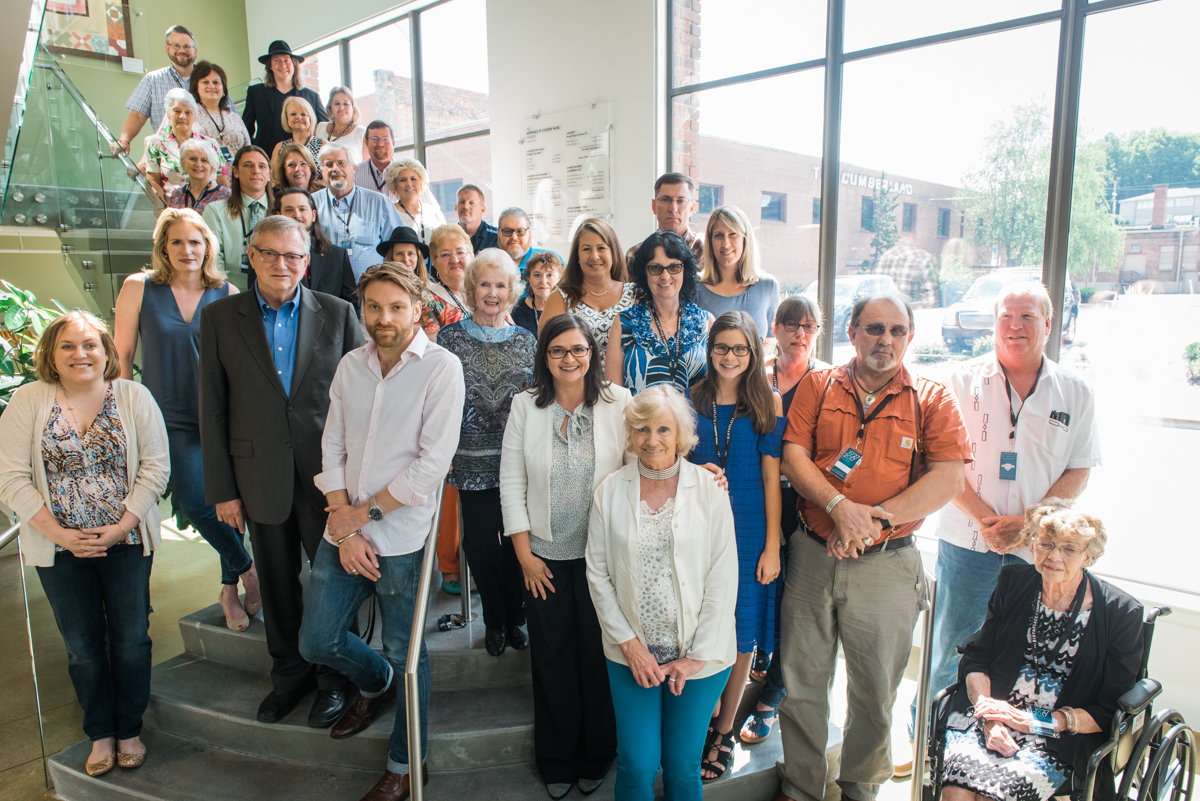
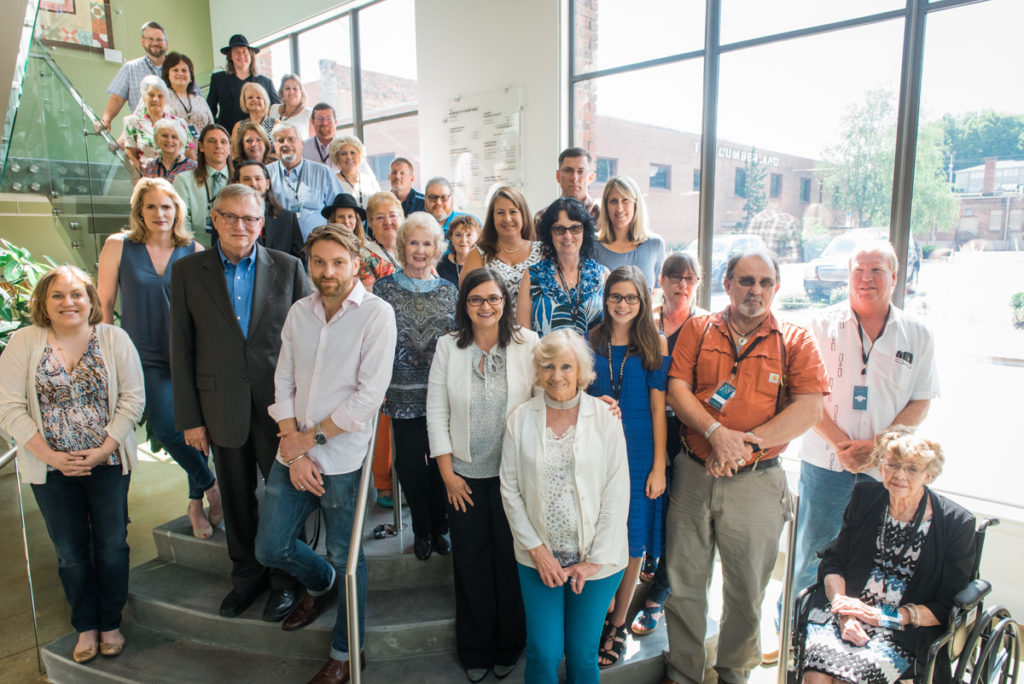
Participants in the symposium. © Birthplace of Country Music, photographer: Billie Wheeler


Descendants of 1927 Bristol Sessions artists with the Peer Family and symposium participants. © Birthplace of Country Music, photographer: Billie Wheeler

* Interestingly, Bryson doesn’t mention the 1927 Bristol Sessions in his book, though he does focus some attention on early sound technology including developments in radio. Curator René Rodgers pointed out this omission in correspondence with Bryson, and he graciously acknowledged the need to visit Bristol to learn more. Perhaps he will do so. We’d love to see him here!

Jessica Turner is the Director of the Birthplace of Country Music Museum.

Country Music Icons: Immortalized and Celebrated in Stamps

July 1 is National U.S. Postage Stamp Day, a day to celebrate these miniature works of art and their important role in correspondence and communication.

While letters and messages have been sent throughout history, the first ever pre-paid postage stamp was issued in the United Kingdom on May 6, 1840. This stamp bore the profile portrait of a young Queen Victoria and was known as a “Penny Black” due to its cost and the ink color used for the printing. The first stamps issued in America were a 5-cent Benjamin Franklin stamp and a 10-cent George Washington stamp, both produced in 1847.

U.S. postage stamps are often used to commemorate important events and people in American history – the first American commemorative stamps were produced in 1893 to celebrate the discovery of the New World by Christopher Columbus. Since then, there have been numerous commemorative stamps and stamp series, including ones to honor the people who made a mark on country music.

Jimmie Rodgers

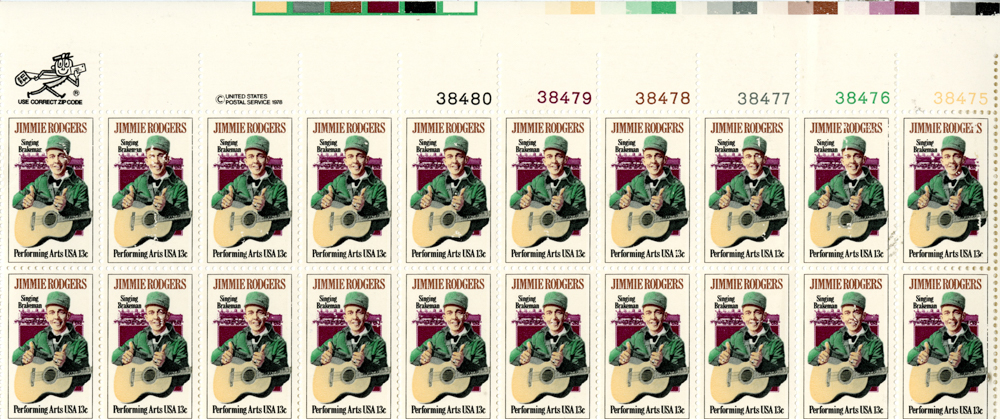
The 13-cent Jimmie Rodgers commemorative stamp was issued on May 24, 1978, and its first-day city was Meridian, Mississippi, Rodgers’s birthplace – it was issued during the town’s annual Jimmie Rodgers Festival. The design of the stamp celebrates his nickname as the “Singing Brakeman,” a persona based on his railroad career and reflected in a character he played in a short film of the same name. The film, produced by Columbia Pictures and Victor Talking Machine Company in 1930, features Rodgers singing three of his songs at the “Railroad Eating House” after a long day on the rails. As with many stamps, the Jimmie Rodgers stamp was part of a series, the first issued in the U.S. Postal Service’s Performing Arts and Artists series.

Jimmie Rodgers Stamp © 1978 United States Postal Service. All Rights Reserved. Used with Permission. Third-party permissions courtesy of Karen Court at Jimmie Rodgers Properties I LP.

Legends of American Music Series: Hank Williams, Patsy Cline, The Carter Family, and Bob Wills

From 1993 to 1999, the U.S. Postal Service produced the Legends of American Music Series. This series covered a host of genres and contributions to American music, including rock-and-roll, jazz and blues, gospel, opera, folk, and popular music; songwriters, conductors, composers, big band leaders, and Hollywood and Broadway songwriters and composers; and, of course, country music icons. The country music stamps, all issued in 1993, featured Hank Williams, Patsy Cline, The Carter Family – A. P., Sara, and Maybelle, and Bob Wills. The stamps were presented at various dedication ceremonies, including one highlighting the Hank Williams stamp at the Grand Ole Opry, which was attended by his son. Williams Jr. noted that his family was thrilled about the stamp, adding that he had told his children that their grandfather now had his picture in the U.S. Post Office, and not on an FBI poster!

Artist Richard Waldrep designed the stamps, creating the artwork for them at 400% of the actual stamp size using gouache that had been thinned so it could be applied with an airbrush, creating a smoother surface showing no brush strokes; he then filled in the minor detailing with brush and colored pencil. The results are vibrant portraits of these artists, capturing their personalities and performance. Waldrep has created 38 stamps for the U.S. Postal Service, including several other commemorative series. He remembers in particular his work on the Centennial Olympic Games stamps of 1996 when he was asked to sign 30,000 sheets of the stamps – he says his signature has never been the same since!

Roy Acuff

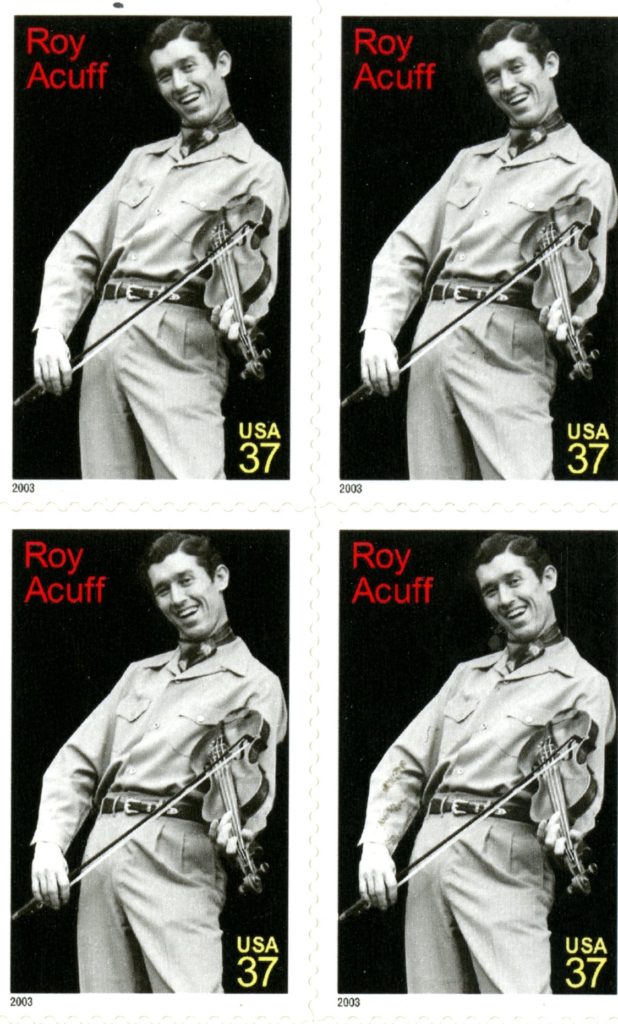
Rather than artwork, the 37-cent Roy Acuff commemorative stamp bore a photographic likeness of the “King of Country Music.” As with the Legends of American Music stamps, the Roy Acuff stamp was printed using the gravure process, a type of printing where the image is engraved on a metal plate for use on the printing press – 52 million Acuff stamps were produced. The stamp was first issued in Nashville, Tennessee, and it was presented at a dedication ceremony during a live Roy Acuff tribute show broadcast from the Grand Ole Opry on September 13, 2003. By coincidence, Johnny Cash had passed away the day before, and the former Postmaster General Marvin Runyon promised he would do all that he could do to be sure Cash was also memorialized through a U.S. postage stamp in the future.

Roy Acuff Stamp © 2003 United States Postal Service. All Rights Reserved. Used with Permission.

Johnny Cash

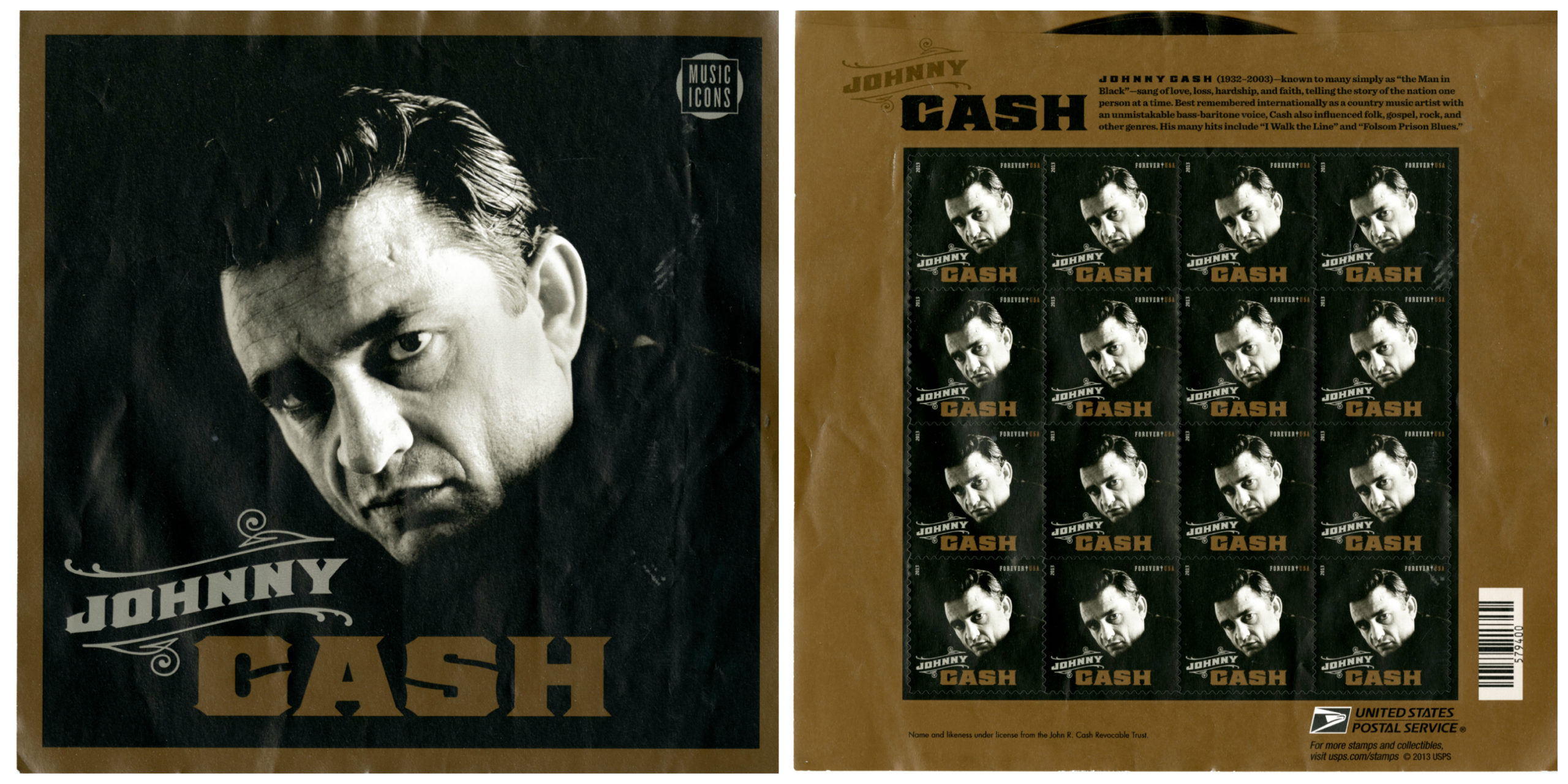
The promise made at the Roy Acuff issue ceremony came to fruition in June 2013 when the U.S. Postal Service released a Forever stamp commemorating Johnny Cash, part of their Music Icons series that also included Lydia Mendoza and Ray Charles. The dedication ceremony was attended by son John Carter Cash, daughter Rosanne Cash, and musicians Larry Gatlin, Jamey Johnson, The Oak Ridge Boys, The Roys, Marty Stuart, and Randy Travis, amongst others. The image used on the stamp is a photograph by Frank Bez, taken during a photo session for Cash’s album Ring of Fire: The Best of Johnny Cash (1963). The level of detail and thought put into stamp design is often extraordinary – for instance, the square stamp pane surrounding the Johnny Cash stamps was designed to resemble a 45rpm record sleeve.

Music Icon Johnny Cash Stamp © 2013 United States Postal Service. All Rights Reserved. Used with Permission. Third-party permissions courtesy of Josh Matas at Sandbox Management.

Country Music Stamps and Beyond

Other stamps from the U.S. Postal Service and Canada have celebrated other country music icons. For instance, the U.S. Postal Service issued stamps focused on cowboys of the silver screen, two of which were also known as singers: Gene Autry, the “singing cowboy” and Roy Rogers, the “King of the Cowboys.” And Canada Post released a series focused on the contributions of Canadian country music stars with stamps of Shania Twain, k. d. lang, Tommy Hunter, Hank Snow, and Renée Martel.

René Rodgers is the Curator of Exhibits & Publications at the Birthplace of Country Music Museum. Special thanks to Patricia Raynor at the National Postal Museum, Richard Waldrep, Karen Court, Josh Matas, and Andrea at the U.S. Postal Services Rights & Permissions Department for their help with this post.