


Anna Buchanan is the Head Curator at the William King Museum of Art located in Abingdon, Virginia. Buchanan is a graduate from Clemson University where she received her MFA with a concentration in drawing.
The William King Museum of Art (WKMA) is no stranger to the age-old question: What is art? It’s a question that art historians still grapple with today. At WKMA, we believe that museums have a responsibility to push the boundaries of that question in order to broaden our understanding of creativity and foster empathic connections across cultures and communities. One of my favorite quotes comes from Yolngu Aboriginal Australian artist Wandjuk Marika:
“There is no distinction between art and life.”
The Fralin Museum and the Kluge-Ruhe Aboriginal Art Museum reflected on this quote, noting how it challenges the distinctions often made in Western culture between “fine art” and “craft,” or “design” and “decoration.” As museums, I think that it’s important to recognize the traits and histories of each creative category, but question the hierarchy that is so often a part of the visual arts.
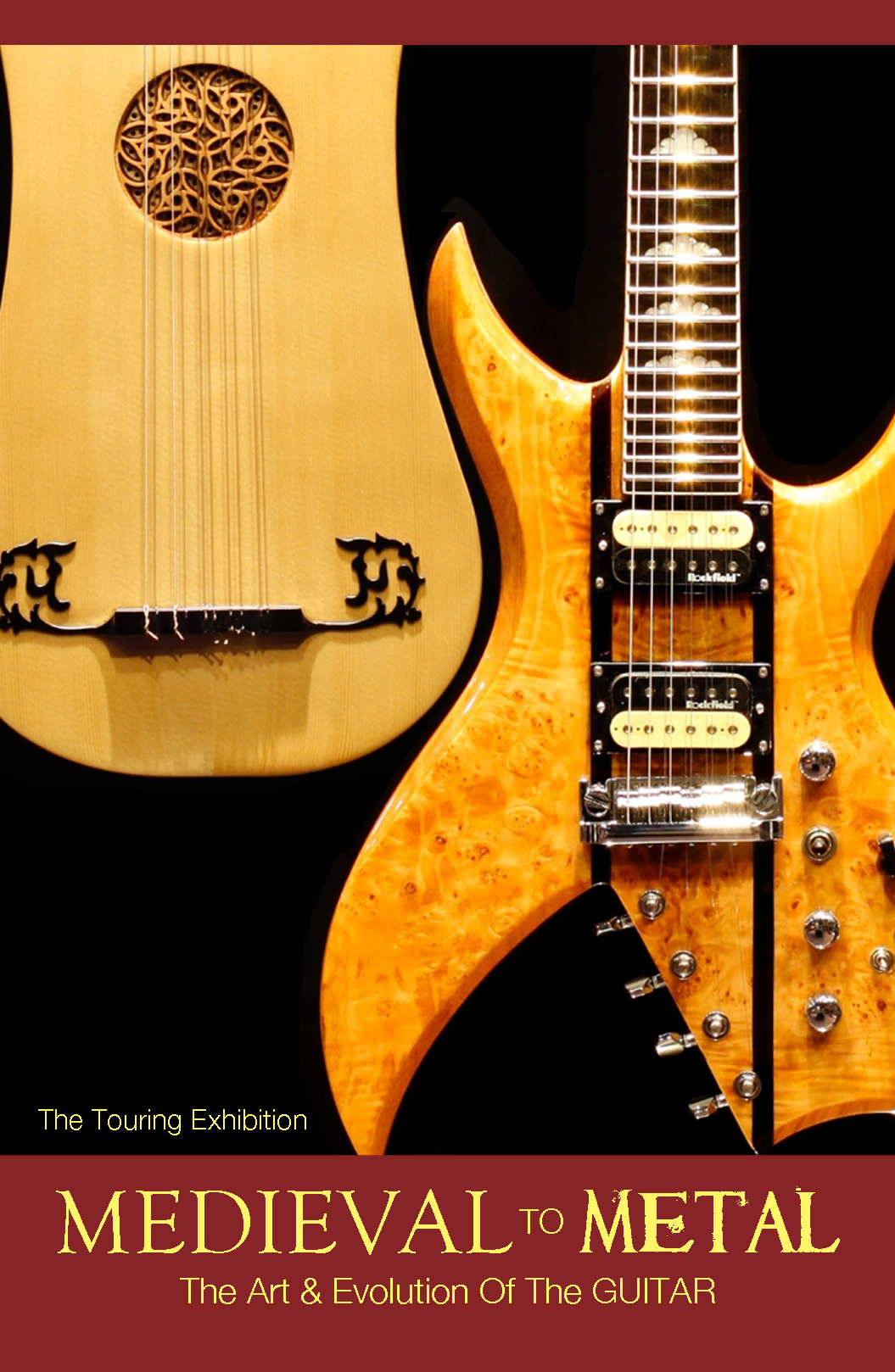
WKMA invites visitors to reconsider their definition of art through our current exhibition, “Medieval to Metal: The Art and Evolution of the Guitar,” on view from May 15 to August 17. This vibrant traveling exhibition–developed by the National Guitar Museum (NGM)–showcases 40 instruments that tell the story of the guitar’s artistic transformation over centuries. Spanning from medieval lutes to modern electric guitars, the exhibition highlights how creative engineering has driven the instrument’s evolution. Whether you’re a lifelong music fan or new to the guitar’s history, the diversity of designs and materials sparks curiosity.
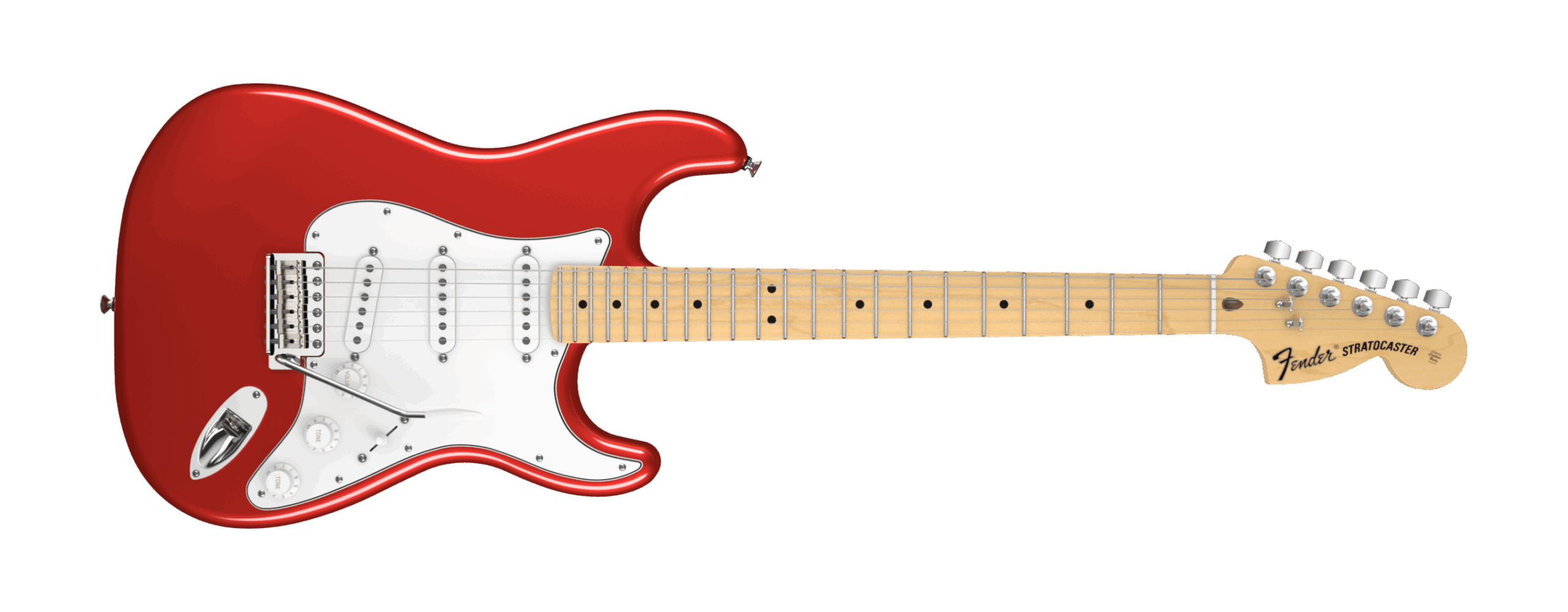
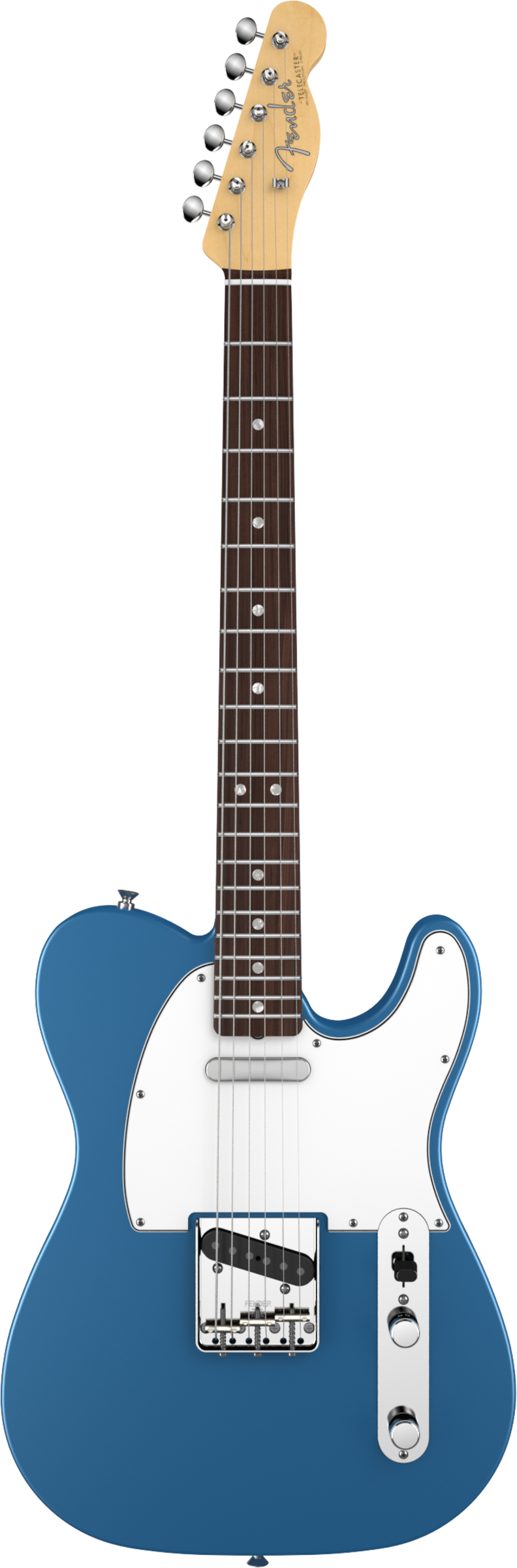
Visitors will recognize some famous names–like Fender, one of the most iconic brands in music. Clarence Leonidas “Leo” Fender (1909-1991) was an American inventor and founder of the Fender Musical Instruments Corporation. Based in Fullerton, California, Fender opened a repair shop in the 1940s that became a hub for local musicians. Local bands brought him music equipment and acoustic guitars for repair. Hearing all the complaints from the musicians about their instruments, Fender set out to create a guitar like no other. The result was the “Telecaster,” named in homage to the growing popularity of television.
Fender’s repair shop flourished in the 1950s and 60s, particularly in the SoCal hot rodding scene that erupted after WWII. Fender knew his clientele and his designs often drew inspiration from car culture, featuring chrome accents and bold colors like Fiesta Red and Lake Placid Blue–the same hues found on 1950s Cadillacs. Fender even partnered with auto paint manufacturers like DuPont. Ironically, despite revolutionizing the instrument, Leo Fender never learned to play or tune a guitar himself.
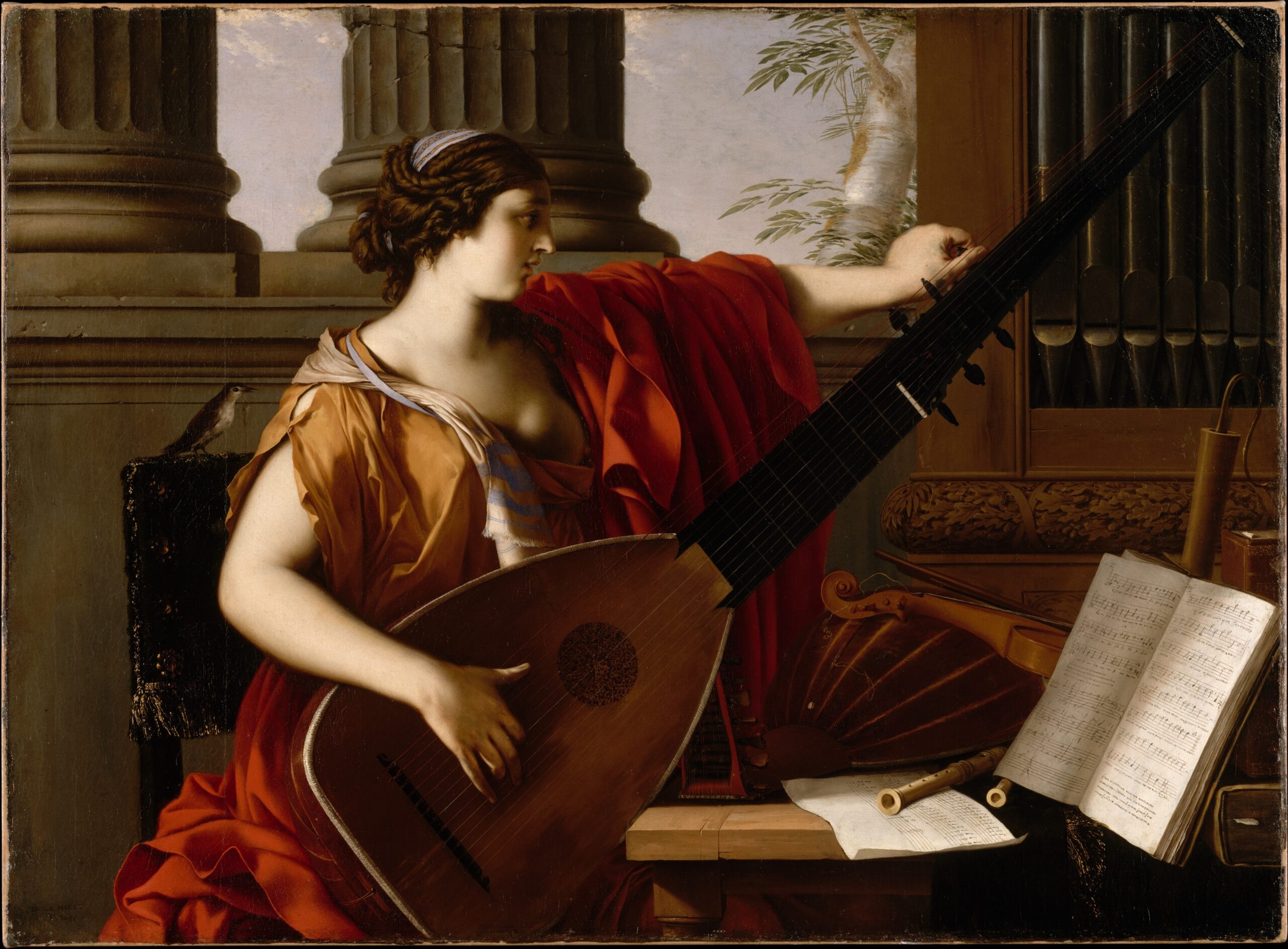
A lesser known instrument that is sure to pique everyone’s interest is the theorbo. The theorbo is a larger than life Renaissance instrument that evolved from the lute. Often six feet long with up to 30 strings, the theorbo was developed to accompany the deep voices of male opera singers in Italy. Featuring a second, extended neck without frets and bass strings, it produced a rich, resonant sound that filled concert halls. Players strummed the upper strings while plucking melodies on the lower neck, creating music that was as visually dramatic as it was ethereal. Though it fell out of favor in the 18th century, the theorbo remains a powerful reminder of how function and artistry can intertwine.
So, what is art? Art can be a way of communication. Art is often used as a tool for the distribution of ideas and the guitar is no different. The guitar is a creative tool used to disseminate messages, thoughts, and even protests just as the visual arts have done for millennia. Alex Nygers, Director and CEO of the Virginia Museum of Fine Arts notes that, “…the guitar holds not only an evergreen presence as a source of entertainment, but becomes a vehicle for these connections to our histories and our communities–-a way to share stories, express emotion, respond to politics…” At WKMA, we see the guitar as more than just an instrument–it’s a work of art, and by exploring its evolution, we hope visitors leave with a broader appreciation for how creativity shapes the world around us. In questioning the boundaries of “what counts” as art, we aim to open the door to deeper engagement, inclusivity, and inspiration.
Additional Links/Resources: