June 2017 - Page 2 of 2 - The Birthplace of Country Music
Listen
Play
Loading station info...

In Search of Lesley Riddle

What I wouldn’t give to have met Lesley Riddle.

Credited as having influenced one of the world’s most prominent families in country music history, Lesley Riddle’s legendary interactions with The Carter Family offer a glance at the messy realities of musicians making a living in the 1920s and 1930s. This history shows that black and white musicians came together in ways that made the music richer, more complicated in its honest reflection that defied the genre catalogs of the industry.

A. P. Carter met Lesley Riddle in the late 1920s in Kingsport, Tennessee. This meeting was the beginning of a musical interaction that would impact The Carter Family’s music, as Riddle traveled with Carter to collect songs throughout the region and helped shape Maybelle’s guitar techniques. Sadly, Riddle never made his living in music himself; however, it is his contribution to country music for which he is most remembered.

From this history, I also wish I could have met Lesley Riddle and A. P. Carter together. Riddle having lost a leg in an accident and Carter with a constant tremor, the two men stand as an odd couple in the canon of country music history, almost a tragic comedic duo looking a segregated South (and a segregated music industry) straight in the face as they traveled the hills of northeast Tennessee and southwest Virginia to hear and learn the songs that were being sung. At a minimum, it’s inspirational that the two rambled forth together; however, if their partnership was a non-issue in the hollers where they traveled, it invites even more consideration.

Born on June 13, 1905 in Burnsville, North Carolina, Riddle spent much of his childhood with his paternal grandparents near Kingsport, Tennessee. After a cement factory accident robbed him of his right leg, Riddle took an interest in the guitar and mandolin. The Traditional Voices Group of Burnsville, North Carolina’s Mountain Heritage Center has compiled a full bio of Riddle if you want to read more about his life.
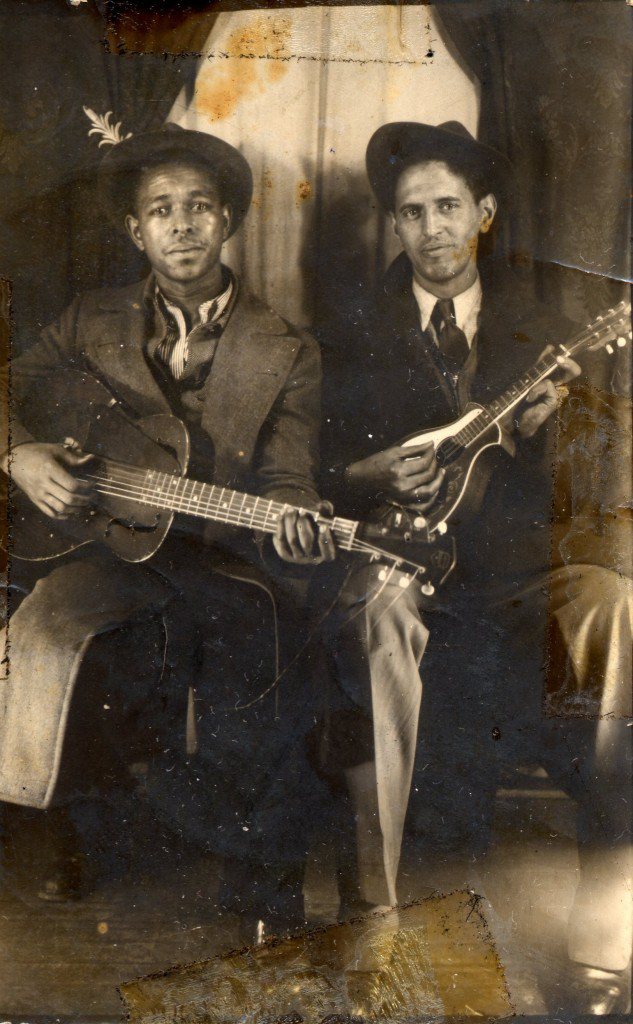
 

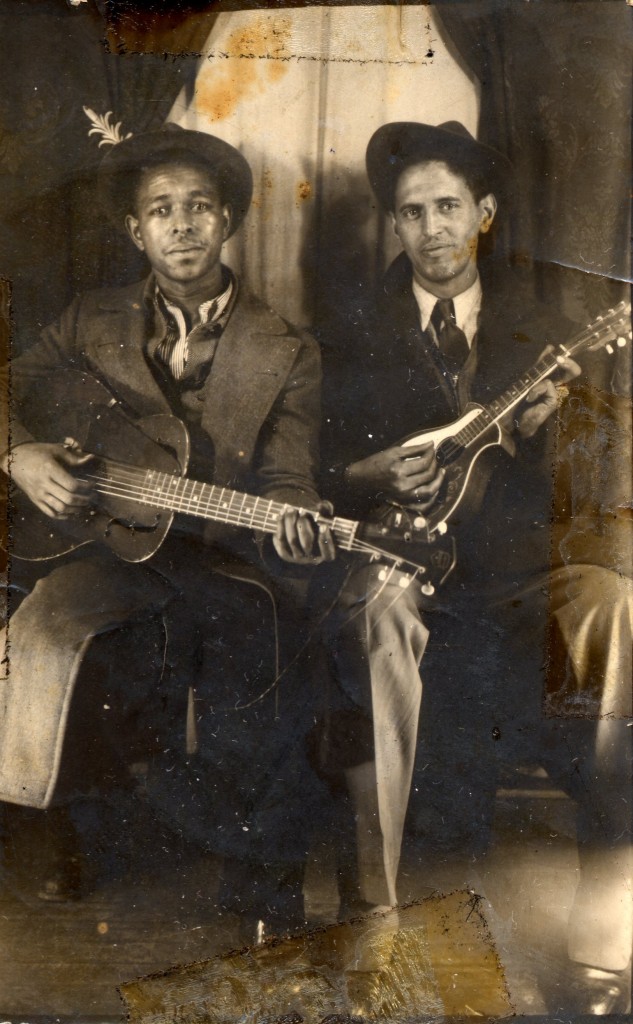
Brownie McGhee (left) and Lesley Riddle played together when both men lived in Kingsport, Tennessee. © Lesley Riddle Family and courtesy of the Mountain Heritage Center’s Traditional Voices Group, Burnsville, North Carolina

Riddle met other musicians during his time in Tennessee, and he was soon a regular in the area’s music scene, especially with other black artists including Steven Tarter, Brownie McGhee, and John Henry Lyons. It was Lyons who introduced Riddle to Carter, and he soon became fast friends with the family, staying with them at their home in Maces Springs, Virginia, for weeks at a time and accompanying Carter on his song collecting trips.

Maybelle Carter credited Riddle with teaching her the “bottleneck” style of guitar picking, in which the index finger plays the melody while the thumb keeps the rhythm on the bass strings. Of Maybelle’s playing, Riddle said: “You don’t have to give Maybelle any lessons. You let her see you playing something, she’ll get it – you better believe it.” Riddle taught The Carter Family such songs as “The Cannon Ball,” “I Know What It Means to Be Lonesome,” “Coal Miner Blues,” and “Let the Church Roll On.” In 1942, Riddle and his wife moved to Rochester, New York, and lost touch with both The Carter Family and music. A few years later he sold his guitar.

In the mid-1960s, Mike Seeger met Riddle, and he interviewed and recorded him on several occasions during the 1960s and 1970s. With Seeger’s influence, Riddle performed at such venues as the Smithsonian Folk Festival and the Mariposa Folk Festival, as well as the Carter Family Fold before he passed away in 1980.
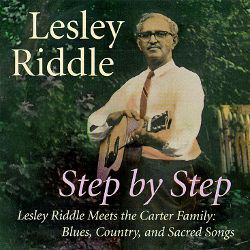
Cover of Step by Step, a recording released by Rounder Records that came out of Riddle’s work with Mike Seeger. © Rounder Records

Some of Seeger’s interviews capture the organic nature of the encounter between A. P. Carter and Lesley Riddle. “I played a couple of songs for him [A. P.] and he wanted me to go back home with him right then and there,” said Riddle in one interview. “I went over to Maces Springs with him and stayed about a week. We got to be good friends and for the next three or four years I continued going over to his house, going where he wanted to go. I went out about 15 times to collect songs.” Riddle continued: “He was just going to get old music, old songs, what had never been sung in sixty years… He was going to get it, put a tune to it, and record it.”  Lucky for us, the materials related to Riddle are available to researchers as part of the Mike Seeger Collection at the Southern Folklife Collection at UNC-Chapel Hill – the collection houses a whopping 70,000+ items in total!

Riddle’s participation was a vital part of Carter’s work to collect traditional songs for the record producers he was working with. “If I could hear you sing, I could sing it too,” said Riddle. “I was his tape recorder. He’d take me with him and he’s get someone to sing the whole song. Then I’d get it and learn it to Sara and Maybelle.”

So while we might not get the chance to meet Lesley Riddle now, his legacy lives on, and if you’re around Burnsville you may meet him in some fashion. Last year a North Carolina Highway Historical Marker was placed to honor Riddle’s work in country music along Burnsville’s Highway 19. And on June 30 of this year, Traditional Voices will present the annual Riddlefest in honor of the music of Lesley Riddle. Riddlefest 2017, featuring David Holt and Josh Goforth with guest Roy Andrade joining Holt for a special seminar, will be the 10th anniversary of this annual concert event.
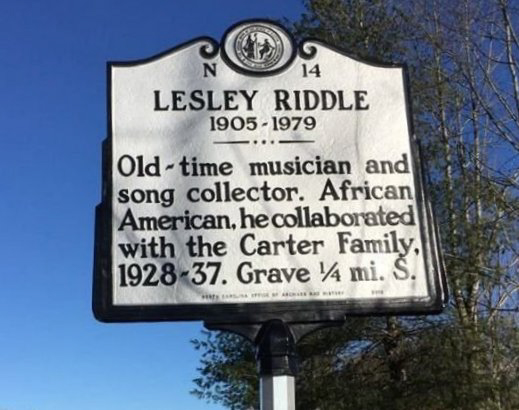
Lesley Riddle marker along Highway 19 in Burnsville, North Carolina. © North Carolina Department of Historic Resources, North Carolina Highway Historical Marker Program

Jessica Turner is the Director of the Birthplace of Country Music Museum.
Creating Experiences for Engaged Learning through Music: A Key Component to our Organizational Mission

At the Birthplace of Country Music (BCM), we believe that engaged learning in museums should be a component of every child’s experience, and those museums should be welcoming, accessible, and relevant. Whether with a school group, as individuals, or with their families, inviting young people to interact with the arts and history in museums and through outreach programs gives us opportunities to teach elements of these subjects through broad lenses in the humanities – and this in turn helps children to understand the world around them. These hands-on learning experiences give students the chance to explore and connect history to their own lives. We offer a variety of youth programs at BCM in an ongoing effort to serve the region – our school group programs, youth summer camps, free Family Fun Days, the Bristol Rhythm & Roots Reunion Children’s Day, and a variety of outreach programs at schools or area agencies provide opportunities for arts education that is an important component in a well-rounded education. And research into visitor engagement at cultural organizations suggests that children who visit museums or other cultural events are TWICE AS LIKELY to visit them as adults. (So take your children to experience the arts and culture at the museums, festivals, and art galleries all around us!)

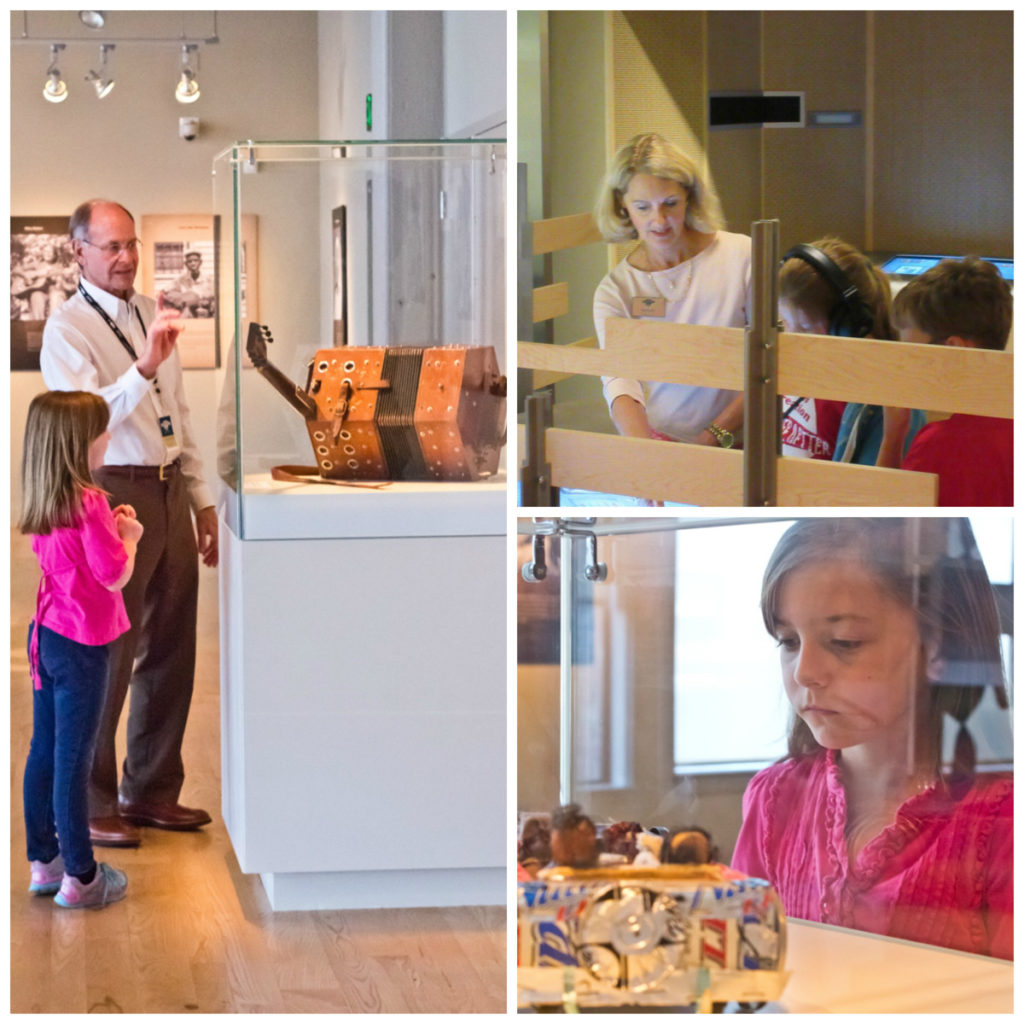
Clockwise from left: Docent Richard Horner and a young visitor ponder the uses of a unique hybrid guitar-accordion on loan from the Music Maker Relief Foundation; docent Barbara Smith explores the mixing station with students during one of her tours; and a young visitor looks at a piece of folk art from the We are the Music Makers exhibit. © Birthplace of Country Music

Planning educational and outreach programs takes enormous amounts of time. Museum staff members develop programming for each new exhibit so that groups visiting the museum have the opportunity for a variety of experiences and so that schools can link to state standards as they plan their visit – because Bristol is located on the state lines of Virginia and Tennessee, we include two different state standards in our planning. Talented volunteer docents are trained in museum content and are ready to provide a tailored and engaging group tour for area students; our docents often gain as much from the students as the students do from their visit!

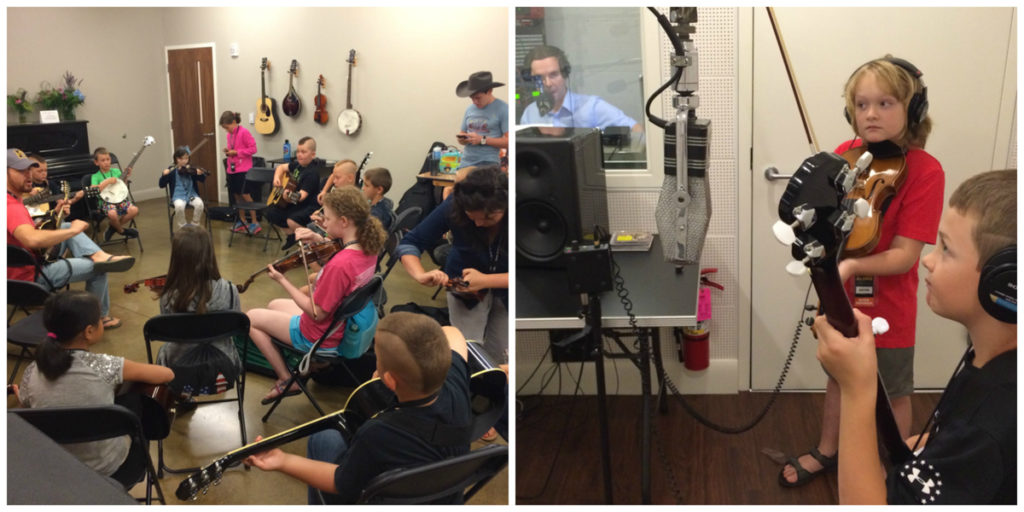
Our Pick Along Summer Camp coordinators and instructors spend numerous hours developing curriculum and activities so that summer camps provide not only a really engaging and enjoyable week, but they also nurture and develop skills in instrument playing and performance competence. These summer camp sessions are a fantastic way to introduce kids to string band music through individual and group instruction, museum-focused activities, songwriting, and arts and crafts. Campers get a chance to perform live on Radio Bristol in the museum, and some have also had the chance to produce their own short programs for broadcast. Scholarships for campers who need financial assistance are always available (we eagerly accept donations for these scholarships and to help with bus transport!) so that we are able to serve our entire community regardless of income level. By offering instrument instruction in a camp format, we have the ability to integrate learning experiences with museum exhibits and radio, facilitate lessons in history and social context for the music they are playing, and give students the opportunity to develop a social network of young musicians interested in regional string music. And, of course, the Pick Along camps are also lots of fun and filled with laughter!

Students enrolled in the Pick Along Summer Camp learn string instruments individually and in groups; young campers also get their first taste of live music broadcast on Radio Bristol. © Birthplace of Country Music

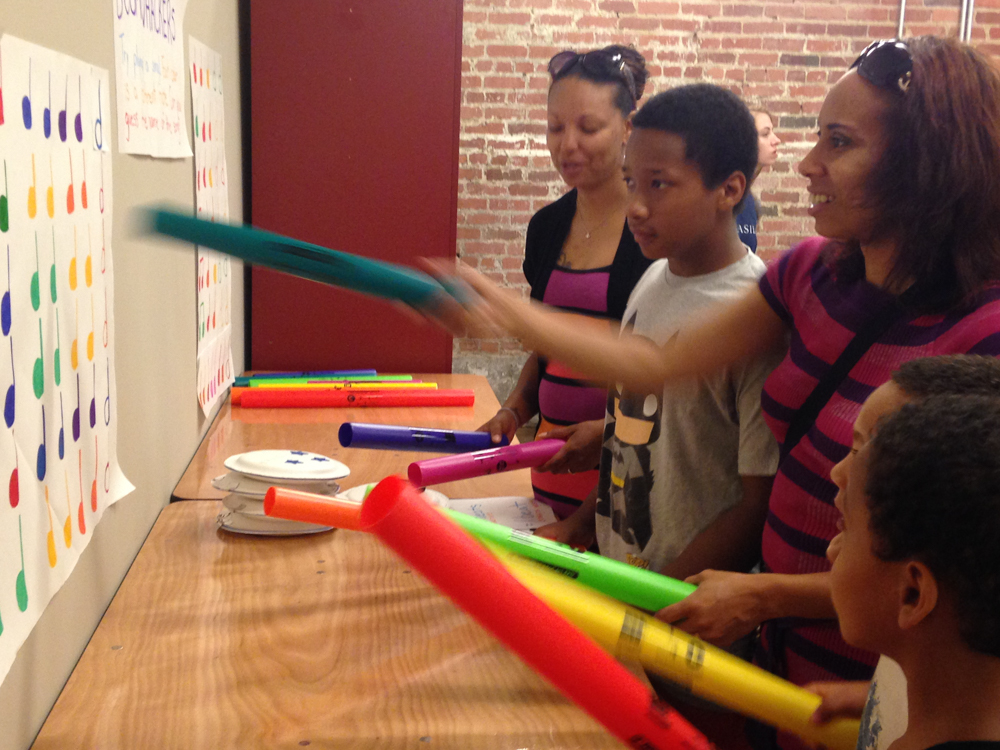
Family Fun Days provide hands-on activities for kids of all ages and encourage families to bring children to the museum. These events give free entry to our Special Exhibits Gallery and often include programming that goes along with the particular exhibit that is featured in that space – from songwriting Mad Libs to a chance to play real instruments to coloring sheets. Our Family Fun Day visitors also get to create entertaining craft takeaways from various activities (and sometimes even prizes, especially after a rousing game of Banjo Bingo!).

Our free Family Fun Days provide the opportunity for families to engage in making music together – here a family enjoys the Boomwhacker Music Station. © Birthplace of Country Music

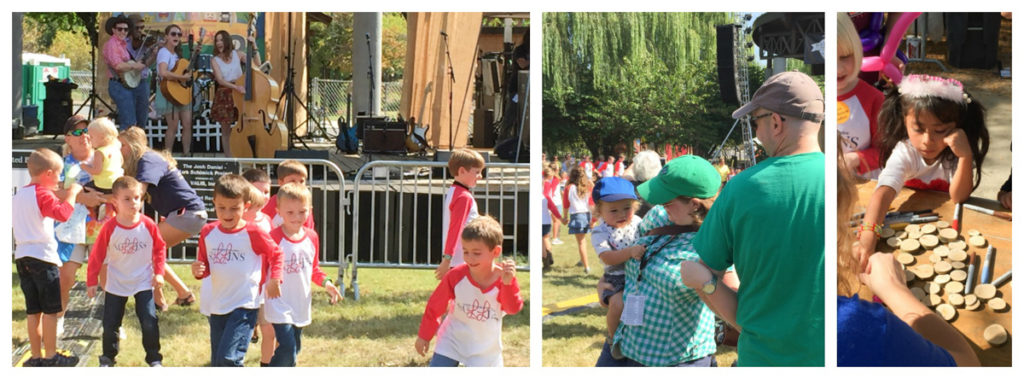
Bristol Rhythm & Roots Reunion’s Children’s Day is another space for engaging families and features a variety of hands-on music-related and arts-focused activities for kids. Participants at this free event get the chance to dance and sing, play instruments, create take-home crafts, and learn about BCM and other nonprofits in the community. It’s also a chance for them to enjoy the feel of a mini-festival with some kid-focused music.

In 2016 the festival’s Children’s Day featured an interactive square dance and a short performance from students at Sullins Academy, while Collections Manager Emily Robinson do-si-doed with her family and children enjoyed crafts with the area nonprofit agencies who participated in the event. © Birthplace of Country Music

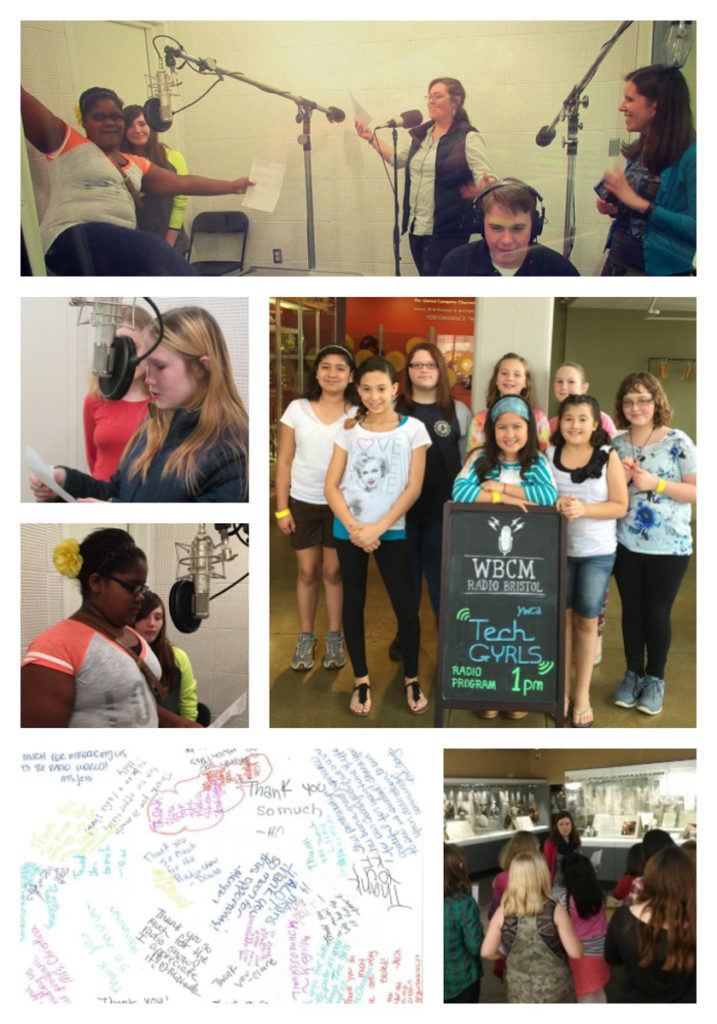
Many of our educational programs and events are geared towards giving students a short learning experience that might shape their understanding and create a desire to dig deeper, while others delve further into museum content through a longer program that helps students gain skills in history, music, writing, and critical thinking. One particularly successful program was an outreach project that museum staff provided for a youth group at the YWCA Bristol. It was developed in response to a special Museum Day Live! event on March 12, 2016, which focused on encouraging all people – and particularly women and girls of color – to explore our nation’s museums and cultural institutions. After thinking carefully about programs that fit in with this theme, we approached the YWCA Bristol TechGYRLS, a local after-school program based on a STEM-focused curriculum and geared towards supporting girls aged 9—15 who would otherwise have limited access to and experience with technology. The goal of the partnership was to give the TechGYRLS access to a new technology and the opportunity to explore the music history of their hometown in a meaningful way – this project provided an innovative STEAM educational program that connected our museum to our community by empowering the TechGYRLS to create a special radio program on Radio Bristol, our in-house working radio station. The program took a creative approach to our museum content and gave the participants a learning experience that has resulted in a strong and continuing partnership with the YWCA, enabling the museum to share its mission with a much wider audience and to engage students in an interesting way.

This project introduced the students to the museum, gave them opportunities to engage directly with radio technology and to learn more about how a radio station works, and helped them to research, write and produce a special radio program that highlighted the importance of the TechGYRLS program to them, their experiences in the museum, and the content that inspired them from our exhibits. The TechGYRLS visited the museum four times for a museum tour, to work on their radio script, to record the program, and as participants in Museum Day Live! We also went to the YWCA Bristol to give them additional coaching on their script and being “on air.” The half-hour radio program they created was played during the Museum Day Live! event at the museum, both on air and in the museum’s Performance Theater (attended by several girls and family members, along with museum visitors). For museum staff, it was a wonderful experience to work with these girls, and it was really gratifying to see them explore the museum and share their enthusiasm and learning on air.

Our goal with this program was to create a new opportunity for an underserved group in our community, while also sharing an enjoyable learning experience that would tie into that group’s needs. Not only did this partnership accomplish that, it also resulted in many of the TechGYRLS becoming advocates for our museum and for the musical heritage of our area – we have seen them as school group visitors sharing the things they learned with their friends, at our summer camp, and at special events. This program is also now saved in our archive collection for future use. By exploring our museum’s content in a new way through the TechGYRLS radio program, we were able to share our mission with a wider audience – across the radio airwaves and within our community – in an engaging way, and more importantly, provide an opportunity for tangible and creative learning to underserved local children, really highlighting the role of our museum as a community resource.

The YWCA Bristol TechGYRLS Radio Program brought together history, the arts, and radio technology as the students researched and recorded their show. © Birthplace of Country Music

At the risk of sounding overly romantic, I’ll finish by saying that the responses of students when they engage in our programs can be rewarding and overwhelming. We see students whose first-ever visits to a museum are on a school visit to our museum, and we’ve heard local students remark about how the Birthplace of Country Music Museum makes them proud to be from somewhere “important.” That’s a significant gift to give, along with inquisitiveness, a general appreciation of the music all around us, and an understanding that history matters now and shapes how we think and live our lives. Those concepts, along with the music history of the region’s rich traditions, are some of the core values driving our educational mission – and these are the things that make our day-to-day jobs so rewarding.

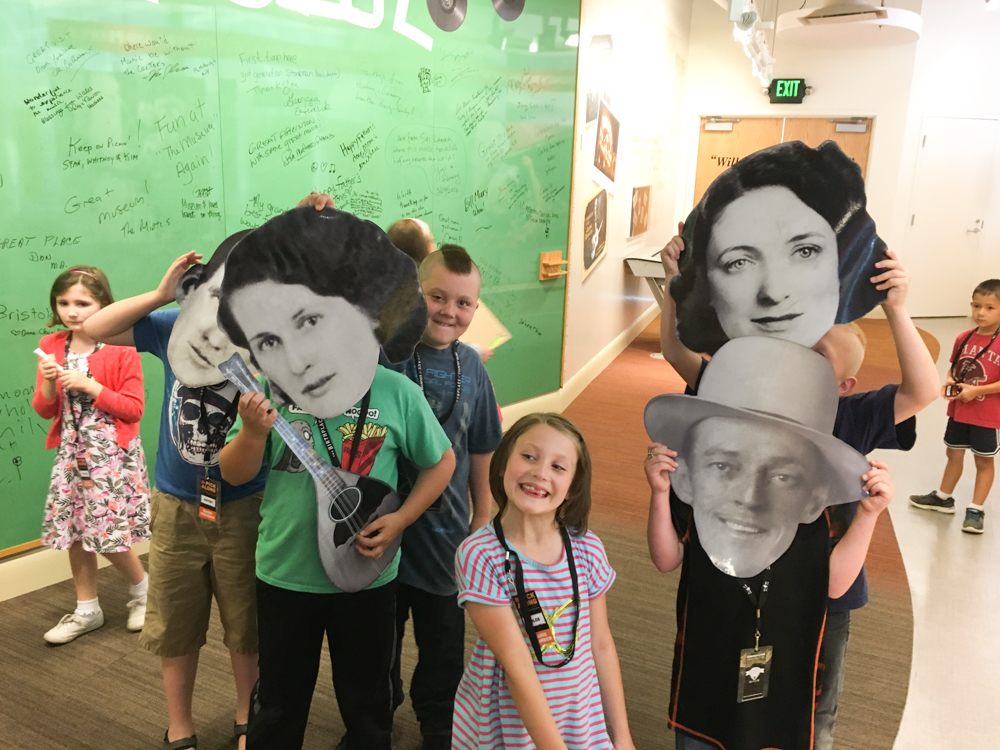
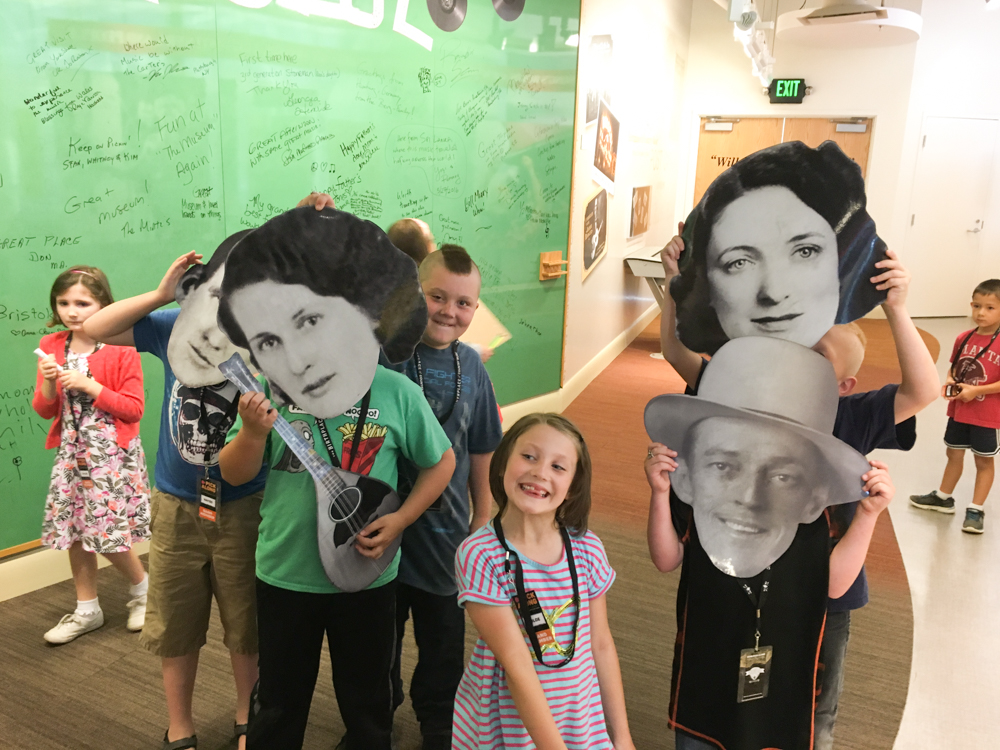
A young camper poses with a few significant “figures” in country music history during a Pick Along camp lesson. © Birthplace of Country Music

Jessica Turner is the Director of the Birthplace of Country Music Museum.
Shiny Shoes, Big Hair, and Riding the Comeback Train

In the Technicolor rearview mirror of my childhood, Bristol circa 1970s, I fondly recall shopping downtown on State Street almost exclusively. There was Christy’s Shoes where I’d pine for the shiny black patent leather Mary Janes with ribbons, begging my mother to buy them. “Not today,” she’d say, “you need shoes for school.” She’d select a sensible pair and then I’d be fitted by an actual salesperson who would measure my feet with a Brannock Device before disappearing into the back of the store to find my size. Upon return, a shoehorn was used to gently glide the deeply scorned option over my heels – and I’d inwardly swear that when I grew up, I’d own every pair of shiny shoes in that store.

Sometimes we’d go to Ball Brothers Furniture where a friendly salesman would hand you a small glass bottle of Coca-Cola when you walked in the door. In retrospect it seems risky to hand a kid a pop in a showroom filled with gorgeous furniture, but on a hot day I’d gulp down the whole thing before taking more than two steps. The belching that ensued would embarrass my mother and leave my little brother and I in a heaping pile of giggles that generally followed us throughout the store.

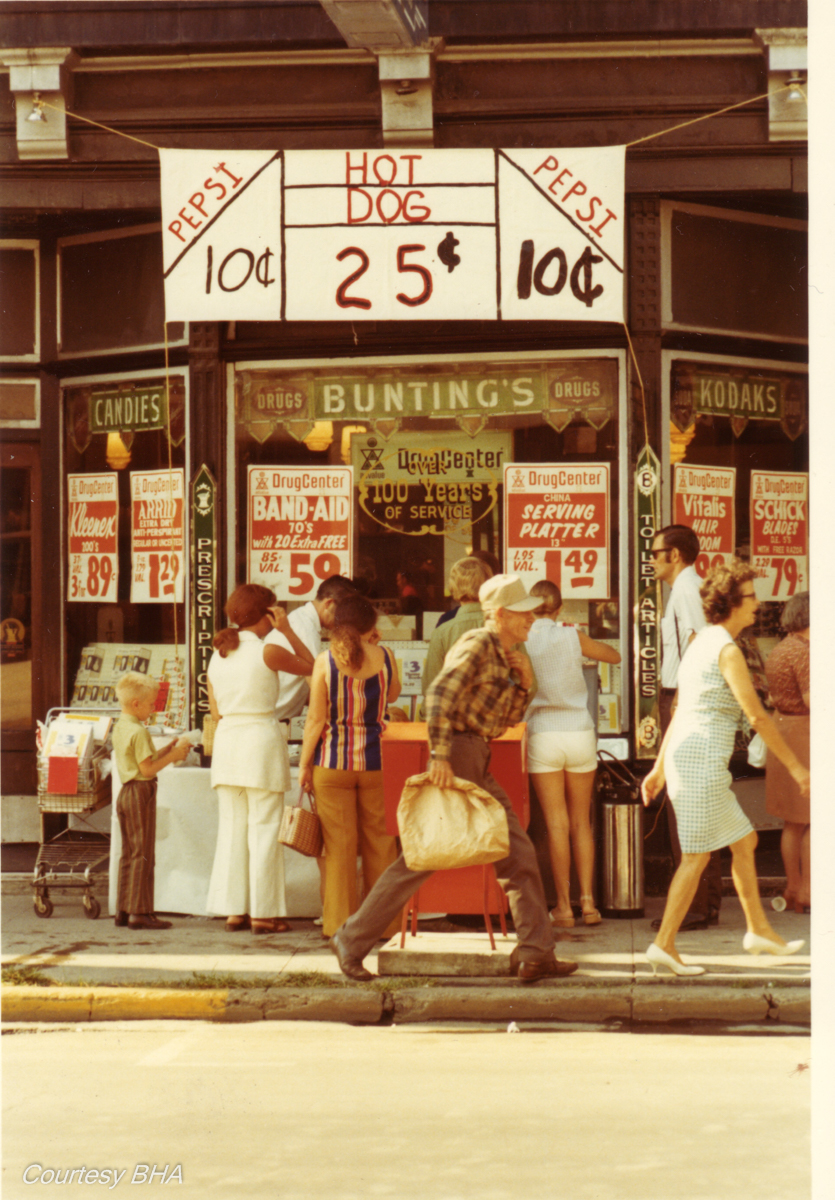
After shopping, we’d usually end up getting hot dogs and root beer floats at Bunting’s Drug Store or stop by the lunch counter at…was it H. P. King’s? The place had banquettes, turquoise counter tops, and black silhouettes of people hung high up on the walls. It’s all a little hazy now, but I do know that – at some point – it all ended. Seemingly overnight, we just stopped going downtown.

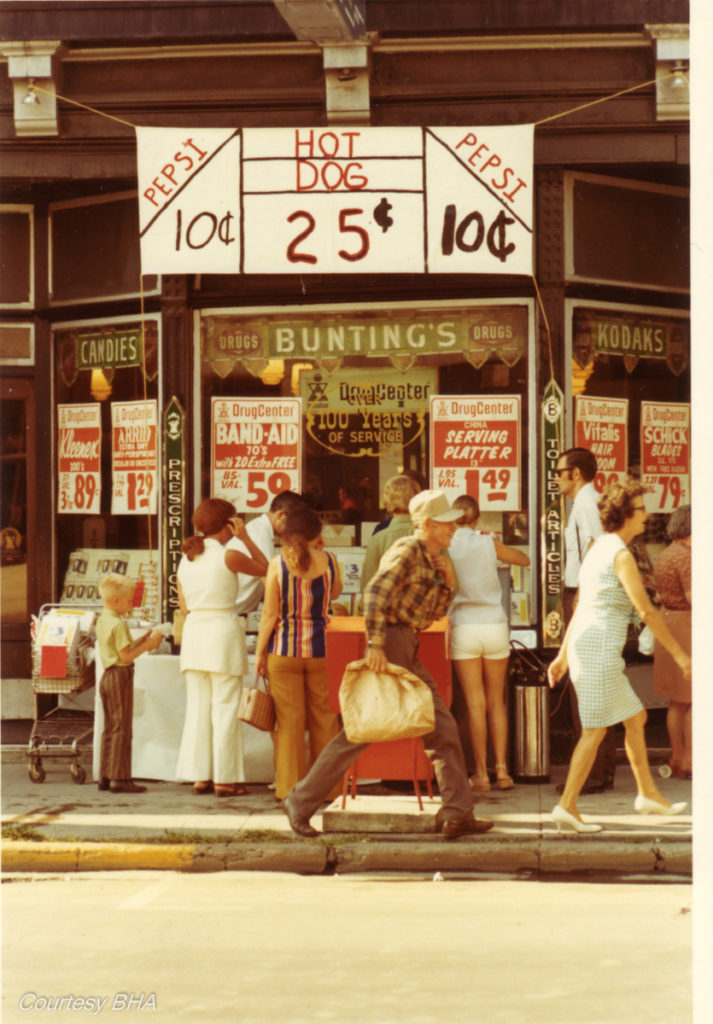
Bunting’s Drug Store in the 1970s, a wonderland of lotions, potions, and root beer floats. Reproduced with permission from the Bristol Historical Association

By the 1980s, mall culture had swept the nation – as did crispy hairstyles. Some say it was the lowest point in fashion history, yet the rise of the “mall claw” wasn’t our nation’s greatest tragedy. The real casualty was Downtown, USA. As the trend toward shopping malls, big box stores, and retail chains became more valued than mom-and-pop businesses, downtowns everywhere literally crumbled before our eyes. The emergence of Reaganomics, BMWs, and giant shoulder pads ushered in yuppies with new money that seemingly held little regard for anything of historic value. Behemoth shopping malls became the air-conditioned havens of leisure for shoppers and loiterers alike – and the place for teenagers to ward off boredom. I would spend many a weekend sipping Orange Julius, noshing Italian Village pizza, and playing Pac Man at The Gold Mine in The Bristol Mall – and not one salesperson ever fitted my shoes again.

I wasn’t properly reintroduced to downtown until my 20s. Back then State Street mainly consisted of abandoned buildings, antique stores, the newly renovated Paramount Center for the Arts, the library, and a cute little eatery called K. P. Duty. Then there was a teeny little dive bar on 7th Street that offered live music.

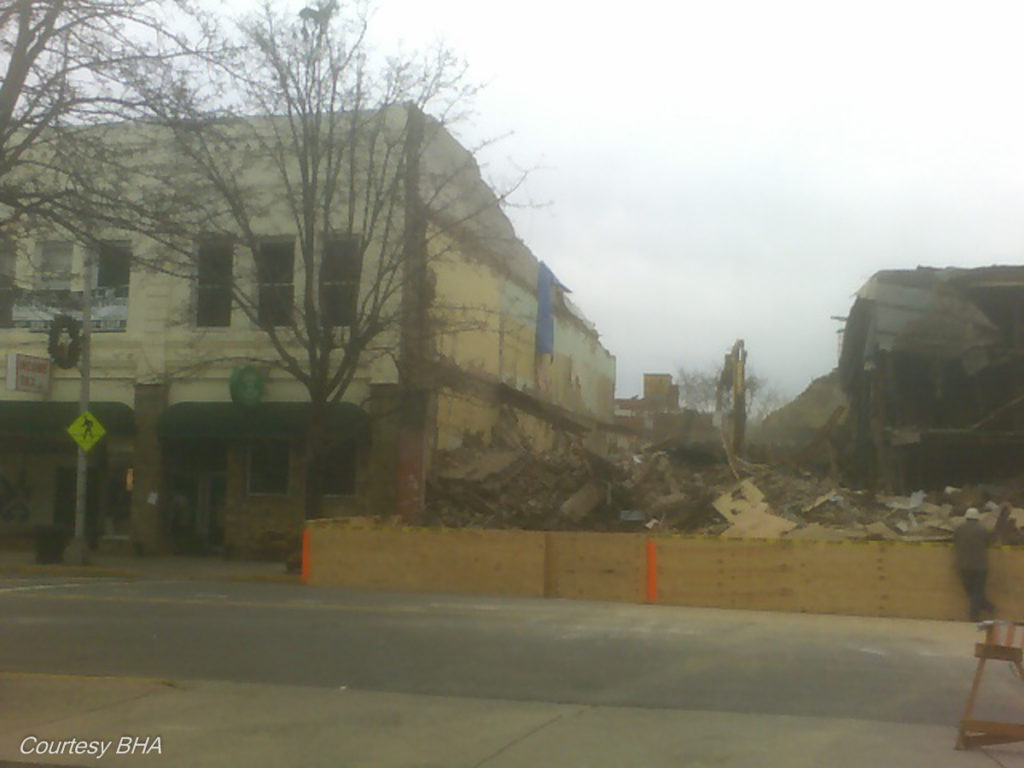
Modernization and “improvement” meant that many of Bristol’s downtown historic buildings – and the once-vibrant businesses housed in them – disappeared or were left empty in the 1970s and 1980s. Reproduced with permission from the Bristol Historical Association

Let me preface to say I’m the daughter of a musician, so it was only natural that I would gravitate toward our local music scene. Many thanks to Fred Bartlett for opening The Offshore Café and for being among the first to invest in live music downtown. With a wide range of local and regional talent playing across genres, The Offshore opened up a whole new world to me and many others. I saw a ton of great bands in that tiny little place: Brian & The Nightmares, Punchin’ Judy, Trailer Park Picassos, the Wandering Zulu Brothers, Thin Line, Janie Gray, Würm, Redstone, H. B. Beverly, Blue Mother Tupelo, Lightnin’ Charlie, The Goody’s – the list is long and distinguished. By the time I was performing there in my own band, The Offshore had changed hands several times but still offered a variety of live music.

Fast-forward several years and I was working at WCYB TV, the NBC/Fox/CW affiliate in Bristol. One of my jobs was producing promotional spots for nonprofits as part of the station’s public service. During that time, I worked a variety of regional events and with several nonprofits including the former Birthplace of Country Music Alliance and the Paramount. This is what led me to Bristol Rhythm & Roots Reunion in 2002. The cities of Bristol turned over organization of the event after the first two festivals; I soon became a board member and continued to volunteer until the opportunity to become an employee presented itself in 2010.

To this day I credit the explosive growth of Bristol’s musical awakening to the people I met on the board of Bristol Rhythm & Roots Reunion and to the folks from the former Birthplace of Country Music Alliance. Though separate at the time, they started that train steamrolling down the track, and I am so grateful to them for their vision and for preserving Bristol’s music history.

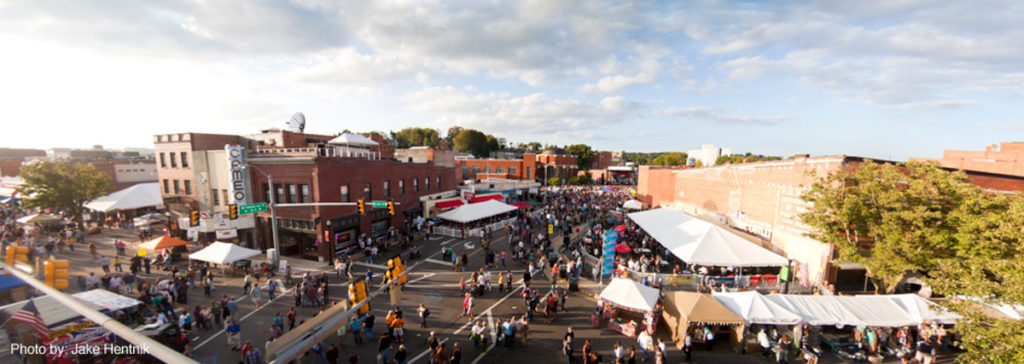
Festivalgoers at Bristol Rhythm & Roots Reunion – the festival has grown exponentially since its beginnings in 2001, and each year it celebrates the musical heritage of Bristol and this region. © Birthplace of Country Music; photographer: Jake Hentnik

Coincidentally, both cities of Bristol were working to increase investment interest and foot traffic downtown. We were fortunate to have members from both city councils on the festival board, and the vision they had for downtown has truly come to fruition.

Then there is Believe in Bristol, our small Main Street organization that works to improve downtown in other ways. They bring groups and businesses together, help with beautification projects, and continue to help make Bristol an even better place to live. Together, we have become a force. It truly takes a village, people!

Today, the Birthplace of Country Music (the “Alliance” was dropped during the 2012 merger with Bristol Rhythm & Roots Reunion) is the parent organization for the Birthplace of Country Music Museum, Bristol Rhythm & Roots Reunion, and Radio Bristol. Visitors from all over the world have been to visit our festival and our museum, and those who have yet to visit can listen to the music of our region via our radio station online and on its app. This has been made possible because of the love and support of this community. I am blessed to have been a tiny cog in the wheel of this fine, music-making machine.

Today I am really proud to take my daughter Callie downtown for nearly every event imaginable. We do the Caterpillar Crawl, Pumpkin Palooza, Border Bash, the Downtown Open House, and Full Moon Jams. She loves Mountain Empire Comics and Top Hat Magic the most, takes the occasional art class at A Work of Art Gallery, and has been enrolled at Bristol Ballet since she was three years old.

We could have breakfast, lunch, dinner, and dessert at any number of fancy or casual places on and around State Street and still have the occasional hot dog and root beer float if we want. And yes, there’s shoe shopping downtown, and yes, Callie gets the shiny ones!

Bristol is proof that great things happen when we work together. Bristol, though crossing the boundary of two states, truly shares one state of mind.

Charlene Tipton Baker is a Marketing Specialist at the Birthplace of Country Music.

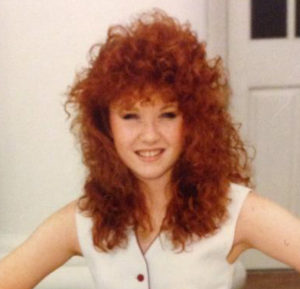
A remembrance of the big hair from my past…